
Custom manufacturing · buyer reference
What to confirm before you release an order
Which files to send and in which format, how long each process takes, the six variables that set unit price, how your drawings and intellectual property are protected, and which documents ship with finished parts. Thirty-three questions are answered on this page. Where a figure belongs to a published standard, this page links to the table that maintains it rather than restating it.
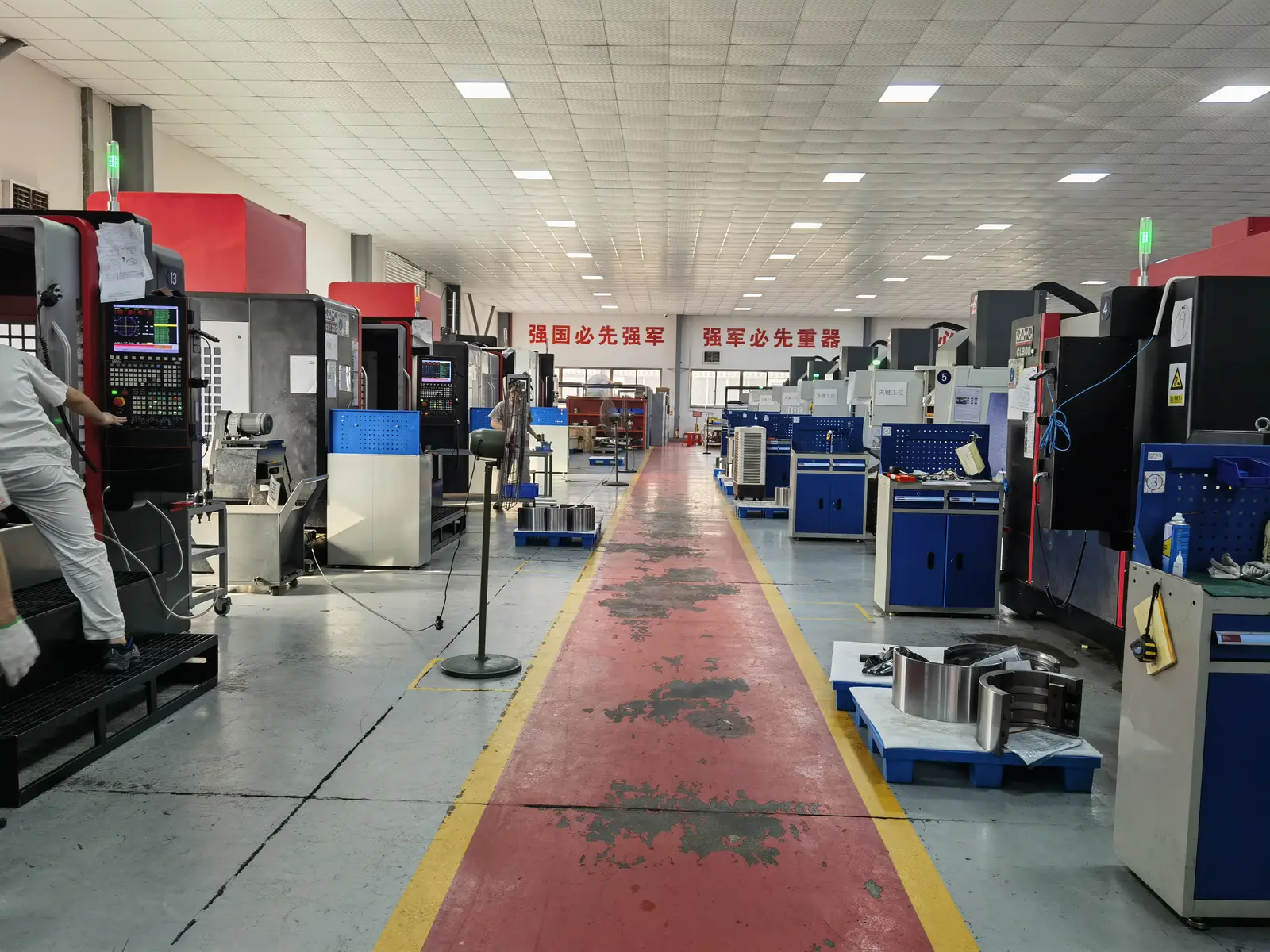
Prolean workshop — CNC machine rows, all in house
Start with the decision you are actually making
Four questions decide whether an order happens. Each one below gives you the short answer, and then a link to the page that covers the detail in full.
Can you make my part?
- Send the model and we answer with a manufacturability check, not a price alone.
- General tolerances follow ISO 2768 unless your drawing states tighter.
- If a feature cannot be held at the price you expect, we say so before the order.
What will it cost?
- The tightest tolerance on the drawing sets most of the price.
- Quantity changes the price less than geometry does — setup is amortised, toolpath is not.
- You can request the price at 1, 10 and 100 pieces in one request.
When will I get it?
- Fastest we run: 1 working day for prototypes, 2 for CNC production, 3 for sheet metal.
- There is no standard lead time — your date depends on the part and the project.
- Hard dates should be stated when you submit, not after.
Is my drawing safe?
- Uploads are encrypted and treated as confidential.
- We can sign an NDA before you upload — send yours or ask for ours.
- You own the design. We do not reuse geometry, and we also take on design work when a project needs it.
A request that contains these three things gets a manufacturability review on the first pass. A request missing any of them comes back with a question instead of a price.
What to send us
Three inputs, one of which is optional.
Accepted file formats
Table 1 · Every format we accept, and what each one is for · 14 extensions
| Format | Use it for | What it does not give us |
|---|---|---|
| 3D model — the geometry we machine from | ||
| STEP (.step, .stp) | Geometry. The preferred format: a solid model with real faces and edges. | Tolerances. |
| IGES (.iges, .igs) | Geometry, when your CAD system cannot export STEP. | Tolerances; feature history. |
| SLDPRT (.sldprt) | A native SolidWorks part. Accepted directly, and useful when the assembly relates to other parts you are sending. | Nothing — but a STEP export travels more reliably between systems. |
| STL (.stl) | Mesh geometry. Fine for 3D printing and for a quick shape check on a screen. | Machining geometry — the surface is faceted, so it cannot be used for a toolpath or a tolerance callout. |
| 2D drawing — the tolerance baseline | ||
| DWG (.dwg) | The 2D drawing: dimensions, datum scheme, tolerance callouts and finish notes. | Reliable 3D geometry. |
| DXF (.dxf) | Flat patterns and profile outlines — the sheet-metal and laser-cutting route. | Bend sequence and formed 3D shape. |
| PDF (.pdf) | The drawing as issued and approved. A vector PDF keeps callouts searchable and unambiguous. | 3D geometry. Send a vector export rather than a scan. |
| Documents and reference images | ||
| DOCX (.docx) | Written requirements: specifications, test criteria, packing and labelling instructions. | Nothing — but it never replaces the drawing. |
| JPG / JPEG | Photographs and reference images — an existing part, the assembly your new part fits into, or a finish sample you want matched. | Any measurable geometry. |
| PNG (.png) | Images where text has to stay legible — a screenshot of a specification, or a marked-up view of a drawing. | Any measurable geometry. |
| Archive — a whole project in one file | ||
| ZIP (.zip) | Bundle an entire project — model, drawing, specification and reference images — into a single upload. The cleanest way to send a package of more than one file. | Nothing. It is the container, not the content. |
Every format above can be sent either through the upload field on the quote page or by email — use whichever suits the file size. A ZIP is the best route when a project is more than one file. Never send a 3D model without a tolerance baseline: the model tells us the shape, the drawing tells us what has to be true about it.
How an order moves, and how long each step takes
Five steps from upload to parts. Steps 1–3 are where your request can stall — a complete request never waits on us.
Table 2 · Fastest lead time by process · 3 rows
| Process | Fastest we run | What decides the actual date |
|---|---|---|
| Prototype / low-volume CNC | 1 working day | Part geometry, material availability, and how many setups the part needs. |
| CNC production | 2 working days | Batch size, material, and the capacity available when you order. |
| Sheet metal fabrication | 1–3 working days | Blank size, bend count, and whether the parts need finishing. |
There is no standard lead time. The figures above are the fastest we run each process at — a floor, not a promise — and the date you actually get depends on the part and the project. Expedited production is a separate flow with dedicated capacity, and expedited orders are managed online so a committed date is tracked rather than assumed: ask for it when you submit.
Related reading: Low-volume CNC machining · Why small-batch CNC is an advantage · CNC milling for small batches
We do not publish a rate card — a rate card ages badly and never describes the part you actually have. What we can publish is what moves the number. Six things do, and five of them are yours to set.
Sheet metal fabrication cost →
Die casting costs →
Metal 3D printing cost →
The six things that set your price
In rough order of impact.
The most expensive habit in custom manufacturing is over-tolerancing: putting ±0.01 on a feature that only needs ±0.2, because the drawing had no default. Set a general tolerance, then mark the exceptions.
Quantity, payment and delivery terms
Three answers that decide whether an order is possible at all — and the assumptions buyers most often get wrong.
Also see: How pricing behaves at low volume · Small-batch CNC, and why we do it
Also see: Low-volume manufacturing, explained
Also see: Small-batch milling
Your drawings, and who owns what
Where your drawings sit between upload and delivery, what we will sign before you send anything, and who owns what afterwards.
Uploads are encrypted and treated as confidential. We do not share your files and we do not reuse your geometry for another customer — ever.
Send us your NDA, or ask for ours, and we will return a signed copy before you upload anything.
The design is yours. We also provide design services where a project needs them — send us the requirement and we will confirm the scope. Either way, what we make for you stays yours.
Models and programs are kept so your repeat order runs on the same setup. Tell us at any time if you would rather we removed them.
Quality, and the paperwork that ships with the parts
Ask for these when you place the order. Material certificates and inspection reports are much harder to produce after the parts have shipped.
Table 3 · Documents available on request · 4 rows
| Document | When to ask | Notes |
|---|---|---|
| ISO 9001:2015 certificate | Any time | SGS, certificate CN24/00004900, valid to 2027-08-04. Download the PDF |
| Material certificate | With the order | Traceability to the mill lot. |
| Inspection report | With the order | Dimensional report against the drawing. |
| First article inspection (FAI) | With the order | Quoted as part of the order. What FAI covers → |
Tolerance tables are published in one place and maintained there, so the figure that governs your order is always the current one. Follow the link for the tables themselves.
Where the technical answers live
Eight topic areas. Each row points to the page that covers it in detail, plus the reading that goes deeper.
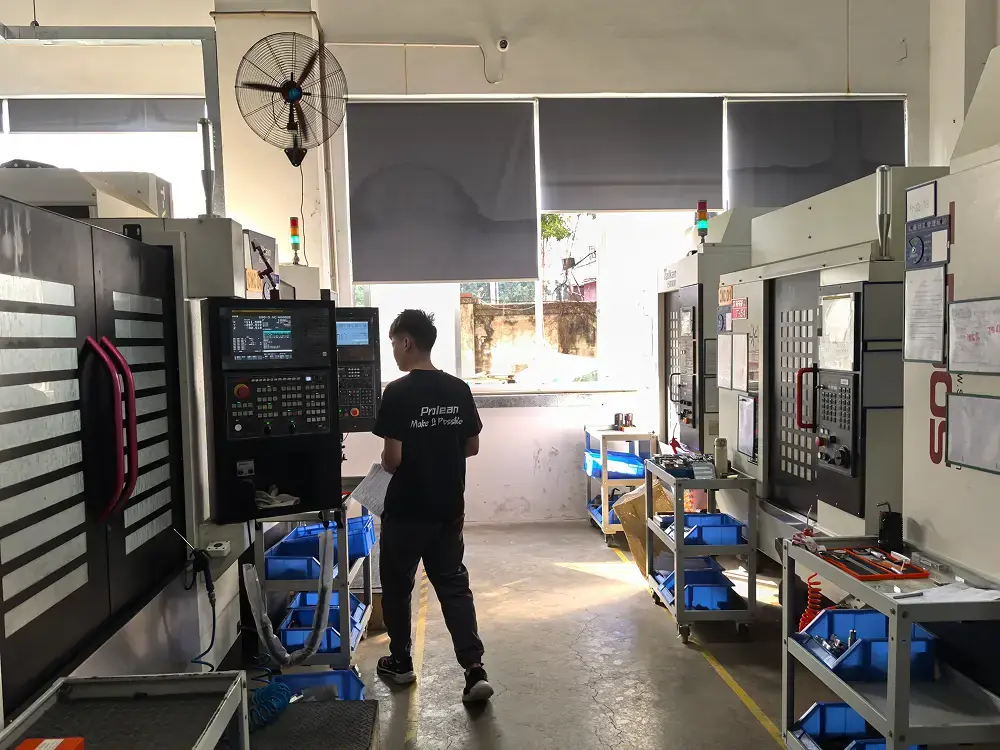
One supplier for the model, the part and the paperwork
All 33 questions
The 33 answers below are the ones buyers ask before a first order — files and formats, lead time, what drives the price, payment, confidentiality, and the documents that ship with the parts. Filter by topic, or search for a word.
Ordering & quoting
What to send, who reviews it, and what you get back · 7 questions
What information do you need to quote a part?
Three things: production drawings (3D files or 2D drawings), quantity, and the material you want. Add any tolerance or finish requirement that is not covered by the general drawing standard and we will quote against it.
How do I send parts to you and get them made?
Upload your CAD files through the quote form with your project details, or email your requirements. We reply with a production and pricing assessment and any design-for-manufacturing (DFM) points we find.
Can you help me engineer my part?
We run a free DFM assessment on every part we evaluate: we tell you what will be difficult to make and what it will cost to make it. We also take on design work where a project needs it — scope and deliverables depend on the part, so send us the requirement and we will confirm what we can take on.
What file formats do you accept?
For the 3D model: STEP (.step/.stp), IGES (.iges/.igs), SolidWorks parts (.sldprt) and STL (.stl). For the 2D drawing: DWG, DXF and PDF. For everything around the part: DOCX specifications, JPG / JPEG / PNG images, and ZIP archives that bundle the whole project. The 3D file gives us the geometry; the 2D drawing gives us the tolerance baseline.
How large a file can I send, and how?
Use the upload field on the quote page, or email the files to us — both routes take every format on this page. If your project is more than one file, put the model, the drawing and the images in a single ZIP; that is the simplest way to keep a project together.
What is your minimum order quantity?
One part. There is no minimum quantity for prototype production — one-off parts and small batches are routine work for us.
Do I need to be an existing customer to get a quote?
No. Upload a model and you will get a pricing and DFM assessment whether or not you have ordered before.
Lead time & capacity
How long a part takes, and what moves the date · 4 questions
What is the lead time for prototype parts?
The fastest we run prototype parts is one working day. There is no standard lead time beyond that: the date depends on the geometry, the material, the quantity and the capacity available when you order. The lead time quoted on your order is the one we commit to.
How long does CNC machining take?
From one working day for a simple part, and from two working days for CNC production runs. Anything further depends on the part and the project — complexity, material availability, finish and current capacity — so your date is quoted per order rather than taken from a schedule.
What is the fastest turnaround for sheet metal fabrication?
Sheet metal parts ship in one to three working days for straightforward work; three working days is the figure we plan against. Complex assemblies are quoted with their own schedule.
Can you expedite an order?
Yes. We run a dedicated expedited production flow, and orders are managed online so a committed date is tracked rather than assumed. Tell us the date you need the parts when you submit and we will quote the fastest route we can hold.
Price & payment
What drives the cost and how you pay for it · 4 questions
What drives the price of my part?
Six things, in rough order of impact: the tightest tolerance on the drawing, how many setups the geometry forces, the material and its stock form, the quantity, the surface finish, and how much inspection you need. The features you mark “critical” are what set the price — over-tolerancing is the most common way a part gets expensive.
Do you accept credit cards?
Wire transfer and PayPal are the payment methods we use. If you need a different arrangement, talk to us before the order is placed.
Do you offer credit terms?
Terms are agreed per customer. Tell us what your process needs and we will tell you what we can do.
How soon will I get the quote back?
A complete request — model, quantity, material — comes back fastest; every request gets a DFM review by a person, not an instant automated number.
Terms, files & IP
Confidentiality, ownership, shipping terms · 5 questions
How do you keep my drawings confidential?
Uploads are encrypted and treated as confidential. We do not share your files, and we do not reuse your geometry for anyone else.
Will you sign an NDA?
Yes. Send us your NDA or ask for ours before you upload, and we will return a signed copy.
Who owns the tooling and the models?
You own your design. For tooling, ownership and storage terms are stated in the order.
Do you do design work?
Yes. Alongside manufacturing we provide design services — send us the requirement and we will confirm the scope, the deliverables and the timing for your project. Anything we design for you stays yours.
What shipping terms do you use?
We ship with UPS, DHL and the other major express couriers, and we can also ship on your own carrier account. If you want to use your own account, tell us before the order is placed so it goes onto the paperwork.
Quality & documentation
Standards, tolerances and the paperwork that ships with parts · 5 questions
What machining standards do you follow?
Our CNC operations are certified to ISO 9001:2015 by SGS. General tolerances follow ISO 2768 unless your drawing states otherwise; the full table of what we hold by default, and how much tighter we can go on a specified feature, is on the standards page.
What tolerance can you actually hold?
The default is the general tolerance for the process; a specified feature can be held tighter and is quoted as such. The per-process numbers live on the standards page.
What documents ship with my parts?
Material certificates and inspection reports are available on request — ask for them when you place the order, because they are much harder to produce afterwards.
Can you provide a first article inspection (FAI)?
Ask when you submit and we will quote it as part of the order.
What industries do you serve?
We manufacture for a wide range of industries — aerospace, automotive, medical and dental, energy, electronics, robotics, food processing and general industrial equipment among them. The constraint is the part, not the sector: send the drawing and we will tell you whether we can make it.
Process & technical
Which process, which material, which finish · 8 questions
Which CNC machining services do you offer?
CNC milling, turning, grinding and Swiss turning, plus rapid prototyping and surface finishing — all in house, so one order does not get split across vendors.
When should I choose CNC machining over 3D printing?
CNC when you need the true material properties, tighter tolerances, or more than a handful of parts. 3D printing when the geometry is more important than the strength and you need it in days.
What are the main advantages of CNC machining?
Repeatability and real material properties, at any quantity from one upwards.
What metals do you work with in sheet metal fabrication?
Aluminium, stainless steel, copper, brass and mild steel as standard; others on request.
What are your sheet metal capabilities?
Sheet thickness 0.1–10 mm, part envelope up to 6000 × 2400 mm, bend length 2400 mm, bend angle ±1°. The full capability table, and the ISO 2768 class that applies to each process, is on the standards page.
Do you offer finishing and assembly?
Powder coating, plating, painting and polishing, plus assembly and installation when the order calls for it. The finish selector is on the surface finishes page.
Can you provide prototypes before full production?
Yes — and it is the normal route. Sample first, then batch on the same program and fixturing.
What are the typical applications of your fabricated parts?
Brackets, enclosures, chassis and mechanical housings for automotive, aerospace, electronics and construction equipment.
Nothing on this page matches that word. Ask us directly and a person answers it — or send the part and raise it on the quote.
What happens next
Get Your Parts Made Today
You now have every answer this page can give. The next question is price — send the model and a person will look at it.