
? Where is your part right now?
SURFACE FINISHING
Alodine Coating Service
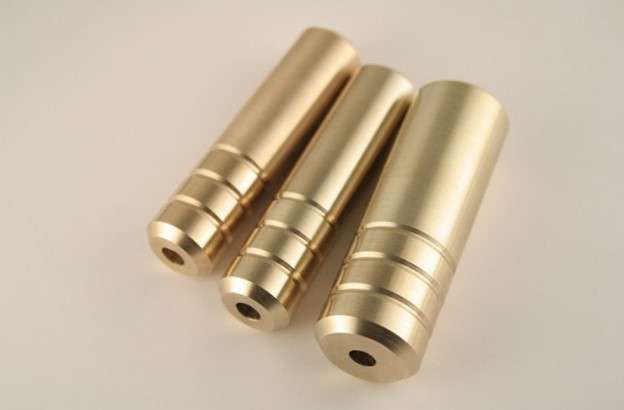
A chromate conversion coating — also called chem film — formed by immersing aluminium in a solution of chromium ions. The layer is thin, protective, and it is the low-cost route for aluminium parts that need corrosion protection without a heavy coating.
Sequence
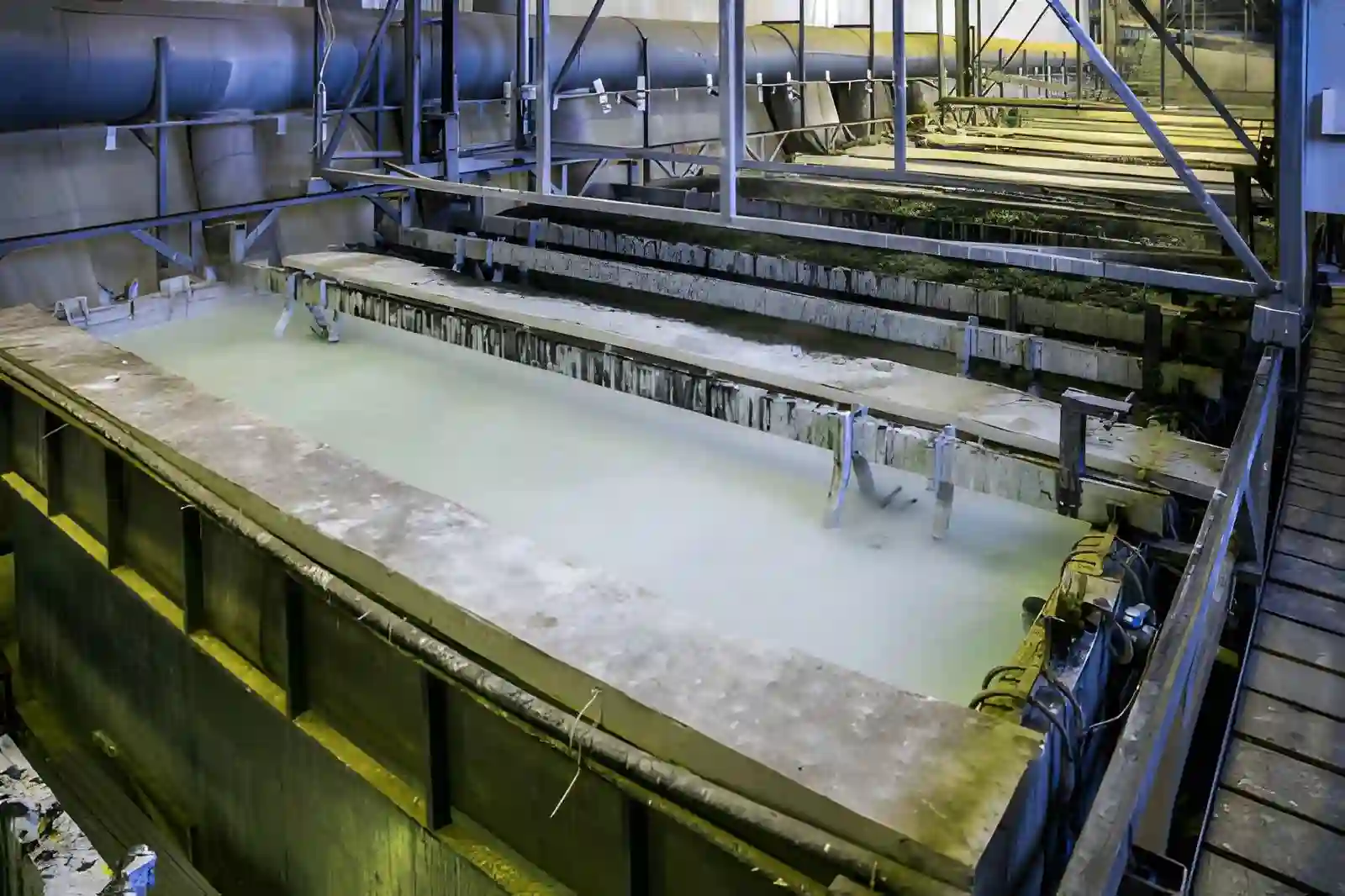
Alodine is an immersion step — cleaning before it decides whether it takes
This is a conversion coating: the solution reacts with the aluminium surface itself. Anything on that surface — oil, oxide, a fingerprint — stops the reaction locally, so the part comes out patchy.
Order matters if the part is also being anodized or welded. Alodine is a conversion coating, so a later anodizing step would replace it rather than sit on top. Tell us the full process route when you order — see design constraints.
Fit check
Can we alodine your part? Three things decide it
Substrate, size and the process route around it. Run through these three before sending a drawing.
Substrate
- Yes — aluminium and its alloys
- No — steel, stainless steel, copper, brass, titanium
- Not on the published list: ask first
For non-aluminium parts, the equivalent protective step is different — see materials.
Size & geometry
- Immersion process — the part has to fit the treatment tank
- The solution must reach the surface, so blind cavities are a risk
- Maximum part envelope: To confirm
Tell us the largest dimension and whether the part has closed or deep internal features.
Process route
- Alodine is a conversion coating — it becomes part of the surface
- A later anodizing step would replace it, not layer on it
- Welding after coating damages the layer at the joint
Give us the full route — machining, welding, anodizing, alodine — so the order can be set correctly.
Specifications
Alodine: 2 colours, clear or gold, on aluminium — applied by immersion
Every value below is taken from our published specification for this process.
What it adds
A conversion layer is thin — the dimensions barely move
Alodine converts the top of the aluminium surface rather than depositing metal on it. The layer is a fraction of what a plating or a paint would add.
| Where it acts | Effect | Why it matters | What to do |
|---|---|---|---|
| Toleranced faces | Negligible build-up | Unlike plating, a conversion coating does not close up a bore or grow a shaft meaningfully. | Normally no masking needed for tolerance reasons. |
| Electrical contact points | Layer is conductive at the contact | This is why alodine is specified on electrical hardware — it protects without insulating. | Confirm with your electrical requirement. |
| Threads | Minimal fill | Threads stay usable where a plated layer would have to be masked. | Flag fine threads if the fit is critical. |
| Appearance | Colour is part of the surface | A scratch through the layer is visible as bare aluminium. | Say if the visible face has to be free of marks. |
Published layer thickness for alodine is not yet available; the behaviour above follows from the process being a conversion coating rather than a deposit. The figure will be added once the shop confirms it.
Need the layer thickness quantified before you commit? Ask us and we will confirm it against your drawing.
Get a quoteClear or gold
Clear or gold: alodine against anodizing, and against itself
Alodine comes in two published colours. But the bigger decision is usually alodine versus anodizing — both are aluminium processes and they are not interchangeable.
Alodine — clear
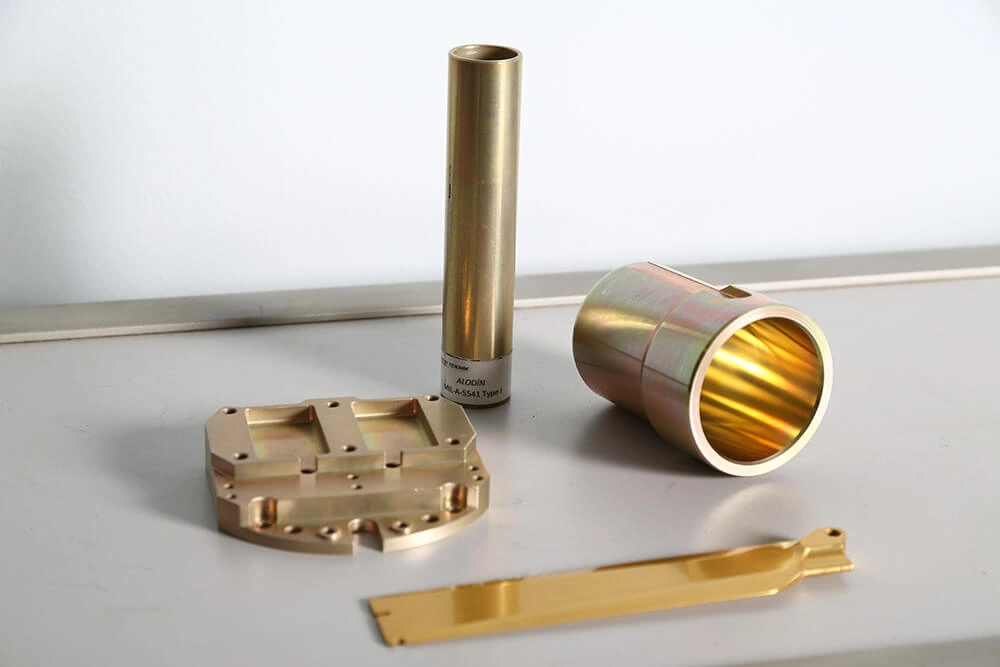
The clear version leaves the aluminium looking close to its natural colour while still protecting it. The layer is thin and follows the machined surface.
Best for: parts where you want protection without changing the appearance much
Not for: parts that need a hard wear-resistant surface — a conversion film is not a thick oxide layer.
Alodine — gold
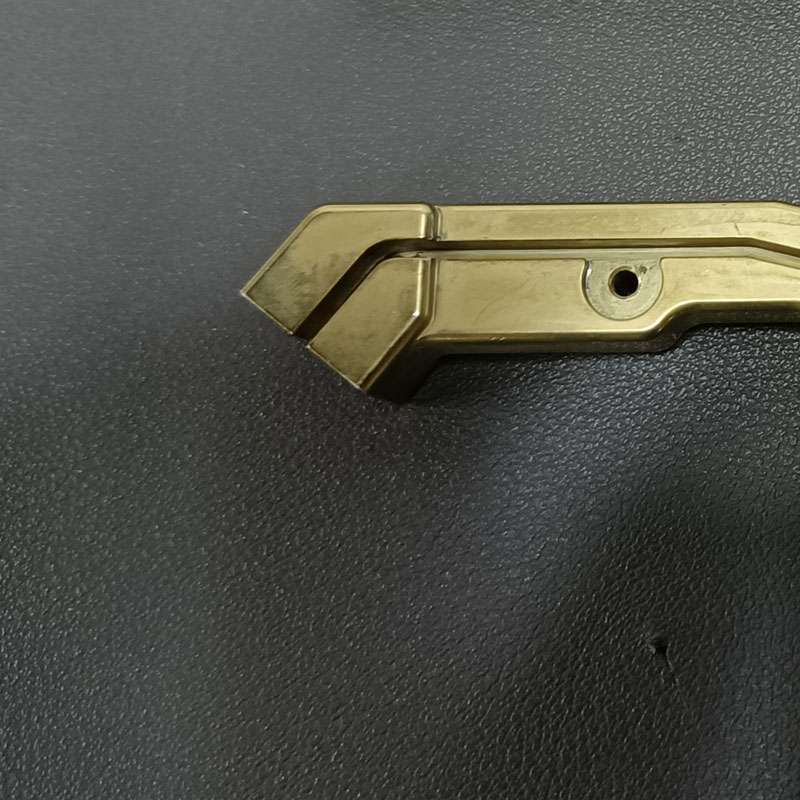
The gold appearance is characteristic of the chromate conversion layer and is the version most often seen on hardware and electrical parts.
Best for: hardware, tools and electrical components where the colour signals the treatment
Not for: colour-matching to a painted assembly — this is a coating colour, not a paint colour.
Alodine or anodizing for your aluminium part? Send the drawing and describe what the surface has to do — protect, wear, or conduct.
Get a quotePick or avoid
When alodine is the right call — and when it is not
Pick alodine when
- The part is aluminium or an aluminium alloy — this is a requirement, not a preference.
- You want corrosion protection at a low cost per part.
- The part is a tool, a piece of hardware or part of an electrical system — the three applications named in our published specification.
- You need protection without a thick layer that would change fits.
- The part is dipped — so it has to be reachable by the solution.
Avoid alodine when
- The material is not aluminium — steel, copper and titanium all need a different process. See materials.
- You need a hard, wear-resistant surface — anodizing builds an oxide layer, alodine converts the surface in place.
- The part is welded after coating — the joint has to be treated again.
- You need a specified paint-like colour — the two published colours are clear and gold.
Aluminium part needing more than a thin film? Ask for anodizing and alodine side by side on the same drawing.
Get a quoteDesign constraints
What decides whether the alodine layer comes out even
Three variables: how clean the surface arrives, whether the solution can reach it, and where alodine sits in the process route.
Surface cleanliness
The conversion reaction happens on the aluminium itself. Oil, oxide, coolant residue or a fingerprint blocks it exactly where it sits, and the part comes out patchy.
Solution access
Immersion means the solution has to reach the surface. Closed cavities and deep blind features trap air and stay untreated — call them out on the drawing.
Route order
A conversion coating is part of the surface, so a later anodizing step would replace it. Set the order before the parts are made, not after.
Handling after coating
The layer is thin compared to a plating. Handling marks and scratches show as bare aluminium, so parts should be packed rather than loose-bagged.
Masking
Because the build-up is negligible, masking is usually unnecessary for tolerance reasons — it is only needed if a surface must stay uncoated for a functional reason.
Colour expectation
Clear and gold are the two published options. On a machined surface the colour follows the surface finish, so a directional machining pattern stays visible through the film.
Drawing notes
What to write on the drawing so the conversion layer comes out even
For alodine the note is mostly about cleanliness, access and order — masking rarely matters because the layer barely adds thickness.
1. ALODINE (CHROMATE CONVERSION COAT) ALL SURFACES. COLOUR: CLEAR / GOLD (delete one)2. CLEAN AND DEGREASE BEFORE COATING. NO OIL, COOLANT RESIDUE OR OXIDE ON COATED SURFACES.3. PROVIDE ACCESS FOR THE SOLUTION: NO SEALED CAVITIES. VENT BLIND FEATURES.4. PROCESS ORDER: MACHINE - DEBURR - ALODINE. DO NOT ANODIZE OR WELD AFTER ALODINE.5. HANDLE COATED PARTS WITH GLOVES. PACK SO COATED FACES DO NOT RUB.
Examples only. The line that most often goes missing is the process order — alodine sits last among the chemical steps, not before them.
Materials
Which materials take alodine — and what to use if yours does not
The conversion reaction is specific to aluminium. Every other substrate needs a different process, and the table below names which one.
| Material | Alodine | Notes | Use instead |
|---|---|---|---|
| Aluminium and its alloys | Yes | The substrate this process is for. Clear or gold, applied by immersion. | — |
| Steel and stainless steel | No | The reaction does not apply to ferrous surfaces. | Black oxide · Passivation |
| Copper and brass | No | Copper alloys need their own protective treatments. | Electroplating · Polishing |
| Titanium | No | Titanium is anodized rather than chromate converted. | Anodizing |
| You need a hard wear layer | Use anodizing | Anodizing builds an oxide layer; alodine converts the surface in place. | Anodizing |
| You need colour beyond clear/gold | Use anodizing | Anodizing offers clear, black, grey, red, blue and gold on aluminium. | Anodizing |
Part in more than one material? Send the assembly and we will route each component to the process that fits it.
Get a quoteApplications
Where alodine is used
Our published specification names three application areas for alodine. They share one trait: the part needs protection without gaining a thick, insulating layer.
Tools
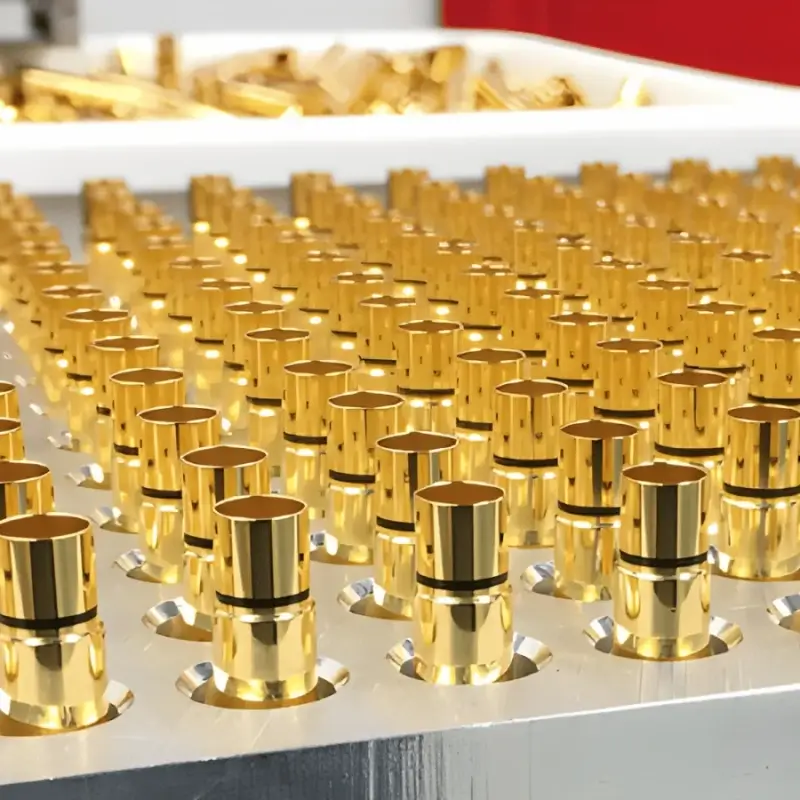
Hand tools and fixtures where a protected surface is handled constantly and a thick coating would change the feel and the fit.
Hardware
Fasteners and fittings that need corrosion protection in service, at low cost per part.
Electrical systems
Enclosures, busbar and connector hardware — where the coating protects the aluminium without behaving like an insulator.
QA and documentation
What you get back with the parts
Purchasing usually needs paper as well as parts. Here is what we can issue today and what is still being confirmed.
Colour and coverage
Visual check for uniform colour and full coverage on specified faces.
Process route
Coating confirmed as the last chemical step in the route.
Layer thickness
Measured conversion layer thickness. Being confirmed with the shop.
Corrosion testing
Salt-spray hours for the coated surface. Being confirmed with the shop.
Further reading
Alodine and chromate conversion guides
Longer answers on the questions this page only has room to state.
The process behind the colour, and where it sits against anodizing.
Aluminium-specific notes on the conversion reaction and its limits.
The comparison most buyers arrive with — protection versus hardness.
When the part needs a built-up oxide layer instead of a conversion film.
The equivalent protective step for stainless steel parts.
Compare all 20 finishes by roughness, thickness, corrosion and cost.
FAQ
Alodine FAQ: the questions engineers ask us
What is alodine?
Is alodine the same as anodizing?
Which materials can be alodined?
Which colours are available?
Will alodine change my part dimensions?
Why did my part come out patchy?
Can I anodize after alodining?
How is alodine applied?
Get your alodine quote
Upload a STEP, IGES or PDF drawing. Tell us the aluminium alloy, the colour you need, and the full process route if the part is also being machined, welded or anodized.
What to send us
- Drawing — 2D and 3D files (STEP, IGES or PDF).
- Alloy — the aluminium grade, so the conversion reaction can be judged.
- Colour — clear or gold.
- Process route — machining, welding, anodizing: the order has to be set correctly.
- Closed features — any sealed cavity or deep blind hole that the solution cannot reach.
- Quantity — number of units, including any spares.
All uploads are secure and confidential. Engineers review and reply with a quotation and lead time.