
? Where is your part right now?
SURFACE FINISHING
Powder Coating Service
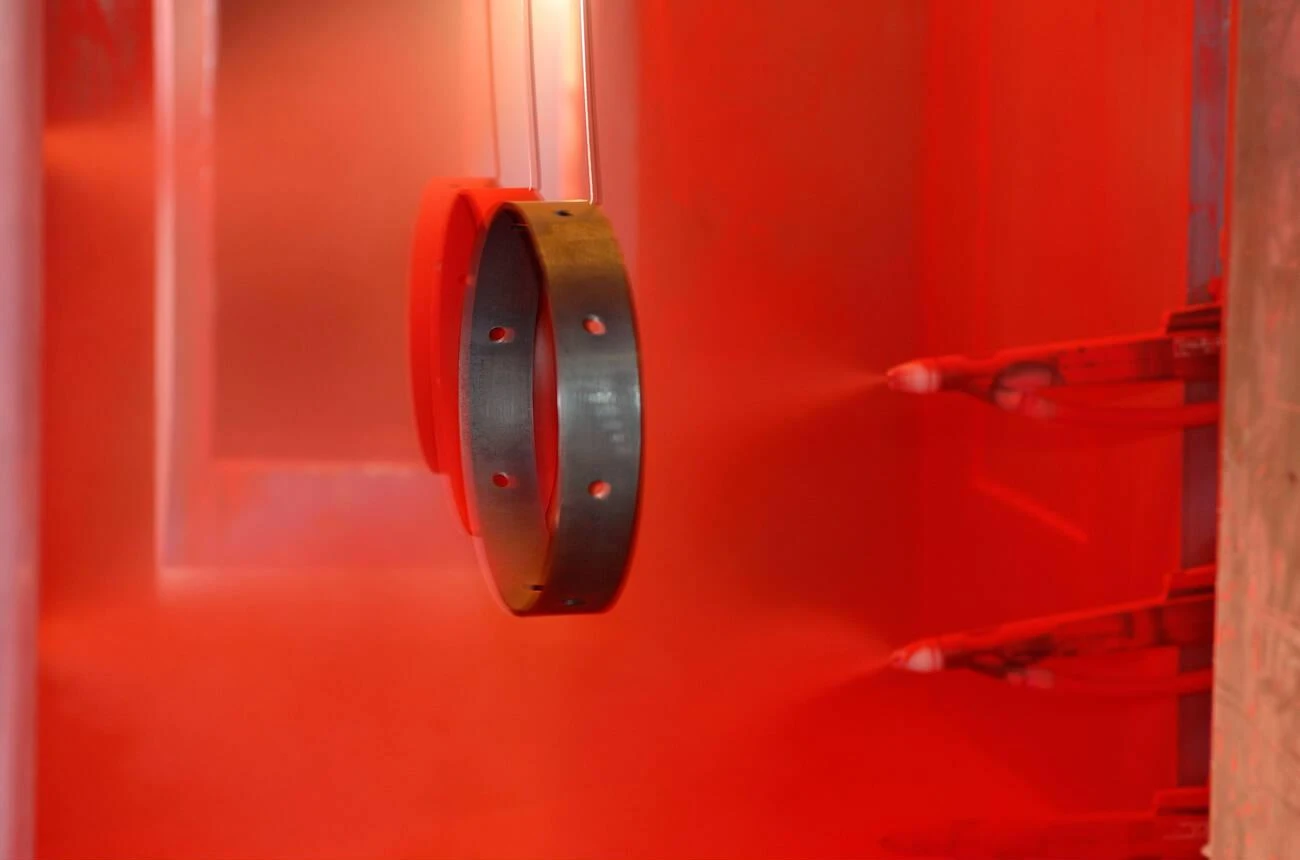
A dry powder is sprayed electrostatically onto the part and then cured in an oven until it flows into a continuous film - published at 60 to 100 um, in black or white and in gloss or semi-gloss. It is chosen for wear, corrosion and UV resistance rather than for a decorative metal look, and because it is a thick film, the thickness is a design decision as much as a finish choice.
Where it fits
Coating is the last step - and the film is cured, not dried
Powder does not dry; it flows and cross-links in an oven. So the part has to be finished, cleaned and masked before coating starts, and it has to tolerate the cure temperature afterwards.
The order matters for two reasons. The film is 60 to 100 um, so anything with a fit has to be decided before coating rather than after; and the part has to take the cure temperature, which rules out some assemblies and heat-treated parts. See drawing notes.
Fit check
Can we coat your part? Three things decide it
The metal, the masking list, and the cure. The second one is where most coating orders go wrong, because the film goes everywhere it is not masked.
Substrate
- Published list - steel, stainless steel and aluminium are the three materials in our table for this process
- The published description also mentions plastics and composites
- That wider list is being confirmed - ask before you quote on it
- Tell us the alloy, not just "metal" - aluminium and steel need different pre-treatment
Give us the material and we will confirm it against the published scope.
Masking
- Threads and press fits must be masked - the film is 60 to 100 um
- Earthing points and any face that must stay conductive have to be masked
- A masked face stays bare metal; an unmasked one is coated and stays coated
- Blast or chemical stripping is the only way back, and it may damage the part
Send the masking list before the parts arrive. See drawing notes.
Cure and geometry
- The film has to be cured in an oven, so the part has to tolerate the cure cycle
- Heat-treated parts, springs, soldered assemblies and inserts are the usual problems
- Deep recesses and faraday-cage shapes coat less evenly than open faces
- The film adds 60 to 100 um on every coated face
Tell us about heat-sensitive features and tight tolerances before quoting.
Specifications
Powder coating: a 60-100 um cured film in black or white, gloss or semi-gloss
Every value below is what we publish for this process. Where the shop has not confirmed a figure, the line says To confirm rather than a guess.
What it adds
The film grows the part by 60-100 um per coated face - plan the fits around it
This is a coating, not a conversion layer: material is deposited on the surface in a film roughly thirty times thicker than a chromate layer. The numbers land exactly on the features that have no room for them.
| Where it acts | What changes | Why it matters | What to do |
|---|---|---|---|
| Threads | Film bridges the flanks | A coated thread will not take its nut - 60 to 100 um is far beyond a thread tolerance. | Mask all threaded features. |
| Press fits and bearing seats | Film builds on the wall | Interference fits are designed in microns; this film is two orders larger. | Mask every press fit and bearing seat. |
| Earthing and contact faces | The face is insulated | A cured powder film is a dielectric - a coated earthing point is no longer an earthing point. | Mask earth points, bonding faces and shielding contacts. |
| Sealing faces | A film sits between the faces | Gaskets and o-rings are designed to seal against metal, not against a cured film. | Mask gasket faces and o-ring grooves. |
| Recesses and faraday-cage shapes | Coverage falls off | Electrostatic spray reaches inside a recess less easily than an open face. | Tell us the depth of any recess that has to be coated on the inside. |
| Outer cosmetic faces | Colour and texture appear | This is the benefit: a durable, coloured, weather-resistant film over the whole coated surface. | No allowance needed - this is the duty the coating was specified for. |
The thickness range is published; the cure cycle is not, and it is being confirmed. The masking rules above hold regardless of both.
Tell us which features must keep their exact size and we will mask them before coating.
Get a quoteWhich system
Three published routes to the same film - the part picks the route
Our published process describes an electrostatic spray and also a fluidized bed variant, and the reasons to choose one over the other come from the part rather than from the finish.
Electrostatic spray
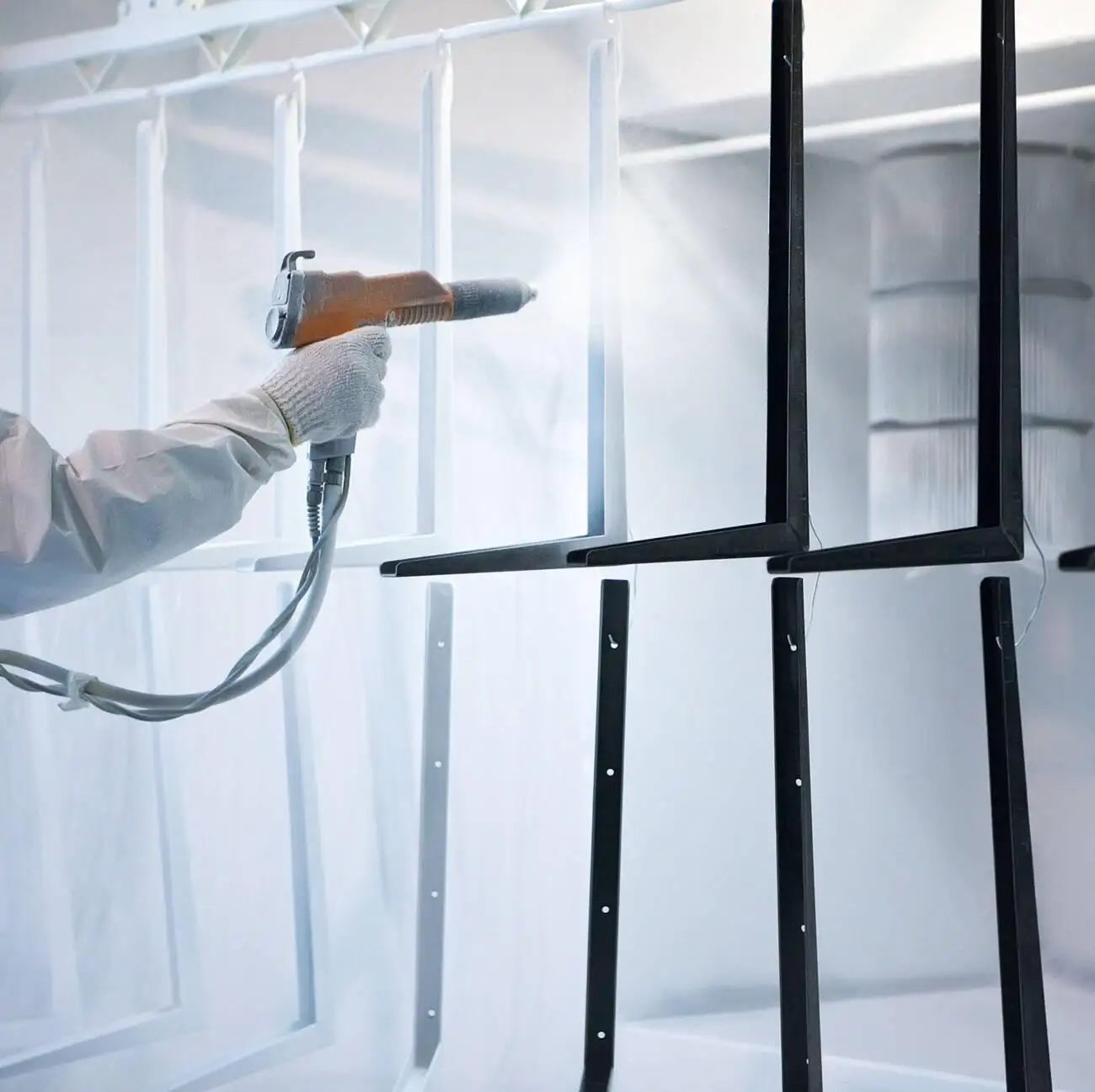
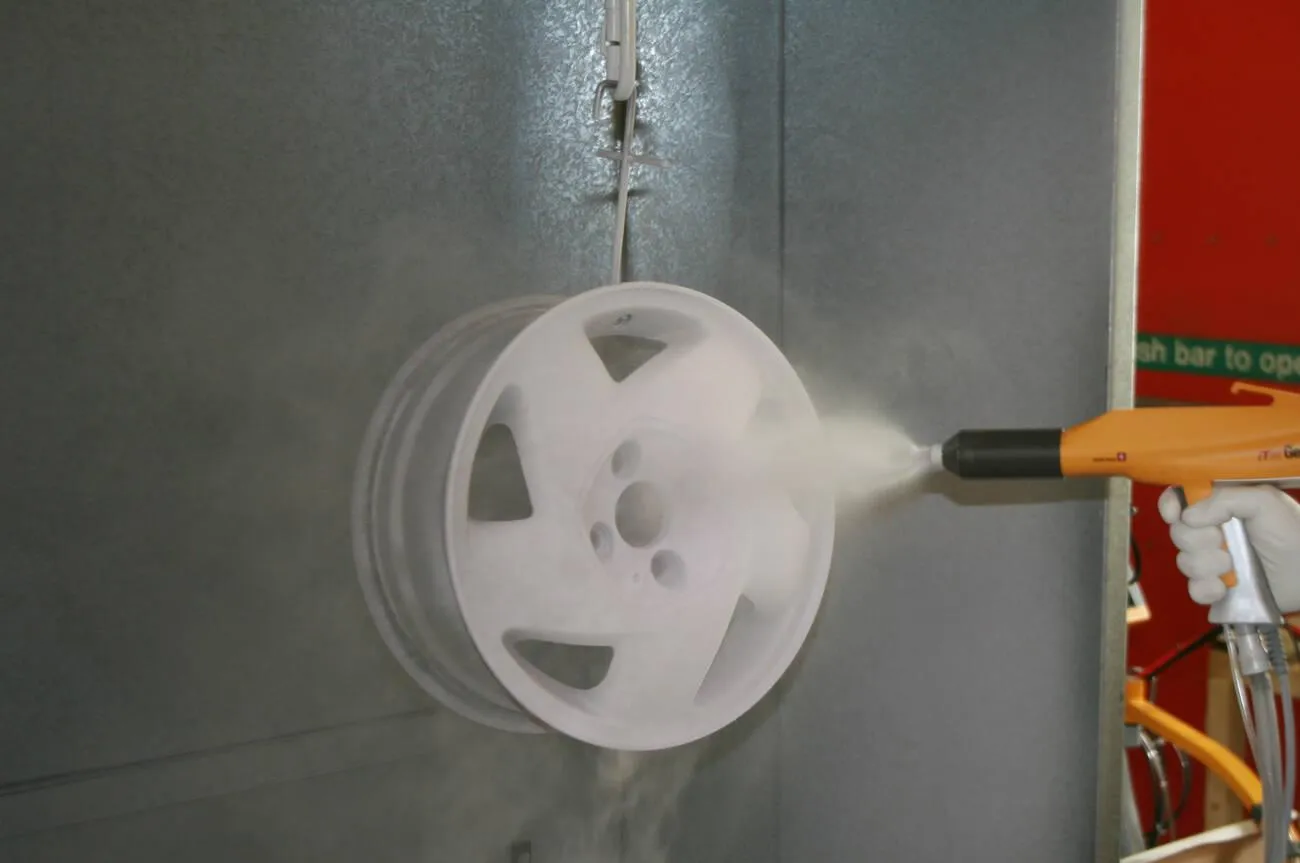
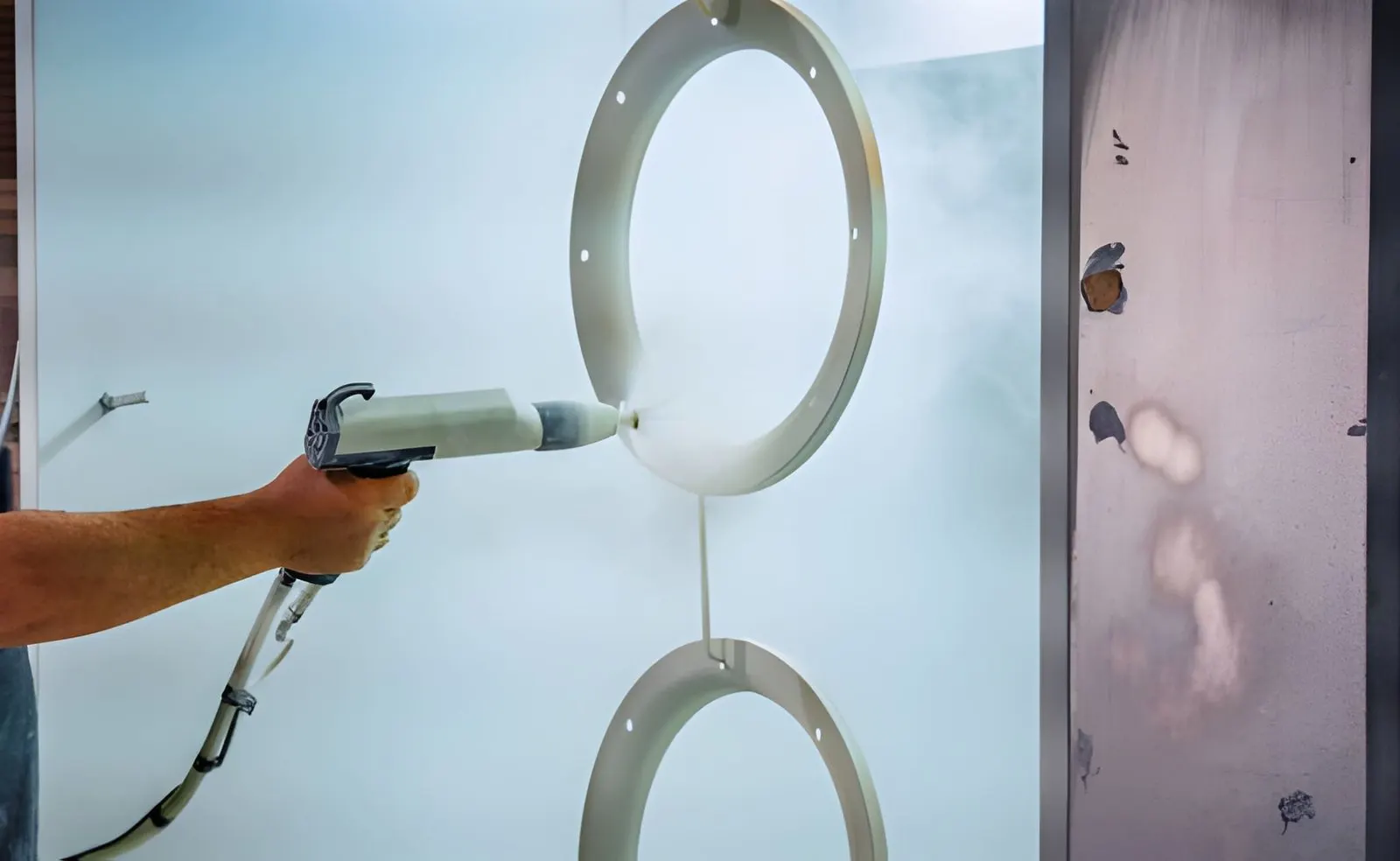
The published method: powder is charged and sprayed at an earthed part, so the powder is attracted to the surface and wraps around it. It suits assemblies, frames and parts of almost any size, which is why it is the route most work takes.
Best for: frames, enclosures, brackets, batches of parts on a jig
Not for: a recess the gun cannot see into - electrostatic attraction reduces as the recess gets deeper.
Fluidized bed
Our published description also covers a fluidized bed process, where a pre-heated part is dipped into aerated powder and then cured. Because the film builds from the heat of the part, it is a route that suits parts where a heavy, even film matters more than a thin one.
Best for: pre-heated parts, wire goods, parts needing a heavy even film
Not for: parts that cannot take the pre-heat, or a part where the thinner end of the range has to be held.

Gloss versus semi-gloss
The published colours are black and white, and each is available at 20% or 90% gloss. That choice is not only cosmetic: a semi-gloss surface hides surface waviness better than a high gloss one, which matters on a large flat panel.
Best for: large flat faces (semi-gloss), visible hardware (gloss)
Not for: a colour outside black and white - those are the two published colours for this process.
Tell us the part and what the surface has to survive, and we will confirm the route, the colour and the gloss level.
Get a quotePick or avoid
When powder coating is the right call - and when it is not
Pick powder coating when
- The surface has to survive weather, UV and handling and a durable film is the point.
- A thick, coloured finish is wanted rather than a metal appearance.
- The part is steel, stainless steel or aluminium - the three published materials.
- The part can take the cure temperature and can be masked where it matters.
- The faces that must stay bare can be identified in advance, because the film does not come off afterwards by accident.
Avoid powder coating when
- A tolerance has no room for 60 to 100 um - a plated or a conversion layer is thinner. See electroplating or chromate.
- You want a metal or anodized look rather than a painted one. See anodizing.
- The colour has to be outside black and white - those are the published colours for this process.
- The part has deep recesses that must be coated on the inside, or is a faraday-cage shape.
- The part cannot tolerate the cure - heat-treated, soldered or temperature-sensitive assemblies.
Not sure whether the part needs a powder film, a wet paint or a plated layer? Send the drawing and say what the surface has to survive.
Get a quoteDesign constraints
What decides whether the coated part comes back usable
Four variables: the film thickness against your tolerance, the masking list, the cure cycle, and how the powder reaches the surface.
Film thickness versus tolerance
The published film is 60 to 100 um per coated face. On a press fit or a thread that is the whole tolerance - decide which features are exempt before the parts are made.
The masking list
Masking is the main quality variable in coating. Threads, fits, sealing faces, earth points and any face that must stay conductive all have to be listed. Unmasked means coated, and there is no easy way back.
Cure temperature
The film has to be cured in an oven, so the part has to tolerate that step. Springs, thin sections, soldered assemblies, heat-treated parts and temperature-sensitive inserts are the usual problems - declare them at quoting.
Reachability inside a part
Electrostatic attraction falls off inside a recess. A deep bore or a blind pocket coats unevenly, and a partly coated bore is worse than an uncoated one for a precision fit.
Surface under the film
The film is thick enough to soften a fine texture but not to hide a step, a weld spatter or a deep scratch. Machining and welding quality still show through a cured film.
Colour and gloss as a process marker
Black or white at 20% or 90% gloss are the published options. On a shop floor the finish is also how a coated part is recognised during inspection - say which one the batch is.
Drawing notes
What to write on the drawing so the film lands where you meant
The masking list and the tolerance allowance are the two lines that decide whether the part assembles after coating.
1. POWDER COAT THE FOLLOWING SURFACES: ____________________________________________ (SEE VIEW A)2. COLOUR: BLACK / WHITE (DELETE ONE) GLOSS LEVEL: 20% / 90% (DELETE ONE) FILM THICKNESS: ______ um (PUBLISHED RANGE 60 TO 100 um)3. MASK THE FOLLOWING BEFORE COATING: - ALL TAPPED HOLES AND THREADS - PRESS FITS AND BEARING SEATS - GASKET FACES AND O-RING GROOVES - EARTH POINTS AND BONDING FACES - ____________ (ANY FACE THAT MUST STAY BARE)4. DIMENSIONS ON COATED SURFACES ARE BEFORE COATING / AFTER COATING (DELETE ONE)5. DO NOT SUBJECT TO TEMPERATURES ABOVE ______ THE CURE IS PART OF THE PROCESS.6. INSPECT: FULL COVERAGE, NO BUBBLES, SAGS OR MISSED SPOTS, MASKED AREAS CLEAR OF FILM.
Examples only - replace every blank with your own requirement. The masking line matters most: unmasked threads and press fits come back oversize by the film thickness and no longer fit.
Which metals
What we coat - the published table, and the materials that are still being confirmed
Our table for this process lists three metals. Our published description names a wider scope that includes plastics and composites. Both are shown below, with the wider list marked as still being confirmed rather than presented as fact.
| Material | Powder coating | Notes | Use instead |
|---|---|---|---|
| Steel | Yes | In our published specification table for this process. | — |
| Stainless steel | Yes | In our published specification table. Stainless is normally left bare or passivated where corrosion is the only duty. | — |
| Aluminium | Yes | In our published specification table. Aluminium needs its own pre-treatment before coating. | — |
| Plastics and composites | To confirm | Named in the published description of the process but not in the specification table - being confirmed. | — |
| Parts with a tight tolerance | Choose thinner | A 60 to 100 um film is too thick for a fit that has no allowance in it. | Chromate |
| Parts needing a metal appearance | Different finish | Powder is a pigmented film, not a metal surface. | Anodizing |
Send the drawing with the material on it - if the film thickness is a problem for your tolerances, we will say so before you order.
Get a quoteApplications
Where a cured powder film is doing the work
The published industries for this process are automotive, architectural, appliances, furniture and general manufacturing. These are the three cases behind those words.
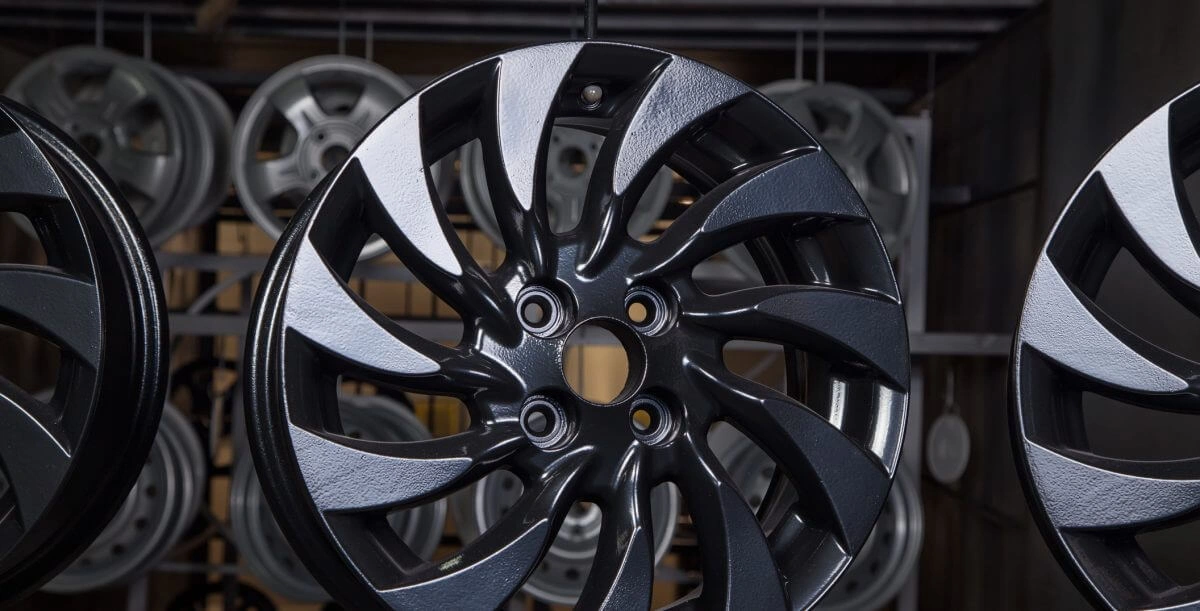
Automotive and transport
Wheels, frames and chassis parts are coated because the film survives stone chips, road salt and UV - and because it is a single cured layer rather than several paint coats.
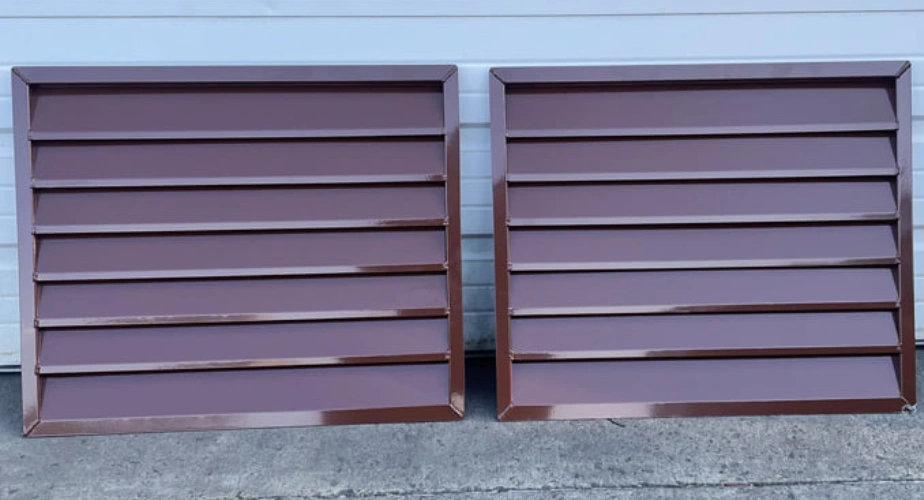
Architectural and construction
Louvres, cladding panels and balustrades are coated for exterior weathering. On a large flat panel a semi-gloss finish hides surface waviness that a high gloss would show.
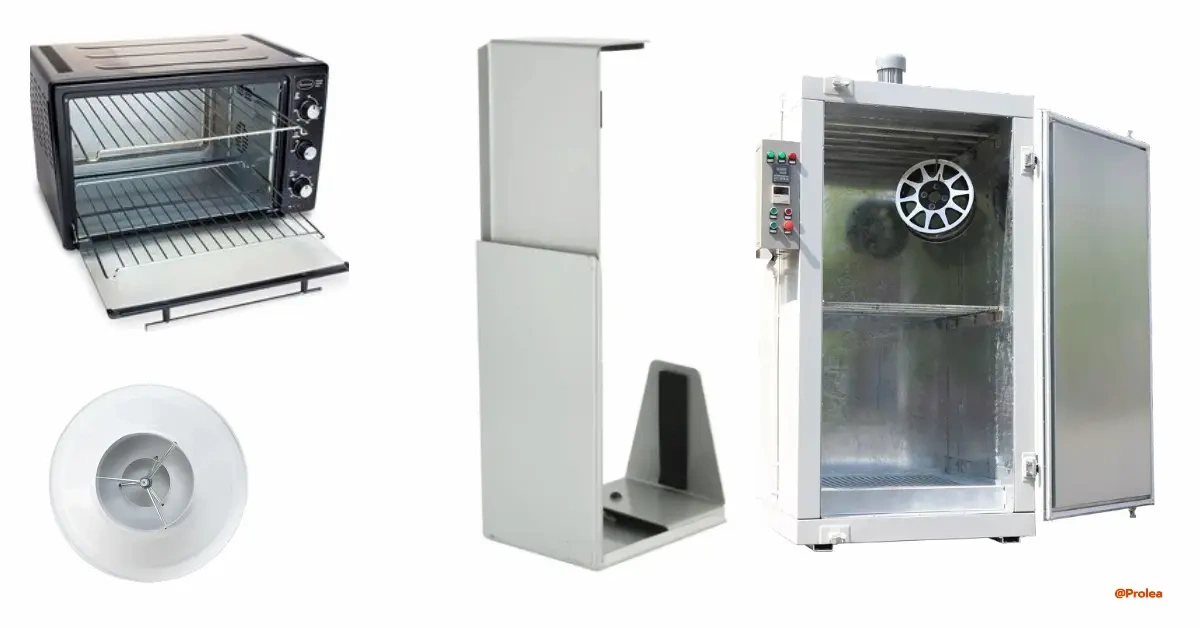
Appliances and general manufacturing
Appliance panels, furniture frames and general metalwork are the volume end of powder coating: durable colour over steel or aluminium, without a paint shop in the same building.
QA and documentation
What you get back with the parts
Purchasing usually needs paper as well as parts. Here is what we can state today and what is still being confirmed.
Visual inspection
The published inspection step checks for bubbles, sags and missed spots across the coated surface.
Dimension check
Coated parts are measured against the drawing where a tolerance was stated, because the film changes the size.
Film thickness record
A measured per-batch film thickness record against the published 60 to 100 um range is being confirmed.
Adhesion and durability testing
Adhesion (cross-hatch or equivalent) and outdoor durability testing are being confirmed against a named standard.
Further reading
Powder coating, paint and surface finish in detail
Longer answers on the questions this page only has room to state.
The background on the process, the powders and what makes the film cure rather than dry.
How the powder chemistries differ and which one suits which service condition.
The comparison to make before specifying either - coverage, durability and edge behaviour all differ.
Where the process is used in volume, with examples by industry.
Aluminium needs its own pre-treatment before coating - this covers what changes.
The two most-confused finishes for aluminium, compared on hardness, colour and thickness.
FAQ
Powder coating FAQ: the questions engineers ask us
What is powder coating?
How thick is the coating?
Will it fit my tolerance?
Which materials can be coated?
What colours are available?
Does powder coating protect against corrosion?
Can I paint over powder coating?
What happens to the faces I need bare?
How do I get a quote?
Get your powder coating quote
Upload a STEP, IGES or PDF drawing. Tell us the material, the colour and gloss level, and which features must keep their exact size - we will come back with the coating and the masking together.
What to send us
- Drawing - 2D and 3D files (STEP, IGES or PDF).
- Material - steel, stainless steel or aluminium.
- Colour and gloss - black or white, at 20% or 90% gloss.
- Masking list - threads, fits, sealing faces and earth points.
- Temperature limits - anything that cannot take the cure cycle.
- What happens next - assembly or storage, so the hand-over state fits.
All uploads are secure and confidential. Engineers review and reply with a quotation and lead time.