
? Where is your part right now?
SURFACE FINISHING
Metallic Coating Service
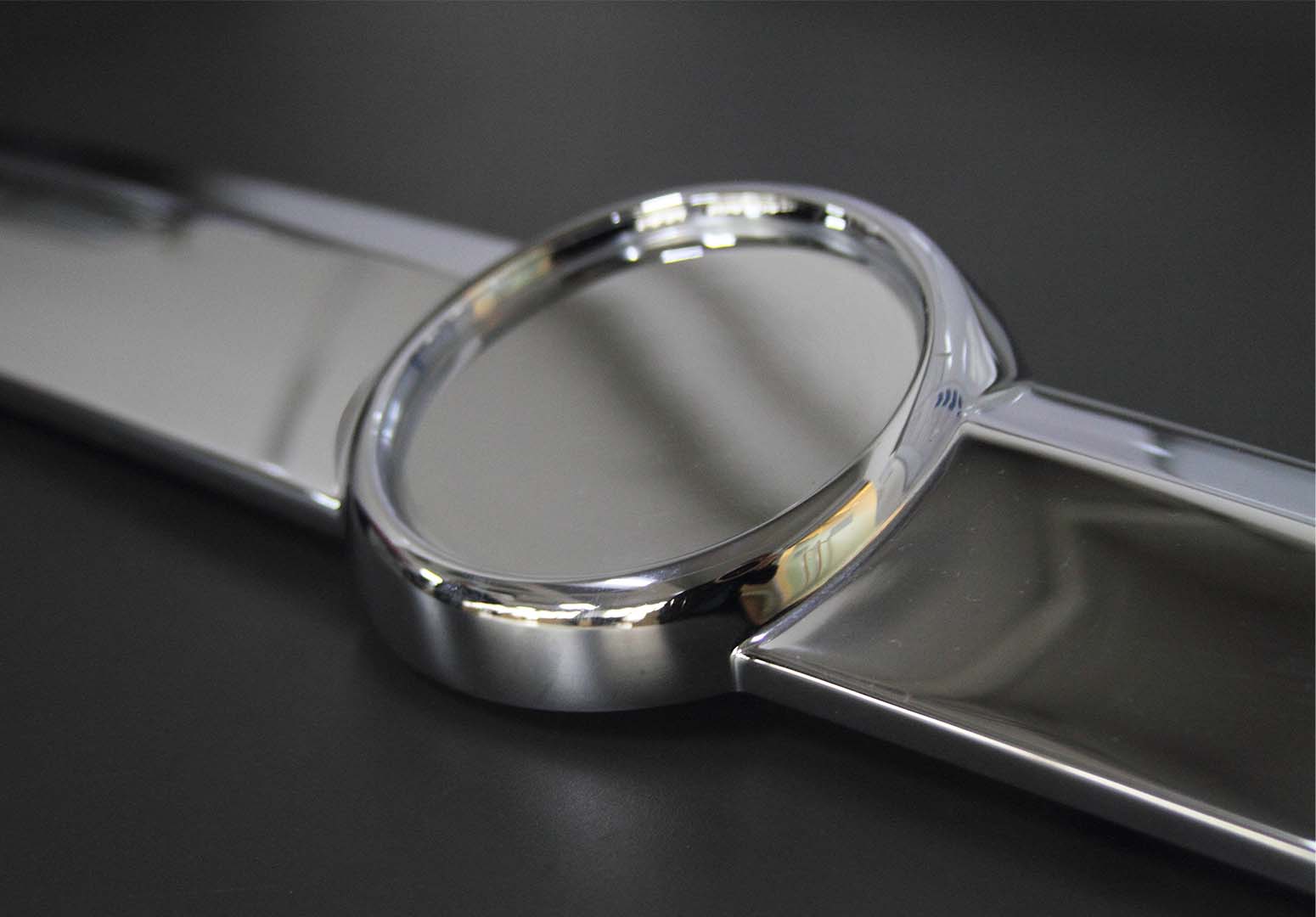
A metal or alloy layer deposited on a part to give it a metallic, glossy surface that resists corrosion, sunlight and oxidation. The layer is 100–200 µm, so it changes the dimensions of anything it touches — decide the masking before you send the drawing.
Sequence
Coating is the last step — the substrate decides whether it sticks
A metallic coating does not hide what is underneath it. Preparation is the variable that decides adhesion, appearance and how long the coating lasts.
The single biggest cause of a coating that peels or blotches is a substrate that was not prepared. If your part has been handled, oiled, or sat in a workshop for weeks, say so — see design constraints.
Fit check
Can we metallic-coat your part? Three things decide it
Substrate, size and geometry. Run through these three before you send a drawing.
Substrate
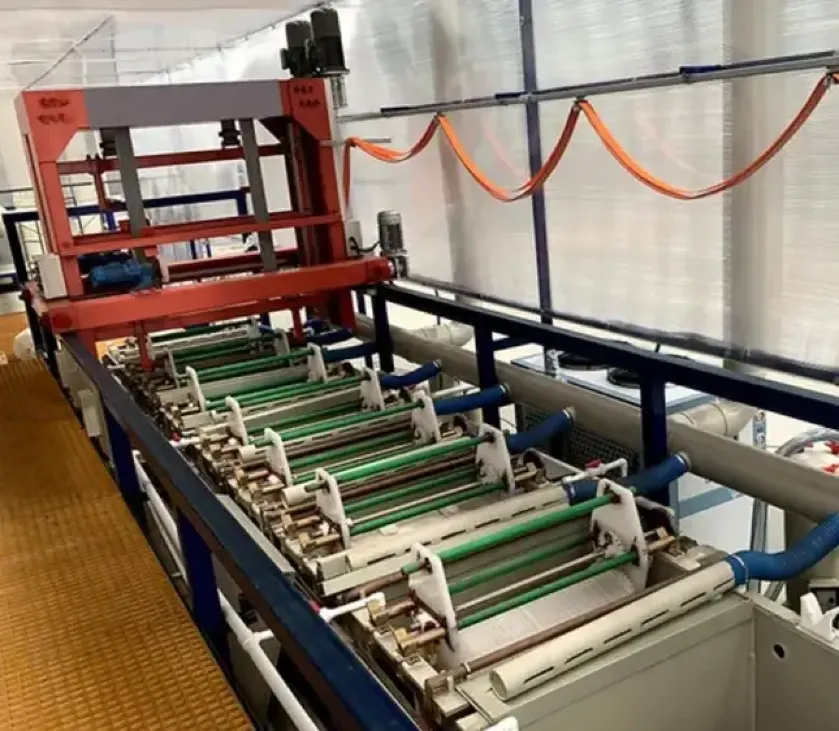
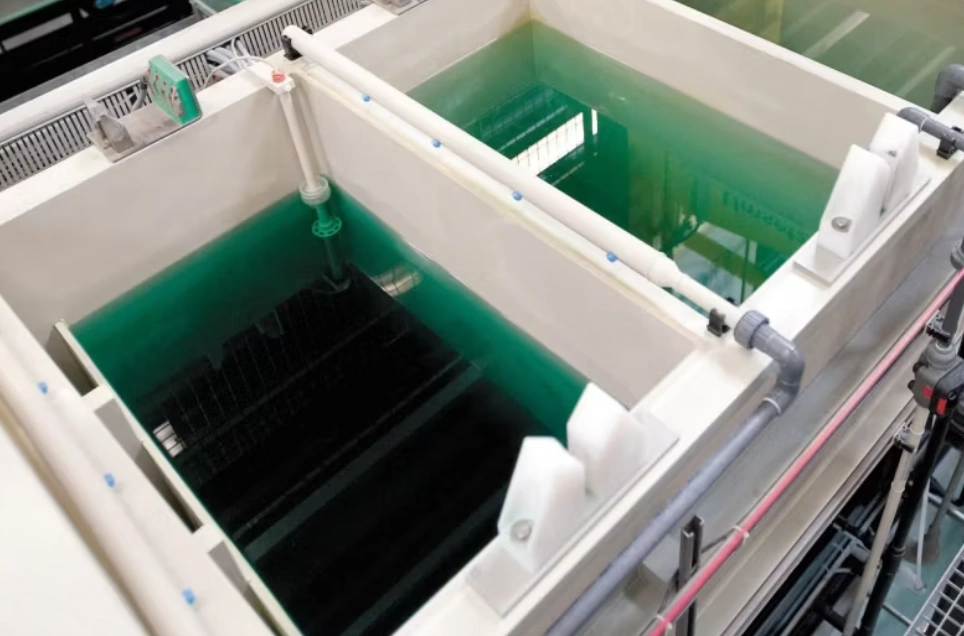
- Metals — need little preparation, since metals conduct
- Plastics — need the surface chemically prepared first
- Full list of what runs and what does not: see materials
Metal or plastic, the deciding factor is how the surface takes the coating — not the material name alone.
Size & coverage
- Recesses and blind holes are the hardest geometry to coat evenly
- Maximum part envelope and weight: To confirm
- Minimum order quantity: To confirm
Tell us the largest dimension, the weight and the tightest recess, and we will confirm coverage.
Geometry & appearance
- Sharp edges tend to build a thinner coating than flat faces
- Cosmetic finish is not available on this process — expect a functional finish
- Deep recesses and internal bores may not coat uniformly
Need a flawless decorative surface? See when to avoid this process.
Specifications
Metallic coating: 100 – 200 µm layer, RAL or Pantone colour matched
Every figure below is taken from our published specification for this process.
Dimensional change
What a 100 – 200 µm layer does to a 20 mm dimension
The coating is deposited on every unmasked surface, so a measured dimension grows by the layer thickness on each side.
| Where the coating goes | Layer | Effect on a measured dimension | What to do |
|---|---|---|---|
| Outside diameter of a shaft | 100 – 200 µm per surface | A 20 mm shaft becomes 20.20 – 20.40 mm across. | Mask the bearing seat, or specify a finishing pass after coating. |
| Inside diameter of a bore | 100 – 200 µm per surface | A 20 mm bore closes to 19.60 – 19.80 mm. | Mask the bore if a shaft has to pass through it. |
| Threads | 100 – 200 µm per surface | Pitch diameter grows on both flanks — a standard nut will not start. | Mask tapped holes, or plan to re-tap after coating. |
| Flat mating faces | 100 – 200 µm per surface | A stack height grows by the coating on each face in the stack. | Mask faces that set a stack height or a seal. |
Layer thickness as published for this process. A dimension measured across the part grows by twice the figure; a dimension measured inside shrinks by twice the figure.
Tell us which surfaces must not grow and we will mask them before coating — masking is available on request, and has to be marked on the drawing.
Get a quoteCoating types
Which metallic coating fits your part
Metallic coating is a family. The coating you pick sets the hardness, the corrosion mechanism and whether the part can be a different colour.
Zinc plating
Zinc corrodes before the steel does, so it protects the base metal at a scratch or a cut edge. Common on fasteners and outdoor hardware.
Best for: corrosion protection on steel, lowest cost per part
Not for: parts needing high wear resistance or a decorative colour match.
Nickel plating
A hard, bright deposit that raises surface hardness and wear resistance — the usual choice where the part is handled or rubbed.
Best for: wear resistance, bright decorative appearance
Not for: parts needing sacrificial protection over a large damaged area.
Electroless nickel
Deposited without an electric current, so it coats recesses and complex geometry far more evenly than electroplating does.
Best for: complex geometry, blind holes, uniform thickness
Not for: the lowest-cost applications — it costs more than electroplating.
Electroplating
An electric current deposits the metal layer. The process covers a wide range of deposits and is the general-purpose route.
Best for: general-purpose coating, colour and finish variety
Not for: deep recesses — current density falls off inside cavities.
Not sure which deposit you need? Describe the environment — salt, wear, heat, or appearance — and we will propose the layer.
Get a quotePick or avoid
When metallic coating is the right call — and when it is not
Pick metallic coating when
- You want a metallic, glossy appearance on a metal or plastic part.
- The part needs corrosion, sunlight and oxidation resistance.
- A functional finish is enough — the surface does not have to be flawless.
- You can mask, or accept, a 100–200 µm growth on unmasked surfaces.
Avoid metallic coating when
- The surface has to be cosmetically perfect — cosmetic finish is not available on this process.
- You need a coloured organic layer with a specific RAL code — see painting.
- You need sacrificial protection on steel at a low cost per part — see galvanizing.
- Every unmasked bore, thread and mating face must stay at nominal size.
Cosmetic surface needed instead? Painting gives a satin or glossy colour finish and cosmetic finish is available on that process.
Get a quoteDesign constraints
What decides whether the coating sticks and looks even
Three variables: the substrate you send us, the masking you mark, and the geometry you design.
Substrate preparation
Metals take a coating with little preparation because they conduct. Plastics need the surface chemically prepared first. Machining marks, oxide and oil all read through the layer.
Masking
Masking is available as per requirement — but you have to indicate the masked areas in the design. Unmarked threads, bores and sealing faces will be coated.
Recesses and edges
Coating thickness varies with geometry: sharp edges build differently from flat faces, and deep recesses or blind holes may not coat evenly. Tell us about the tightest feature.
Appearance expectation
This process gives a functional metallic finish, not a cosmetic one. Slight colour and gloss variation between batches should be expected.
Colour specification
Natural metal colour, black, or any colour matched to a RAL code or Pantone number. Give us the code — do not describe the colour in words.
Substrate condition
A part that has been handled, oiled, or left in a workshop for weeks may need cleaning before it can be coated. Say so on the order and we will account for it.
Drawing notes
What to write on the drawing so the coating lands where you meant
Masking is only available if you indicate it. These are the lines that decide the result.
1. METALLIC COAT ALL SURFACES UNLESS MASKED. COATING THICKNESS 100-200 um.2. MASK THE FOLLOWING AREAS BEFORE COATING: - TAPPED HOLES AND THREADED FEATURES - BEARING SEATS AND PRESS FITS - SEALING FACES AND O-RING GROOVES (SEE VIEW A)3. COLOUR: RAL / PANTONE ____________. MATCH TO SUPPLIED SAMPLE IF PROVIDED.4. FUNCTIONAL FINISH - COSMETIC FINISH NOT REQUIRED. SLIGHT GLOSS AND COLOUR VARIATION ACCEPTABLE.5. DO NOT RE-MACHINE COATED SURFACES EXCEPT WHERE MASKED.
Examples only. The masking list matters more than the coating callout — anything you do not list will be coated, and the layer is 100-200 um per surface.
Materials
Which substrates we can coat — and what to use if yours is not one of them
Metallic coating runs on metals and on plastics. What changes between them is the preparation, not the principle.
| Substrate | Metallic coating | Notes | Use instead |
|---|---|---|---|
| Metals | Yes | Little preparation needed — metals conduct, so the coating takes readily. | — |
| Plastics | Yes, with preparation | The surface has to be chemically prepared first, because plastics do not conduct. | — |
| Need a specific colour instead | Use painting | Painting gives a satin or glossy colour finish with RAL or Pantone matching, and cosmetic finish is available. | Painting |
| Need sacrificial protection on steel | Use galvanizing | Zinc corrodes before the steel does, so it protects at a scratch or cut edge. | Galvanizing |
| Need a mirror or satin polish | Use polishing | A mechanical finish rather than a deposited layer. | Polishing |
Part in more than one material? Send the assembly and we will route each component to the process that fits it.
Get a quoteApplications
Where metallic-coated parts end up
The common thread is a part that has to look metallic and survive its environment — with outdoors, wear and chemicals as the usual failure modes.
Complex geometry
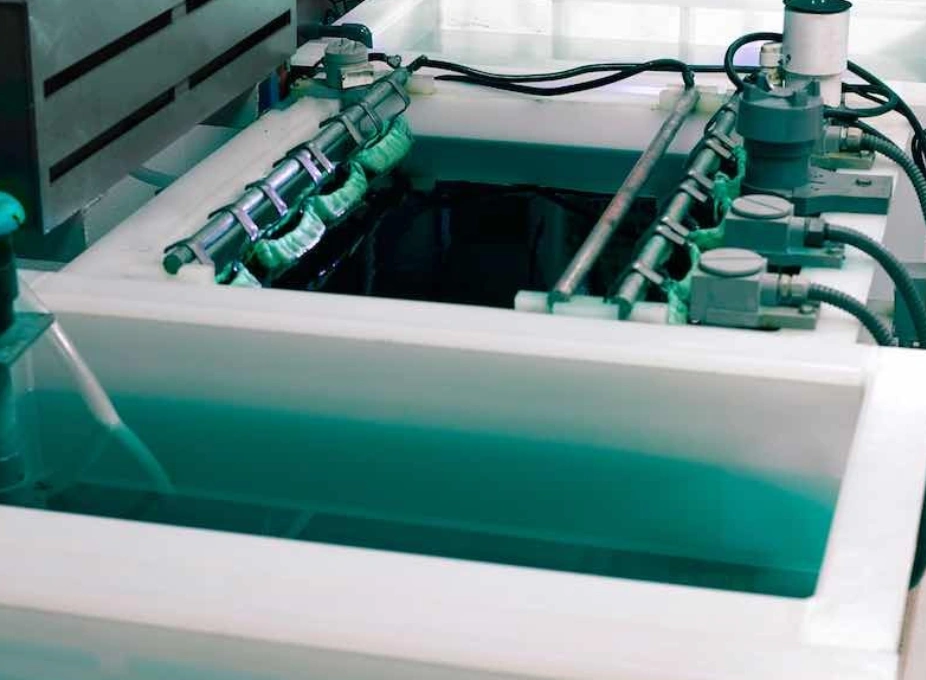
Electroless nickel deposits without a current, so recesses and blind holes coat as evenly as flat faces.
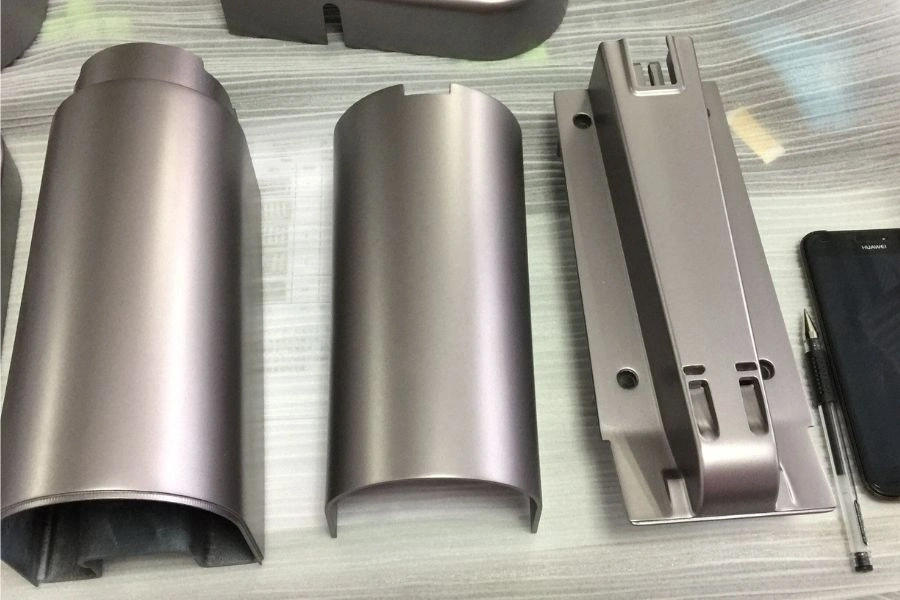
Metal-look appearance
Parts where the metallic appearance is the specification, not just a side effect of the protection.
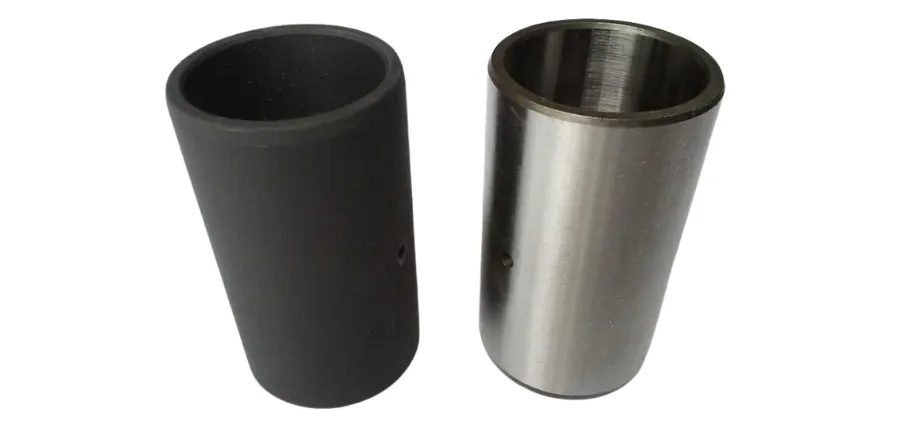
Corrosion and wear
A plated layer resists oxidation, sunlight and abrasion — the reason it is specified on outdoor and handled parts.
QA and documentation
What you get back with the parts
Purchasing usually needs paper as well as parts. Here is what we can issue today and what is still being confirmed.
Coating thickness
Layer measured against the specified 100–200 µm range.
Material certificate
Mill certificate for the base material — subject to the material arriving with one.
Salt-spray report
Hours to first red rust. Being confirmed with the shop.
RoHS / REACH
Compliance statement for the coating chemistry.
Further reading
Metallic coating guides and comparisons
Longer answers on the questions this page only has room to state.
Why one needs a current and the other does not — and which covers a recess better.
The wider picture of what plating does to a part and where it is used.
How sacrificial protection works, and when it is the right mechanism.
The single most common metallic coating, in detail.
When a coloured organic layer is what you actually need.
Compare all 20 finishes by roughness, thickness, corrosion and cost.
FAQ
Metallic coating FAQ: the questions engineers ask us
Does metallic coating work on plastic?
Is there a cosmetic finish option?
How thick is the coating?
Will the coating change my part dimensions?
Can you match a specific colour?
How do I tell you which areas to mask?
Which metallic coating should I choose?
Do you coat customer-supplied parts?
Get your metallic coating quote
Upload a STEP, IGES or PDF drawing. Tell us the substrate, the quantity, the colour code if you have one, and which surfaces must stay uncoated.
What to send us
- Drawing — 2D and 3D files (STEP, IGES or PDF).
- Quantity — number of units, including any spares.
- Substrate — the metal or plastic, so we know how much preparation is needed.
- Masking — which surfaces must stay uncoated: threads, bores, sealing faces, press fits.
- Colour — the RAL code or Pantone number, if the appearance matters.
- Appearance expectation — confirm you accept a functional, non-cosmetic finish.
All uploads are secure and confidential. Engineers review and reply with a quotation and lead time.