
SURFACE FINISHING / CUSTOM MANUFACTURED PARTS
The right finish.
For the way your
part works.
Protect a surface. Refine its appearance. Preserve the fit. Explore finishing options for your material, then define the requirements that matter on your drawing.
Drawing-led review · Confidential files · Optional NDA
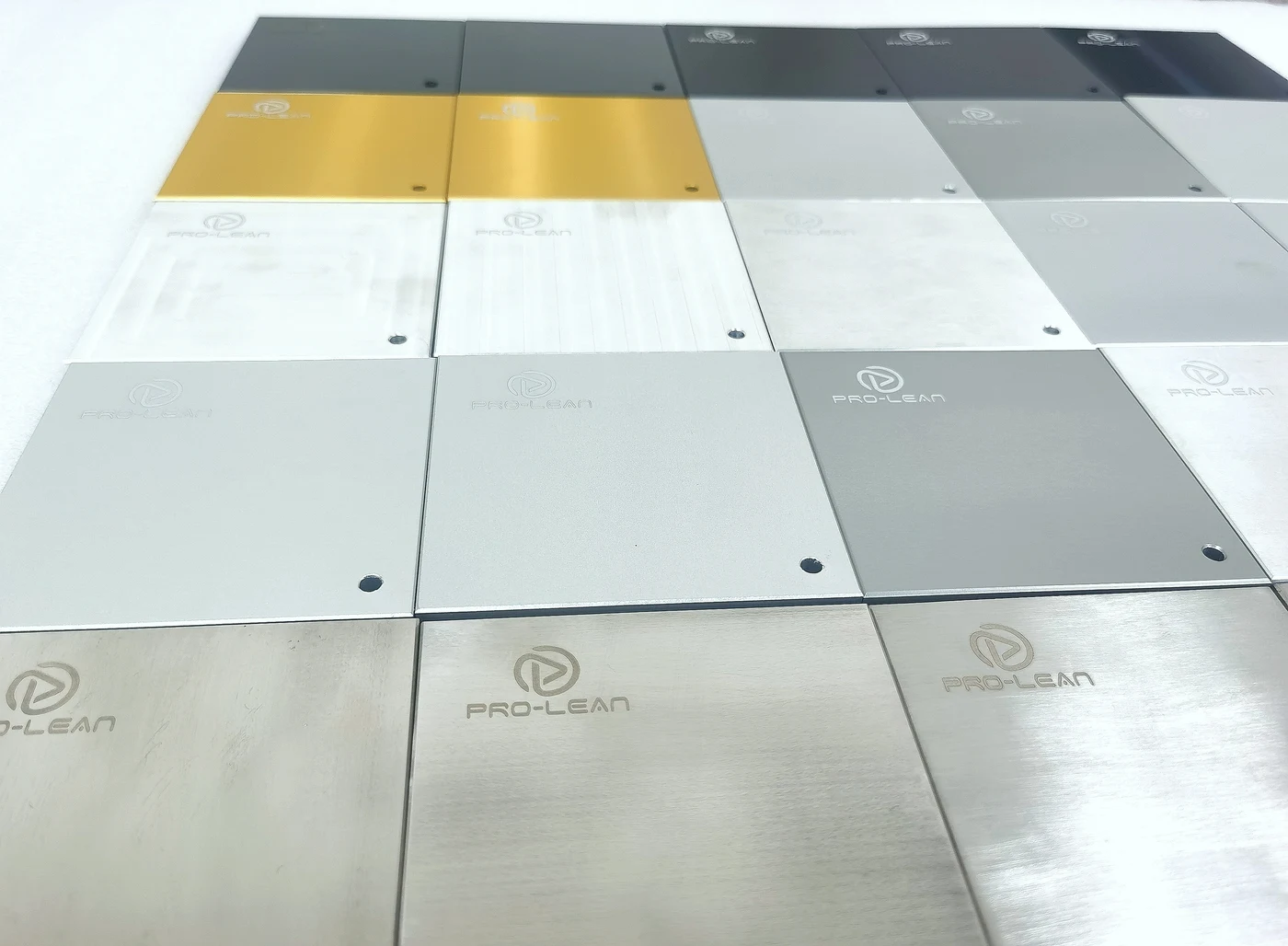
Compare colour, texture and appearance.
Sample reference only. Final finish acceptance follows the agreed specification.
Material firstAlloy and condition guide the process.
Function before finishCorrosion, wear, contact or appearance.
Dimensions after finishingDefine fits, masking and acceptance.
01 / START WITH THE JOB
What does your surface need to do?
Start with the requirement. Use the options below to narrow the process library; substrate, geometry and acceptance criteria still need review.
02 / PROCESS LIBRARY
Find a starting point for your part.
Browse mechanical finishing, conversion treatments, coatings and specialty processes. Material matches are preliminary selection guidance, not approval for every alloy or application.
As machined / deburring ↗
Visible tool marks; deburr requirements belong on the drawing.
- Starting substrates
- Aluminum, Steel, Stainless steel, Brass, Plastics
- Surface / dimensional effect
- Material removal
Bead blasting ↗
A uniform matte texture; protect precision and sealing surfaces.
- Starting substrates
- Aluminum, Steel, Stainless steel, Brass, Plastics
- Surface / dimensional effect
- Surface texture
Brushing ↗
Directional satin texture. Define the brushing direction.
- Starting substrates
- Aluminum, Steel, Stainless steel, Brass
- Surface / dimensional effect
- Material removal
Polishing ↗
Reduced visible machining marks, from gloss to a specified polish.
- Starting substrates
- Aluminum, Steel, Stainless steel, Brass
- Surface / dimensional effect
- Material removal
Sanding ↗
Abrasive preparation or cosmetic refinement before another finish.
- Starting substrates
- Aluminum, Steel, Stainless steel, Brass, Plastics
- Surface / dimensional effect
- Material removal
Smooth machining ↗
A finer machined surface, specified on the relevant faces.
- Starting substrates
- Aluminum, Steel, Stainless steel, Brass, Plastics
- Surface / dimensional effect
- Material removal
Fine machining ↗
Drawing-defined surface texture for functional features.
- Starting substrates
- Aluminum, Steel, Stainless steel, Brass, Plastics
- Surface / dimensional effect
- Material removal
Anodizing ↗
An aluminum oxide layer for appearance and protection. Specify type and colour.
- Starting substrates
- Aluminum
- Surface / dimensional effect
- Oxide growth
Alodine / chemical film ↗
Conversion coating where corrosion protection and contact requirements must be balanced.
- Starting substrates
- Aluminum
- Surface / dimensional effect
- Conversion film
Passivation ↗
Free-iron removal for stainless steel; does not replace polishing.
- Starting substrates
- Stainless steel
- Surface / dimensional effect
- Surface chemistry
Yellow chromate ↗
Supplementary treatment associated with a specified plating system.
- Starting substrates
- Steel
- Surface / dimensional effect
- System dependent
Black oxide ↗
A black conversion finish; corrosion performance depends on the specified system and seal.
- Starting substrates
- Steel
- Surface / dimensional effect
- Conversion film
Electroless nickel ↗
Deposited nickel-phosphorus coating; specify thickness and any post-treatment.
- Starting substrates
- Aluminum, Steel, Stainless steel, Brass
- Surface / dimensional effect
- Added coating
Nickel plating ↗
Electrolytic nickel for a specified appearance or protective coating system.
- Starting substrates
- Steel, Brass
- Surface / dimensional effect
- Added coating
Zinc plating ↗
Sacrificial protection for steel, with the supplementary finish specified separately.
- Starting substrates
- Steel
- Surface / dimensional effect
- Added coating
Electroplating ↗
An electrodeposited metal layer selected for the substrate and end use.
- Starting substrates
- Aluminum, Steel, Brass
- Surface / dimensional effect
- Added coating
Powder coating ↗
Colour and texture options for metal parts; mask threads and mating faces.
- Starting substrates
- Aluminum, Steel, Stainless steel
- Surface / dimensional effect
- Added coating
PTFE coating ↗
A coating option for release or friction requirements, subject to application review.
- Starting substrates
- Aluminum, Steel, Stainless steel
- Surface / dimensional effect
- Added coating
Painting & coating ↗
Specify colour, gloss, preparation and acceptance requirements as a coating system.
- Starting substrates
- Aluminum, Steel, Stainless steel
- Surface / dimensional effect
- Added coating
Metallic coating ↗
Review the coating metal, deposition route and substrate together.
- Starting substrates
- Aluminum, Steel
- Surface / dimensional effect
- Added coating
Galvanizing ↗
A zinc protection route for steel; confirm method and dimensional suitability.
- Starting substrates
- Steel
- Surface / dimensional effect
- Added coating
Heat treatment ↗
Changes material properties; assess condition, distortion and process sequence.
- Starting substrates
- Steel, Aluminum
- Surface / dimensional effect
- Thermal process
Laser cladding ↗
A deposited overlay for selected wear or repair requirements.
- Starting substrates
- Steel
- Surface / dimensional effect
- Added overlay
Laser engraving ↗
Permanent part identification; define location, content and legibility.
- Starting substrates
- Aluminum, Steel, Stainless steel, Brass, Plastics
- Surface / dimensional effect
- Local marking
No matching process. Reset the filters or discuss your material and requirement with an engineer.
Surface roughness and coating thickness are separate requirements. Neither is a universal property of a finish name. Specify the required values and measurement locations; feasibility is confirmed with your quotation.
03 / MAKE THE TRADE-OFF VISIBLE
Compare the routes you are considering.
Choose up to three processes in the library. Compare their purpose and dimensional effect before opening the detailed process page.
Select up to three processes from the library to compare them here.
Preliminary guidance only. Final compatibility, thickness, appearance and inspection depend on your drawing and the agreed process specification.
04 / DEFINE THE ACCEPTANCE
A finish name is
not a complete
specification.
Give your engineer the information needed to protect function as well as appearance.
Send your drawing for review ↗
STEP / IGES + a dimensioned PDF drawing
Material & condition
Identify the alloy, temper or heat treatment condition. Include the intended environment and end use.
Process & coating requirements
Specify process type, standard and revision where applicable, thickness, colour and any post-treatment.
Critical features & masking
Mark threads, bearing seats, bores, sealing faces and conductive contact areas. State whether dimensions apply before or after finishing.
Appearance & inspection
Define cosmetic faces, texture direction, sample approval and the inspection or documentation required.
05 / FROM DRAWING TO FINISHED PART
Build the finishing plan into the part.
Review finishing alongside machining, rather than treating it as the final cosmetic step.
Send the part requirements
CAD, drawing, quantity, material and the finish you need,or the problem it must solve.
Confirm the process route
Resolve substrate compatibility, coating allowance, masking and acceptance before order confirmation.
Inspect to the agreed scope
Check the specified features and finish requirements against the approved manufacturing plan.
06 / PRACTICAL ANSWERS
Before you specify
the finish.
Questions that affect fit, appearance and process choice.
What is the difference between surface roughness and coating thickness?+
Roughness describes surface texture; thickness describes an added or grown layer. A coating does not automatically produce a particular Ra. Specify both independently when they matter.
Can finishing change the dimensions of my part?+
Yes. Mechanical processes can remove material; coatings add material and anodizing grows an oxide layer. Identify critical fits and agree how the final dimensions will be achieved.
Can one finish be used on every metal?+
No. Start with the exact substrate and condition. Aluminum anodizing and stainless steel passivation serve different substrates and mechanisms; other processes may require preparation or an intermediate layer.
How do I specify an exact colour or cosmetic result?+
Use a colour reference together with gloss, texture and cosmetic-face requirements. Agree a physical sample where appearance is critical; screens and photographs are not acceptance standards.
Does a finish make a part food-safe or medical-grade?+
A finish name alone does not establish compliance. Provide the application, contact conditions, applicable requirements and validation criteria for review.
What if I do not know which finish to choose?+
Share the material, operating environment, mating surfaces and appearance requirements. The quotation review can establish a suitable process route and any requirements that still need clarification.
LET’S FINISH THE SPECIFICATION
Have a part in mind?
Share your drawing and the surface requirements.
We’ll review the process with your material and geometry.