
? Where is your part right now?
SURFACE FINISHING
As Machined and Deburred
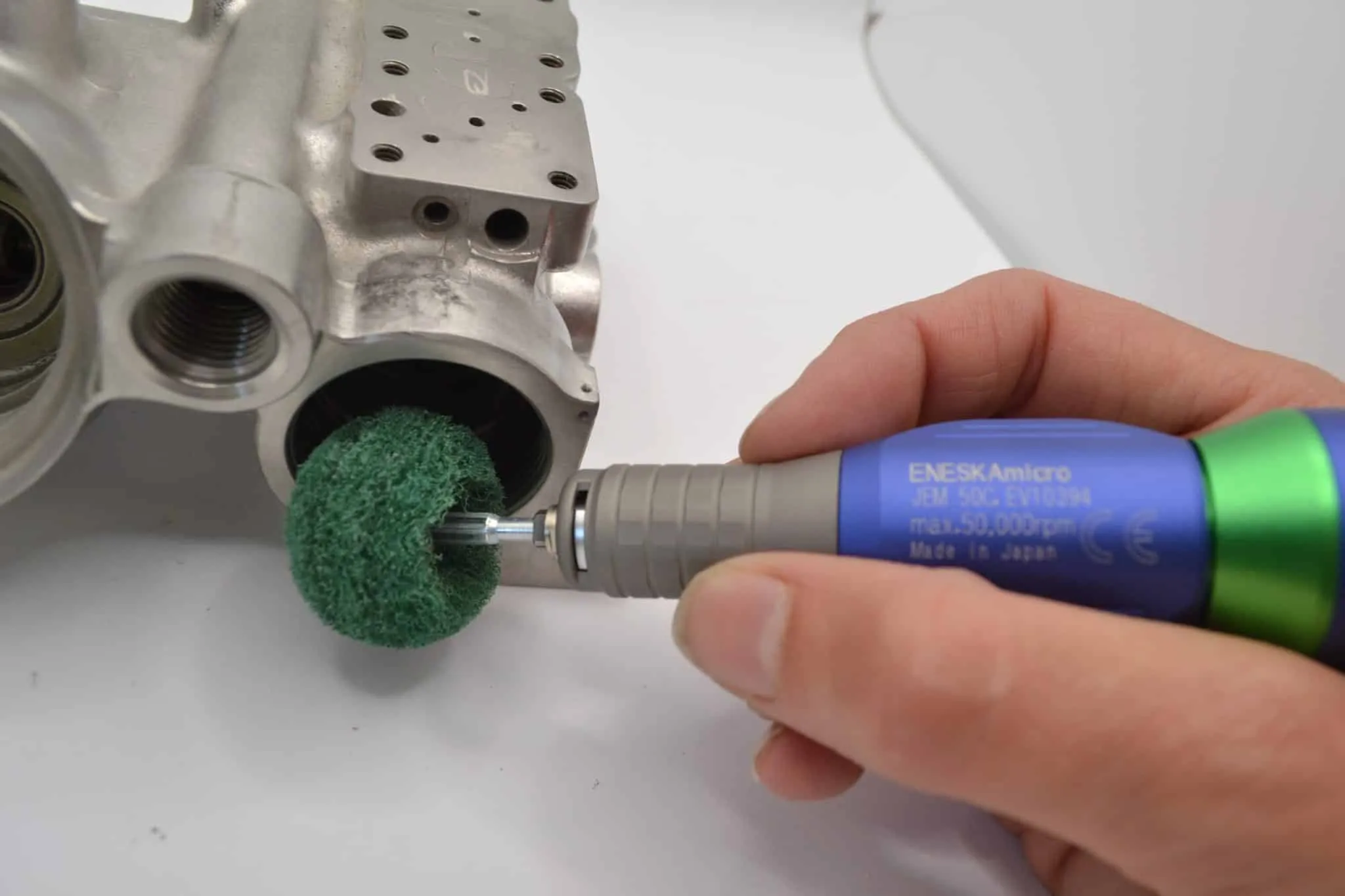
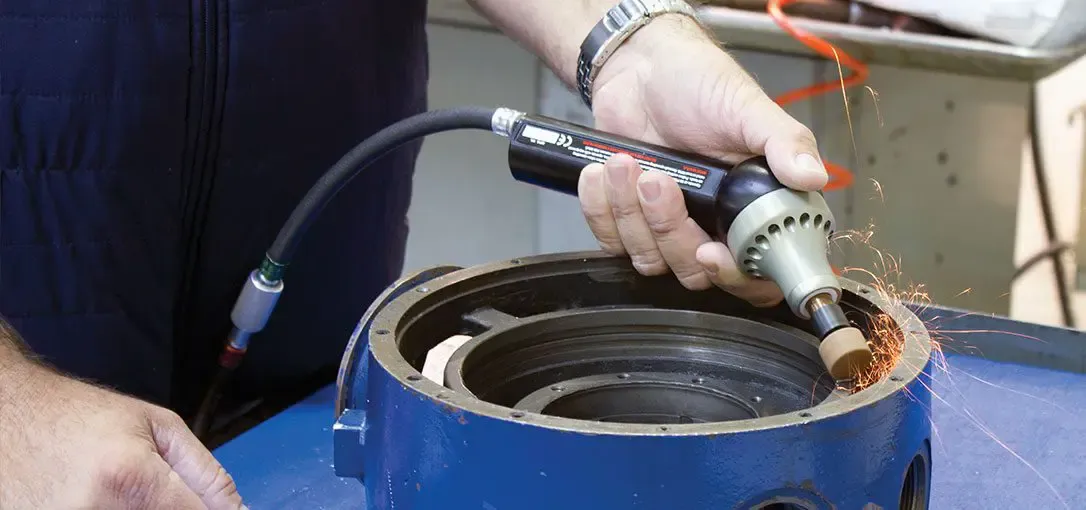
The surface a part has when the machining is finished and the burrs are gone. Burrs and chips are removed and sharp edges are chamfered, which leaves a smooth surface without compromising dimensional stability - and the published process holds a roughness of 3.2 um easily. It is the one option in this family that adds nothing and takes away nothing.
Where it fits
As machined and deburred is the baseline every other finish starts from
Machining leaves burrs on every cut edge and chips in the features. Deburring removes them. After that the part is finished - unless the drawing asks for something else on top of it.
Deburring is the one operation that can quietly damage a part: take too much off and the feature no longer meets its drawing. State which edges are functional and which are only there to be safe to handle - see drawing notes.
Fit check
Two things decide whether deburring is all your part needs
Whether the edges are functional, and whether the surface has to look like anything. If the answer to both is no, as machined is the cheapest correct answer.
Edges
- Burrs are removed and sharp edges are chamfered - that is what deburring does
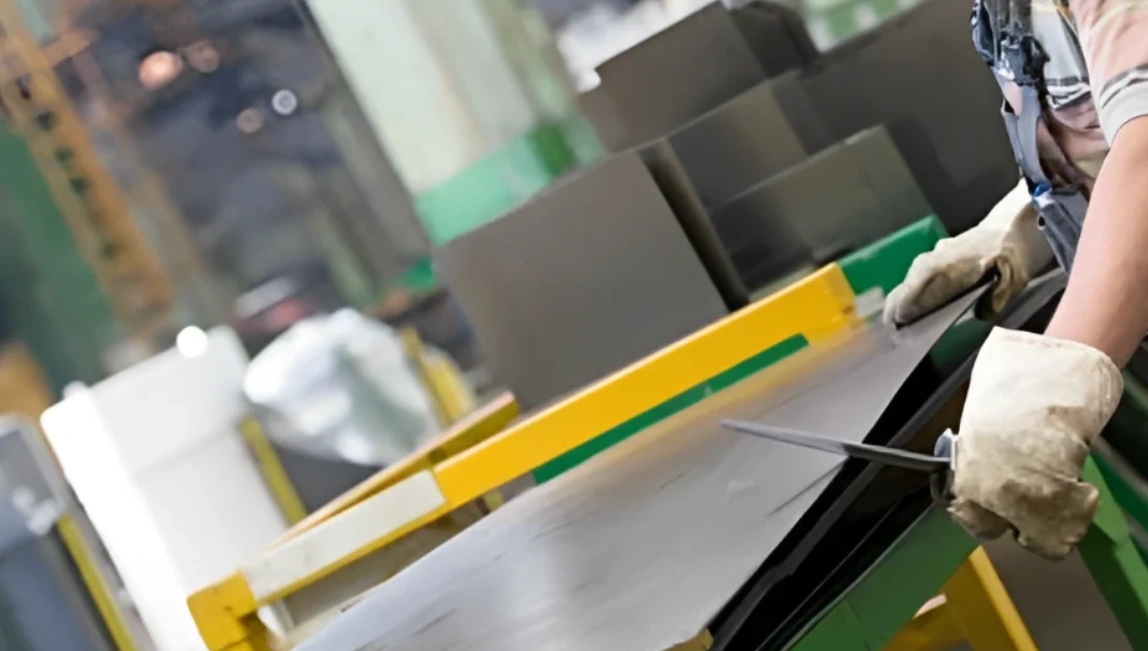
- Functional edges (sealing, mating, sheet metal hems) need to be identified first
- Edge break size is To confirm - tell us what it has to be
Say which edges are functional, otherwise they all get treated as handling edges.
Dimensions
- The published claim is that deburring holds dimensional stability
- Deburring removes material from edges only - it is not a sizing operation
- A part that is out of tolerance cannot be fixed by deburring
If a feature is critical, state its tolerance so the edge treatment respects it.
Surface appearance
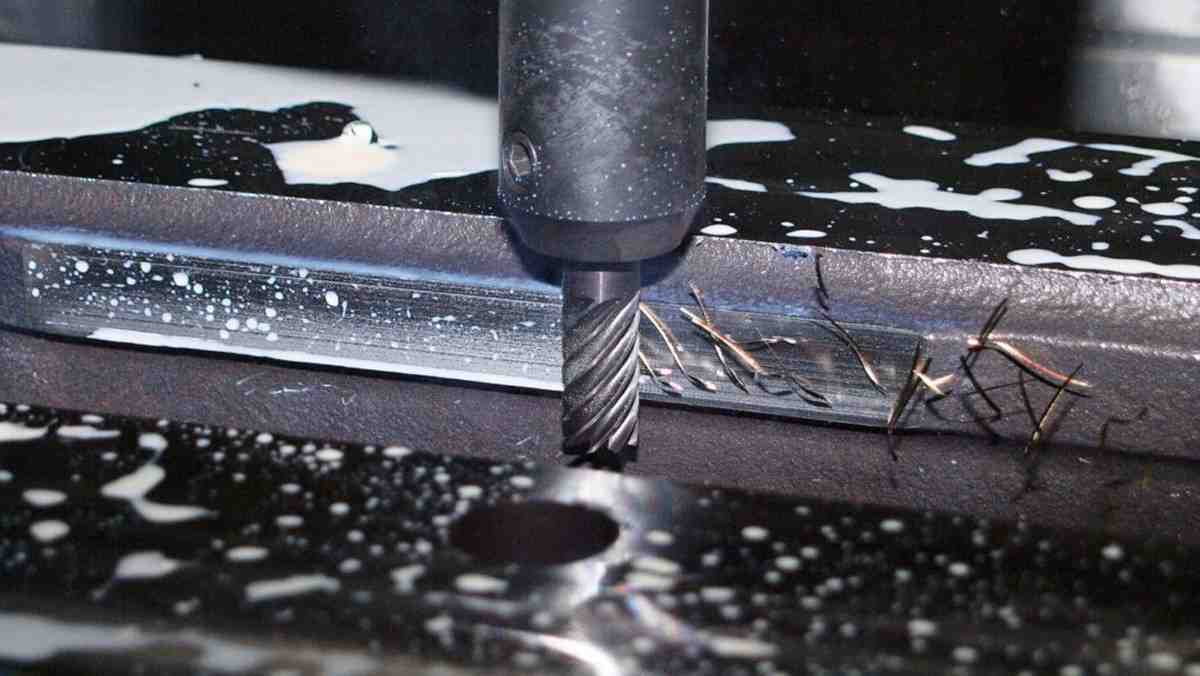
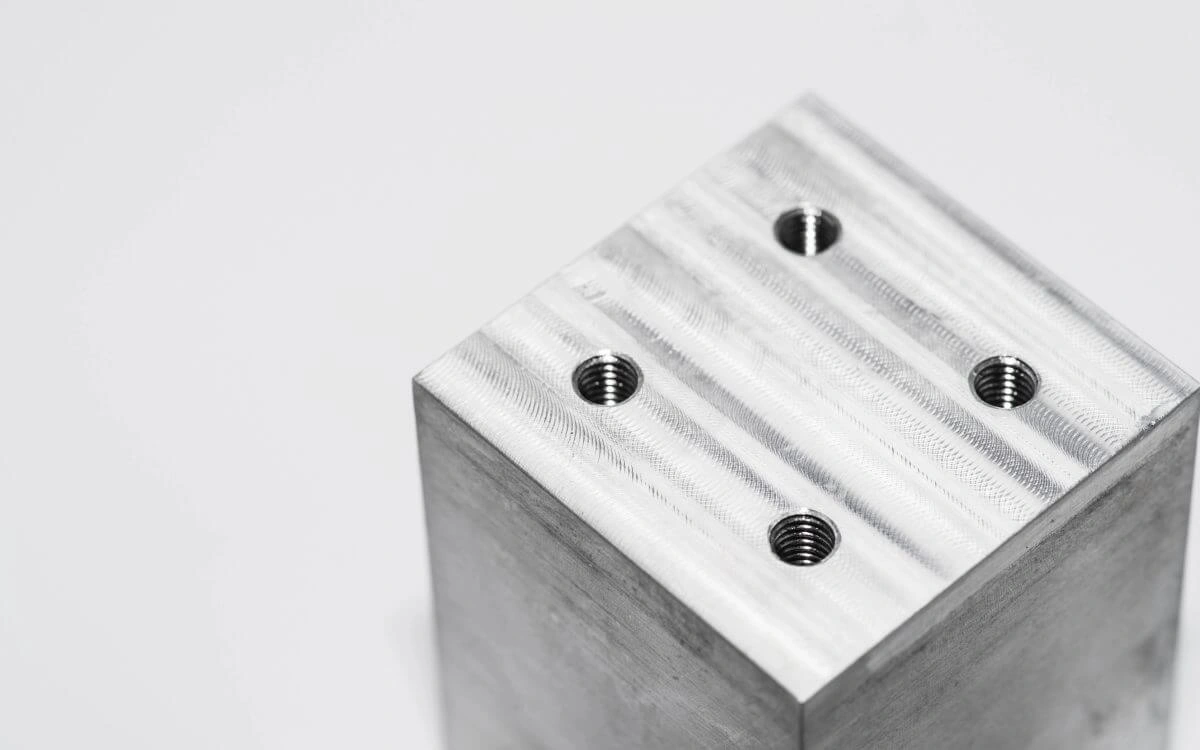
- As machined carries visible tool marks - that is normal and expected
- Deburred faces may still show lines left over from the deburring process
- If the face is cosmetic, a finish has to be specified
For a uniform look, see bead blasting or fine machining.
Specifications
As machined and deburred: Ra 3.2 um held, no layer, dimensions unchanged
Every value below is what we publish for this process. Where the shop has not confirmed a figure, the line says To confirm rather than a guess.
What changes
Nothing is added - the only change is at the edges
Every other process on this site either adds a layer or works the surface. As machined and deburred does neither: the dimensions you draw are the dimensions you get, and the only dimensional effect is the edge break.
| Where it acts | What changes | Why it matters | What to do |
|---|---|---|---|
| Cut edges | Burrs are removed, edges are chamfered | A burr is a sharp, weak edge that can injure the operator and break off in service. | State the edge break you need, or accept the standard chamfer. |
| Holes and slots | Burrs are cleared from the edges | A burr inside a hole stops a pin, a dowel or a fastener seating correctly. | Call out any hole that has to be burr-free for assembly. |
| Machined faces | Nothing - tool marks remain | Tool marks are the surface. Depth and direction come from the machining operation. | If the marks have to be finer, the machining pass has to change - see below. |
| Overall dimensions | Unchanged | This is the point: no layer is added, so no tolerance has to be reserved for a film. | No allowance needed on the drawing. |
| Colour and appearance | Unchanged | Bare metal looks like bare metal; there is no finish to fade, chip or peel. | If appearance matters, specify a finish - see the alternatives table. |
| Weakest link | Deburring can go too far | Removing more than the burr changes the edge geometry and can scrap the part. | Mark functional edges and state the maximum edge break allowed. |
The standard edge break and the typical roughness per machining operation are being confirmed with the shop. The rules above hold regardless of both figures.
Tell us which edges are functional and which are only handling edges, and we will deburr to that line.
Get a quoteEdges
As machined, deburred, or deburred to a stated edge break
The three states below are what a drawing can ask for. They differ only at the edges - which is exactly where a part is most likely to fail or injure someone.
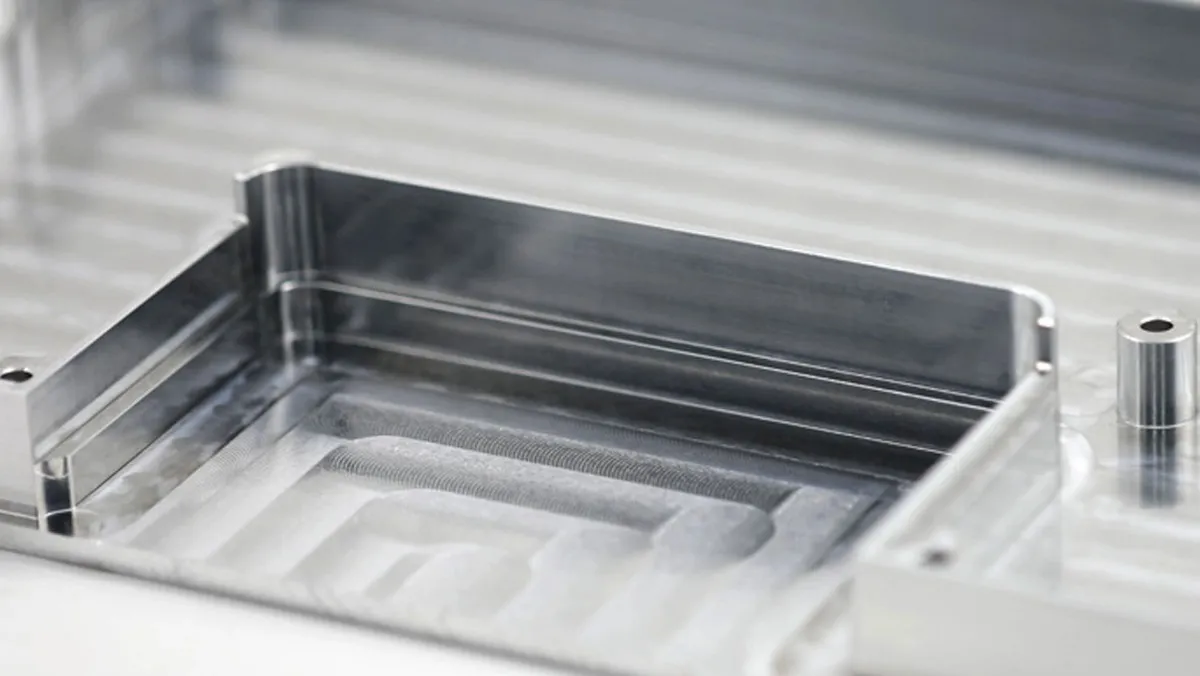
As machined
The part comes off the machine with the burr still on. Used only where the edges genuinely do not matter - usually internal parts that will never be handled.
Best for: parts that are never handled, never assembled against anything sharp
Not for: anything an operator touches or assembles - burrs are a safety and a fit problem.
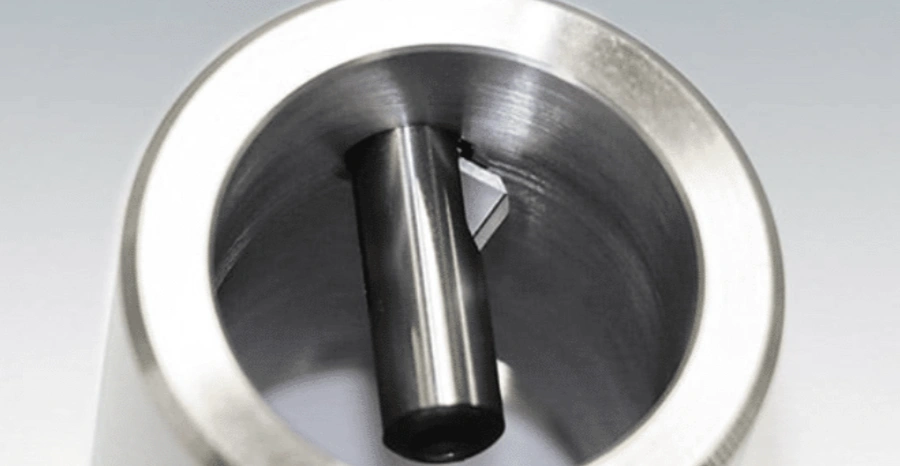
Deburred
Burrs and chips are removed and the sharp edges are chamfered - the standard state for machined parts and what this page is about. Dimensions are held; only the edges change.
Best for: the default state for machined parts, and the base for any finish applied afterwards
Not for: decorative faces - deburring does not improve how a face looks.
Deburred to a stated edge break
Where the edge geometry is functional - a sealing edge, a bearing lead-in, a hem - the drawing states the edge break and the part is deburred to it rather than to a shop standard.
Best for: sealing faces, bearing lead-ins, sheet metal hems, assembly-critical edges
Not for: drawings that do not state one - without a figure it falls back to the standard chamfer.
Tell us the edge break you need on the functional edges and we will deburr to it - or quote the machining pass that produces the texture you want.
Get a quotePick or avoid
When as machined and deburred is the right call - and when it is not
Pick as machined and deburred when
- Nothing about the surface has to change - the part only has to be safe and fit.
- Dimensions have to stay exactly as drawn, with no film to allow for.
- The part is internal, will be painted or assembled elsewhere, or is a prototype.
- Deburring is the only thing you need - the parts are already machined.
- Cost matters: this is the only option here that adds no process step.
Avoid as machined and deburred when
- The face has to look uniform or hide machining marks. See bead blasting.
- A directional grain is wanted. That is brushing.
- The part needs corrosion protection - nothing is added here, so nothing protects it. See passivation, anodizing or black oxide.
- A finer surface roughness is needed than the machining pass leaves. See fine machining.
- A part is already out of tolerance - deburring cannot bring it back.
Not sure whether the marks on your face are acceptable as machined? Send a sample and we will tell you what the operation actually leaves.
Get a quoteDesign constraints
What decides whether the deburred part comes back right
Two variables: which edges are functional, and whether the tool marks on the faces are acceptable. Everything else follows from those.
Which edges are functional
A sealing edge, a bearing lead-in and a hem all need a defined edge break. An outline edge usually only needs the burr off. List the functional ones or they get the standard treatment.
Field of the burr
Burrs do not only form on the outline. They form where the tool exits - inside holes, at the ends of slots, on the far side of a milled pocket. Call out the holes that have to be clean for assembly.
Tool marks as the finish
The as-machined face carries the marks of the machining operation: the stepover, the feed and the tool. If the marks are unacceptable, the fix is a different machining pass, not a finishing operation.
Roughness callouts
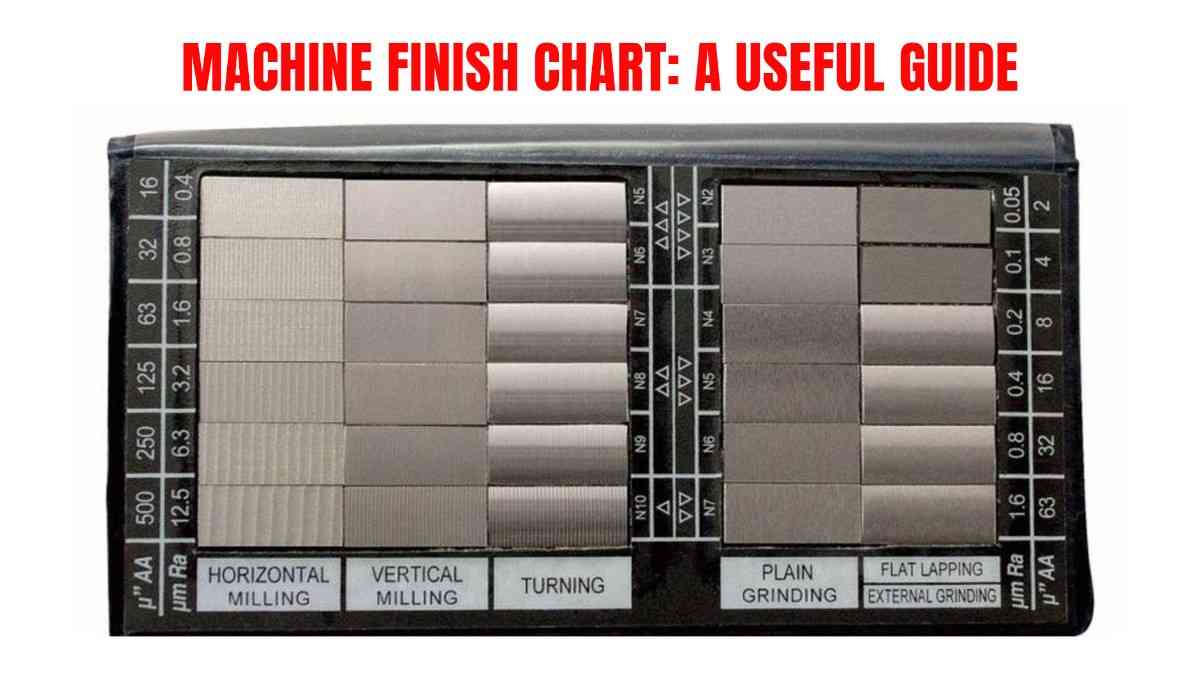
The published process holds Ra 3.2 um easily. A tighter callout has to be planned into the machining, and the achievable value per operation is being confirmed.
Sharp edge requirements
Sometimes an edge has to stay sharp - a cutting edge, a scraper, a specific functional corner. Say so, because deburring removes sharp edges by design.
Handling and surface protection
A bare machined surface marks and rusts differently from a coated one. Tell us if the parts will be stored before use, or if a protective finish goes on later.
Drawing notes
What to write on the drawing so the deburring respects your part
Two lines carry the whole requirement: which edges are functional, and what happens to the rest.
1. AS MACHINED AND DEBURRED. NO COATING. REMOVE ALL BURRS AND SHARP EDGES.2. FUNCTIONAL EDGES - HOLD EDGE BREAK TO: ______ mm MAX (LIST THE EDGES THE DRAWING CONTROLS)3. ALL OTHER EDGES: STANDARD CHAMFER, MAX ______ mm ______ (OR: BREAK EDGES 0.3 mm MAX)4. KEEP SHARP: __________________ (LIST ANY EDGE THAT MUST NOT BE CHAMFERED)5. BURR-FREE REQUIRED ON: __________________ (HOLES AND SLOTS THAT CARRY A PIN OR A SEAL)6. SURFACE ROUGHNESS: RA ______ MAX ON: __________________ (DEFAULT RA 3.2 um PER THIS PROCESS)
Examples only. The "keep sharp" line is the one that is missed most often - an unlisted edge gets chamfered, which is correct behaviour and the wrong result.
Metals and plastics
What we run as machined and deburred - metals and plastics, by family
The published scope for this process is metals and plastics. The families below are what we machine and hand over without a finish.
| Material family | As machined and deburred | Notes | Use instead |
|---|---|---|---|
| Aluminium and its alloys | Yes | Bare aluminium is soft and marks easily; if the surface matters, anodizing is the usual next step. | Anodizing |
| Steel and stainless steel | Yes | Bare steel needs protection against corrosion unless it is used in a controlled environment. | Passivation |
| Brass and copper alloys | Yes | Left bare, these tarnish over time - that may be exactly what the application wants. | Brushing |
| Engineering plastics | Yes | ABS, acetal, POM, PTFE and similar machine cleanly and are often used exactly as machined. | — |
| Anything needing corrosion protection | Add a finish | Nothing is added by this process, so nothing protects the surface. | All finishes |
| Anything needing a decorative surface | Add a finish | Tool marks remain visible - that is the nature of an as-machined face. | Bead blasting |
Send the drawing - if the surface it produces is not good enough for the application, we will say so before you order.
Get a quoteApplications
Where an as-machined and deburred part is the right part
Most machined parts in the world are handed over exactly like this. These are the three cases where it is not a compromise but the correct specification.
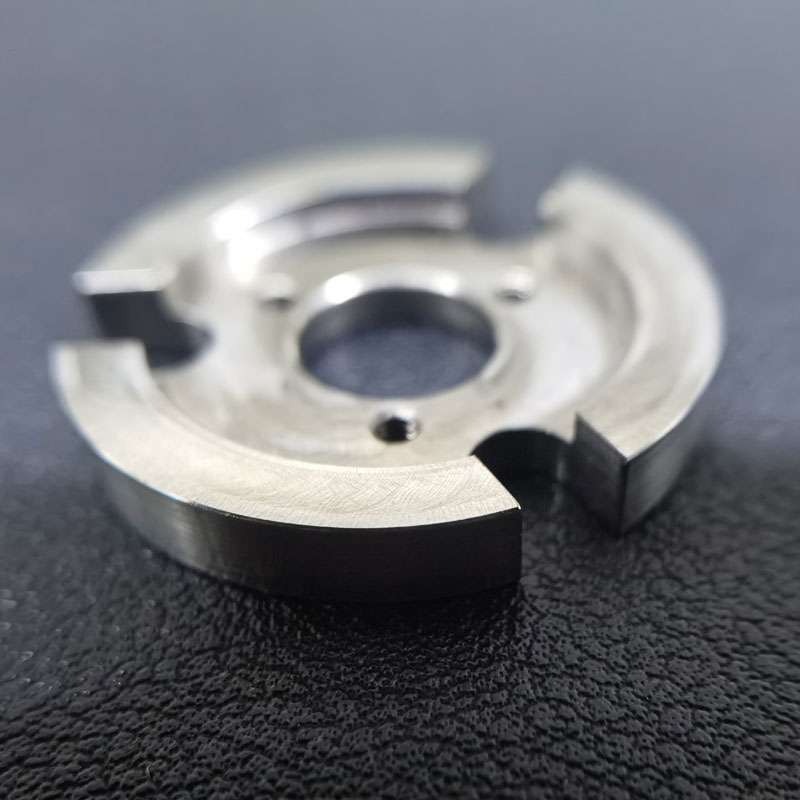
Brackets, housings and internal parts
Where the part is internal, load-bearing and never seen, the only requirement is that it fits and carries no burr. A finish would be cost with no benefit.
Parts that will be finished elsewhere
Plates and panels that go on to be painted, anodized or assembled by another supplier are usually ordered deburred only, so the finishing step is not paid for twice.
Repeat production runs
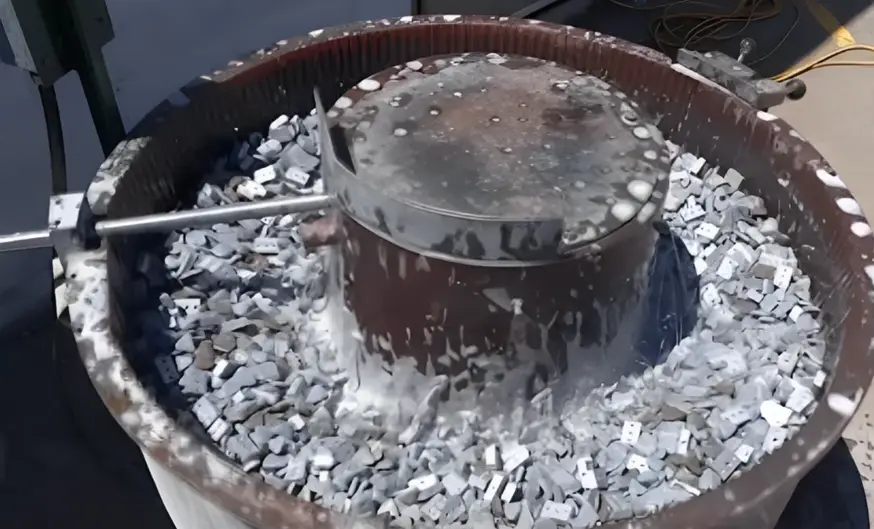
On volume work deburring is a machine operation rather than a bench one, which keeps the edge treatment consistent part to part.
QA and documentation
What you get back with the parts
Purchasing usually needs paper as well as parts. Here is what we can state today and what is still being confirmed.
Burr check
Edges and holes are inspected for remaining burrs before dispatch - including the far side of machined features.
Dimension check
Deburred parts are measured against the drawing, because deburring is where a dimension can be lost.
Edge break record
A measured edge break record per batch is being confirmed with the shop.
Roughness measurement
Measured Ra per machining operation, against the published Ra 3.2 um, is being confirmed.
Further reading
Deburring, burrs and surface roughness in detail
Longer answers on the questions this page only has room to state.
The methods, the tools and the machines - and where each one is the right choice.
How burrs form on different operations and what removing them involves.
The types and causes of burrs - useful when a burr keeps coming back on the same feature.
How Ra is measured and how to write a callout the shop can hold.
The measurement side in detail, for when a roughness callout is the requirement.
The same part with a finer machining pass, when the tool marks are the problem.
FAQ
As machined and deburred FAQ: the questions engineers ask us
What does "as machined" mean?
What roughness does deburring hold?
Does deburring change the dimensions?
Can you fix a part that is out of tolerance?
Will the surface show tool marks?
Which materials can be supplied as machined and deburred?
Does it protect the part against corrosion?
Should I specify an edge break?
How do I get a quote for deburring only?
Get your machining and deburring quote
Upload a STEP, IGES or PDF drawing. Tell us the material, the roughness you need and which edges are functional - we will come back with the machining and the deburring as one operation.
What to send us
- Drawing - 2D and 3D files (STEP, IGES or PDF).
- Material - any metal or engineering plastic we machine.
- Roughness - your Ra per face, against the published Ra 3.2 um.
- Functional edges - the edges the drawing controls, and the edge break.
- Edges to keep sharp - deburring removes sharp edges by design.
- What happens next - assembly, painting or storage, so the hand-over state fits.
All uploads are secure and confidential. Engineers review and reply with a quotation and lead time.