
? Where is your part right now?
SURFACE FINISHING
Painting Service
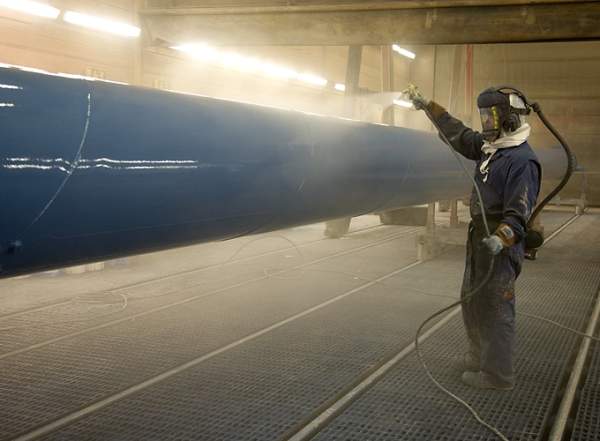
A painted layer that protects a part from corrosion and environmental forces, and gives it a colour you specify. Unlike most finishing processes, cosmetic finish is available here — the surface is meant to be looked at.
Sequence
Painting is the last step — preparation decides how it looks
Paint does not hide a bad substrate; it amplifies it. Grease, machining marks and sharp edges all show through the layer.
The specified preparation for this process is a standard surface finish, cleaned and degreased. If your part has been oiled, handled or has heavy machining marks, tell us — the appearance of the finished part depends on it. See design constraints.
Fit check
Can we paint your part? Three things decide it
Material, colour and masking. The third one is where most orders go wrong.
Material
- Metals — prepared to a standard surface finish, cleaned and degreased
- Plastics — also painted, with the same cleaning requirement
- Full list and alternatives: see materials
If the substrate is not one we paint, the materials table points you to the process that fits.
Colour & appearance
- Colour matched to a RAL code or Pantone number — bring the code, not a description
- Satin or glossy finish — say which
- Cosmetic finish is available on this process, unlike metallic coating
Send a physical sample or a RAL/Pantone reference if the match is critical.
Masking
- Masking is available as per requirement
- Indicate masked areas in the design — unmarked threads and bores get painted
- Layer thickness per coat: To confirm
Threads, bearing seats and electrical contact faces are the usual masking candidates. See drawing notes.
Specifications
Painting: colour matched to RAL or Pantone, satin or glossy finish
Every figure below is taken from our published specification for this process.
What changes
What a painted layer does to your dimensions and your masking
Paint adds material on every coated surface. The exact layer is not published yet, but the direction of the change is fixed — and masking is the tool that controls it.
| Where the paint goes | Layer | Effect | What to do |
|---|---|---|---|
| Exterior faces | To confirm | Every coated face grows outward by the layer thickness. | Nothing to do — unless it sets a stack height. |
| Bores and internal diameters | To confirm | A coated bore shrinks by the layer on each side. | Mask any bore a shaft or pin has to pass through. |
| Threads | To confirm | Painted threads will not accept a nut reliably. | Mask all tapped holes, or specify re-tapping after painting. |
| Sealing and mating faces | To confirm | A painted seal face will not seal to the designed preload. | Mask o-ring grooves, gasket faces and press fits. |
Layer figures for painting are being confirmed with the shop and will be published as numbers. The masking rules above hold whatever the layer turns out to be.
Tell us which surfaces must not be painted and we will mask them — masking is available on request, and has to be marked on the drawing.
Get a quotePaint or powder
Painting or powder coating — the decision before the colour
Both give a coloured protective layer. They differ in how the material is applied and cured, and that difference decides which one suits your part.
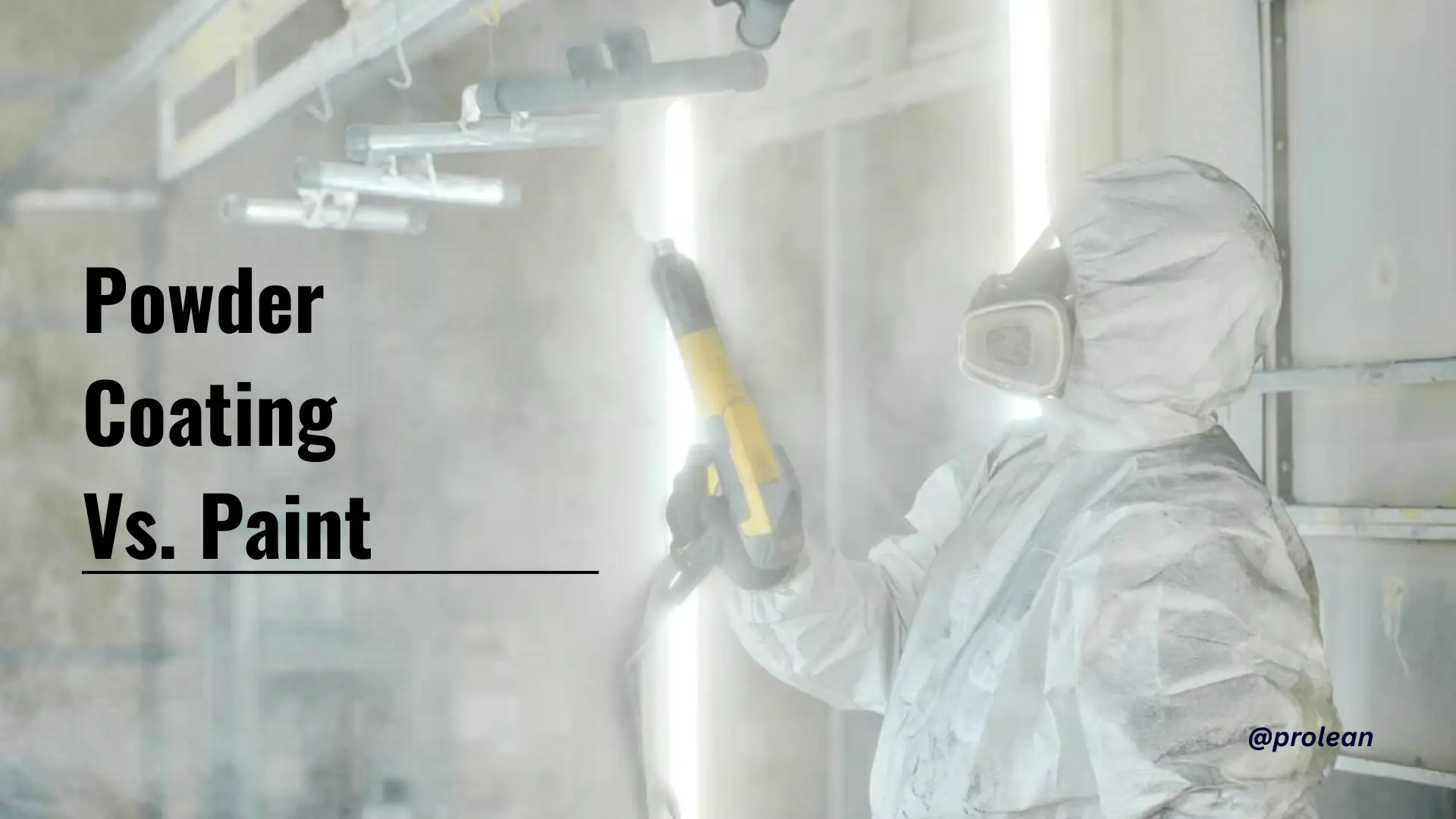
Painting (liquid coating)
Paint is applied as a liquid and carries the colour directly. A wide range of paints covers different environments and appearances, and cosmetic finish is available on this process.
Cosmetic finish available · RAL or Pantone colour matching
Not for: the hardest-wearing surfaces — a liquid layer is softer than a thermally cured powder layer.
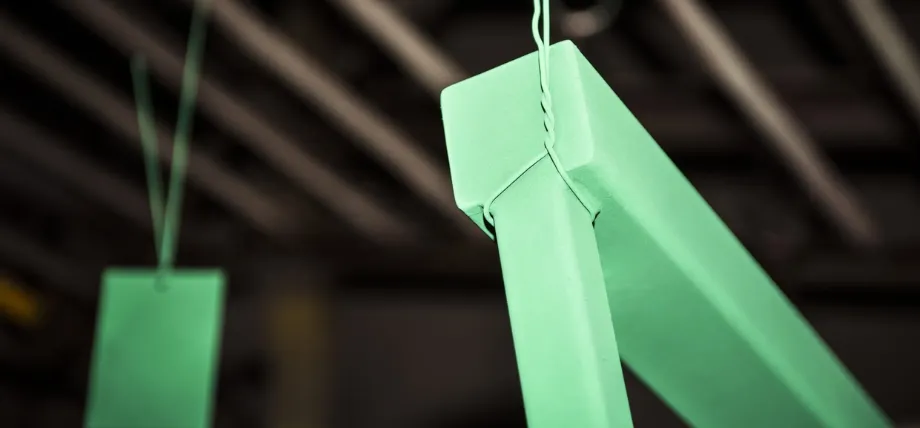
Powder coating
Powder is sprayed on and baked, forming a continuous protective coloured layer that is usually harder and more uniform than a conventional painted layer.
Usually harder and more even than liquid paint
Not for: substrates that cannot take the curing oven temperature.
Pick or avoid
When painting is the right call — and when it is not
Pick painting when
- The part is visible and the colour is part of the specification.
- Cosmetic finish matters — this process offers it, unlike metallic coating.
- You need a specific RAL or Pantone colour.
- The part is metal or plastic and can be cleaned and degreased before coating.
- You want a satin or glossy appearance rather than a metallic look.
Avoid painting when
- You need a metallic, reflective appearance — see metallic coating.
- You need sacrificial corrosion protection on steel at a scratch — see galvanizing.
- The layer has to be harder and more abrasion-resistant than a liquid coating — consider powder coating.
- Every thread and bore must stay at nominal size and you cannot mark them for masking.
Colour plus durability? Send the drawing with the RAL code and the environment the part sees — we will quote painting, powder coating, or both.
Get a quoteDesign constraints
What decides how the painted part looks when it comes back
Three variables: the preparation, the masking you mark, and the colour reference you give.
Preparation
The specified baseline is a standard surface finish, cleaned and degreased. Machining marks, grease and oxide read through a painted layer more than through any other finish.
Masking
Masking is available as per requirement — but you have to indicate the masked areas in the design. Unmarked threads, bores and sealing faces get painted.
Colour reference
Give a RAL code or Pantone number. A colour described in words cannot be matched, and a rework on a colour mismatch costs a full strip and repaint.
Surface finish choice
Satin or glossy is specified up front, not decided in the shop. A satin part cannot be changed to glossy after the fact.
Substrate condition
A part that has been handled, oiled, or left in a workshop may need extra cleaning. Say so on the order — it affects both adhesion and appearance.
Welding and heat
Weld and heat-treat before painting. Neither operation is compatible with a finished painted surface; a post-assembly repair has to be spot-painted.
Drawing notes
What to write on the drawing so the colour and the masking come out right
Colour and masking are the two things that most often come back wrong. Put both on the drawing.
1. PAINT ALL SURFACES UNLESS MASKED. COLOUR: RAL / PANTONE ____________ FINISH: SATIN / GLOSSY (delete one)2. MASK THE FOLLOWING AREAS BEFORE PAINTING: - TAPPED HOLES AND THREADED FEATURES - BEARING SEATS AND PRESS FITS - O-RING GROOVES, GASKET FACES AND SEALING SURFACES - ELECTRICAL CONTACT AND EARTHING POINTS (SEE VIEW A)3. SURFACE PREPARATION: STANDARD FINISH, CLEANED AND DEGREASED BEFORE PAINTING.4. COSMETIC FINISH REQUIRED - NO RUNS, SAGS OR UNIFORMITY DEFECTS ON VISIBLE FACES.5. COLOR MATCH TO SUPPLIED SAMPLE / RAL SWATCH.
Examples only. If you leave the colour line blank, the part cannot be matched to a reference — and the masking list is the only thing keeping threads clean.
Materials
Which substrates we paint — and what to use if yours is not one of them
Painting runs on metals and plastics. What changes between them is the preparation, not the principle.
| Substrate | Painting | Notes | Use instead |
|---|---|---|---|
| Metals | Yes | Standard surface finish, cleaned and degreased. Cosmetic finish available. | — |
| Plastics | Yes | Painted on the same basis; cleaning and degreasing is the deciding step. | — |
| Ferrous parts in weather | Consider galvanizing | A painted layer protects until it is scratched. Zinc protects at the scratch itself. | Galvanizing |
| Metal-look appearance needed | Use metallic coating | Painting gives colour, not a metallic sheen. | Metallic coating |
| Harder, more abrasion-resistant layer | Use powder coating | Thermally cured powder is usually harder and more uniform than liquid paint. | Powder coating |
Part in more than one material? Send the assembly and we will route each component to the process that fits it.
Get a quoteApplications
Where painted parts end up
Every application below is one where the part is visible, or where the colour carries a function.
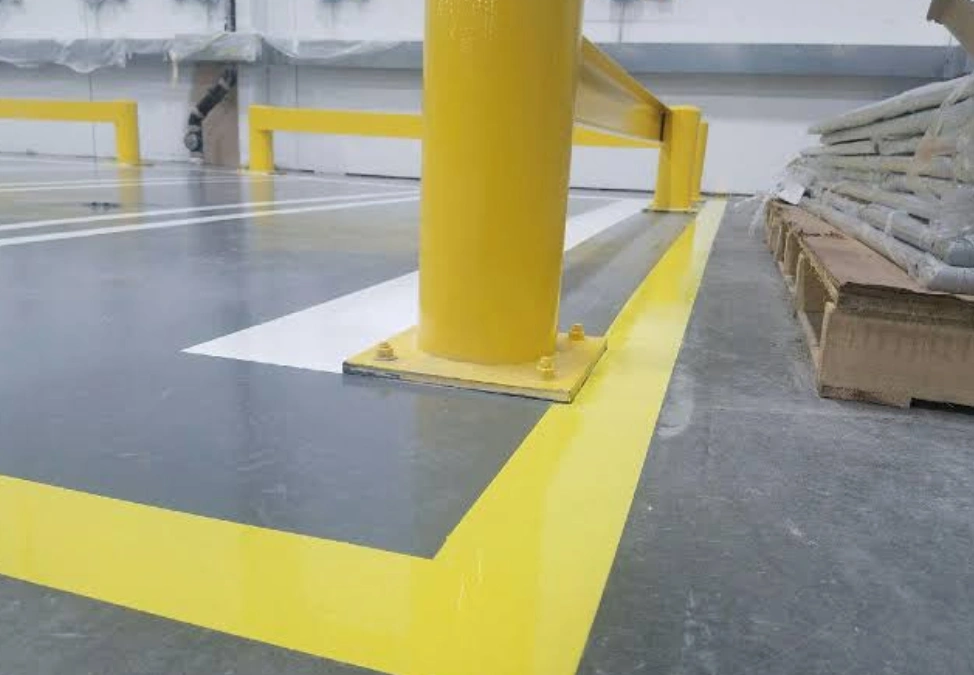
Industrial equipment and floors
Machine frames, guards and floor markings where a hard-wearing coloured layer protects and identifies the equipment.
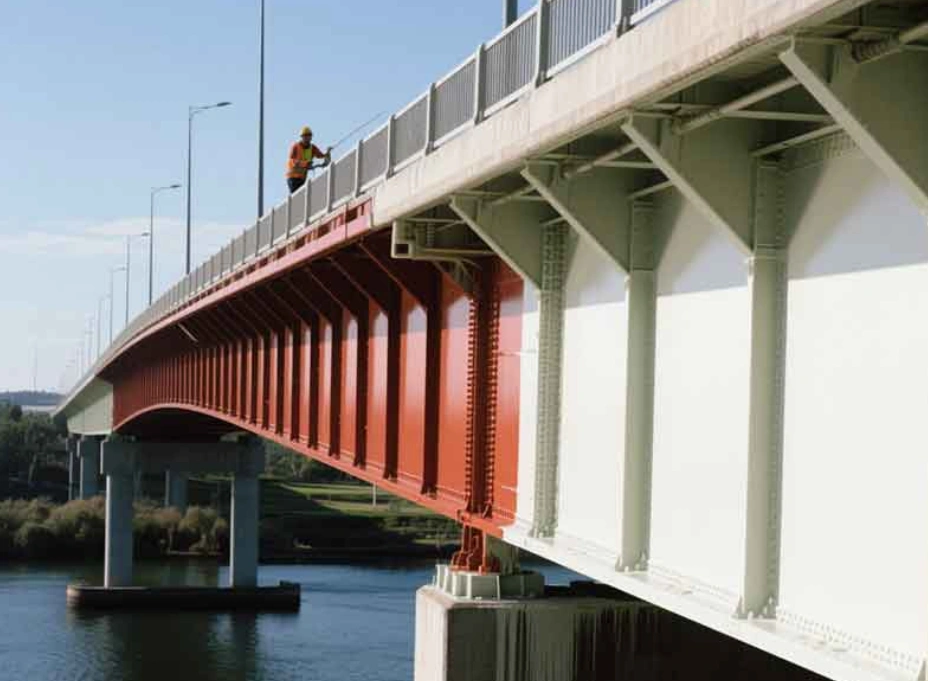
Bridge and structural steel
Where the colour is part of a protective coating system and has to survive decades outdoors.
QA and documentation
What you get back with the parts
Purchasing usually needs paper as well as parts. Here is what we can issue today and what is still being confirmed.
Colour match
Matched against the RAL code, Pantone number or supplied sample.
Layer thickness
Measured dry film thickness per coat. Being confirmed with the shop.
Adhesion test
Cross-hatch or tape adhesion check. Being confirmed with the shop.
RoHS / REACH
Compliance statement for the paint chemistry.
Further reading
Painting guides and comparisons
Longer answers on the questions this page only has room to state.
The two coloured finishes compared on durability, appearance and cost.
How the application method changes the result, not just the material.
What clear, blue, yellow and black chromate actually change.
The thermally cured alternative, when the part can take the oven.
The metallic-look process — and why it has no cosmetic finish option.
Compare all 20 finishes by roughness, thickness, corrosion and cost.
FAQ
Painting FAQ: the questions engineers ask us
Is a cosmetic finish available?
Can you match a specific colour?
Satin or glossy — which should I choose?
How do I tell you which areas to mask?
Will painting change my part dimensions?
What is the difference from powder coating?
Can you paint plastic parts?
Do you paint customer-supplied parts?
Get your painting quote
Upload a STEP, IGES or PDF drawing. Tell us the substrate, the quantity, the RAL or Pantone colour, and which surfaces must stay unpainted.
What to send us
- Drawing — 2D and 3D files (STEP, IGES or PDF).
- Quantity — number of units, including any spares.
- Substrate — the metal or plastic, so we know what preparation is needed.
- Colour — the RAL code or Pantone number. This is the line that most often goes missing.
- Finish — satin or glossy.
- Masking — which surfaces must stay unpainted: threads, bores, sealing faces, contact points.
All uploads are secure and confidential. Engineers review and reply with a quotation and lead time.