
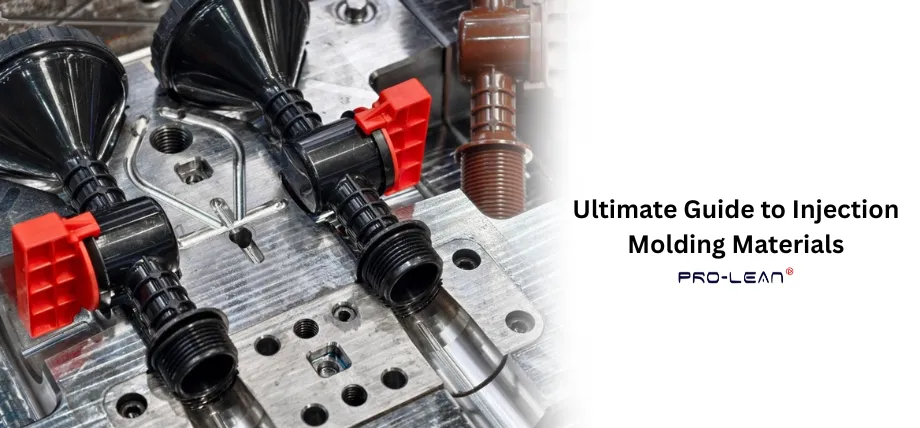
Injection molding materials
Injection molding is a standard high-volume manufacturing method that is used to make precise and accurate components. The process is highly versatile with endless material options and great precision, as well as efficiency. The process involves injecting molten polymer into a mould cavity under high pressure, which then cools and takes the mould’s shape.
Materials play an essential role in the manufacturing of parts. The type of material you use affects cost, part quality, performance, and production efficiency. The material can further determine the environmental impact and regulatory compliance. This injection molding material comparison highlights how different resins perform across key metrics like strength and cost.
The Role of Resins in Injection Molding
Resins are the base of the polymer. They are melted and injected into a mould under high pressure. The properties of resins can be modified to suit different requirements. For example, additives such as fillers, reinforcements, and stabilisers can be added for better durability. Colourants are used to give different colors to the moulded part. The flow behaviour during various processes, such as cooling, filling, and the final performance of the part, is determined by the resin. These raw materials for injection molding pellets are the foundation of the entire process.
Key Physical and Chemical Properties
The suitability of a material is judged based on different properties and the behaviour of the material under stress. These properties include both mechanical and chemical that need to be assessed when using the materials, depending on the applications. Some essential properties are listed below:
- Tensile strength: This is a measure of the maximum stress that a material can handle while being pulled or stretched before breaking.
- Elongation at break%: This is a percentage measure of how much change occurs in the material’s length, showing its ductility
- Flexural modulus: Flexural modulus is a quantification of resistance to bending and deflection under flexural load, showing its ductility.
- Impact strength: This indicates the amount of energy that the materials can absorb during a sudden impact without fracturing. It is usually performed using Charpy tests.
- Heat deflection temperature: the temperature at which the material begins to deform. It shows the short-term heat resistance of the materials under stress.
- Melt flow index: It indicates how well the material flows under normal conditions. Higher values mean the materials flow more easily, helping them settle into cracks more effectively.
- Chemical resistance: it describes the resistance of the material to different chemical agents, such as solvents, oils, and acids.
- Density (g/cm³): it is the mass per unit volume of the material, influencing part weight, buoyancy, and cost.
- Flammability rating (UL94): this indicates how prone it is to ignition, burning, and self-extinguishing.
Thermoplastics vs. Thermosetting Plastics
Injection molding is mainly done using thermoplastics. This is because they can withstand high temperatures without degrading or going through a chemical change. Thermoplastics are recyclable. They can be reused multiple times, which helps to minimise the environmental impact as well as reduce cost by reducing material waste. These plastics, such as PP and ABS, are commonly used in various industries due to their toughness and cost-effectiveness.
Thermosetting plastics are different and permanent. Once injected into the mould, they cure through a chemical reaction and set permanently, making them non-recyclable and non-reusable. Thermoplastics heat resistance, and dimensional stability. This means that they have a larger environmental impact. Thermoplastics are more preferable for high-performance applications.
Classification of Plastic Molding Materials
Amorphous Plastics: Properties and Uses
Amorphous plastic does not have a structure or ordered molecular crystals. This gives the material good transparency and impact resistance. Apart from that, amorphous plastics feature excellent surface finishes. They are widely used in optical lenses, electronic housings, and transparent enclosures.
Crystalline and Semi-Crystalline Plastics
Crystalline and semi-crystalline plastics are tough, rigid, and have superior chemical resistance. They have an ordered structure, which gives the plastics their excellent mechanical properties. Plastic polymers such as PP, PE, and POM are all crystalline and used for high-stress applications that include automotive and industrial applications. Though crystalline plastics are better suited to specific applications, they are more prone to shrinking and warping. This means that they require more optimised and careful manufacturing.
High-Performance and Engineering-Grade Resins
Plastics like PEEK, PEI, and PPS are ultra-high-performance plastics. They have superior mechanical and chemical properties with thermal stability at temperatures over 200 °C and high tensile strength that surpasses 90 MPa. The combination of the properties ensures durability and longevity.
High-performance plastics serve as substitutes for metal in structural applications across industries such as aerospace and automotive, as well as in oil and gas seals and bushing bearings. Though they are more expensive, their crucial property makes them ideal for high temperatures and aggressive chemicals.
Top 10 Most Common Injection Molding Materials
Polypropylene (PP)
Polypropylene recycling symbol
Polypropylene is the second-most-commonly used plastic in the world. It provides good chemical resistance and retains its shape after torsion or bending. Its high melting point prevents thermal degradation. Additionally, it is moisture- or water-resistant. Injected moulded polypropylene is also recyclable.
Polyethylene (PE)
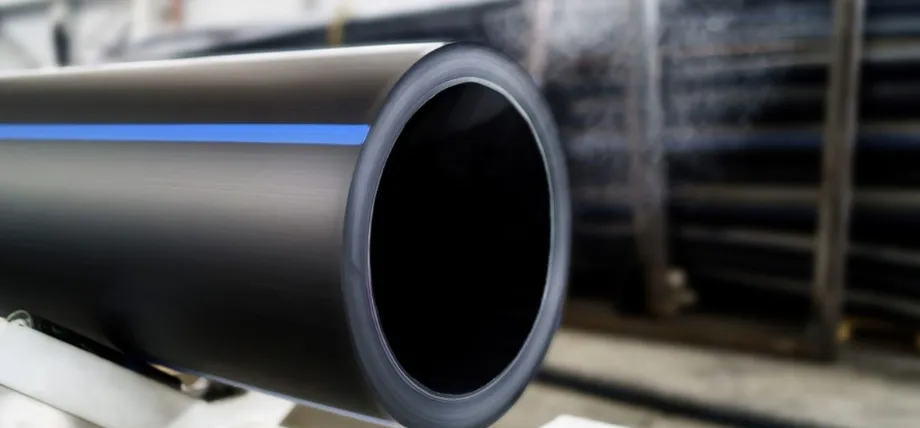
Durable polyethylene piping
Polyethylene is the most common plastic polymer worldwide. It has different variants according to density, high-density polyethylene (HDPE), and low-density polyethylene LDPE. Both differ in terms of hardness, flexibility, and melting point as well as optical properties. HDPE materials are valued because they have better durability and impact resistance for things like containers and exterior plastic parts.
Acrylonitrile Butadiene Styrene (ABS)
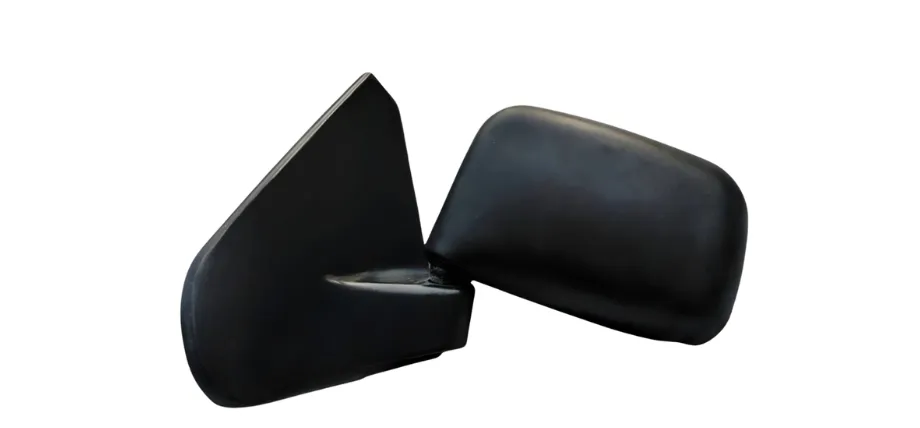
ABS automotive mirror housing
ABS plastics have a lower melting point than other plastics, making them easier to mould. ABS is opaque, making it easy to colour with colourants. Additionally, ABS is shiny, attractive, and strong. In addition to these properties, it can be finished in several ways, making it versatile for various applications.
ABS is known for its strength and impact resistance, but it lacks strong resistance to sunlight (UV), water, and weather. Compared to acrylic, injection-molded ABS is not a good choice for outdoor applications.
Polycarbonate (PC)
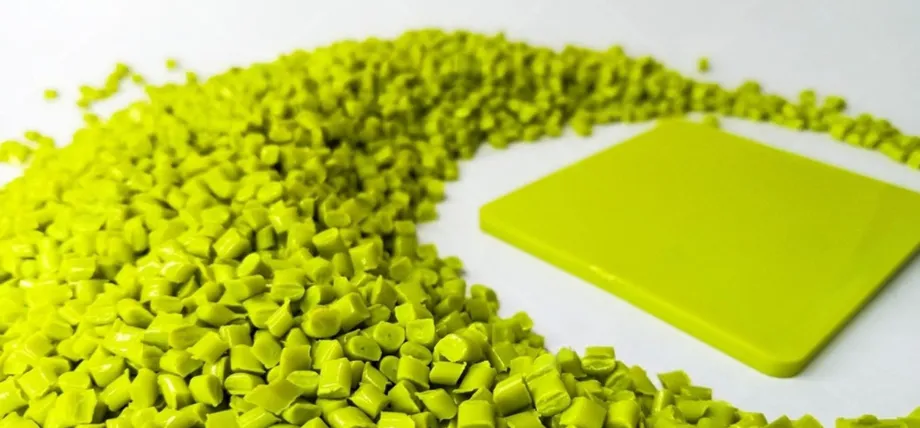
Polycarbonate PC
Polycarbonate PC is a light ight rigid, and transparent plastic that has excellent optical properties. It is somewhat UV-resistant, but prolonged exposure can cause it to take on a yellow hue and become brittle, chipping and flaking as other plastics often do. PC is significantly stronger than glass and highly durable, making it an excellent substitute for glass panes.
Acrylic (PMMA)
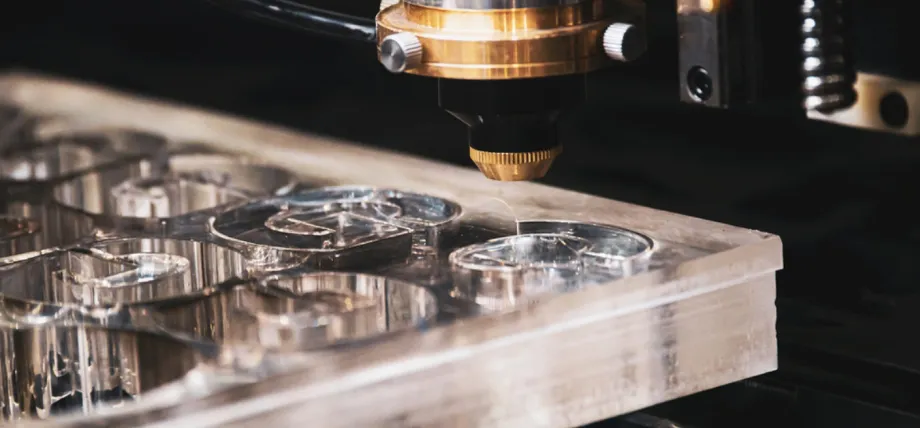
Laser cutting clear acrylic
Acrylic is also a transparent and lightweight plastic similar to PC. Injection-molded acrylic has optical clarity. Acrylic is resistant to UV and weather erosion. It can withstand UV light and be molded to tight tolerances due to its good flow. However, it is susceptible to solvents. Although it has high tensile strength, it can crack under heavy loads.
Nylon Polyamide (PA)
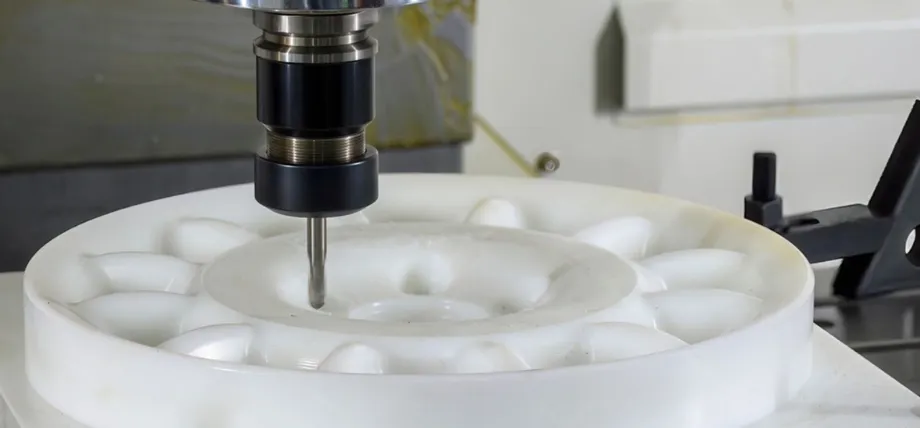
CNC machining nylon gear
Nylon is a synthetic polyamide that offers high toughness and excellent heat and wear resistance. Nylon isn’t inherently flame-resistant and can degrade in sunlight, though UV stabilisers are available. Nylon has poor chemical resistance and is prone to moisture. It has high strength and excellent dimensional stability, making it suitable for high-load applications such as gears and bearings.
Polyoxymethylene (POM)
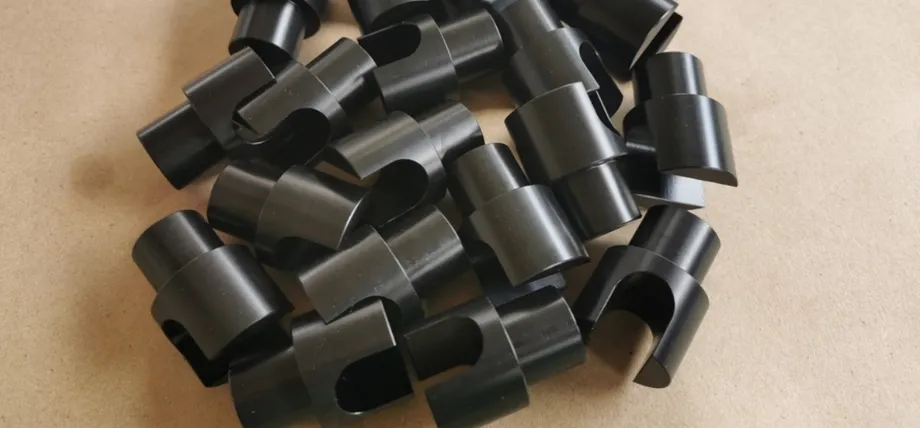
Machined POM plastic bushings
Try Prolean Now!
Specialized and Hybrid Molding Materials
Thermoplastic Elastomers (TPE) and Polyurethane (TPU)
TPE is a mixture of rubber and plastic materials. It is soft and flexible like rubber, but is processed like a plastic. Often called thermoplastic rubber, it has moderate stretchability and can bend under stress and return to its original shape. It is recyclable
TPU is a type of TPE. It is a rubber-like material that is an excellent substitute for hard rubber.TPu has better temperature and chemical resistance. Compare to TPE. It is hard to injection mould and costs more because the drying process takes longer.
Glass-Filled and Fibre-Reinforced Resins
Glass or fibre-filled reinforced resins have 10-50% addition of short glass fibres into thermoplastic bases like nylon, PA, polypropylene, PP, and PPS. The addition of fibre or glass improves the material’s mechanical properties for structural applications.
Glass fibres can double the tensile strength of the material, pushing it to around 240 MPa, and quadruple the flexural modulus, making them 2-4x as stiff. Carbon fibres offer superior strength-to-weight and conductivity. It’s harder to process due to higher pressure requirements and can shrink.
Sustainable and Bio-based Materials (PLA)
PLA is a biobased material that is derived from corn starch or sugar cane. It is eco-friendly and has promoted injection molding in recent times. PLA offers excellent stiffness and optical clarity. It is non-toxic, which makes it great for disposable utensils and plates. Other bioplastics are PHA and Bio-PP. These bioplastics have a significant limitation of low heat deflection temperatures, as well as higher costs and cycle times due to slow crystallisation.
Material Selection Criteria for Part Design
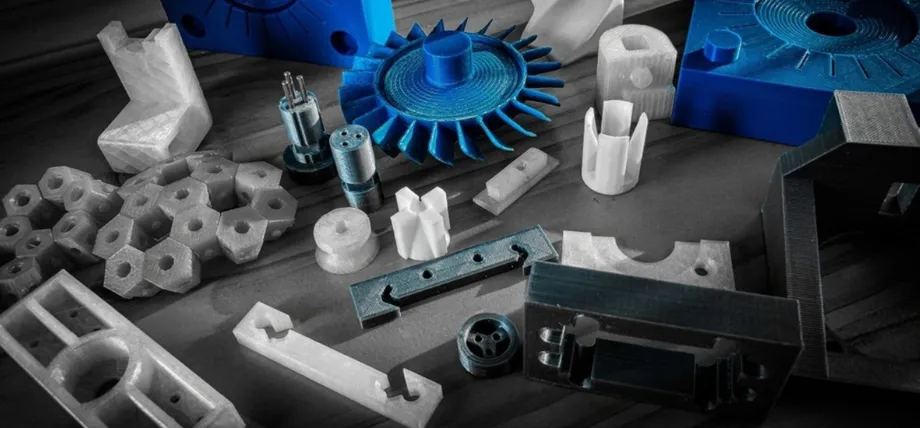
Diverse plastic material parts
Material selection is a crucial step for injection molding. This is because you need to account for various factors, such as cost, manufacturability, and application of your injection molded parts. An injection molding materials selection guide like this is ideal to evaluate mechanical, thermal, and chemical requirements.
Mechanical strength and impact resistance are primary materials selection factors. Plastics that have better tensile strength are ideal for load-bearing and high-stress applications, such as glass-filled or PA. PC and ABS have excellent impact resistance, which makes them great for consumer products.
Thermal stability and heat deflection of a material are essential in order to understand its behaviour under high temperatures. Heat deflection temperature defines the material’s operating limits. For general applications, the range is around 90–110 °C. PP is a great choice, whereas for high temperature applications, PEEK and glass fibre are ideal.
When it comes to chemical resistance, PP and PE are superior. They have better resistance to acids, amines, and solvents. For outdoor applications, PMMA and stabilise PP and PE are resistant to UV. Medical and food-related parts are made from PP, PC, or TPU because of sterilizability and regulatory compliance (FDA/USP/RoHS). Prototyping and testing are still essential to confirm that the selected material meets all performance, environmental, and cost targets.
Impact of Materials on the Injection Molding Process
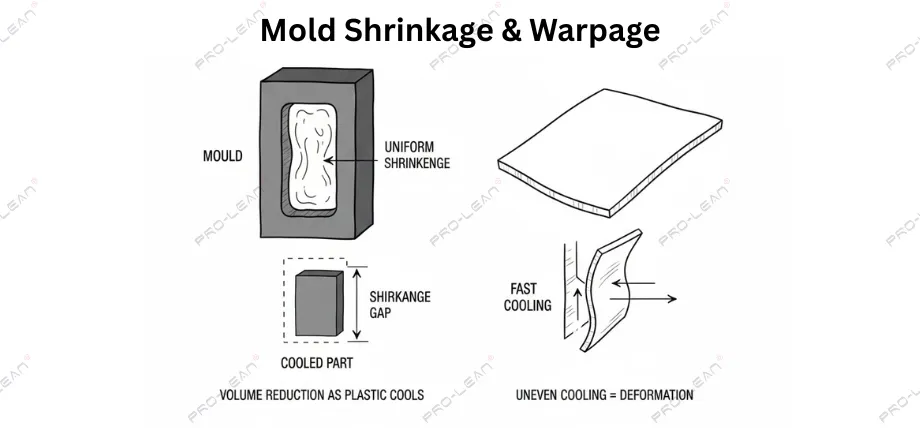
Mold shrinkage and warpage
Understanding Mould Shrinkage and Warpage
Shrinking occurs when the molten polymer cools and solidifies, and reduces due ot dimensional contractions. To address this, it has to be calculated into the moulds through a shrink allowance. Amorphous plastics have a lower shrink rate compared to crystalline polymers.
This is due to their lack of molecular structure and order in amorphous polymers, which reduces their directional difference and allows for tight tolerance control. Factors that can influence warping include non-uniform cooling. Warying wall thicknesses, fillers, and incomplete crystallization.
Flow Rates and Melt Viscosity
Melt flow index measures ing/gg/g/10min measures how materials flow under standard conditions. A higher MFI means lower viscosity and more effortless flow. PP and PE have high MFI, ranging from 20-50+, which means they are excellent for thin-wall applications and complex geometries in ML cavities. Higher flow rate also means shorter fill time and lower injection pressure.
Lowe melt flow means higher viscosity. HDPE and PP are great examples of this; they have low MFI and higher viscosity, which suit thick and sturdier parts for better mechanical properties.
When manufacturing, you need to select a material with a balanced MFI. Higher MFI means better manufacturability but weaker parts, depending on your application.
Tolerance, Consistency, and Surface Finish
The tolerance you achieve when making your part depends on the material. Amorphous plastics can achieve tighter tolerances due to their molecular structures and uniform shrinking behaviour, which allows you to predict results and address the shrinking.
Typical tolerances of amorphous plastic can be around ±0.001–0.005 mm. It additionally facilitates different surface finishes, such as high gloss and smooth, for aesthetics. Crystalline and reinforced polymers pose different challenges, such as shrinkage due to the direction of the fibres, which can cause looser tolerances and degrade surface finish.
Try Prolean Now!
Industrial Applications by Material Type
Automotive and Aerospace Components
The automotive industry is a major consumer of injection-moulded plastics. Bumpers made from PP and ABS dashboards, as well as PA and PC headlamp lenses, with glazing for better optical clarity, dominate the industry due to cost-effectiveness, along with impact and chemical resistance. High-performance polymers like PEEK are used for bushings and bearings in aerospace components.
Medical Grade Plastics and Healthcare Products
The medical and healthcare industry follows regulatory standards and strict regulations; therefore, polymers used in the industry must comply with FDA/ISO 10993. PC is used for transparent containers, PP for syringes, and TP for flexibility. The advantage of these polymers is that they are biocompatible and can be sterilised.
Consumer Electronics and Packaging Solutions
ABS plastic is widely used in consumer electronics because of its durability and impact resistance. Additionally, it provides different surface finish options. PP and PE are rigid as well as flexible, depending on the applications. They can be made into thin walls and lower costs, making them budget-friendly for housing.
How to Choose the Right Material for Your Project
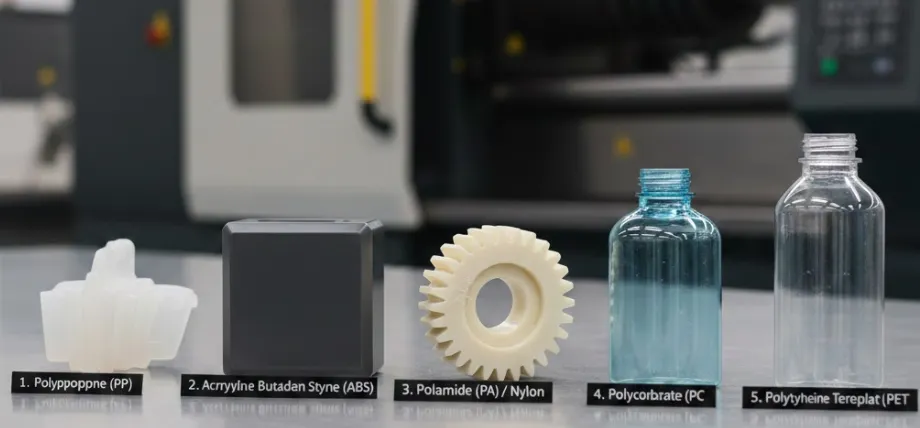
Common injection molding materials
Assessing Performance Requirements vs. Budget
To select the most suitable material for your part, you need to balance both performance and budget. Assessing the requirements of your part is the best way to do this. Categorise your requirements into essential for function and non-essential, such as aesthetics. Common plastics such as PP and PE cost around 1-2$ per kg and are great for 70% of applications, such as packaging toys and housings. High-performance resins like PEEK or PEI can cost over $50 per kg but are essential for extreme conditions like aerospace and implants. Our blogs on plastic injection molding materials provide a detailed comparison for this.
Importance of Material Testing and Prototyping
Material testing and prototyping are crucial processes that is essential before mass manufacturing. Testing allows you to ensure that your parts function in real-life conditions and the materials behave as predicted. Small prototyping can cost 500$ to 2000$, depending on materials and complexity. Conducting a test using a prototype helps you collect crucial data and assess it to find possible points of failure.
Standard tests like tensile strength (ASTM D638), impact (ASTM D256), and HDT give clear pass and fail results. This initial testing and prototyping can save you from costly mistakes later on, prior to full-scale production.
Injection Molding Services
Proleantech provides state-of-the-art injection molding services for top-range molding materials, including metal and plastics. We specialize in high-speed, high-volume production with complex geometry and accuracy up to 0.005” in tolerances.
Take advantage of our vast injection molding materials stock, select your material, and get automated quality control to reduce unit costs and waste.
Request a free quote today!


0 Comments