
Glass-epoxy laminate guide
FR-4 CNC
Machining
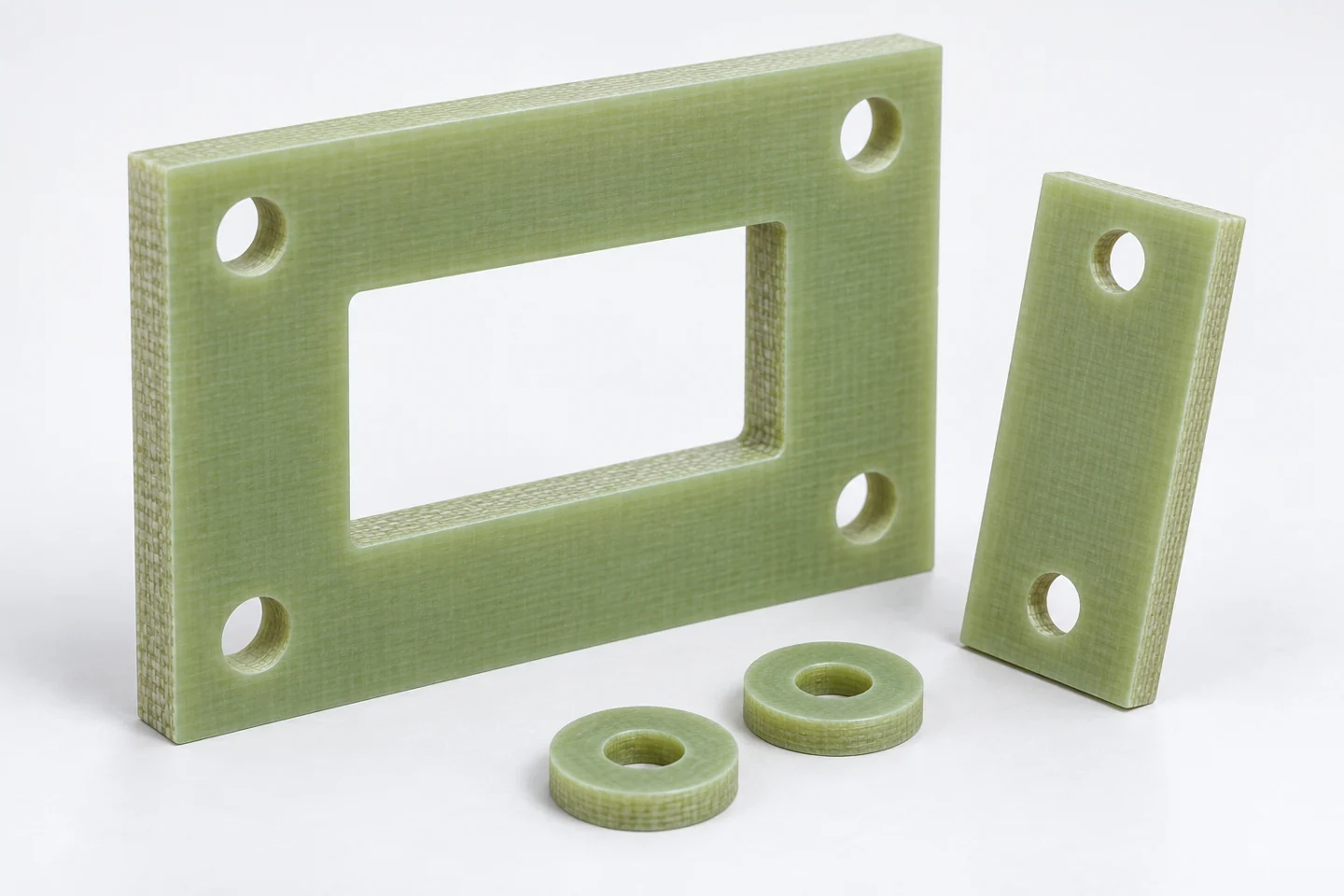
Machined glass-epoxy insulating plates and spacers, with laminate product, thickness, edge quality and electrical requirements defined together.
Confidential enquiries. NDA available.
- Specify
- Named industrial FR-4 sheet or named alternative
- Review
- Laminate direction and Hole breakout
- Confirm
- Final condition and acceptance records
Specify the laminate behind the FR-4 designation.
FR-4 describes a glass-epoxy laminate grade family used in electrical and structural details. Different products can meet the designation with different chemistry and property balances. Choose the actual laminate for the part.
Insulating mounting plates
Define electrical paths, mounting holes and working environment. Identify the surface and cut-edge conditions required for the application.
Spacers and supports
State load direction, thickness, flatness and fastener interfaces. The relationship between load and laminate direction matters.
Machined equipment panels
Provide cutouts, hole positions and whether copper cladding is present or excluded. A mechanical insulating plate is not automatically a PCB manufacturing request.
Choose the grade and stock together.
Compare the FR-4 options below against the drawing and service conditions. Specify the complete supplier grade, condition and stock form; material examples do not establish current inventory or permit substitutions.
| Grade or stock | Why consider it | What to resolve |
|---|---|---|
| Named industrial FR-4 sheet | A machined insulating plate or spacer using a documented laminate. | Specify manufacturer product, governing standard, thickness and conditioning. |
| High-Tg or other specialised FR-4 | A design with a specific thermal or electrical requirement. | Name the product and relevant tests; “high temperature” is not a complete specification. |
| Unclad sheet versus copper-clad laminate | Different starting forms for a mechanical or electrical part. | State cladding, copper removal or retention, finished thickness and edge condition explicitly. |
| FR-4 rod or tube product | A design requiring a particular non-sheet laminate form. | Specify the manufacturing form and relevant standard; sheet-ground and rolled products can differ. |
Selection examples are subject to material and drawing review. They are not an inventory list.
Already have a grade on the drawing?
Add it to your quotation checklist ↓Review the cut edge, hole and laminate direction.
Glass reinforcement affects tooling and the finished edge. Mark the features where chipping, delamination or a damaged insulating surface would affect acceptance.
Laminate orientation
Show sheet plane, thickness direction and load direction where relevant. Do not assume in-plane and through-thickness data are interchangeable.
Holes and cutouts
Specify position, diameter, edge distance and permitted breakout. Review backing, entry and exit quality for the actual laminate.
Tooling, dust and edge control
The glass reinforcement needs an appropriate machining and extraction approach. Define cleanliness and loose-fibre acceptance for the delivered component.
Mark critical dimensions on the drawing. Achievable tolerances, wall thickness, part size and delivery are confirmed for the geometry, material, finish and quantity in the quotation.
Finish only what the electrical and mechanical job needs.
Machined edges
Define permitted chips, breakout, exposed fibres and edge breaks. Keep functional dimensions inside the finishing acceptance.
Edge sealing or coating
Include an application-specific requirement where needed. Name the material, protected surfaces and acceptance rather than assuming a universal sealing step.
Cleaning and identification
Specify residue limits, marking and handling. Prevent damage or contamination to insulating paths during packaging.
Connect laminate evidence to the finished geometry.
Laminate records
Request the manufacturer product, grade or standard and lot documentation required. State flame or electrical evidence for the relevant thickness and condition.
Mechanical dimensions
Define thickness, flatness, hole pattern and inspection conditions. Include laminate direction if it affects the requirement.
Electrical and edge acceptance
Agree any required electrical tests, conditioning and edge criteria. A photograph or generic FR-4 name is not a completed electrical acceptance.
Three different checks.
The material record identifies the purchased stock. The inspection report checks the drawing. Application validation checks the part in service.
Review inspection requirements ↗FR-4 machining questions.
Answers to the decisions that affect the material, drawing and finished part.
Is every FR-4 product the same chemistry?
No. Different laminate products can meet the same grade designation. Use the exact manufacturer product and required properties for the design.
Can G-10 replace FR-4?
Only after checking the governing specification and required flame, electrical and mechanical performance. Similar construction does not approve a substitution.
Does an FR-4 plate need copper foil?
Not necessarily. State unclad or clad stock explicitly. A machined insulating plate and a circuit-board fabrication job are different scopes.
Why specify laminate direction?
Glass-epoxy laminates can have direction-dependent properties. Identify the sheet plane and the directions relevant to loading or acceptance.
What edge defects should be defined?
State allowable chipping, breakout, delamination, exposed fibres and edge breaks, especially near electrical paths or mounting holes.
What helps quote a machined FR-4 part?
Include laminate product and standard, thickness, cladding status, geometry, hole and edge criteria, electrical requirements, quantity and documentation.
Prepare your enquiry
Specify the FR-4 laminate and its finished edges.
Send the CAD model and dimensioned drawing with quantities, service conditions and the requirements below. If the grade is undecided, describe the function and the constraints.
Your files stay confidential. NDA available.
FR-4 RFQ checklist
Material: FR-4, [manufacturer product + governing standard]
Stock: [thickness, sheet/rod/tube, unclad or copper-clad]
Orientation: [sheet plane, load direction where relevant]
Features: [cutouts, hole positions, edge quality, flatness]
Acceptance: [electrical or flame evidence, conditioning, tests]
Quantity and records: [lot size, laminate and inspection documents]
Material references & specification notes
Manufacturer information supports material selection. Use the datasheet for the exact grade, stock form and test conditions. It does not establish Prolean inventory, application approval or a guaranteed machining result.
Prepared October 2026. Final material and manufacturing requirements are agreed in the quotation.