
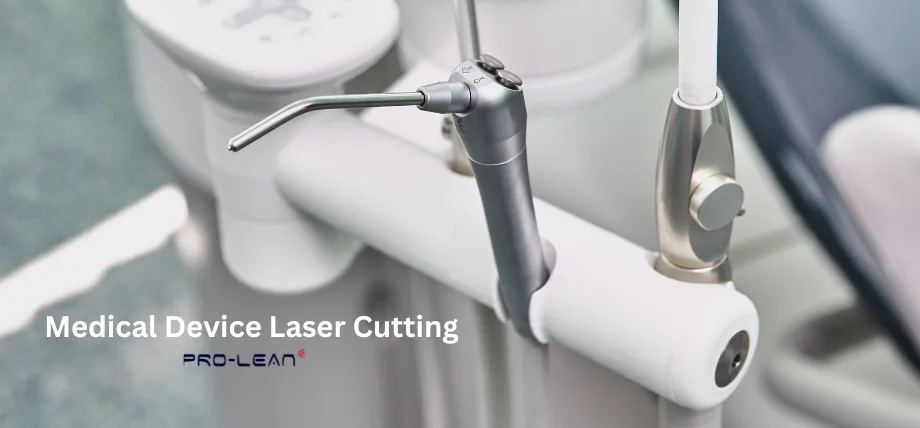
Medical laser cutting device
Laser processing medical devices allows medical products to be manufactured using a contactless cutting method that produces highly precise components. Laser cutting can be used on metals and non-metals alike and can quickly be adjusted for different materials.
Many medical devices require a small kerf, clean edges, and low machining needs, and Proleantech provides high-quality laser machining that requires minimal post-processing and saves costs.
Why Is Laser Cutting Essential in Medical Device Manufacturing?
Medical device manufacturing relies on medical device laser cutting because it delivers precise results through non-contact operations, achieving tolerance of laser cutting of ±0.001 inches. The process causes minimal heat damage to materials, thereby maintaining their properties in nickel-titanium and other alloy implants and surgical instruments.
The use of assist gases, such as argon or nitrogen, during medical device laser cutting produces clean edges that require less post-processing work and result in lower production costs. The technique enables the creation of intricate shapes in multi-lumen extrusions and medical tube cutting, which are essential for performing complex surgical operations.
The process provides contamination-free results and tool wear protection, fulfilling the requirements of the medical industry. The precise nature of precision laser cutting enables mass production while maintaining product tracking, which makes it essential for developing dependable medical devices that meet biocompatibility standards.
Laser Technology in Medical Device Manufacturing
Medical applications depend on laser technology because it provides exact non-touch energy for performing surgical and manufacturing operations. Medical lasers, including fiber lasers, Nd: YAG, and femtosecond systems, provide surgeons with precision laser cutting, coagulation, and ablation tools for complex surgical procedures.
Medical device manufacturers use lasers to perform exact cutting and welding operations on small-scale implantable devices and surgical instruments. The high beam quality of lasers creates small heat-affected zones, which maintain the material’s structure.
Laser processing medical devices enables etching, engraving, and post-processing operations that reduce tool deterioration and manufacturing expenses. The medical industry relies on this technology because it enables flexible operation with high accuracy, allowing for the creation of dependable medical devices that are safe for human contact.
Types of Lasers Used in Medical Device Manufacturing
|
Laser Type |
Wavelength |
Capabilities |
Materials |
Medical Devices |
|
Fiber Lasers |
1.06 μm |
High-quality beam; precise cutting/welding with minimal heat; micro-machining; marking/etching |
Stainless steel, titanium |
Implantable devices, surgical tools, micro-scale components |
|
Nd: YAG Lasers |
1.064 μm |
Welding/cutting (CW), high-power drilling/micromachining (pulsed). Has very low thermal effects |
Nickel-titanium |
Surgical tools, implantable devices, complex components |
|
Femtosecond and USP Lasers |
Varies ( near-IR or UV) |
It can create micro-features and perform non-contact drilling |
Polymers, metals |
Stents, catheters, small-part prototypes, multi-lumen extrusions |
Medical device manufacturing requires a specific laser selection to achieve precise results during medical device laser cutting, welding, and drilling operations. The lasers used in medical manufacturing differ in their wavelength, pulse duration, and energy delivery capabilities.
Fiber Lasers Medical Device Laser Cutting
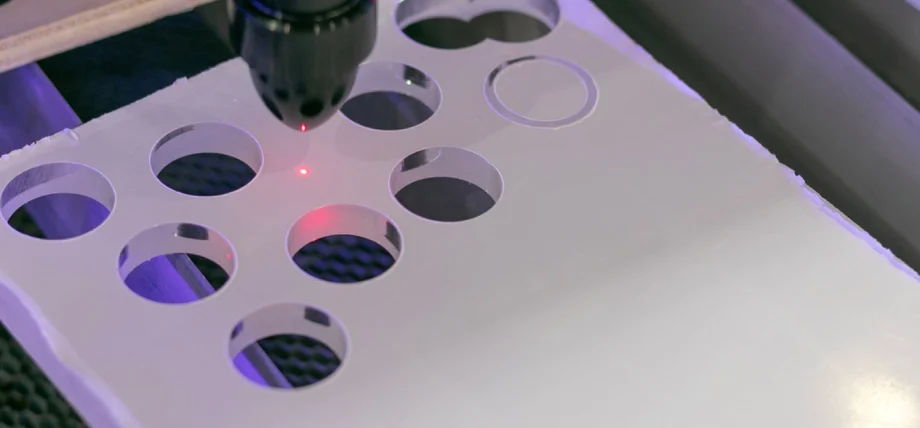
Laser cutting circles
Medical device manufacturing benefits from fiber lasers because they utilize doped optical fibers as gain media to produce high-quality beams with efficient operation, enabling precision laser cutting and welding applications. The 1.06 μm wavelength operation of these lasers makes them ideal for stainless steel laser cutting and laser cutting titanium, which are typical materials used in implantable medical devices.
Medical device manufacturing benefits from reduced expenses due to the fiber lasers’ compact size and minimal required maintenance. Medical applications benefit from fiber lasers because they enable micro-scale component laser machining through pulse modulation, which allows precise material removal with minimal heat damage.
Medical device laser cutting excels at laser marking, etching, and engraving on surgical tools because it provides both biocompatibility and extended durability. Medical industry operations become more efficient through automated processing systems that integrate with advanced fiber laser technology.
Nd: YAG and Pulsed Nd: YAG Lasers
The Nd:YAG laser system utilizes neodymium-doped yttrium aluminum garnet as its active medium to produce 1.064 μm emission, making it suitable for medical and manufacturing applications. The continuous wave operation of Nd: YAG lasers enables welding and cutting tasks, but their pulsed operation delivers high peak power for accurate drilling and micromachining applications.
The medical field utilizes these lasers to manufacture surgical tools and implantable devices, as their controlled pulse durations minimize thermal effects. The pulsed operation of these lasers enables wire stripping and post-processing cleaning tasks, which extend tool life. The lasers support complex surgical operations through their ability to create high-quality beam components for nickel-titanium materials.
Femtosecond and USP Lasers
The 10^-15 second pulse duration of femtosecond lasers enables cold ablation without heat damage for precise medical device production.
The USP laser family, which includes picosecond models, offers enhanced capabilities for minimizing thermal damage in sensitive materials. Laser processing medical devices uses these lasers to create micro-scale features in stents and catheters from polymers and metals.
The non-contact operation of these lasers enables wire drilling and advanced laser processing, allowing for multi-lumen extrusions without requiring additional processing steps. The lasers enhance medical device prototyping by allowing the creation of precise and adaptable small parts.
Core Laser Processes in Medical Manufacturing
Medical laser cutting systems combine lasers with fiber or Nd: YAG technology inside multi-axis workstations, which process both tubular and flat components. The CNC-controlled systems from Alpine Laser enable device precision cutting of medical devices through their ability to perform laser drilling and welding operations.
The systems operate with assist gases, including argon, nitrogen, and oxygen, to achieve optimal cutting results while maintaining low operational expenses and high beam quality. The medical industry requires these workstations to produce laser-cut parts because they process stainless steel and polymer materials while creating small heat-affected zones.
Medical manufacturing depends on laser processes because they enable deep fabrication techniques that produce precise and reliable medical devices. The main section examines each process through technical explanations that use engineering principles to demonstrate their value in device manufacturing.
Laser Cutting
Medical manufacturing utilizes laser cutting to direct high-intensity beams, which vaporize or melt materials through predefined paths, with the assistance of nitrogen or oxygen gases to facilitate debris removal.
The precision laser cutting process utilizes fiber lasers and femtosecond systems to produce kerf widths between 20 and 50 μm, enabling the manufacture of medical devices with complex shapes. The non-contact process of laser cutting protects thin-walled tubes, such as those found in catheters and stents, from mechanical damage.
The engineering process requires attention to beam quality, as it determines edge roughness (Ra < 0.5 μm), and pulse frequency management to prevent warping of the nickel-titanium alloy. The medical industry benefits from efficient production because laser cutting produces clean cuts that need no additional processing.
The integration of laser cutting with welding operations through hybrid processes enables device assembly applications.
Laser Welding
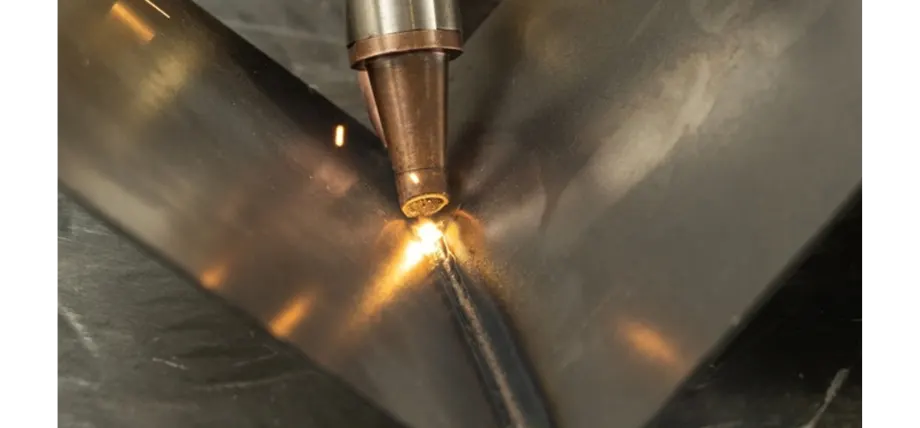
Laser welding seam
The process of laser welding unites materials through beam-focused melting, which produces strong bonds between interfaces without requiring any additional materials. Medical device manufacturers utilize pulsed Nd: YAG and fiber lasers for spot and seam welding applications, producing welds with depths of up to 2 mm while maintaining small heat-affected zones (less than 100 μm in diameter).
Medical implantable device welding requires this process because it maintains essential biocompatibility properties. The process requires specific technical parameters, including a pulse energy of between 1 and 10 J and a spot size of between 0.1 and 0.5 mm, to prevent porosity formation. The use of argon as an assist gas protects welds from oxidation, resulting in clean, surgical tool-quality welds. The manufacturing process of medical devices benefits from this method because it provides affordable costs and produces consistent results during large-scale production.
Laser Drilling
The USP laser system performs percussion and trepanning operations to create exact holes while minimizing the formation of recast layers. Medical manufacturing applications utilize femtosecond lasers to create micro-holes between 10-100 μm in diameter within needles and catheters, achieving aspect ratios of 10:1. The engineering team optimizes the pulse duration to less than one ps for cold ablation, as this method prevents thermal damage and allows them to drill through wire in flexible shafts.
The addition of assist gases improves hole quality by removing molten material, resulting in perfectly circular and clean apertures. The technology enables surgeons to perform complex surgical procedures by creating multi-channel structures that need no additional cleaning steps.
Laser Marking
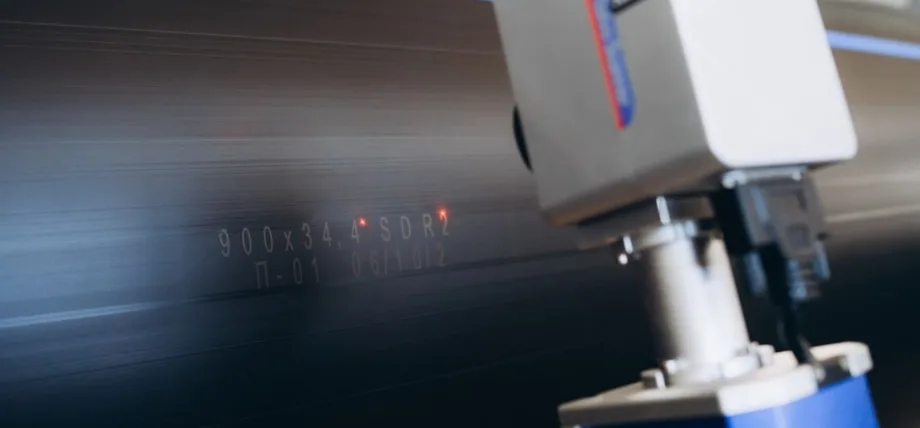
Laser marking tube
The process of laser marking creates permanent surface identifiers through precise control of ablation or annealing. Medical facilities utilize fiber lasers to engrave clear UDI codes and other markings on stainless steel and titanium surfaces, with depths ranging from 10 to 50 μm. The technical parameters for scan speed range from 500 to 2000 mm/s, and the power density needs to be optimized to maintain readable marks after sterilization. The non-contact marking method provides corrosion protection, making it suitable for tracking used medical equipment.
Laser Engraving with Laser Cut Nylon
The process of laser engraving creates deep features through material removal, which resembles marking but produces deeper results (up to 100 μm). The Nd: YAG laser system enables precise logo and scale engraving on surgical instruments through its laser processing capabilities. The process enables the engraving of functional textures, such as grip patterns, through etching while minimizing heat exposure to protect material characteristics.
Laser Machining for Laser Cut Aluminum
The process of laser machining involves ablation to create intricate parts using USP lasers, which produce small features for medical device manufacturing. The process enables users to perform cutting, drilling, and welding operations, which provide medical device manufacturers with the flexibility to create custom geometries.
The engineering process requires specific energy density levels between 10^8 and 10^10 W/cm² to produce smooth surfaces without burrs, thereby minimizing the need for additional processing steps.
Try Prolean Now!
What Materials are Suitable for Medical Device Laser Cutting?
Metals
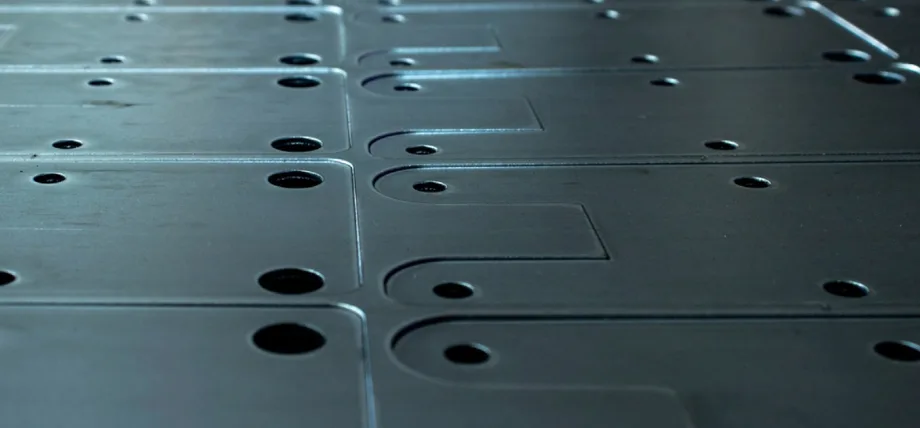
Laser-marked metal plates
The combination of corrosion resistance and easy laser cutting makes stainless steel (316L) a popular choice for surgical tools and stents. The high strength-to-weight properties of titanium alloys make them suitable for implantable devices, while fiber lasers create clean cuts through argon-assist gas to prevent oxidation.
The shape memory properties of nickel-titanium (Nitinol) stents depend on femtosecond laser processing, which reduces the size of the heat-affected zones. The Nd: YAG laser cutting process enables the production of tight tolerances for orthopedic implants made from cobalt-chromium alloys.
Polymers
PEEK stands as the preferred material because it maintains thermal stability and exhibits biocompatibility, making it suitable for laser machining of spinal implants. The high temperature resistance of polyimide makes it ideal for flexible shafts and multi-lumen extrusions, while USP lasers deliver exact laser-cut nylon material removal.
The processing of catheters with low-power lasers enables the use of Nylon and Pebax materials because these materials remain flexible. The chemical resistance of PTFE (Teflon) makes it suitable for vascular devices, which can be cut using fiber lasers to achieve smooth edges.
Other Materials
The diagnostic field utilizes glass and ceramic materials through laser drilling techniques, which produce micro-features without compromising the integrity of the glass or ceramic material. The processing of composite materials through advanced laser systems enables the creation of hybrid devices with customized properties.
What Is the Tolerance Required for Medical Device Laser Cutting?
Medical device laser cutting operations require tolerance settings between ±0.001 inches and ±0.005 inches (25-125 μm) based on material thickness and specific application needs. The production of precise medical devices with small holes in catheters requires femtosecond lasers to achieve tolerances of ±0.0005 inches (12.5 μm).
The combination of beam diameter size (20-50 μm) and machine stability, as well as assist gas flow rates, determines the achievable tolerances because these factors control kerf width and edge straightness. The manufacturing of medical devices requires adherence to ISO 13485 regulatory standards, which enforce measurable tolerance specifications to verify proper device operation in complex surgical procedures.
The thermal effects that occur in materials thicker than 1 mm lead to larger tolerances, but pulsed Nd:YAG lasers for intricate medical components require more precise control.
Types of Medical Devices Made by Laser Cutting
Cardiovascular Devices
- Stents: The manufacturing process creates vascular support structures by cutting Nitinol tubes to produce self-expanding or balloon-expandable stents.
- Heart valves: The manufacturing process creates heart valve frames through laser machining for both strength and tissue compatibility.
- Guidewires: The flexible shafts of guidewires contain micro-features that enable navigation through complex medical procedures.
Orthopedic and Implantable Devices
- Orthopedic implants: Laser cutting produces plates and screws with specific geometric designs for bone fixation procedures.
- Dental implants: The dental field requires exact thread designs for osseointegration processes.
- Prosthetic components: The manufacturing process involves the production of joint parts with surface etching for enhanced bonding capabilities.
Surgical and Diagnostic Tools
- Surgical tools: Blades and forceps with laser-marked scales.
- Endoscopes: Tubes with drilled holes for fiber optics.
- Needles: Hypodermic types with micro-holes for drug delivery.
Specialized Devices
- Catheters: Multi-lumen extrusions for fluid delivery.
- Pacemakers: Enclosures with welded seams.
- Biosensors: Micro-scale sensors for monitoring.
Try Prolean Now!
Advantages of Using Medical Device Laser Cutting
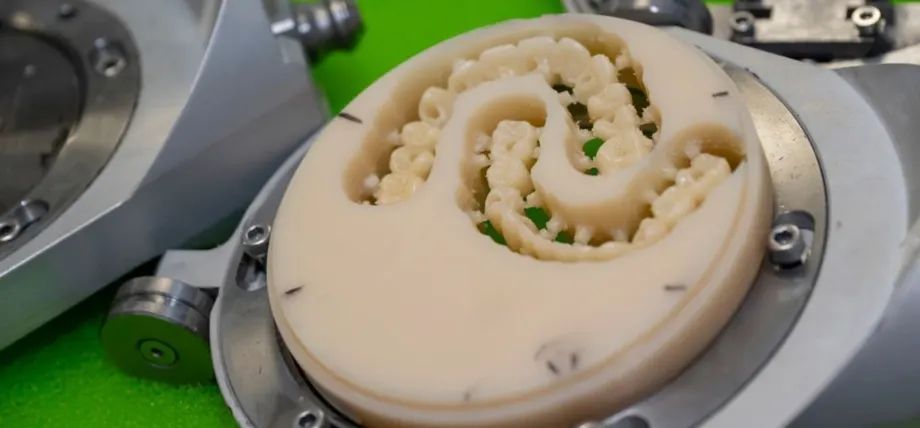
Dental prosthesis machining
High Precision and Accuracy: Laser cutting technology produces tolerances of ±0.001 inches, enabling precise medical device design without distortion for implantable devices and surgical tools.
- Minimal Heat-Affected Zones: The concentrated beam creates small heat zones that protect material properties in nickel-titanium alloys during processing, thus minimizing risks in complex surgical procedures.
- Non-Contact Processing: The non-contact processing method prevents tool wear and contamination, thereby maintaining the sterility and biocompatibility of medical devices during manufacturing, while producing clean cuts that require minimal additional processing.
- Versatile Materials: The system operates with multiple materials, including metals, polymers, and composites, to produce a diverse range of medical products, such as multi-lumen extrusions and flexible shafts, utilizing assist gas optimization for improved cut quality.
- Cost Efficiency: The process minimizes material waste while enabling fast prototyping, resulting in reduced manufacturing expenses for medical devices while maintaining excellent beam quality.
- Scalability: The system operates at high speeds to produce large quantities of products with consistent results, which suits the medical field for faster product delivery in laser-cut aluminum.
- Enhanced Customization: The system enables the creation of complex designs for customized medical devices, resulting in improved outcomes in medical laser processing and joining operations.
Custom Metal Laser Cutting Services
Proleantech excels in prototyping, high-volume production, and custom production runs for your medical project and medical device prototyping needs. You can have your medical device engraved, marked and cut using our laser cutting machines from fiber lasers to USP lasers. We handle materials from metals to polymers and provide contact-free machining through our large bed size laser machines.
Request a free quote today!
Conclusion
The medical industry relies on these processes, which include laser welding, drilling, marking, and machining, to produce reliable, biocompatible devices. The guide demonstrates engineering excellence through its analysis of tolerances and materials, as well as the advantages that power medical precision application development.
0 Comments