
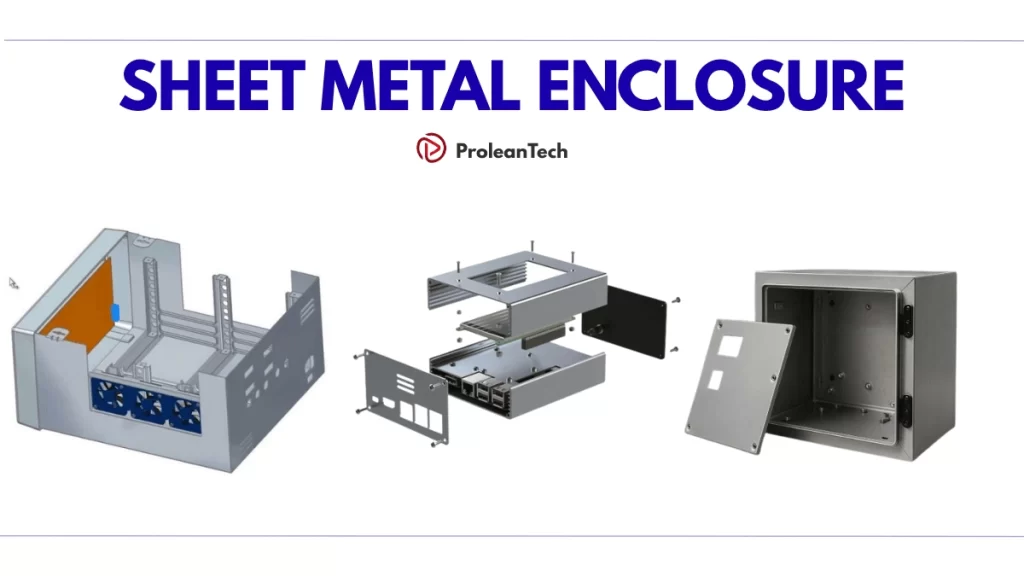
 Sheet metal enclosure
Sheet metal enclosures are custom metal boxes used to house electrical and electronic devices. They safeguard the internal components from environmental conditions and physical damage. Consequently, enclosures are also crucial for aesthetics.
Metal forming, machining, welding, and other custom sheet metal fabrication processes are applied to raw sheet metal to form it into an enclosure of the desired size and shape. But at first, you need an enclosure design and manufacturing strategies based on that design.
This article will discuss the design of a sheet metal enclosure, material selection, and design rules.
Let’s get started.
Sheet Metal Enclosure Explained
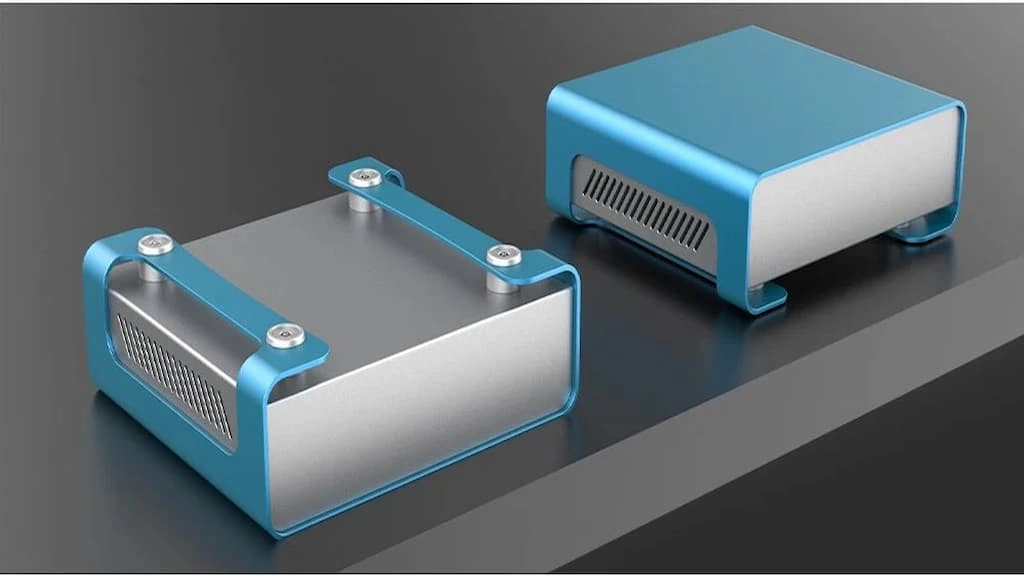
Finished sheet metal enclosure
A sheet metal enclosure is defined as a protective housing for any type of device, equipment, or system, which is manufactured with sheet metal fabrication services. Enclosure shields the assembled parts from physical impact, moisture, dust, and electromagnetic interference(EMI). Additionally, a metal enclosure is finished with aesthetic coating or plating to enhance the attractiveness of the product.
Sheets of aluminum, stainless steel, and mild steel are the primary choices for enclosure. Meanwhile, forming operations like bending, punching, slotting, and notching are used to shape the flat metal sheets, followed by the joining of individual sheet metal parts via screw and welds.
You can see the use of enclosures in electrical, electronics, industrial machinery, automotive, telecommunication, and many other sectors.
What Are the Importances of Sheet Metal Enclosures?
Sheet metal enclosures are important for the overall durability, safety, and reliability of the product/system. They provide protection from environmental factors, ease the handling, and improve the lifespan of enclosed components.
Let’s break this down through a list of priorities.
- Longer Lifespan: Enclosures made from tough materials resist corrosion, wear, and abrasion, even in harsh conditions, thereby safeguarding the product for an extended period.
- EMI and RFI Protection: Metal enclosures minimize electromagnetic emissions and shield sensitive components from external radio frequency interference (RFI), ensuring stable performance.
- Heat Dissipation: Aluminum and copper enclosures are good for efficient heat transfer from the system to the surroundings due to their thermal properties.
- Cost Reduction: Thermoset, composite, or other enclosures typically cost more than metal sheet enclosures.
- Surface Finish: Metal surfaces are compatible with anodizing, plating, and powder coating, which provides flexibility for custom sheet metal enclosures with many finishing options.
Try Prolean Now!
Material Selection for Sheet Metal Enclosure
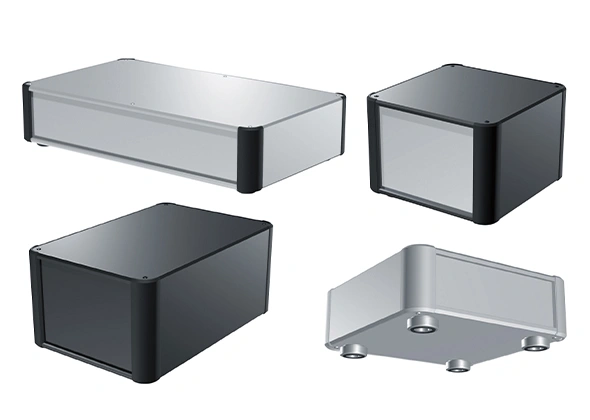
Enclosure materials
Selecting the right material for the enclosure is essential for formability, design complexity, cost-effectiveness, and desired performance. Therefore, you must consider the different factors while choosing an enclosure material for your applications.
Some considerations are;
- Mechanical strength(tensile, compressive, shear)
- Hardness
- Corrosion Resistance
- Thermal properties
- Weldability
- strength-to-weight limitations
- Material availability and cost
Next, the table below outlines the material options for sheet metal enclosures
|
Metal / Alloy |
Suitable grades |
Properties |
When to use? |
|
Cold-rolled steel |
SPCC, CR |
Strong, cost-effective, good formability, paintable |
General-purpose enclosures, indoor racks |
|
Galvanized steel |
G60, G90 |
Zinc coating gives extra corrosion resistance |
Outdoor and industrial systems |
|
Stainless steel |
304, 316 |
Corrosion-resistant, higher strength, weldable |
Harsh/food/medical/marine environments |
|
Aluminum |
5052, 3003, 6061 |
Lightweight, good thermal conductivity, anodizable |
Weight-sensitive, EMI housings, heat-sink enclosures |
|
Copper |
C110 (ETP) |
Excellent electrical & thermal conductivity, aesthetic |
Conductive/heat-dissipating enclosures, EMI grounding |
|
Brass/Bronze |
C260 brass, phosphor bronze |
Attractive finish, moderate strength |
Aesthetic panels, low-volume custom enclosures |
Read More:
How to Design a Sheet Metal Enclosure?
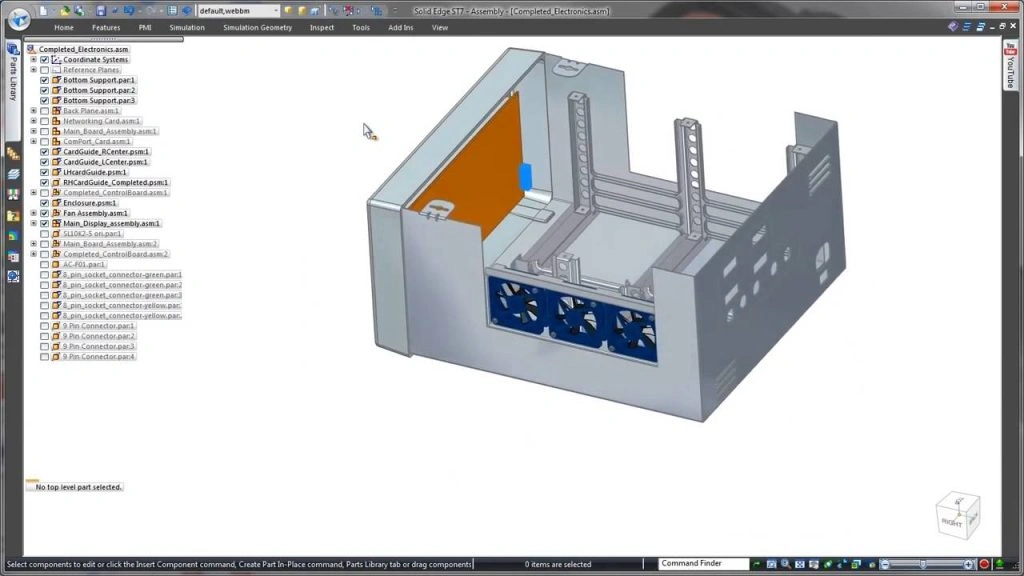
Enclosure design
Designing a sheet metal enclosure requires identifying the end requirements, choosing the right dimensions, shape, and finish, along with consideration of several key factors.
Let’s examine the various steps involved in the sheet metal design of an enclosure.
Identify Design Requirements
First, identify the functional, performance, aesthetic, and dimensional requirements based on the end application of the enclosure. Define operating conditions, mounting requirements, environmental exposure, and other relevant factors.
- End Use: Define where the enclosure will be used, such as mechanical, electrical, electronics, or other types of equipment/systems.
- Operating Condition: Define desired mechanical stress, vibration, heat, moisture, or other operating conditions.
- Required Mounting: Determine the mounting option, such as wall, tabletop, or other type of mount.
- Material Properties: Define the strength, weight limit, conductivity, corrosion-protection, and other material properties required for the application.
- Dimensioning: Based on the size of components to be enclosed, define the height, width, and positions of holes, slots, etc.
Sheet Thickness
Choose the right sheet thickness for the enclosure based on the desired strength-to-weight ratio, durability, punch size, and structural integrity. The selection process entirely depends on the end-use requirements.
You can refer to the chart of sheet metal gauge while choosing the thickness.
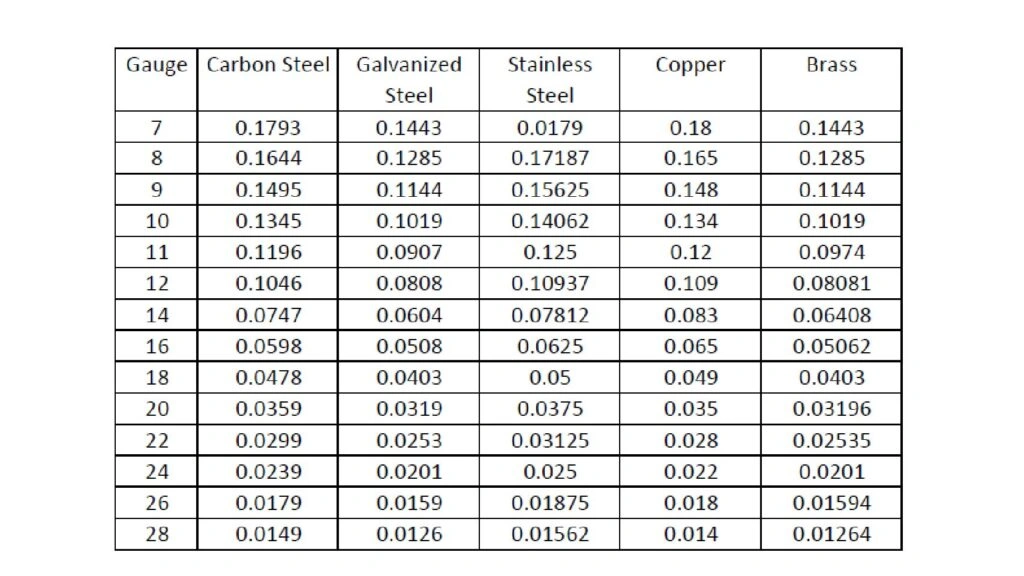
Sheet metal gauge
In the data table above, the sheet metal thickness of different materials is given in inches corresponding to gauge size.
Select the Enclosure Geometry
L-shape, F-shape, U-shape, square metal basket, and folded box are the common geometries practiced in enclosure design. However, you can customize the shape according to specific needs.
- F-shape: Simple and easy for fabrication, used for PCBs, connectors, etc.
- Folded Box: It is made by multiple bends and punching small holes & ventilation openings in the sheet metal.
- L-Shape: Simpler than the F-shape, and suitable for applications requiring frequent access to internal components.
- U-shape: It involves a tough base with side sheets, resembling the U-shape.
Finalize the Dimensions
Dimensioning not only defines the size of an enclosure and the position of its features, but is also crucial for DFM and accurate assembly. Therefore, finalize the dimensions and tolerances considering manufacturability, fit, functionality, and performance.
So, decide the following dimensions.
- Dimension of the flat sheet required to build the enclosure.
- Size of features like bend radius, hole diameters, cutout size, and their positions.
- Spacing between features and their alignment.
Choose a Surface Finish
Select a surface finish for the enclosure based on the application environment, aesthetic importance, and the type of sheet metal. The compatible finishing options are anodizing, plating, galvanization, and powder coating.
Draft the Design on CAD Software
Based on the identified requirements and finalized dimensions, draft the design using computer software such as AutoCAD, CATIA, and SolidWorks.
The next section will elaborate on the critical rules/considerations for sheet metal enclosure design.
Try Prolean Now!
Considerations for Sheet Metal Enclosures Design
Let’s discuss design considerations for sheet metal enclosures.
Choose the Consistent Bend Radius
Bend radius refers to “radius of curvature formed by bending,” which affects the structural integrity of enclosures. Therefore, you must choose the right bending radius and make it consistent. Here are some rules related to bend radius;
- Inside bend radius (R) ≥ sheet thickness ( t)
- Min. flange length (L) ≥ 3 to 4 x sheet thickness ( t)
- Bend to bend distance (D) ≥ 2.5 x sheet thickness ( t)
How tight or open a bend you can form depends on the flange length and thickness. Large bend radius with short flanges can lead to material fracture.
Consider the Assembly Method
Most of the sheet metal electronic enclosures are made by assembling multiple sheet metal components. Therefore, choose an assembly technique and consider that in your design. For example, you need to align the holes in joining parts if you are using nuts and bolts.
The common methods for sheet metal enclosure assembly are welding, screw fastening, and nut & bolt fastening.
Clearance and Fit
Consider the position and alignments of mating features with respect to the bend radius in sheet metal components. Ensure the tool access to fasteners, fastener & holes alignment, and the position of clearance holes. So the assembly parts can fit perfectly.
Access Panels
Especially large machinery and electrical enclosures require frequent access to enclosed components for maintenance. For that, you must consider an access panel in your design, like one with hinges.
Ventilations for Efficient Heat-Dissipation
If the inside components have a higher tendency to generate heat, you must optimize the enclosure design for efficient heat dissipation. Features like slots, vents, and channels can be integrated into the design at the right positions. You must strategically choose the location, shape, and size of these ventilation features.
If you are unsure about the manufacturability of the design you have prepared, you can consult with an expert manufacturer like ProleanTech for optimization.
Furthermore, material selection also impacts the heat-dissipation rate of the enclosure. For example, aluminum alloy sheets transfer the heat quickly and avoid the buildup.
Steps of Metal Enclosure Manufacturing
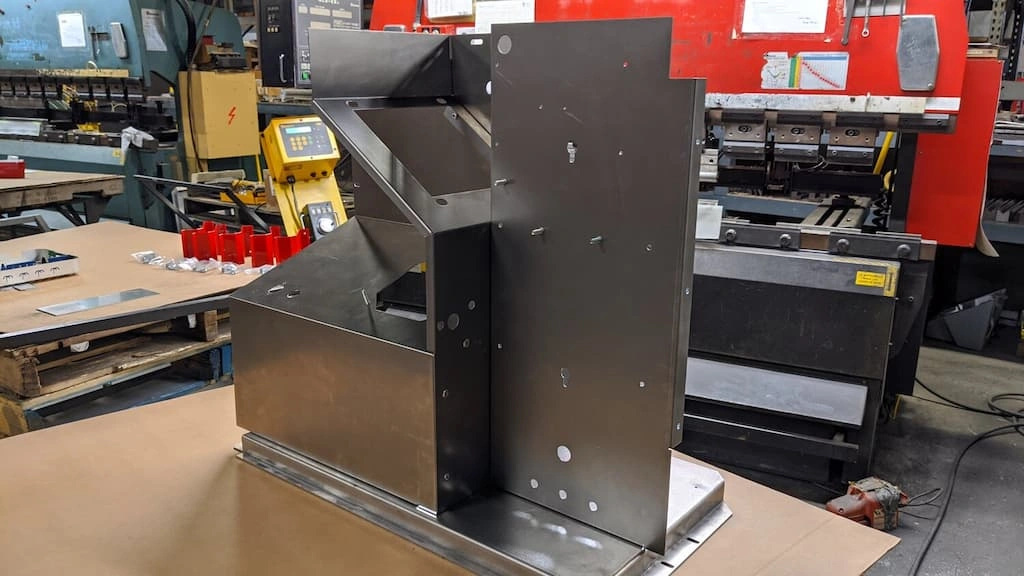
Enclosure manufacturing
Once the enclosure design is ready, its manufacturing is the next stage, which involves strategic planning of metal forming processes to shape the raw work sheet.
Let’s look at the steps of metal enclosure manufacturing.
Cutting of Sheet Metal
First, custom-cut sheet metal into the desired flat size from commercial sheet metal blanks and fix it into the feeding system of the forming setup. Laser cutting, shear cutting, and other suitable techniques can be used for this.
Finalize the Forming Methods and Their Sequence
Based on the features of the design (like bends, holes, stretching, etc), choose a metal forming method. Whether simple bending is enough to obtain the shape or it requires progressive metal stamping. Consequently, decide the sequence of forming operations in which order you want to execute them.
Machine Setup and Tooling
Make Dies, punches, fixtures, or other tooling required to form the enclosure shape. For complex shoes, you might need custom tooling, whereas a simple metal electronic box enclosure can be made with standard V, U, or other bending methods.
Sheet Metal Forming Process
Ensure proper alignment between the die, pressing punch, and worksheet. Then, start the forming process. It requires a CNC program if you are using CNC bending, stamping, or other similar methods.
Industries Using Sheet Metal Enclosures
Industries like electrical & Electronics, telecommunication, energy, automotive, medical, and home appliances use sheet metal enclosures for housing of devices, systems, or components.
Next, the list below outlines examples of applications across various industries.
- Electronics: Server chassis, rackmount panels, switch cabinets, and router housing
- Industrial Automation: Control cabinets, motor enclosures, junction boxes, and power distribution units.
- Home Appliances: Microwave casings, housing for washer/dryer control panels, and HVAC unit housings.
- Automotive: ECU housings, battery covers, and HVAC duct housings.
- Medical: Enclosures for diagnostic instrument enclosures, sterilizable cabinets, infusion pump housings, and lab instrument boxes.
Try Prolean Now!
Summing Up
We have discussed various aspects of sheet metal enclosures, including material selection and design guidelines. It concludes that you must identify the end-requirements of the intended application, choose the right material, and follow various design rules for manufacturability and structural integrity.
Have your sheet metal enclosure ready, but are not sure how to optimise it for better performance and ease of fabrication? Contact us. Our engineers can guide you through every minor detail.
FAQ
What are the benefits of using aluminum over stainless steel for enclosures?
Using aluminum over stainless steel provides benefits like lightness, good formability, better heat dissipation, and corrosion protection.
Why is ventilation important in sheet metal enclosures design?
Ventilation is important for heat dissipation to prevent component overheating and failure. Improper vents in enclosure design affect the reliability, thermal safety, system downtime, and durability.
How do you design a sheet metal enclosure?
Sheet metal enclosures are designed on CAD tools based on defined bend radii, cuts & hole sizes, fits, sealing, assembly features, and finish. Meanwhile, maintaining manufacturability is key while designing an enclosure.

0 Comments