
EV parts manufacturing
Let’s learn EV parts manufacturing and what matters during supplier selection. Key EV components include battery housings, electric motors, inverters, thermal management parts, and structural components. Battery enclosures need tight tolerances and strong thermal control. Motor casings demand dimensional accuracy and vibration resistance. Inverters rely on precision machining for heat dissipation. Thermal systems require leak-free joints and material stability. Structural parts focus on strength-to-weight ratio and safety compliance.
Prolean Tech specializes in the production of high-quality custom automotive parts using advanced manufacturing techniques like custom CNC machining services. We have expertise in automotive injection molding and 3D printing automotive parts, as well as precision machining within the EV industry.
This comprehensive guide covers everything that manufacturers need to learn about the production of EV car components.
Understanding EV Parts Manufacturing
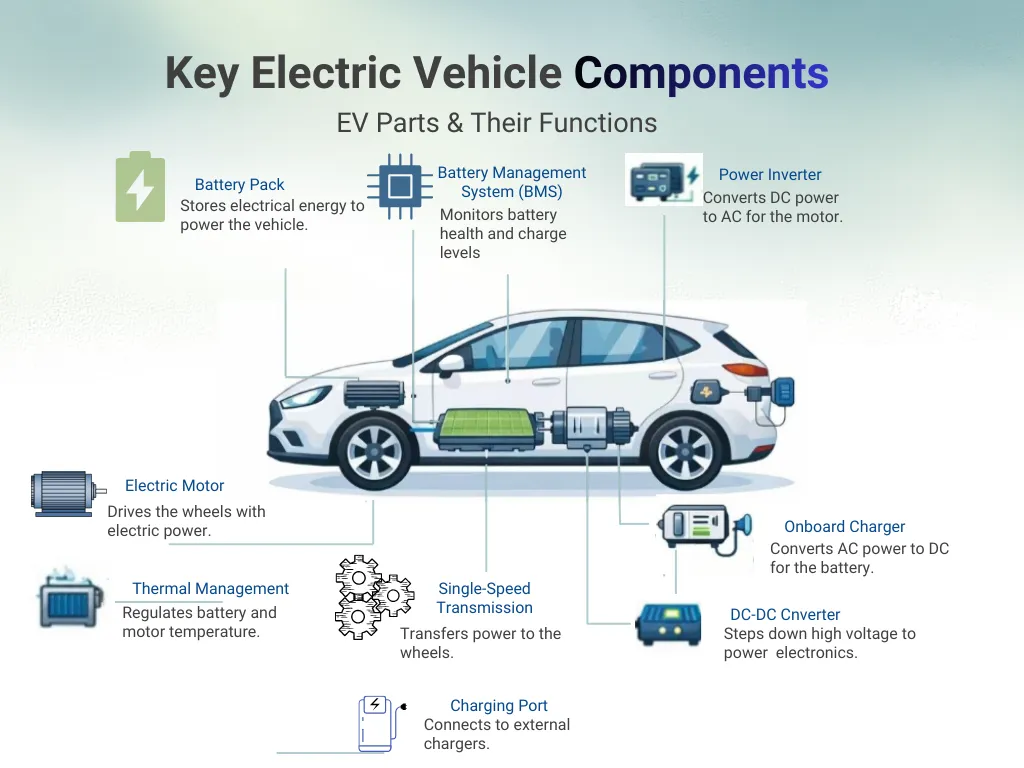
Key Electric Vehicle Components – EV Parts & Their Functions
The production of EV auto parts is very different from that of traditional automobiles. Components for electric vehicles must be able to handle high voltages and thermal loads while reducing weight. Tolerances must be tightened, and materials with electrical and thermal properties must be used.
Electric mobility is a new market for component suppliers. Manufacturers need to adapt their capabilities to meet changing requirements. Understanding these differences is critical for success in EV markets.
Types of EV Car Components
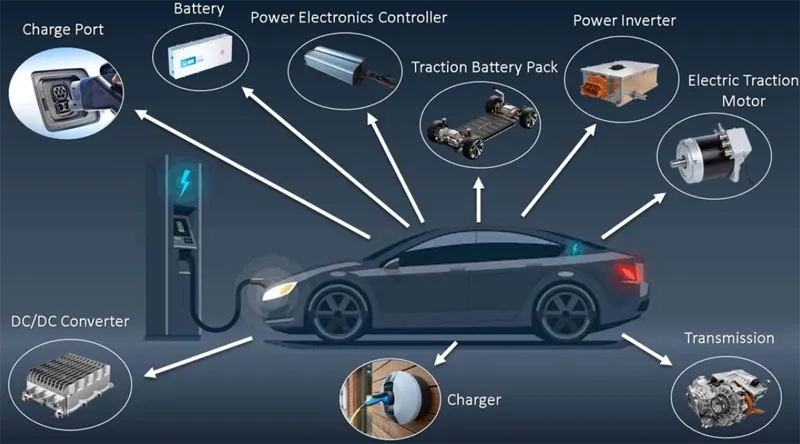
EV Car Components
Battery Components
The battery’s cells are kept within a thermal protective enclosure, which also provides impact resistance and lightweight construction. Automotive parts of battery systems include precision-welded aluminum enclosures and thermal management devices.
To shield battery management systems from electromagnetic interference, protective boxes employ thermal isolation, which also protects sensitive electronic systems from outside interference. Such components are extremely high-tolerance parts and require considerable assembly in cleanroom conditions.
Electric Motor Components
To ensure effective bearing alignment, motor casings and bells must be meshed with great precision. When fully assembled, these units will experience high thermal and mechanical pitch, which is why great care is taken to employ suitable automotive machining technologies to ensure all critical dimensions are achieved.
To optimize energy performance in laminated stators and rotors, Eastern Steel is used. High-speed stamping not only produces large quantities of uniform laminations but also speeds up the assembly by careful stacking and gluing.
Power Electronics Enclosures
Effective electronic protective packaging must incorporate efficient heat dissipation, which is a common characteristic of most inverter and converter housings. Advanced thermal management design and machining are combined in modular construction.
Securing electrical connections requires precision in connector housings and terminals. Visibility of Housings and Terminals. Manufacturing quality allows for dependability in demanding situations.
Essential EV Parts Solutions
Custom automotive parts for EVs must be lightweight and must have a heat-dissipating design. Parts must also be compatible with electromagnetic fields.
- Lightweight Design: Performance and EV range are interdependent. An increase in vehicle performance, efficiency, and operating conditions also increases range. Using advanced materials and topology optimization, manufacturers can reduce vehicle mass. Aluminum and magnesium alloys are lightweight and have excellent strength-to-weight ratios, making them suitable for a variety of applications. To further reduce weight, especially in composite materials, alloys can be used in conjunction with polymers.
- Thermal Management: The efficiency of heat dissipation of EV components proportionally affects their lifespan. Batteries, motors, and electronics generate heat, and optimal operating temperatures can be achieved with innovative cooling solutions. Precision-crafted tubes can be used with heat exchangers in liquid cooling systems. To improve heat transfer, a thermal interface pad can be used, along with phase change materials. Fluid engineering and thermal expertise are required for these systems.
- Electromagnetic Compatibility: It is critical to mitigate any possible electromagnetic interference among different electric vehicle components. Appropriate shielding and grounding methodologies can be applied to avoid performance degradation. In automotive shielding, metal etching is used to form and manufacture elaborate, complex shielding. The performance of electromagnetic compatibility can further be enhanced using tailored conductive gaskets and fleet EMC components. Compliance must be guaranteed through the synergetic efforts of design and manufacture. Functionality tests are conducted for the product before moving to mass production.
Advanced Manufacturing Processes
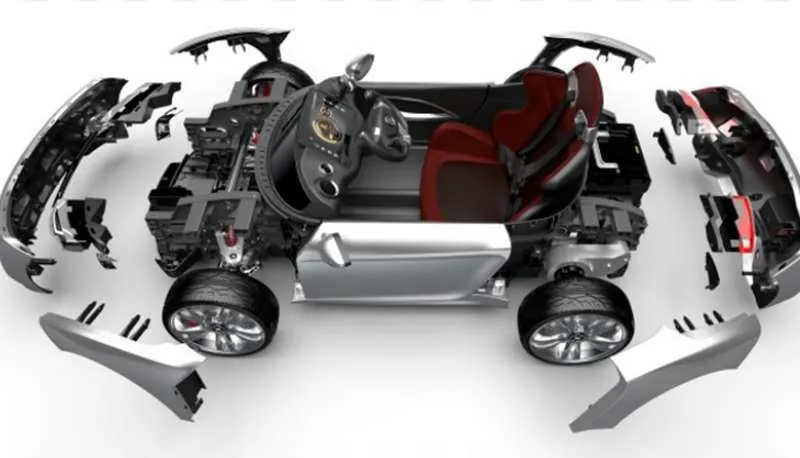
Electric Car Parts Manufacturing
CNC Machining of EV Parts
Custom CNC machining is one of the ways precision EV components are delivered. Multi-axis machines can manufacture and machine elaborate complex geometries in a single setup. In this way, accuracy and reduced mistakes are improved and enhanced.
Some materials, especially those that are of high strength or are titanium alloyed and aluminum alloyed, are considered difficult or even impossible to machine. Specialized tooling is needed. Production must be optimized, including programming and cutting strategies, in order to improve and enhance surface finishes for the performance of the component.
Die Casting Technology
Automotive die casting is a low-cost method used to manufacture complex parts in aluminum and magnesium. In high-pressure die casting, the molten metal is forced into complex mold cavities, filling them. With this technique, machining is minimized, and near-net-shape parts are produced.
A vacuum-assisted technique is used to lessen the porosity of fully enclosed elements, such as motor and battery housings. Other vacuum-sealed components also benefit as well. Post-casting thermal treatments further enhance the mechanical characteristics of the alloy.
Injection Molded Plastic Parts
Automotive injection molding is used to produce the plastic parts used in the vehicle’s interior and the battery’s charging system. The engineering thermoplastics used in the molding process are strong and provide ample insulation. Involves the merging of two or more types of plastic in one component.
Rigid components are overmolded to provide soft-touch surfaces and seals. For plastic housings, metal components are integrated using insert molding. These methods enhance reliability and minimize the number of parts that require assembly.
3D Printing
3D metal printing is used for rapid prototyping of complex auto parts. In traditional manufacturing, complicated internal cooling channels are impossible to create. This technology revolutionizes the design of components requiring thermal management.
A polymer 3D printer is used to quickly create prototypes and production tools. It enables design improvement iterations without the expense of modifying the tool and auto parts materials. With technology advances, more people are using additive manufacturing.
Material Selection for EV Autoparts
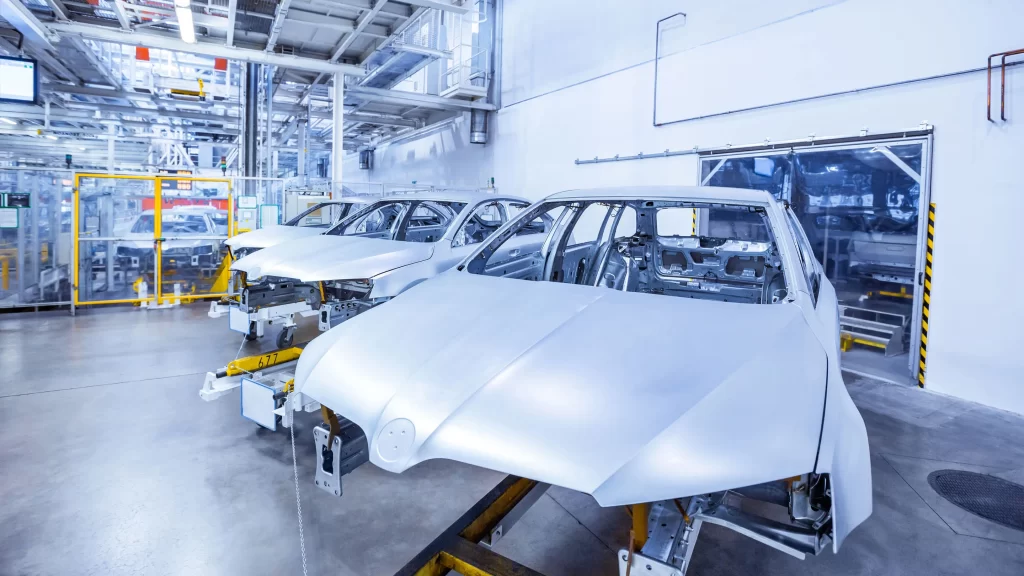
Shifting gears in EV manufacturing
Metals
Because of its low weight and capacity for conductivity, aluminum is the preferred metal for electric vehicle components. Different alloys have different combinations of strength, formability, and resistance to corrosion. For such components, Aluminum 6061 and 7075 are implemented.
Copper and its alloys are necessary for the conduction of electricity in motors, chargers, and other electronic components. Precision components are best fabricated using brass and bronze. If parts are exposed, stainless steel is a good option because of its resistance to corrosion.
Engineering Plastics
High-end polymers can act as metal substitutes in electrical insulation. Electronic devices and motors can use PEEK and PPS. Using nylon and polycarbonate for housings can resist impact. Plastics can have increased strength and stiffness by using glass and carbon fiber. These composites make it possible to have structural components that are lightweight. The decision of the material is influenced by weight, cost of manufacture, and performance.
Composite Materials
For lightweight construction, carbon fiber composites are best because they have the highest strength-to-weight ratio. There are other high-performing components of electric vehicles that can be manufactured using such materials. The processes used for the manufacture are autoclave curing, resin transfer molding, and other similar processes. For high-volume production, sheet molding compounds are a good choice. These composites are lightweight and offer a lot of freedom in terms of design.
Quality Standards for EV Parts Manufacturing
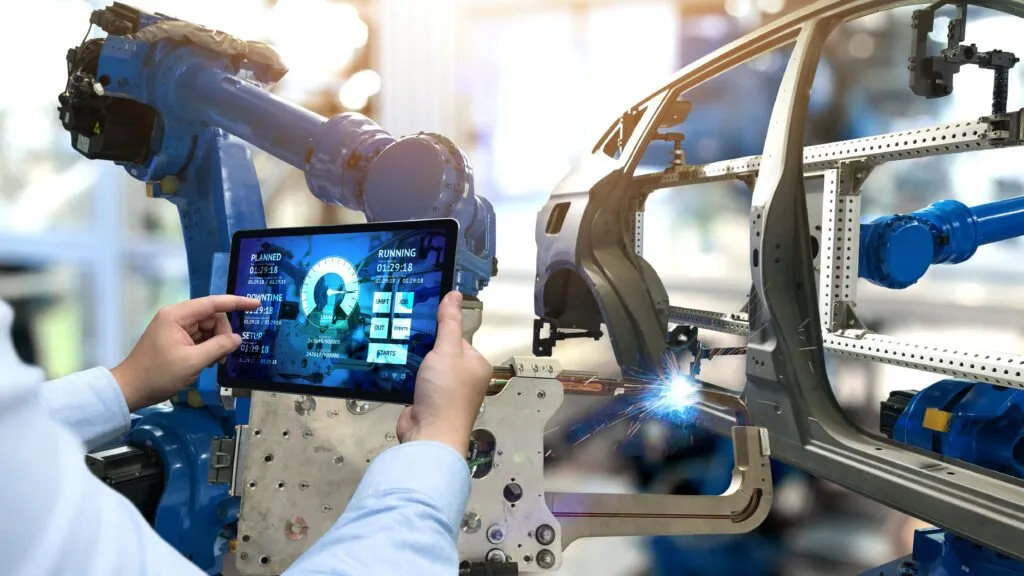
Quality Control for EV Parts
Automotive Quality Requirements
The IATF certification provides credibility regarding stability and consistency in the automotive field. The IATF standard is an automotive-specific add-on to ISO 9001. Quality management must be robust from the suppliers.
The level of APQP, Advanced Product Quality Planning, is the guiding framework to control new and updated component design and development. The PPA, Production Part Approval, framework is used to check the verification of the capabilities of the fabrication to mass-manufacture the component. This is to ensure the specifications of the components to be produced.
Electrical Safety Standards
Safety regarding the added components for EV is of a higher level than standard automotive components. Safety testing for insulation resistance, dielectric resistance, and arc resistance is required. High-voltage components must be handled with the utmost care.
Safety for EV components: UL, IEC, and SAE established these standards. Compliance testing is required for design validation, which is to be done before the beginning of production. Conformance to the standards must be monitored consistently in the manufacturing process.
Dimensional Accuracy
To ensure critical dimensions of EV car parts, CMM Coordinate Measuring Machines are used. Assurance of manufacturing capability is done by SPC Statistical Process Control, which involves continuous monitoring of the manufacturing process. Tight assembly and functioning of the parts are the main reasons for a low tolerance.
Free-form surfaces can be measured with laser and optical scanning. 100% inspection is possible with these methods. The data for digital measurements is used to control the parameters of the machining for efficiency.
Try Prolean Now!
Automotive Machining Challenges
Below are some concerns that may arise during the Production of EV parts.
Complex Geometries
The components of contemporary EVs are designed to maximize efficiency and performance. Accessing the hard-to-reach features at a variety of angles increases performance. Complexity is a focus of advanced CAM programs. The design of reinforced composite thin-walled sections must be carried out with caution to mitigate distortion. Dimensional accuracy relies on both fixture design and toolpath sequencing. Success will demand both skilled programmers and machinists.
Material Properties
Reinforced sections of EVs are a challenge to cutting tooling. Tool wear escalates when machining titanium and hardened steels. Tool life can be optimized by the proper selection of cutting speeds, feeds, and tool materials. The softness of aluminum can result in a buildup of edges and a poor surface finish. This can be mitigated by using cutting fluids and sharp tooling. Improved machining results are a consequence of understanding material behavior.
Production Efficiency
High-volume EV production demands efficient manufacturing processes. Reduced cycle time directly impacts production costs and capacity. Automation and optimized processes increase throughput. Quick-change tools and fixtures reduce setup time. Multitasking machines can complete multiple operations with a single setup. Continuous improvement methods drive continuous efficiency gains.
Surface Finishing and Treatment
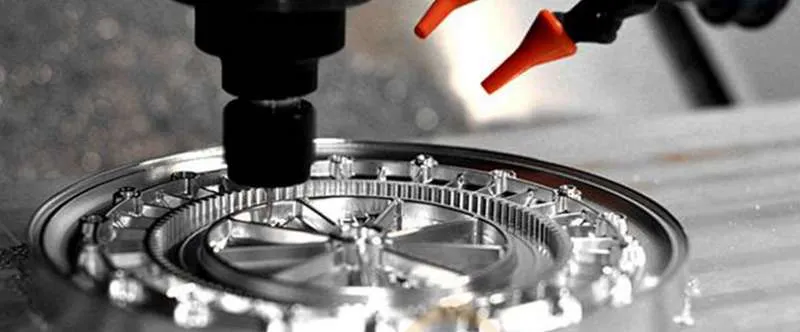
Surface finishes for EV manufacturing parts
Anodizing for Aluminum Parts
Aluminum components are anodized to create a hard, corrosion-resistant surface. Where needed, the oxide layer acts as an electrical insulation. The color anodizing process offers aesthetic options. Hard anodizing creates surfaces that are extremely resistant to wear for moving parts. Controlling the thickness ensures consistency in coating properties. Post-treatment sealing enhances corrosion protection.
Powder Coating
Powder coating is a durable and attractive finish for metal components. It is highly resistant to corrosion and chemicals. It is more environmentally friendly than liquid painting. The application of electrostatics ensures even coverage over complex shapes. Curing in the oven creates a durable finish. Colors can be used to differentiate brands and create an aesthetic appeal.
Electroplating
Nickel and chrome coatings improve corrosion resistance and aesthetics. Zinc coating protects steel from corrosion. The thickness of the zinc plating is controlled to ensure adequate protection, without dimensional problems. The uniform thickness of the nickel coating can be achieved by electroless nickel plating, even on complex geometries. This process provides excellent corrosion and wear resistance. This process is widely used to protect functional components.
Try Prolean Now!
Cost Optimization in EV Parts Manufacturing
We can optimize cost by working on the following factors:
- Easy designs
- Processing method
- Supply chain management
Design for Manufacturing
Early collaboration between the design and manufacturing teams can reduce costs. Manufacturing complexity is minimized by designing parts to be efficient. This balances performance and manufacturability. Standardizing materials and features across multiple parts reduces the variety. Components that are similar allow for bulk purchases and a simplified inventory. Modular design simplifies assembly and maintenance.
Process Selection
The cost of manufacturing is influenced by the choice of appropriate processes. High-volume parts justify expensive tooling for die casting or stamping. CNC machining may be a better option for low-volume components. Hybrid processes combine multiple processes in the best way. Forging or casting creates shapes that are close to net, followed by precision machining. It reduces waste material and machining times.
Supply Chain Management
Strategic sourcing of raw materials controls costs without compromising on quality. Stable pricing and supplies are ensured by long-term relationships with suppliers. Geographic diversification of suppliers reduces risk. Just-in-time delivery reduces inventory costs. Vendor-managed inventory shifts inventory responsibility from suppliers to vendors. These strategies increase working capital efficiency.
Most Predictable Changes for Electric Vehicle Parts Manufacturing
- Automation and Robotics: Automated production cells streamline operations by enhancing uniformity and lowering expenditure. Robots excel at performing monotonous duties with great consistency and accuracy. Collaborative robotics has been designed for safe operations alongside human workers.
- Sustainable Manufacturing: The growing necessity for eco-friendly practices is the core of the demand for sustainable manufacturing. Reworked resource flow is the closed system that has been obtained for electric Vehicles. Evaporative cooling systems for reduced application manufacturing.
- Digital Manufacturing: Before real operations, digital twins assist in process visualization. Development of a process takes less time when it is digitally refined optimally. Current production systems, with instant monitoring systems, provide feedback at the time of production to identify and correct quality problems.
Testing and Quality Control
Quality control is the critical and final step. Testing of new electric vehicles is critical before releasing the public sale of the product.
Non-Destructive Testing
Ultrasonic testing for structural integrity examines internal flaws of castings and forgings. X-ray testing looks for critical inclusions and porosity in components. These methods assure the structural integrity of the components through non-destructive testing of the components.
Eddy current testing shows the presence of surface flaws in conductive materials, while magnetic particle inspection identifies defects in ferrimagnetic materials. Employing various methods of NDT assures quality.
Testing of Performance
To verify that the components are working as intended, functional testing is done. Reliability is tested through thermal cycling. Simulated road wear over years is done through vibration testing. Reliability is tested through thermal cycling. Predicting long-term durability is done through accelerated durability testing. To determine safety margins, destructive testing is done to analyze failure modes, as well as the modes of failure. Meeting extensive testing ensures that the components of the EV are in compliance with the challenging requirements.
Systems of Traceability
Through serialization, individual components can be tracked through their lifecycle. Manufacturing data paired with components can be automated through barcode and RFID systems. This is valuable for traceability in warranty claims and in the case of a recall.
All records of manufacturing and inspection are kept for complete digital documentation. Security in traceability can be strengthened through the use of blockchain technology. These systems encourage improved traceability.
Partnership for Success
The EV industry is huge. When it comes to partnerships in the industry, success comes easily.
- Supplier Selection Criteria: The success of the product is very much dependent on the choice of the manufacturing partner. All three factors, technical capability, quality management systems, and financial capability, are of equal importance. Current customers can provide references that speak to the quality of the partnership. These factors, communication and cultural fit, are essential for the partnership to be successful.
- Collaboration Best Practices: Involving suppliers in the design process from the start helps improve manufacturing. Knowing the right information facilitates communication to solve misunderstandings, delays, and problems that can hinder progress. Challenges can be addressed through problem-solving as a group.
Conclusion
The production of parts for the automobile of the future is on EVs. The industry is shifting towards electric mobility and is opening a lot of opportunities for manufacturers to be innovative. To be successful, you have to have a good command of high-end materials, processes, and quality standards.
Every aspect that goes into an electric vehicle, such as the battery casings and motor parts, needs to be precise and reliable. Prolean Tech has the best capabilities in the fields of CNC machining, automotive diecasting, and advanced manufacturing technology, and thus makes the best partner for you. Reach out to us and learn more about our EV Parts Solutions and how they can help you reach your goals in production and development.

0 Comments