
“Acrylic machining requires specialized tools and techniques like diamond polishing and CNC milling to achieve smooth edges and fine finishes”.
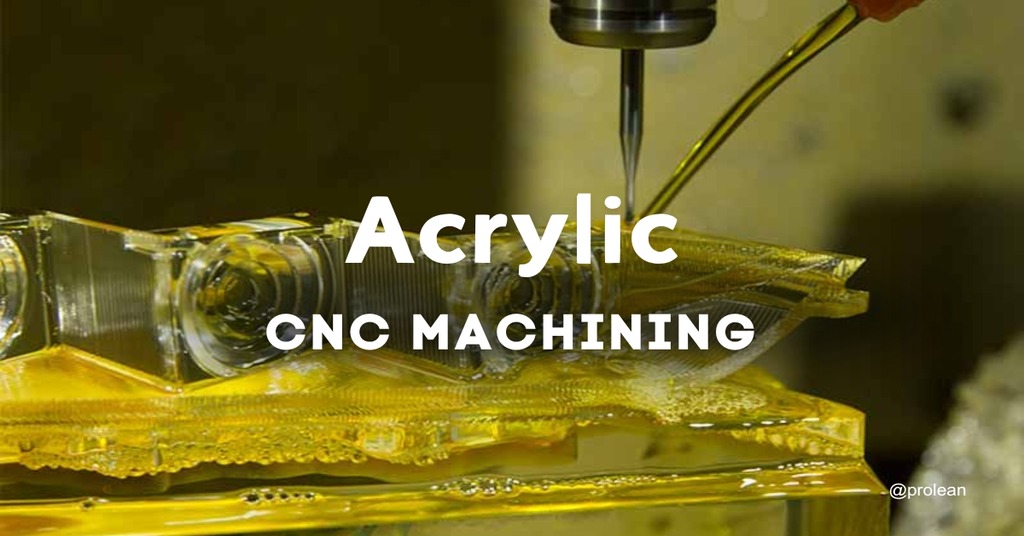
Acrylic machining-feature image
Acrylic, or plexiglass, is distinguished by its high clarity, mechanical strength, and stiffness. Due to its high transparency, it is used as a better substitute for glass in many applications. CNC acrylic machining is the most efficient technique for manufacturing acrylic parts.
Machining acrylic using computer numerical control results in fabricating parts of the correct sizes and shapes. This process entails the controlled application of force to reduce material loss and increase efficiency. The main machines used for acrylic CNC machining include CNC routers, CNC milling machines, and CNC lathes, depending on the shape and requirements of the part. How is acrylic machined with CNC? Are you curious? Read on to learn more about acrylic machining and understand how machining is used for CNC-cut acrylic material.
What Makes Acrylic an Optimal Choice for Machining?
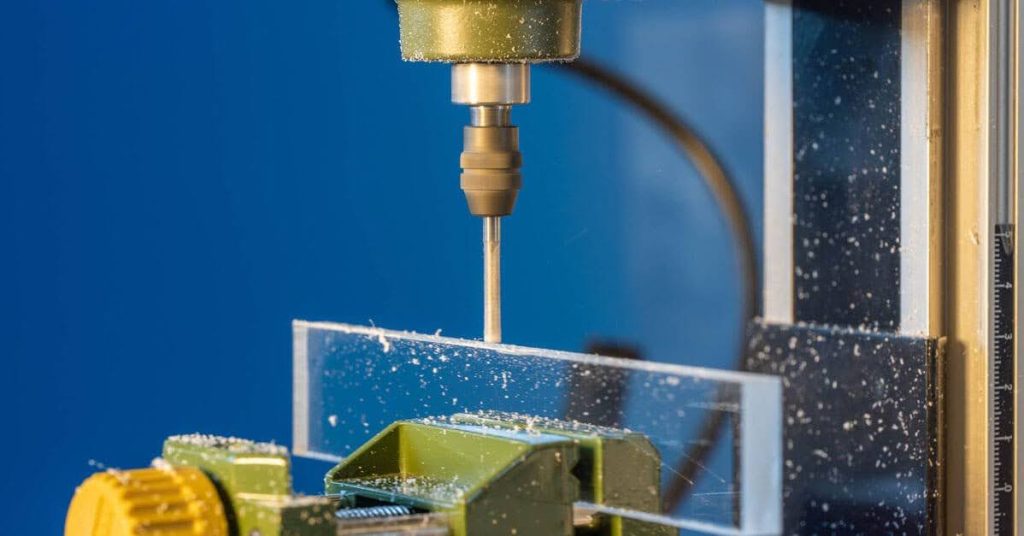
Acrylic CNC machining
Polymethyl methacrylate, commonly called acrylic, is a thermoplastic polymer with unique characteristics. This material offers excellent surface hardness, weathering, dimensional stability, and optical clarity, making it a good substitute for glass. Key benefits of CNC acrylic include:
- 50% Lighter Than Glass: Acrylic is lighter than glass, making it easier to handle and fix in the desired place.
- Generally More Affordable: Acrylic is usually cheaper than glass and, therefore, widely used in different applications.
- Higher Impact Resistance: Acrylic’s impact strength is higher than glass’s, making it more durable and long-lasting.
These features make acrylic a good choice for prototype and production applications, mainly where high-precision CNC machining is required. (Learn more about CNC plastic material)
Why is CNC Machining Ideal for Machining Acrylic?
CNC (Computer Numerical Control) machining is one of the most effective manufacturing methods, and it involves using computerized tools to shape the material. It is particularly effective for working with acrylic for several reasons:
Material Compatibility
Acrylic is a thermoplastic, making it flexible when exposed to heat. This characteristic makes it suitable for CNC machining, as the material can be easily shaped and cut.
Precision and Accuracy
CNC machines can cut with high precision in thousandths of an inch. This level of accuracy is required when cutting edges and other measurements in acrylic parts.
Enhanced Production Speed
CNC machining is faster in the production process than conventional machining processes. This efficiency is particularly beneficial for small to medium quantities of acrylic parts, thus improving manufacturing.
Waste Reduction
CNC machining is accurate in the amount of pressure used in cutting, so minimal material is used, and no material is damaged during the process. This leads to the achievement of high production rates and precise forms of the parts to be manufactured.
Consistent Repeatability
CNC automation also makes it possible to have different parts or batches of manufactured products of the same quality. This reliability is significant in ensuring that the quality of the acrylic parts produced in the market meets the required standards.
Try Prolean Now!
Tips For CNC Acrylic Machining
To maximize the efficiency and outcomes of acrylic CNC machining, follow these steps;
- Secure the Acrylic Billet: For the required outcomes, the acrylic piece must be well secured to ensure no vibration or misalignment that may result in defects.
- Choose the Right Cutter: Use a sharp cutter designed for plastics. Single-flute or O-flute cutters are commonly recommended for acrylic because they provide better chip removal and help reduce heat buildup.
- Monitor Cutting Depth and Direction: To enhance the accuracy of the designs, the cutting depth should match the tool size, material thickness, and machine setup. For example, a 6 mm O-flute tool may use a starting depth of around 1 to 3 mm per pass.
- Set Accurate Feed Rate: The feed rate should be matched with the spindle speed and number of flutes. A feed rate that is too low can increase friction and heat. On the other hand, an excessive feed rate can increase cutting forces and cause chipping or vibration.
- Check RPM Settings: Try to keep the feed rate lower as per the RPM so that the heat can be controlled and the material cannot be handled at a high temperature. Typical starting spindle speeds for acrylic are around 12,000 to 18,000 RPM, depending on the tool, acrylic type, and machine.
Read more: machining plastics guide.
Here are some easy measures that can be taken to avoid the melting of acrylic while undergoing CNC Machining.
Adjust Spindle Speed & Feed Rate
The spindle speed and feed rate must be appropriately adjusted to prevent heat from forming. They also cause melting, leading to a reduction in the RPMs. A low feed rate is also practical because the material is taken off slowly and with little heat, eliminating the risk of burning the material.
Select the Proper Flute on the Tool
It is recommended that the tool always have one or two flutes for plastics at once. These tools come in handy when removing chips and reducing the heat produced. When cutting with acrylic, the single-flute tool is the best to use most of the time.
Cooling Techniques
Acrylic is heat-sensitive, so cooling methods must be used in its production. To cool it, air is blown with a special coolant spray. This, in turn, assists in lowering the amount of heat the material can attain before it begins to combust.
Secure the Material to Reduce Vibration
The material often causes vibration during machining, which in turn causes wear and heat. When the heat is too much, the material can melt. Ensure the acrylic is well anchored so it cannot move around when cutting. Some ways of handling the motion of the material during the machining process include using soft jaws or vacuum clamping.
Select the Proper Cutter Geometry
It is advisable to always use cutters meant for acrylic material only. These have a cutting edge and a high rake angle, which shaves the material. This eliminates resistance and heat, so the component cannot melt.
Steps For Acrylic CNC Machining
Acrylic CNC machining involves using computer-controlled tools to cut, carve, and engrave raw acrylic sheets into finished products or sub-assemblies, with several steps to achieve high-quality output. The following is a step-by-step guide on how to CNC machine acrylic;
- Conceptualization and CAD Design: It begins with the design of computer-aided design (CAD) software, where the whole machining process begins with the design layout.
- Material Selection: The choice of cast or extruded acrylic depends on the project’s requirements, since they both have benefits and ways of being machined.
- Machine Setup: CNC machine readiness involves assessing the machinery’s components’ performance and appropriately positioning them
- Tooling Selection: Choosing appropriate cutting tools is crucial to avoiding damage to the acrylic and achieving the right degree of precision and surface finish.
- Securing the Material: The acrylic sheet has to be well secured by clamps so that there is no movement or vibration during the machining process that may affect the precision.
- Parameter Configuration: The spindle speed, feed rate, and cutting depth are adjusted according to the properties of acrylic to ensure the best results during the part’s machining.
- CAM Programming: This design is then converted into a series of steps that the CNC machine uses to cut the material to the desired design.
- Test Cut (Optional): This may involve trial cuts to determine whether there will be an issue and ensure the machine is well-positioned for the final cut.
- Final Machining: The CNC machine acts as instructed and cuts the acrylic sheet into the right shape and size for the project.
Try Prolean Now!
CNC Machining Operations Applicable For Acrylic
CNC machining provides numerous operations suitable for acrylic, and manufacturers can benefit from the material’s transparency, strength, and flexibility. These processes enhance acrylic’s ability to generate high-quality parts with exact specifications and fine surface finishes.
CNC Acrylic Milling
CNC milling is a highly adaptable operation used on acrylic to produce complex designs and give the material a smooth finish. Acrylic milling entails using a rotary cutting tool to shave material from the acrylic to create three-dimensional shapes. The accuracy of CNC milling reduces problems such as melting or cracking. Therefore, acrylic milling is widely used in the automotive and medical device industries.
CNC Acrylic Turning
Another necessary process is CNC turning, where the acrylic is turned on the lathe, and a cutting tool forms cylindrical parts. This process is particularly suitable for making accurately dimensioned, smooth-surface, seamless, and round acrylic parts such as rods, tubes, and circular-shaped parts. The controlled environment in CNC turning does not compromise the optical clarity and strength of the acrylic. Thus, it creates parts for lighting fixtures, architectural applications, and electronic gadgets.
CNC Acrylic Drilling
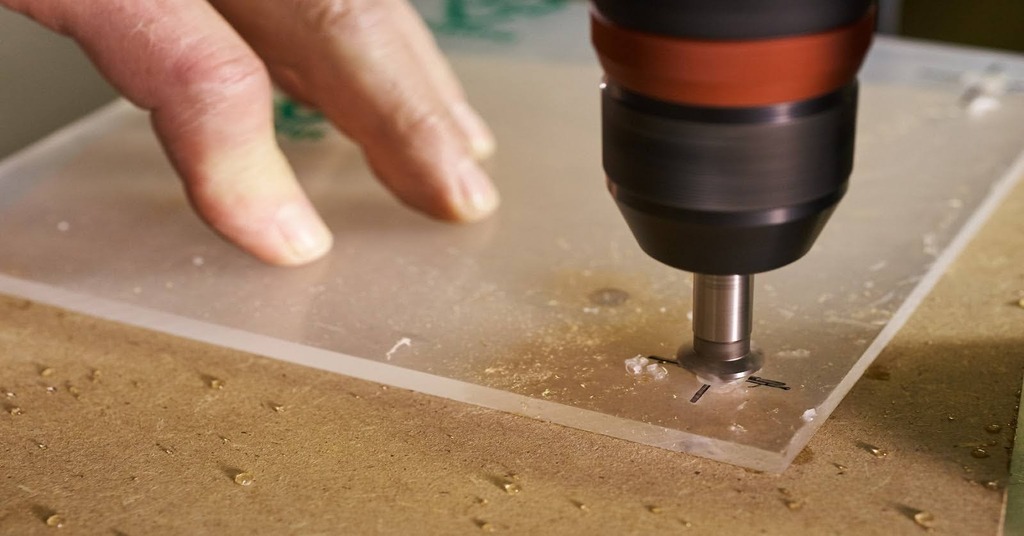
Acrylic CNC drilling
CNC drilling entails making holes in the acrylic material, which can be simple or complex in design. This process is helpful for those parts that need a specific location of holes for assembly or mounting. The drilling that CNC does is very accurate, and the holes are smooth and free from burr, and the material is not damaged. CNC drilling in acrylic is used in making displays, enclosures, and other parts where the alignment of the holes is critical.
CNC Acrylic Engraving
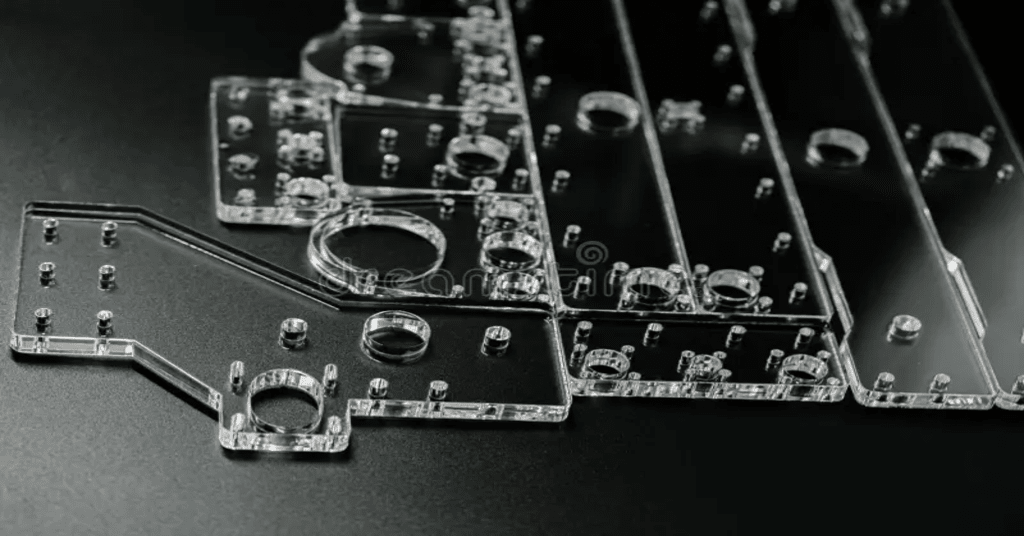
CNC Acrylic engraving
CNC engraving is a method of carving intricate designs, logos, or messages on the surface of acrylic products. This process also achieves high accuracy levels, meaning that designs can be very detailed and elegant. Since precision is vital, CNC engraving is commonly applied in producing signs, awards, and industrial labeling. It is not aggressive in any way that could harm the acrylic, yet it effectively provides clean and clear engravings.
CNC Acrylic Cutting
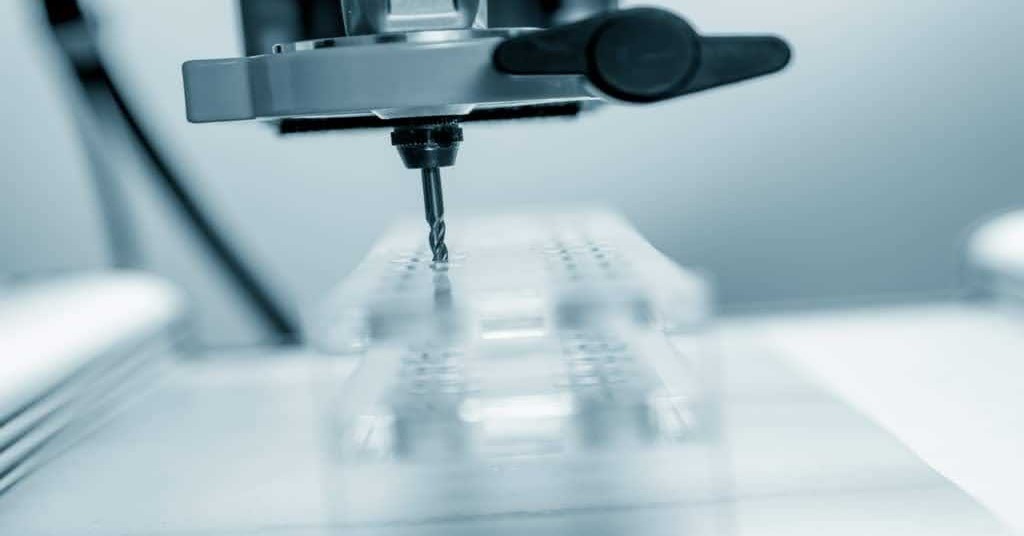
CNC acrylic cutting
CNC cutting is an accurate technique of cutting acrylic sheets into particular forms and sizes. This is done through a computer numerical control router or mill that cuts through the material along a set path to create clean edges and detailed designs.
CNC cutting is suitable for acrylic because the cutting conditions can be controlled. Proper tool selection, speed, and feed rate help reduce cracking and chipping. It is widely used to make architectural models, electronic circuits, and other components and parts needing accurate measurements.
CNC Acrylic Laser Cutting
CNC laser cutting is beneficial for cutting acrylic since it can create fine cuts. This process involves using a laser beam to cut through the material, resulting in smooth edges that do not require further sharpening. Laser cutting is most suitable for intricate or complex designs, like signage and ornaments.
CNC Acrylic Laser Engraving
Laser engraving with CNC allows the desired patterns to be inscribed into the surface of the acrylic material without actually carving it. This process gives the engraved area a frosted, white look, contrasting the transparent acrylic substrates nicely. Laser engraving is very accurate, and the surface can be engraved with fine details of images, text, and patterns. It is ideal for logos, signage, and aesthetics.
Try Prolean Now!
Surface Finishing Options For CNC Machined Acrylic Parts
The inherent properties of acrylic mean it does not usually need surface treatment. However, there are some occasions when one has to fill the object for beauty or functionality.
Standard Finish
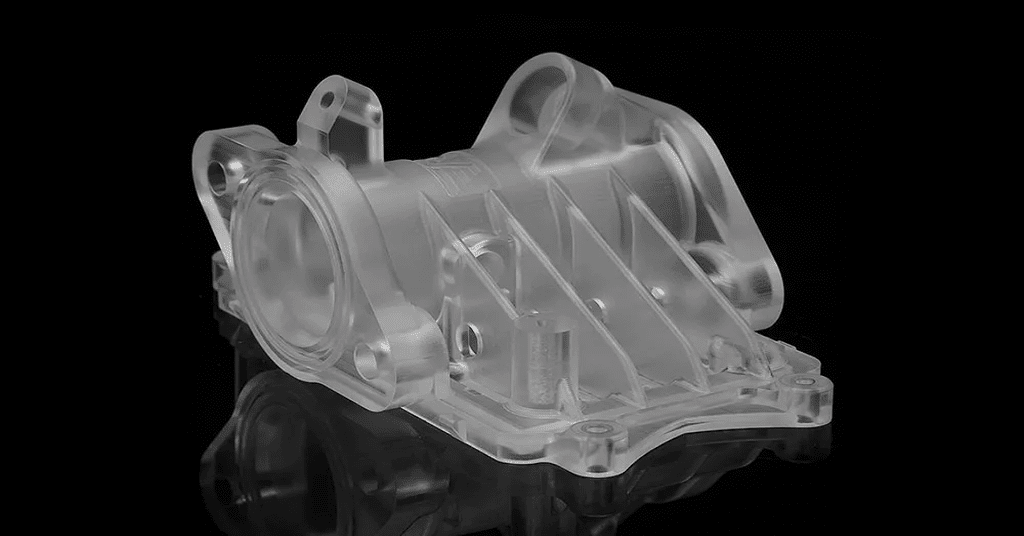
Standard finished acrylic component
A standard finish reduces the possibility of getting marks from the cutting tools. This involves a little friction on the item’s surface to be coated. Marks are still possible, but they could be more apparent. The finish is better than raw machining. Moreover, it retains the material’s optical properties.
Bead Blasting
Bead blasting is more complex than sandblasting since it uses various types of beads and bead sizes. It is a process of using beads and firing them at high pressure. This leads to a matte-frosted texture of the material’s surface used to produce the product. The process effectively conceals tool marks and provides a uniform surface finish. Bead blasting is done in a controlled environment, which helps prevent the wastage of the acrylic material used in making the product.
Custom Polishing
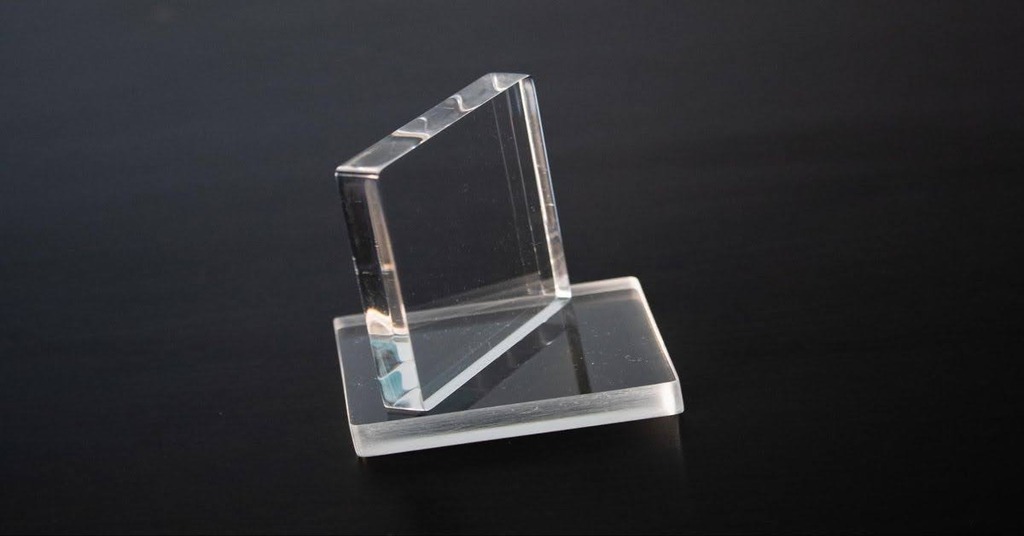
Polished acrylic parts
Custom polishing provides the highest level of clarity and brightness. There are two fundamental polishing methods: chemical polishing, which uses solvents, and wet sanding, which uses sandpaper. Both are very time-consuming but very important. They are needed in high-light transmission applications. The final product is reasonably technical and visually appealing.
Comparison between Machining Acrylic, 3D Printing, and Injection Molding
Acrylic is preferred to be CNC machined because it offers the best clarity compared to other materials. Other techniques are 3D printing and injection molding, but each has advantages and disadvantages.
CNC machining helps achieve 100% transparency in acrylic machining. It also produces complex parts, especially in low- to medium-volume production runs.
The two benefits of 3D printing are time and geometry. However, CNC machining, used in acrylics, only produces well-defined parts like FDM printers.
Ideally, injection molding is used to make many acrylic parts simultaneously. Molding suits various colours but cannot be as detailed as CNC machining and 3D printing. However, large-scale production is allowed since transparency is not a concern here. (Learn more through our guide on metal vs plastic machining)
Applications of Acrylic Machining
During the Second World War, PMMA or acrylic produced gun turrets, canopies, and windshields. Recently, it was added to many commercial products, and today, many industries use acrylic for manufacturing custom acrylic parts.
Automotive Industry
The automotive industry is the largest consumer of acrylic sheets for car glasses, car panels, and motorcycle screens. Some parts, such as interior and indicator light covers, are typically made from coloured acrylic sheets. Acrylic is very pliable and, as such, is used to manufacture numerous auto parts and novelties.
Lighting and Electronics
Acrylic is a transparent material that can increase the light-emitting capability of LED lights due to its transparency. Due to the excellent light transmission and good scratch resistance, it is suitable for constructing lamps and other lighting. For electronics, acrylic is used where transparency is essential, such as in display parts.
Medical and Healthcare
Acrylic is preferred in the medical field since it is clean and easy to clean. It is used to produce incubators, medical cabinets, and other medical appliances. It is also compatible with biological materials and can be used in healthcare products like dental fillings.
Construction and Architecture Industry
Acrylic is suitable for construction and architectural work since it is resistant to UV and impact. It can be applied to doors and window frames, panels, canopies, façade designs, and many others. Due to its strength and durability, acrylic is one of the most used materials in construction.
Custom CNC Acrylic Machining Products
Some of the unique custom acrylic products that can be made using acrylic sheets are as follows:
- Glove boxes
- Display cases and signs
- Lighting fixture lenses
- Aircraft glazing
- Desiccators and dry boxes
- Radiation shields
- Sinks, knobs, and batons
- Retail fixtures
- Windows and glass alternatives
- Auto parts, including doors, steering wheel, and emblem
Read more: machined plastic components.
Try Prolean Now!
Summary
Acrylic is one of the best materials to work with when it comes to CNC plastic machining due to its versatility. In this article, we have explained many benefits and uses of acrylic CNC machining, as well as tips on how to get the best results. Now, you are armed with the information that will enable you to design your unique acrylic parts.
Prolean is a reliable source for your CNC machining needs. Our professional engineers will work hard to provide you with the highest-standard acrylic parts within the shortest time possible. We specialize in CNC milling and turning acrylics and employ the best techniques to achieve exact specifications.
FAQ – Acrylic Machining
Q1: Is Acrylic machining better than ABS CNC machining?
In general, acrylic sheets are superior to ABS and other CNC plastics. They are light in weight, breakage-resistant, and possess higher surface hardness. Furthermore, acrylic machined parts or products have better UV stability, making them ideal for many uses compared to ABS products.
Q2: Is It Safe to Use Acrylic?
Yes, acrylic is safe regarding health hazards and is not known to have many adverse effects on the user’s health. It is worth mentioning that acrylic does not contain Bisphenol A (BPA), a chemical associated with certain health risks. Acrylic is BPA-free, which means you are safe when using it.
Q3: Is It Possible to Use a Router to Cut Acrylic?
Yes, a router can be used to cut acrylic straight and curved. Using a router with a collar and guide is advised for curved cuts. When cutting using the CNC router, one has to use a particular type of bit and has to cut at a constant rate while at the same time ensuring that the acrylic does not heat up.
0 Comments