
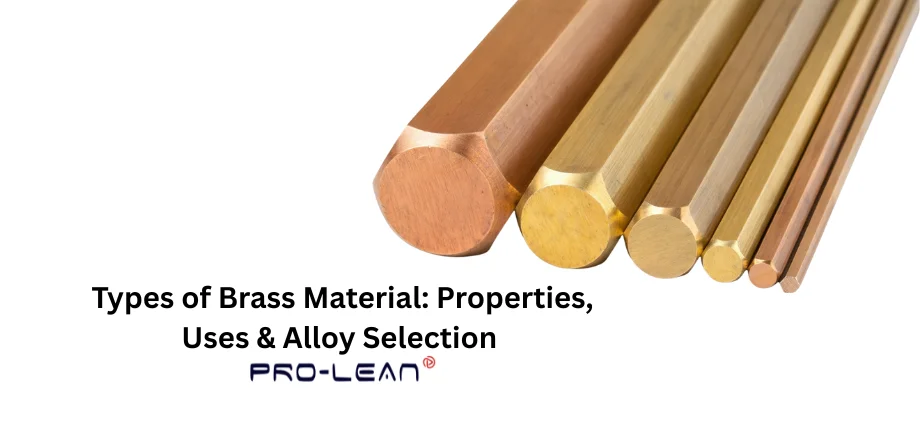
Brass Rods Variety
If you have ever worked with brass material, you should know that it is one of the easiest metals to work with. It is almost free of those unexpected and difficult trade-offs.
Because of brass’s inherently good mechanical properties and premium aesthetic appeal, you’ll always find it as a good all-rounder alloy. That’s why you see many types of brass material in everyday items, spanning from household items to highly technical applications like brass CNC machining parts.
Brass can perform well under custom metal machining. Also, you might have seen that the brass finishes are typically very clean and smooth. Therefore, it has become an ideal choice for both functional parts and decorative items.
Composition of Brass
Brass metal alloy is primarily made using copper and zinc elements. Sometimes you’ll also find elements such as lead, tin, aluminum, manganese, iron, etc., in certain types of brass material, but in very small amounts.
And brass is not just a single alloy. Just as in steel and aluminum alloys, there are different kinds of brass designed for specific needs.
Effect of the Copper-Zinc Ratio
If you take them individually, you know that zinc and copper are two elements with complementary properties. That’s why their combination brings us very special properties. And especially, the copper-to-zinc ratio is the main factor that decides the majority of mechanical properties. You will see a clear relationship between these percentages and properties of different types of brass material after reading this section.
In the market, you can find different types of brass material that are readily available to buy. There are brasses with copper percentages starting from about 55% to over 90%. Changing this ratio directly affects how the material behaves during machining and operating under different conditions. Therefore, there are different types of brass material (sometimes also known as families) developed by changing the copper-to-zinc ratio. Mainly,
- Copper improves corrosion resistance, ductility, and surface finish of brass. Copper makes brass easier to form and more reliable in harsh environments.
- Zinc increases strength, hardness, and machinability. Zinc supports brass, allowing for tighter tolerances and improved performance in applications such as load-bearing and custom metal machining.
So simply, if your goal is for good softness and formability, go for brasses with lower zinc percentages. If you need stronger and harder components and can sacrifice some ductility for that, you can choose a brass with a higher zinc content.
Effect of Minor Alloying Elements
As mentioned above, if you need customized properties, you have the option of adding small amounts of alloying elements like lead, tin, aluminum, manganese, and iron. You can add one or more of these elements based on your target properties.
Table 1: Purpose of Adding Different Minor Alloying Elements to Brass
| Element | Purpose of Adding |
| Lead | Lead stays as small particles within the alloy, and they act as lubricants and chip breakers. So, they lower the cutting force and improve machinability. |
| Tin | Tin improves the corrosion resistance of brass by minimizing the loss of zinc atoms. |
| Aluminum | Aluminium can increase the strength of the alloy matrix. It also improves corrosion resistance by forming its passive oxide layer. |
| Manganese/Iron | These metals modify the microstructure of brass. This improves hardness and wear resistance. |
You’ll mostly have to consider these effects, especially in situations such as designing brass metal fabrication processes and precise brass turned components.
Try Prolean Now!
Types of Brass Alloys: Common Brass Families
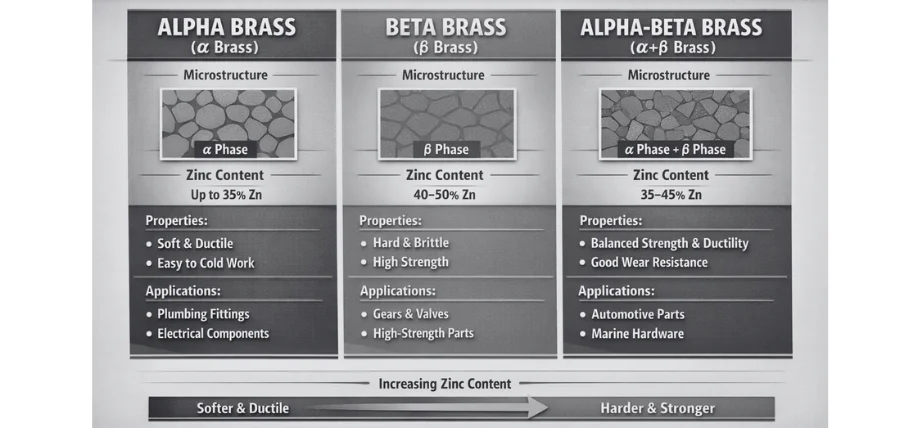
Brass Alloy Comparison
You will see drastic variations in properties of brass (like tensile strength, hardness, corrosion resistance, conductivity, machinability, etc.) when you change its composition. Therefore, having a deep understanding of the various types of brass materials is important. The performance of the product and production cost are directly dependent on the choice of the correct grade.
Alpha Brass
Alpha brass has approximately 35-37% zinc and a single-phase (alpha) crystal structure. Due to its high copper percentage and structure, alpha brass is highly ductile and capable of cold working.
Because of its excellent formability, you mostly use this type of brass when you need:
- High ductility and easy cold working – You can easily deep-draw, bend, roll, spin, and press-form it with less risk of splitting. This saves you a significant amount of production costs.
- Good corrosion resistance – This is highly beneficial for parts that operate in moist environments and mild chemical conditions. And also, alpha brass can maintain its surface appearance for a long time without losing the premium appeal.
- Clean surface finish – Due to the high copper percentage, alpha brass has its unique reddish color with a warm tone. You can achieve smoother and more consistent surface details after machining due to its high formability.
Alpha brass is mostly used for decorative items due to its surface properties. It is also widely used in cartridge cases and thin-walled parts due to its excellent machinability.
Beta Brass
Beta brass typically contains 45% or more zinc. It forms a harder and stronger beta phase than alpha brass. Therefore, beta brass is less ductile and much stronger than alpha brass.
One unique characteristic is the high-zinc beta brass appearance, which is lighter and less reddish compared to copper-rich brasses (alpha types). This occurs due to the shift in color away from the warm tone of copper.
Beta brass is your ideal choice when:
- You need excellent strength, hardness, and limited ductility.
- You’re okay with hot-working or machining rather than deep cold-forming.
- Your greatest concern is functional properties (such as structural or wear-exposed components) rather than aesthetic appeal or surface properties.
Alpha-Beta Brass
Alpha–beta (duplex) range is the most widely used family of engineering brasses commercially. This family gives you middle-ground properties with a good balance. This family is generally stronger than alpha, but still workable with the right process control.
You’ll find many applications in alpha–beta brasses in valves, fittings, couplings, and many general-purpose industrial components. If you’re also looking for “general engineering brass,” this is often the best category you should consider.
Specialized Brasses
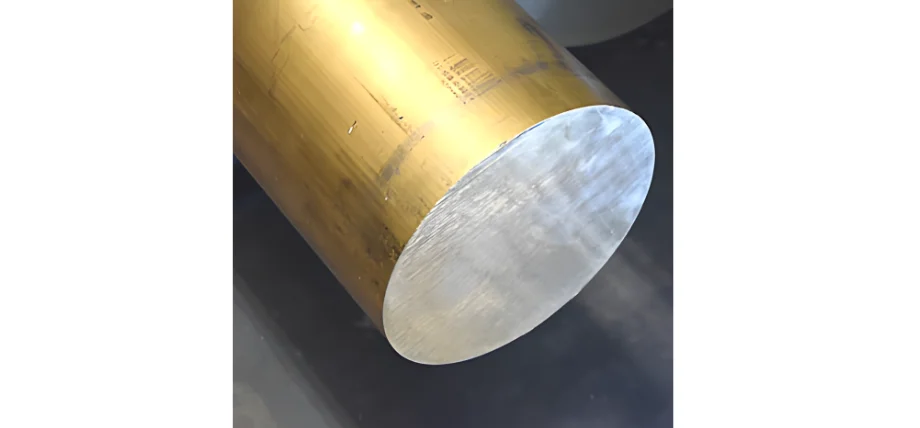
Brass Round Bar
“Specialized brasses” are brasses that aren’t just copper and zinc. They’re intentionally modified on purpose to survive certain environments and conditions, so they can behave better than general brass materials in specific processes. Although the base is still brass, its performance is significantly altered with the addition of small amounts of other alloying elements, such as tin, aluminum, or silicon.
You can go for specialized brasses when:
- The product has to face extreme and unexpected conditions (marine conditions, electrical fields, extremely high loads, or aggressive corrosion risks)
- You need a brass optimized for casting, hot forging, high-wear contact, or long service life in harsh conditions.
Types of Brass Materials: Industrial Grades
What you’ve read under the previous section (alpha, beta, and alpha-beta brass) is the classification according to the microstructural properties. This classification is based on the commercial alloys, which are chosen for end-use needs (seawater resistance, machinability, dezincification resistance, color, cost).
These are simply the most widely used industrial grades of brass readily available in the market.
Admiralty Brass
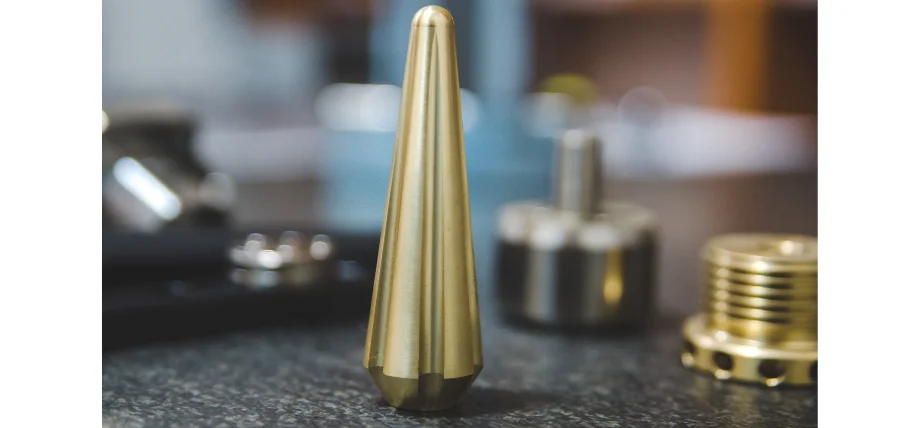
Brass Center Punch
Admiralty brass contains tin as its unique addition of minor elements. This addition improves the resistance to seawater corrosion.
If your components have to survive around water, heat, and long runtimes, admiralty brass is your go-to choice. That’s why you’ll mostly see admiralty brass in heat exchangers, condensers, and marine tubing. If you want a long service life with less maintenance, this grade is a wise pick.
Cartridge Brass
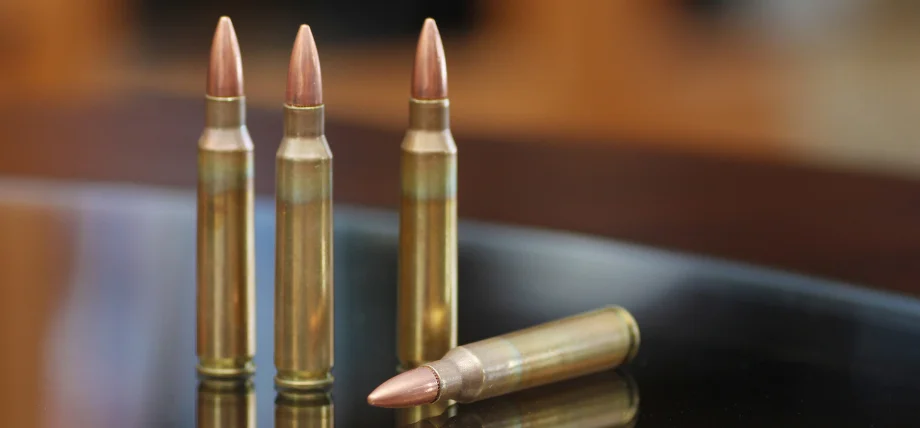
Brass Cartridge Ammunition
Cartridge brass generally contains 70% copper and 30% zinc. Because of its high copper amount, cartridge brass is highly ductile and easily cold-formable. Therefore, you can deep draw, bend, and press it into shape smoothly. This is the best choice if your product is thin-walled or requires heavy forming.
Cartridge brass is mainly used for applications like ammunition casings, electrical connectors, and decorative components.
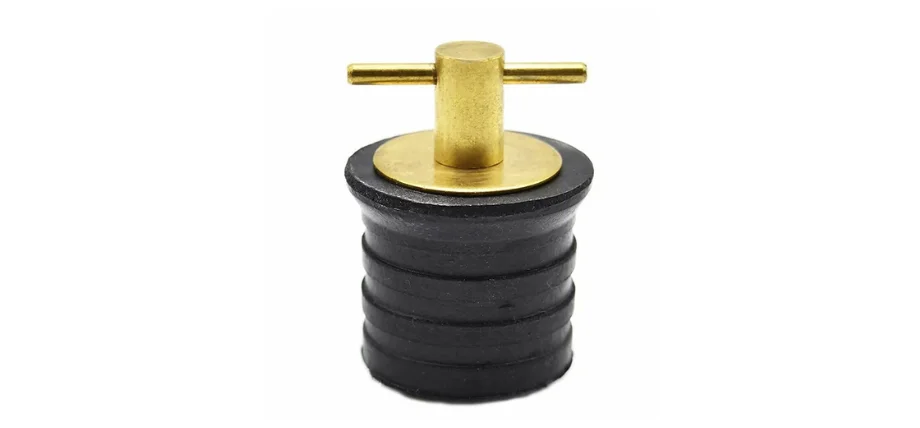
Brass Drain Plug
Naval brass is exclusively designed for use in seawater. This grade addresses a primary issue with brass occurring under marine conditions, specifically dezincification over time.
The main addition is tin (and sometimes small additions, such as aluminum, depending on the exact grade), which has the potential to remain stable in harsh marine conditions. You’ll typically use it for marine hardware, heavy-duty fasteners, and shaft-related components. If the reliability of the product matters more to you than perfect formability, naval brass should be your choice.
Free-Machining Brass
As the name itself suggests, free-machining brass is specifically designed for fast and clean machining. Lead is intentionally added as an alloying element, which helps reduce tool wear and breakage. This grade is particularly helpful in brass CNC machining, as it enables smoother cutting.
If you’re planning for precision brass turned components and high-volume production with good tolerance levels, free-machining brass is highly recommended.
Red Brass
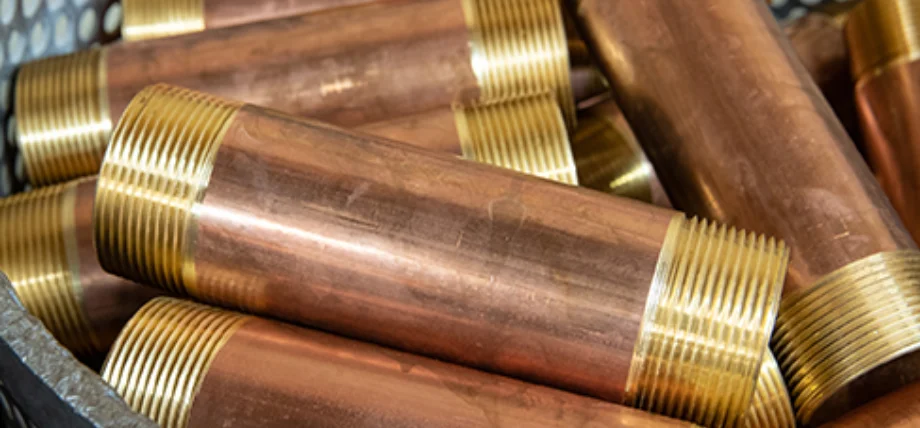
Brass Pipe Fittings
Red brass is a grade with a significantly higher copper content. That’s why it’s called “red” brass. Red brass gives you stronger corrosion protection than many of the yellow brasses.
Red brass is widely used in applications where continuous exposure to water or moisture is expected. Plumbing, valves, and fittings are used due to their excellent resistance to corrosion.
Yellow Brass
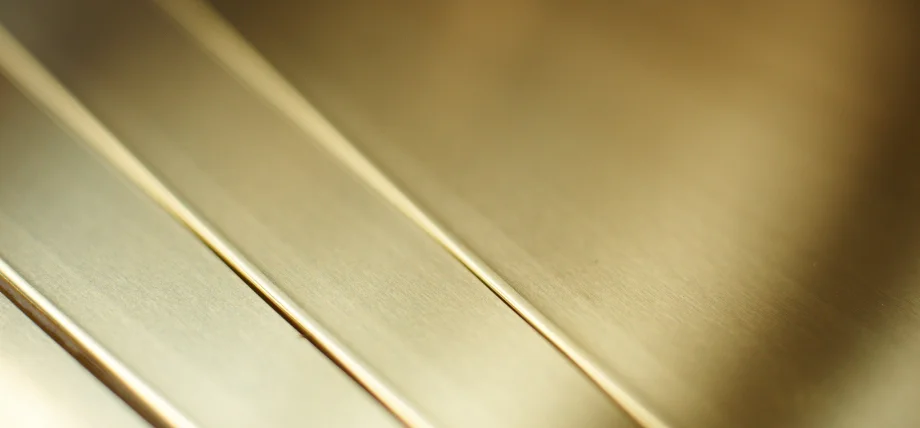
Brass Sheet Surface
Yellow brass is the type that comes to your mind when you hear the name “brass”. It has that bright gold color and generally good strength. It is also very cost-effective.
Yellow brass is a balanced material and reasonable from every aspect for everyday purposes. So it is widely used for consumer products, fittings, hardware, and decorative items. Items made using yellow brass give a luxurious appeal and are very affordable. Therefore, these are very popular among people.
Brass CNC Machining Alloys
When you need precise and complex-shaped components, certain brass types allow you to machine them.
CNC Machinable Types of Brass Materials
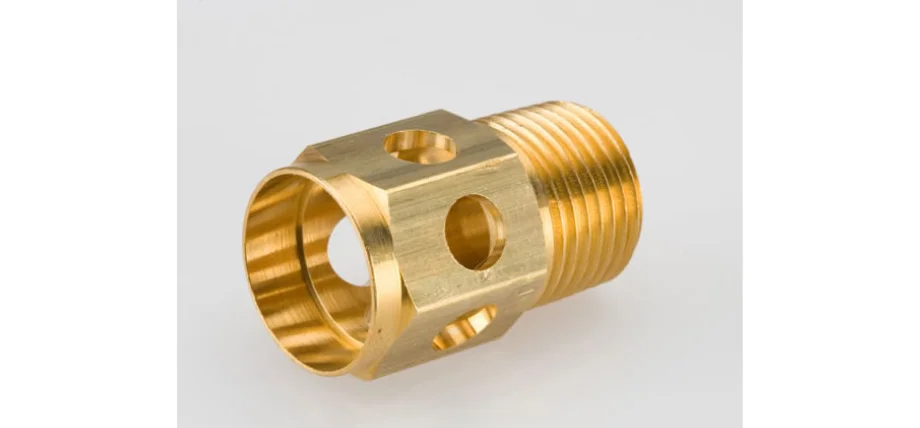
Brass Hex Nipple
The most widely used option in brass CNC machining is free-machining brass (lead-added). Since it cuts smoothly with tool wear, you can hold tight tolerances with fewer difficulties.
If you require high-strength components for use in harsh conditions, consider alpha-beta engineering brasses. Some tin- or silicon-brasses also come with excellent engineerable properties. You can still work smoothly with these grades, but they don’t always feel as soft as free-machining grades. Therefore, you’ll need to control process parameters carefully and follow up with secondary processes to improve the final finish. When it comes to copper-rich brasses, they can be a bit harder to work with, producing stringy chips and sometimes built-up edges.
If you are aiming for high-volume custom metal machining, you can move to CNC lathes for brass turned components such as fittings, inserts, bushings, adapters, and connectors. In more complex cases, you’ll have to go for secondary milling or finishing processes as well.
Can You Machine Lead-Free Brasses?
Sometimes, you may have to go for lead-free brasses due to regulatory requirements. They are also fully machinable, but they can cause higher tool wear than free-machining brass (lead-added), so you’ll have to plan tooling and process settings carefully.
Try Prolean Now!
Bronze vs Copper vs Brass
You might have confusion about the difference between bronze vs copper vs brass and brass because these three materials mostly look alike and are sometimes used for the same type of application. You can clarify it here.
- Copper: Copper is the pure metal (Cu). If you need very high electrical/thermal conductivity and good corrosion resistance, copper is your best option. Copper is soft and easy to form, but it’s not the best choice when you need high strength or wear resistance.
- Brass: As we discussed, brass is an alloy of copper and zinc (Cu-Zn). It offers excellent machinability and corrosion resistance. Brass mostly has a more premium and aesthetic look than copper and bronze.
- Bronze: Bronze is an alloy of copper and tin (Cu-Sn). Bronze also has other elements like aluminum, phosphorus, or silicon, depending on the type. You must go for bronze when you need higher wear resistance, good strength, and strong performance (bearings, bushings, sliding/contact applications). Bronze looks more brownish than brass.
Applications of Brass
Because of its special properties, affordability, and availability of many types of brass material, you can find many applications of brass in various industries. The most widely used applications and respective industries are:
- Electrical and Electronic Industries – Since brass gives good electrical conductivity, it is a popular material used in wires, terminals, connectors, and some parts of switches.
- Plumbing Components and Parts Operated in Marine Conditions – Since these components work in water-based environments, corrosion resistance is critical. Naval and admiralty brasses are the best-performing brasses in this case.
- Automotive Industry – Brass is widely used in radiator cores, precision fittings, and many other components in the automotive industry. It’s a popular choice because of its reliability and good machinability.
- Consumer Products and Decorative Items – This is a popular choice for aesthetic components due to brass’s golden appearance. Most artistic items, such as vases, souvenirs, handles, and wall decorations, are made from brass. These items are in high demand because they are very affordable as well.
Try Prolean Now!
Custom Metal Machining at Proleantech
Proleantech provides high-quality metal machining for specialty alloys, custom alloys, including brass, copper, or bronze. You can get tolerances of up to 0.001” in standard machining and a host of surface finishing and electroplating options for machined components.
Request a free quote today!
Conclusion
As a popular alloy used in many manufacturing processes, it’s highly useful to have a good understanding of the types of brass material. It helps you make smart decisions in planning, design, and sourcing materials.
0 Comments