
Rapid prototyping cost
You might have a straight question: how much does rapid prototyping cost? Well, it costs somewhere between $100 to $ 10,000 for a small and medium-scale prototyping project, whereas it can be as high as $100,000 for complex and performance-sensitive prototypes. It depends on different factors, such as size, shape complexity, material type, lead time, tooling cost, and number of required prototypes. A simple 3D printed plastic prototype costs between $ 5 to $ 50 per part.
There are many stages in manufacturing before any component or product goes into the market, designing, prototyping, testing, and refining. Rapid prototyping is one of the crucial stages in product development which allows designers and manufacturers to validate their designs and test the functionality. The process focuses on creating functional models with optimal materials and streamlining manufacturing processes while keeping costs low.
This article will elaborate on the different factors affecting rapid prototyping costs and will explain the cost estimation with an example.
What is the Cost of Rapid Prototyping?
The rapid prototyping cost is the cumulative cost of prototype material, tooling cost, machining or manufacturing cost, surface treatment cost, quality control and shipping cost, and overhead cost. Here machining or manufacturing costs contribute a significant amount to total rapid prototyping cost. So, which method you choose can heavily influence your budget. For example, 3D printing can be a cheap rapid prototyping option for you as compared to CNC rapid prototyping. However, 3D printing can not accommodate all prototyping requirements, especially when it comes to metallic and strong prototypes.
Again, the cost ranges from a very small amount to a chunk of money. For example, an air-tight washer can make with a $ 20/part price using 3D printing. On the other hand, if you need an injection mold prototype, the rapid prototyping price could be $30,000 due to complex CNC and EDM machining requirements.
Rapid Prototyping Cost Breakdown
The following are the key constituents of rapid prototyping costs, each contributing to the final budget of any prototype.
1. Material Cost
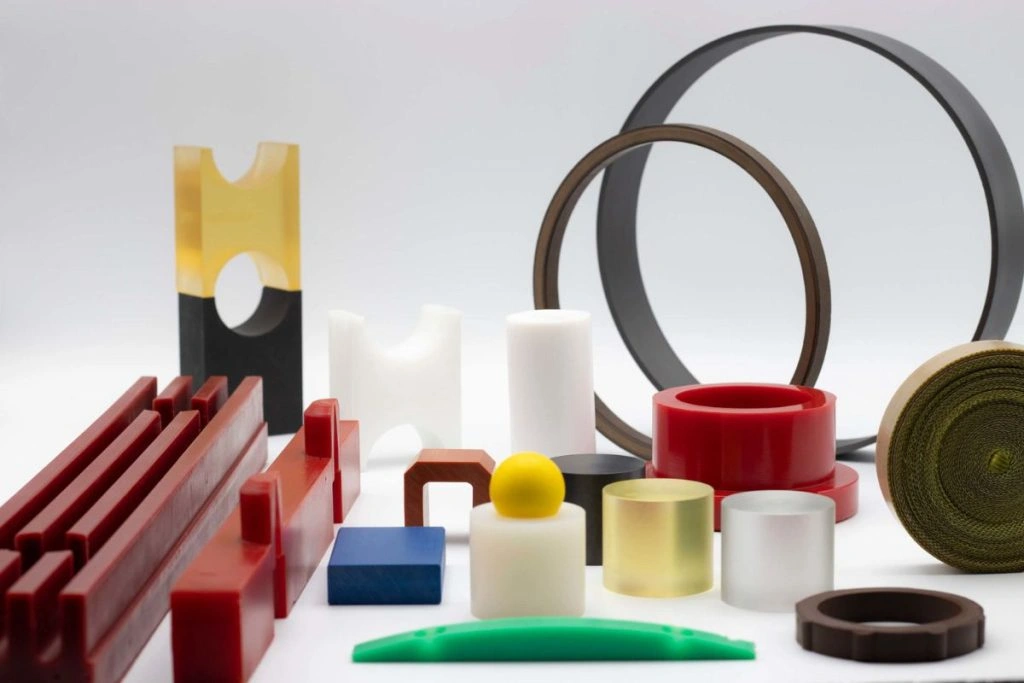
Rapid prototyping materials
First, the material cost itself is a crucial element of prototyping cost. Secondly, the type of material you choose also influences the other cost factors. For example, the machining of hard material has a lower production speed that increases the total machine cost as more time is required to craft the design. Similarly, if you need to make plastic prototypes that might reduce the material cost as well as the machining (per/hour) or 3D printing cost, whatever prototyping method you are using.
The table below summarizes the common rapid prototyping materials and their cost in relation to each other.
| Prototyping Material | Cost |
| PLA (Polylactic Acid) | $ |
| ABS (Acrylonitrile Butadiene Styrene) | $$ |
| Resin (Photopolymer) | $$$ |
| Nylon (Polyamide) | $$$ |
| Aluminum | $$$$ |
| Polycarbonate (PC) | $$$ |
| Stainless Steel | $$$$ |
| Silicone | $$$ |
| Carbon Fiber Reinforced Polymer | $$$$$ |
| Titanium | $$$$$ |
“Note: $ (lowest cost) to $$$$$ (highest cost)”
2. Tooling Cost
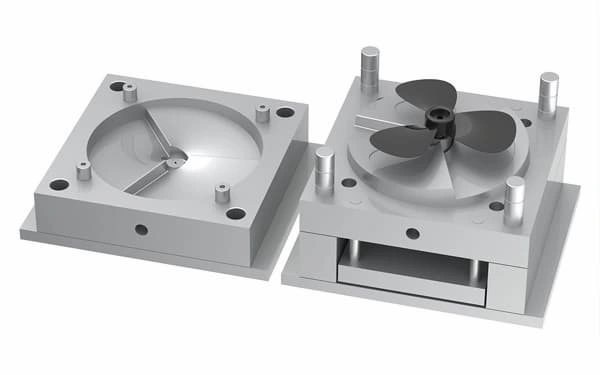
Prototyping mold tooling
Another element of the rapid prototyping cost breakdown is the tooling cost. It means the cost of the required tools and fixtures. In the case of CNC machining tooling cost is lower than injection molding. Furthermore, the 3D printing tooling cost is significantly lower than both CNC machining and molding, as it involves minimal or no tooling.
In CNC rapid prototyping, the tooling cost can be higher if any custom tools are required to tackle the complex and unique geometrical features. Most of the time manufacturers include the tooling cost along with machining or equipment cost.
3. Equipment and Labour Cost
The next element is the cost associated with the equipment required to create the prototype. In the case of CNC machining, it is typically expressed in terms of $/hour. Here, the complex design might require more advanced and higher axes (4, 5, or even 6 ) machines that cost higher. The general range could be $20 to $120/ hour for CNC machining. The more advanced and higher the axes, the more /hour cost. Consequently, other machining like laser cutting, water jet cutting, and electrical discharge machining also in / hour.
For 3D printing, it is expressed in $/hour as well as per part. Here, the cost variation depends on the which type of 3D printing you are using, Stereolithography (SLA), Digital Light Processing (DLP), Multi Jet Fusion (MJF), Direct Metal Laser Sintering (DMLS), and Electron Beam Melting (EBM). For instance, SLA costs less than DMLS.
Furthermore, the labor cost is the cost for the operator, engineer, and other staff in the factory. Typically, manufacturers combine this cost with the machining cost. Here, geography influences the cost heavily. The labor costs are higher in Western countries than Asian and African countries and they can offer considerably low costs. For example, the advanced manufacturing infrastructure and low labor costs of Chinese companies allow them to offer precise prototyping solutions at competitive pricing. That’s why rapid prototyping china services are accurate, fast, and affordable.
4. Design Complexity and Precision
.As designs become more intricate, they require advanced equipment and production time also increases. As a result, it drives up rapid prototyping costs. Additionally, complex geometries may necessitate additional support structures or post-processing, further increasing expenses. The need for higher precision and tighter tolerances also contributes to the overall cost. Next, complexity makes the assembly process challenging and time-consuming, further adding the expense. This means complex prototypes are more expensive to produce than simpler designs.
Often, these costs are reflected in the per-hour machining or production cost.
5. Post-Processing and Surface Finishing
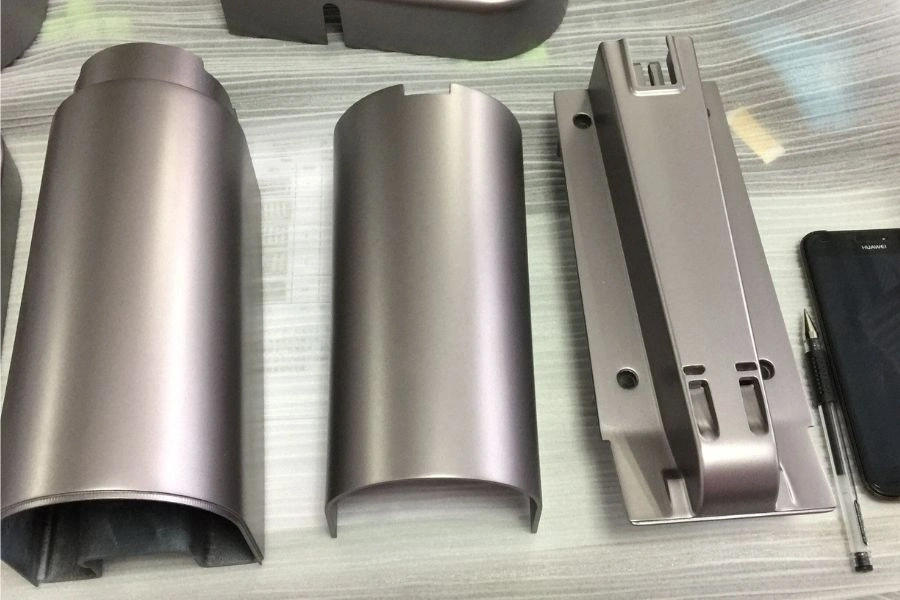
Finished metal prototypes
Post-processing means additional trimming, deburring, heat treatment, coating, etc. Meanwhile, surface finishing is the achievement of specific surface smoothness and aesthetics. If your prototype needs any surface finishing, it increases the cost. Furthermore, the cost might vary depending on the type of surface finish required. For example, polishing and electroplating are costlier than powder coating and grinding, whereas an as-machined finish costs nothing.
The table below compares the relative costs of some common post-processing & finishing techniques;
| Post-Processing / Surface Finishing Method | Cost |
| Sanding/Polishing/ Beadblasting | $$ |
| Electropolishing | $$$ |
| Powder Coating | $$$ |
| Anodizing | $$-$$$ |
| Plating (e.g., Nickel, Chrome) | $$$-$$$$ |
| Heat Treatment | $$$-$$$$ |
| Chemical Etching | $$$ |
| Laser Engraving/Marking |
$$-$$$ |
“Note: $ (lowest cost) to $$$$$ (highest cost)”
6. Overhead Costs
Some other overhead costs are also included in the total sum of the rapid prototyping prices. Companies generally add overhead costs like quality control costs, software costs, packaging costs, logistic costs, and some miscellaneous costs in their quotes. So, if you ask them about any overhead or hidden charges included in the service.
Try Prolean Now!
Cost Estimation of Rapid Prototypes
Since we know the elements of overall rapid prototyping costs, let’s discuss the rapid prototyping cost estimate next. Let’s take an example of Custom Drone Housing.
- Material: ABS Plastic
- Process: FDM 3D Printing
- Quantity: 5 units
- Size: 150mm x 100mm x 50mm
- Lead Time: 7 business days
Here is the cost estimation for this rapid prototyping project;
“Note: it is an example of a rapid prototyping cost estimate, the real prices depend on what are the size and specifications of your project.”
Furthermore, the cost per/part decreases if you increase the production volume or if you scale the prototyping into Low Volume Manufacturing with a few hundred items.
Tips to Optimize Your Rapid Prototyping Budget

Prototyping budget
You can follow the following tips to reduce and optimize the budget of rapid prototyping;
- `Make your Design Simpler
The complex geometries and features like undercuts, internal grooves, and cavities add to the rapid prototyping cost, especially in CNC prototyping. So, optimize your design into a simpler form without altering the required functionality and performance. Additionally, make sure there is minimal assembly.
- Select the Right Machinery or Prototyping Technology
Based on your needs and requirements, choose the optimal rapid prototyping technology, CNC, 3D printing, etc. Furthermore, it also analyzes the specific capabilities of technology. For example, 3 3-axis CNC machines can facilitate cheaper, rapid prototyping than 5 or 6 axes.
- Material Choices
Use cost-effective materials that fulfill all the necessary properties and required functionality. You can also choose low-cost plastics to make functional prototypes at the initial stage of iteration.
- Opt. for Outsourcing
You can also outsource the prototypes by sending your designs. Many online rapid prototyping companies provide prototype manufacturing services for a range of applications. Choose a low-cost and reliable manufacturer that has the capability to convert your design.
Is it Worth Outsourcing the Rapid Prototypes?
The equipment and factory setup costs are the big challenges if you want to produce rapid prototypes by yourself. The factory setup cost can only be justified if you have a long series of production projects. Consequently, expertise and human resources can be another challenge.
Therefore, outsourcing is the best way to boost your business productivity and release the product early in the market. Outsourcing from experienced and established manufacturers allows you to leverage their manufacturing infrastructure and expertise. Additionally, it also costs less than producing on your own.
Outsource Rapid Prototype from ProleanTech
Are you looking for a reliable and affordable prototype outsourcing partner? Our CNC machining and 3D printing factories are well-equipped with the latest manufacturing equipment, from multi-axis CNC machining to 3D printing and EDM facilities. In every rapid prototyping project, we streamline the production process by eliminating lengthy stages to create your prototype in the shortest possible lead time. However, we do not compromise the precision and quality of prototypes.
Our strategies, like direct collaboration with material suppliers, optimal material utilization, streamlined production, quick iterations (if needed), and cross-disciplinary collaboration, allow us to lower our cost for prototyping.
So, get a quote for our rapid prototyping services by uploading your design. We claim that we offer great quality and the best prices in the industry!
Try Prolean Now!
Summing Up
Overall, the rapid prototyping costs depend on several factors, from material type and labor cost to machining or manufacturing method. Optimizing the design for speed production and using cost-effective material can significantly reduce the rapid prototyping prices. You can also outsource the prototypes from reliable companies like Prolean to save time and cost.
FAQs
How much does it cost to create a prototype?
It depends on several factors, but, roughly it can be $100 to $20,000 above. Typically, less cost for simpler and small prototypes.
What factors most influence the cost of rapid prototyping?
The primary cost drivers include material type, manufacturing process, part complexity, quantity, and lead time. Additional factors like post-processing, quality assurance, and machine setup also significantly impact overall costs.
How can I reduce the cost of rapid prototyping?
You can reduce the cost of rapid prototyping by optimizing the design for manufacturability, choosing cost-effective materials, reducing part complexity, and minimizing the number of iterations. Additionally, if you order in a higher volume, there will be lower per-unit costs.
Does material selection affect rapid prototyping costs?
Yes, material selection directly influences the cost. High-performance materials are typically more expensive. Meanwhile, certain materials require specialized machines to process them.
0 Comments