
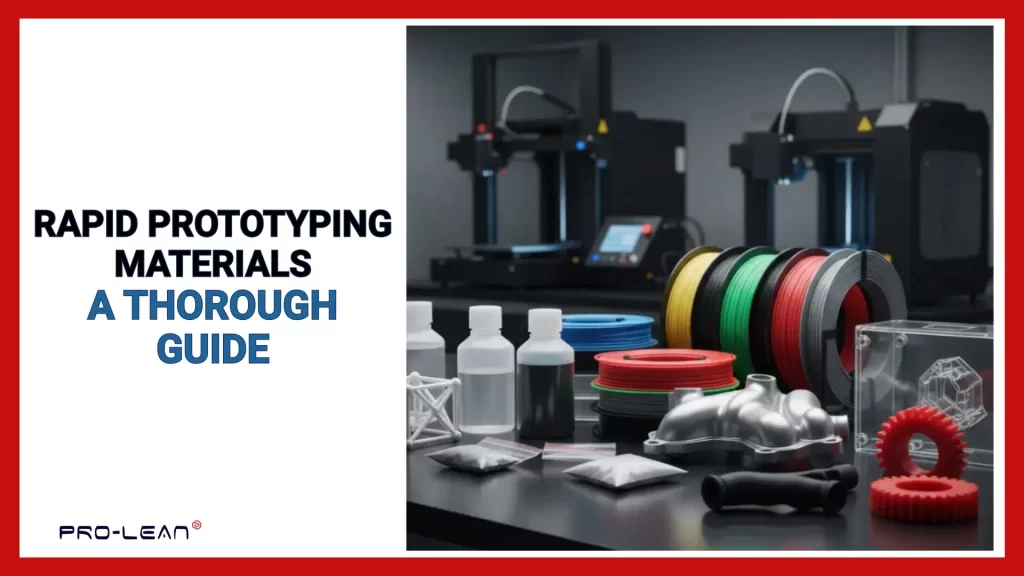
Rapid prototyping materials
The foundation of a prototype’s performance is the right material. Rapid prototyping converts a digital design into a physical part rapidly – but using the wrong rapid prototyping material can render a validation process and cause expensive rework.
Material options include metals, plastics, resins, ceramics, composites, bio-materials, wax, and paper & powder. Engineers use them to develop visual and functional models to precede full production. Manufacturers seeking to beat time and offer value to clients can’t afford a prototype that misrepresents the desired part or fails under the slightest load.
From the stiff composites to machinable plastics, each rapid prototyping material serves a specific stage of the product development process. The right material not only promotes design iterations and helps control costs but also builds stakeholder interest.
With the breakdown of material options as provided in this guide, you will learn about each category’s options, benefits, and limitations. This will help you match the right material to prototype in your next project.
What is Rapid Prototyping?
Rapid prototyping is a manufacturing technique that quickly converts a digital design into a physical part. This technique avoids the lead time and costs associated with conventional tooling.
At its core, rapid prototyping comprises five stages;
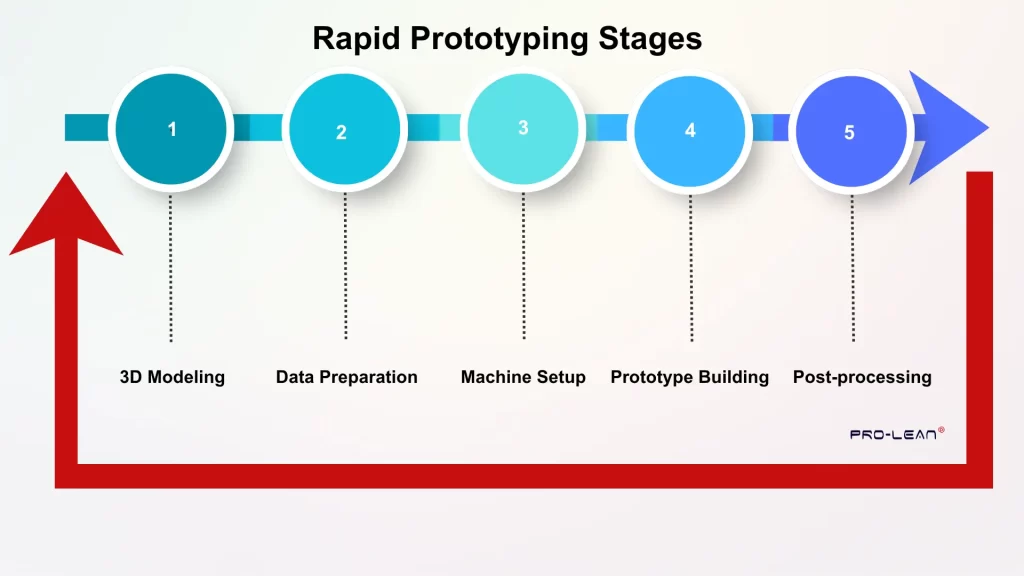
Rapid prototyping stages
Popular rapid prototyping processes include sheet metal fabrication, CNC machining, 3D printing, and injection molding with low-cost tooling. Manufacturers use visual and functional models from rapid prototyping to test form, fit, and function. This is an important step before full production.
Benefits of Rapid Prototyping
Rapid prototyping bridges the gap between a concept and a physical product. The resulting business advantages include speed to market, cost efficiency, quality, testing and validation, customization, sustainability, and better communication
| Advantage of Rapid Prototyping | Business Benefit |
| Speed to market | Products reach customers and generate revenue faster |
| Cost efficiency | The validation stage does not have tooling costs |
| Quality, testing, and validation | Physical parts are used to identify fit and function problems before commitment to production tooling |
| Customization | Custom variants to the product can be executed without retooling costs |
| Sustainability | Material waste is avoided |
| Better communication | Physical models are a more effective alignment tool among stakeholders |
Metal Prototypes
The three most common metals for rapid prototyping are aluminum, stainless steel, and titanium. Metal prototyping offers benefits such as heat resistance, durability, and strength.
Here’s how each of these metals for rapid prototyping fits into projects.
Aluminum Metal Prototypes
Reasons why aluminum is a top choice for rapid prototyping material include excellent machinability, relatively low cost, corrosion resistance, and a high strength-to-weight ratio of up to 1.8. [3]
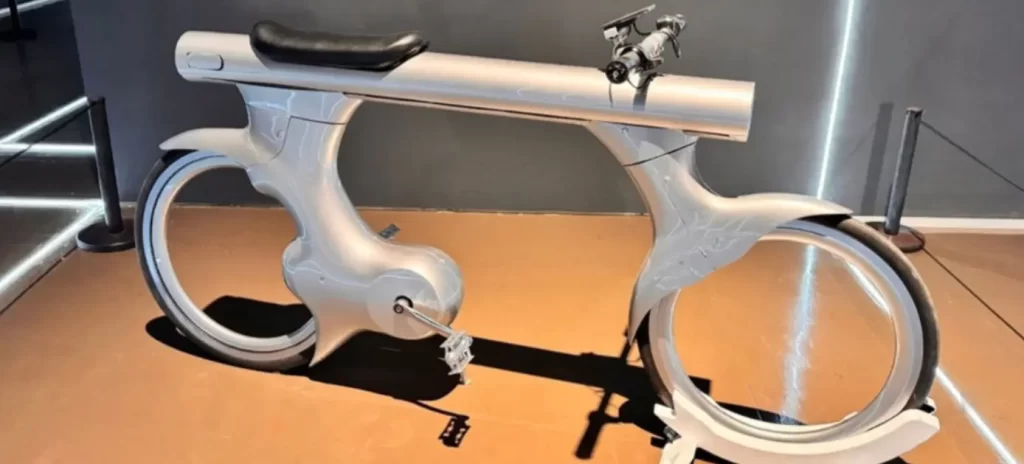
Aluminum prototype
Engineers frequently rely on extruded aluminum stock manufactured to ASTM B221 standards for consistent dimensional tolerances and mechanical performance. [2]
Stainless Steel Metal Prototypes
Stainless steel metal prototypes are used where the part needs to withstand corrosion, repeated mechanical stress, and generally harsh conditions. With the higher strength of stainless steel, expect higher tool wear and longer machining time.
Titanium Metal Prototypes
These metal prototypes deliver performance that is unmatched by other metals in biocompatibility, corrosion resistance, and strength-to-weight ratio. Common applications for the metal’s prototypes are the aerospace and medical industries.
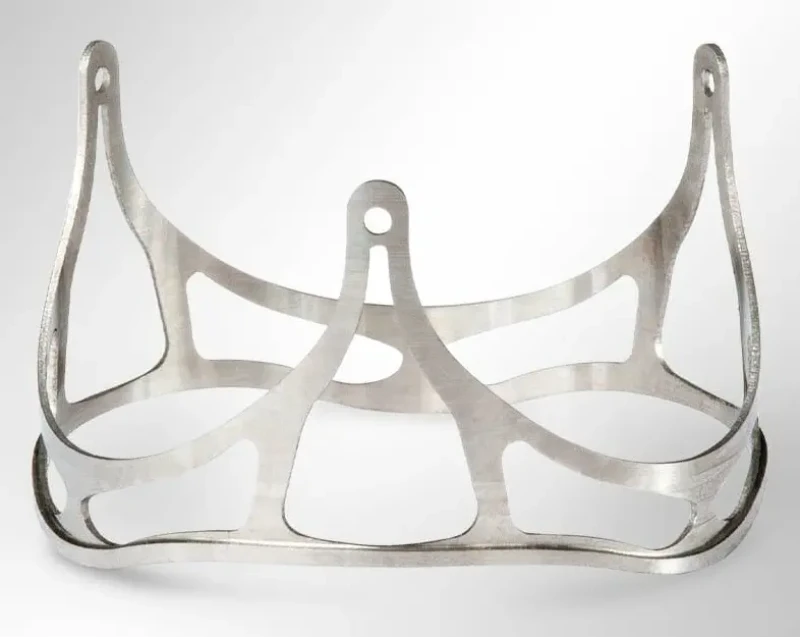
Titanium medical prototype
Since titanium is relatively slow to machine and expensive, it is understandable that it is mostly used for validation-centered prototypes. Early-stage prototypes are better machined from less-premium materials that are more affordable and easier to machine.
Plastic Prototyping
The five most used options in plastic product prototyping are Polycarbonate (PC), Poly(methyl methacrylate) (PMMA), Acrylonitrile Butadiene Styrene (ABS), Polypropylene (PP), and Polystyrene (PS). [4]
There are two reasons plastics are the most common materials in rapid prototyping: availability in multiple grades and ease of machining.
Polycarbonate (PC) Plastic Prototyping
One of the most prominent properties of PC is excellent impact resistance. On top of that, the material is naturally transparent and offers exceptional performance with a wide operating temperature range (-30°C to 120°C). [5]
Poly(methyl methacrylate) (PMMA) Plastic Prototyping
This is a glass-like acrylic material; it is often used as a glass replacement in plastic prototyping. It has excellent optical clarity. It may be more brittle than PC, but its good weather and UV resistance still qualify it for outdoor rapid prototyping.
Acrylonitrile Butadiene Styrene (ABS) Plastic Prototyping
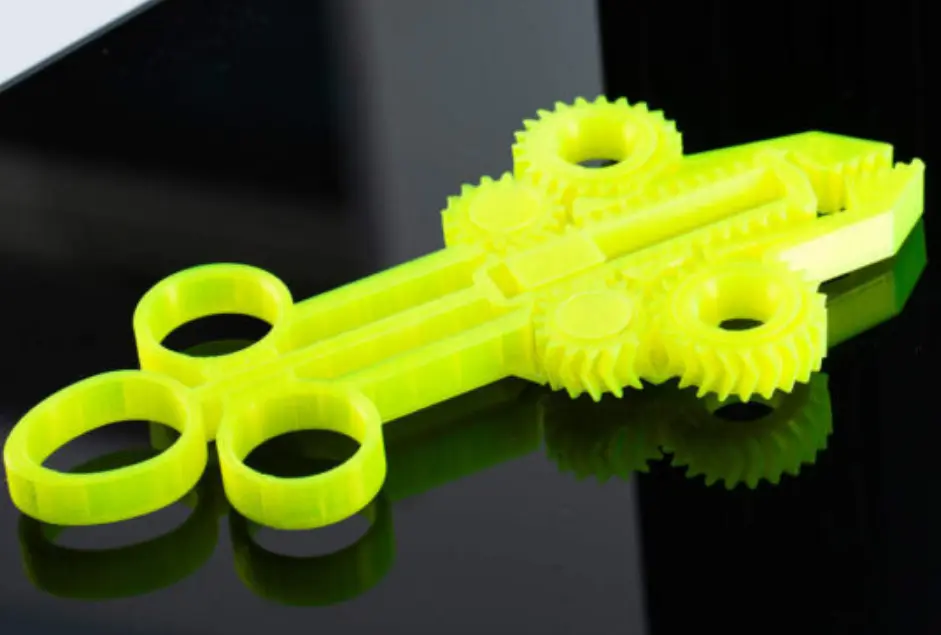
ABS plastic prototype
ABS is a manufacturer’s favorite for functional prototypes because of its remarkable machinability, strength, and cost-effectiveness. Like PC, ABS has good impact strength. This low-cost material is also easy to machine and 3D print. Add that to a consistent surface finish.
Polypropylene (PP) Plastic Prototyping
Polypropylene has a high fatigue resistance, which is necessary for making snap-fit designs and living hinges. Its good chemical resistance is also important in rapid prototyping for parts intended for harsh environments. A concern for this plastic would be lower dimensional stability compared to PC or ABS.
Polystyrene (PS) Plastic Prototyping
With its cost-effectiveness and ease of processing, PS is a perfect material for early concept prototypes. The material’s brittle nature rules it out of mechanical validation applications. Instead, engineers prefer to use it in form-and-fit projects.
Typical Properties of Common Prototyping Plastics
The following table highlights the typical properties of common prototyping plastics.
| Type of Plastic | Density (g/cm³) | Heat Deflection Temp (°C) | Tensile Strength (MPa) | Behavior on impact |
| ABS | 1.02–1.08 | 80–100 | 40–50 | Moderate toughness, 8–25 kJ/m² notched |
| PC | 1.18–1.22 | 125–140 | 55–70 | Doesn’t break unnotched |
| PMMA | 1.17–1.20 | 80–100 | 70–80 | Breaks at 2–5% elongation |
| PP | 0.895–0.920 | 55–65 | 30–40 | Doesn’t break unnotched |
[4]
Resins for Rapid Prototyping
Resins provide tight tolerances and fine surface finishes that metals or plastics cannot match. Whether through DLP or SLA, the specific reasons a manufacturer may opt for resins in rapid prototyping are;
- Requirement for detailed visual models
- High dimensional accuracy and fine surface finish
- Requirements for specialty formulations – standard, flexible, castable, and others
However, resins used for rapid prototyping are unsuitable for functional prototypes due to UV sensitivity and brittleness.
Ceramics for Rapid Prototyping
Ceramics make excellent prototypes when the design must meet requirements for insulation and extreme heat resistance. The temperature limit is higher than what most plastics or metals can withstand.
Ceramic prototypes are not the best option if you are looking for mechanical strength.
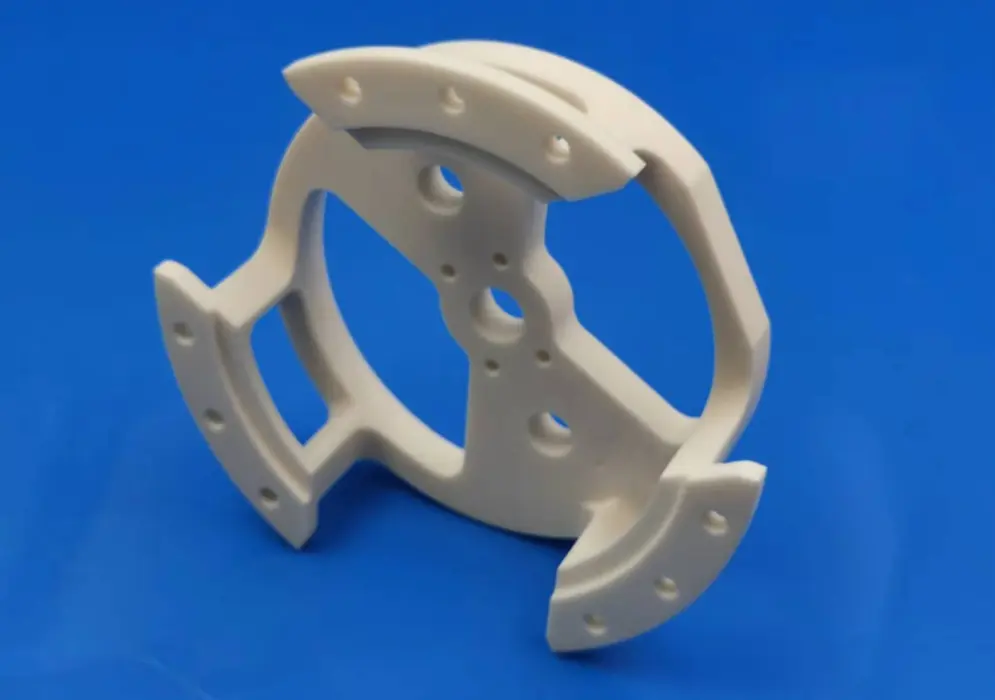
Ceramic prototype
Composites for Rapid Prototyping
Composites are strong and stiff, but are not as heavy as solid metal. The options for carbon fiber prototyping and other rapid prototyping applications are Chopped Carbon/Polyurethane Mixes, Carbon Fiber Reinforced Nylon, and Glass-Bead/Glass-Fiber Filled Polymers;
- Chopped Carbon/Polyurethane Mixes
- Carbon Fiber Reinforced Nylon
- Glass-Bead/Glass-Fiber Filled Polymers
Carbon fiber prototyping is specifically preferred for high-strength, lightweight prototypes.
Bio-Materials for Rapid Prototyping
Bio-materials are increasingly gaining ground in rapid prototyping. The main benefit of these rapid prototyping materials is reduced environmental impact.
Some features of bio-materials in rapid prototyping:
- Ideal for concept models
- Lower environmental footprint than petrol-based plastics
- Poor mechanical strength and heat resistance
Examples of bio-materials are bio-based PA and PLA.
Wax for Rapid Prototyping
Wax is the indispensable material for producing investment casting patterns. Key reasons it is such a valued rapid prototyping material are its ability to burn out cleanly and the excellent surface finish it provides. However, the fragility of wax rules out the material for functional prototypes. But we can all agree that it helps make cast metal parts quickly.
Paper and Powder for Rapid Prototyping
The role of this material in rapid prototyping is narrow, but it is there nevertheless. It is a fast, cost-effective means to make visual models for early prototyping purposes. Since the mechanical strength of such models is limited, they are not an option for functional prototypes.
Try Prolean Now!
The Pros and Cons of Rapid Prototyping Materials
The following table highlights the pros and cons of rapid prototyping for the different materials, which range from high strength vs high cost for metals, and lower environmental impact vs low strength for bio-materials.
|
Rapid Prototyping Material |
Pros |
Cons |
|
Metals |
Durable, high-strength, wear resistance, heat resistance |
Longer lead times, higher cost, higher machining requirements |
|
Plastics |
Fast, low-cost manufacturing, easy to machine/3D print |
UV and chemical degradation, lower heat resistance |
|
Resins |
High dimensional accuracy, excellent surface finish |
Limited durability, brittleness |
|
Ceramics |
Chemical stability, excellent heat resistance |
Brittle, low impact resistance |
|
Composites |
High strength-to-weight ratio |
High-cost raw materials and processing |
|
Wax |
Excellent surface finish |
Not for functional application/fragile |
|
Bio-materials |
Lower environmental impact |
Low heat resistance, low strength |
|
Paper and powder |
Fast, low cost |
Poor mechanical strength |
Considerations When Choosing Rapid Prototyping Materials
These factors are worth weighing when selecting a material at the prototyping stage: Speed, functionality, cost, surface finish, environmental exposure, and mechanical stress.
- Speed – The speed of sourcing, machining, printing, or injection molding a material is one of the determinants of the number of design iterations a team can run.
- Functionality – As much as the prototype’s appearance is crucial, the material should also mimic the part’s actual performance once production is complete.
- Cost – Material and processing costs should reflect the prototype’s purpose. Using a production-grade material at the prototype stage is typically unnecessary.
- Surface Finish – Some prototypes may require a production-like appearance, while others may not. If the reviewer or stakeholder requires the prototype, it is better to insist on materials that can provide a matching surface finish.
- Environmental Exposure – Chemicals, humidity, salinity, and such factors characterize real-world conditions. The prototype material should be capable of withstanding these conditions where applicable.
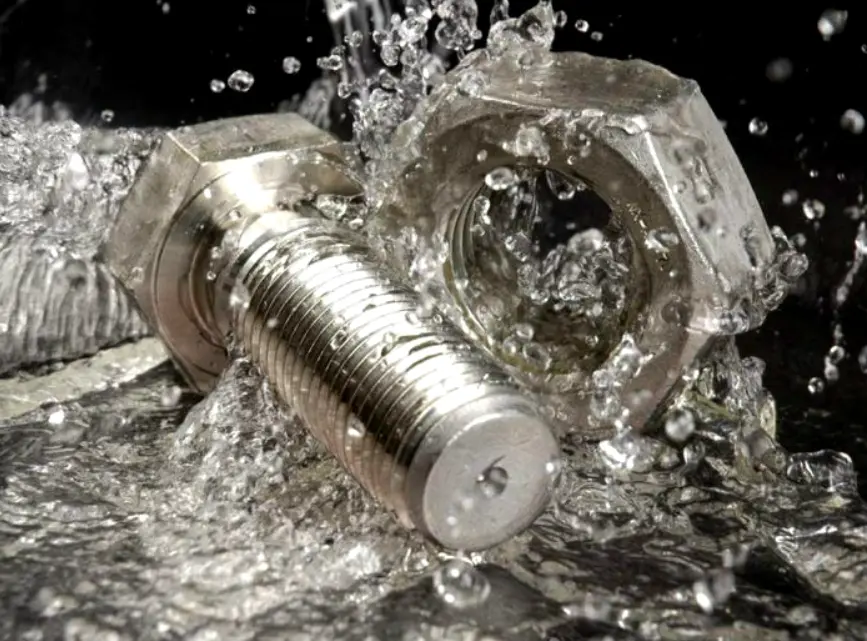
Environmental conditions matter
- Mechanical Stress – Actual use of a prototype means exposure to mechanical forces. The material for a functional prototype should suit these requirements.
Rapid Prototyping Material Selection Based on Purpose: A Table Analysis
The table below highlights the recommended rapid prototyping materials based on the intended purpose.
|
Prototype purpose |
Recommended materials |
Reasons |
|
Appearance |
PS, resins, wax |
Low cost, tight tolerances, excellent surface finish |
|
Functional testing |
Aluminum, stainless steel, ABS, PC |
Durable, mechanical strength |
|
Thermal testing |
Ceramics, titanium |
High temperature resistance |
|
Production validation |
Production-grade plastics, aluminum |
Matches final machining/molding performance and behavior |
*Choose PC or titanium instead of single-purpose materials if your parts require both mechanical and thermal validation.
Prototyping Processes for Different Materials
The main processes that determine the speed and cost of a prototype are CNC machining, injection molding, 3D printing, and sheet metal fabrication. So, how do these methods align with rapid prototyping materials?
CNC Machining
CNC machining is a reliable method for processing rapid prototyping materials due to its high compatibility with a wide range of materials. It is also relatively fast, perfectly fitting the prototyping requirements for speed.
The CNC machining prototyping steps are;
- Step 1: Design ideation
- Step 2: 3D file production
- Step 3: Identification of specific CNC process – turning, milling, drilling, etc.
- Step 4: CNC programming
- Step 5: Prototyping
- Step 6: Testing
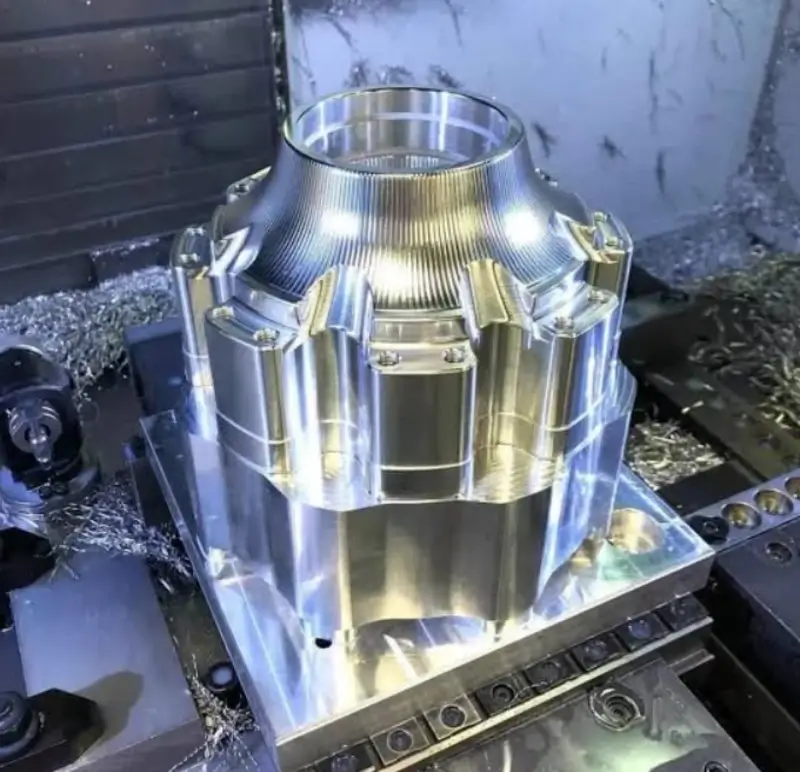
CNC prototype machining
Injection Molding
Injection molding is a validation method for plastic parts in readiness for high-volume production. It is mostly used to test molding performance and production-grade materials. Prototype tooling is usually not as expensive as production tooling. It can be manufactured from aluminum.
3D Printing
3D printing is attractive for its speed and ability to handle geometric complexity without dedicated tooling. It is suitable for a wide array of plastics, composites, and resins. While some 3D-printed components can meet production-grade mechanical performance, manufacturers typically opt for 3D printing for rapid prototyping purposes.
Sheet Metal Fabrication
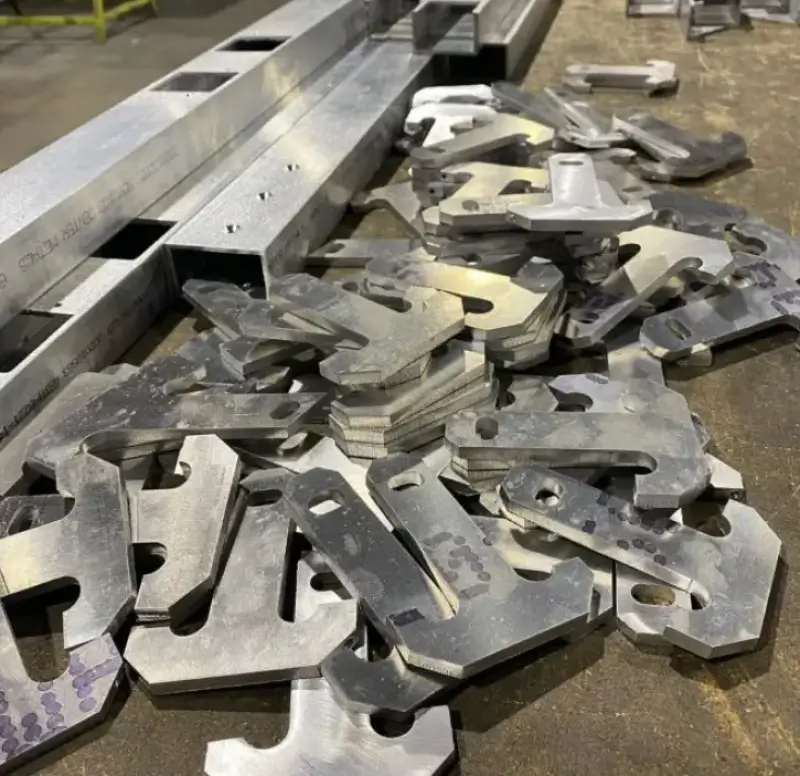
Sheet metal fabrication
Sheet metal fabrication in prototyping is useful for components such as enclosures, panels, and brackets. As in final part production, processes such as cutting and bending are used.
|
Material |
CNC machining |
Injection molding |
3D printing |
Sheet metal fabrication |
|
Metals |
Excellent |
Not applicable |
Limited – high cost |
Excellent |
|
Plastics |
Good |
Excellent |
Excellent |
Not applicable |
|
Composites |
Uncommon – depends on resin form |
Limited |
Good |
Not applicable |
|
3D printing resins |
Not applicable |
Not applicable |
Excellent |
Not applicable |
Try Prolean Now!
Future Trends for Rapid Prototyping Materials
The gap between prototype and final part is narrowing, thanks to advances in material science. Flexible resins, biodegradable plastics, modern composites, and lighter designs and durable prototypes highlight the next wave of rapid prototyping materials.
- Flexible resins – DLP and SLA printing are characterized by brittleness, but modern types of resins are more flexible.
- Biodegradable plastics – With growing sustainability pressure, stronger and more heat-resistant biodegradable plastics are becoming available in manufacturing.
- Modern Composites – The disparity between prototypes and production-grade parts is now narrower thanks to modern filled polymer and fiber-reinforced formulations.
- Lighter designs and durable prototypes – Generally, rapid prototyping materials are becoming more suitable for functional testing, with stronger designs with higher strength-to-weight ratios becoming more common.
Conclusion
The material you use can define the appearance and performance of the prototype. The iteration speed and the resemblance to the final part are closely tied to this choice. Aluminum, stainless steel, and other metals provide the mechanical strength required for functional prototypes. Plastics such as PS and ABS give a unique combination of machinability and cost-effectiveness. Engineers turn to resins and composites for high precision and specialty projects, respectively.
The gist is that there are many options, and you should match the prototype’s function to the material choice. As you plan to transition from an idea to a part, our rapid prototyping services offer the guidance you need on material choice and more. Upload the design file, and you will get a free quote within 24 hours.
Resources
[2]https://store.astm.org/b0221m-13.html

0 Comments