
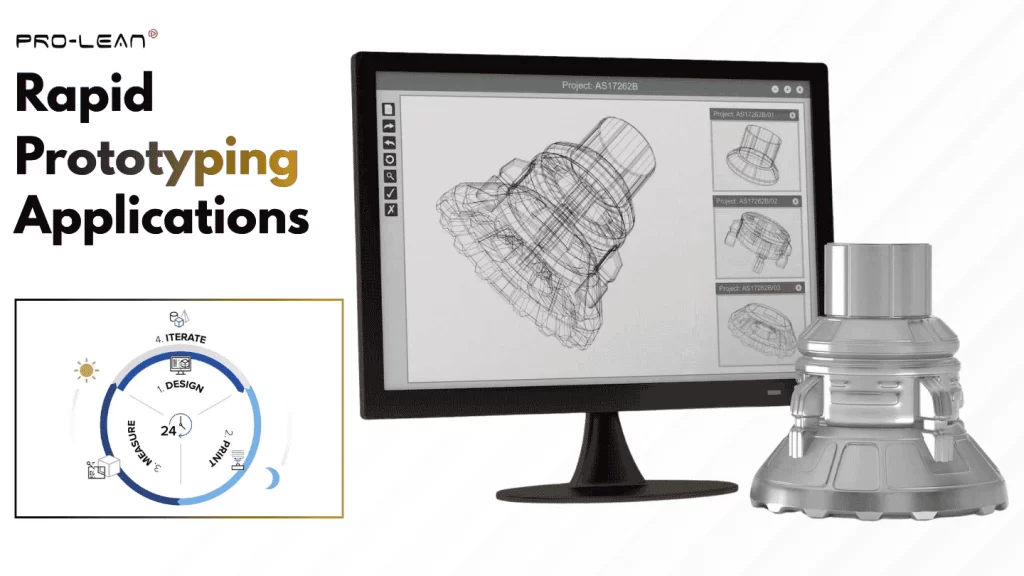
Rapid Prototyping Applications
Rapid prototyping serves multiple industries, such as automotive, medical, aerospace, tooling, industrial machinery, robotics, and electronics. 3D printing is the most popular method for creating custom prototypes, whether you need them for proof of concept, visual models, or functional testing. Additionally, CNC machining, vacuum casting, and injection molding can also be used.
The choice of material, prototyping method, manufacturability of the 3D model, iteration, and many other factors influence the final quality of rapid prototyping applications. This article will present a systematic approach to examining the common applications of rapid prototyping, including the development process, benefits, and critical considerations.
Rapid Prototyping Introduction- Why It is Popular Across Industries
Rapid prototyping introduction
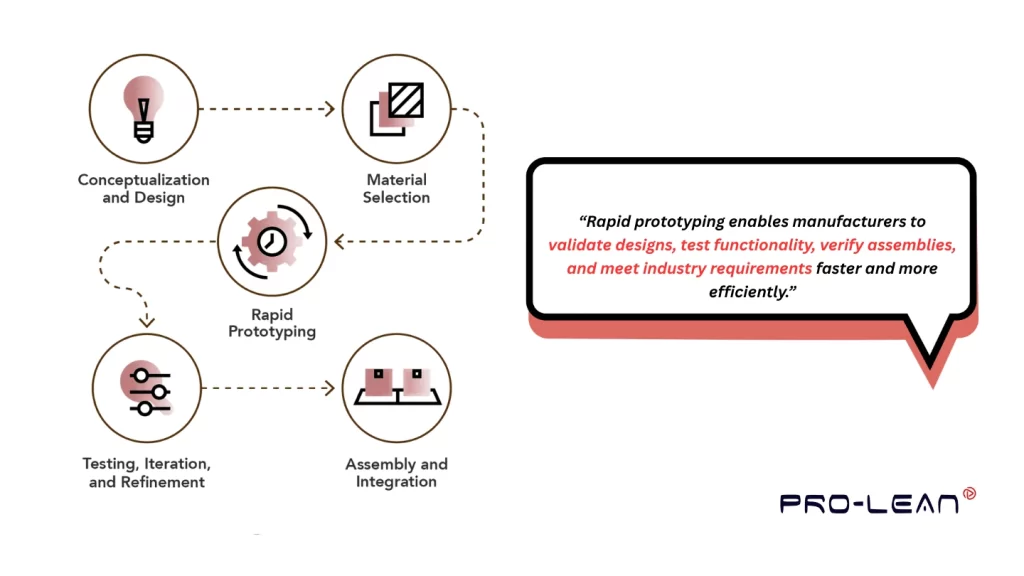
The history of rapid prototyping and its applications began in the early 1990s [1] as a quick way to create physical models (“proof of concept”) and to test them using additive manufacturing. It allows engineers and product developers to produce designed parts that focus on key features, enabling them to test specific ideas for real-world applications.
Unlike traditional prototyping, rapid prototyping is for early design validation and skips or streamlines many steps to achieve a shorter lead time, typically 1-3 days. The produced prototypes are for quick iterations, rather than formal feedback loops.
Some key application examples are fuel nozzle prototypes for aircraft, custom cutting guides for knee replacement surgery, mirror housing in a car for airflow validation in a car, and injection mold inserts for custom plastic products.
The following are the 5 key reasons why rapid prototyping is popular in many industries.
- It verifies the scope of mechanical design in early phases of product development.
- Rapid prototypes help to ensure the desired functional requirements and end goal of the designed part/product.
- Design mistakes, manufacturability, material choices, performance, and cost-efficiency can be rectified before medium- or full-scale production.
- A proof of concept can be presented to clients, investors, the project team, or any other stakeholders.
- Quick iteration can be done at a minimal budget before the desired results are achieved.
Rapid Prototyping Applications in Automotive
Automotive prototyping
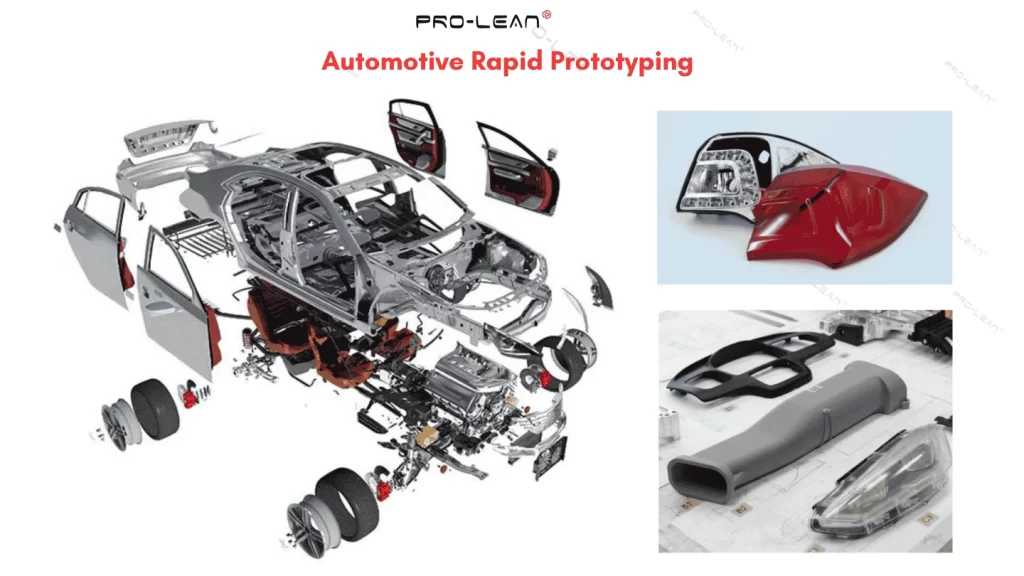
The manufacturing of automotive prototypes provides companies with a competitive edge in the loop from computer-aided design to physical parts. It involves no tooling, dedicated rapid tooling, or minimal tooling, saving both time and cost.
Rapid prototyping is suitable for aesthetic components, load-bearing components, and even critical engine parts. SLA, Polyjet, or other similar methods are first used for concept and styling, whereas SLS, FDM, and multi-jet are best for functional or assembly-fit automotive prototyping. This way, the risk of heavy investment commitment before series production can be eliminated while prototyping automotive components.
Below is the list of common rapid prototyping applications in the automotive industry.
- Functional Parts: Engine & transmission parts, fuel line, fuel injectors, cooling line, intake manifolds, valves & connecting rods, sensor mounts.
- Automotive Interior: Door & floor panel, dashboard, air vents, switches, door handles.
- Automotive Exterior: Grilles, bumpers, and wheel covers.
- EV Components: Battery enclosures, wire-carrying components, instrument panels, and motor housings.
Rapid Prototyping Applications in Aerospace
Aerospace prototyping parts
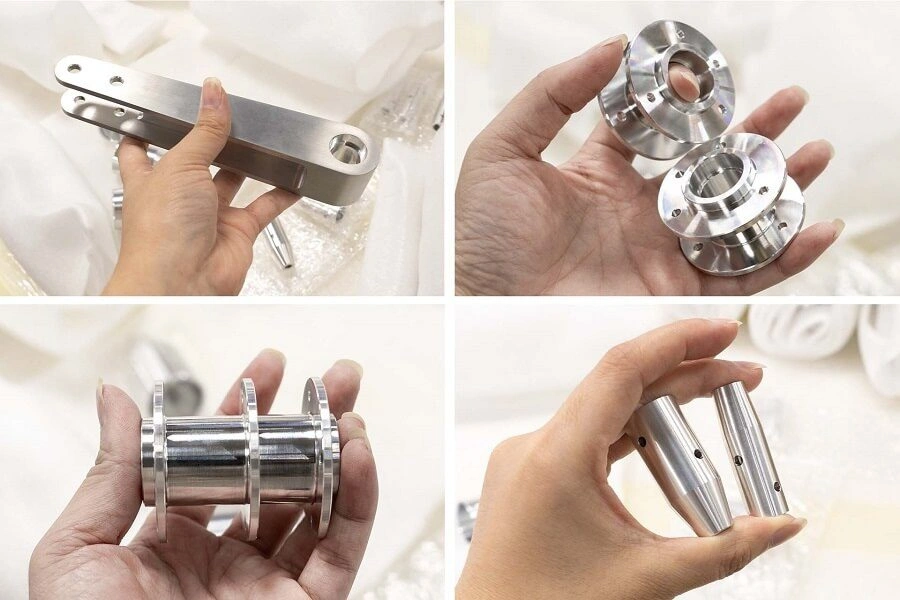
The aerospace industry also relies on rapid prototyping for design validation models, functional prototypes, and testing prototypes that are lightweight, complex, and precise. For instance, fuel nozzles, scale models for aircraft wings, custom ducting, and structural components for satellites.
Producing forged, cast, or CNC-machined Inconel, stainless steel, or other super-alloy parts without rapid aerospace Prototyping is costlier and time-consuming. So manufacturers prototype the designed components to validate design performance against tight weight margins. So, they use powder-bed fusion, directed energy deposition, and other similar rapid prototyping methods.
Rapid aerospace prototyping methods also comply with quality management and additive manufacturing qualification standards, such as AS9100 and ASTM 52941:2026.
The following are the rapid aerospace prototyping applications.
- Fuel nozzle tips lighter than forged or cast parts.
- Cabin brackets and interior structural brackets
- Fuel-line fittings, manifolds, valve bodies, and brackets
- Sensor mounts and enclosures, instrumentation panels, and landing gear development.
- Flight control components, propeller & rotor development, and wind-tunnel testing prototypes
- UAV/drone structure, satellite parts, and rocket engine development.
Rapid Medical Device Prototyping
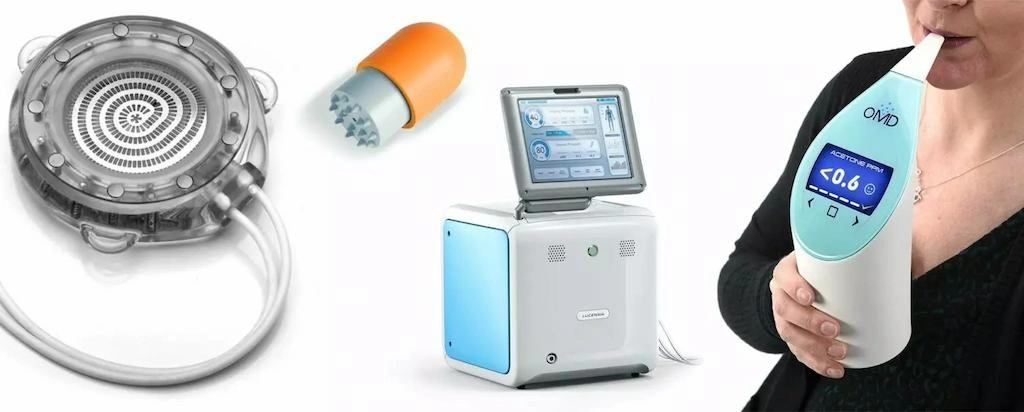
Medical device prototyping
The medical industry is another sector benefiting from customization, tool-less fabrication, precision, and quick lead times of medical prototypes. They are used for patient-specific implants & prosthetics, surgical instruments, and medical device manufacturing.
For medical prototyping, biocompatible polymers, load-bearing plastics, biocompatible alloys, and other materials are used. Meanwhile, common prototyping technologies in medical manufacturing are SLA, DLP, PolyJet, SLS, and FDM.
Since medical rapid prototyping influences patient safety and diagnosis accuracy, several quality and safety standards are critical.
- ISO 13485: Quality management of medical device manufacturing, from design to production.
- ISO 10993: Biological examination of medical device prototypes.
- ASTM 52900: Foundational standard for additive manufacturing, including medical 3D printing.
Next, the common rapid prototyping applications in the medical industry are;
- Prosthetic joints and sockets, drug-delivery devices, catheter development, and respiratory masks.
- Surgical instruments, surgical guides, orthopedic implants, and dental models.
- Enclosures for patient monitors, diagnostic equipment, instrument panels, endoscopic devices, medical pumps, and lab equipment.
- Medical testing fixtures and wearable devices.
Rapid Prototyping Applications in Consumer Electronics
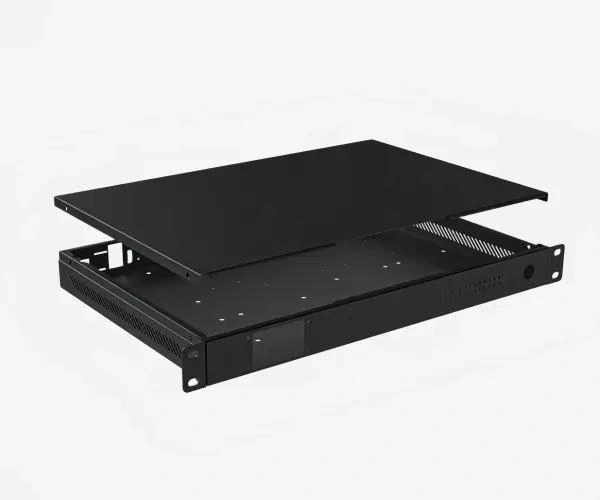
Electronic enclosure prototype
Device housings, mounts, snap-fits, living hinges, heat-sink bodies, device panels, and several other components are prototyped with rapid prototyping methods in the electronics industry. It ranges from a case of your smartphone to circuit board assemblies(PCBAs) of complex electronic devices.
| Application | Prototype Examples |
| Electronics Enclosures | Smartphones, tablets, laptops, IoT & device housings |
| Wearable Devices | Smartwatch, fitness tracker shells, navigation bands |
| Protective Cases | Phone cases, grips, stands, holders |
| Audio Products | Earbud, headphone & speaker housings |
| Gaming Devices | Controller housings, buttons, grips, and interactive touch keypads |
| Thermal Components | Cooling ducts, vents, thermal-management prototypes, and TIM test fixtures |
Try Prolean Now!
Rapid Prototyping Applications in Robotics and Automation
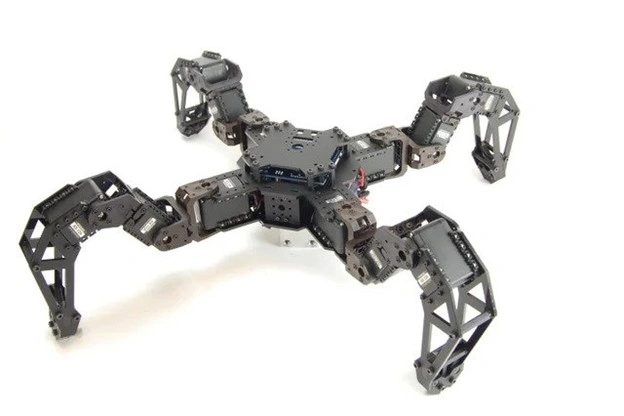
Robotics prototype
What makes rapid prototyping in robotics and automation different from other industries is that the final products themselves are produced in low volumes, and prototyping is extensively used for design verification and rapid iteration of task-specific hardware. The examples range from structural linkages for robotics systems to sensor and actuator mounts.
Let’s look at common applications of rapid prototyping in robotics and automation.
- Modular claw assembly for humanoid robots
- Base prongs for gripper-end effector
- Gear-train mechanisms
- Vision-system fixtures
- End-of-Arm Tooling (EOAT) and kinematic parts.
- Robot Wrist Adapters
Rapid Prototyping Applications in the Sport Equipment Industry
The sports equipment industry uses rapid prototyping to test designs for performance, reliability, and aesthetics before moving into full-scale production, including protective padding, custom-fit accessories, helmets, golf club heads, and running midsole lattices.
Some specific application examples are;
- Protective pads, helmets, and grips.
- Golf, racquet, and archery sports equipment
- Surfboard fins for hydrodynamic testing
- Climbing holds and training equipments
- Cycling equipment components
Types of Rapid Prototypes and Industry-wise Applications
Based on what they are used for, there are many types of rapid prototypes, including proof of concept, assembly testing, functional, and regulatory testing prototypes.
Proof of Concept Prototypes
These are the earlier prototypes in the product development cycle, used to demonstrate physical models of designs without much focus on functionality. They help identify whether a design is accepted or rejected by evaluating its geometry, texture, and aesthetics.
Assembly Testing Prototypes
As the name suggests, assembly testing prototypes are used to evaluate the mating, fit, and alignment of assembly parts. They focus on the shape, dimensions, and features of the designed parts.
Functional or Work-like Prototypes
Functional prototypes are made to test the desired functionality of designed components. They are helpful to iterate and refine the mechanical systems. Typically, companies take a sub-unit approach, which means different sections of complex systems are prototyped individually.
Regulatory Testing Prototypes
Regulatory testing prototypes are used to verify industry-specific compliance with quality, safety, and material compatibility requirements. These are especially used in the food processing, medical, and aerospace industries. For instance, FDA compliance for food mixture tanks.
|
Types of Prototypes |
Automotive |
Medical |
Aerospace |
Electronics |
|
Proof of Concept |
Powertrain layout, ergonomic seating bucks, and steering-mechanism rigs |
Prosthetic-joint concept models, orthotic-brace concepts, and equipment enclosure aesthetic |
wing-splice concepts, cabin-bracket layout, turbine-blade models, etc. |
Enclosure form, IoT device layout, PCB form-factor, hinge/buttons |
|
Assembly Testing |
HVAC fit jigs, hinge alignment, engine-bay clearance, bumper fit tests |
Surgical simulators, dental fits, prosthetic sockets, hearing-aid shells |
Wing-splice checks, cabin fitting, engine-mount alignment, airframe jigs |
Snap-fit tests, connector alignment, battery-compartments |
|
Functional / Work-like |
Intake manifolds, brake caliper, exhaust thermal tests, suspension load evaluation |
PA12 guides, cranial implants, dental crowns, fixation plates |
Fuel nozzles, wind-tunnel models, and turboprop parts |
EMC enclosures; thermal builds; IP gaskets; TPU cables; switches; heat sinks |
|
Regulatory Testing |
FMVSS crash parts, safety hoods, airbag housings |
ISO 13485 guides, FDA-compliant implants; ISO 10993 parts |
AS9100 DMLS parts, FAA test parts, DO-160 parts |
IEC 62368 enclosures, IP-rated enclosures, and FCC housings |
What Are the Steps of Rapid Prototyping?
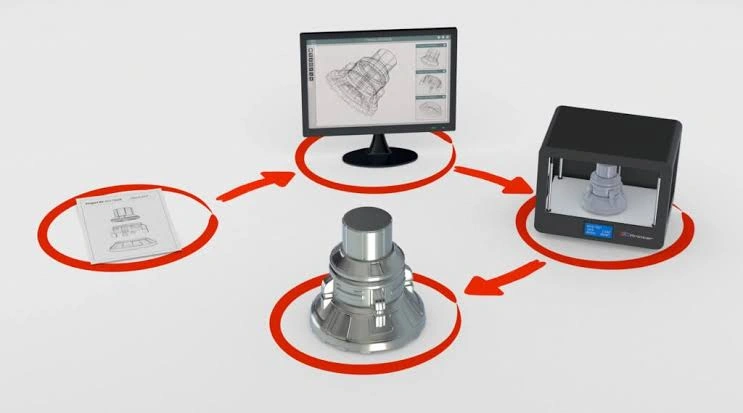
Rapid prototyping steps
The rapid prototyping process starts with requirement identification & preliminary design, followed by prototype printing, testing, and iteration. Each step is streamlined to achieve quick leads with minimal errors.
- Step 1: Identify the prototyping requirements, such as the scope and end goal of your prototype.
- Step 2: Create the 3D model of your prototype, visualizing the geometry and features digitally. You can use computer-aided design (CAD) software such as AutoCAD and SolidWorks.
- Step 3: If you are using 3D printing, make the design compatible with a 3D printer. It typically involves slicing the design using software such as Blender and Fusion 360.
- Step 4: Choose a suitable material and 3D printing method, then let the 3D printer build the physical form of your design.
- Step 5: Once the prototype is made, test it to see whether the desired results are achieved. Based on feedback, iterate on the prototyping if required.
Try Prolean Now!
Advantages of Rapid Prototyping
First, rapid prototyping is a quick process that delivers the designed prototypes within a few hours to a few days, depending on the types of prototyping and fabrication method, at a low cost. Let’s look at the six key advantages below.
- Quick Process: Rapid prototyping eliminates the need for extensive tooling and reduces lead time, enabling overnight iteration.
- Cost-effective: Methods like 3D printing and Vacuum casting are low-cost processes. They only require labor, material, and equipment costs.
- Extensive Testing: With rapid prototyping, you can test geometry, features, materials, thermal & mechanical functionality, and the economic scale of full-scale production.
- Competitive Edge in the Market: Especially for consumer items, rapid prototyping provides a competitive edge to test the ideas and introduce the product early in the market.
- Design Rectification: Any design flaws and manufacturability issues can be identified earlier in the product development cycle.
- Design Complexity: Rapid Prototyping supports complex geometrical features, such as undercuts, internal channels, and lattices,
Limitations of Rapid Prototyping
Along with several advantages, rapid prototyping also has limitations in material options, iteration costs, and the handling of large mechanical assemblies. It is difficult to use wood, paper, or some exotic metal alloys in additive rapid prototyping. Additionally, 3D-printed prototypes are not suitable for testing large assemblies composed of multiple individual units.
Is Rapid Prototyping Different from Rapid Tooling?
Yes, rapid prototyping is different from rapid tooling. Unlike prototyping, rapid tooling involves creating injection molds, dies, inserts, or other tooling to produce plastic parts in small- to medium-volume production. Methods like 3D printing, CNC machining, and vacuum casting are used for this.
Another difference is the material; prototyping is typically used with plastics and metal powders, whereas rapid tooling uses aluminum, P20 steel, silicone, 3D-printed inserts, etc. Prototyping happens early to test the concept and validate the design, while rapid tooling is used to assess moldability and lock in the hard tooling before committing to mass production.
Order Rapid Prototypes for Your Design with Us
At ProleanTech, we excel at creating rapid prototypes of your design with high customization, precision, and a wide range of material options. Our dedicated prototyping team works closely with clients to ensure the desired result and promised lead time. No matter the industry, you get custom prototypes with greater design freedom, expert DFM feedback, and opportunities for iteration.
Why Choose Us?
- 250+ high-performance material options.
- 3D printing, Fast CNC machining, Vacuum casting, and other prototyping methods
- Lead time of 1 to 15 business days, depending on technology and prototype complexity
- Balance of precision, lead time, and affordability
- Expert engineering consultation for design rectification and prototyping iteration
- Excellent networking with logistics to deliver prototypes worldwide.
To bring your concept to life, upload your design file and request a quote for Rapid Prototyping Services today!
0 Comments