
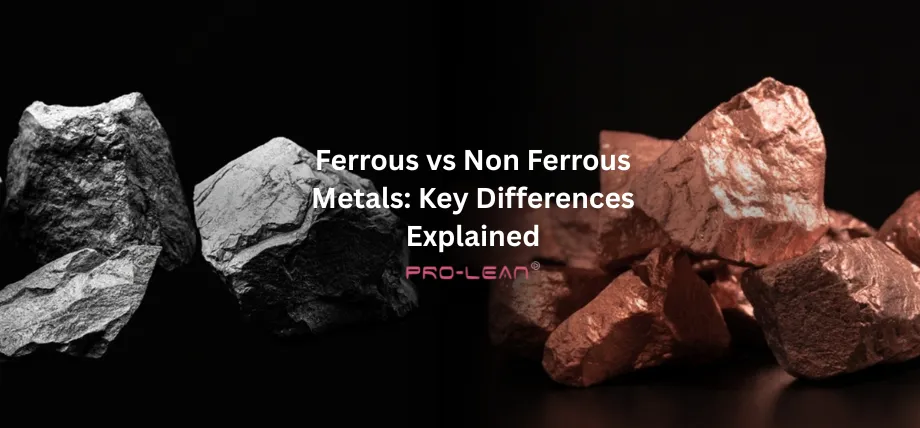
Ferrous and non-ferrous ores
What is the difference between ferrous and non-ferrous metals? To put it simply, ferrous metals contain iron as a major component, while non-ferrous metals contain little to zero iron.
Metals that contain iron are known as ferrous metals, answering the question what is ferrous metal? and they behave quite differently from non-ferrous metals. Ferrous metals are prone to rusting when exposed to air or moisture due to their iron makeup. This limits the applications of ferrous metals. But they are more affordable than nonferrous metals, making them common in construction or manufacturing.
What Are Ferrous Metals?
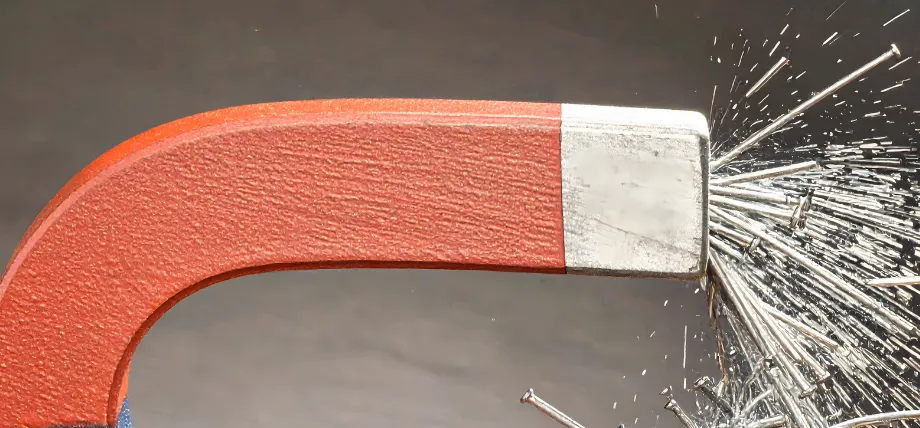
Magnetic properties of iron
Ferrous metals are metal alloys that contain iron as their component makeup. But this does not mean small traces of iron. When we say ferrous metal, we mean that iron is a large percentage of the metal’s elemental composition. The term “ferrous” comes from the Latin word for iron, “ferrum”.
Properties of Ferrous Metals
You can find ferrous metals in stuff like construction, manufacturing, architectural beams, and heavy machinery. Ferrous metals are known to be durable, having great tensile strength, usually magnetic, and a good conductor of electricity.
The most important property of ferrous metals is their strength. Iron gains a very high level of strength and tensile hardness when alloyed with carbon or other metals. Different metals provide different types of strength. Carbon steel is used to withstand heavy loads and avoid deforming.
Magnetic Properties of Ferrous Metals
Ferrous metals are known for their magnetism. Ferromagnetism occurs when unpaired electrons within iron atoms align their spins. This results in a strong magnetic attraction between metals. Depending on the type of alloy used, it can reduce or increase the magnetism in ferrous metals.
Due to their magnetism, they are highly sought after for applications such as transformers, motors, and generators.
Corrosion and Rust Behavior
One of the disadvantages of using ferrous metals is that they are less resistant to corrosion. Iron reacts with oxygen and water, which leads to rust. This rust peels or cracks over time, which exposes a new layer that is susceptible to further oxidation.
Although they can be covered with a protective coating such as paint or enamel or a zinc coating known as galvanization, alloying with elements like chromium, nickel, and molybdenum can be used to improve their resistance.
The most corrosion-resistant, cost-effective metal is stainless steel. Pairing it with chromium creates a self-healing oxide layer. 316 stainless steel is a good corrosion-resistant steel material for general machining, often known as marine-grade stainless steel.
Examples of Ferrous Metals
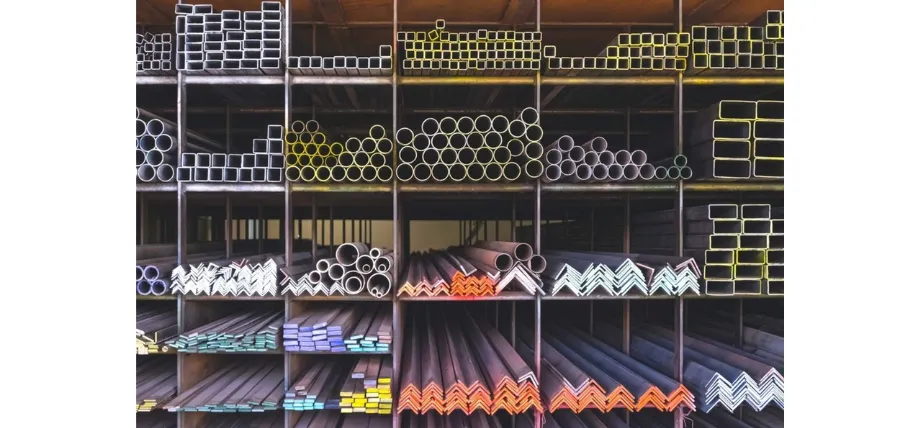
Organized ferrous metal stock.
The most common examples include carbon steel, alloy steel, cast iron, wrought iron, and stainless steel. All of them are very different from each other, which results in various applications.
Carbon Steel
Carbon steel is strong and cheap, which can be easily welded into mechanical parts. These factors make it extremely popular in construction and machinery. It is the most common ferrous metal with over 90% iron makeup. The higher the carbon content, the higher the strength and hardness would be
Stainless Steel
Stainless steel is corrosion-resistant due to high amounts of chromium and is easy to sterilize. The cost ranges from moderate to high. It combines strength with excellent corrosion resistance, making it suitable for medical devices and food processing equipment. On the plus side, it is also highly recyclable, making it environmentally friendly.
Cast Iron
Cast iron is known for its hardness and low cost. Even though it is brittle, it is typically used in shaping engine blocks, pipes, or cookware. It has more carbon than other metals. Its low cost comes from the absence of outside elements other than iron and carbon. Even though it is brittle, it is also wear-resistant. It has great castability, is relatively cheap, has good wear resistance, and has a low melting point.
Wrought Iron
Wrought iron is tough, ductile, and easily shaped by forging or rolling, making it ideal for decorative gates, railings, and architectural details. It is also known for being cheap.
Alloy Steels
Alloy steel offers strength and heat resistance through the addition of alloying elements. This makes it suitable for tools, pipelines, and other high-stress applications. Its price falls within a moderate range.
Try Prolean Now!
What Are Non-Ferrous Metals?
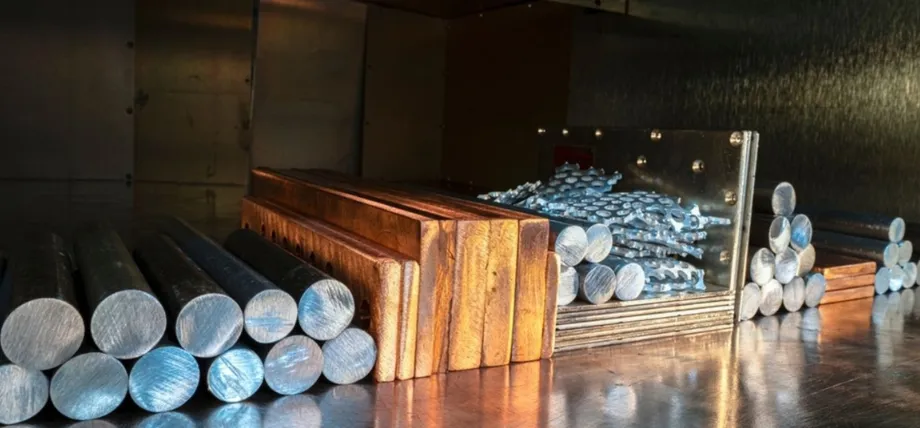
Non-ferrous material variety.
Now that we have covered ferrous metals, let’s dive into non-ferrous metals. Metals in which iron is not the main component are known as non-ferrous metals. They contain little to no iron but can also contain 50% iron by definition. They are softer and easier to shape. Metals like gold and silver are non-ferrous.
Since non-ferrous metals are an important part of human civilization, some metals gained popularity due to their scarcity, like gold or silver.
Properties of Non-Ferrous Metals
Non-ferrous metals, defined by their lack of iron content, have different properties compared to ferrous metals. They lack magnetism and cannot rust. They are known for corrosion resistance and light weight.
Some pure non-ferrous metals, like aluminum, are relatively soft but can be strengthened through alloying and heat treatment. Some non-ferrous metals are known for their low levels of strength and hardness. These include tin, lead, and zinc.
Non-ferrous metals offer high corrosion resistance, easy fabrication (such as machinability, casting, welding, etc), great thermal and electrical conductivity, low density, and absence of magnetism.
Non-Magnetic and Corrosion-Resistant Characteristics
Since non-ferrous metals lack magnetism, they are the perfect candidates in processes that present a risk of magnetism, like MRI machines. However, this does turn into a disadvantage during recycling.
Corrosion resistance is the biggest advantage non-ferrous metals have over ferrous metals. Unlike iron, they can protect themselves from exposure to oxygen and water without needing a protective coating. These metals protect themselves through a natural oxide film deposition. Copper develops a green patina to protect itself, while aluminum forms a thin oxide layer.
These characteristics make them suitable for a wide range of applications, such as marine and biomedical devices.
Examples of Non-Ferrous Metals
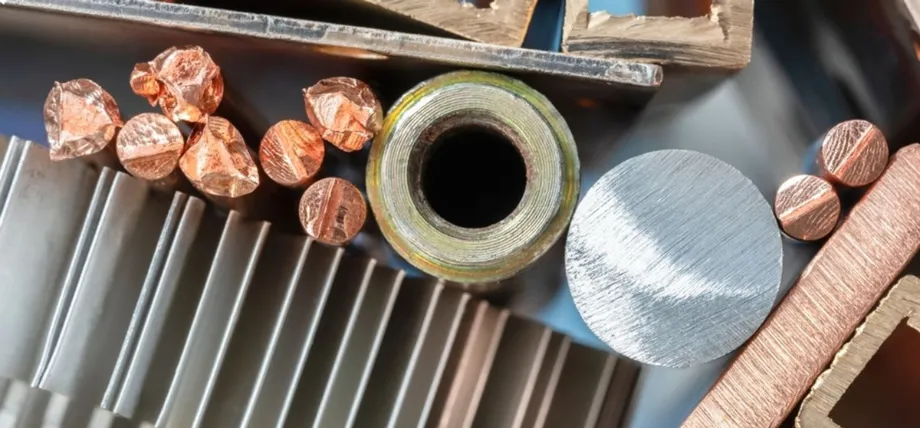
Non-ferrous metal examples.
Non-ferrous metals include aluminum, copper, zinc, and lead. Precious metals include gold, silver, and platinum. These materials share common properties such as a lack of ferromagnetism and a good level of corrosion resistance.
Aluminum
Aluminum is a lightweight, corrosion-resistant metal that is easy to mold, making it perfect for transportation, packaging, and aerospace components. Its many advantages include corrosion resistance and being a good conductor of heat and electricity. A process which is known as aluminum precision machining uses CNC milling to turn aluminum into complex components for industries like aerospace.
Copper and Copper Alloys
Copper offers excellent electrical and thermal conductivity, making it a primary material for wiring, plumbing, and electronic components. Copper provides good corrosion resistance and high ductility.
Lead and Zinc
Lead is a soft metal that offers protection against radiation. Commonly used in batteries and protective barriers. Lead is very heavy and resistant to corrosion.
Zinc has a low melting point and is easily cast. Used in die casting, galvanizing, and corrosion protection coatings.
Precious Metals
Gold has high ductility and is an excellent conductor of electricity. One of its famous properties is that it resists tarnishing. The primary applications of gold are in jewelry, electronics, and connectors. Silver has the highest electrical and thermal conductivity among metals. Its applications include electronic circuits, solar cells, and precious jewelry.
Platinum is dense, corrosion-resistant, and highly catalytic. For these properties alone, platinum is used in automotive converters in cars, laboratory equipment, and even in high-cost jewelry.
Try Prolean Now!
Ferrous and Non-Ferrous Metals Comparison
Strength and Durability
Ferrous metals are strong and economical. Non-ferrous metals are lighter and corrosion-resistant. Both these metals are suitable for various manufacturing purposes.
Non-ferrous metals have low hardness, which means they can be molded easily. They have high strength with low weight. Examples of the application of non-ferrous metals can be wires, parts of an airplane, packaging, electronics, or pipes.
Ferrous metals have high tensile strength and are magnetic in nature. The iron content in ferrous metals causes them to have magnetic properties. Ferrous metals are often used in the form of a beam in construction or in vehicles.
Weight and Density
Ferrous metals are normally heavier and have a medium electrical and thermal conductivity. Non-ferrous metals are naturally corrosion-resistant and lighter in weight. They also possess high electrical and thermal conductivity.
Corrosion Resistance
Ferrous metals possess low corrosion resistance, which might lead to rusting. Non-ferrous metals are also naturally corrosion-resistant and lighter in weight.
Magnetic Properties
Ferrous metals are magnetic due to their iron content. On the other hand, non-ferrous metals are non-magnetic because of the absence of iron.
Cost, Recycling, and Scrap Value
Ferrous metals are known to be cheap, making them very common. Non-ferrous metals are typically expensive and sometimes even more expensive, making them somewhat rare.
Ferrous metals have a good impact environmentally due to their ability to easily separate magnetically. Non-ferrous metals can be recycled, but not as commonly as ferrous metals. They are harder to sort. Although both metals produce high CO2 emissions from mining, recycling reduces the carbon footprint.
Manufacturing and Applications of Ferrous and Non-Ferrous Metals
During manufacturing, engineers must consider the manufacturability of ferrous and non-ferrous metals, in addition to their other material properties.
- Machining: Both ferrous and non-ferrous metals are suitable for CNC machining. The process is ideal for ferrous metals like cast iron and non-ferrous metals like aluminum and brass. Harder metals like titanium and nickel superalloys require special considerations to minimize tool wear.
- Extrusion and Die Casting: Non-ferrous metals are better candidates for processes like extrusion and die casting due to their superior ductility and lower melting points (with a few exceptions), with alloys like aluminum 6061 and 6063 being some of the easier materials to work with. Some steels can be extruded.
- Sheet Metal Fabrication: Both ferrous and non-ferrous metals can be processed as sheet metal and subject to sheet metal prototyping processes like rolling and stamping. Ideal ferrous metals include carbon steel and stainless steel, while popular non-ferrous sheet metals include aluminum 5052 and 3003.
- 3D Printing: Metal additive manufacturing processes like DMLS/SLM can process a number of metals, ferrous and non-ferrous. The most common ferrous metal powders for the process are 17-4 PH and 316L stainless steels, while manufacturers also produce printable powders from non-ferrous metals and alloys like aluminum, titanium, cobalt chrome, and Inconel.
Uses of Ferrous Metals in Construction and Machinery
Ferrous metals are highly in demand due to their strength, low cost, and iron content. They can be found in structural frameworks, industrial machinery, automotive parts, and infrastructure.
Uses of Non-Ferrous Metals in Electrical and Lightweight Applications
Non-ferrous metals are important in electrical and lightweight applications because of their high conductivity and corrosion resistance. They can be found in industries like aerospace and automotive wiring.
Precision Metal Machining Services
Looking for reliable precision machining for your custom project? Proleantech has been providing metal machining services to customers in over 30 countries with a complete in-house machining facility. We maintain a stock of ferrous and non-ferrous metals, including standard brass alloys, bronze alloys, copper, and aerospace-grade titanium for your precision components. We use CNC milling, 5-axis machining, and isolated finishing floors with skilled staff to deliver consistent, high-performance parts.
Request a free quote online and start your production in as little as 24 hours.
Try Prolean Now!
Frequently Asked Questions about Ferrous VS Non Ferrous Metals
Is Ferrous Stronger Than Non-Ferrous Metal?
Ferrous metals are known for their superior strength, durability, and toughness as compared to non-ferrous metals. This makes them ideal for structural frameworks or industrial machinery.
Is Stainless Steel Ferrous or Non-Ferrous?
Stainless steel is a ferrous metal because it contains high amounts of iron. As read above, metals that contain iron are ferrous metals.
Is Copper Ferrous or Non-Ferrous?
Copper is a non-ferrous metal because it does not contain iron. As read above, metals that do not contain iron are non-ferrous metals.
Is Gold Ferrous or Non-Ferrous?
Gold is a precious metal that comes under the category of non-ferrous metals because of its lack of iron.
What Are Ferrous Metals And Non-Ferrous Metals?
Metals such as carbon steel, alloy steel, cast iron, wrought iron, and stainless steel come under ferrous metals due to their iron composition.
Metals such as aluminum, copper, brass, bronze, zinc, lead, nickel, titanium, gold, silver, and platinum come under non-ferrous metals because of their absence of iron and corrosion resistance.
0 Comments