
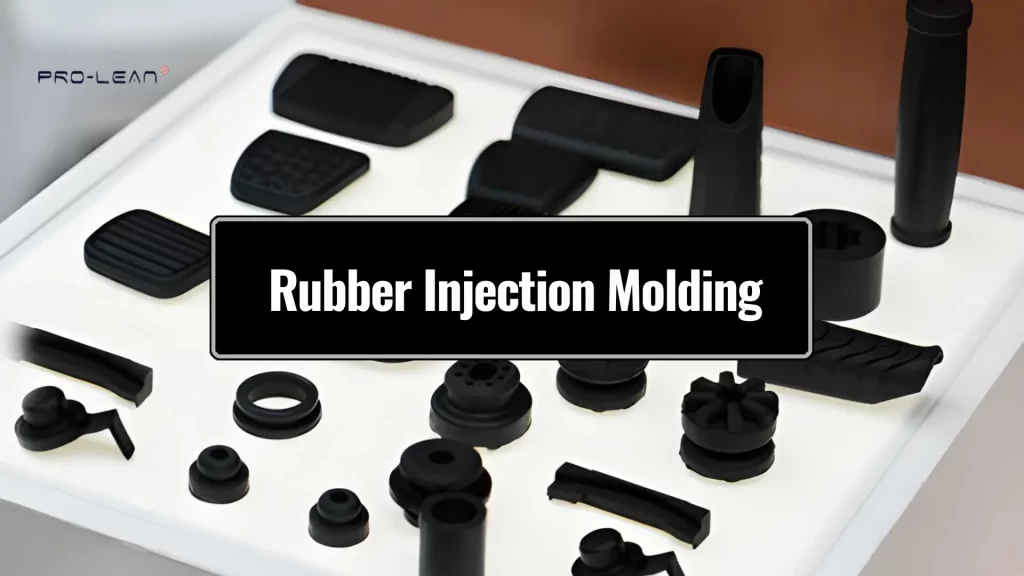
Rubber Injection Molding
Rubber injection molding shapes uncured rubber by forcing it into a closed metal mould. The mould is heated and held under pressure during the cycle. As the rubber fills the cavity, heat triggers the curing (vulcanization) process. This reaction permanently sets the part’s shape and physical properties.
Unlike plastics, rubber does not simply cool and solidify. The material must fully cure inside the mould before ejection. Cycle time, mould temperature, and injection pressure directly affect part quality. This process is commonly used for seals, O-rings, gaskets, hoses, and similar components. It supports high-volume production with consistent performance.
This guide explains rubber injection moulding from a practical manufacturing perspective. It covers process principles, rubber types, moulding methods, applications, and advantages.
What Is Rubber Injection Molding
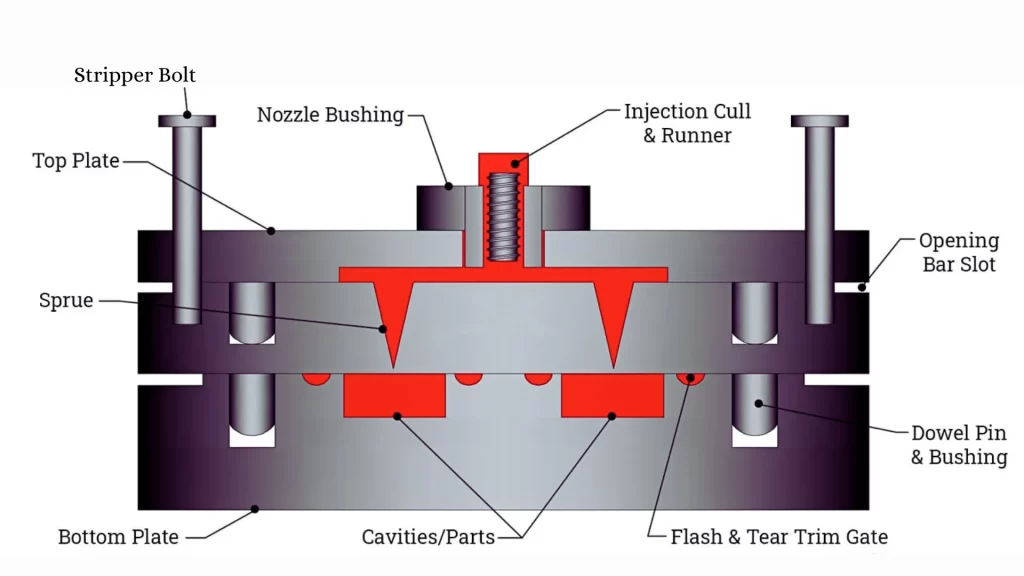
Rubber Molding Process
The Rubber Injection molding process involves producing parts from raw rubber using a metallic mold. After the mould is prepared with a pre-shaped cavity, the uncured rubber is forced through the mould at high pressure, curing it (vulcanising) within the mould. The vulcanisation reaction forms cross-links within the rubber’s molecular structure, giving it its final physical properties.
A crucial element of creating rubber moulds is strict control over all variables, including time, temperature, and pressure. If these variables fall outside the specified acceptable range, the end product could exhibit incomplete vulcanisation, warped parts, or incorrect dimensions. Therefore, it is essential to properly monitor and set up the process to obtain consistent results.
Rubber Injection Molding Workflow (From Design to Productions
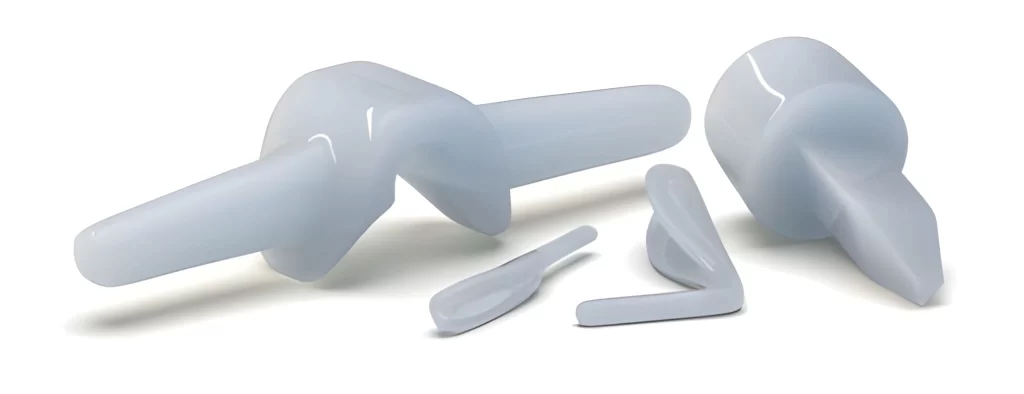
Molded Silicone Rubber Implants
The use of rubber moulds allows identical parts to be produced consistently, rather than manually shaping each one. This production process also depends on chemical reactions under controlled conditions to create strength and flexibility in the rubber. Heat may also be applied to enhance the curing cycle during part formation.
Steps involved in rubber injection molding:
- Part design
- Mold design (CAD development)
- Gate & runner system design
- Venting design
- Mold material selection
- Temperature control system integration
- Mold fabrication and machining
- Mold inspection and testing
- Material preparation
- Injection and curing process
- Parting Line and flash control
- Demolding and part removal
- Post-Processing and finishing
- Final inspection and quality Control
Types of Rubber Injection Moulding Processes
This molding process creates rubber parts by forcing a rubber compound into a closed mold under pressure. It is best suited for producing custom-molded parts and high volumes of similar rubber parts with consistent quality. Rubber injection molding has several advantages, including the ability to achieve tight tolerances with minimal finishing requirements after molding.
Here are the main types of rubber injection moulding
Organic Rubber Injection
Organic injection molding is the oldest and most common form of rubber injection molding. First, a rubber compound is created from a specific formulation, then it is heated and forced into a mold with a screw-style injector.
After the rubber compound is placed in the mold, it is cured and takes its final shape. Organic rubber injection molding is most commonly used to produce long-lasting, heavy-duty industrial rubber components.
Liquid Silicon Rubber Injection Molding
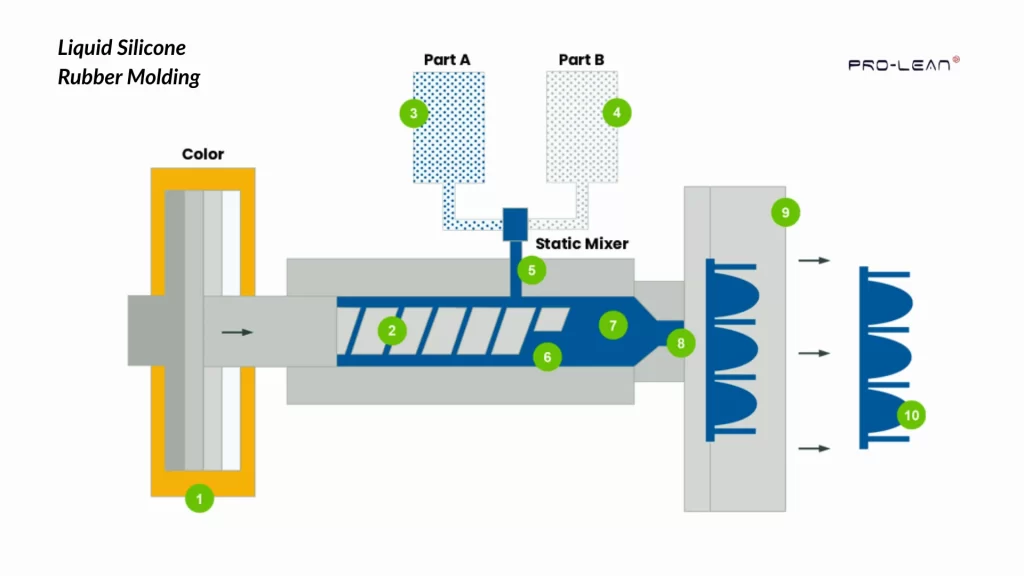
Liquid Silicone Rubber
LSR (Liquid Silicon Rubber) injection molding uses a liquid silicon product that is mixed and then injected into a sealed mold, where it cures and forms a solid part. Parts produced by silicone injection molding exhibit high flexibility, cleanliness, and heat resistance. LSR is most commonly used to create complex, precision parts that may include food-grade or medical components.
Thermoplastic Rubber (TPR, TPE, TPV) Injection Molding
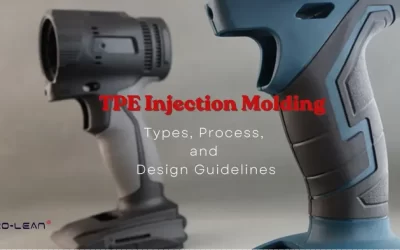
Thermoplastic rubber injection molding operates similarly to plastic injection molding, but produces parts with rubber-like properties. Thermoplastic rubbers do not require vulcanization, reducing the processing time needed to produce parts. Thermoplastic rubber parts can be created in various colors and are recyclable, making them ideal for consumer goods, electrical housings, and medical devices.
Custom Rubber Injection Molding
Custom rubber molding process allows manufacturers to design parts to their specifications, including material properties, shape, and compliance with regulatory requirements.
It is most often used for prototype development, low-volume production, or specialized applications. The custom rubber injection molding process gives engineers the flexibility to develop new designs and meet the exact performance specifications of a product without using an off-the-shelf molded part.
Custom rubber injection molding is best suited for creating products with unique requirements that typical rubber parts cannot meet, particularly when certifications or precise material performance are required. (Also read: rubber compression molding)
Try Prolean Now!
Types of Rubber Used in Injection Moulding
This process is compatible with a variety of rubber types, each offering different physical properties, depending upon the intended application. The choice of the correct rubber is essential to guarantee durability, chemical resistance, temperature resistance, and mechanical performance. The table below illustrates the most common rubber types and their respective physical properties.
Natural Rubber (NR)
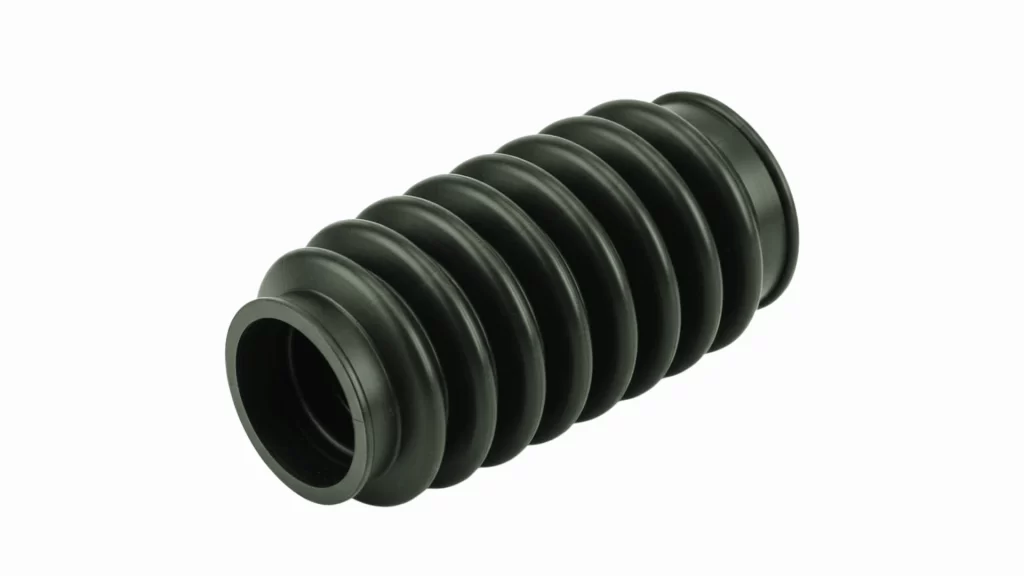
Natural Rubber Molded Part
Natural Rubber is a natural polymer derived from latex harvested from rubber trees. It is known for its elasticity, high tensile strength, and abrasion resistance. It is one of the most popular rubber types used to produce O-rings, seals, diaphragms, dampers, and bumpers. Its ability to bond to metals makes it a popular choice for coated parts. It remains a cost-effective option and is preferred when flexibility is essential.
Nitrile Rubber (NBR / Buna-N)
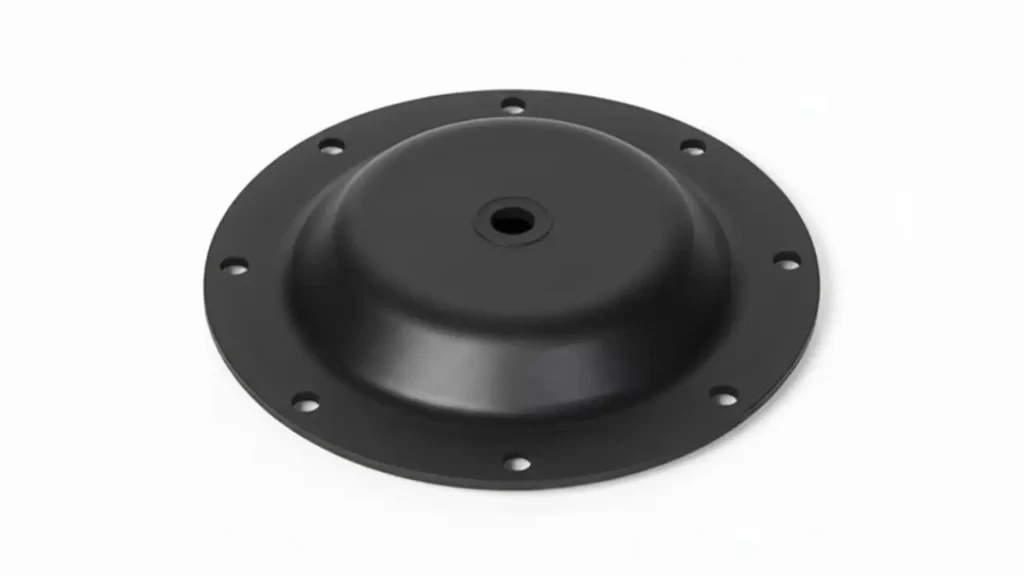
NBR Molded Diaphragm
Nitrile Rubber is a synthetic rubber compound made from butadiene and acrylonitrile. It is resistant to oil, fuel, water, and many chemicals. NBR is hard, abrasion-resistant, and is widely used in the automotive industry for seals, hydraulic gaskets, and fuel system components. Its chemical resistance and mechanical durability make it one of the most versatile rubber compounds for industrial applications.
Hydrogenated Nitrile Rubber (HNBR)
HNBR is a variant of nitrile rubber that has enhanced resistance to heat, oil, and chemicals. It offers superior performance at high temperatures and is used in the automotive powertrain component industry for seals, hoses, and other applications. Its durability makes it ideal for applications that involve thermal and chemical stresses.
Ethylene Propylene Diene Monomer (EPDM)
EPDM is known for its exceptional heat, ozone, and weather resistance. EPDM is primarily used in automotive rubber injection molding for panel seals, brake systems, waterproof seals, weather stripping, and electrical insulation. It has a long service life in outdoor and high-temperature applications.
Silicone Rubber (SI)
Silicone rubber is highly flexible and can operate in extreme temperatures. It is used in medical devices, valves, infant care products, and high-temperature seals. Silicone retains its flexibility and weather resistance, so the silicone rubber molding process is preferred for consumer and industrial applications.
Fluorosilicone (FVMQ)
Fluorosilicone is a combination of silicones’ flexibility with the chemical and fuel resistance of fluoropolymers. Fluorosilicones are widely used in the aerospace and automotive industries for seals, O-rings, and gaskets exposed to petroleum products and harsh chemicals. They maintain their performance across a wide temperature range.
Neoprene (CR)
Neoprene is fire-, weather-, and abrasion-resistant. Neoprene is used for gaskets, hoses, industrial belts, and protective coatings. Its versatility makes it suitable for marine, construction, and automotive applications.
Styrene-Butadiene Rubber (SBR)
SBR is valued for its excellent abrasion resistance and its ability to withstand long-term aging and cracking, providing consistent impact handling and wear performance. For these reasons, SBR is commonly used in seals, gaskets, diaphragms, tires, shoe soles, and conveyor belts.
Fluorocarbon Rubber (FKM/Viton)
FKM or Viton performs exceptionally well at both high and low temperatures and resists attack from many aggressive chemicals. Due to its chemical and temperature-resistant properties, FKM, or Viton, is widely used in fuel systems, hose lines, and O-ring seal designs, primarily in the automotive and chemical process industries. As such, these are ideal materials for those requiring reliable operation in harsh environmental conditions.
Butyl Rubber (IIR)
Butyl rubber has exceptionally low gas permeability and is a superior material for noise damping due to its sound-absorptive properties. The most common uses of butyl rubber include tire inner liners, pharmaceutical stopper caps, seals, and parts that require vibration control. IIR is flexible under external pressure, allowing it to be used in both vacuum and high-pressure applications.
Urethane Rubber (PU/Polyurethane)
Urethane rubber exhibits exceptional tensile strength, excellent abrasion resistance, and the ability to support heavy loads. Urethane rubber is often molded into custom wheels, bushings, rollers, and other industrial components that experience significant wear and repeated loading.
Thermoplastic Elastomers (TPE)
Thermoplastic elastomers combine the flexibility of rubber with the molding and recycling capabilities of thermoplastics. Thermoplastic elastomers are easy to mold using injection molding techniques and can be made from 100% post-consumer material and/or recycled from manufacturing waste. TPEs are frequently used in the design of over-molded components, automotive interior trim, consumer goods, and medical devices that require a soft, comfortable surface.
Thermoplastic Vulcanizates (TPV)
TPV is a polymer-based compound consisting of EPDM rubber blended with polypropylene. TPV provides long-term thermal resistance to heat deformation, compression set, fatigue, and many chemicals. TPV is often used for automotive weather seal designs, gaskets, and under-the-hood components that require extended durability.
Try Prolean Now!
Applications and Uses of Rubber Injection Moulding
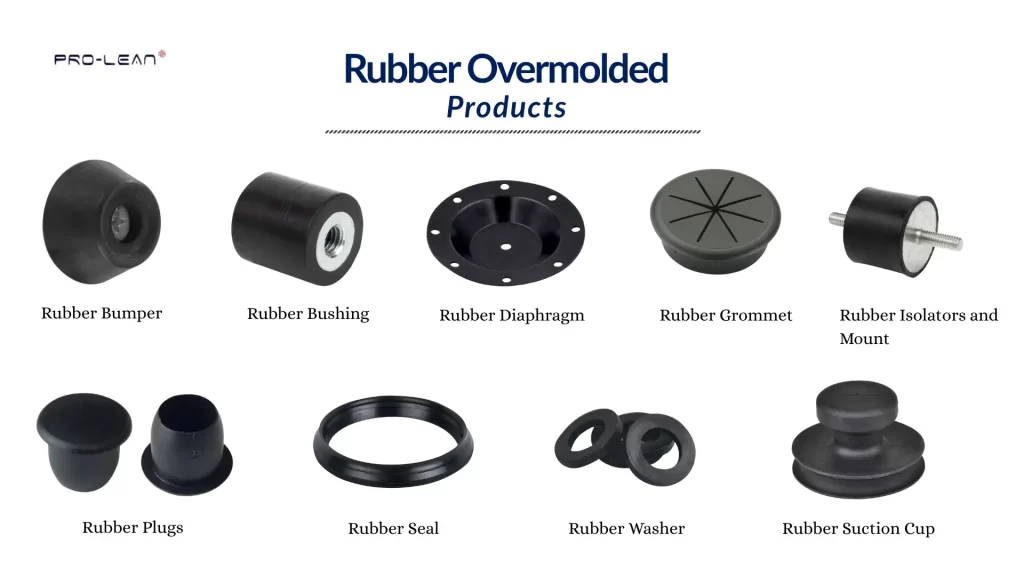
Rubber Overmolded Products
Rubber components are commonly found in various sectors, including machinery, vehicle, electronic, and consumer product industries.
- Rubber Bumpers: Bumpers are rubber components used to protect equipment from impacts and vibrations. The designs of these components vary greatly, including stem, mushroom, and recessed styles. Bumpers are installed in equipment, furniture, displays, and packaging to minimise the force generated upon impact.
- Rubber Bushings: Bushings are designed to absorb the energy created by vibrations between two pieces of equipment. These components are typically cylindrical; however, some bushings are specifically designed for specific applications. Bushings are installed in all sorts of equipment, including automobiles, semi-trucks, bicycles, industrial machinery, and other heavy equipment, to help reduce vibration and extend equipment life.
- Rubber Diaphragms: Diaphragms isolate two pressure areas and create a barrier to prevent leakage between them. Some diaphragms may remain stationary while others will flex and move when subjected to pressure. Diaphragms are commonly installed in pumps, valves, and pressure systems.
- Rubber Grommets: Grommets shield wires and cables from metal edges and burrs. This prevents abrasions and creates an isolation zone between the cable or wire and the surrounding structure, thereby preventing electrical shorts and damage to the cable or wire. Grommets are installed in numerous applications, including electronics, vehicles, and industrial equipment.
- Rubber Isolators and Mounts: Isolators and mounts are rubber components that reduce vibration transmission and maintain equipment levelness. Isolators and mounts may take on many forms, such as shock mounts, pads, and bumpers. Equipment using isolators and mounts includes industrial machinery, heating and air conditioning systems, and conveyor equipment.
- Rubber Plugs: Plugs are rubber components that seal openings to prevent dust and liquids from entering the interior of equipment. Plugs also protect connector openings, preventing damage. There are many different plug configurations available, including T-style, plus-style, and plug-washer combinations. All types of plugs are used to prevent dust or liquid damage to equipment and to prevent electrical short circuits.
- Rubber Seals: Seals seal gaps and prevent the escape of fluids and gases from equipment. Rubber seals are used to seal equipment using liquids, gases, and high-pressure systems. Rubber seals are available in strip form, film, moulded shapes, and other forms and are used on equipment, piping, and other mechanical systems.
- Rubber Pads: Pads reduce the amount of vibration transmitted through equipment and reduce the noise it produces. Pads protect the surface below the equipment and enhance operator safety. They are used under both small equipment, such as office printers, and larger equipment, such as electric generators.
- Rubber Suction Cups: Suction cups allow equipment to grip and hold onto flat or curved surfaces. Flat suction cups are used to pick up flat surfaces, while suction cups with bellows are used to pick up curved or irregularly shaped surfaces. Suction cups are used in a variety of applications, including robotics, automation, and material handling.
- Rubber Washers: Washers are rubber components that are used to distribute weight and reduce vibration in equipment. Washers are used in pipe joints, machines, and electrical assemblies to help prevent leaks and wear. In addition to providing support and reducing vibration, washers help protect equipment from stress and fatigue.
- Rubber O-Rings: O-rings seal fluids and gases within equipment. These are used in hydraulic, pneumatic, chemical, and automotive applications. In addition, O-rings are used to prevent fluid and gas leaks and to withstand both heat and pressure.
Get Rubber Injection Moulded Parts from Us
At Prolean Tech, we provide expert Injection Molding Services and also support projects with custom tooling, precision machining, prototyping, and overmolding solutions. Our goal is to help businesses get high-quality, reliable parts that meet their exact needs. Reach out to us to see how we can make your next project more efficient and precise.
0 Comments