
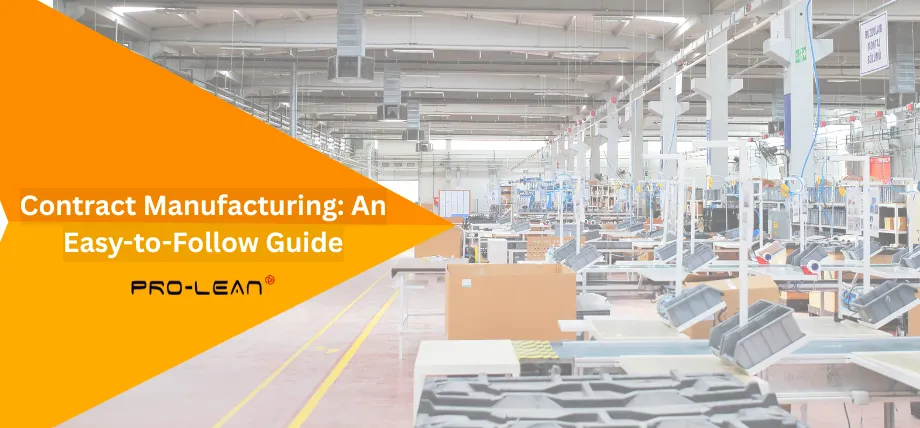
Manufacturing Facility
Contract manufacturing occurs when a company outsources the machinery-intensive part of production to an external specialist through subcontract machining, subcontract CNC machining, and other outsourced manufacturing services, allowing it to focus on design and branding.
We’ll walk you through the entire contract manufacturing process, including how the process typically unfolds, the different models companies rely on, and what to expect from machining subcontractors and CNC machining service providers.
What Is Contract Manufacturing?
Manufacturing and Contracts
An original equipment manufacturer teams up with a third-party contract manufacturer, especially an online CNC machining manufacturer, for CNC precision machining parts and flexible production scaling.
Most of the work is done by a contract manufacturer or machining subcontractor, such as finding the right materials and operating precision machining equipment. However, even though the contract manufacturer performs the physical work, the finished product still belongs to the original equipment manufacturer. That setup means companies don’t have to buy tons of expensive machinery and can instead spend more time on designing new products.
Things begin when the contract manufacturer provides the OEM with a price quote. That quote is shaped by labor and the engineering drawings submitted by the OEM. Once both sides agree, the contract manufacturer begins production and sticks to the required standards and tolerances.
Whether they’re making a one-off prototype, rapid prototyping China, low-volume CNC machining, or high volume CNC machining run, Contract manufacturers rely on advanced technology, such as CNC machining, to hit incredibly tight tolerances, sometimes as precise as ±0.0002 inches. It’s pretty wild when you think about it.
How the Contract Manufacturing Process Works
Initial Consultation
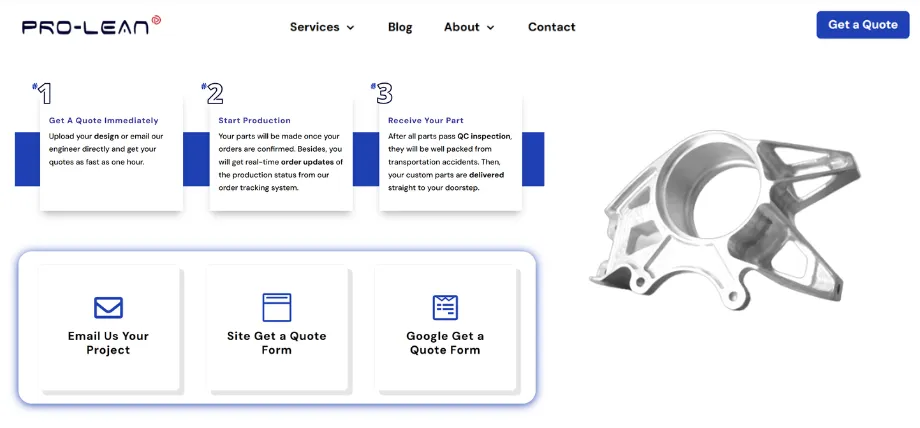
Quote Request Options
The OEM reaches out to a few contract manufacturers along with CAD files and a list of material specs. The CM’s engineering crew tries to figure out whether the thing can actually be manufactured. Selects appropriate CNC machining, tooling, and material routes for efficient outsourcing machining parts execution.
Quoting
The contract manufacturer puts together a cost estimate. The contract manager then coordinates with the client before production commencement.
Prototyping and Validation
A contract manufacturer creates prototypes using CNC machining, on-demand manufacturing, and rapid CNC precision machining of parts. This is done based on the drawings you submit with specified tolerances. The OEM metal fabricator and contract manufacturer review the form and functional requirements and validate that the model can be made with optimized production methods before moving to large-scale manufacturing.
Production Ramp-Up
After you approve the prototype sample, the contract manufacturer transitions to small-batch machining. During the production ramp-up, critical steps such as fixture design, dimensional stability, and CNC programming are implemented to ensure the volume is scaled according to requirements and material waste is minimized as much as possible.
Quality Assurance and Testing
Manufactured parts are regularly inspected for dimensional accuracy according to ISO standards and drawing specifications. Some of these tests may include stress testing and corrosion tests to ensure compliance with OEM specifications.
Packaging, Delivery, and Post-Production Support
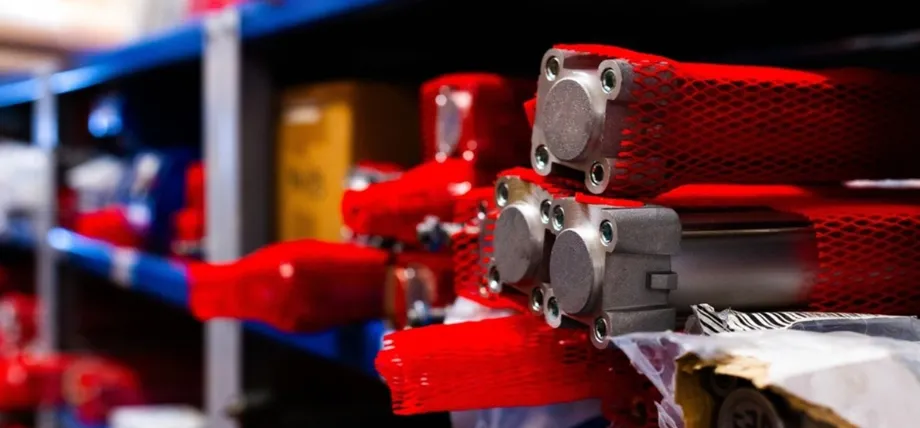
Protected Industrial Parts
Once the parts have passed inspection, the contract manufacturer will proceed to package them. The contract manufacturer will provide support, like warranty claims, to ensure long-term reliability.
OEM, CM, and Toll Manufacturing
Although people often group them together, they are quite distinct.
Original Equipment Manufacturing (OEM)
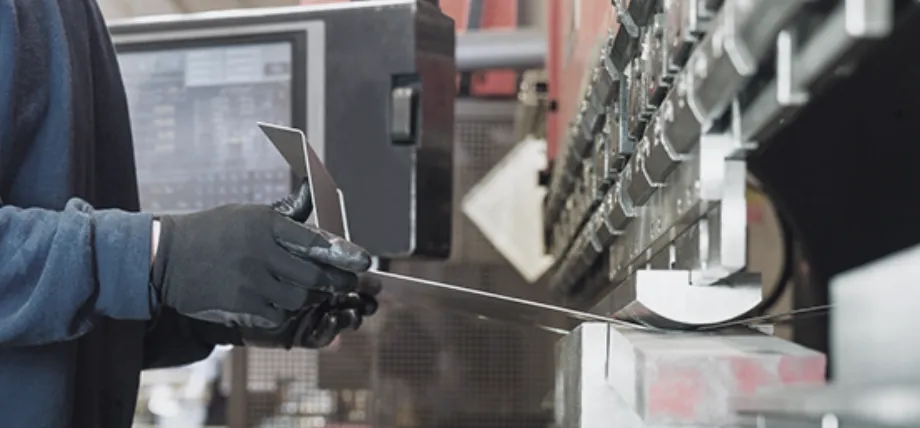
Precision Metal Bending
An Original Equipment Manufacturer (OEM) produces equipment, parts, and components on behalf of another company. OEMs play a critical role in reducing production costs, especially for less established companies that lack the capacity to build all equipment/components in-house.
Most OEMs partner with numerous manufacturers and related companies, so their products are manufactured at a larger scale (and thus lower costs) while delivering features that are on par (or better) than if they were manufactured in-house.
The decision to partner with an OEM typically comes down to the company’s core competency, where the company weighs the pros and cons of in-house production vs. outsourcing to an OEM to reduce the production and material costs (and focus on delivering their differentiated value-add).
Contract Manufacturing (CM)
A contract manufacturer (CM) produces goods under contract for an outsourcing company under the label or brand name of that company. Suppose the good is a complete product, rather than product components. A contract manufacturer performing packaging operations is called a copacker or a contract packager. Companies focus on product innovation, design, and sales, while the manufacturing takes place in independent factories.
Most turnkey suppliers specialize in simply manufacturing physical products, but some are also able to handle a significant part of the design and customization process if needed. Some turnkey suppliers specialize in one base component or a base process.
Toll Manufacturing
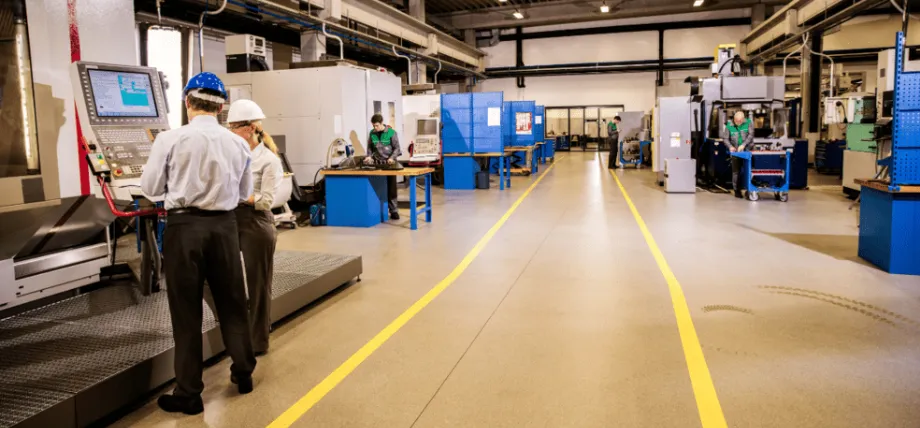
Factory Floor Oversight
Toll manufacturing occurs when the client supplies raw materials or semi-finished goods to the processor, who then processes them. Who, in return, will perform specific operations like blending or machining. And from an engineering perspective, the work can get surprisingly delicate: think cryogenic grinding to keep polymer structures intact, or electrochemical machining for turbine components that demand tolerances down to about ±0.001 mm.
Comparison Table
| Aspect | OEM | CM | Toll Manufacturing |
| Material Sourcing | OEM provides or sources based on client specs | Contract manufacturers source materials | Client provides all materials |
| Design Input | Client provides full design; OEM executes | contract manufacturer offers DFM suggestions | Client provides semi-finished inputs |
| IP Control | Client owns; OEM limited to production | Client owns; limited contract manufacturer process IP | High client control; minimal exposure |
| Volume Suitability | High-volume, standardized products | Flexible, from prototypes to mass production | Specific processes, variable volumes |
| Cost Structure | Fixed per unit; economies of scale | Quote-based; includes overhead | Per-process fee; no material markup |
| Engineering Focus | Assembly and customization | Full process optimization | Specialized operations (e.g., finishing) |
| Risk Allocation | OEM bears production risks | Shared; contract manufacturer handles capacity | Client bears material risks |
Try Prolean Now!
Top 3 Machining Subcontractors
Proleantech, RapidDirect, and Tuofa CNC. Each one has its own quirks and strengths.
Proleantech
Proleantech, located in a busy manufacturing hub in Shenzhen, can turn CAD files into actual aluminum, steel, or even titanium prototypes. They have everything covered, from aluminum to titanium, and are present in industries such as aerospace and medical.
Prolean delivers state-of-the-art CNC machining to produce rapid prototyping China, on-demand manufacturing, and fast tooling for high-volume CNC machining parts. Get started with a CNC quote from an actual engineer today and receive your parts back within 24 hours. They provide a full suite of sheet metal cutting and forming services to take you from prototype development to on-demand production of sheet metal components that are used across a wide range of industries, such as construction, automotive, aerospace, and electrical.
RapidDirect
Whether you need fast-turn prototypes or low- to high-volume production, they are your trusted partner for complex, custom parts delivered with speed and precision. Accuracy is within ±0.001 inches, and they’re comfortable with stainless steel or engineering plastics, so they are quite flexible.
Tuofa CNC
Tuofa CNC has been a Shenzhen-based ISO 9001:2015 certified facility since 2006. Their tolerances hit ±0.001 mm, which is perfect for long, thin components that tend to wobble.
Advantages of Contract Manufacturing
It’s interesting how often companies lean on subcontracted CNC machining, not just to lighten the workload. But it genuinely sharpens both engineering outcomes and day-to-day operations.
Access to Equipment
Most subcontractors have an impressive lineup of high-end CNC machines. Far more than a typical OEM would ever want to buy outright. Hiring a subcontractor allows you to enjoy the benefits of owning expensive machinery without actually investing in it.
Engineering Expertise
Subcontractors use certified engineers whose expertise lies in CAM software and advanced machining strategies for optimized toolpaths. They will tweak toolpaths in ways that save cycle times by 20%. This can be reduced by adaptive clearing strategies that keep the cutter in a consistent engagement zone.
Reduced Lead Times
To enable full mass production from a prototype, subcontracting allows you to scale flexibly and rapidly. This cuts lead times.
Enhanced Quality Control
Dedicated QC labs with CMMs and laser scanners measure tolerances down to ±0.0001 inches.
Cost Efficiency
People assume the biggest drain is electricity or raw materials, but half the time it’s dusty old machines and payroll. Hand some of that work to a subcontractor. When companies do that, costs drop.
Contract Manufacturing vs Other Production Models
Engineers often swear by vertical integration. They say it gives them room to tinker, change this toolpath, and adjust that coolant flow. But here’s the catch: you’ve basically volunteered to become an expert in every upstream and downstream process.
Contract Manufacturing vs In-House Production
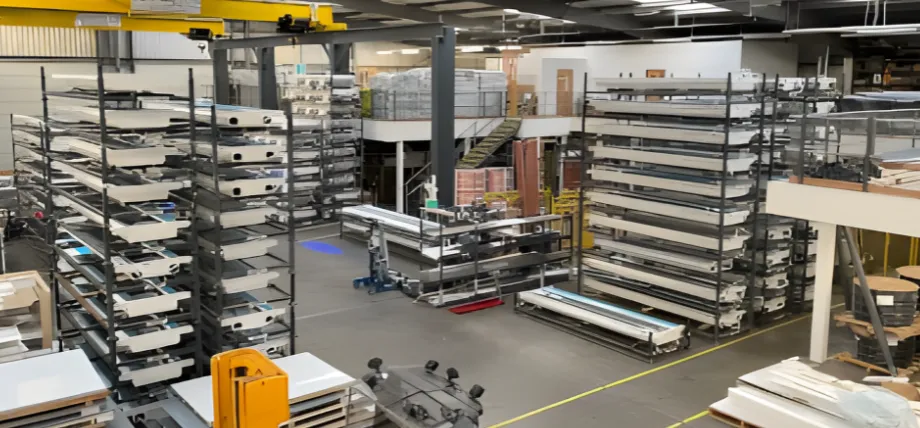
Organized Parts Warehouse
The ability of companies to run their own manufacturing facilities enables them to develop products quickly because their engineers can directly transition between design areas and production spaces to adjust tolerance stacks, tool radii, and coolant concentrations. The direct link between production and design operations enables successful product development for complex research-based products and intricate manufacturing processes.
The contract manufacturing model operates differently from the original approach. The OEM pays for each manufactured part or production batch, rather than building its own hardware and workforce. The contract manufacturer performs fixture design work, toolpath optimization, tolerance management, and SPC chart development. The model works best for parts that need advanced materials, including Inconel, titanium, and PEEK.
Contract Manufacturing vs Vertical Integration
A company needs to control all production stages of vertical integration, which starts with raw material procurement and continues through machining and surface finishing, assembly and packaging, and distribution.
Two main strategies enable companies to achieve operational efficiency.
- standardized work instructions, process capability studies, and preventive maintenance schedules
The operational costs of contract manufacturing are not included in this business model. An OEM can use contract manufacturing to send its production work to a contract manufacturing service that already possesses the necessary infrastructure, personnel, and certification capabilities.
Try Prolean Now!
Selection Criteria for Contract Manufacturers
Capability and Tolerance
The first checkpoint requires manufacturers to demonstrate their design and production abilities by physically making products with precise tolerance management for multiple production runs. A supplier with 5-axis machining and in-process probing and CAM optimization, and operators who specialize in difficult material machining, will reduce the number of required iterations for complex geometry production.
Production Capacity
The shops that work with prototypes cannot necessarily produce finished products. A contract manufacturer can create perfect first articles but will fail to meet repeat order requirements because they do not have enough machines or automated workflow systems. High-capacity suppliers operate multiple machining cells, utilizing pallet changers and lights-out machining, and store tooling inventory to facilitate rapid product changes.
Quality Compliance
Quality is an absolute requirement when safety, performance, and regulatory approval must be achieved. The selection process requires manufacturers who employ established inspection methods and SPC monitoring systems and maintain relevant certifications, including ISO 9001 and AS9100 for aerospace, and ISO 13485 for medical devices.
- Dimensional reports (CMM, 3D scan, or optical measurement)
- First Article Inspection (FAI)
- Traceability for materials and batches
Lead Time Reliability
The reliability of lead time depends on process control instead of fast production rates. CMs achieve strong operations through ERP scheduling, fixture standardization, tool-life monitoring, and buffer stock management to prevent production delays. Assembly schedule protection becomes possible through delivery predictability, which minimizes the requirement for additional inventory storage.
Custom Machining Service
Proleantech offers custom manufacturing solutions for CNC machining, sheet metal fabrication, and metal 3D printing for various parts and industries. With intellectual property rights and secure uploads, you can have complete confidence in your design confidentiality.
Proleantech is an ISO compliant company with capabilities of producing standard tolerances of ± 0.01 mm and close tolerances of up to ± 0.001 mm using EDMs and micromachining techniques.
Get a free quote today!
Final Thoughts
Companies that utilize contract manufacturing can maintain their focus on innovation and branding by partnering with specialized manufacturers who handle production tasks. Organizations can achieve rapid product development at reduced costs while enhancing their market position by selecting a contract manufacturing partner effectively.
0 Comments