
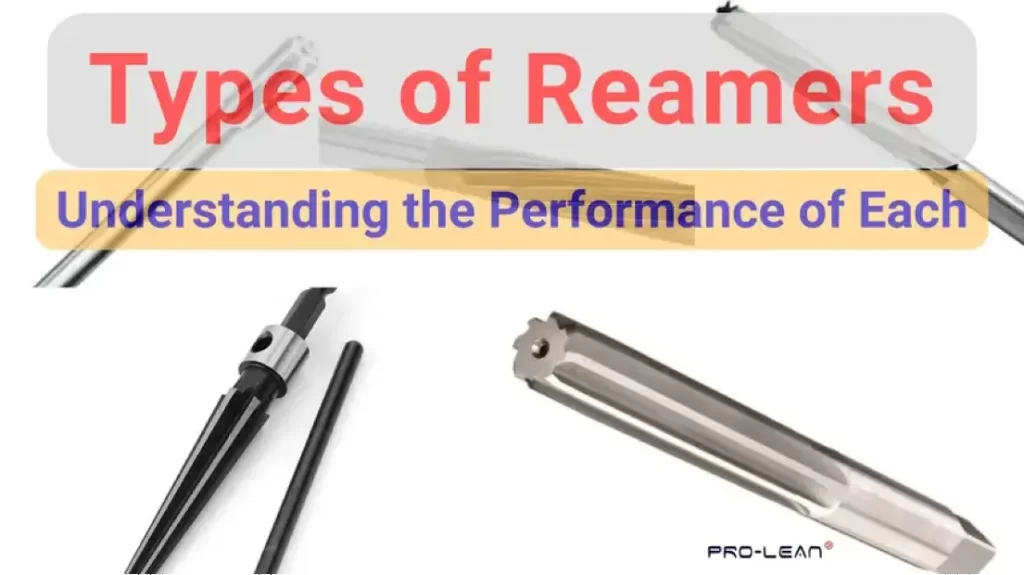
 Types of reamers
The types of reamers comprise hand reamers, machine reamers, and chucking reamers for operational use; straight-flute and spiral reamers for flute geometry; taper, shell, and floating reamers for hole geometry; adjustable and expansion reamers for size flexibility; and carbide, HSS, and indexable reamers for tool material and construction.
Poor internal finishes and inconsistent bore tolerances can cause assembly disasters even when the rest of the part is immaculately machined. For precision engineering industries like aerospace, hydraulics, automotive, and tooling, such problems can be extremely costly. The same case applies to businesses relying on reamer manufacturing to hit IT6–IT7 tolerances – they must select tools flawlessly.
Different types of reamers – one of the essential CNC cutting tools in precision manufacturing – help manufacturers in such industries achieve tighter tolerances and more stable assemblies. Important considerations for the type of reaming tools to use are operation method, production volume & workpiece material, hole geometry, and nature of work. These are critical whenever CNC machining is used for precision industries.
This article covers the types of reamers in more detail, explaining how the different designs fit in the sizing and finishing of holes in machining.
What Is a Reamer, and What Is Its Working Principle?
A reamer bit is a rotary cutting tool with multiple flutes, which is used to slightly enlarge holes (cast, drilled, or bored) to precise diameters and flawless surface finishes. It is a finishing operation that removes approximately 0.1mm to 0.5mm of material.
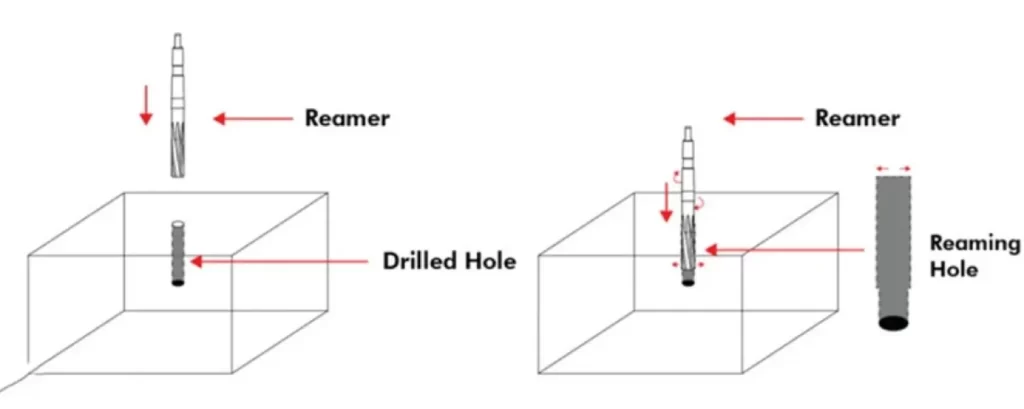
Reaming
A reamer is fitted with fluted cutting edges that machine the wall uniformly during machining. Reaming is a controlled machining process capable of achieving surface finishes as good as Ra 0.4-1.6 µm. [1]
For businesses specifying close tolerances for bearing bores, press fits, and such assemblies, the specifications can be achieved with reaming, even at manufacturing scale.
What Is The Purpose Of A Reamer Tool?
So, what is a reamer used for? A reamer is used to make a pre-existing hole suitable for fit, function, or assembly. Depending on the type of reamer, applications include automotive transmission parts, aerospace pinholes, bearing housing bores, jig/fixture dowel locations, and hydraulic valve body ports.
Automotive Transmission Parts
Bearing seats, gear bores, and shaft holes for cars require tight tolerances. A reamer tool can ensure that, alongside smooth finishes.
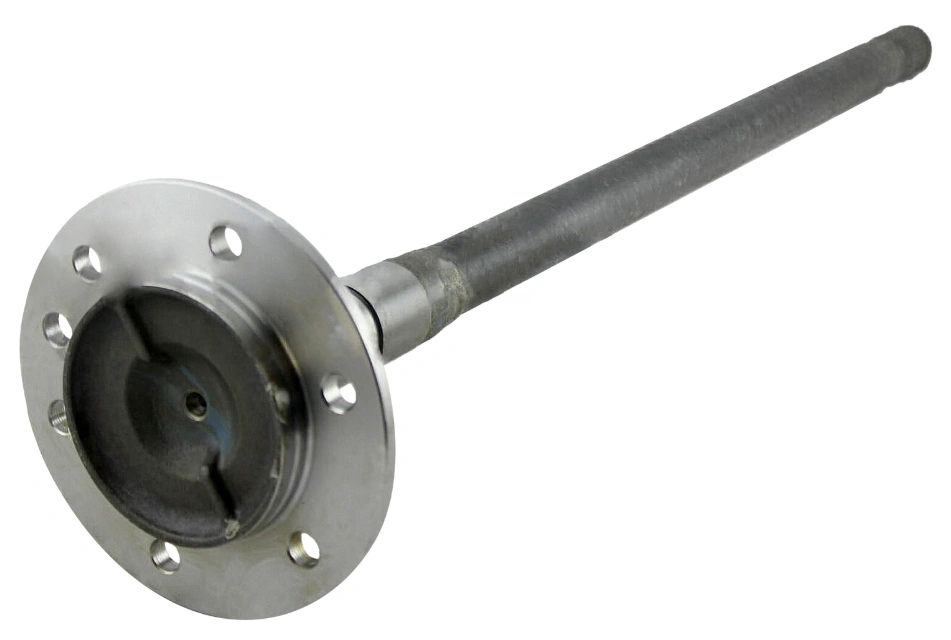
Automotive axle shaft
A carbide chucking reamer would provide the necessary IT6–IT7 tolerances [2] for thousands of car transmission systems. With its fast wear, the HSS reamer type is not suitable for such an application.
Aerospace Pin Holes
The tool helps ensure precise roundness and diameters for wing attachment points and structural fastener holes. A TiAlN-coated spiral flute machine reamer is the best option for these types of holes. It is engineered for achieving tight tolerances and effective chip removal from deep holes. A straight flute reamer is avoided due to galling and chip clearance issues.
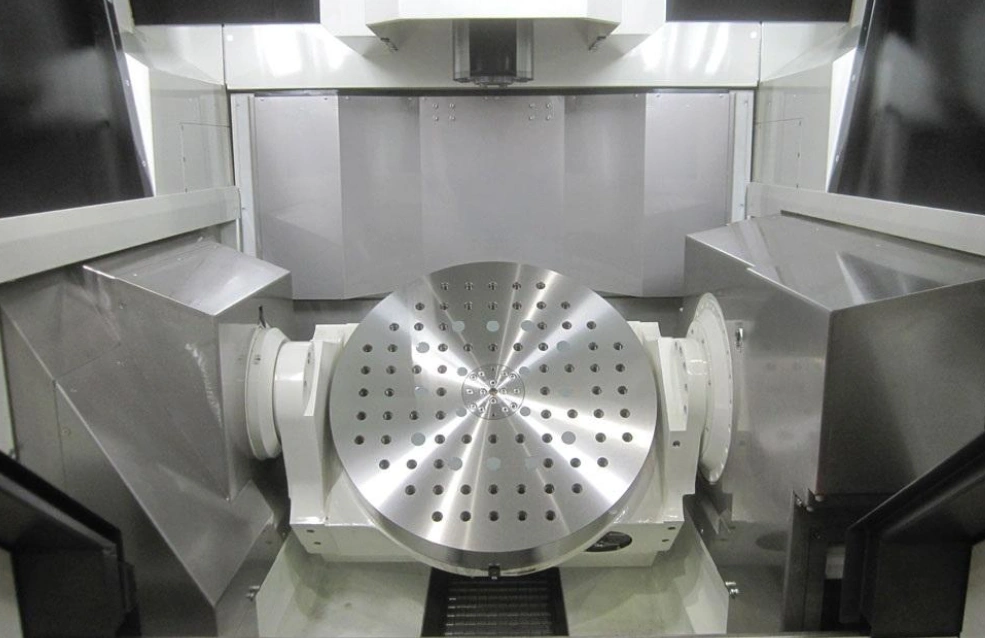
Aerospace pinholes
Bearing Housing Bores
Reamers can reliably help produce smooth surface finishes and precise diameters for housing bores and bearing seats. The practical choice for bearing house holes is a shell reamer because it delivers the stipulated surface finish at a relatively low per-hole tooling cost. A solid carbide reamer may also be used, but its higher cost is often a concern.
Jig/fixture Dowel Locations
Reaming provides the repeatability required in fixture plate bores, bushings, and dowel pin holes.
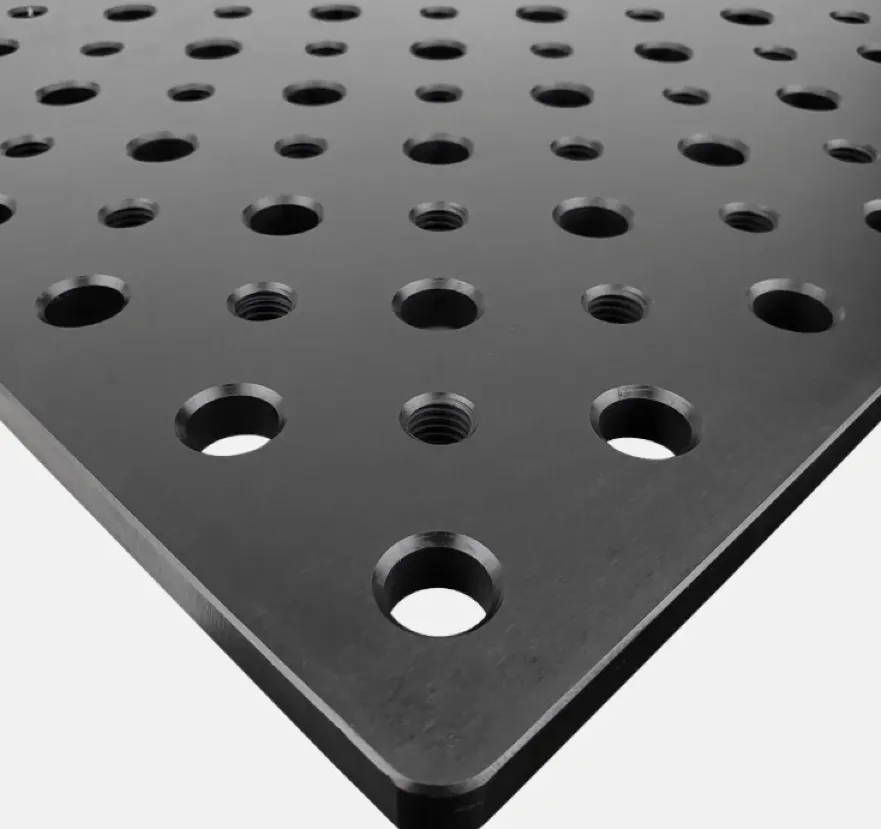
Fixture plate holes
With a solid-carbide chucking reamer, the risk of dowel-hole variations is eliminated. Consistent results can be achieved for every batch.
Hydraulic Valve Body Ports
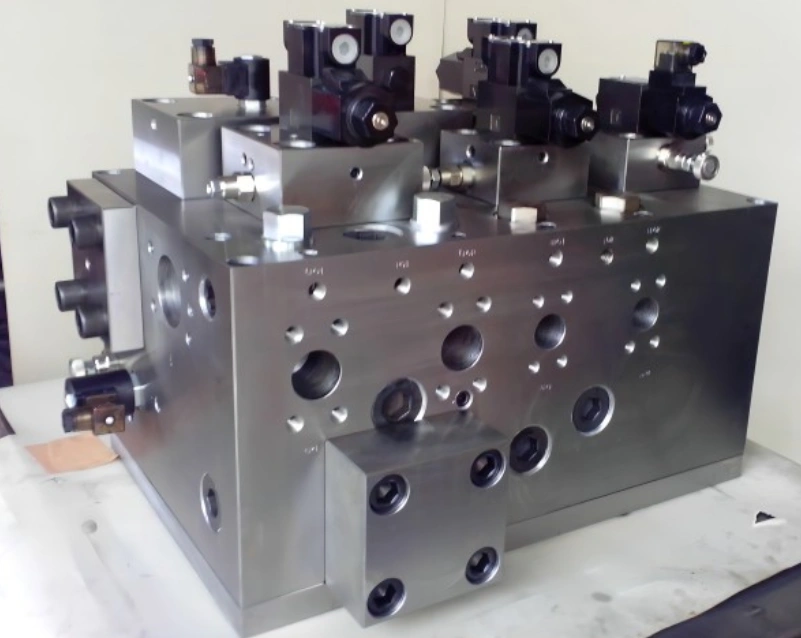
Hydraulic valve block
Excellent surface finish and precise bore geometry are critical in valve seats and spool bores. With reaming technology, this is achieved for superior sealing performance. CrN-coated straight flute reamers are the best for these features. The straight flutes enhance the bore geometry, while the coating prevents adhesion on brass and stainless steel valve bodies.
Without the CrN coating, the risk of material adhesion is high, and valve bodies can experience premature wear.
Various Types of Reamers
The types of reamers can be classified by operation method, hole geometry, tool material, flute design, and adjustability.
Reamers Classified By Operation Method
- Hand Reamers – These are manually operated, commonly using a tap wrench. The option is not suitable for production-level work.
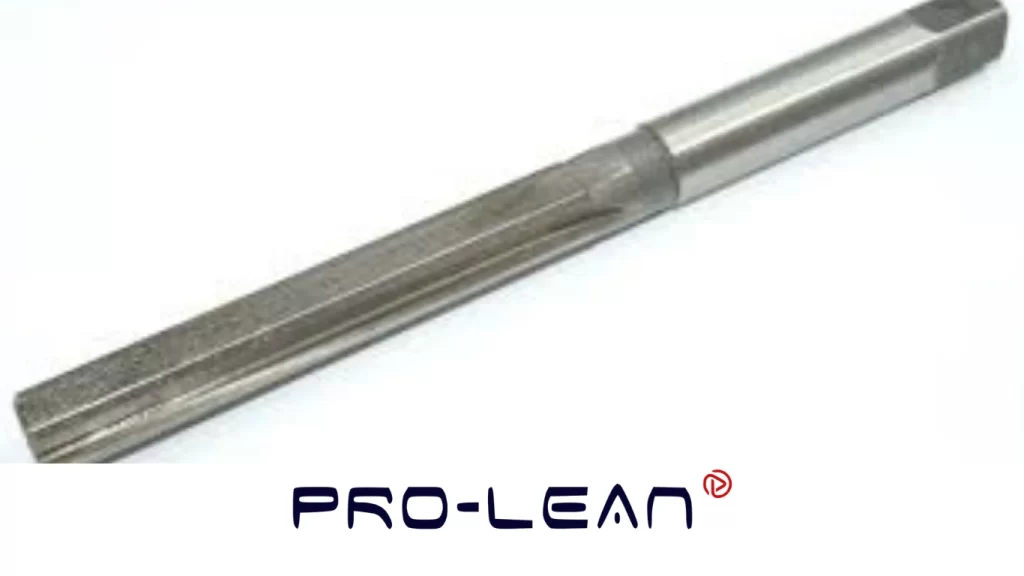
Hand reamer
- Machine Reamers – Machine reamers are powered by lathes or CNC machines. Therefore, they are eligible for production work, where accuracy and consistency matter most.
- Chucking Reamers – This production-type reamer is common in CNC setups. It is characterized by a straight chuck design for collet or chuck engagement.
Reamers Classified By Hole Geometry
- Taper Reamers – A taper reamer is a long conical tool with a tapered design from the shank to the end. Taper reamers are ideal for producing tapered holes for pin connections and spindle interfaces.
- Shell Reamers – This cylindrical cutting head is short and thick. It also has a hollow center bore for connecting to an arbor shaft. With a replaceable shell, this reamer is cost-effective for finishing large-diameter holes.
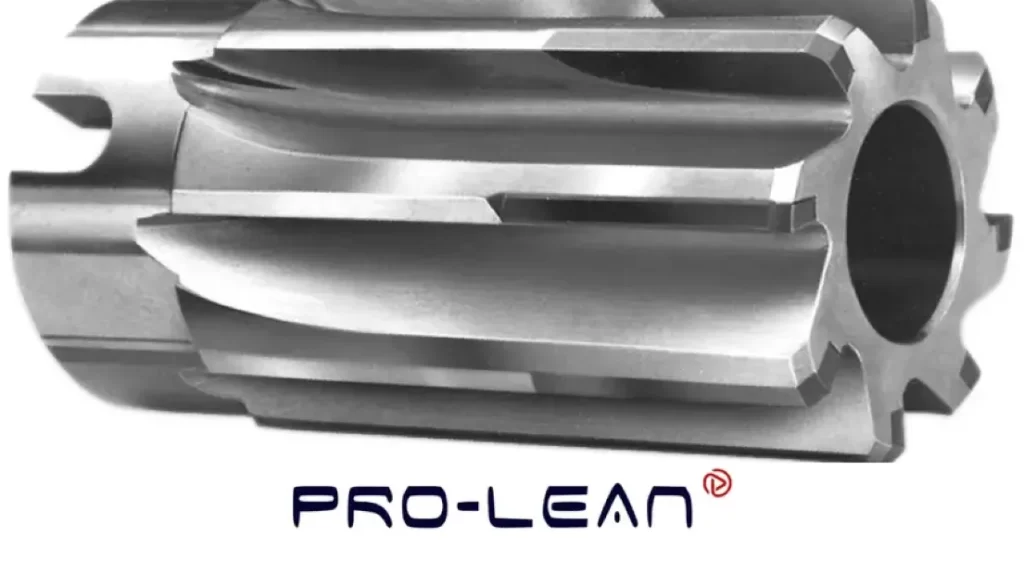
Shell reamer
- Floating Reamer – The main feature in this type is a sliding or spring-loaded toolholder. The design allows minor lateral movement that allows for minor hole-to-spindle misalignment.
Note that if the hole and spindle are well-aligned, a fixed reamer is the simpler, more affordable tool.
Reamers Classified By Tool Material and Construction
- Carbide Reamers – Carbide reamers may look slightly like HSS reamers, but the carbide tool’s edges are more brittle. The reamer costs relatively more, but lasts longer.
- HSS Reamers – A classic silver finish is a major hallmark of HSS reamers. It is common in the general machining of materials such as mild steel and aluminum. It is easy to sharpen.
- Indexable Reamers – Insert pockets embedded into the tool’s head hold carbide cutting inserts that can be replaced. Therefore, the tool replacement cost is avoided.
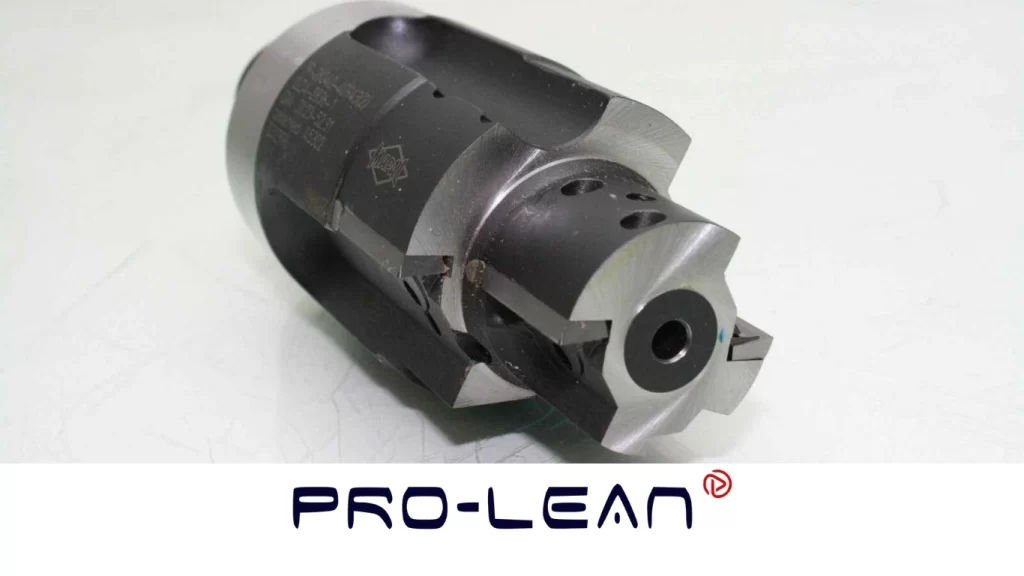
Indexable reamer
Reamers Classified By Flute Design
The spiral vs straight flute reamer choice primarily depends on the depth and chip evacuation requirements. More about the options is below.
- Straight Flute Reamer – The tool’s flutes are perfectly aligned along the axis. The tool is recognizable from its symmetrical appearance. The design is simple and common. Manufacturers use straight flute reamers on most materials to produce standard through-holes.
- Spiral Flute Reamer – This reamer features helically twisted flutes, resulting in a twist-drill-like appearance.
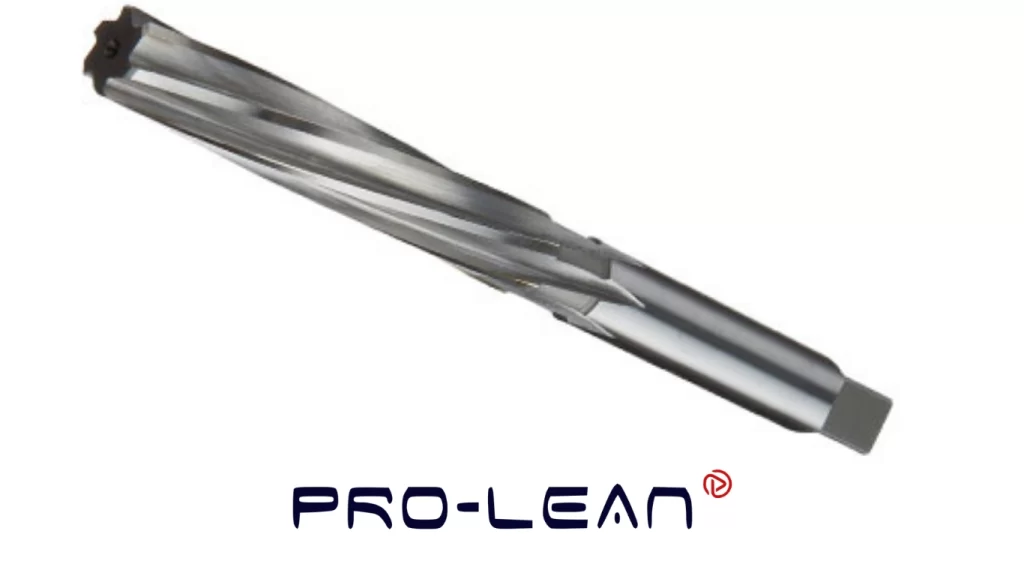
Spiral flute reamer
Reamers Classified By Adjustability
- Adjustable Reamers – Adjustable reamers feature replaceable blades around the body. They make it easy to adjust reamer size without swapping tools. The segmented arrangement sets the design apart from fixed reamers. This type is best suited for low-volume work.
- Expansion Reamers – The tip of this reamer has a screw, whose function is to push the cutting blades outwards when the tool advances. This tool is mostly used for prototype manufacturing and maintenance projects.
What Type of Reamer Has a Square Shank?
Square shanks are used in hand reamers. The tool is so shaped to facilitate engagement with the brace or tap wrench. Since this is the best way to differentiate the hand reamer from the machine reamer, a tool with a square shank is not reliable or safe for machine use. Using it on a machine will likely damage the tool or workpiece.
Try Prolean Now!
Parts Of A Reamer
The anatomy of a reamer comprises body/shank, flute geometry, cutting edges (flutes), chamfer lead, and margins.
Here are more details about the parts.
- Body/Shank – This part connects or mounts to the machine collet or chuck. It should be rigid to control runout.
- Flute Geometry – The helical and straight channels control tool rigidity, chip flow, and the general cutting action. Factors considered in determining the helix angle and number of flutes include hole size and material type.
- Cutting Edge (Flute) – This is an equally crucial part of a reamer, whose function is to remove material from the bore wall. Its sharpness determines whether Ra 3.2 or Ra 0.4 is achieved.
- Chamfer Lead – This is the angled tip of the tool that contacts the hole first. The chamfer lead also guides the reamer’s entry and equally distributes the cutting load.
- Margins – These are narrow lands or material strips along the lengths of the flutes. They don’t cut the surface; instead, they burnish and rub.
Reamer Geometries to Consider
Chamfer configuration, helix angle, and flute type are the most critical geometries for machining performance. The wrong combination of these variables can cause poor surface finish and tolerances, and shorten the tool life.
- Chamfer – This is the angled tip of the tool. A 45° chamfer effectively handles most general production work. To extend the tool life, a longer chamfer is necessary because it involves more cutting edges and extends the tool’s life. A shorter chamfer is undesirable because it escalates tool wear, particularly in high-volume runs.
- Helix Angle – This is the angle of the flute around the tool body. Higher helix angles are recommended to enhance the surface finish and minimize chatter.
- Flute Type – Straight flutes are popular for their cost-effectiveness and wide availability for producing through-holes.
When it comes to deep bores and blind holes, spiral flutes are the non-negotiable option. Fundamentally, the spiral vs straight flute reamer decision revolves around the production of through-holes vs. blind bores.
Common Reamer Materials
The main reamer materials are HSS (High-Speed Steel), carbide, and cobalt. Choosing among these reamers for metal machining depends on volume and material hardness.
HSS (High-Speed Steel) Reamers
HSS reamers are the most popular for general-purpose reaming. They are reliable reamers for metal work like aluminum and stainless steel. Advantages such as low upfront cost, reliable performance, and easy sharpening are too good to ignore. Unlike carbide, HSS reamers rarely crack when machining aluminum, stainless steel, or mild steel.
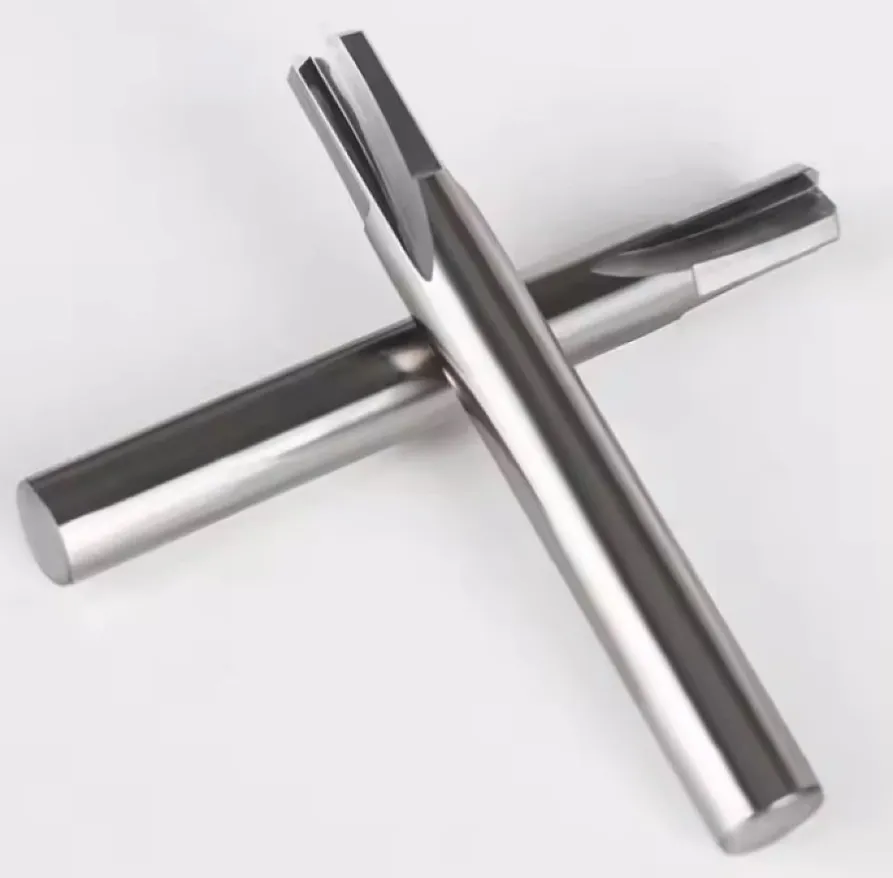
HSS reamers
Carbide Reamers
Carbide reamers are the go-to option when the work requires fast, wear-resistant machining of hardened materials. Where HSS reamers would wear quickly and yield unsatisfactory results, carbide reamers often thrive.
Cobalt Reamers
These reamers contain 8% cobalt, usually alloyed with HSS. Therefore, the reamer has the hardness of cobalt and the toughness of HSS. HSS reamers are more affordable, so they should only be abandoned for cobalt reamers when the hardness of the material demands so.
Types of Surface Coatings for Reamers
Note that reamers are often coated for enhanced performance. Common surface coatings for reamers are TiAlN (also called AlTiN), TiCN (Titanium Carbonitride), TiN (Titanium Nitride), and CrN (Chromium Nitride).
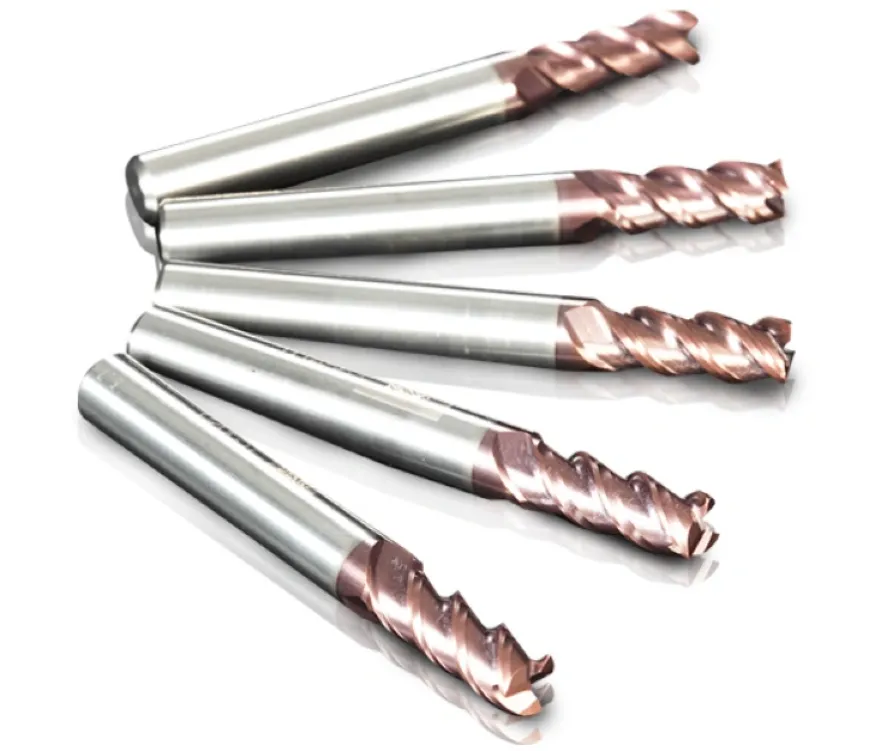
TiAlN coating
- TiAlN (AlTiN) – Ideal for high-temperature environments
- TiCN (Titanium Carbonitride) – Best suited for abrasion resistance
- TiN (Titanium Nitride) – Gold-colored and renowned for its general-purpose performance.
- CrN (Chromium Nitride) – Works best with non-ferrous materials. Adds corrosion resistance. It is a perfect coating for aluminum, brass, copper, and stainless steel.
Coatings should be matched to the material. If not, for instance, TiN on stainless, the tool can wear faster and give poor performance.
Try Prolean Now!
How to Use a Reamer
Reamer usage entails pre-drilling, controlled feed & speed, correct withdrawal, and runout checks.
Step 1: Pre-Drilling
The hole is drilled first to get the reamer size, leaving about 0.5mm of stock for larger bores, and up to 0.3mm for smaller ones.
Step 2: Controlled Feed & Speed
A steady feed combined with about 50% of the speed of the equivalent drilling speed is applied. Cutting oil or flooding coolant is used during the process.
Step 3: Correct Withdrawal
A reamer should never be reversed on load because the cutting edges can chip. It should be withdrawn while rotating in the normal (forward) direction.
Step 4: Runout Checks
Production runs should be preceded by spindle runout verification. A dial indicator is an ideal tool for this task. It is advisable to keep it within 0.005mm to prevent hole tolerancing issues.
Choosing the Right Reamer for Machining
Four factors that guide reamer selection are operation method, production volume & workpiece material, hole geometry, and nature of work.
Operation Method
A hand reamer is only for maintenance or fitting jobs. A floating reamer is a reliable choice for spindle-to-hole misalignment. In short, the type of operation determines the best reamer to use.
Production Volume & Workpiece Material
HSS wears faster than carbide reamers, so it should be specified only for low-volume mixed material jobs. High-volume jobs on harder materials, such as cast iron or hardened steel, are better machined using carbide reamers.
Hole Geometry
A straight flute chucking reamer is very effective in producing through-holes, some of the most common hole geometries. But since blind holes demand flawless chip removal, a spiral flute reamer is the ideal choice. If the bore is larger, say 20mm, a shell reamer does the best job.
Nature of Work
Finally, there is the question of the nature of work, especially standard vs. nonstandard work. An adjustable reamer becomes a strong option for non-standard holes or general maintenance work. Production settings require more repeatability and quality, hence the preference for reamers like fixed-diameter HSS for such.
Difference Between Reamers, Boring Tools, and Drill Bits
There is common confusion among reaming tools, boring tools, and drill bits. However, the three types of tools differ in function, amount of material removed, surface finish, tolerances, and ideal applications. For instance, the drill bit vs reamer distinction emanates from the fact that one process originates the hole while the other finishes it.
These differences are captured in the comparison table below.
|
Element |
Reamer |
Boring Tool |
Drill Bit |
|
Primary Function |
Finish a hole with precise diameter and surface finish |
Correct and enlarge an existing hole |
Produce a new hole |
|
Material Removed |
Approximately 0.1–0.5mm |
Varies, but usually up to several mm |
Full bore diameter |
|
Tolerance Attained |
IT6–IT7 [2] |
IT7–IT9 [2] |
IT11–IT13 [2] |
|
Surface Finish |
Ra 0.4–1.6µm [1] |
Ra 1.6–3.2 µm [1] |
Ra 6.3–12.5 µm [1] |
|
Ideal For |
Dowel pinholes, press fits, precision assemblies |
Adjusting hole position, single-point finishing |
Hole origination, stock removal |
In Conclusion
Simple as they may look, most reamers are complex tools and highly valued in precision engineering. From hand reamers to custom HSS reamers, the diversity of reaming tools is beyond question. The type of reamer used depends on the material, expected surface finish, desired hole tolerance, application, and machining capacity.
At ProleanTech, precision reamer manufacturing is defined by a perfect match between tool and tolerance. We know that choosing the right reamer type can mean the difference between costly rework and a precise fit.
So, have you determined the type of reamer to use? Or are you considering the hole geometry and tolerance? We can help. Contact our engineering team to settle on the perfect reaming strategy or request a free quote for your machining project.
References
[1] https://geomiq.com/blog/cnc-machining-surface-roughness-guide/
[2] https://en.wikipedia.org/wiki/IT_Grade
[3] https://www.asme.org/codes-standards/find-codes-standards/b94-2-reamers
[4] https://www.nature.com/articles/s41598-025-16424-4
[5] https://www.customtool.com/blog/tool-coating-differences/
[6] https://monaghantooling.com/high-performance-reaming-for-low-surface-finish/

0 Comments