
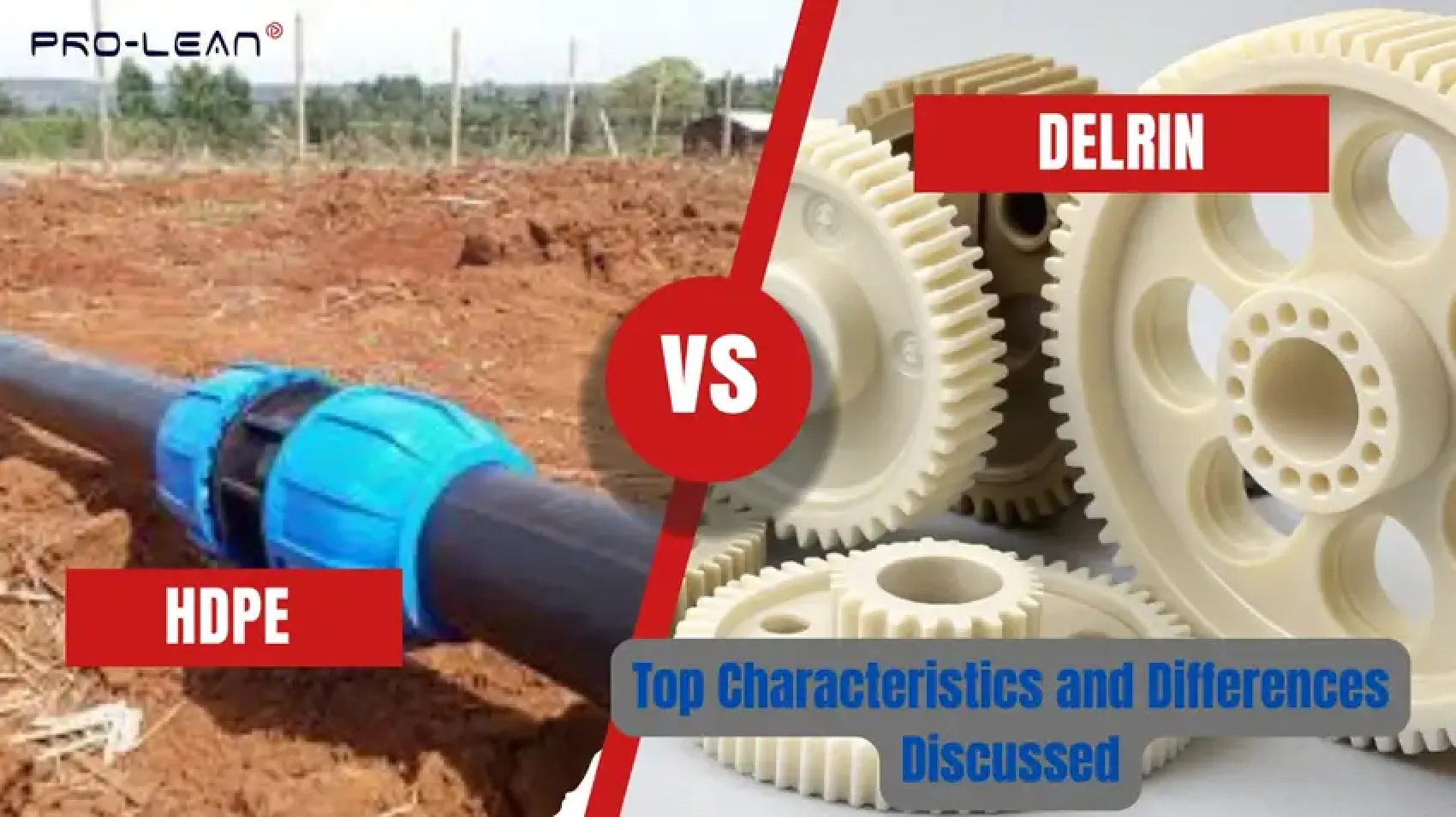
 HDPE vs Delrin
Choosing from a set of machinable plastics, including HDPE vs Delrin, entails considering performance, durability, availability, and cost, among other factors. Since both Delrin and HDPE machining parts are renowned in manufacturing, choosing one over the other requires some introspection and expert help.
These plastics look similar, but they do have some important distinctions. High-density polyethylene (HDPE) has a high strength-to-weight ratio, low moisture absorption, and superior chemical resistance. Delrin, also called polyoxymethylene (POM), is stiff, strong, and dimensionally stable. It is an Acetal family member and formed through formaldehyde polymerization.
Manufacturers consider these and other properties when deciding where to use these parts. While HDPE is mostly found in construction, industrial, packaging, and outdoor items, Delrin is applied in aerospace, automotive, medical, and electronics.
This article will cover the properties, benefits, and applications of HDPE and Delrin, showing the differences between the materials in the process.
What Is HDPE?
High-density polyethylene (HDPE) is a lightweight, strong, and recyclable thermoplastic polymer derived from ethylene. The structure is shown below.
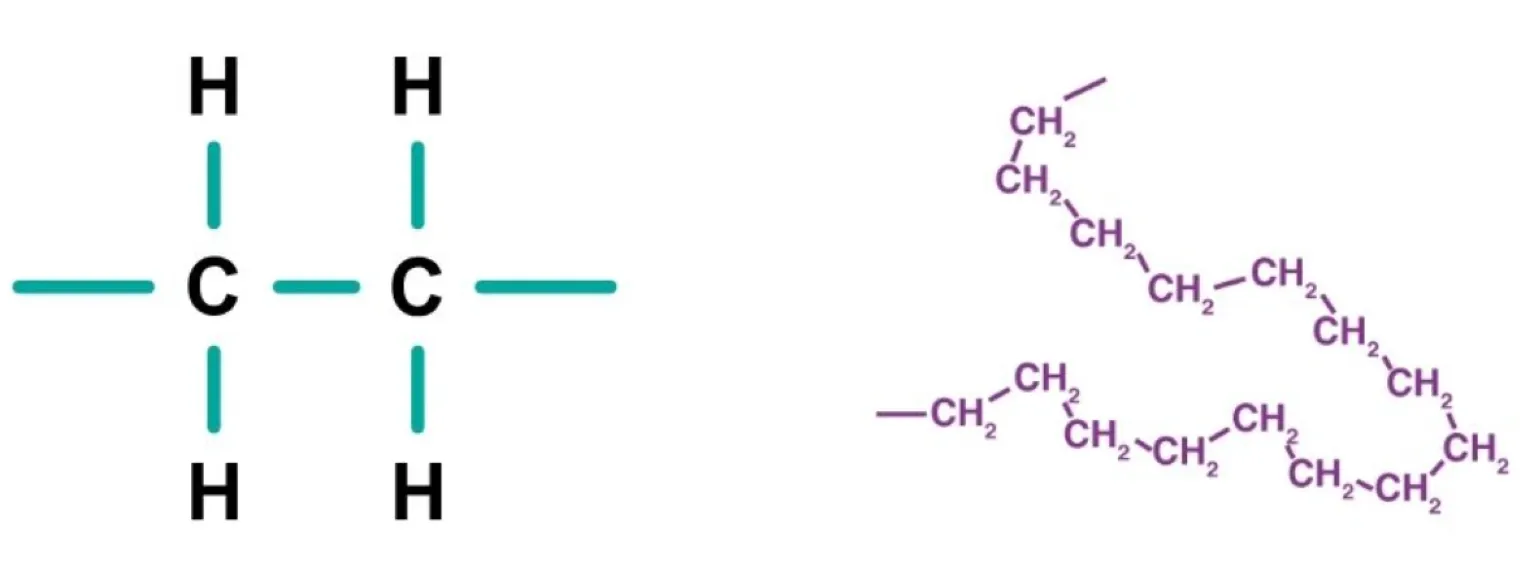 HDPE molecular structure
It is a preferred material for diverse industries. To demonstrate its uniqueness, HDPE is sometimes compared to low-density polyethylene (LDPE). Although HDPE’s density of between 0.93 and 0.97 g/cm³ is only slightly higher than LDPE, it is built for higher tensile strength and intermolecular forces. As a result of these characteristics, HDPE has higher temperature resistance and strength, and is more opaque.
What are the Benefits of HDPE?
The benefits of HDPE include;
- Low moisture absorption
- Excellent chemical resistance
- High strength and durability
- Processing Versatility – Can be CNC machined, extruded, and molded. Extruded HDPE is common in pipes and tanks
- Recyclable
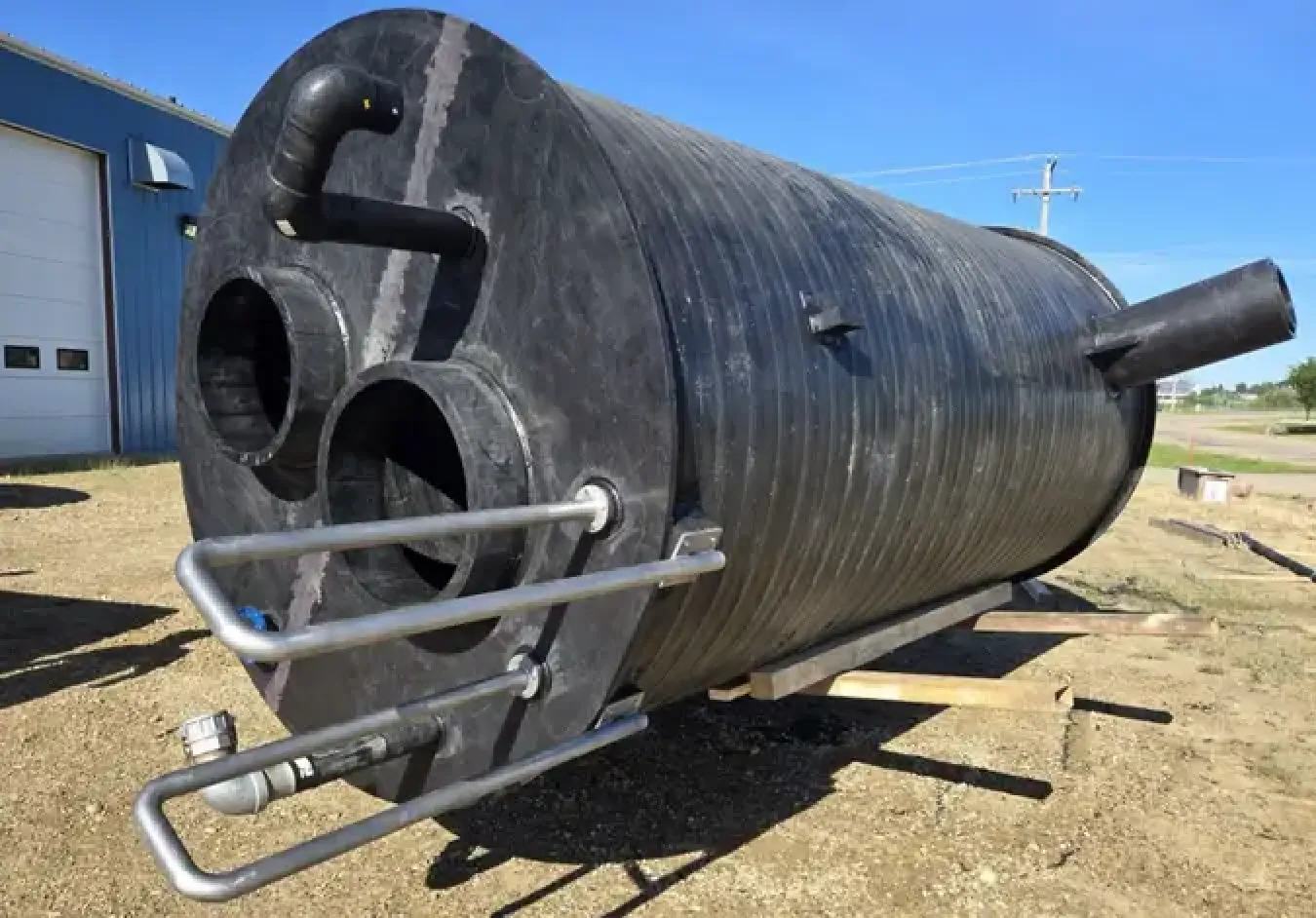 HDPE tank
What is the Disadvantage of HDPE?
The material has the following limitations;
- Sensitivity to UV exposure
- Cracks at low temperatures
What is Delrin?
Delrin® is the brand name for POM (polyoxymethylene) or acetal. It is a high-performance engineering thermoplastic highly regarded for its wear resistance, machinability, lubricity, and dimensional stability. It is a ‘homopolymer’ type of acetal, meaning that it is a single polymer. To avoid confusion, the industry usually says Acetal when referring to the co-polymer, and says Delrin in reference to the homopolymer.
Engineers and machinists like to use this thermoplastic for its high tensile strength, good dielectric properties, and excellent low-temperature performance. Since Delrin® is also somewhat rigid or stiff, it is popularly used in the manufacture of lighter, thinner parts.
Benefits of Delrin
The most prominent advantages of Delrin® are;
- Excellent dimensional stability
- High strength
- Superior low-temperature performance
- Low friction
Limitations of Delrin
Delrin® presents these limitations;
- Sensitive to acids – Unsuitable for food items
- Not easy to bond
- Usually unavailable as a flame-retardant type
Try Prolean Now!
Compare HDPE vs Delrin
HDPE and Delrin® differ in dimensional stability, machinability, mechanical properties, chemical resistance, moisture absorption, and temperature range.
HDPE vs Delrin: Dimensional Stability
Delrin® material has superior dimensional stability, which is much better than HDPE’s. Humidity, mechanical stress, and temperature changes have less effect on Delrin® parts.
This is a critical element when considering which CNC machining material to use for precision parts. The susceptibility of HDPE to elements, especially temperature, makes the material less preferable for such parts.
HDPE vs Delrin Mechanical Properties
HDPE is more impact-resistant than Delrin plastic. This means it absorbs energy before fracture better than Delrin material does.
However, some of the favorable Delrin mechanical properties are a lower friction coefficient, higher strength, and higher stiffness. That’s why it makes better-quality, precision, wear-resistant parts. The aging and creep resistance of Delrin are also better.
HDPE vs Delrin: Machinability
HDPE and Delrin are both machinable, but Delrin performs better because it can hold tighter tolerances. The tendency to be gummy can make HDPE machining challenging. If you are looking for high-precision parts, Delrin plastic would be a better choice. Its hard and stiff nature supports the use of various CNC machining methods. Smooth surfaces can be produced because tool deflection is minimal.
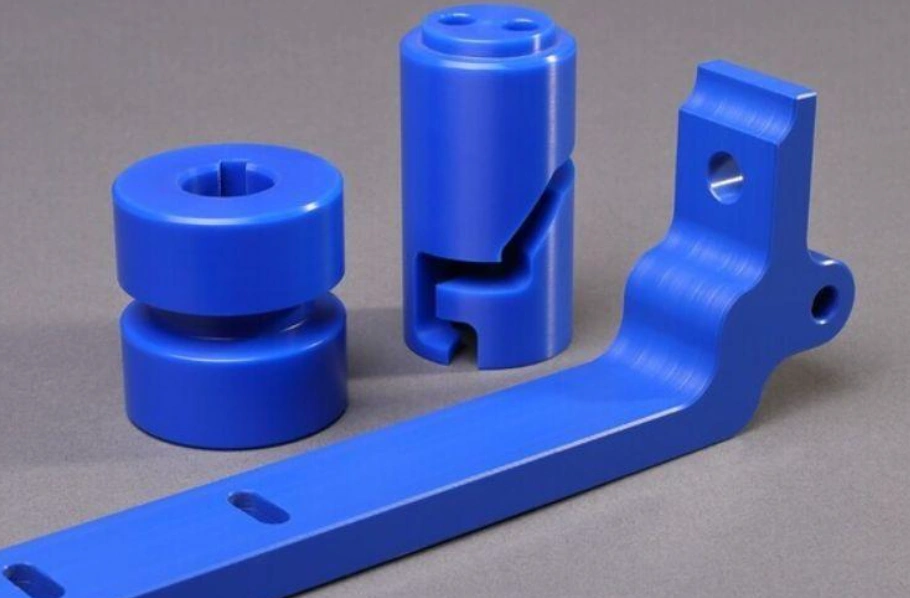 Delrin machined parts
CNC machining HDPE requires several conditions, including high rake angles and sharp cutting tools. Clamping the material can be challenging due to its tendency to deform. Attaining a smooth finish is difficult – matte texture is usually the result.
HDPE vs Delrin: Chemical Resistance
HDPE’s chemical resistance is phenomenal. It is engineered for optimal performance in different chemical environments. Whether in acid, base, or solvent, this thermoplastic withstands.
This property answers why HDPE parts are widely used in chemical piping, processing, and storage. Delrin material offers chemical resistance, but not as thorough as HDPE’s. To thoroughly assess Delrin chemical compatibility, exposure to chlorine-based compounds and strong acids should be considered.
HDPE vs Delrin: Moisture Absorption
Both Delrin and HDPE absorb moisture, but HDPE absorbs much less (0.01% vs 0.2%). This is because of its suitable chemical structure and crystallinity. Therefore, HDPE parts would perform better in waterlogged or humid environments.
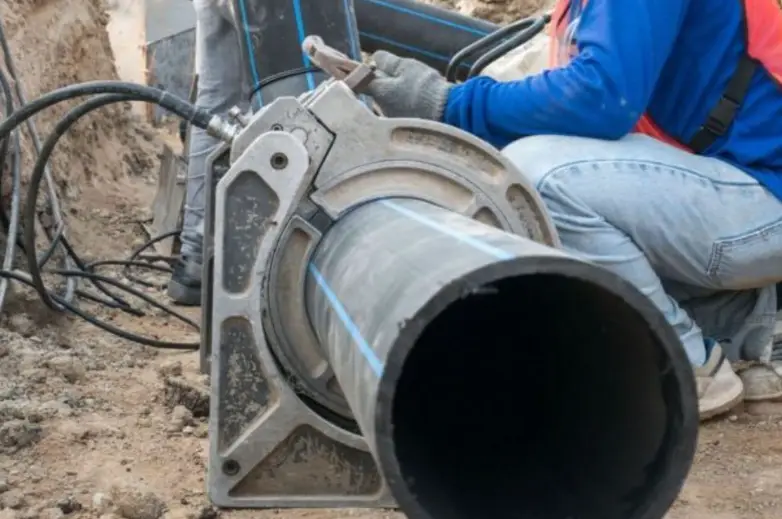 Plumbing application for HDPE
HDPE vs Delrin: Temperature Range
Delrin temperature range is wide – (-40°C to 120°C). It is more thermally stable than HDPE, with its melting point at 175°C. It is suited for high-temperature applications.
Comparison Table for Physical Properties: HDPE vs Delrin Parts
The following comparison table for the physical properties of HDPE vs Delrin showcases the differences further.
| Property | HDPE | Delrin |
| Chemical Resistance | Excellent | Fair |
| Coefficient of friction | Medium | Low |
| Density | 0.93–0.97 g/cm³ | ~1.41 g/cm³ |
| Dimensional stability | Fair | Excellent |
| Impact resistance | Very high | Moderate |
| Moisture absorption | ~0.01% | ~0.2% |
| Temperature resistance | –50°C to ~80°C | –40°C to 120°C |
HDPE vs Delrin: Cost
HDPE cost is lower than that of Delrin plastic, particularly in large-scale, budget projects. This is because HDPE is more available, and it has relatively simple processing. Consequently, HDPE parts are prominent in budget projects involving containers and piping.
With HDPE cost higher, Delrin material is convenient for its higher strength, stiffness, and machining precision. Manufacturers that mostly use it seek enhanced wear resistance and tolerances, for instance, in automotive parts.
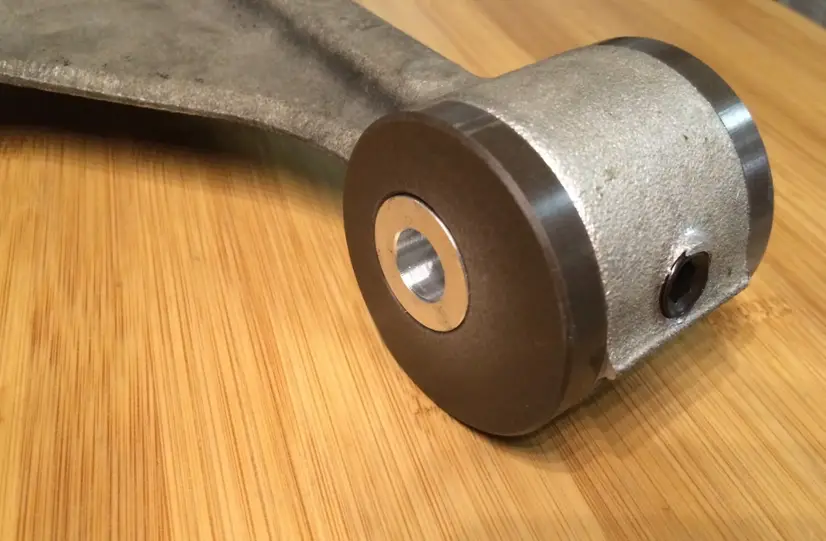 Delrin car part
Try Prolean Now!
So, Which One is Better, HDPE or Delrin?
Based on this discussion, there are instances when either HDPE or Delrin is the better option for parts. Here are some recommendations for these thermoplastics.
Use HDPE For;
- Parts exposed to acids or chemicals
- Instances where tensile strength is less important than impact resistance
- Average tolerances and higher cost-effectiveness
- Piping, tanks, and other fluid handling
Use Delrin For;
- Bushings, gears, screws, and other mechanical components
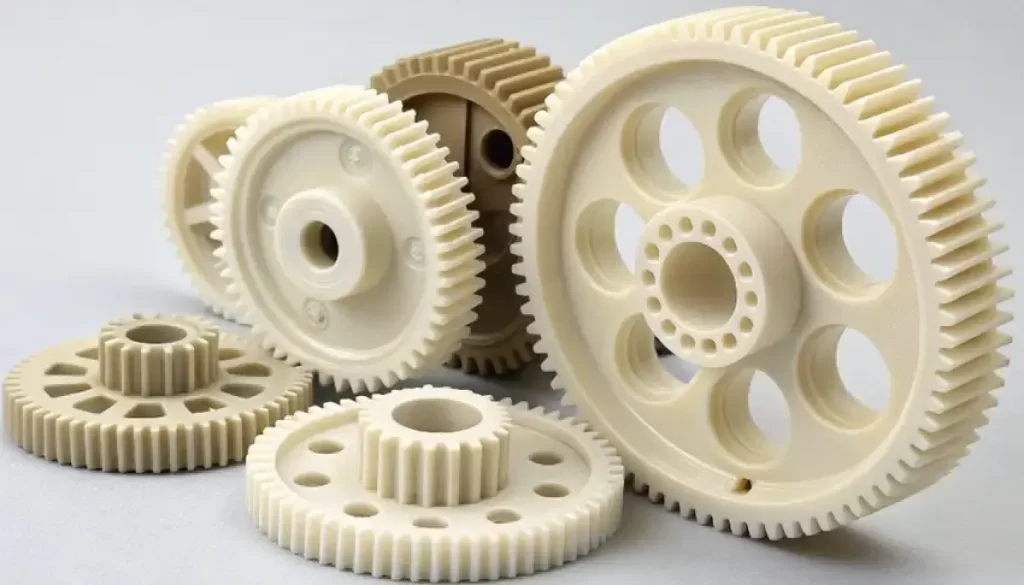 Delrin gears
- Higher tolerances (±.002″ and higher)
- Higher-quality surface finish
- Stiff and structurally reliable components
Materials Comparable to HDPE and Delrin
Alternative machinable plastics to HDPE and Delrin include ABS, polycarbonate, nylon, and PEEK. However, they still have their distinct characteristics, as outlined next.
ABS – It is cost-effective with good machinability and impact resistance. The trade-off for this impact resistance plastic is lower heat resistance and strength than Delrin.
Polycarbonate – PC is transparent and has exceptional impact strength. These standout properties make it ideal for safety-centered parts. It doesn’t machine as nicely as Delrin plastic.
Nylon – Nylon parts are highly sought after for their toughness and fatigue resistance. Although it is moisture-absorbing, the plastic beats HDPE in load-carrying capacity.
PEEK – PEEK is exceptionally chemically resistant and strong. Its high-temperature capacity is also better than that of HDPE and Delrin, suiting demanding applications such as medical and aerospace.
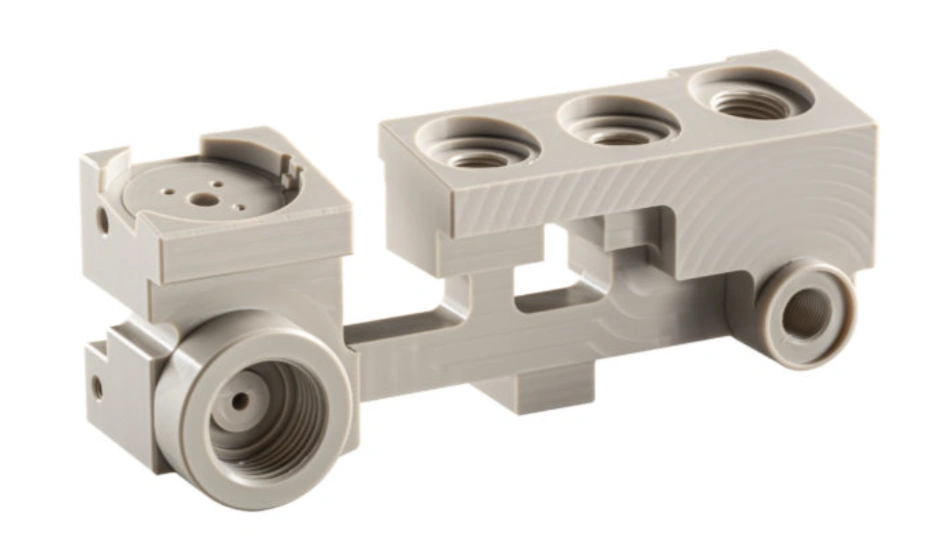 PEEK plastic medical part
UHMW (Ultra-High-Molecular-Weight) Polyethylene – It is renowned for wear resistance and impact resistance. In UHMW vs Delrin, UHMW is more chemically resistant and wear-resistant. Delrin wins in stiffness and precision.
Conclusion
Delrin and HDPE are widely used engineering plastics for parts in various industries. Although they have similarities, differences in specific properties mean that ideal applications vary. Depending on your performance, longevity, and aesthetic requirements, each of these thermoplastics can be a good choice. You might need assistance from a manufacturing partner to understand the polyacetal vs. Delrin comparison and to use the materials optimally.
ProleanTech machines HDPE, Delrin, and other engineering plastics for custom parts. Along with Delrin machining, we also provide polyethylene machining services for prototypes and production parts built to your drawing and tolerance requirements.
Contact the machining experts today for more details.
FAQs
Is HDPE The Same As Acetal?
No, HDPE is not the same as Acetal, although both are industrial semi-crystalline thermoplastics. Yes, the Delrin vs acetal discussion can be confusing because the two look alike, but the materials have different properties.
Acetal is known for high machinability, high mechanical strength, and low moisture absorption, properties that are ideal for gears, bearings, and electrical insulations. This contrasts with HDPE’s niche applications, which include food processing machinery, wine bottling, and food production. The superior chemical resistance of HDPE is widely utilized in chemical piping systems and storage tanks. Delrin chemical compatibility is not as impressive in such applications.

0 Comments