
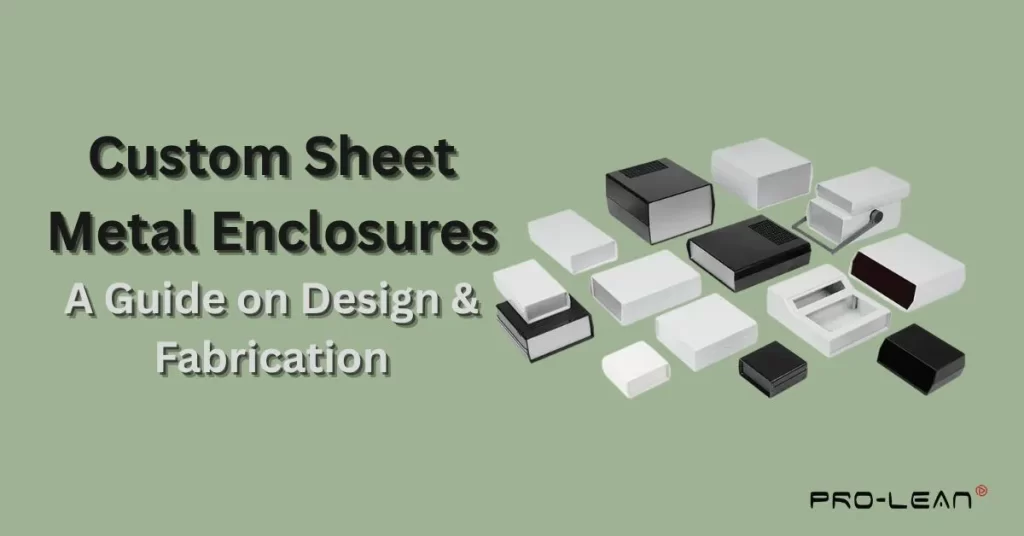
Custom Sheet Metal Enclosure
Custom sheet metal enclosures are reliable products for electronic devices, machines, and HVAC systems. Metal sheet enclosures are shaped by cutting, punching, and bending metal sheets. Metal enclosures are strong and stable, protecting internal components against dust, heat, and impact. Metal enclosure manufacturing is suitable for both simple and complex shapes and can be used in low or high-volume production.
Custom sheet metal fabrication allows you to control the layout and structure. Airflow, safety, and cable routing are improved as the enclosure is designed to fit your assembly. Prolean Tech is a custom sheet metal parts manufacturer that specializes in the design and production of high-quality enclosures. Each custom sheet metal enclosure is tested to ensure it meets the highest standards of strength, durability, and precision.
This blog will cover the materials used to manufacture metal enclosures. We’ll also discuss design considerations and how custom fabrication can support reliable and tailored solutions.
What are Custom Sheet Metal Enclosures?
Custom sheet metal enclosures are housings made from sheet metal. They are designed to match the exact dimensions, shapes, and layouts of your equipment. These enclosures protect and hold internal components, while also supporting airflow and cable routing.
The enclosures are made to your specifications, including cutouts, structural requirements, and measurements. Every panel, bend, and vent is matched to your device. You can choose the thickness, material, features, and finish.
Materials Used in Metal Enclosures Manufacturing
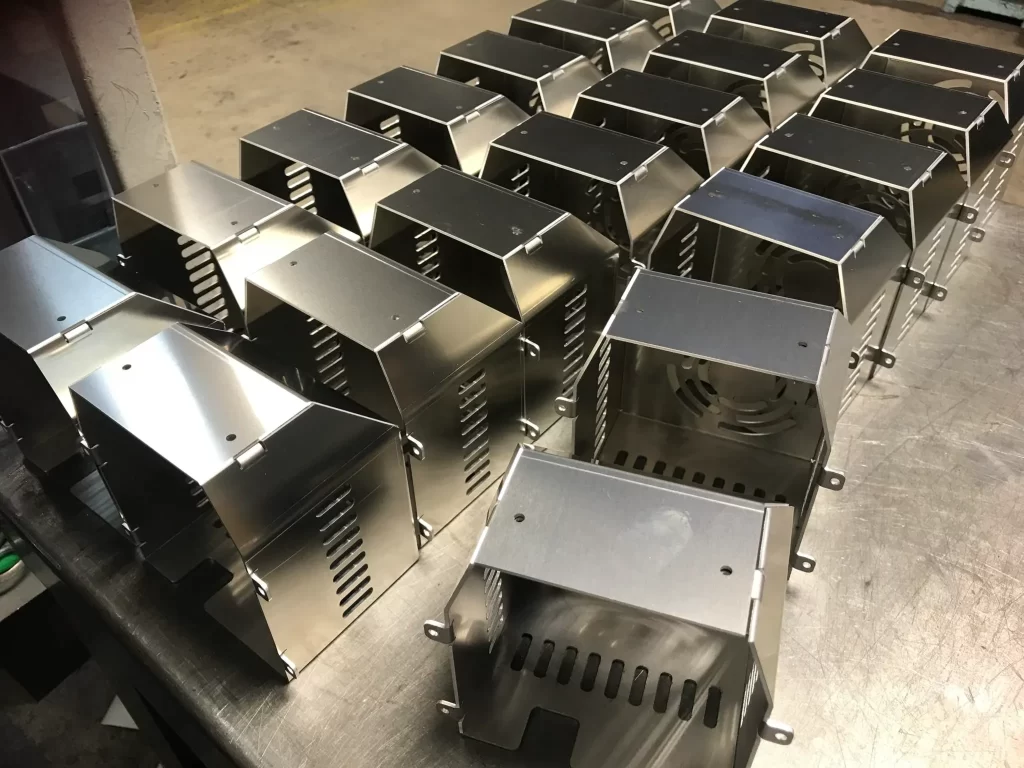
Custom Sheet Metal Manufacturing
Custom sheet metal enclosures can be created using different metals, depending on the industry where it is to be used. Common metals are steel, stainless steel, and aluminium.
Steel
Steel is stronger and highly resistant to corrosion. It is used for large enclosures and industrial. Steel can withstand the heavy loads.
Stainless steel
The stainless steel sheet metal fabrication maintains hygiene standards and high corrosion resistance. It is suitable for outdoor use, the medical industry, and the food industry. It retains its shape even under heat, friction.
Aluminum
The aluminum sheet metal fabrication is lightweight and offers efficient heat transfer. It is ideal for electronic housings, portable devices, and other applications that require rapid heat dissipation. Aluminum is easy to form and allows for a smooth, clean finish, and regular wear
Try Prolean Now!
Benefits of Using Sheet Metal Enclosures in Manufacturing
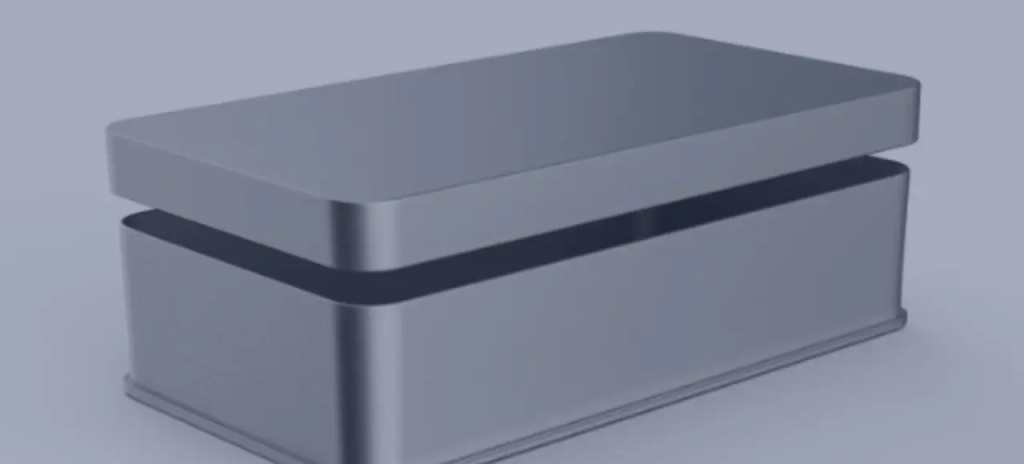
Aluminium Sheet Metal Enclosure
It is highly beneficial to use sheet metal enclosures in different industries as they protect the delicate and sensitive parts. Some prominent benefits are mentioned below:
High Strength
Sheet metal enclosures provide high protection for sensitive components. They maintain structural integrity even under high loads, vibrations, or impacts.
Longer Service Life
Metal is resistant to wear, corrosion, and environmental exposure. Surface treatments and coatings increase durability in harsh environments, such as outdoor or industrial environments.
Easy Repairs
The enclosure can be removed and replaced with individual panels or sections. This saves time, reduces costs, and increases service efficiency.
Better fit for Complex Sevices
The bends, cutouts, and vents are made to match the exact position of each component. This allows for a proper assembly, a stable installation, and an efficient use of space.
Customized Design Options
Size, layout, and internal supports can all be customized. Openings, hinges, and locks can be customized to meet specific operational requirements.
Sheet Metal Enclosure Design
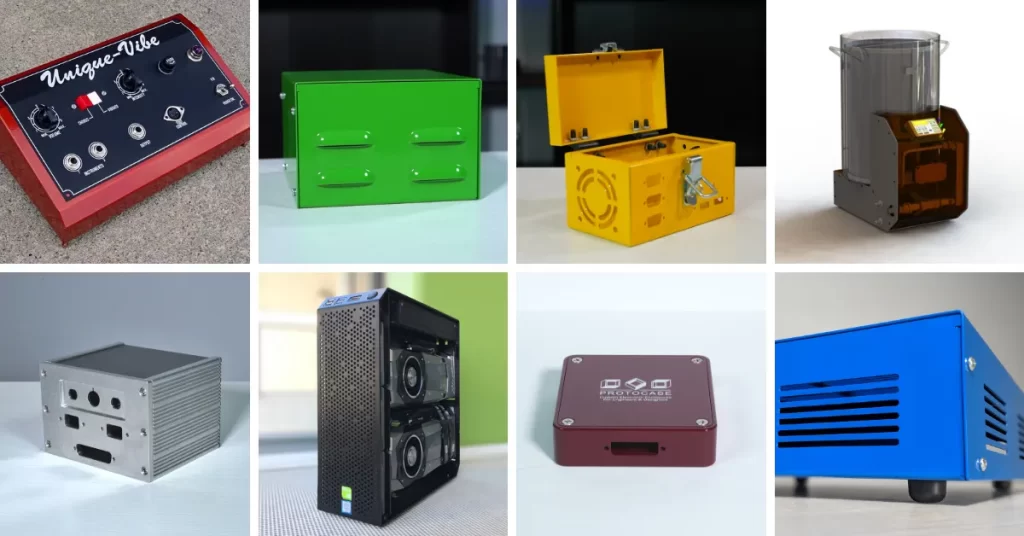
Sheet Metal Enclosure Styles
There are certain rules that should be followed while designing custom metal enclosures.
Key Design Rules
Design simple geometries for stable forming. Avoid cutting too close to the corners and maintain correct bend radii to avoid stress and cracking. Panels that are subjected to repeated handling or heavy components should be reinforced.
Material Selection
Material selection is based on the load, temperature, and environment. Steel is a strong material for heavy-duty industrial applications. Stainless steel sheet metal fabrication is resistant to corrosion and ideal for outdoor applications. Aluminum sheet metal fabrication offers lightweight solutions that are excellent at managing heat.
Thickness and Strength Requirements
The thickness of the material should be determined by panel size and stress. For large panels, thicker sheets are needed for stiffness. Small enclosures can be made with thinner material and still maintain strength.
Thermal Planning and Ventilation
Position vents near heat-generating components. Airflow can be controlled by louvers, heat sinks, or perforations. Aluminum enclosures are better at transferring heat in high-temperature areas.
Mounting and Cable Routing
Include brackets, mounting tabs, and standoffs during the design phase. Plan cable entry points, strain relievers, and internal paths to support assembly efficiency and protect wiring.
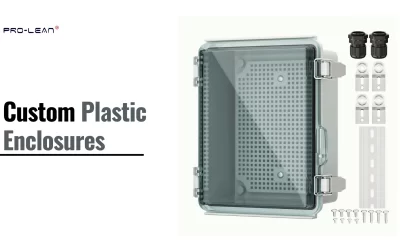
Comparison with Plastic Enclosures
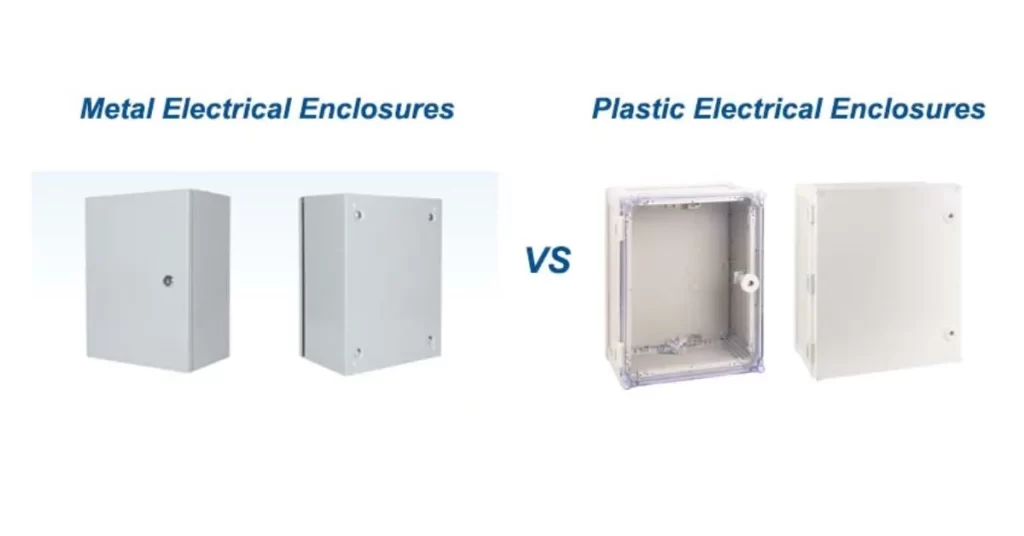
Metal Enclosures vs. Plastic Enclosures
For applications that require an optimum of strength, heat resistance, and shielding of electromagnetic interference, metal enclosures are better than plastic. Also, metal enclosures are better able to safeguard center-sensitive electronic equipment and machinery in industrial, heavy-duty, and outdoor applications.
Metal enclosures provide better tolerance levels and greater management of airflow. Also, they offer a sturdy base for mounting, whereas plastic enclosures are simple to shape, low-cost, and lightweight.
The decision rests on your operational environments, and the protection level needed for the device too. In which case, what do you think custom metal enclosures are better than plastic?
Why Custom Metal Enclosures are Better than Plastic?
Metal enclosures are ideal for applications that require long-term service. Plastic enclosure design guidelines will help you decide whether plastic is the best option, while custom metal solutions can be tailored to your component layout and requirements.
Try Prolean Now!
Metal Enclosure Manufacturing Methods
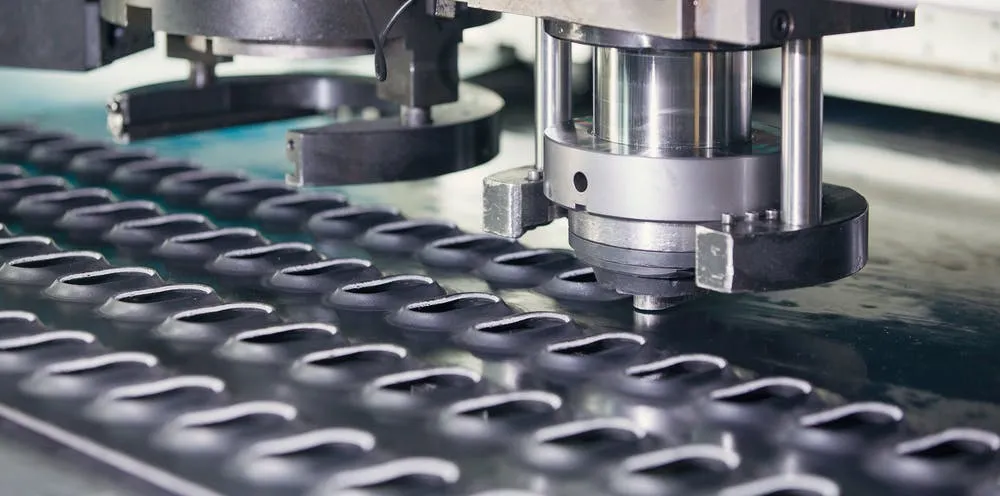
Sheet Metal Punching
To create custom metal sheet enclosures, we cut, shape, assemble, and complete metal sheets, and we perform these procedures until raw metal turns into an enclosure for electronics, equipment, and HVAC units that is strong, exact, and tough.
Cutting
- Laser cutting: This approach utilizes a beam of light to accurately slice through metal, resulting in a smooth finish. Because of the varying intricacies in some metal designs, laser cutting is ideal because it produces the same high quality results.
- CNC punching: This method of cutting is accomplished through a computer-controlled device that precisely whacks out holes, designs, and pattern cutouts. Sheet metal punching for electrical enclosures is able to create exact openings for wires, connectors, and switch cutouts.
- Waterjet cutting: This method cutting is performed through a jet stream of high pressure water that is mixed with abrasives. Because there is no heat produced, the method is perfect for materials that cannot be heated, and it prevents the metal from warping.
Forming
- Bending: With a press bent, you can shape metal sheets into a shape you desire. With this tool, you can also create enclosures to fit the exact specifications.
- Stamping: This approach utilizes a press to quickly cut out an entire sheet of metal into varied designed panels, adding raised designs to the panels, and creating holes. This approach is also able to quickly add designs and a great method for mass sheet metal production.
Joining
- Welding: Combines individual pieces of metal into a solid and unified metal structure. Weldments are suitable for outdoor and industrial enclosures using MIG or TIG welding.
- Mechanical assembly: Panel assembly using screws, bolts, or rivets. This technique is used when welding is not required and facilitates easy access for service or maintenance.
Finishing
- Powder coating: Durable finishes are obtained by applying a dry powder, corrosion resistant using a process called baking or UV curing.
- Anodizing: Corrosion resistance is improved and small finishes are allowed for branding or identification purposes, used mainly for aluminum.
- Other treatments: Sanding, polishing, or brushing improves surface smoothness and prepares the enclosure for painting, coating, or final use.
Application of Custom Sheet Metal Enclosures
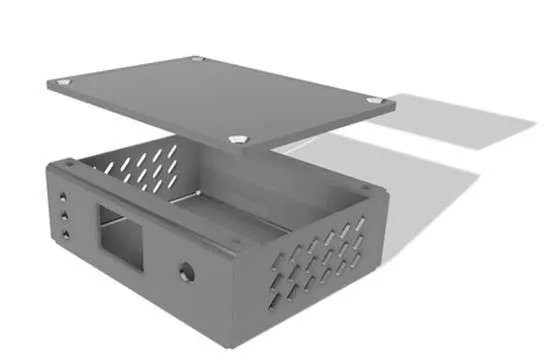
Enclosure Fabrication for Electronics
Sheet metal enclosures have applications in many industries: Electronics, HVAC, and telecom.
Electronics
The metal enclosure for electronic, such as circuit boards, sensors, and other components, is created. They provide heat management, secure mounting of sensitive electronics, and EMI protection.
Industrial Control Panels
In industrial settings such as factories and plants, control systems and technologies such as PLCs, relays, and switches are integrated and encased in what we call control panels. Control panels are designed with protection from moisture and dust, as well as protection against any vibrations. They also allow for easy access to wiring.
HVAC Systems
HVAC sheet metal fabrication involve the use of HVAC sheet metal to build control modules with motors and fans. These control modules are made to control the ducting and air flow from vents. They protect the control modules from structural damage and other environmental factors.
Telecom
In telecommunications, custom enclosures are manufactured to protect and housed servers, networking equipment, and cabling in cabinets and racks. These enclosures are weather resistant and come with mounting options.
Outdoor and Indoor Machinery
Special enclosures are designed to protect machinery components from extreme climates and debris. For custom enclosures designed for outdoor machinery include vents, mounting brackets, and access panels for safe and easy maintenance.
Working With Sheet Metal Enclosure Manufacturers
Let us know what it is like to work with the professional sheet metal enclosure manufacturers.
How Manufacturers Handle Design Files
A sheet metal enclosure manufacturer must receive design files such as CAD or technical drawings to outline the design before fabrication can begin. Once received, manufacturers check for overall design feasibility by reviewing the dimensions, cutouts, and bends in the design. With manufacturers, it is common for design revisions to be made to request structural improvements, as well as improvements in material utilization.
Quality Checks
Every production stage has been subjected by manufacturers to strict quality monitoring. This includes the inspection of sheet metal punching used in an electrical enclosure and the checking of bends, welds, and finishes received. The end product should be safe, should be able to perform the desired functions, and withstand extreme conditions.
Lead Time
Depending on complexity, volume, and material, lead times can fluctuate. Standard enclosures are quicker to produce, while fully customized enclosures take longer for fabrication, prototyping, and finishing. The manufacturers assist by providing time schedules to aid in coordinating deliveries with project deadlines.
Cost Factors
Factors affecting the cost of an enclosure include the material, size, complexity, quantity, and surface finish. While adding long term durability and performance, aluminum sheet metal fabrication and stainless steel sheet metal fabrication are more expensive.
What to Ask before Ordering Custom Sheet Metal Fabrication?
Determine what their cutting, bending, and finishing capabilities are, and what their tolerances and prototypes are like. Be certain of the shipping times and any extra services like powder coating or assembly. Prolean Tech can help in ensuring that the enclosures are manufactured to the required specifications.
Try Prolean Now!
Future Trends in Custom Sheet Metal Enclosures
Sustainability and advanced materials will shape future trends. Increasingly, lightweight alloys, recyclable materials, and coatings that have a lower environmental impact are becoming popular. Modular designs and additive manufacturing techniques such as 3D laser cutting and robotic bending will allow for faster production with greater precision.
Customization will be easier. These trends will result in enclosures that are not only functional but also environmentally friendly and technically advanced.
Conclusion
Custom sheet metal enclosures provide strength, durability, and precision fit to electronic, industrial machinery, and HVAC systems. These enclosures offer many benefits, including improved airflow and protection for sensitive components. The right material, thickness, and fabrication will ensure long-lasting performance.
Prolean Tech provides high-quality sheet metal fabrication, including enclosures in stainless steel or aluminium. For both small and larger projects, we ensure that each design, cutout, and vent is exactly to specifications.
Prolean Tech can assist you with all your sheet metal enclosure needs. Call us to discuss your requirements and get a quote.

0 Comments