
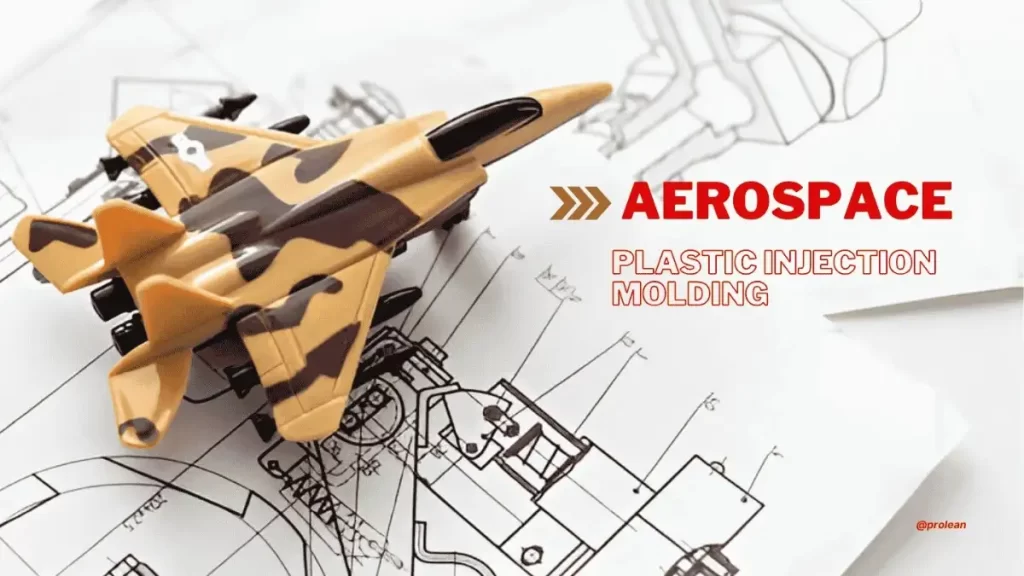
Aerospace plastic injection molding
Aerospace parts must handle extreme conditions like outer space. They face heat, pressure, and constant movement in everyday use. Because of this, engineers keep looking for better solutions. One wise choice is Custom Aerospace Parts Manufacturing.
This process gives you fast production and flexible design. You can make complex parts with great accuracy. It’s also cost-effective, especially for large-scale runs. If you need strong but lightweight parts, this works well.
Injection molding also supports many high-performance materials. That’s key in aerospace, where every detail matters. In this article, you’ll learn why it’s a top method. We’ll look at its benefits, materials, and real-world uses.
Why Use Injection Molding in the Aerospace Industry?
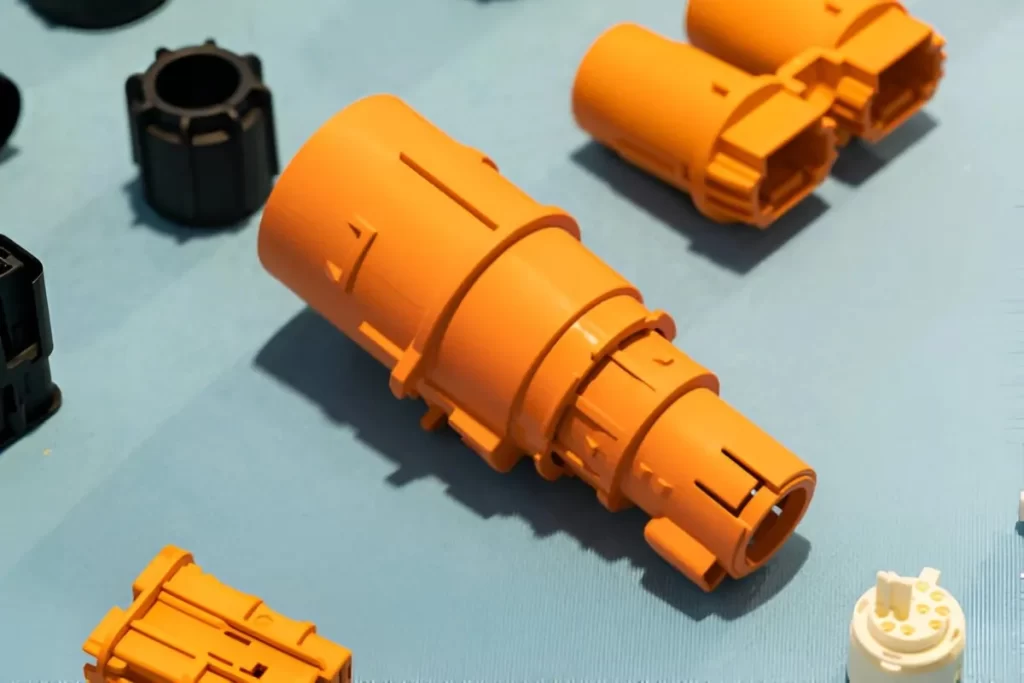
Aerospace molded parts
Injection molding plays an important role in modern aerospace manufacturing. It is especially useful when creating lightweight, strong plastic parts at scale. Let’s explore why manufacturers often choose aerospace plastic molds for high-performance aerospace components.
Flexible Design Options
While injection molding offers design freedom, molds require significant lead time and cost to produce. Design changes after mold manufacture typically involve major modifications and new molds. So, it leads to significant delays and costs. Prototyping often uses cheaper, faster methods (like 3D printing), and less durable prototype molds (e.g., aluminum instead of steel) for initial testing.
Wide Range of Material Choices
Plastic injection molding supports several materials, whether regular plastics or reinforced composites. You may opt for plastics that resist heat, corrosion, and wear. Are you seeking lightweight yet durable components? Injection molding allows the use of appropriate materials to match part requirements.
High Precision and Tight Tolerances
You are assured of strong accuracy when using IM. The process can meet very tight tolerances of ±0.001 inches. This makes a big difference in aerospace, since every minor change counts. Besides, most of the parts are uniformly finished after being molded. You can produce large-volume parts in minimal time.
Strong and Lightweight Parts
The aerospace components should withstand forces like drag, thrust, and turbulence. Engineered grade thermoplastics offer excellent strength and thermal resistance. Lightweight parts are a fundamental requirement of the aerospace sector. You don’t have to worry about a weight increase because the parts are light yet strong out of the mold.
Consistent Quality at Scale
Injection molding is a perfect choice for making many of the same items. A single mold can make more than 100,000 similar parts. This approach is vital for aerospace, since quality in the industry must be constant.
Custom Finishes and Surface Quality
Injection molding allows you to manage the finished parts’ shape and texture. Some finishing options available are matte, glossy, or textured surfaces. These surface treatments can reach a surface roughness as low as 0.012 µm. It allows you to improve the looks and performance.
Low Cost and High Efficiency
While plastic injection mold cost varies, it can be comparable to or higher than some die casting tooling. However, in general, it is lower than investment casting patterns/coring setups. Moreover, the process requires a significant upfront investment (mold cost) compared to CNC machining for low volumes, though it becomes very cost-effective at scale.
Using lightweight material in aerospace parts helps reduce shipping and storage costs. With time, the process improves its efficiency. After you make your mold, each part will be made at a little extra cost.
Best Material for Injection Molding in Aerospace Parts
Injection molding works with many plastics that meet aerospace standards. Below are common materials used and their reasons why each is ideal for aerospace parts.
Polypropylene (PP)
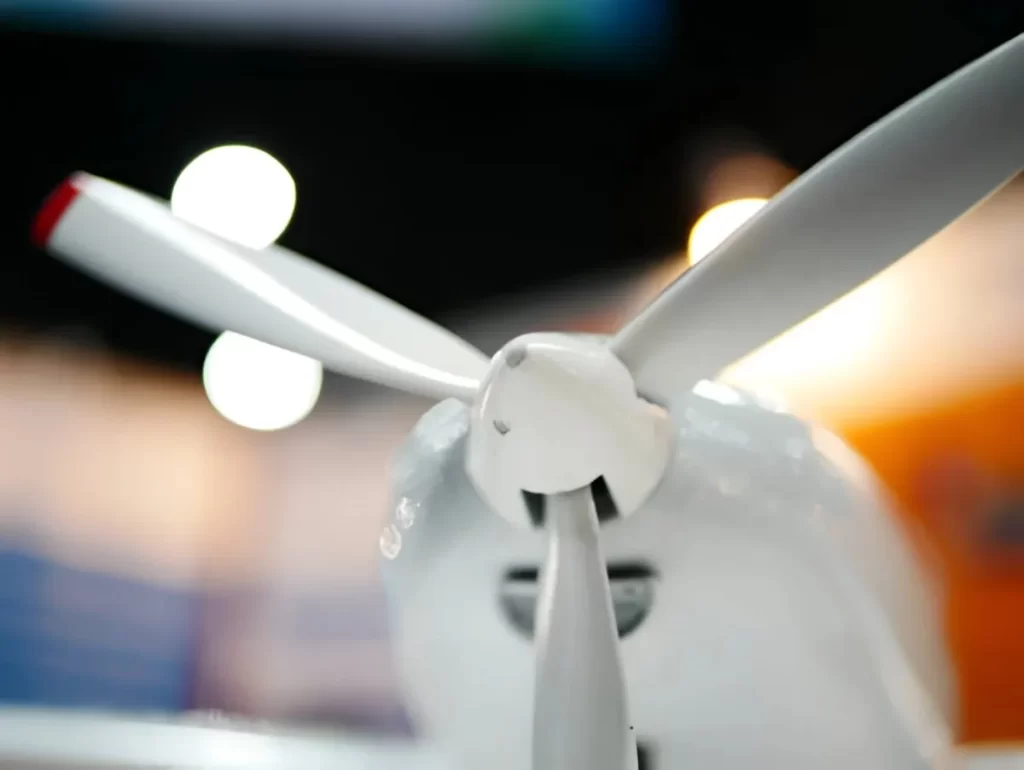
PP Aircraft Wing Component
- Good resistance to chemicals
- Handles moderate heat well
- Tough and slightly flexible
High-Density Polyethylene (HDPE)
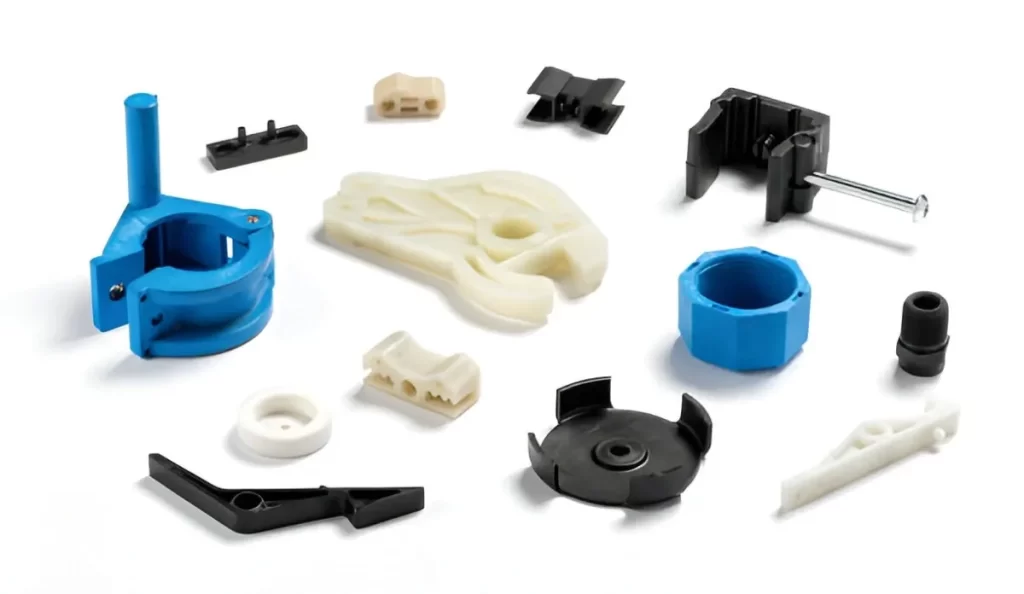
HDPE Aerospace Injection Molded Parts
- Remains tough in cold conditions
- Highly weather-resistant
- Lightweight and flexible
Acrylonitrile Butadiene Styrene (ABS)
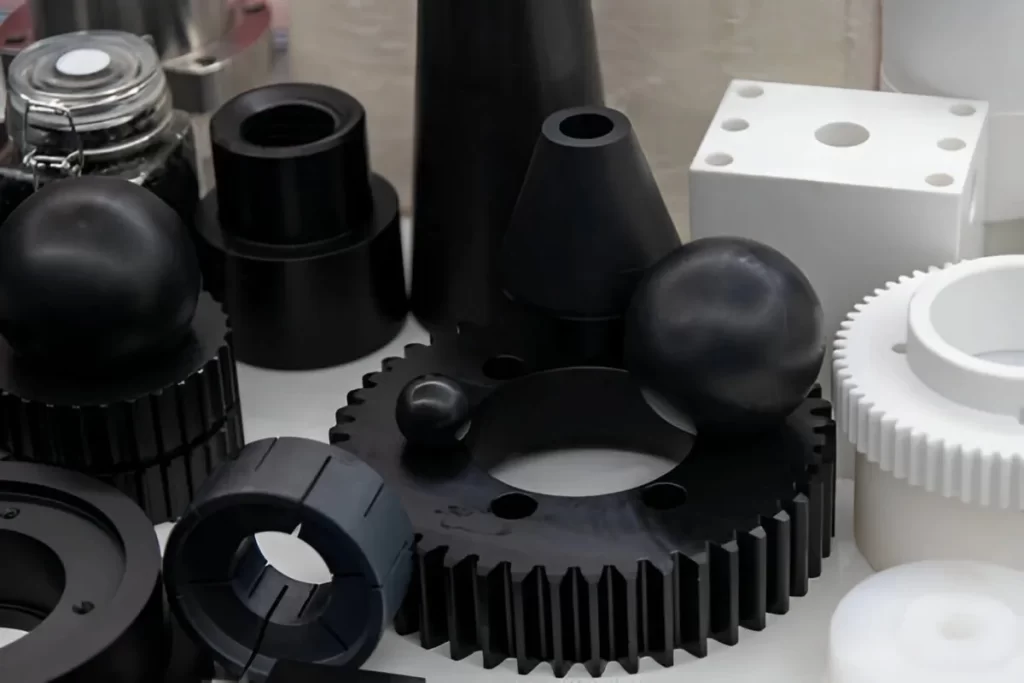
ABS Aerospace Injection Molded Parts
- Among the strongest injection molding thermoplastics
- Excellent surface finish quality
- Stays stable in harsh environments
High Impact Polystyrene (HIPS)
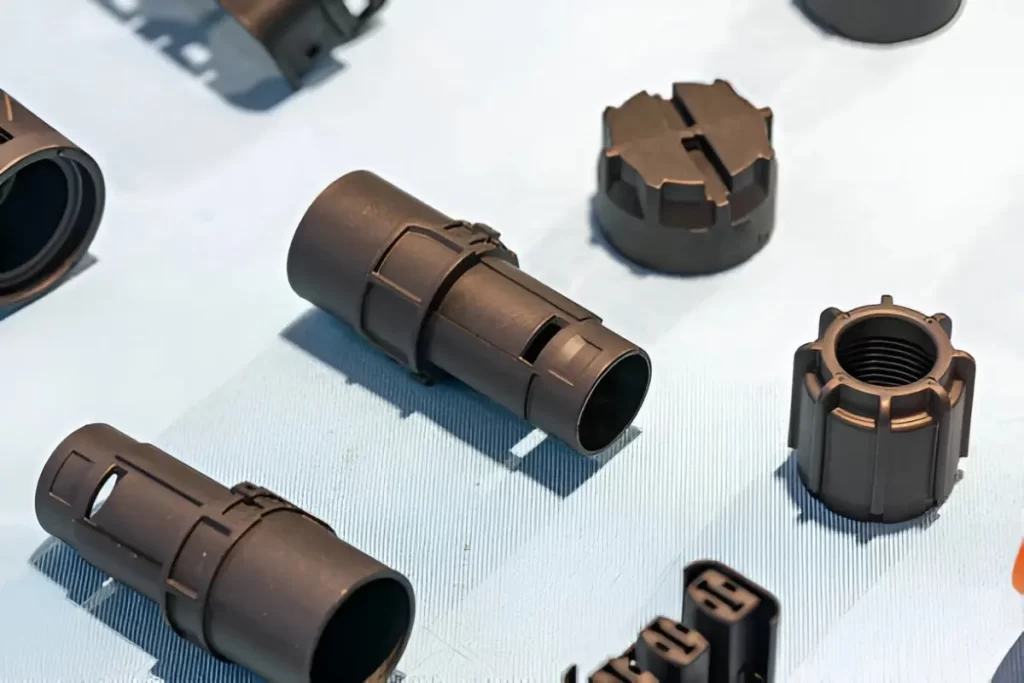
HIPS Injection Molded Parts Displayed
- Good impact strength
- Holds shape under pressure
- Affordable for large runs
Polyether Ether Ketone (PEEK)
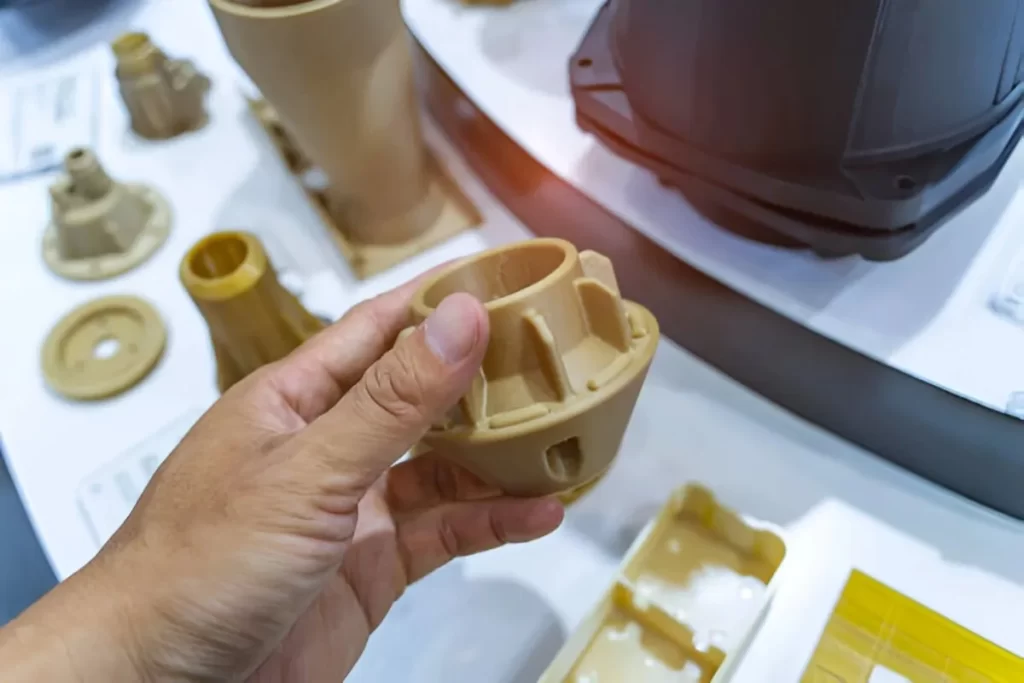
PEEK Injection Molded Parts
- Withstands high heat and stress
- Resists harsh chemicals
- Often reinforced for extra strength
Thermoplastic Polyurethane (TPU) / Thermoplastic Vulcanizate (TPV)
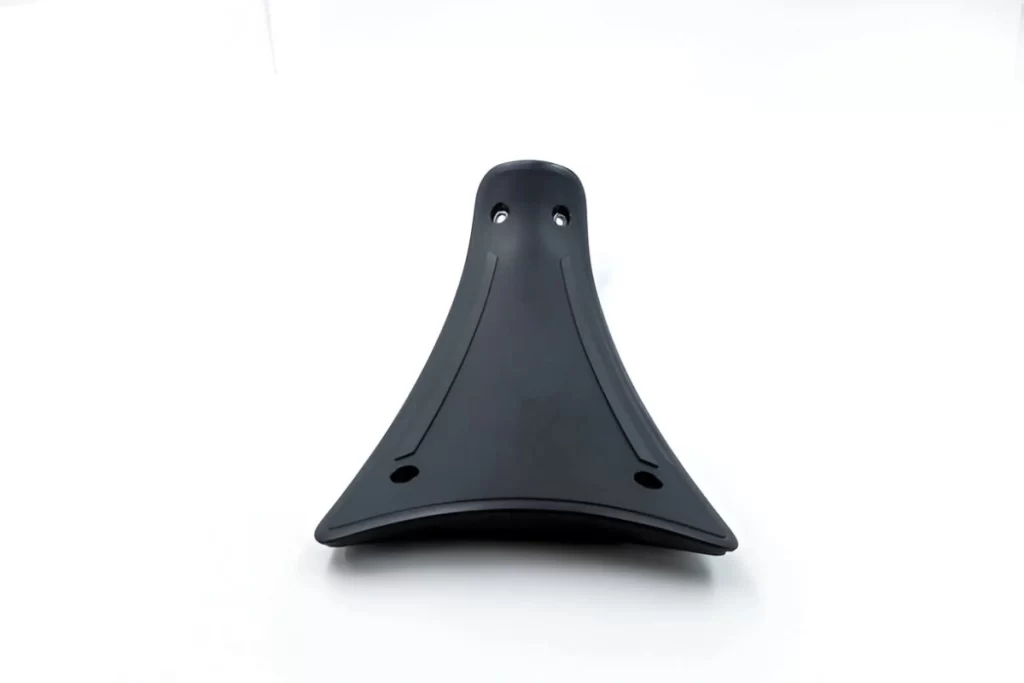
TPU/TPV Black Part White Background
- Highly flexible and durable
- Resists wear and abrasion
- Good at handling compression
Try Prolean Now!
Injection Molding Processes in the Aerospace Industry
The process of injection molding isn’t limited to one way. All types below provide their own set of unique advantages. Thanks to these processes, you can make parts that come in many forms and are all carefully accurate. Here are the most commonly used types of techniques in aerospace.
Plastic Injection Molding
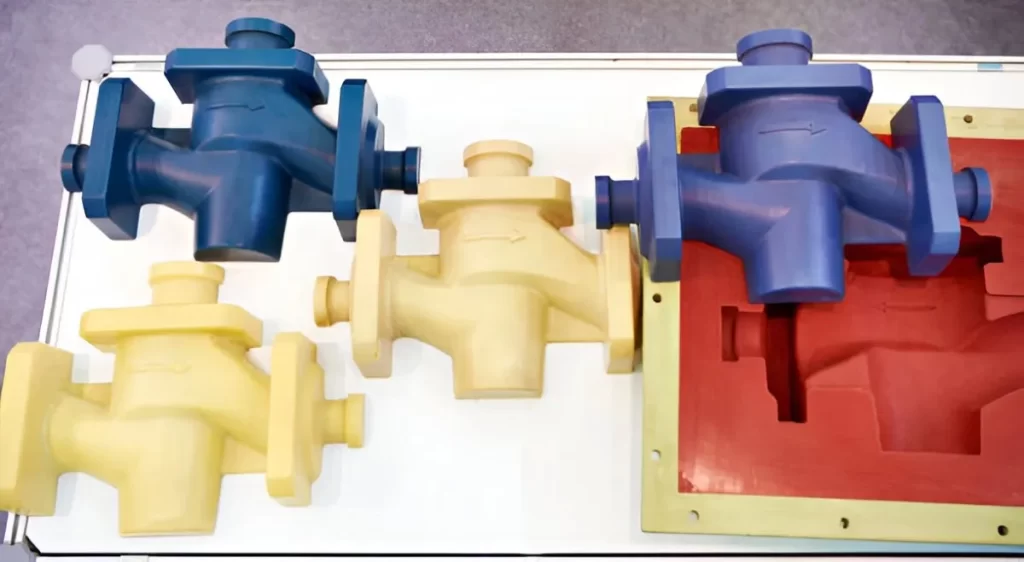
Custom Plastic Injection Molding
The plastic injection molding is more frequently used than other techniques. The first part of the process is melting the plastic pellets. Next, the melted plastic goes into a mold with the final shape. When the part has cooled, the mold separates and lets the part come out. It is quick, very accurate, and aimed at producing multiple parts. You can apply it for anything from connecting housings to supporting brackets in aircraft systems.
Overmolding
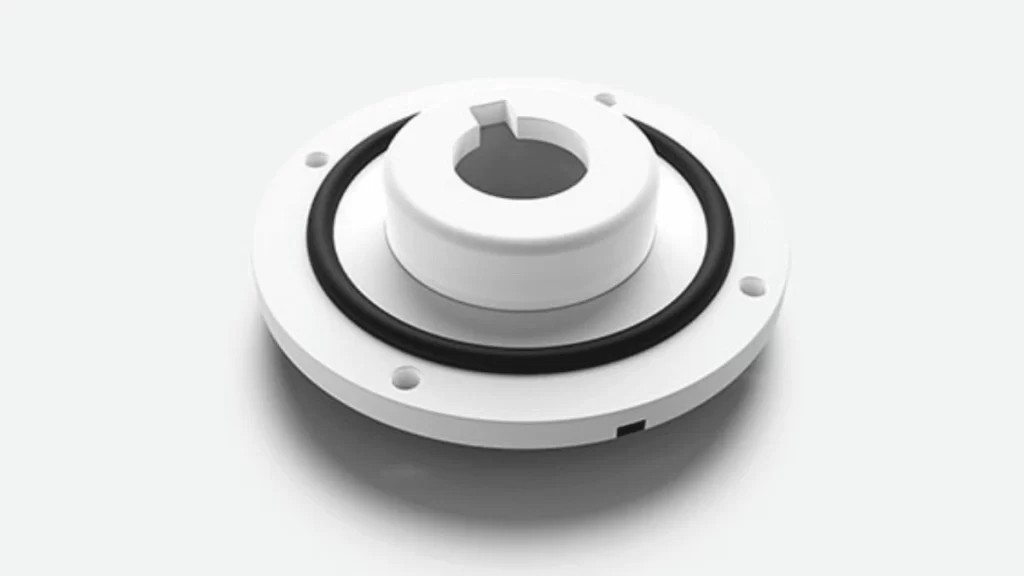
Overmolded Product
Overmolding makes it possible to put two types of materials together in one part. First of all, the central part, or substrate, is shaped. After that, another material is wrapped around the first one. It is helpful when you require a part to be strong and hold onto something. This shows how a latch needs a strong base and a gentle outside cover. Overmolding saves time by combining two materials into one part during the molding process. There is no need for a separate assembly. (Read more about metal injection molding (MIM))
Insert Molding
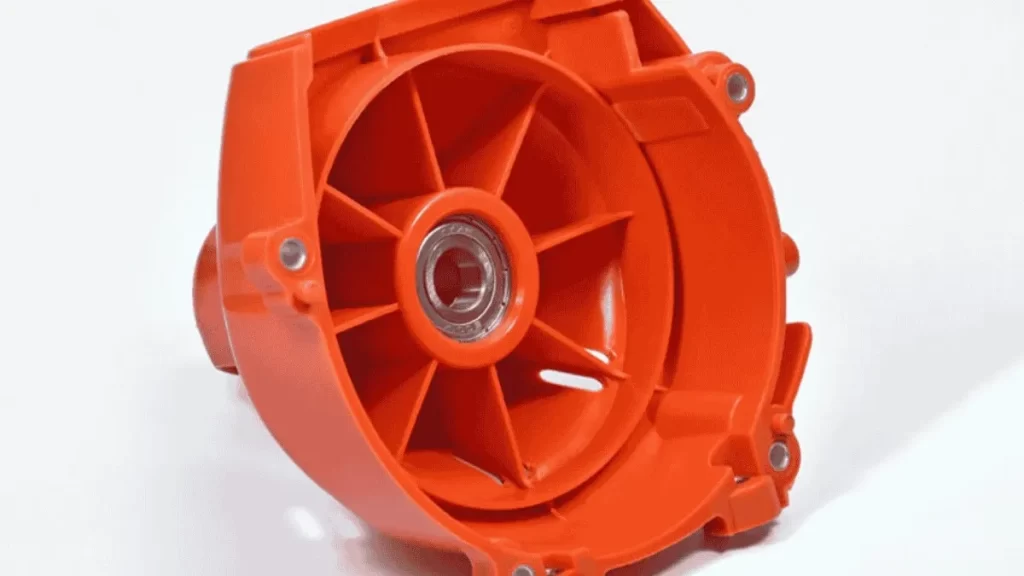
Insert Molding Product
The first phase in insert molding is to put a metal insert into the mold. After that, plastic is formed over the item to keep it stable. This method is ideal for parts such as connectors because strength and stability are essential. It further helps you avoid assembling many pieces.
Micro Molding & Reaction Molding
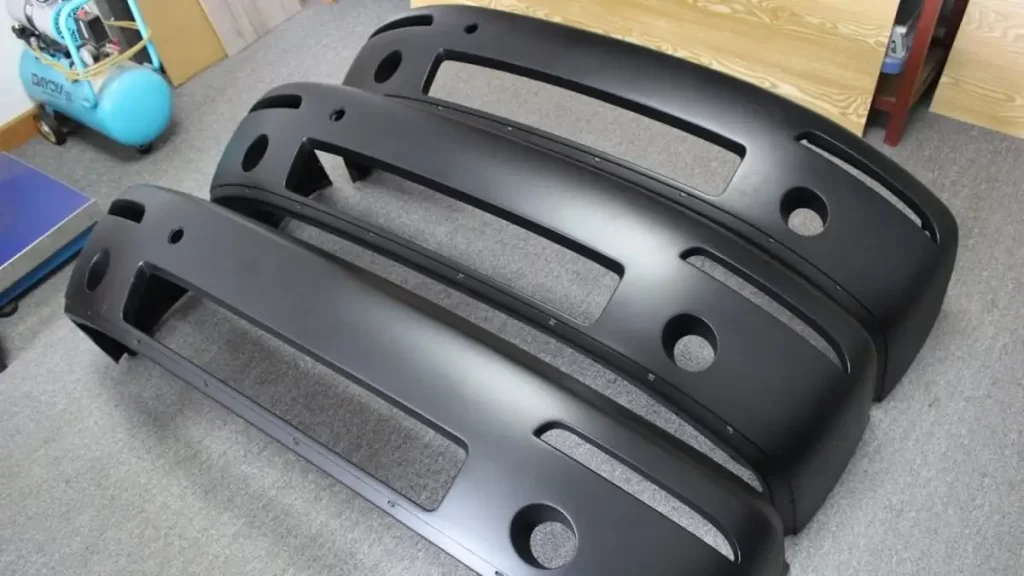
Reaction Moled Parts Displayed
Micro molding is employed for minute and intricate parts. Sometimes these tiny parts are lighter than a paperclip and smaller than a grain of rice. Despite using a few parts, the process has to be very precise. Such tiny gears, sensors, or other components in the aerospace industry will find it a perfect match. Aside from this, reaction injection molding (RIM) is typically used for large, low-to-medium density polyurethane parts, such as interior panels, enclosures, bumpers (often for ground vehicles), and housings.
Also Read: Silicone Injection Molding
Try Prolean Now!
Common Aerospace Products Made with Injection Molding
Injection molding is a wise choice in aerospace engineering. It helps create lightweight, durable parts with excellent detail and strength. Here are some standard aerospace components made using this method:
Battery Housings
Electrical cells in aircraft are stored in the battery housings. All these parts have to be resistant to vibrations that occur in flight. Injection molding makes it possible to create durable and lightweight items. You can pick plastics that are not affected by battery acid and chemicals while ensuring safety.
Circuit Enclosures
Circuit enclosures are put in place to keep the electrical systems in planes safe. Like all other aircraft parts, circuits encounter heavy movement and vibration. Enclosures made with injection molding support internal parts and keep them from getting damaged during shocks. Besides, plastic naturally prevents heat and electricity from spreading, which is excellent for safety regarding electrical items.
Radomes
The job of a radome is to protect antennas and radar equipment from the weather or other outside effects. They need to make sure that all sent signals are uninterrupted. Fluoropolymers are used for this purpose. These materials are not affected by the weather and won’t disrupt radio signals, which is necessary for the task.
Pitot Tubes
Pitot tubes measure air movement and assist pilots in watching their speed. The tubes need to be smooth so the air passes without trouble. Engineers can choose plastics that work well when flying at high altitudes in freezing weather.
Turbine Blades
Drones and models usually have plastic turbine blades because they are light. The strong and smooth blades of injection molding help move and direct the air. It is simple to make many products without any loss in quality.
Chassis Parts
Many of today’s small aircraft and drones have plastic parts in their chassis. Even though they don’t carry heavy things, these pieces must still be strong and stable. It becomes convenient to make them in significant quantities by using injection molding. Outsourcing lets you produce parts at a lower cost while ensuring they meet your exact requirements.
Window Bezels
Window bezels ensure aircraft windows are well sealed and do not leak air. Because of their lightweight, plastics are a reliable choice. With injection molding, you achieve precise measurements and a perfect join for the cabin’s door.
Get Custom Aerospace Parts From Prolean Tech
At ProleanTech, we offer expert aerospace injection molding service. Whether you need a prototype or mass production, we have you covered. Our services include overmolding, insert molding, and mold flow analysis. This ensures your parts meet strict aerospace standards.
Our skilled engineers support you throughout the process. You get quality checks and 24/7 help whenever needed. Plus, our online quoting tool makes ordering fast and simple. Just upload your design, and get a quick quote with a design review. This helps you check your design’s feasibility early on.
FAQ’s
Q1. What is aerospace injection molding?
Aerospace Plastic Injection Molding is a way to make plastic parts for airplanes and spacecraft. It uses molds to shape melted plastic into precise, strong components.
Q2. Why is injection molding good for aerospace parts?
Injection molding produces lightweight, complex parts with high precision. It employs engineering thermoplastics like PEEK, PEI (e.g., Ultem), PPS, and specialized grades selected for specific harsh aerospace environments.
Q3. Can I make prototypes and mass production parts with injection molding?
Yes, injection molding works well for both small prototypes and large production runs. It’s flexible and cost-effective for all project sizes.
0 Comments