Which one is better? Brass or Stainless steel. There is no single answer; it depends on the end-use requirements, operating environment, desired mechanical performance, corrosion resistance, and other factors.
Stainless steel is an iron-chromium alloy with other alloying elements that is used for corrosion resistance in harsh environments, high-stress handling, and dimensional stability. But stainless steel machining is not as easy as Brass. On the other hand, Brass is an alloy of copper and Zinc, which offers excellent machinability, formability, good corrosion resistance, and thermal & electrical conductivity. But it does not match the overall mechanical performance of stainless steel.
This article will break down Brass vs Stainless steel, comparing their engineering properties, application suitability, cost, and ease of manufacturing.
What is Brass? Definition and Composition
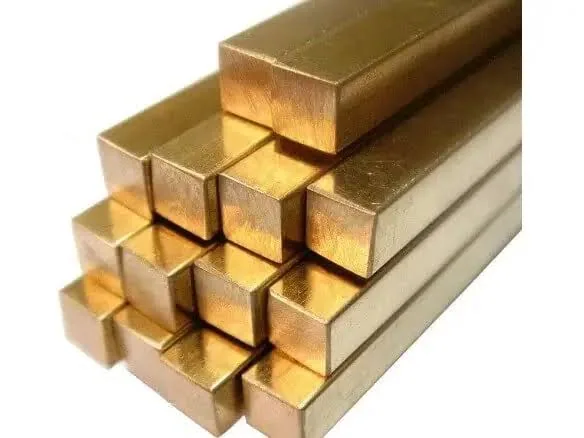
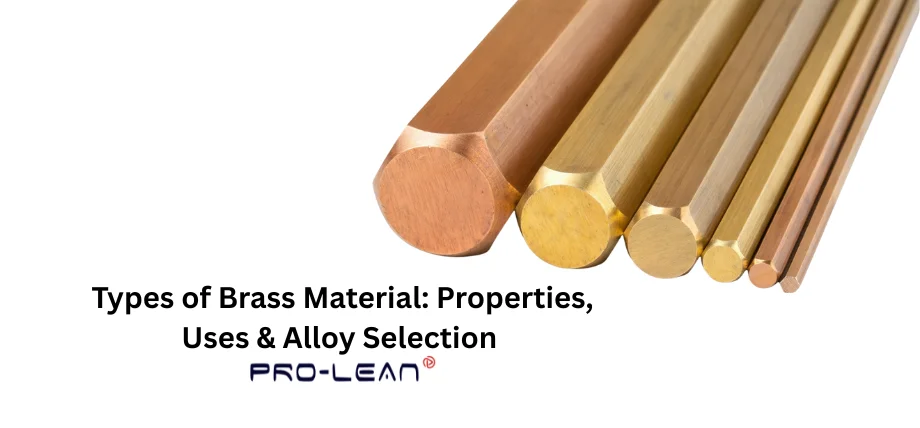
Brass alloy
Brass is a bright, golden-yellow alloy made with Zinc and Copper, consisting of 55-95% copper (Cu) and 5-45% zinc (Zn), along with minor amounts of lead, tin, and other elements. The exact composition depends on the types of brass, specific grade, and application requirements. The CNC machining brass typically contains ~60 % of Cu and ~40 % of Zn.
Copper provides malleability, formability, conductivity, and antibacterial characteristics, whereas zinc adds strength, toughness, and hardness. Subsequently, a small amount of lead helps to maintain excellent machinability.
Brass is used for fittings, screws, plumbing hardware, electrical pins, switches, busbars, marine hardware, architectural components, and various other industrial applications.
What is Stainless Steel? Definition and Composition
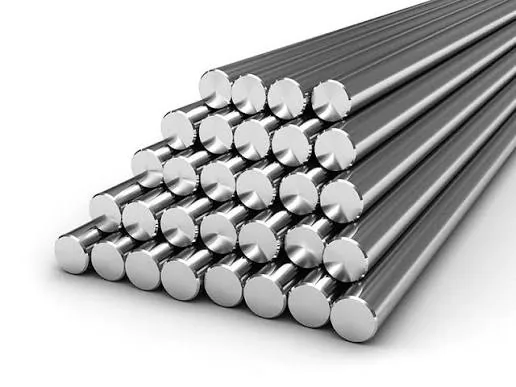
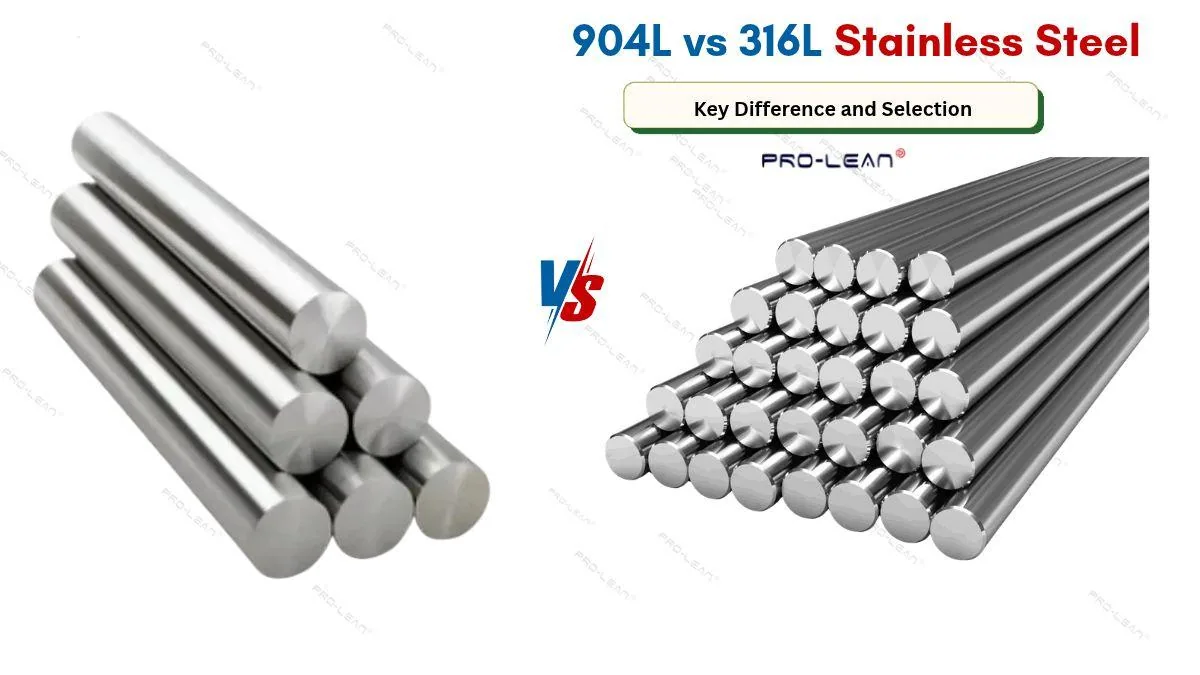
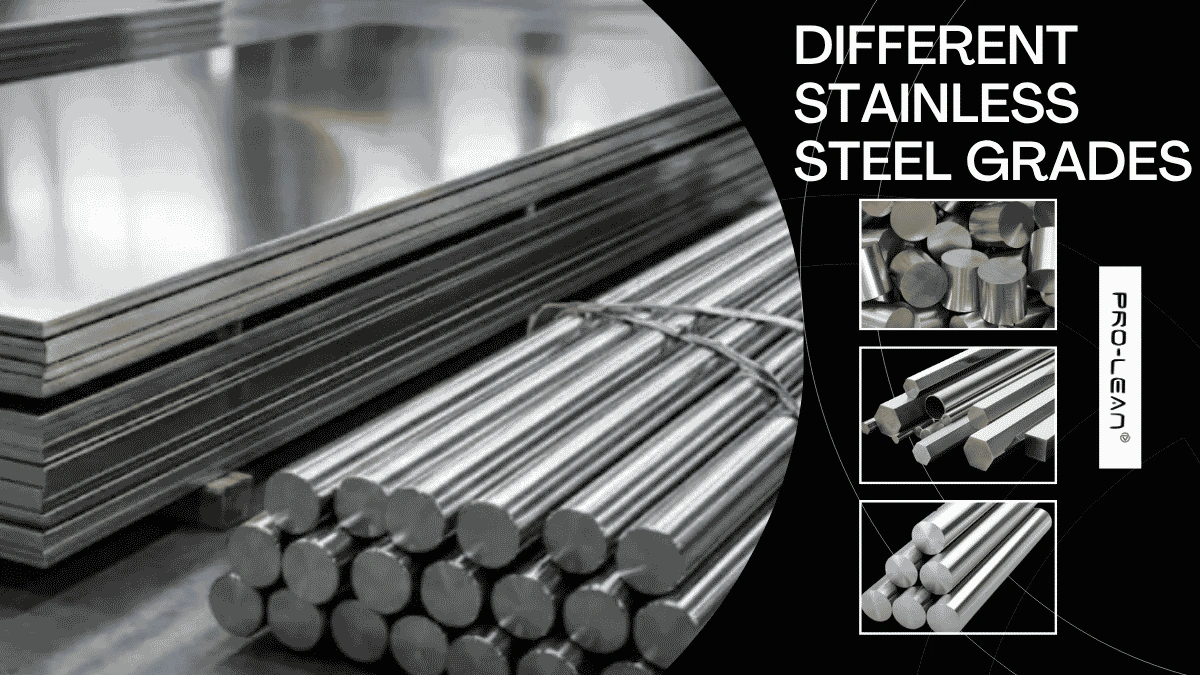
Stainless steel rod stock
Stainless steel is a bright, silvery-grey alloy made of Iron, chromium, and other alloying elements. In engineering practice, this iron-based alloy contains at least 10% Chromium ( Cr) and carbon C) up to 1.2 %. Their exact content and inclusion of other elements, such as Nickel, molybdenum, and manganese, depend on the specific type and grade of Stainless Steel.
Stainless steels are valued for their strength, durability, corrosion resistance, and good thermal performance. AISI 304, 304L, 316, 316L, 410, and 430 are the common grades in stainless steel machining.
The table below shows the significance and content ( %) of the main alloying elements in stainless steel’s composition.
|
Element (wt.%) |
Key Significance |
304 |
304L |
316 |
316L |
430 |
410 |
|
Carbon (C) |
Hardness, strength, and thermal resistance |
≤0.07 |
≤0.03 |
≤0.07 |
≤0.03 |
≤0.12 |
≤0.15 |
|
Chromium (Cr) |
Corrosion resistance |
17.5–19.5 |
17.5–19.5 |
16–18 |
16–18 |
16–18 |
11.5–13.5 |
|
Nickel (Ni) |
Cold-working & weldability |
8–10.5 |
8–10.5 |
10–14 |
10–14 |
0% |
≤0.75 |
|
Molybdenum (Mo) |
Chemical resistance and marine-safe |
0% |
0% |
2–3 |
2–3 |
0% |
0% |
|
Manganese (Mn) |
Stability of internal structure and hot-workability |
≤2 |
≤2 |
≤2 |
≤2 |
≤1 |
≤1 |
|
Silicon (Si) |
Enhanced strength & high-temperature oxidation resistance |
≤1 |
≤1 |
≤1 |
≤1 |
≤1 |
≤1 |
[1]
Brass Vs Stainless Steel: Comparison of Their Properties
The table below compares the physical, mechanical, thermal, and electrical properties of brass and stainless steel.
|
Property |
Stainless Steel |
Brass |
Difference |
|
Density (g/cm³) |
7.65–8.1 |
8.2–8.53 |
Brass is denser |
|
Melting point (°C) |
1300–1530 |
916–954 |
Stainless steel can perform at higher temperatures |
|
Thermal conductivity (W/m·K) |
8.6–30 |
120–121 |
Brass is significantly more conductive |
|
Tensile strength (MPa) |
425–1350 |
320–680 |
The ranges overlap, but most SS grades are stronger. |
|
Yield strength (MPa) |
185–850 |
110–570 |
Annealed stainless has high yield strength |
|
Hardness (HRB) |
70–117 |
53–93 |
Stainless outperform Brass |
|
Elastic modulus (GPa) |
190–220 |
110 |
Stainless is stiff |
|
Elongation at break (%) |
AISI 304, 40 -60 |
C26000, 40- 65 |
Depends on the specific grade |
|
Modulus of rigidity (GPa) |
73–85 |
41 |
Stainless resists twisting better. |
|
Electrical conductivity (% IACS) |
1.6–3.1 |
28 |
Brass is far better for electrical conductivity |
*Note: These values are given for general reference; exact values depend on the specific alloy grade/standard/material form
Brass vs Stainless Steel: Eight Key Differences
Brass and stainless steel differ in strength, hardness, corrosion resistance, thermal stability, electrical & thermal conductivity, preferred applications, ease of machining, and raw material cost. Let’s break down each of them.
Corrosion Resistance
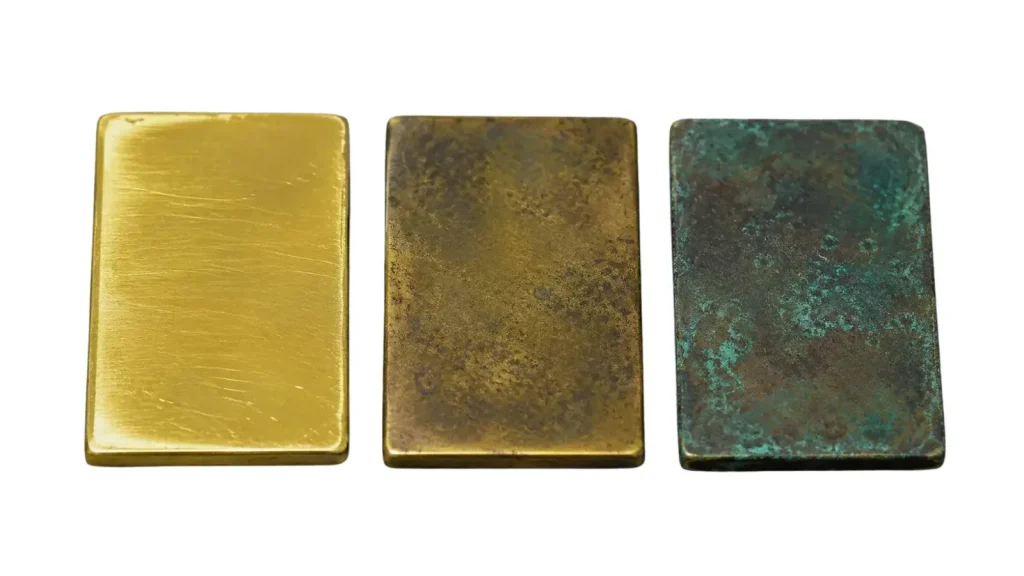
Tarnish on brass parts
Chromium in stainless steel forms a thin protective oxide layer to protect the material from rust. Other elements like molybdenum and nitrogen further make it resistant to chloride pitting and crevice corrosion.
Brass resists rust formation in moisture, fresh water, and non-oxidizing solutions. Brass corrosion resistance is better for Naval brass (e.g., C46400), which is also resistant to saltwater and significantly reduces the de-zincification risk.
Mechanical Strength
Stainless steel is a high-strength alloy with tensile strength of ~425 to 1350 MPa and yield strength (185-840 MPa). It supports heavy stress and fatigue loads. So, you can choose it for shafts, machine frames, auto parts, and medical tools.
Although the tensile and yield strength of brass is not as high as stainless steel, it is durable for light loads, and some grades(e.g., C67500) are used for bushings, valves, and other moderate-load components.
Other engineering metals like aluminum provide a better strength-to-weight ratio than stainless steel ( stainless steel vs aluminum). So, stainless steel might not be strong enough for lightweight parts.
Wear Resistance
Stainless steel is significantly more resistant to wear and abrasion compared to brass. It has high surface hardness (70-117 HRB) and strength. That’s why stainless alloys are chosen for heavy-load, marine, fuel-handling, and durable industrial applications.
Stainless steels 440, 420, 17-PH, and a few other grades are best for rotating and wear-resistant components. They provide hardness as high as ~117 HRB.
High-temperature Resistance
Heat-resistant austenitic stainless steel 253MA (UNS S30815) is suitable application requiring oxidation resistance at elevated temperature, as high as 1,150°C. A high-carbon version of 304 is also suitable for components with service temperature up to 950°C. However, the exact performance at high temperature of brass and stainless steel depends on specific grade, mechanical load, and exposure condition. [2] [3]
Brass generally has lower high-temperature performance than heat-resistant stainless steel. Common grades such as C26000 (70/30 cartridge brass) experience declining mechanical strength as operating temperatures increase. So, they are less suitable for prolonged high-temperature applications.
Electrical and Thermal Conductivity
Brass outperforms stainless steel when it comes to applications where electrical and thermal conductivity matters, such as electrical connectors, heat sinks, and radiators. But stainless steel maintains better dimensional stability of parts under heat. Its coefficient of thermal expansion is 10.4 – 17.2 µm/m·°C ( vs. brass, up to ~ 20.5 µm/m·°C).
Furthermore, copper is more conductive than brass, so if you are looking for parts for thermal and electrical applications, check the article “copper vs brass” here.
Applications
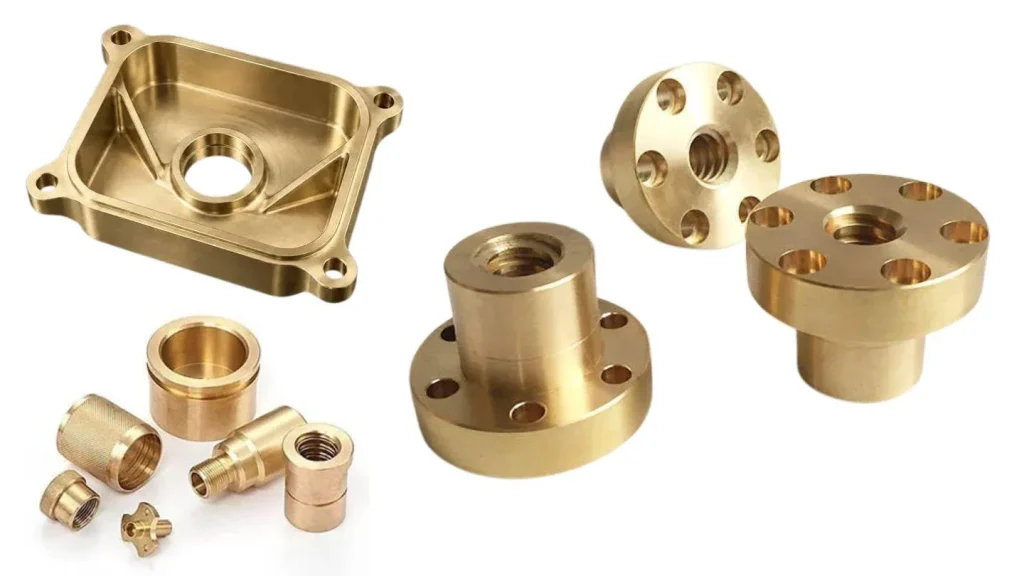
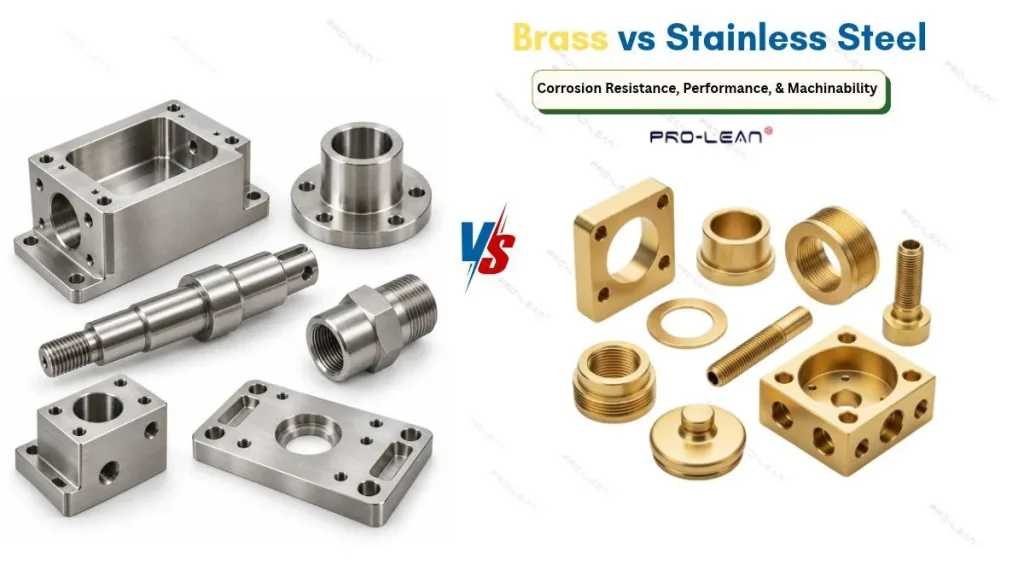
CNC-machined brass parts
Brass is used in applications requiring thermal & electrical conductivity, low friction, and a decorative finish. Subsequently, it offers a machinability advantage over stainless steel.
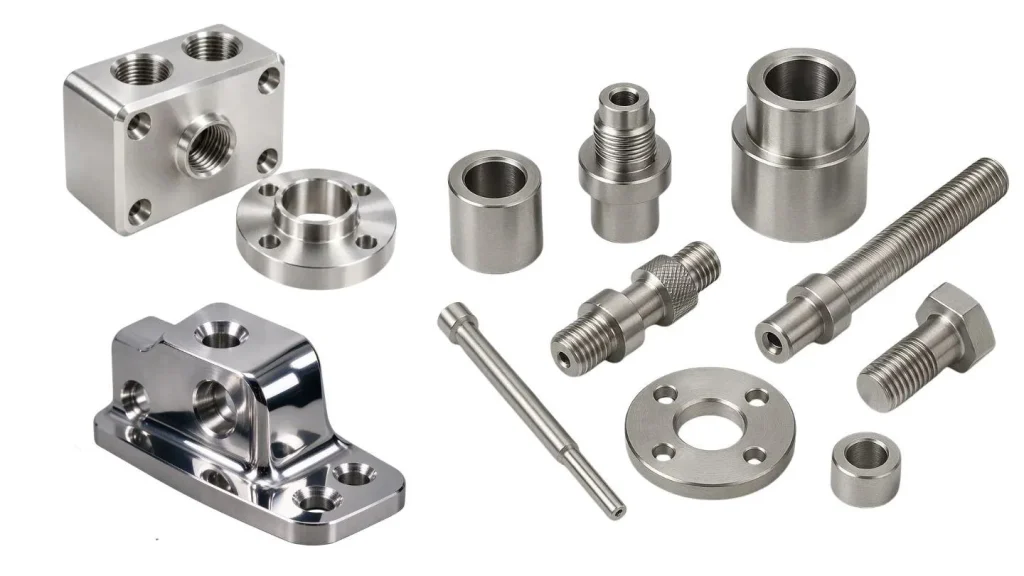
CNC-machined stainless steel components
Stainless steel is preferred for applications requiring high strength, durability, harsh-condition capability, and food hygiene. Grades like ASTM F138, ASTM F139, and ASTM F899 are also suitable for medical applications.
Brass CNC machining applications
- Electrical connectors
- Busbars
- Sockets and switch components
- Radiator parts
- Heat exchangers
- Plumbing and marine fittings
- Screws, bushings, and sliding components
- Decorative and architectural components
Stainless steel CNC machining applications
- Precision shafts
- Valve stems
- Structural brackets, high-load machined parts
- Fasteners (nuts, bolts, screws, dowel pins)
- Food-processing vessels, conveyors, and storage tanks
- Heavy-machinery parts
- Industrial piping
- Electrical enclosures
- Automotive engine parts
- Medical instrument and trays
Material Cost
Brass is more expensive than stainless steel, mainly because of the copper content in its alloy composition. It varies from $5 to $15+, whereas industrial stainless grades range from $1.5 to $13. However, the exact cost depends on raw material form (rods, sheets, bars, plates, and tubes), supplier location, and alloying composition.
Ease of Machining and Cold-working
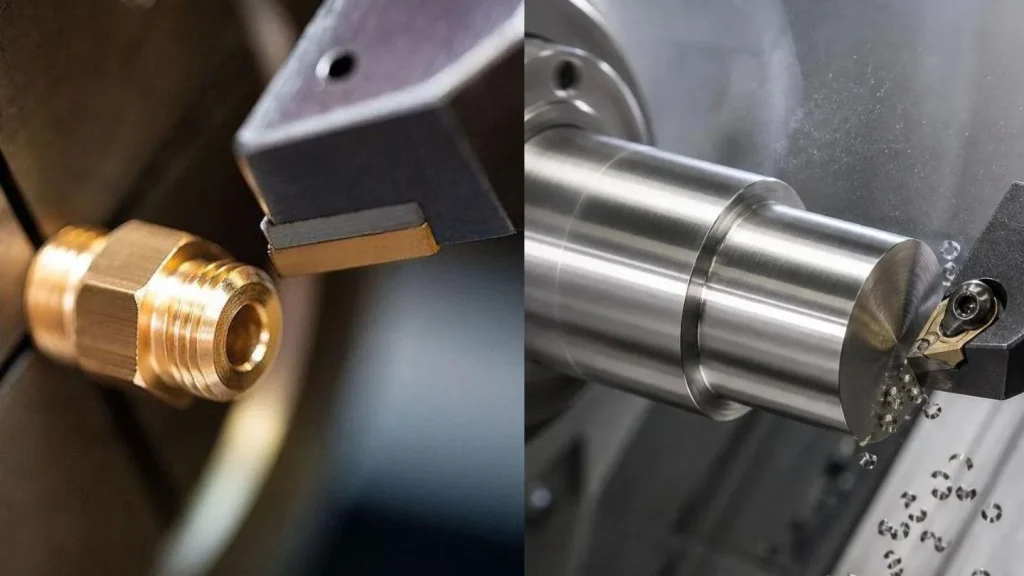
Brass vs stainless steel machining
Brass ( particularly C36000) has excellent machinability and can be machined precisely at high cutting speeds. Chips break easily, and the tool lasts for a longer period. On the other hand, stainless steel needs sharp carbide tools, and they wear relatively quickly. Common machining grades are 303, 304, 316L, and 430.
For bending, stamping, and deep drawing, C26000 is easier than other brass grades and stainless steels. Although stainless grades have lower formability than brass, they can be used for cold-working processes.
Is Brass Stronger than Steel?
Most stainless grades are stronger than brass materials, whereas the structural strength of some of the brass grades overlaps or exceeds the strength of some low-carbon stainless steels. For instance, cold-worked brass ( e.g., C26000) provides tensile strength over 570 MPa in extra-hard or spring temper conditions.
For strong structures, steel alloys like AISI 4140, AISI 4340, AISI 1045, and AISI 630 are preferred. Still, you can use some of the brass grades based on load, stress concentration, impact, fatigue, and operating temperature.
Let’s look at the table below why the specific grade and material condition matter.
|
Material and grade |
Condition |
Tensile strength (~ MPa) |
Yield strength (~ MPa) |
|
ASTM A36 steel |
Hot rolled |
400–550 |
250 min. |
|
AISI 1020 steel |
Hot rolled |
380 minimum |
210 min. |
|
C26000 |
Annealed, 0.5% extension |
310–420 |
145 |
|
C26000 |
Half-hard (H02), 0.5% extension |
395–460 |
350 |
|
C26000 |
Extra-hard (H06), 0.5% extension |
570–635 |
570 |
[4]
Brass vs Stainless Steel Fittings
Brass and stainless steel fittings are both widely used in plumbing, hydraulic, pneumatic, fuel-delivery, and industrial fluid systems. However, neither material is universally better. The choice depends on the fitting’s pressure rating, fluid compatibility, operating temperature, connection design, and applicable industry standards.
|
Comparison factor |
Brass fittings |
Stainless steel fittings |
|
Fitting pressure rating |
Typically, low to medium. Some engineered brass fittings can handle high pressure (< 250 bar). |
Medium to high. Certain instrumentation fittings can handle pressures exceeding 500 bar. |
|
Fluid compatibility |
Water, compressed air, diesel, gasoline, and some hydraulic fluids. |
Several hydraulic fluids, fuels, and industrial chemicals. |
|
Operating temperature |
Moderate-temperature applications. |
Better suited to elevated-temperature applications. Actual limits depend on stainless steel grade, fitting design, and pressure. |
|
Connection design |
Available in NPT threaded, compression, flare, and other connections. |
Available in NPT, BSP, double-ferrule compression, 37° flare, and O-ring face seal designs. |
|
Industry standard Examples |
ASME B16.15, ASME B16.18, and ASME B16.22, |
ISO 8434-1, SAE J514, and applicable ASME piping standards |
- Brass Fitting Examples: Household plumbing, compressed air systems, threaded fittings, LPG, fuel hoses, and quick disconnect fittings.
- Stainless Steel Fitting Examples: Twin-ferrule compression fitting, Socket-weld fitting for high-pressure lines, JIC hydraulic fittings, and tri-clamp fittings for dairy & pharmaceutical.
Which is Easier to Weld? Brass or Stainless Steel
Stainless steels (304, 304 L, 316, 316L, etc.) can be welded with conventional methods like TIG, MIG, spot, and stick welding. They offer good fusion weldability. However, the lower thermal conductivity is a concern, so welding speed and heat must be controlled carefully.
On the other hand, brass is challenging to fusion-weld. The presence of zinc in brass is susceptible to volatilization at high temperatures and produces hazardous zinc oxide fumes. It can also cause porosity and alter weld composition. Proper ventilation and fume extraction mechanism is required.
Alternatively, brass components can be joined using brazing or soldering, which involve lower temperatures and do not melt the base metals. TIG brazing is also possible, but it is distinct from TIG fusion welding because the base metal is not intended to melt during the joining process.
|
Material Grade |
Recommended joining methods |
|
C26000 |
TIG/GTAW fusion welding ( with qualified procedure), brazing, soldering |
|
C36000 |
Soldering, brazing with alloy-specific qualification |
|
C46400 |
Brazing, soldering; qualified gas-shielded arc welding |
|
C23000 |
TIG, brazing, soldering |
|
SS 304 |
TIG, MIG, SMAW, resistance spot welding |
|
SS 304L |
TIG, MIG, stick, resistance spot welding |
|
SS 316 |
TIG, MIG, stick, resistance spot welding |
|
SS 316L |
TIG, MIG, stick, resistance spot welding |
|
SS 410 |
TIG, MIG, stick |
|
SS 430 |
TIG, MIG, resistance spot welding |
|
SS 17-4 PH |
TIG, MIG, resistance spot welding |
Which has Better Aesthetic Value? Brass vs Stainless Steel
Brass is often considered a luxurious metal in architecture, decoration, lighting fixtures, and musical instruments. It provides a warm golden color, and polished brass surfaces are bright and reflective. When exposed to air for a long time, brass’s surface forms a blue-green patina.
On the other hand, stainless steel offers a bright, silvery-grey appearance and can be finished with a polished, matt, or coated surface. Choose it for architectural and industrial aesthetics.
Factors to Consider While Choosing Between Brass and Stainless Steel
The selection between brass and stainless steel depends on the end-use requirements of machined parts and their operating environment.
Consider the following factors for selection;
- Desired machining speed
- Evaluate corrosion resistance against moisture, saltwater, and chemicals.
- Thermal & electrical conductivity
- Stress and wear conditions
- Sliding and rotation of parts
- Joining method: welding or other techniques
- Operating temperature
- Raw material cost and manufacturing cost
- Aesthetic requirement
Do you need Brass Fittings, Connectors, and other Parts? Choose Brass Machining Service at ProleanTech
At ProleanTech, we provide Brass machining services for mechanical fittings, electrical, automotive, aerospace, and other industries. Our in-house factory has 3,4, and 5-axis CNC machines to shape custom brass components with tolerances as low as ±0.01 mm. They can process designs with threads, narrow pockets, thin walls, undercuts, cross-holes, sealing surfaces, free-form surfaces, and other critical features.
Why Choose ProleanTech?
- Diverse material options, including C36000, C26000, and C46400.
- CNC milling, turning, drilling, threading, profiling, and various other operations
- 15+ surface finishing options
- No MOQ and quick lead times
- ISO 9001: 2015 quality control
- FAI, material certification, and other documentation upon request.
Our engineers manually review submitted designs and provide DFM feedback along with the quotes. We can also help you select the right material and reduce costs through strategic process planning. So, upload your design to our online platform today.