
Aerospace surface finishing
In a critical field like aerospace, surface finishing is not just an appearance-targeted step. Aerospace surface finishing directly contributes to the performance, safety, and lifespan of aircraft and spacecraft parts. When it comes to performance, the benefits of proper surface finishing expands over a wide scope, from corrosion resistance to fatigue strength.
What Is Aerospace Surface Finishing?

Green powder-coated parts
Aerospace surface finishing is the process you apply to the surface of a component to improve its performance, durability, and appearance. This is usually done as the final stage of the overall machining process of a part.
Surface finishing improves and balances properties such as roughness, hardness, chemical resistance, and friction behavior to obtain the optimum surface condition with a good appearance. In aerospace surface finishing, parts must meet extremely tighter tolerances and stricter regulatory standards than other general surface finishing processes. This is because even a small surface defect can cause crack initiation or early failure under cyclic loading conditions.
Some important scenarios you can treat with surface finishing are:
- Reducing surface roughness (Ra)
- Improving fatigue resistance
- Improving corrosion protection
- Optimizing aerodynamic performance
- Preparing surfaces for bonding or coating
What Are Aerospace Surface Treatments?
Aerospace surface treatments are the different techniques we use to modify surfaces during surface finishing. These treatments can alter the surface layer of a material chemically or physically without affecting its bulk properties. In simple terms, surface treatments are a subset of the overall surface finishing process.
Some common examples of industrial part surface treatments are:
- Anodizing aluminum to create an oxide layer for improved corrosion resistance.
- Passivation of stainless steel to remove contaminants and improve corrosion resistance
- Chemical conversion coatings are applied to improve paint adhesion
You can achieve controlled surface behavior with these treatments.
Materials Used in Aerospace Surface Finishing
Almost all of the metals and non-metallic materials used in the aerospace industry undergo surface finishing processes before coming out as an aircraft or spacecraft part. The table below explains the need for surface finishing for a few common aerospace materials.
|
Material |
Uses in Aerospace |
Why Surface Finishing is Needed |
|
Aluminum alloys (2024, 7075) |
Fuselage skins, frames, wing structures, and interior structural parts |
Many aerospace grades of aluminum are vulnerable to corrosion and surface wear. You need to improve corrosion resistance, surface hardness, paint adhesion, and long-term durability. |
|
Titanium alloys |
Engine components, fasteners, landing gear parts, and high-strength structural components |
Titanium has good corrosion resistance. But surface finishing is still needed to improve wear resistance, reduce galling, and improve coating adhesion. |
|
Stainless steel |
Fasteners, exhaust components, hydraulic parts, structural fittings |
Stainless steel already resists corrosion well, but you might need finishing to remove contaminants, improve cleanliness, and provide additional corrosion resistance. Also, they help to achieve smoother surfaces for precision or sealing applications. |
|
Nickel-based superalloys |
Turbine blades, combustion section parts, exhaust system parts, other high-temperature engine parts |
Nickel superalloys are mostly used in extreme heat. So, surface finishing is needed to improve oxidation resistance, thermal protection, wear resistance, and service life under harsh operating conditions. |
|
Composites (CFRP, GFRP) |
Aircraft panels, fairings, radomes, interior parts, lightweight secondary and primary structures |
Composites usually do not need metallic-style finishing. However, their surfaces need preparation for bonding, painting, sealing, and environmental protection. |
Types of Aerospace Surface Finishing Techniques and Treatments
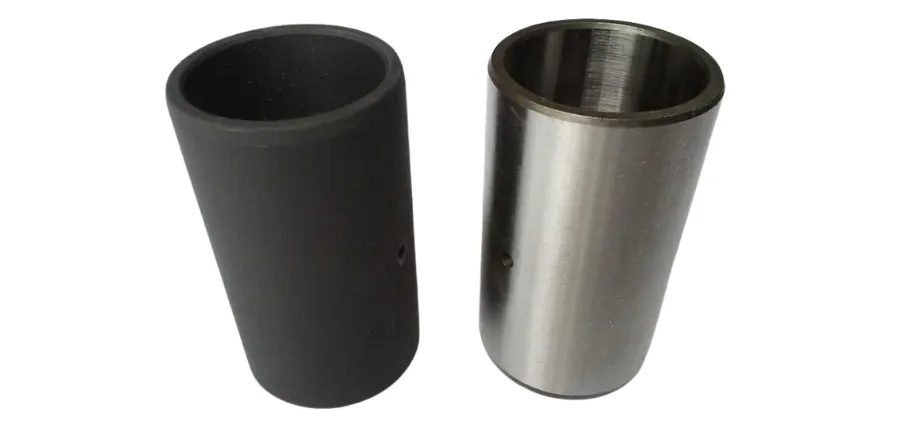
Matte vs. machined finishes
Electroplating and Electroless Plating
During both of these plating processes, a thin, highly conductive metal layer (such as nickel or chromium) is deposited onto the surface. If you use electroplating, you can perform this using an electric current. There also exist electroless plating methods that use chemical reactions if you want to proceed without using current. These platings you apply can improve wear resistance, corrosion protection, and electrical conductivity, depending on the application.
Thermal Spray Coating
This technique is widely used in aerospace to apply protective layers such as thermal barrier coatings (TBCs) over metallic bondings. You can mostly see these coatings sprayed onto turbine blades and vanes. That’s because they should act as a thermal shield against extreme temperatures. Thermal spray coatings reduce heat transfer and thereby help resist oxidation and improve wear resistance. They also indirectly help you extend component life and improve engine performance.
HVOF
HVOF means High-Velocity Oxygen Fuel. Here, the particles of the coating are fired onto the surface at very high speeds. The coatings you create with HVOF are dense and strongly bonded. You can use HVOF coatings to improve wear and corrosion resistance, especially in high-stress aerospace components.
Anodizing
Anodizing is mostly used with aluminum. With anodizing, you can build a controlled oxide layer on the surface to improve corrosion resistance. One special property of these anodized layers is that they are porous. So, they can be dyed since those pores can absorb color. So, they can be used for part identification and traceability tracking in aerospace systems.
Aerospace Superfinishing
This technique is used to achieve extremely smooth surfaces (below Ra 0.1 µm). You especially need aerospace superfinish-level smoothness in parts like bearings, gears, and hydraulic parts to reduce friction and wear and improve fatigue life.
Powder Coating and Painting
These coatings are mainly applied to protect and improve the appearance of external surfaces. You can obtain a more uniform and durable layer with powder coating or a more environmentally protective and visible coating with painting.
Cadmium Replacements and Dry Film Lubricants
Since cadmium is a heavy metal and harmful, aerospace is now moving towards safer alternatives like zinc-nickel coatings and dry film lubricants. The goal of using lubricants is to reduce friction between moving parts while also improving corrosion protection.
Hot Blackening
This is mainly used to obtain a clean, dark appearance and light protection. Hot blackening is known as black oxide coating as well. It can also provide mild corrosion resistance. This is a cost-effective process you can use in non-critical aerospace components that don’t require heavy protection.
Vibratory and Metal Vibratory Finishing
In this process, you vibrate parts with abrasive media to obtain smooth surfaces. You can use this technique to remove burrs, obtain sharp edges, and fix minor surface imperfections. It’ll give you a good surface consistency, especially in batch production.
Ultrasonic Cleaning
High-frequency sound waves transmitted within a liquid can be used to remove contaminants from surfaces. With ultrasonic cleaning, you can obtain clean surfaces that are perfectly ready for coating, bonding, or assembly. This is specifically useful for complex shapes with tiny internal features.
Passivation
Passivation is mainly used for stainless steel to remove surface impurities (like free iron). This is a chemical treatment that can improve the natural corrosion resistance of the material. It’s essential when you need clean, stable surfaces that won’t degrade over time.
Try Prolean Now!
Top Aerospace Metal Finishing Applications
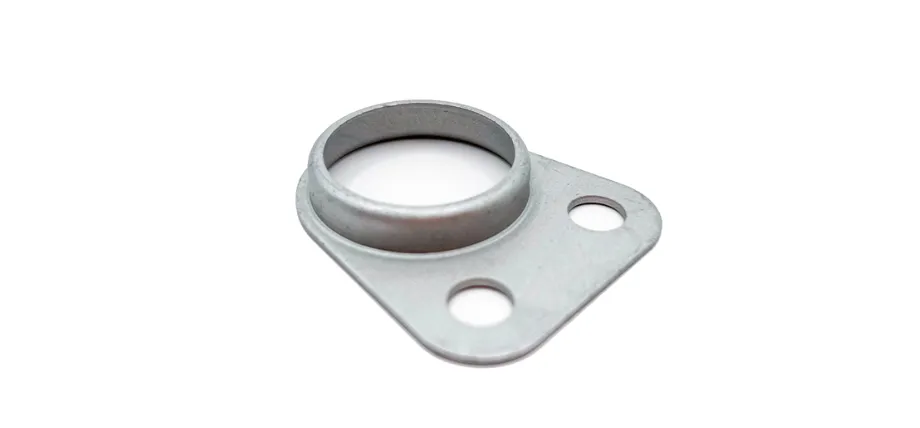
Corrosion-resistant metal flange
Corrosion Protection
Aircraft are always exposed to highly corrosive environments during operation. They experience rapid changes in humidity, salt level, pressure, and temperature. Therefore, one of the main goals of surface finishing in the aerospace industry is to improve corrosion resistance. You can achieve this with an appropriate technique from the options, such as anodizing, plating, passivation, and coatings.
Pre-Braze Surface Preparation
Another requirement is to prepare parts for joining processes like brazing. Surfaces must be free from oxides and contaminants to form a perfect assembly with strong bonding.
Component Life Extension
With proper surface finishing, you can reduce wear, fatigue, and stress concentration points. This will protect your parts from cracks, early failure, and erosion, providing a maximum lifespan with excellent performance.
Surface Enhancement for Performance
Surface treatments can directly improve internal and external performance. You can improve the efficiency of internal parts by reducing wear, corrosion, and fatigue. Also, by applying proper finishes, you can obtain better aerodynamic behavior from the parts that get exposed to the environment.
Aerospace Surface Finish and Treatment Specifications
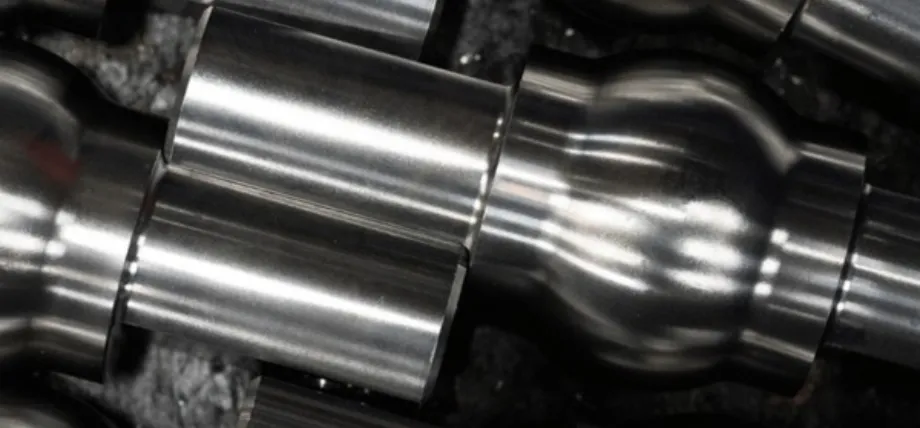
Polished industrial metal components
In the aircraft industry, one small failure can cause disasters, including loss of life and significant financial losses. Therefore, in aerospace engineering, there are strict, measurable specifications for machining, surface finish, and assemblies. These are implemented to guarantee safety and avoid unexpected failures during operation.
Ra Values and Surface Roughness Requirements
Ra (average roughness) is the indicator of surface roughness in standard specification sheets. There are different roughness requirements for different aircraft parts, depending on their uses:
- Precision components like bearings and gears need a high level of smoothness of Ra < 0.2 µm (most of these finishes go into the superfinish category)
- Structural parts also need higher smoothness levels of Ra = 1.6 – 3.2 µm
- General machined parts need Ra = 3.2 – 6.3 µm
Waviness and Lay Pattern Specifications
In addition to roughness, waviness and lay pattern are also two important specifications you must consider in aerospace parts. Waviness refers to large-scale surface deviations, and lay pattern refers to the direction of surface texture.
These features are highly critical in certain conditions and must meet strict regulatory compliance. For example, the airflow over turbine blades is controlled by their lay pattern. Also, for surfaces that should be sealed properly, waviness should be minimal. Because of these tight requirements, surface finishing services maintain these features according to ISO/ASME standards.
Try Prolean Now!
Benefits of Aerospace Metal Finishing and Surface Treatments
With the right aerospace surface machining surface finish process, you can obtain many direct and indirect advantages, including improvements in functional properties as well. Some of the highly beneficial property improvements are:
- Improved corrosion resistance for a longer service life and good appearance throughout
- Improved fatigue strength for fewer unexpected and early failures of parts
- Reduced friction and wear for higher efficiency and smooth functioning
- Better coating adhesion for stronger bonding and durability under harsh conditions
- Compliance with aerospace regulatory standards
- Improved reliability, trust, and safety in extreme environments
Need Reliable Aerospace Surface Finishing Services?
Whether you need anodizing, passivation, thermal spray coating, aerospace superfinishing, or precision surface treatments, our team delivers high-quality finishing solutions that meet strict aerospace standards. We help improve corrosion resistance, wear performance, fatigue life, and coating adhesion for critical aerospace components.
Contact us today to discuss your aerospace surface finishing requirements and get a custom solution for your project.
FAQs
What is the difference between aerospace surface treatments and surface finishing?
Surface finishing is a broad process. It includes all the techniques used to modify a surface (including polishing, grinding, and coating). Surface treatments are the specific chemical or physical changes performed to the surface layer/
What aerospace metal finishing process is most commonly used?
It depends on the specific category of aircraft, but anodizing is known as one of the most commonly used processes, especially for aluminum components.
What is an aerospace superfinish, and when is it required?
It is an ultra-precision finishing process. With superfinishing, you can get extremely smooth surfaces with Ra < 0.1 µm. You’ll need this level of smoothness, especially in high-performance components like bearings, gears, and hydraulic systems.
0 Comments