
Materials · Brass
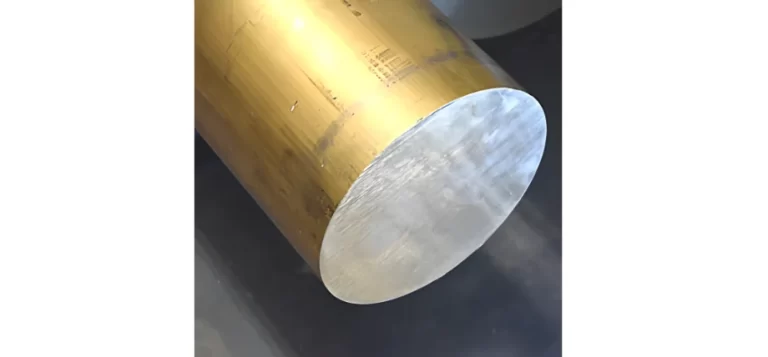
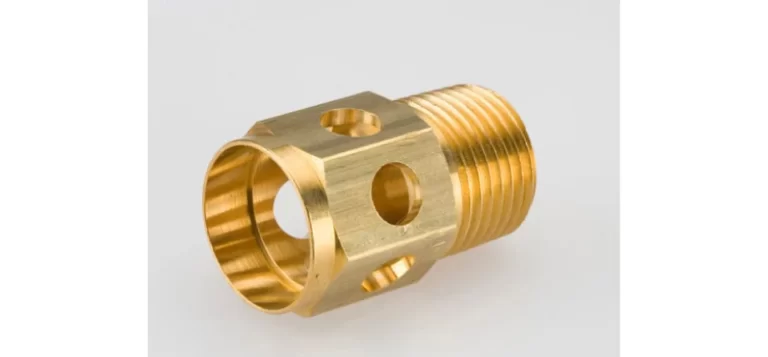
Brass CNC Machining Service
Free-cutting, red and commercial-bronze grades machined to your drawing — 3 copper-zinc grades published here, from C360 free-cutting through C230 and C220.
Specifications
What we hold on brass
Six numbers a buyer asks for before sending a drawing — the process, the
tolerance we hold, the minimum wall, the largest envelope, the lead time and the price band.
identical on all 23 material pages — they describe the shop, not the material. Tolerance,
minimum wall and price band are the three that change from one material to the next.
Grade guide
The 3 brass grades on this page
Family for each published grade, read off the UNS designation itself, so nothing here can drift out of date. None of the three hardens by heat treatment — they are single-phase copper-zinc alloys, worked and annealed.
Grade matrix · sourced from the published brass list on this page
| Grade | AISI / UNS | Family | Heat treatment | Where it usually fits |
|---|---|---|---|---|
| Brass (C360) | UNS C36000 | Free-cutting brass (Cu-Zn-Pb) | Not hardenable — stress relief only | Screw-machine parts: fittings, connectors, bushes, valve bodies |
| Brass (C230) | UNS C23000 | Red brass (Cu-Zn, 15% Zn) | Not hardenable — stress relief / anneal | Plumbing and heating tube, architectural trim, hardware |
| Brass (C220) | UNS C22000 | Commercial bronze (Cu-Zn, 10% Zn) | Not hardenable — stress relief / anneal | Hinges, fasteners, decorative and architectural hardware |
density. They move with temper — the same C220 is roughly twice as strong half-hard
as it is annealed — so one figure per grade would mislead. Ask for the datasheet in
your temper, or state the temper on the drawing and we machine and confirm to it.
because that is what makes it machine fast and clean. It is the right grade for a
fitting or a bushing and the wrong one for anything that touches drinking water, food
or long-term skin contact. Say what the part touches on the drawing and the grade is
confirmed before the first cut rather than after.
Which grade?
Four questions, then a grade
Each answer points at a page on this site that covers it in more depth — a
comparison, a grade guide or a process page.
Machining & tolerance
What governs the part you get
The published tolerance on this page is Not lower than ±0.125mm (±0.005″)
on the drawing, to ISO 2768. Where a feature needs better than that, say so on the
drawing — that conversation belongs before the tool goes in, not after.
Finishes
Finishing a brass part
This is the copper-alloy set of finishes. Passivation and black oxide — the
two cards the steel pages carry — do not apply to brass, and heat
treatment is stress relief only: none of these grades hardens.
Applications
Where brass earns its cost
- Electrical & electronicConnectors, terminals, contacts and hardware
- Plumbing & heatingFittings, valves, taps and tube for water and gas service
- Automotive & defenceFittings, bushes and machined hardware
- Architecture & hardwareVisible trim, fasteners, hinges and decorative parts
All of it cut on the same floor —
see CNC machining and
how we hold tolerance.
Further reading
Six pages worth reading before you pick
Deeper reading from around this site — the comparisons, the standards and the
process notes behind this material.
FAQ
7 questions brass buyers actually ask
Straight answers to the questions that come up most often on a CNC quote —
with the figures published for this material, and a link for each point.
Which brass grades can you machine?
What tolerance can you hold?
What is the smallest wall and the largest part?
How fast is a brass part?
Can you heat treat brass?
What files should I send?
Is my drawing kept confidential?
Next step
Send the drawing — we come back with a grade and a price
Upload the model and the 2D PDF. You get a manufacturability note, a grade recommendation if the drawing leaves it open, and a price.
All uploads are secure and confidential.
- Quoted in 1 business day on a clean drawing
- Grade and heat-treat condition confirmed in writing
- First article inspected before the run