
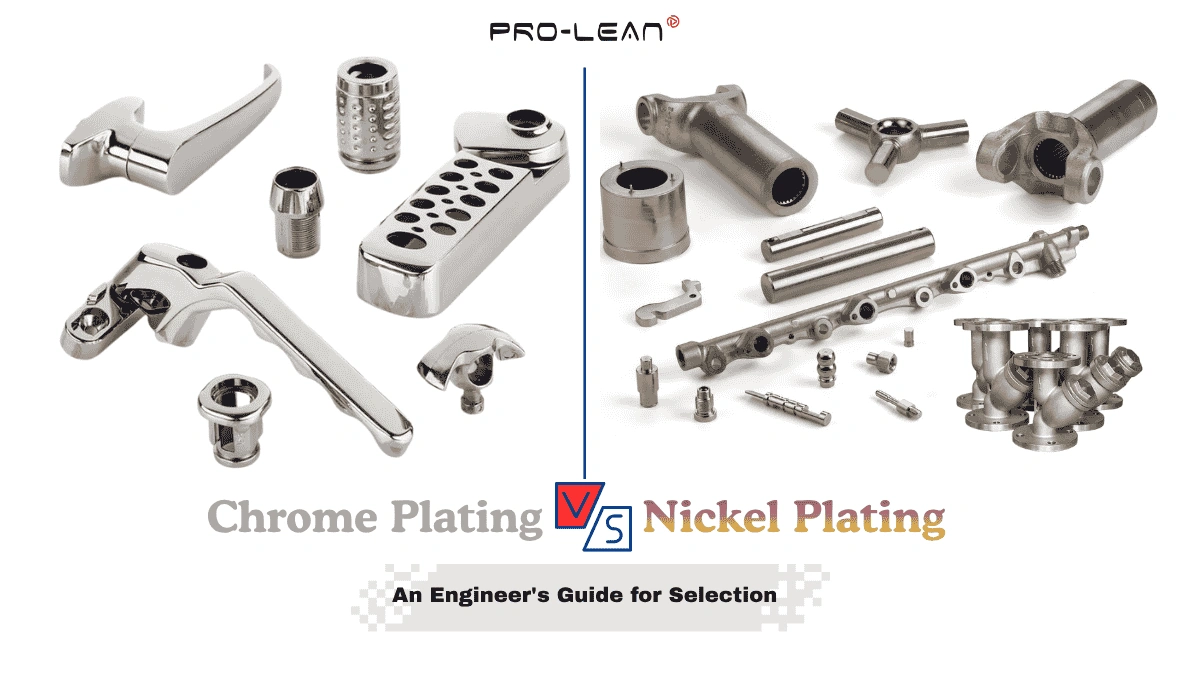
 Chrome plating vs nickel plating
Nickel electroplating gives high corrosion resistance and a decorative appearance, whereas chrome plating increases the hardness and provides a bright, mirror-like finish. Electroless nickel plating forms a dense layer and makes the surface harder than electroplating, but not as hard as chrome without heat treatment. If you need both high corrosion protection and wear resistance, a Nickel-chrome plating can be applied.
Are you struggling to decide between chrome vs nickel plating, which one provides the best protection and finish to your parts? Choosing the right type of plating not only ensures desired corrosion-resistance and aesthetic, but it also directly impacts parts’ performance & durability.
ProleanTech has extensive experience working on metal plating projects, including nickel, chrome, zinc, gold, and other plating techniques. We have assisted hundreds of companies to choose right plating technique and have supplied finished parts for them.
This article will present a comparative overview of chrome and nickel plating.
What is Chrome Plating?
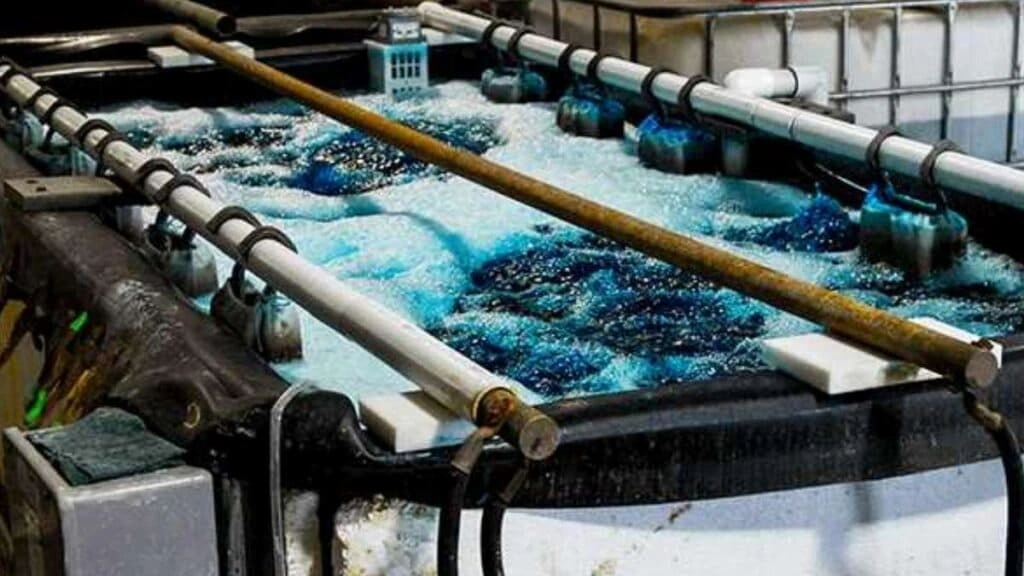
Industrial chrome plating
Chrome plating is a type of Plating finish that involves electrochemical deposition of chromium metal on the surface of manufactured parts. This can be used on steel, aluminum, brass, copper, and other substrates.
Chrome plating enhances surface hardness, wear & abrasion resistance, reduces coefficient of friction, and improves parts performance & durability.
Based on the coating thickness, there are two types of chrome plating: Decorative and Hard Chrome Plating.
| Aspect | Decorative Chrome Plating | Hard Chrome Plating |
| Thickness | 0.1 to 1 µm (4 to 40 µ inches) | 5 to 500 µm (~ 0.0002 to 0.02 inches) |
| Appearance | Reflective, mirror-like finish | Engineered for performance |
| Applications | Motorcycle muffler, car trim, door handles, bathroom fixtures | Piston rods, hydraulic cylinders, dies, and pump parts. |
What is Nickel Plating?
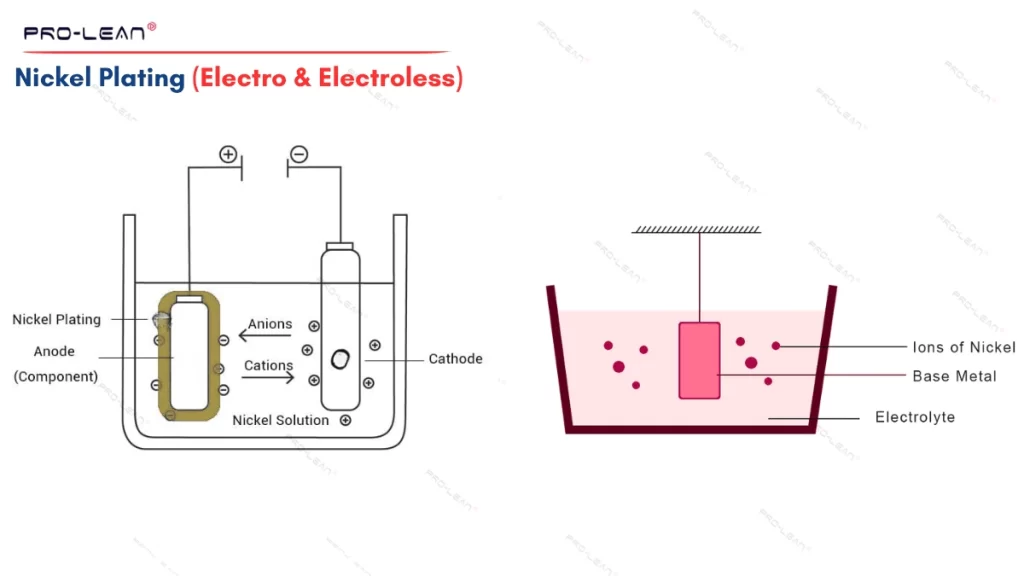
Nickel plating processes
Nickel plating is a surface finishing process that coats a thin layer of nickel through electrochemical deposition or chemical reduction(electroless). No matter which method, nickel plating provides corrosion resistance, wear resistance, and aesthetic appearance.
Nickel plating can be applied toon cast iron, steels, stainless steels, copper, and other metals. The electro-less nickel coating process is also compatible with non-metallic substrates.
Based on how the nickel layer is coated, there are two types of Nickel Plating: Nickel Electroplating and Electroless Nickel Plating.
| Feature | Nickel Electroplating | Electroless Nickel Plating |
| Thickness | 3 to 500 µm( 5-10 µm for Decorative, 15-30 µm for corrosion, and 50 µm +for industrial coating) | More uniform, up to 150 µm |
| Appearance | Shiny decorative; can be polished | Function than decorative |
| Applications | Interior trims, electrical connectors, architectural parts, decorative items. | Valve, pumps, general hardware, aerospace parts, and EV components. |
Try Prolean Now!
Chrome Plating Vs Nickel Plating: A Quick Comparison Table
| Aspect | Chrome Electroplating | Nickel Electroplating |
| Thickness | Thin coating | Thicker, main protective coating layer |
| Appearance | Bluish-white, bright mirror finish | Yellowish/silvery, softer glow finish |
| Corrosion Resistance | Good; suitable for indoor use | Excellent; superior in marine conditions |
| Hardness | Very high (HRC 65–72) | Moderate (HRC 10–45). It can be increased with heat treatments. |
| Wear Resistance | Excellent for high-friction surfaces | Good |
| Durability | Extremely durable in abrasive conditions | Good and reducedl in high-wear conditions. |
| Dimensional Stability | Less precise | High precision and uniform deposition |
| Thermal Stability | Stable up to ~650°C | Stable up to ~400°C |
| Ease of Repairing | Difficult to repair or recoat | Easier to strip and recoat |
| Cost | Lower TCO for parts used in a high-friction environment. | Lower TCO for corrosive environment |
| Applications | Pistons, molds, shafts, high-wear parts | Marine parts, corrosion protection uses |
Chrome vs Nickel Electroplating: Process Comparison
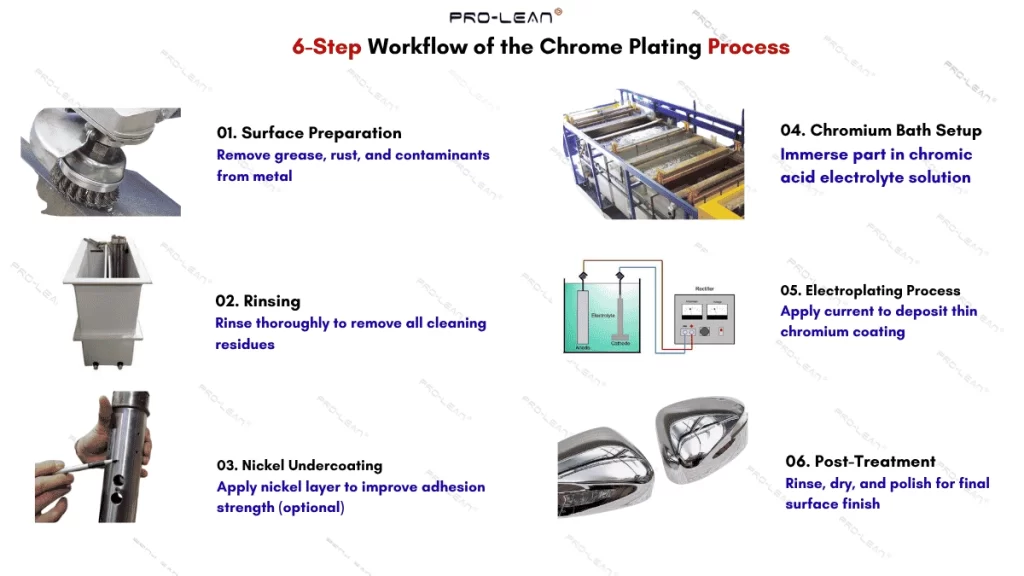
Chrome plating workflow
Both chrome and Nickel plating processes follow the electrolysis process; the difference lies in the electrolytic solution(bath), anode type, and process parameters.
Process control influences deposition rate, coating uniformity, plating speed, and overall quality. Therefore, they must be chosen carefully.
ASTM B650 Standard specifies requirements for electrodeposited (hard) chromium coatings, defining coating thickness, hardness, and performance testing. On the other hand, ISO 4527 defines requirements for electroless nickel-phosphorus alloy coatings based on phosphorus content and heat treatment conditions.
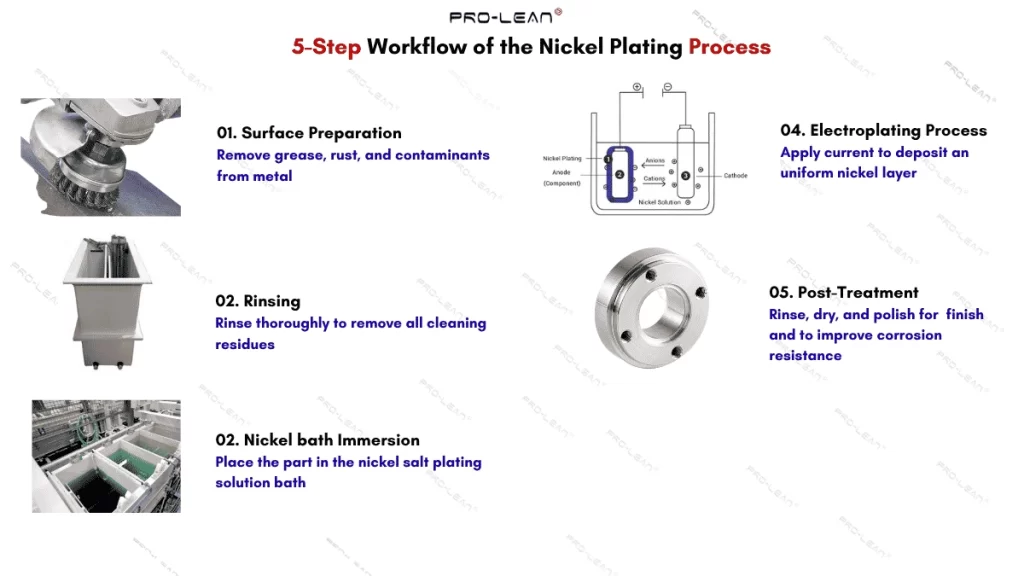
Nickel Plating workflow
Next, the table below compares the chrome and nickel coating processes.
| Process Parameters | Decorative Chrome | Hard Chrome | Nickel Electroplating |
|---|---|---|---|
| Anode/Cathode | Lead Alloy/Substrate | Lead Alloy/Substrate | Souluble Nickel AnodeMetal |
| Electrolyte/Bath | CrO₃–H₂SO₄ | CrO₃–H₂SO₄ | Combination of NiSO₄, NiCl₂, and boric acid |
| Temperature(°C) | 45–55 | 50–65 | 45-65 |
| Current Density(A/dm²) | 10–40 | 20-60 | 2-10 |
| Coating Rate(µm/min) | 0.25–1 | 0.5 to 5 | 0.3 to 0.8 |
Chrome Plating vs Nickel Plating: Which is More Corrosion Resistant?
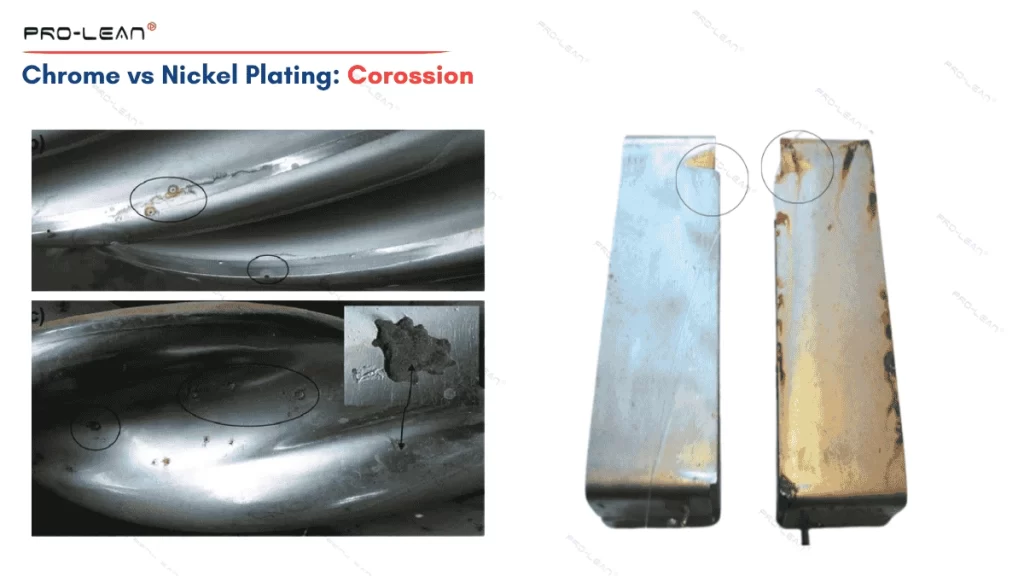
Corrossion in nickel vs chrome plating
Both nickel and chrome offer corrosion resistance, but Nickel is superior. Therefore, nickel plating is used when the primary purpose is corrosion protection.
The corrosion resistance of nickel & chrome plating also depends on the part’s function and the application environment. For instance, chrome delivers the level of resistance required for indoor applications, but it may not be sufficient for marine environments.
Comparing corrosion appearance, the corroded chrome-plated surface shows pitting & micro-cracks, whereas nickel-plated surfaces develop a slightly yellow or silvery stain as corrosion begins.
Next, let’s compare the corrosion resistance of Nickel- Plated vs Chrome- Plated parts under different environments.
| Environment | Nickel Plating | Chrome Plating |
| Indoor | Excellent | Excellent |
| Humid/Moisture | High | Good |
| Saltwater | High (combined with chrome) | Low |
| Marine | Excellent | Good |
| Elevated Temperatures | Excellent | Good |
ASTM B117 Salt Spray Testing for Corrosion Resistance
At ProleanMFG, we perform the ASTM B117 salt spray test to assess corrosion resistance and ensure that the plated parts meet the desired performance requirements. In this testing, plated part samples are exposed to ~5% saltwater fog for 24 to 100+ hours.
Additionally, we use a nickel-chrome coating for highly corrosive environments (such as marine & saltwater), which outperforms both chrome and nickel plating.
Try Prolean Now!
Chrome Plating vs Nickel Plating: Finish & Color Variations
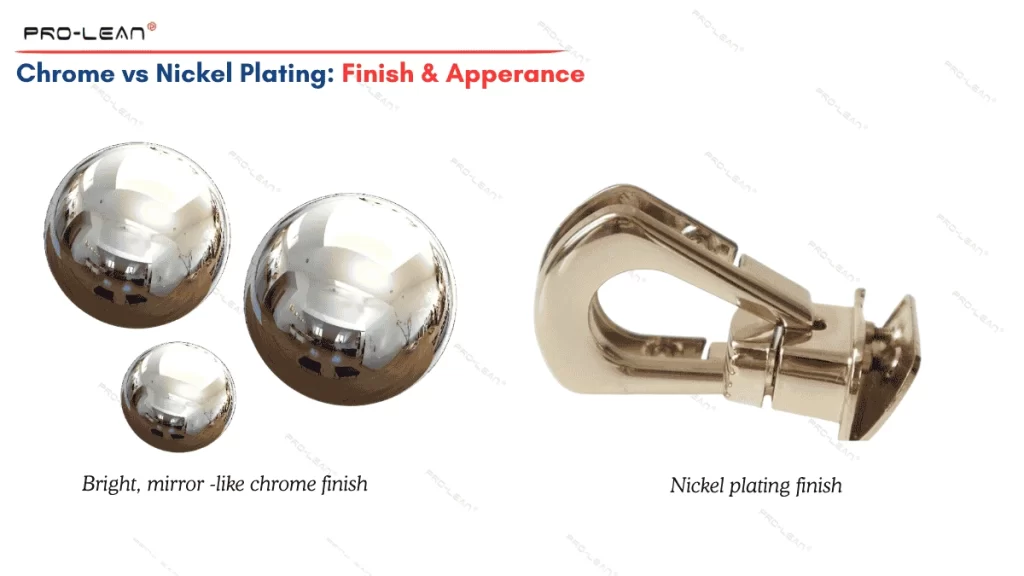
Chrome vs nickel plating finish
The main difference between chrome and polished nickel is that chrome has a slightly bluish white appearance and can be plated on diverse substrates with a bright & reflective mirror finish. On the other hand, nickel provides a yellowish or silvery appearance.
In functional hard chrome plating, you need to polish the surface to achieve the reflective finish. Additionally, you can also polish Nickel-plated surfaces for a rich glow.
The table below compares the appearance of chrome plating vs nickel plating.
| Criteria | Chrome Plating | Nickel Plating |
| Appearance | Slightly bluish white | yellowish or silvery |
| Finish Quality | Bright and Reflective | Bright, matte, black, and stain. |
| True-mirror Finish | Yes | Yes, but soft glow |
| Color Retention | Excellent | Moderate to High |
| Touch/Feel | Hard and Slippery | Soft buttery tactile |
Chrome Plating vs Nickel Plating: Cost Comparison
Nickel electroplating costs less than chrome plating per square foot. It is because of higher process complexity, chrome metal cost, higher equipment cost, and manpower requirement. Chrome is expensive, even if you compare electroless nickel vs hard chrome plating. Only some Heat-treated components with electroless nickel coating exceed the chrome plating cost.
However, the cost-effectiveness depends on your project requirements and targeted durability. For instance, nickel plating machined parts for marine applications can be costlier than chrome plating throughout the lifecycle, as it lowers the durability and demands frequent coating replacement.
Let’s break down and compare chrome plating vs nickel plating cost.
| Cost Factors | Chrome Plating | Nickel Plating |
| Per sq. ft. price | ~ $15 to 100+, vary on thickness | $ 1.5 to $5 |
| Metal Cost | High | Low |
| Equipment Cost | High | Moderate |
| Labor Cost | High, labor-intensive | Low |
| Maintenance Cost | High | Moderate |
Is Nickel Plating Cheaper than Chrome Plating?
The nickel plating services are cheaper than chrome, whether you compare per-component or per SQ.ft plating prices. This is because the nickel plating is less complex and faster than chrome plating. On the other hand, the chrome plating process has higher environmental hazards, involves more stages, consumes high energy, and requires skilled operators.
Furthermore, the exact cost of nickel and chrome plating depends on factors like part size, complex part geometries, material type, finishing quality, and production volume.
Nickel Plated vs Chrome Plated Parts: Hardness and Wear Resistance
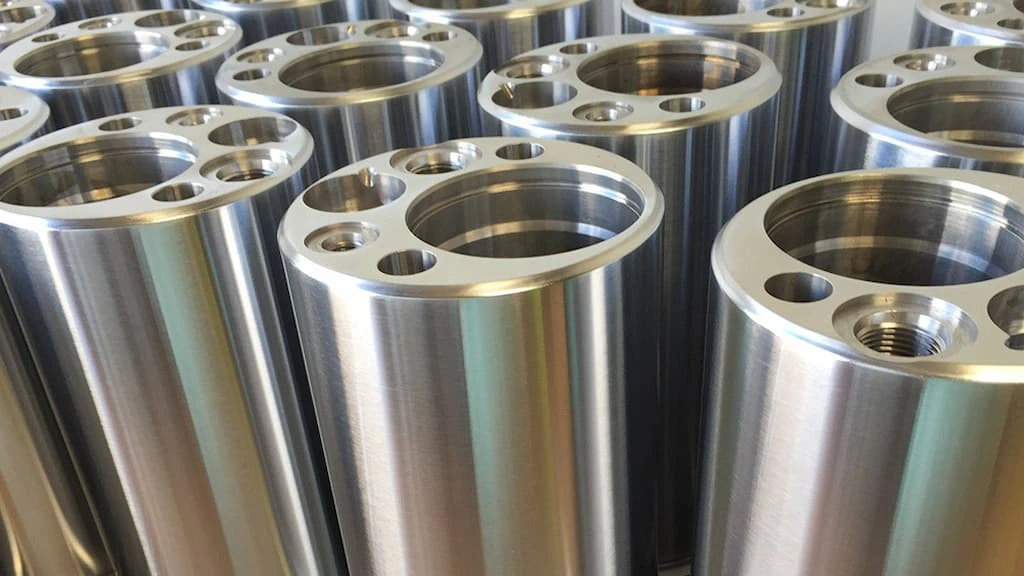
Functional hard chrome plating
Hard chrome plating provides superior wear resistance compared to decorative chrome, electroless nickel, and nickel electroplating. Meanwhile, heat-treated nickel plating also provides high wear resistance.
Chrome also provides higher wear resistance while comparing Electroless Nickel and Hard Chrome. For electroless nickel, hardness is 45 to 55 HRC, but it is up to 72 HRC in the case of hard chrome plating.
You must consider the application scenario to decide whether nickel is sufficient to withstand the environment. Only choose Chrome if parts will be used in high-abrasive or high-friction conditions.
Let’s look at the hardness comparison of chrome plating vs nickel plating.
| Hardness | Hard Chrome | Nickel Electroplating | Electroless Nickel Plating |
| Rockwell C (HRC) | 65 to 72 | 10 to 45 | 45 to 55 / up to ~ 70 after heat treatment |
Due to its higher wear resistance, functional hard chrome plating is ideal for finishing sliding and rotating parts, as well as those exposed to abrasive conditions. For instance, function coatings for pistons, molds, dies, bearing shafts, and crankshafts.
Nickel Plated vs Chrome Plated Parts: Precision & Dimensional Stability
Nickel plating machined parts helps to maintain their precision due to strict thickness control and uniform deposition. On the other hand, chrome-plated parts can be precise, but their tolerances are not as tight as those of electroless nickel plating.
However, plating precision is significantly influenced by the finish and tolerances of substrates. If you are nickel plating machined parts with rougher surfaces, finishing precision can be relatively low.
Another key factor is surface preparation. If the parts are not grind properly, the surface contains dirt & oils, or has chemical residue, it impacts tolerances.
How to Ensure Plating Precision?
- Derburring, grinding, and chemical cleaning of workpieces.
- Pre-plating considerations, i.e., deduction of coating thickness
- Grinding of the hard chrome-plated surface to the exact dimensions.
Chrome Plating vs Nickel Plating: Which Performs Better at Elevated Temperatures?
Chrome plating provides higher thermal stability than nickel. It loses hardness and starts to oxidize only above ~500°C. Meanwhile, hard chrome can perform up to ~650°C. On the other hand, Nickel plating tarnishes above ~ 400°C,
Therefore, chrome plating is preferred for applications that require withstanding elevated temperatures, such as exhaust system parts, engine parts, and firearm barrels.
Let’s compare how nickel- plated vs chrome- plated parts respond at elevated temperature.
| Aspect | Chrome Plating | Nickel Plating |
| Melting Point | ~1900 °C | ~1455 °C |
| Thermal Stability | Up to 650°C | Up to 400°C |
| Discoloration | Retains appearance | Discolors at high temperatures. |
| Strength & Hardness Retention | High | Moderate |
| Resistance Against Thermal Cycling | High | Low |
Nickel Plated vs Chrome Plated Parts: Ease of Repair & Recoating
Nickel plating is easier to tear down and recoat, but localized repairs are relatively expensive. On the other hand, chrome plating is difficult to repair after damage and to reapply the coating. Consequently, comparing the difference between chrome and polished nickel, polished nickel is easier to repair & recoat.
For recoating with zinc or nickel, you must strip the existing layer and prepare the surface by grinding, chemical cleaning, and other techniques. Often, a small layer of substrate also needs to be removed.
Chrome Plating vs Nickel Plating: Problems and Their Solutions
Chrome and nickel plating can exhibit weak adhesion, pitting, microcracks, and discoloration. Subsequently, each one also has unique problems. These problems can be solved by thoroughly cleaning the surface, using the appropriate current density, and accounting for specific process factors.
Chrome Plating Problems & Solutions
- Wear Adhesion
Solution: Clean the substrates to remove surface contamination, then set the correct current density.
- Surface Pitting
Solution: Remove pores from the substrate surface, avoid contamination, and reduce the deposition rate.
- Poor Color Appearance (Dull Deposit)
Solution: Maintain the correct ratio of chromic acid and sulfuric acid in the plating bath and adjust the bath temperature.
- Sharp Edges
Solution: Round all edges to about 10% of the material thickness, or keep them under 0.127 mm (0.005”).
- Burned Chrome Deposition
Solution: This is mainly caused by high current density, so reduce it to an optimal level.
Nickel Plating Problems & Solutions
- Peeling Issue
Solution: Coat a thin film of copper before Nickel and ensure continuous current flow.
- Surface Pitting
Solution: Remove entrapments of hydrogen bubbles in the nickel plating bath, add wetting agents, and periodically filter the bath.
- Brittleness and Cracks
Solution: Maintain an appropriate concentration of boric acid and pH in the plating solution, reduce the current density, and treat organic contaminants to activate carbon.
- Dullness & Discoloration
Solution: You must remove any metallic contaminants, primarily copper, zinc, lead, etc.
Try Prolean Now!
Chrome Plating vs Nickel Plating: Total Cost of Ownership
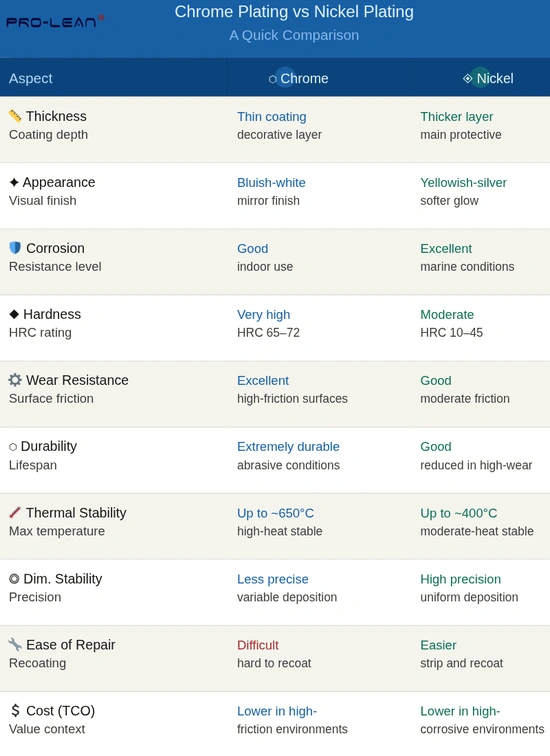
Nickel and chrome plating comparison
Total cost of ownership (TCO) provides an idea of which plating offers the best value for money over the part/product lifecycle. The TCO is lower for chrome when parts need to withstand high-friction or corrosive environments. In contrast, the TCO for Nickel is lower when the environment is corrosive, or when you have initial budget constraints.
The given table compares the TCO of Chrome and Nickel Plating.
| TOC Factors | Chrome Plating | Nickel Plating |
| Initial Cost | High | Low |
| Repair Cost | High | Low |
| Downtime/Replacement | Low | High |
| Environmental Cost | Low | High for electroless |
| Durability | Extremly durable | Good |
What Are the Factors to Consider while Choosing between Chrome and Nickel Plating?
End use of components, desired performance parameters, substrate material type, application environment, and cost-effectiveness are the key factors to consider while choosing between chrome and nickel plating.
End Use of Components
Consider the function of the components that you are going to plate. For instance, will it be used as a decorative item, a load-bearing component, sliding/rotating motion parts, etc.?
Desired Performance Parameter
Next, consider performance parameters such as hardness, strength, and corrosion resistance. Chrome or electroless nickel are good options for high-performance components.
Substrate Material
The substrate material type influences the metallic bonding of the coating material. Some materials are highly compatible with Nickel, and some are with chrome.
Application Environment
Consider the application environment, such as moisture, chemical exposure, saltwater, marine, etc.
Cost-effectiveness
Chrome plating is more expensive than Nickel, but its lifecycle cost-effectiveness matters. Therefore, consider the total cost of ownership rather than simply comparing per-part plating costs.
What is the Difference between Chrome and Polished Nickel?
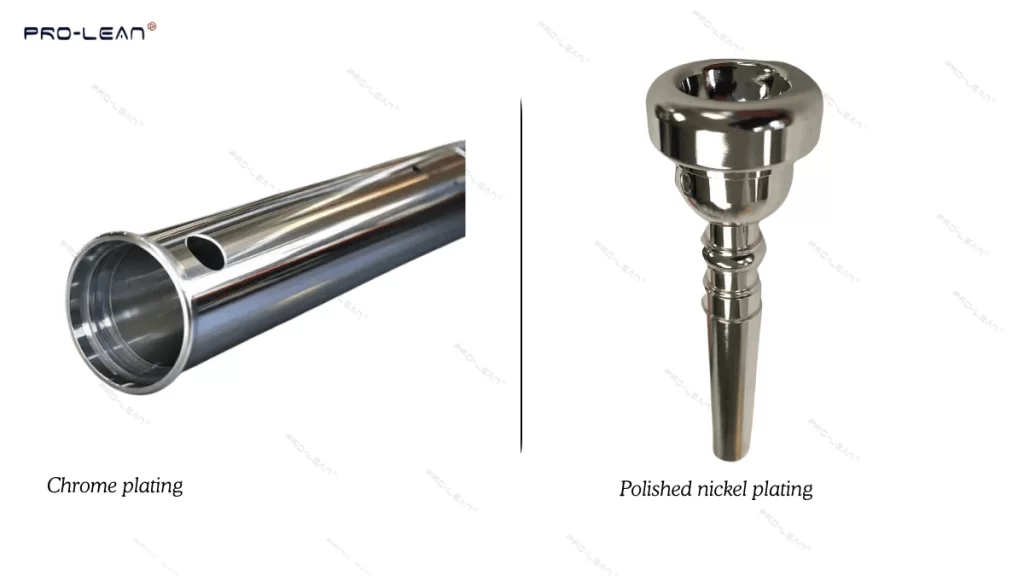
Chrome vs polished nickel finish
Chrome has a bright, mirror-like finish with blue-tinted hues, while polished Nickel offers a yellowish undertone with a luxurious feel. Simply, you can differentiate Chrome as brighter and more modern finish, and nickel as softer & more vintage.
Next, let’s further compare other difference between chrome and polished nickel.
Durability→ Chrome is more durable. Polished nickel is more prone to abrasion.
Repairability→ Polished Nickel is easier to repair than chrome.
Heat-resistance→ Chrome provides higher heat resistance.
Cost→ Polished Nickel is more cost-effective than chrome.
Chrome Plating vs Nickel Plating: Deciding Based on Substrate
You can decide between chrome and nickel plating, based on the type of substrate material. Chrome is easier to coat on tool steel, steel, stainless steel, and copper. On the other hand, Nickel is highly compatible with aluminum alloys, cast iron, and brass.
Some of the substrates are compatible with both types of plating, and you need to choose based on the desired finish.
| Substrate Material | Chrome Plating | Nickel Plating | Which is Better? |
| Steel | Good with nickel undercoat | Excellent | Nickel or Nickel + Chrome |
| Aluminum | Difficult | Good | Nickel |
| Brass | Excellent | Excellent | Both are favourable based on the desired finish |
| Copper | Excellent | Excellent | Based on the desired finish |
| Stainless Steel | Good wth proper surface activation | Good wth proper surface activation | Based on the desired finish |
| Cast Iron | Good | Excellent | Nickel |
| Titanium | Good with special activation | Good with special activation | Nickel is slightly better |
| Tool Steel | Excellent | Good | Chrome |
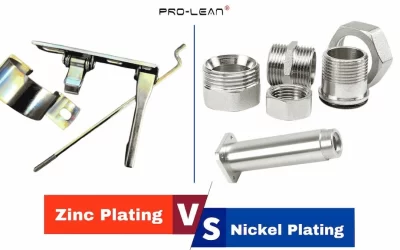
Chrome vs Zinc vs Nickel Plating: Which One Protects Parts for Longer?
Although the durability of the coating depends on the application environment, the electroless nickel coating process generally protects substrates for a longer period than chrome & zinc. However, when it comes to high wear conditions, chrome plating outperforms the other two.
Consequently, zinc plating can protect parts long enough when applied to indoor components. Another difference is that zinc plating creates a sacrificial layer, whereas plated chrome and nickel are passive barriers.
How Long does Chrome Plating Last?
For heavy-duty applications, hard chrome is recommended, and it can last up to 10 years. For example, hydraulic cylinders, mechanical gears, and shafts.
For components like chrome-plated rollers, the plating layer requires maintenance within a few years if they are subjected to high load, speed, rotation, and corrosive environments.
How Long does Nickel Plating Last?
Nickel plating can last 5–10 years, depending on the environment and application, commonly used for fasteners, fittings, valves, and decorative items. It is recommended for applications requiring good corrosion resistance and moderate wear conditions.
Often, nickel is combined with chromium plating for marine, offshore, and high-wear applications to enhance the durability of underlying components.
Electroless Nickel vs Hard Chrome: Which is Better for Wear Resistance?
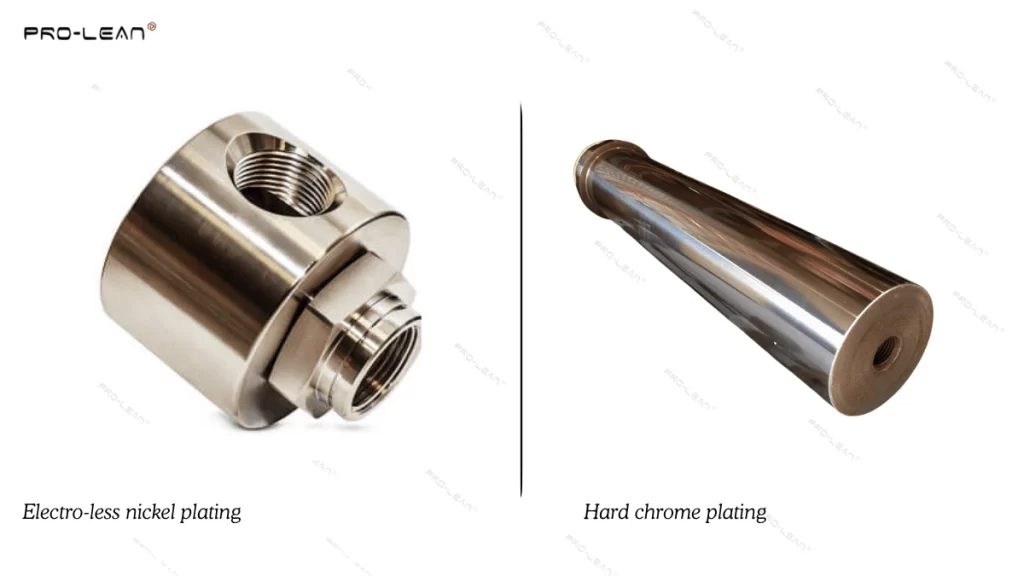
Electroless nickel vs hard chrome plating
Chrome provides better wear resistance than electroless nickel plating. The hardness of functional hard chrome plating can reach ~1200 HV or ~75 Rockwell C. On the other hand, the typical hardness range of the electroless nickel layer is ~45 to 60 HRC(before heat treatment).
Choose hard chrome if your parts need plating for high wear resistance in environments, such as high friction and heavy loads. You can also plate a nickel layer underneath for both wear and corrosion protection.
Furthermore, ASTM B733 specifies the hardness levels of electroless nickel coatings after heat treatment.
Why Our Nickel Plating Services Stand Out?
Our Nickel plating services stand out as we ensure an economical plating solution that meets desired performance, regardless of whether they are high-wear parts or parts for humid conditions.
Are you looking for a reliable manufacturer who can supply finished custom parts with nickel plating and other types of surface coatings? ProleanTech can provide durability, precision, and a flawless finish. Additionally, you get flexibility in substrate materials, part complexity, and production volume.
Our nickel plating services stand out due to;
☑ Comprehensive design and material selection support
☑ Availability of multiple texture options, such as Clear, matte, and black
☑ Standard and custom thicknesses for the coating layer
☑ Customization and strict quality control
☑ Quick turnaround and cost-effective solutions
Try Prolean Now!
Summing Up
Overall, deciding on chrome plating vs nickel plating is influenced by substrate material type, desired corrosion resistance & hardness, aesthetic requirements, and their end applications.
Choose chrome plating for applications that require low-friction surfaces, a bright, reflective finish, or use in high-wear environments. Meanwhile, opt for Nickel plating for applications in corrosion-prone environments, for parts requiring ductility, or for large-volume finishing projects.
If you are still confused about which one to choose, contact us for further information and expert assistance. Our engineer will guide you through the selection process to determine the best method of plating for your component to meet specific tolerance specifications, corrosion resistance, wear conditions, and your budget.
Our electroplating services provide tight dimensional tolerances, consistent coating quality, and quick turnaround times to help meet your production deadlines. We offer different coating thicknesses: 3μm, 8μm, 12 μm, and thick coatings as well. You get production volume flexibility, cost competitiveness, and industry-specific solutions with us.
FAQs
Is chrome or nickel plating better?
It is hard to tell exactly; Chrome is better for high wear-resistance and bright finish, whereas the nickel coating process is better for high corrosion resistance, appearance, and cost-effectiveness. The better option depends on the environment, load, and durability needs. Therefore, take an engineering review before selection.
What are the disadvantages of chrome plating?
High initial cost, process complexity, brittleness, and challenging coat repair are the disadvantages of chrome plating. But these can be controlled through proper design and optimization of process parameters.
Is nickel plating cheaper than chrome plating?
Yes, nickel plating is cheaper than chrome due to lower metal prices, a simple process, and energy efficiency. While nickel offers a lower upfront cost, the best value depends on lifecycle performance. So, consider the total cost of ownership(TCO) factor for comparative cost analysis.
How long does chrome plating last?
The durability of chrome plating depends on wear, corrosion exposure, and maintenance conditions. The functional hard chrome coating lasts above 10 years with periodic maintenance.
0 Comments