
3D printing applications
3D printing is no longer just about rapid prototyping. There is extensive 3d printing in the manufacturing industry across numerous applications, including 10 common ones highlighted in this article. 3D printing aerospace components, injection molding tooling, automotive parts, and medical implants highlight these applications.
Fundamentally, 3D printing, also called additive manufacturing, is the layer-by-layer production of physical parts from digital 3D models. Engineers choose from categories such as material extrusion, powder bed fusion, vat photopolymerization, material jetting, and binder jetting.
Businesses can benefit by identifying these 3D applications because each industry draws from one technology rather than another. If it’s material variety, FFF is a preferred technology; SLA works for applications with detailed designs; material jetting provides smooth finishes, and so forth.
Matching a 3D printing technology with an industrial application is an important business decision that can affect the smooth flow of operations and the bottom line. That’s where this guide on 3D applications comes in. Read on to learn about 10 industrial applications and the technologies they align with.
What is 3D Printing?
3D printing is the layer-by-layer building of a physical component or part from a digital 3D model. It is also referred to as “additive manufacturing” based on its additive nature.
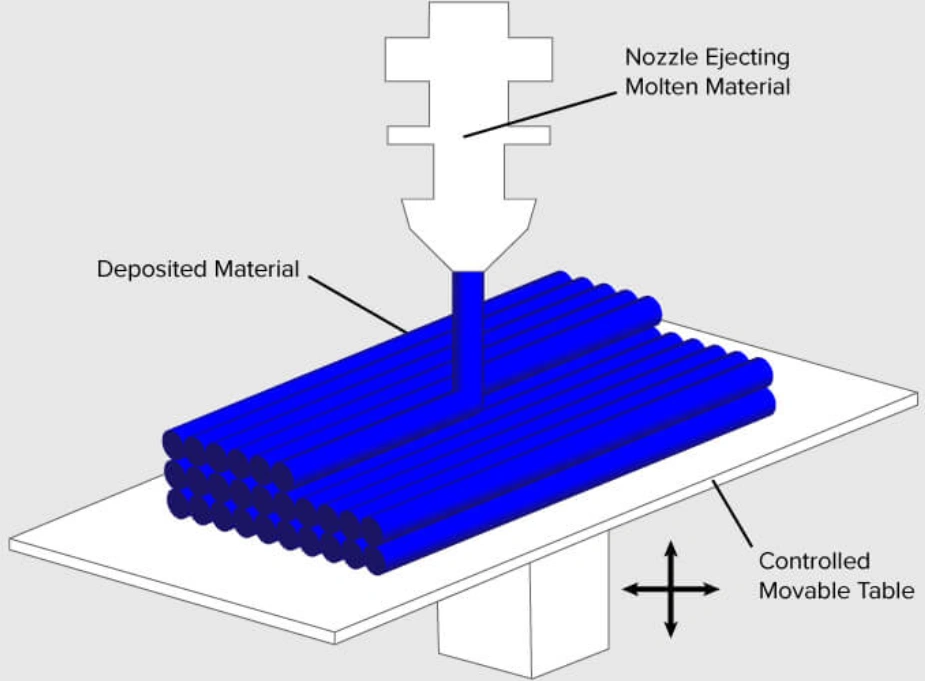
3D printing basics
While there are different types of 3D printing technologies, the most prominent one is fused deposition modeling (FDM) or fused filament fabrication (FFF). The 3D printer moves along the X, Y, and Z axes. The X axis is for the right and left movement, the Y axis moves in and out, while the Z axis produces the up and down movement. The feeding, heating, and extrusion of the filament as it settles on the build plate is enabled by various printer components. The main ones are the heater block, nozzle, extruder motor, and control board. More vocabulary and terminology of 3D printing are captured in ISO/ASTM 52900:2021(en), which covers general principles in additive manufacturing. [1]
3D Printing Tolerance and Accuracy
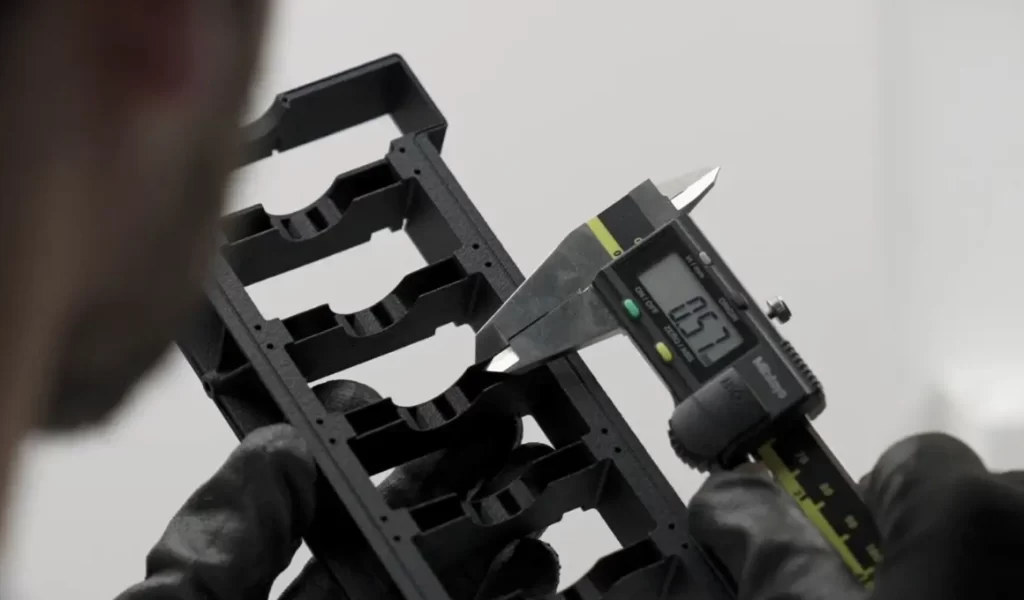
3D tolerance and accuracy
Precision is vital in 3D printed parts, especially for industries such as aerospace, healthcare, and automotive. Every printed part should match specifications and meet manufacturing standards. With cutting-edge technology and innovative strategies, precision requirements for different industries can be met.
Here is a table outlining the tolerance for common 3D printing technologies.
|
3D Printing Technology |
Standard Dimensional Tolerance |
|
SLS |
± 0.3% (± 0.3 mm) |
|
SLA |
± 0.5% (± 0.2 mm) |
|
FDM |
± 0.5% (± 0.5 mm) |
|
Carbon DLS |
± 0.1% (± 0.1 mm) |
|
DMLS |
± 0.2% (±0.1 – 0.2 mm) |
Please note: These are not fixed tolerances. Actual achievable 3D tolerance depends on material, machine capability, and post-processing.
ProleanTech offers custom 3D-printed parts and products with high precision and detail, whether for prototyping or full-scale production, achieving precise tolerances of ± 0.025 mm.
Inquire about our 3D printing service now.
Reasons 3D Printing is Popular – Benefits
3D applications have increased in popularity across industries in the recent past because of benefits such as material variety, intricate products, isotropic mechanical properties, and smooth finishes. These benefits can be optimized depending on the type of 3D printing used, as explained next.
Material Variety – Material variety in 3D printing is mostly evident with FFF (fused filament fabrication). This would be a priority technology if you are looking for more than one type of 3D-printed product. FFF is also affordable and easy to scale, so your range of project capacities can be handled.
Intricate Products – 3D printing can create intricate parts effortlessly. The SLA (stereolithography) technology has this capability. This benefit comes in handy when producing jewelry.
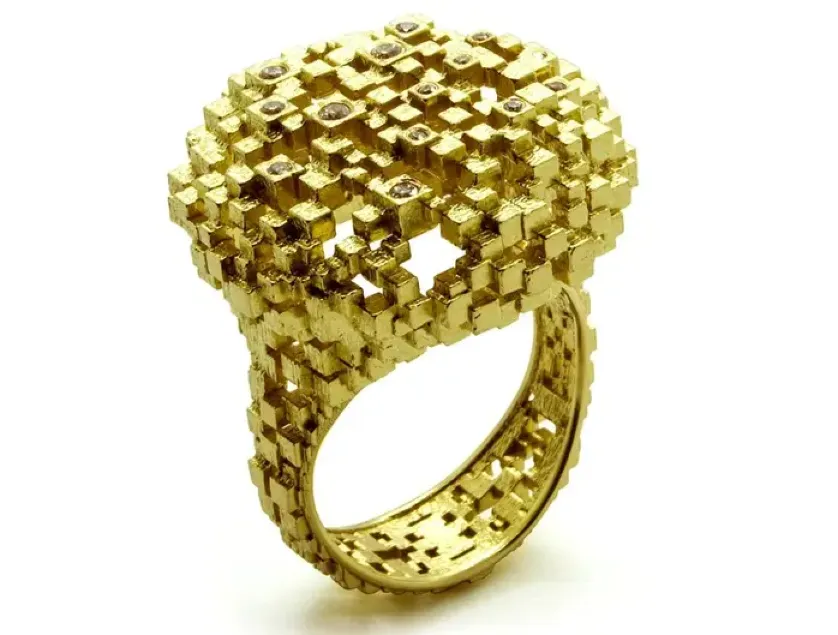
SLA 3D printed jewelry
However, it is not a given that a complex part will be easy to produce. The overall manufacturability of a part depends on the design orientation, support structures, materials, and post-processing steps.
Isotropic Mechanical Properties – High isotropic mechanical properties refer to 3D-printed parts having good mechanical properties in all directions. This benefit is mostly seen in the SLS technology.
Smooth Finishes – 3D printed parts also have smooth finishes. This is a notable property of parts printed using the material jetting method
Try Prolean Now!
10 Key 3D Printing Applications
As discussed below, the main 3D printing applications are rapid prototyping, tooling, aerospace, automotive, and industrial end-use parts. Other applications are injection mold tooling, medical/dental implants and devices, dental aligners and crowns, consumer products, and education &research.
1. Rapid Prototyping
Rapid prototyping is the quick transformation of CAD designs into physical models. 3D printing in this space allows engineers to test fit, form, and function early in the design and manufacturing process. When flaws are captured early, changes can be implemented before tooling investment has been made.
2. Tooling, Jigs, and Fixtures
The role of jigs and fixtures in ensuring accuracy and repeatability during manufacturing cannot be overstated. With 3D printing as an alternative to machining, manufacturers can produce these items faster at a lower cost. This usually makes sense for low-volume, specialized tooling.
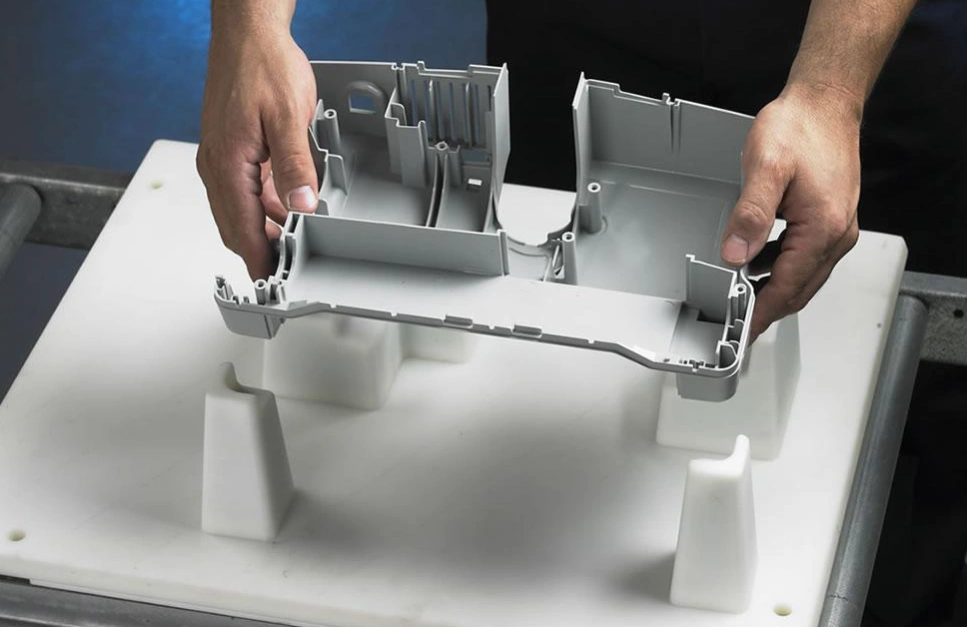
3D printed jigs and fixtures
3. Aerospace Components
Common 3D-printed aerospace parts are housings, ducting, fuel injectors, and brackets. Manufacturers use additive manufacturing for such parts to avoid the upfront tooling investment associated with injection molding.
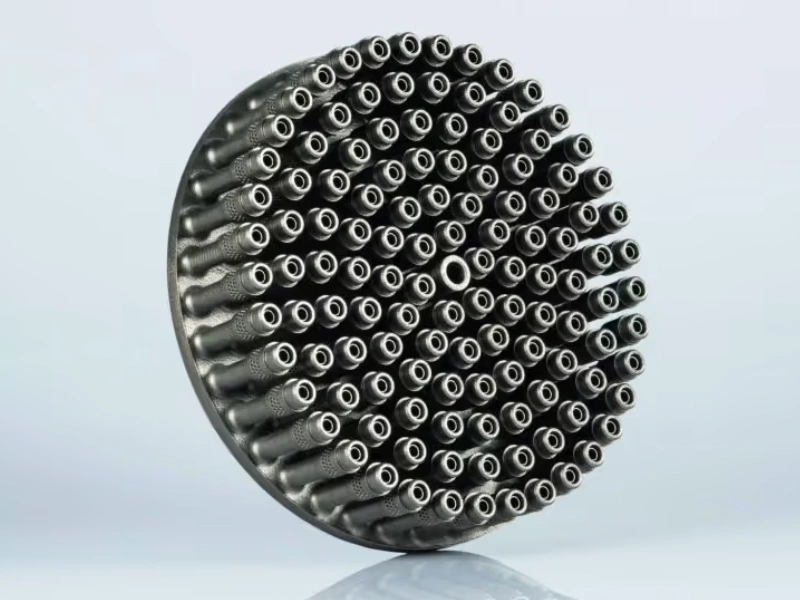
3D-printed fuel injectors for rockets
4. Automotive and Related Industry Parts
Whether for custom or replacement use, producing automotive parts can require massive upfront tooling investment. With 3D printing automotive solutions, rapid design iteration and short production runs can be executed more practically than with injection molding. Auto parts manufacturers are taking advantage of this capability to make more business sense.
For instance, making complex 3d printed motorcycle parts can be completed within hours. The exact production time depends on part size, material, printing technology, and post-processing requirements.
5. Industrial End-Use Parts
Unlike prototypes, end-use parts are used directly and practically in machines and equipment. When these parts are complex and required in relatively low volumes, it makes more economic sense to use additive manufacturing than conventional methods.
6. Medical/Dental Implants and Devices
Prosthetics, implants, and other patient-related devices must be designed and manufactured to match requirements accurately. The dimensional accuracy of 3D printing provides custom, safe solutions that meet patient safety requirements. Common, off-the-shelf medical devices may not provide the same level of service.
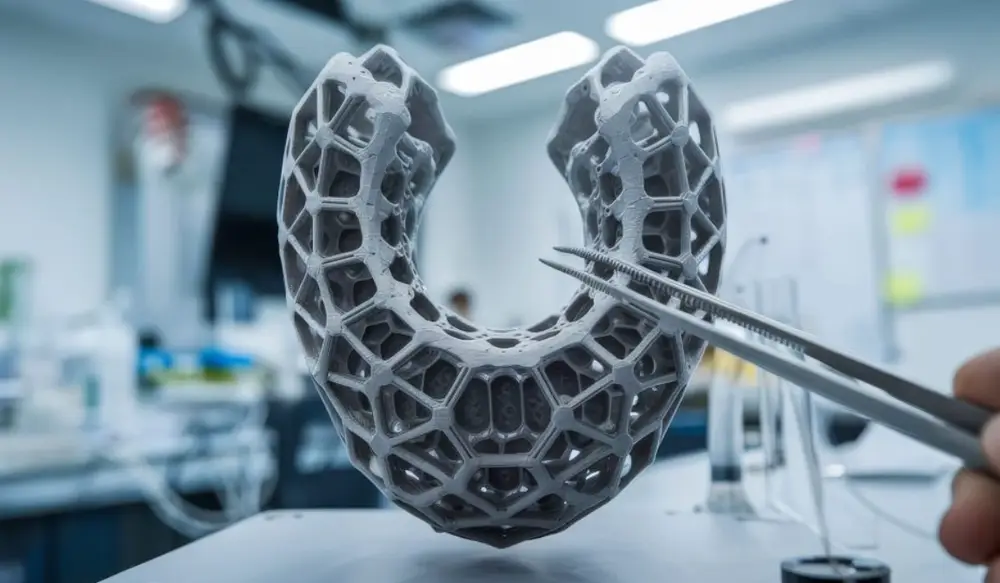
Medical 3D printing
Further, the parts require appropriate validation, testing, and regulatory compliance depending on the application. ISO 13485 is one of the frameworks that help manufacturers maintain traceability and quality in production. [2]
7. Dental Aligners and Crowns
The dental and orthodontic industry is also a big market for 3D printing, specifically for aligners and crowns. The technology meets the precision requirements of these parts. Advanced dental labs can use 3D printing applications for both custom and standard solutions.
8. Consumer Products
The range of consumer products that can be 3D printed is staggering because it covers eyewear and footwear. Because there are no tooling costs for injection molding, even smaller businesses can customize and differentiate their products without straining economically.
9. Education and Research
The academia and teaching world uses 3D printing methods to produce lab equipment, models, and prototypes. The products help researchers and students interact with items and processes used in real-world engineering.
10. Defense and Military Applications
3D printing is a popular process in the defense and military establishments for the production of low-volume parts and field-repair parts. The solution is crucial in remote operations where the speed of replacing a part is more important than conventional sourcing options.
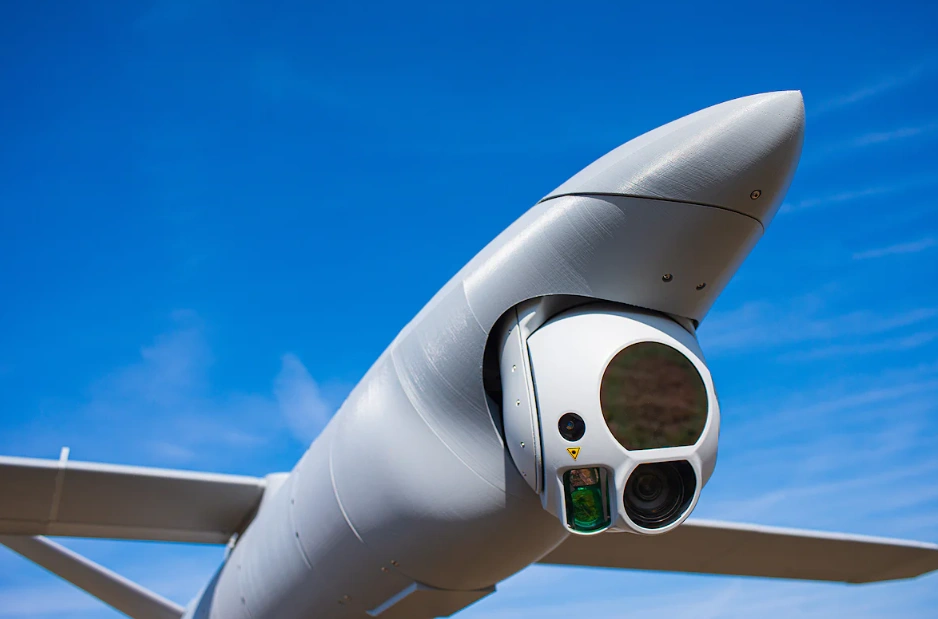
3D printing in drone technology
Comparison Table for Applications and 3D Printing Technologies
This table maps 3D printing applications against the ideal technology and the reasons for the pairings.
|
Application |
Ideal 3D printing technology |
Reason |
|
Rapid Prototyping |
FFF/SLA |
Detailed, low-cost, fast |
|
Tooling, Jigs & Fixtures |
FFF |
Low cost, durable |
|
Aerospace Components |
Powder Bed Fusion (PBF) |
Aerospace-grade parts, complex geometry |
|
Automotive & Related Parts |
FFF / PBF |
Functional parts, rapid iteration |
|
Industrial End-Use Parts |
PBF / FFF |
Cost-effective – low-volume complex parts |
|
Medical/Dental Implants & Devices |
PBF / Material Jetting |
Biocompatibility, precision |
|
Dental Aligners & Crowns |
SLA/DLP/LCD |
Clear resins, tight tolerance |
|
Consumer Products |
Vat Photopolymerization |
Versatile designs, smooth finish |
|
Education & Research |
FFF |
Low cost |
|
Defense & Military Applications |
DED |
Low-volume parts for field repair |
Try Prolean Now!
Main 3D Printing Technologies
The main 3D printing technologies are Material Extrusion (FDM/FFF), Powder Bed Fusion (PBF), Vat Photopolymerization (SLA, DLP, LCD), Material Jetting (PolyJet, MultiJet), Binder Jetting, Sheet Lamination, and Directed Energy Deposition (DED).
The table below highlights the materials and applications associated with each of these technologies.
|
3D Printing Technology |
Common Materials |
Common Applications |
|
Material Extrusion (FDM/FFF) |
ABS, nylon, PC, fiber-reinforced composites |
Jigs & fixtures, functional prototypes, standard end-use parts |
|
Powder Bed Fusion (PBF) |
Metal powders, TPU, nylon (PA11, PA12) |
Aerospace components, medical components, complex geometries |
|
Vat Photopolymerization (SLA, DLP, LCD) |
Castable resin, standard resins, clear/transparent resin |
Dental aligners and crowns, consumer products, precision prototypes, jewelry |
|
Material Jetting (PolyJet, MultiJet) |
Photopolymer resins |
Anatomical and medical models, design validation |
|
Binder Jetting |
Metal powders, sand |
Metal parts, sand casting molds |
|
Sheet Lamination |
Plastic sheets, paper, metal foils |
Concept models, architectural models |
|
Directed Energy Deposition (DED) |
Metal powder or wire |
Aerospace repair, tooling repair, general metal part repair |
Durability of 3D Printed Parts
The durability of 3D-printed parts depends on the material, chamber temperature, software settings, part design, and post-processing treatments. For instance, Nylon 12 Tough Powder (SLS) is very durable thanks to its high structural strength, impact resistance, and ductility. It is widely used in aerospace manufacturing of parts such as fuel tank connectors and fuel lines.
At the same time, 3D software settings should ensure the desired durability. The material density and layer direction are particularly critical for the integrity and durability of parts.
Costs Related to 3D Printing
Factors that contribute to the cost of 3D printing are part design complexity, material cost, order volume, 3D printing technology, and post-processing requirements.
Here’s how each of these factors works.
Part Design Complexity – Complex internal geometries take longer to print, thereby increasing cost. Support structures and wall thickness also determine the amount of material used, which affects 3D printing costs.
Material Cost – The amount of material, type of material, and amount of waste during printing directly affect cost. In terms of material type, metals are typically significantly more expensive than plastics.
Order Volume – Economies of scale mean that larger orders are likely to attract lower per-part cost.
3D Printing Technology – Some 3D printing technologies are more cost-effective than others. The DMLS/SLM (Metal) technology costs more for its specialty, while FDM usually offers the lowest cost per hour.
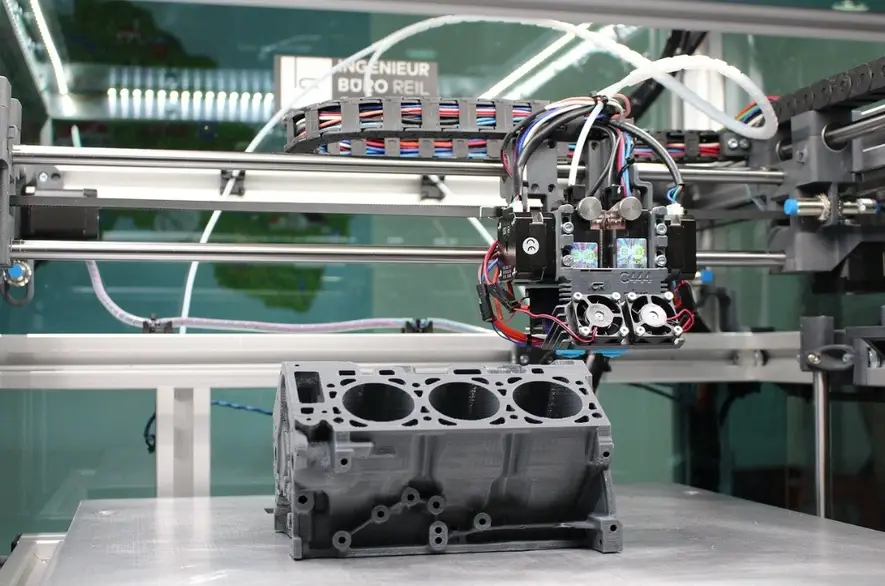
Industrial FDM 3D printing
Post-Processing Requirements – These requirements include support removal, cleaning, surface finishing, curing, and painting/coating.
Maintenance of 3D Printers
Optimal performance of 3D printers comes from not only a good choice of equipment, but also professional maintenance practices, which entail:
- Daily maintenance – Nozzle cleaning, bed leveling, and rail lubrication
- Weekly maintenance – Belt tension, firmware and software updates, filtration system cleaning
- Monthly maintenance – Electrical connection inspection, sensor calibration, hotlend cleaning/replacement
- Predictive maintenance – Analysis of historical performance logs and real-time sensor data
Future Outlook of 3D Printing Applications
In the future, 3D printing applications will involve cost minimization, faster production, and higher sustainability. These trajectories will trigger developments in technology, supply chain integration, and mass adoption of 3D printing in the manufacturing industry.
In Conclusion
Different from the earlier days of 3D printing, today’s 3D applications extend beyond prototyping. Real 3D applications are evident in key industries, including aerospace, automotive, dental, consumer products, and defense.
Whether you choose SLA, binder jetting, or FFF, the 3D printing technology should be aligned with the precision requirements, material used, and production volume. Additive manufacturing is your faster and more cost-effective method for complex end-use parts, low-volume tooling, rapid prototyping, and other 3D printing applications highlighted in this article. What part are you planning to manufacture? Upload your design and let our engineers review it. We will recommend the right 3D printing technology based on manufacturability and cost. You will also get a free quote.
Explore our 3D printing service and start the conversation today!
FAQs
Will 3D printing replace other conventional manufacturing processes?
Not entirely. 3D printing is largely a complementary technology, especially around complex geometries, short production runs, and custom parts. It will more likely be common in hybrid manufacturing environments, where additive manufacturing and traditional methods coexist.
Which materials are suitable for 3D printed prototypes?
The range of materials allowed for metal 3D printing is narrow, typically limited to Aluminum AlSi10Mg, Stainless steel 316L, Inconel 718, and titanium Ti-6Al-4V. They are usually processed using the DMLS method.
Is 3D printing more cost-effective than CNC machining?
It depends on the volume and geometry. 3D printing is more cost-effective for low-volume runs of complex parts because it avoids tooling costs. As the volumes increase, CNC machining becomes increasingly more cost-effective.
CNC is also a better investment for higher-strength, more precise parts, regardless of the machining cost.
Which 3D printing technology is most suitable for functional parts?
DMLS and SLS are the most popular 3D technologies for functional parts because of their superior dimensional stability and mechanical strength. For instance, SLS is prominently used to manufacture dental models.
References
[1]https://www.iso.org/obp/ui/#iso:std:iso-astm:52900:ed-2:v1:en
0 Comments