

3D printing materials
What your part is designed to do will determine the best 3D-printing material. PLA and ABS are good for prototyping. SLS nylons and engineering resins are used for functional parts. Metal printing is used for high-performance industrial applications. Choose the right process after comparing the material with the performance requirements.
Understanding 3D materials is important, especially as parts progress from concept models to functional uses. A PLA visual prototype looks fine on a desk. It cracks and softens when heated. It is important to know which materials can handle what demands.
ProLean Tech provides a complete 3D Printing Service, from material selection to final production for custom 3D Printing projects. Whether you’re choosing plastics for a prototype or metals for functional components, our team helps you select the right material and process for your application.
What Materials Can be Used in 3d Printing?
The materials used in 3D printing are generally divided into two main categories: 3D Printing Plastics and 3D Printing Metals.
Thermosets vs. Thermoplastics: the core difference
Understanding the two major 3D printing plastic types is important before comparing materials.
Thermoplastics:
- Can be melted and re-solidified multiple times. Used in FDM and SLS printing. Examples include PLA, ABS, PETG, nylon, and TPU.
- The automotive industry uses nylon thermoplastic parts for clips and brackets because the material can be remelted if design changes are needed.
- Preferred in recycling-focused production since scrap material can be reprocessed.
Thermosets:
- Are permanently cured by UV light or heat and cannot be remelted. SLA resins are thermosets. They produce smooth, isotropic parts with consistent strength in all directions.
- Dental labs use SLA thermoset resins for surgical guides because permanent hardness and dimensional stability are critical.
- Better than thermoplastics, where heat resistance and surface quality cannot be compromised, such as jewelry casting patterns.
Emerging Materials:
Here are some emerging 3D printing materials
- Biodegradable thermoplastics like plant-based PLA blends are growing in packaging and consumer goods.
- Carbon fiber reinforced nylon combines recyclability with near-metal stiffness, used in aerospace and robotics.
- Ceramic-filled thermoset resins are being developed for extreme heat industrial applications.
FDM 3D Printing Materials
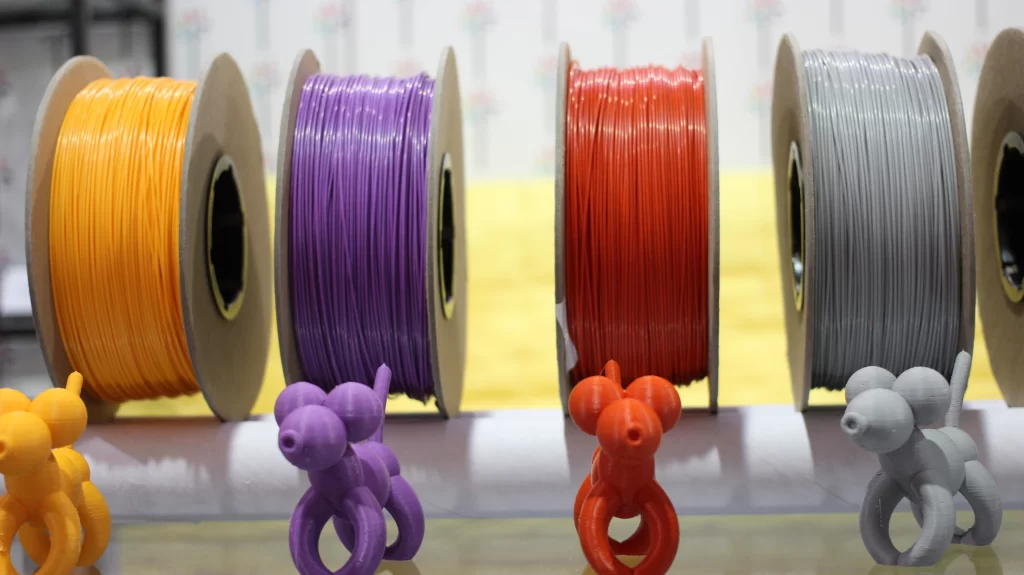
FDM printing filaments
FDM melts thermoplastic and deposits it in layers. This is the most affordable and accessible printing method, which is well-suited for simple functional parts and basic prototypes.
This is the most commonly used comparison when deciding on FDM materials.
PLA is one of the easiest materials to print with FDM. It is biodegradable and odorless. It is ideal for visual prototypes and concept models. Its weakness is its low heat resistance (it softens at around 60 °C) and its brittleness when hit.
Best for visual prototypes and concept models. Choose PLA for desktop prototyping where heat resistance is not required.
ABS can withstand temperatures of up to 100 °C. It is ideal for functional prototypes with mechanical stress. It is a trade-off between requiring a heated printing bed and ensuring proper ventilation.
Best for functional prototypes under mechanical stress. Choose ABS when the part must handle temperatures up to 100°C.
ABS or PLA are not the best choice for production parts. Both engineering resins and SLS nylons are superior in terms of mechanical performance.
Additional Key FDM Materials
| Material | Key Properties | Best for |
| PETG | Food-safe, chemical, and moisture-resistant options | Snap-fit parts that are waterproof |
| Nylon | Heat-resistant, strong, flexible | Wear-resistant functional components |
| TPU | Flexible, shock-absorbing | Flexible prototypes, vibration-damping |
| Composites | Very stiff carbon fiber reinforced with glass | Jigs and fixtures are structural parts |
Anisotropy is a major limitation in FDM. Layer adhesion creates directional weakness. Print orientation is important if your part is going to be subjected to directional loads.
SLA 3D Printing Materials
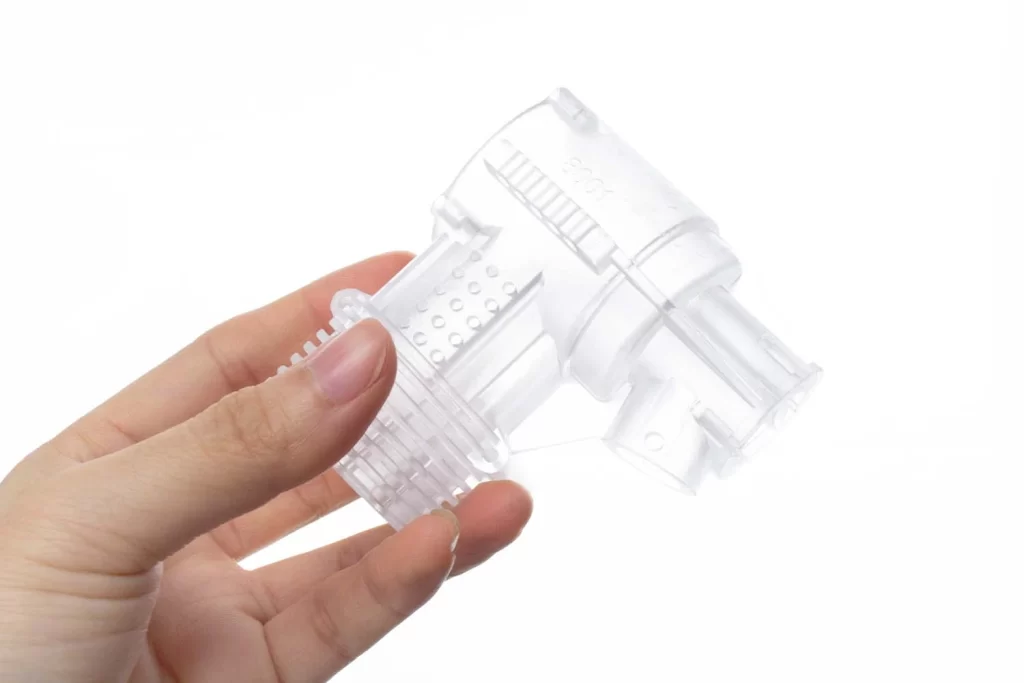
SLA 3D printing material
SLA is a process that uses a laser to harden liquid resin. This process produces the highest quality surface finish, with the tightest tolerances and highest resolution of any plastic printing method. Chemical bonds between layers make parts isotropic.
SLA Resin Categories
SLA is a widely used 3D printing material, having different types based on their usage:
- General-Purpose Resins: Suitable for concept models and visual prototyping with their smooth, matte finish.
- Engineering Resins: Designed to mimic the behavior of ABS and HDPE. These resins can withstand compression, bending, and impact. Housings, enclosures, and connectors are standard choices.
- Rigid Resins: Filled with glass or ceramic for maximum rigidity. Used in jigs and fixtures as well as high-temperature components for airflow.
- Flexible and Elastic Resins: Mimic the behavior of silicone or rubber. These resins can be bent repeatedly without tearing. Ideal for prototypes of medical devices.
- High–Temp Resins: Retain their shape when heated. Used for molds and inserts as well as heat-exposed parts.
- Biocompatible Resins: Designed for dental and medical applications where material safety is required.
SLA has the largest material selection of any plastic printing method. The resin selected directly correlates to the mechanical and thermodynamic demands of the application. They are best for concept models, visual prototypes, housings, enclosures, and mechanical parts.
SLS 3D Printing Materials
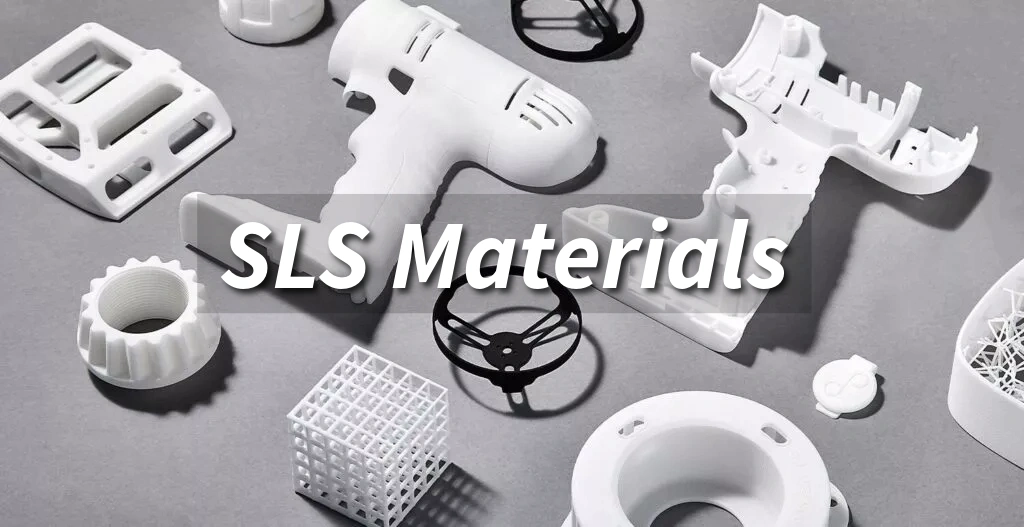
SLS Materials
SLS uses a variety of materials, including thermoplastics, nylon, metal powders, and others. No support structures are required because the unfused powder supports the part during printing. It offers unmatched design flexibility for complex geometries. Standard SLS material is Nylon 12. It is impact-resistant, strong, and stable to moisture, UV, and chemicals. It is a great choice for both functional prototypes and final-use production components.
Nylon 11 is stiffer than Nylon 12 but has a higher elasticity. It is suitable for applications where toughness is more important than rigidity. For applications that require structural rigidity, Nylon composites reinforced by glass or carbon fibre are available. TPU for SLS creates flexible rubber-like components with excellent UV stability and shock absorption. SLS parts’ mechanical performance is similar to that of injection-molded components. Surface finish can be improved by post-processing, such as tumbling and dyeing.
Try Prolean Now!
Metal 3D Printing Material
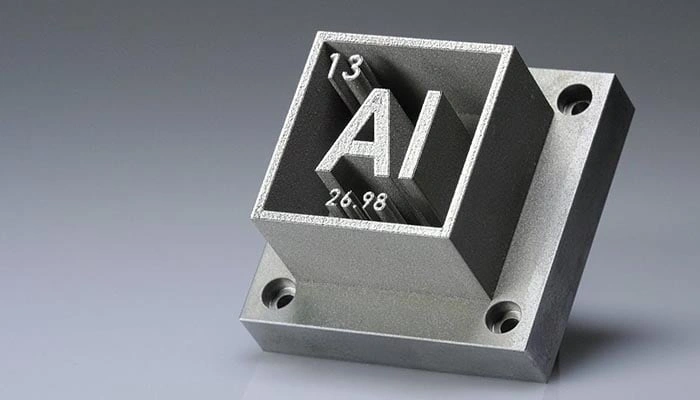
Metal for 3D printing
Metal printing is used primarily in the aerospace, automotive, and medical industries. DMLS and SLM processes fuse the metal powder layer-by-layer, producing strong parts that are difficult to replicate with traditional machining.
Common metals for 3d Printing options include:
- Titanium is used for lightweight, strong, and heat-resistant components in aerospace and medical implant parts
- Stainless steel is used for corrosion-resistant, high-strength industrial components
- Aluminum structural lightweight parts and thermal management components
- Nickel alloys are used in high-temperature turbine components and engines
- Tool steel for dies and molds, as well as high-wear tooling
Metal printing is more expensive than printing on plastic. If you need metal-like properties for a lower price, consider electroplating or casting plastic parts from SLA patterns.
How to Select the Best 3D Printing Materials?
The following are some basic steps to follow for selecting suitable 3D printing materials.
Step 1: Determine Your performance level
Low Performance
- No mechanical demands, just visual models or fit testing
- Suitable materials: PLA resins or general SLA resins
- Use case example: A designer prints a mock-up of a phone case just to check how it looks and fits in the hand. No strength is needed, so basic SLA resin is enough.
Modest Performance
- Functional prototypes that must behave like real production parts
- Suitable materials: ABS, engineering SLA resins, or SLS nylons
- Use case example: An engineer prints a valve housing prototype that will be tested under light pressure to confirm assembly fit and basic function before mass production begins.
High Performance
- Parts facing long-term wear, heat, chemical exposure, or cyclic loading
- Suitable materials: SLS nylon composites or engineering SLA resins
- Use case example: A manufacturer prints a bracket for an under-hood automotive component that must survive heat cycles, vibration, and occasional contact with engine fluids.
Step 2: Match Specific Material Properties
Once you have determined your performance level, select materials appropriate for the part.
- Impact resistance: ABS in FDM or nylon, tough resins in SLA or Nylon 11 or 12.
- Flexibility: TPU can be used with FDM, SLA, or SLS
- Heat resistance: High-temperature or rigid SLA resins. Nylon 12 for SLS
- Chemical resistance: PETG for FDM, Rigid resins for SLA, Nylon for SLS
- Stiffness: Rigid SLA resins, SLS Nylon composites, FDM carbon fiber composites
Step 3: Consider process trade-offs
The material and the process are interdependent. SLA is a process that can achieve tight tolerances, smooth finishes, and a wide range of materials. SLS is the preferred process if internal geometry is more important. Nylon is your main material family.
Try Prolean Now!
Material Selection Mistakes
Choose the material first, then define the application. Priority is given to performance requirements. Material follows what the part must do.
- Ignoring anisotropy when designing FDM parts. FDM layer lines create directional weakness. Before production, FDM parts that carry loads need to be oriented.
- Miscalculation of operating temperature. PLA softens when heated to temperatures commonly exceeded in car interiors, industrial environments, and other applications. Always check heat deflection temperature against real operating conditions.
- When casting is sufficient, metal printing should be chosen. SLA investment cast patterns can produce metal parts at a lower cost and faster rate for many applications.
Conclusion
The most important part of any 3D-printing project is choosing the right material. The ability to match performance requirements with material properties of FDM plastics and SLA resins or SLS nylons, as well as metals, determines the success or failure of parts in actual use.
ProLean Tech’s team is experienced in all major processes and material types. They can help you choose the best option and save money by avoiding costly reprints. Please contact us to discuss the material selection for your next project.
FAQ’s
What materials are suitable for 3D printing functional parts?
The main options are SLS Nylon 12, engineering, and rigid SLA Resins. The choice is based on the mechanical, thermal, and chemical requirements of the application.
What are the differences between FDM and SLA plastics?
FDM filaments are thermoplastics that melt and then re-solidify. SLA resins are thermosets, which cure permanently when exposed to UV light. SLA parts have a smoother surface and are more isotropic. FDM parts can be anisotropic and are more affordable for basic uses.
Which process provides the best comparison of 3D printing materials for functional prototypes?
Both SLA engineering resins and SLS nylon produce functional prototypes that are strong. SLS offers better design freedom for complex geometry. SLA provides a higher surface quality as well as a wider range of material properties.
What material is best for creating automotive parts using 3D printing?
For automotive parts, SLS Nylon 12 is a common choice because it handles heat, vibration, and mechanical stress well. It is used for air ducts, clips, brackets, and under-hood components. For visual or display parts, SLA resin gives a smoother finish.
What 3D printing material works best for medical devices?
SLA engineering resins are widely used in medical applications because they produce smooth, precise parts. Biocompatible resins are available for items like surgical guides and dental models. SLS nylon is also used for prosthetic components due to its strength and flexibility.

0 Comments