
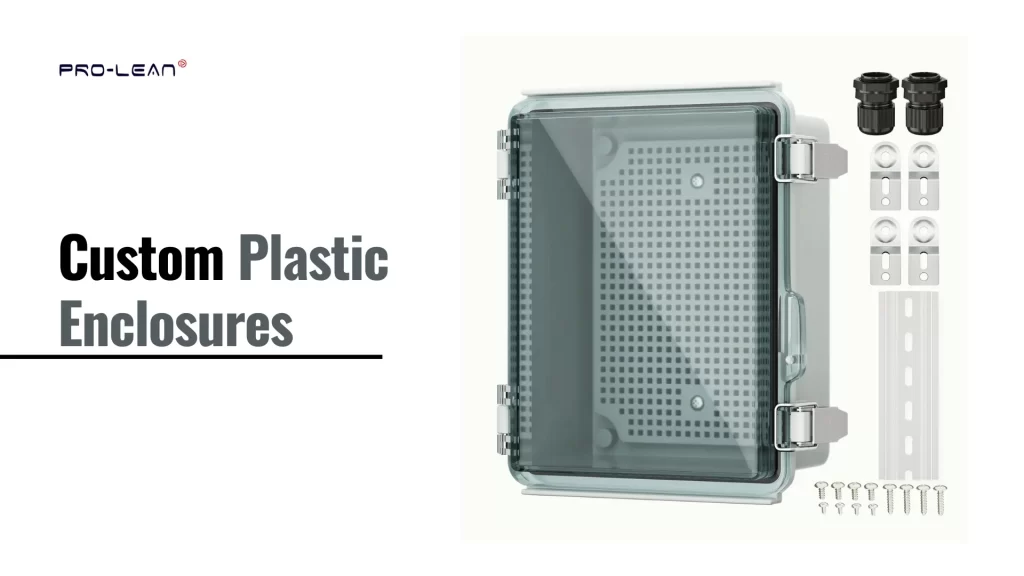
Custom Plastic Enclosure
Electronic components often fail due to inadequate protection, dust, moisture, and heat. This impacts and damages internal parts over time. Metal enclosures aren’t always the best choice when weight, insulation, and corrosion resistance are concerns. They often add extra weight, add cost, and raise grounding concerns. Therefore, electronic products need a lighter and safer enclosure solution.
Custom plastic enclosures effectively address these issues. They protect sensitive electronics from dust, heat, and mechanical stress. They are typically made from ABS and polycarbonate. These materials offer strong insulation and impact resistance. Moreover, these perform well in indoor and outdoor conditions.
At Prolean Tech, our injection molding products and enclosures are designed to maintain high durability and long-term serviceability. We use engineered-grade, flame-retardant ABS and impact-resistant polycarbonate, as well as POM. Our customers can choose from multiple sizes, shapes, and unique colour options.
This article covers various types of plastic electrical enclosures, their specifications, and applications. Additionally, you will learn about the differences between custom and modified products, the design considerations, and the selection of a suitable plastic enclosure. Let’s get into it.
Differentiating Fully Custom Plastic Enclosures vs. Modifying Existing Products
Both options have their own advantages and disadvantages. Ultimately, the decision comes down to your project requirements. Below, we outline their distinct benefits and limitations to help you determine the best method for your project.
Fully Custom Enclosures
Fully custom enclosures are manufactured entirely from scratch. You control everything about the enclosure, including size, shape, material, interior layout, mounting points, colour, texture, and surface finish. This provides the ultimate degree of flexibility when designing an enclosure for a unique application or for complex components.
Why Choose Fully Custom Enclosure Design
Fully custom enclosures provide optimal fitment for your components. You can optimise airflow, cooling, and interior space. Additionally, with fully custom plastic enclosures, you can include any desired branding elements and/or special finishes. Therefore, these are typically the best options for high-volume production or for products with unique requirements.
Modifying Existing Enclosures
Instead of designing an enclosure from scratch, an existing enclosure can also be modified to suit your specific needs. This may include adding mounting holes, vents, or cutouts to accommodate your components. The method is generally quicker and less expensive than a fully custom design. It is beneficial when you can accept standard sizes and shapes for your enclosures, and time or cost is not an issue.
Why Modifying Is Important
Modifying an existing enclosure reduces the time required to manufacture your enclosures and lowers the costs associated with developing molds. Minor modifications to an existing enclosure can be made without requiring a redesign of the entire product. As such, this method is ideal for prototyping or small batch manufacturing.
Choosing the Best Method
Choose fully custom plastic enclosures for unique sizes, complex interior arrangements, or if you require specific branding elements. On the other side, choose modifying existing enclosures if you require standard shapes/sizes, and speed/cost is an issue. Sometimes, it is beneficial to begin with modifying an existing enclosure and then transition to a fully custom design.
Benefits of Choosing Custom Plastic Enclosure Designs Without Tooling/Molds
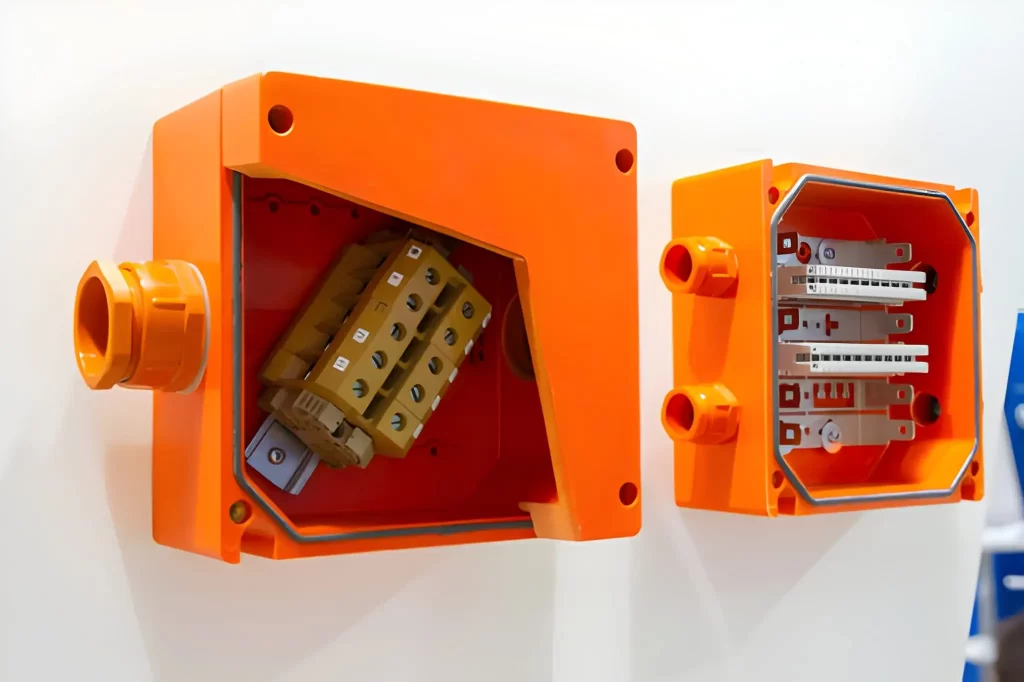
Electrical Distribution Box
Not all enclosure projects cover the cost of producing molds. Often, the first design version change occurs after initial testing has been completed. Locking in a design too quickly can be costly, as it would be time-consuming to make changes to a mold afterwards.
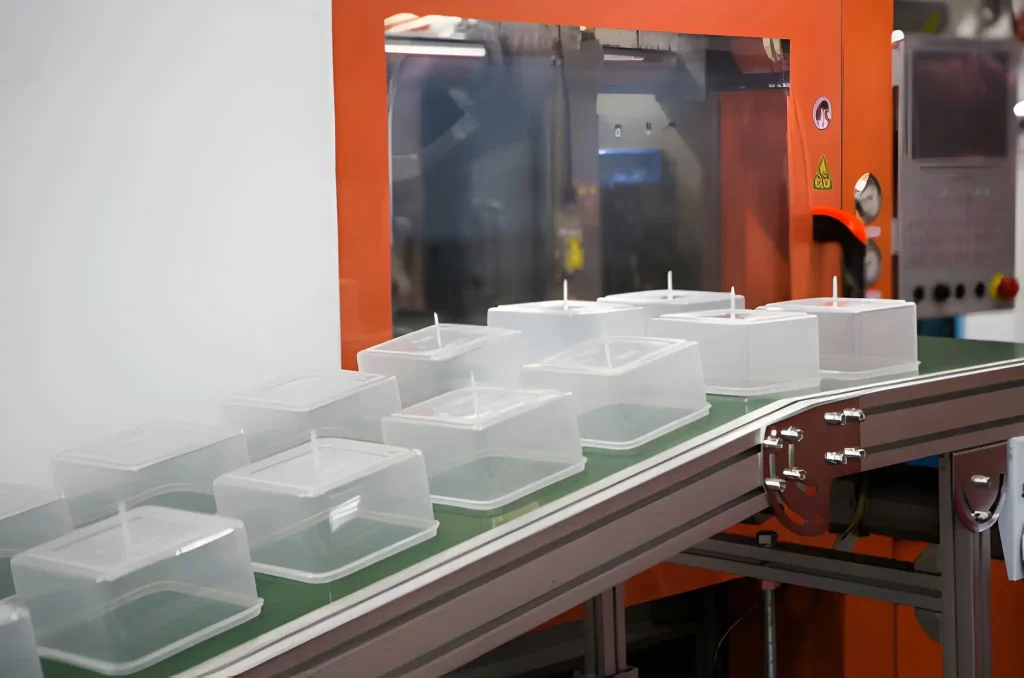
Enclosures fabrication using tool-free methods eliminates that risk. This enables the creation and refinement of custom plastic enclosures without the need for molds. The technique also supports fast design iterations and short production runs. Many engineering teams use tool-free methods until they move into high-volume injection molding.
How Tool-Free Enclosures Are Made
Tool-free enclosures are produced by cutting through plastic sheets or solid blocks of plastic. A CNC machine makes the precise openings, slots, and mounting points. Once the panels are cut, they can then be bent, bonded, or fastened together to create the enclosure.
One of the significant advantages of the tool-free method is its simplicity and flexibility. Any changes can be implemented immediately during the program phase. So, this eliminates any delays associated with evolving designs.
When Tool-Free Methods Are Ideal
The tool-free method is ideal for prototype and pilot builds. These applications allow you to test your electronics, fit, and airflow before entering mass production. Additionally, low-volume production is best suited to tool-free methods. This method eliminates the high costs associated with creating molds when only small quantities of the product are required. One-off or custom projects are also ideal candidates for the tool-free method.
Plastic Materials Used Without Molds
ABS (Acrylonitrile Butadiene Styrene) is commonly used for tool-free enclosures. It is easy to machine and offers good strength. Polycarbonate is also used for higher impact and heat resistance. Depending on the strength requirements, environment, and appearance, other materials such as acrylic or PVC may also be suitable alternatives.
Design Freedom
Another advantage of using the tool-free method is the ability to make design changes quickly and easily. Openings, vents, and mounting points can be modified, allowing engineers to refine designs based on hands-on experience and testing.
This ability to make frequent design changes easily helps reduce the risk involved in the development process. Designers can make design improvements without having to restart the process. This helps to keep projects moving along efficiently.
Cost and Time Savings
Eliminating molds significantly reduces upfront costs. The elimination of high upfront costs allows developers to test their designs before making a significant investment. In addition to the savings in upfront costs, tool-free methods result in a substantial reduction in the time required to produce enclosures. In some cases, enclosures can be made in days, which can help to get your product to market faster.
Table 1: Tool-Free Enclosures vs Injection-Moulded Enclosures
|
Factor |
Tool-Free Enclosures |
Injection-Molded Enclosures |
|
Cost |
Low |
High |
|
Delivery Time |
Fast |
Slow |
|
Quantity |
Low / Medium |
Medium / High |
|
Flexibility |
High |
Low |
|
Applicable Stage |
Prototype / Pilot |
Mass Production |
What are the Common Types of Custom Plastic Enclosures?
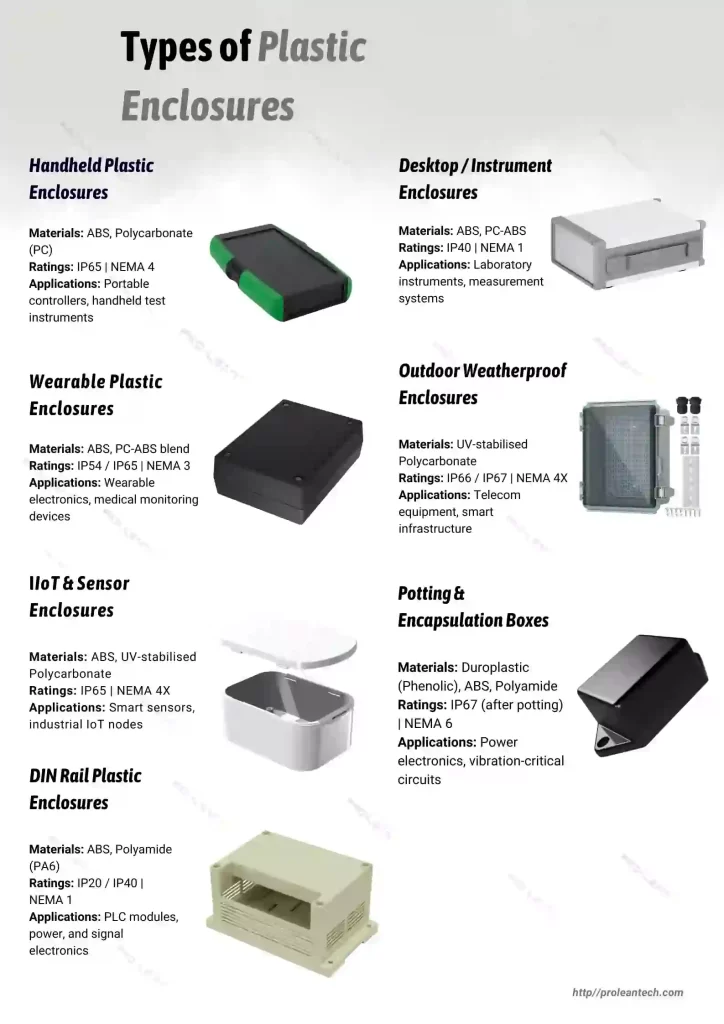
Types of Plastic Enclosures
Custom plastic enclosures are designed to meet the specialized requirements for electronic, mechanical, and environmental aspects of a product. However, it’s imperative to choose the right type. It depends on the
- Component size
- Mounting style
- Protection class
- Operational condition/environment
Below are the common types of enclosures, along with their characteristics and specifications.
Standard Box Enclosures
Square Plastic Enclosures
Standard box enclosures are rectangular or square housings. These are used for casing electronics control systems. They are easy to machine, stack, and modify. When it comes to their application, these are ideal for indoor and light outdoor applications; they provide basic protection against dust and accidental contact.
Wall-Mount Enclosures
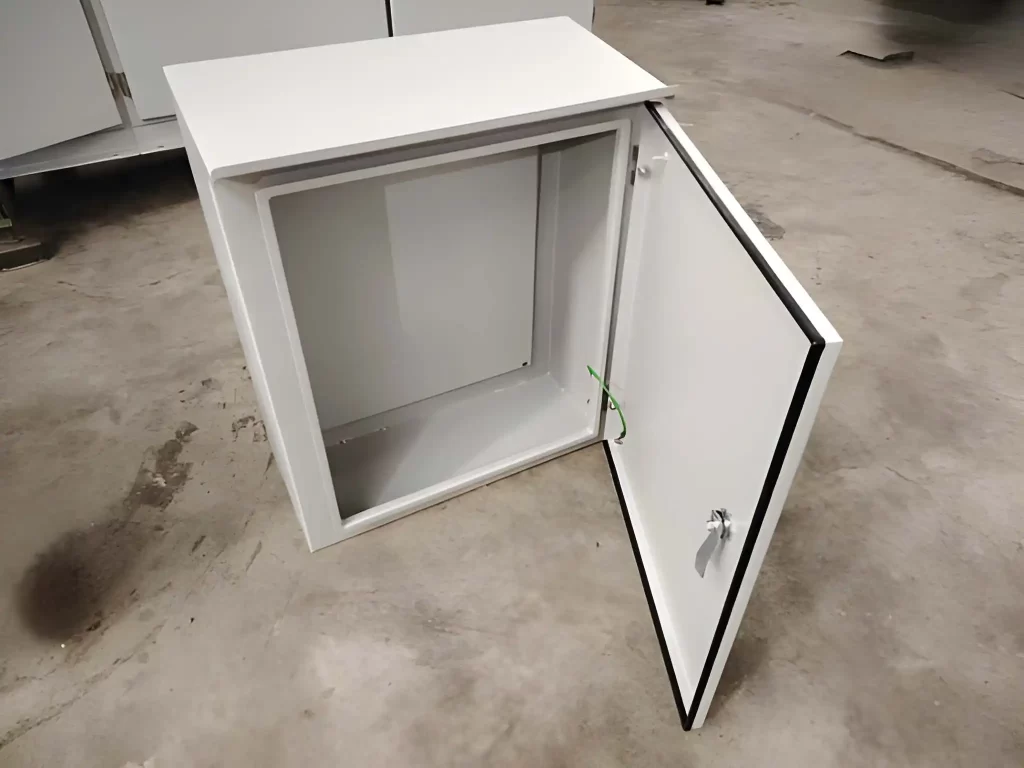
Wall-Mounted Enclosures
Wall-mount enclosures are designed to attach to vertical surfaces. They often entail integrated flanges and brackets. They are commonly used for industrial control units, junction boxes, and sensor housings. Moreover, wall-mount enclosure designs save floor space and allow easy wiring access.
Handheld/Portable Enclosures
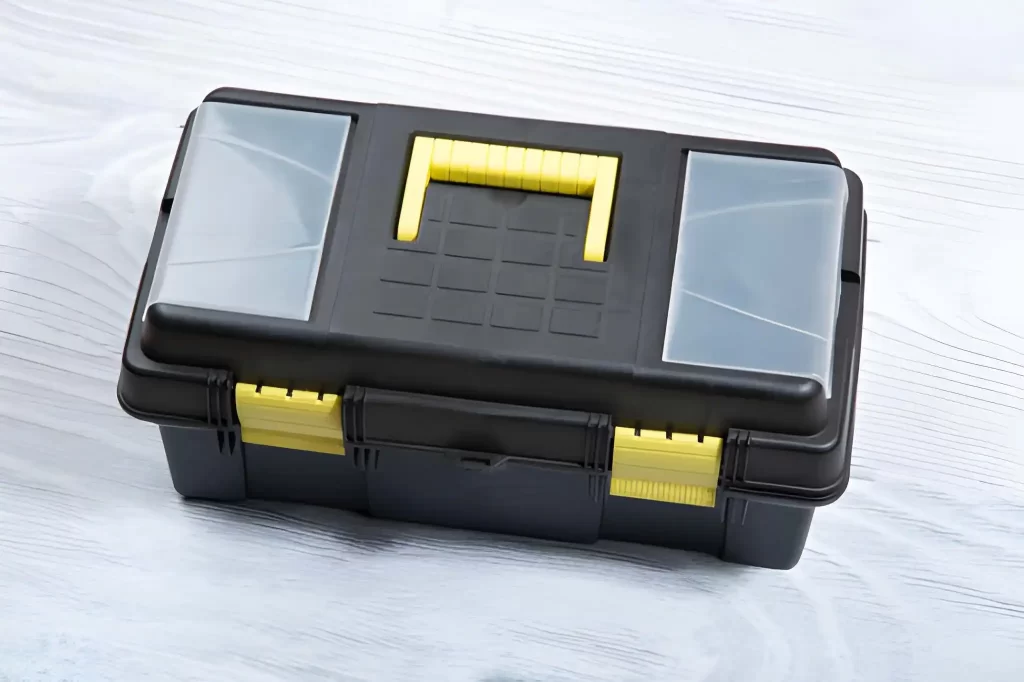
Portable Black Tool Box
Handheld enclosures are portable and ergonomically designed. They are used for use for housing measuring instruments, remote controllers, and testers. Typically, shock-resistant and lightweight materials(like ABS and PC) are used for their manufacturing.
IP-Rated/Waterproof Enclosures
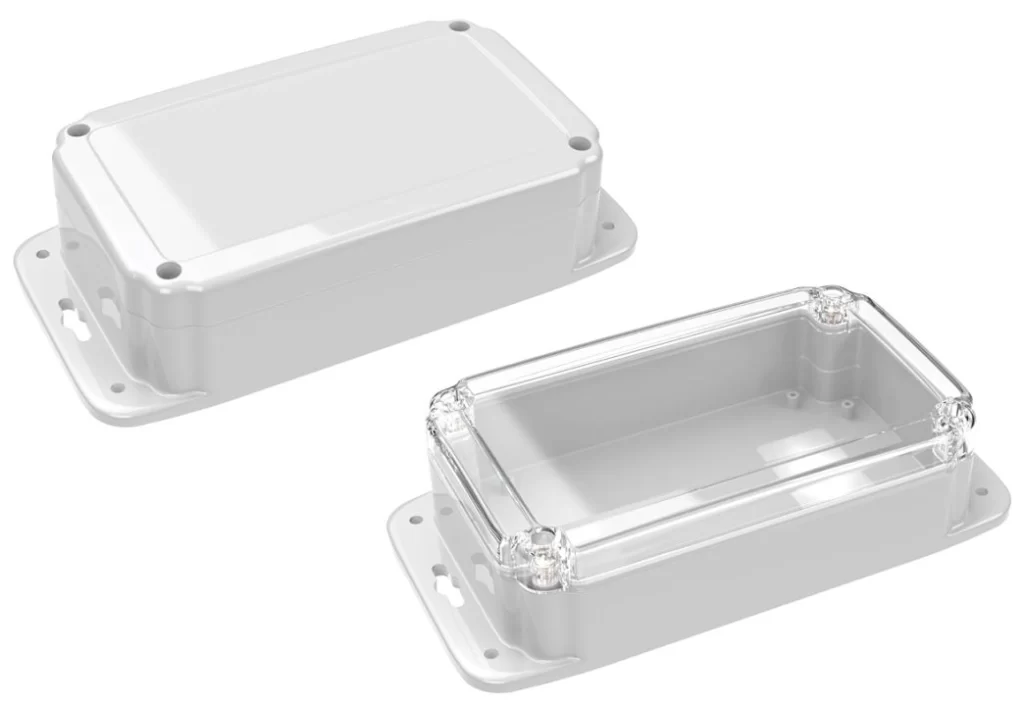
Waterproof Plastic Enclosure Box
These plastic enclosures protect sensitive electronics from dust, moisture, and water ingress. Sealing methods include silicone gaskets, O-rings, and tight lid tolerances. These are ideally used for outdoor, industrial, and marine applications.
Modular/Stackable Enclosures
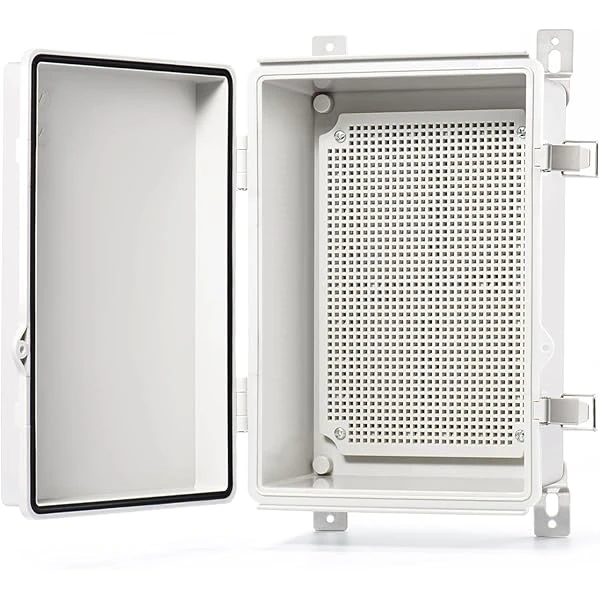
Modular Plastic Enclosure
Modular enclosures are designed to interconnect/stack with other units. They are used in multi-component electronics, industrial panels, and expandable systems. Moreover, they allow for standardized connectors and interlocking features, enabling easy expansion and maintenance.
Table 1: Common Types of Custom Plastic Enclosures Specifications Overview
|
Enclosure Type |
Typical Shape |
Material |
Rating (IP) |
Size Range (L × W × H) |
Wall Thickness |
Mounting Style |
Oper. Tem. |
|
Standard Box Enclosures |
Rectangular / Square |
ABS, Polycarbonate |
IP20–IP54 |
50 × 50 × 30 mm to 300 × 200 × 150 mm |
1.5–3 mm |
Screw mount or base flange |
-20°C to 80°C |
|
Wall-Mount Enclosures |
Rectangular with flanges |
ABS, Polycarbonate, ABS/PC blend |
IP54–IP66 |
100 × 100 × 60 mm to 400 × 300 × 200 mm |
2–4 mm |
Wall flanges, DIN rail compatible |
-30°C to 85°C |
|
Handheld / Portable Enclosures |
Ergonomic, compact |
ABS, Polycarbonate, TPE overmold |
IP54–IP65 |
80 × 40 × 20 mm to 250 × 120 × 60 mm |
2–3 mm |
Snap-fit or screw assembly |
-20°C to 70°C |
|
IP-Rated / Waterproof Enclosures |
Sealed rectangular box |
Polycarbonate, ABS-PC blend |
IP65–IP67 |
100 × 100 × 50 mm to 500 × 400 × 200 mm |
2.5–5 mm |
Wall or panel mount, gasketed screws |
-40°C to 85°C |
|
Modular / Stackable Enclosures |
Interlocking modular units |
ABS, Polycarbonate, PC/ABS blend |
IP20–IP54 |
100 × 50 × 30 mm to 400 × 200 × 150 mm |
1.5–3 mm |
Snap-fit, interlocking modules |
-20°C to 80°C |
Try Prolean Now!
IP Ratings vs NEMA Ratings for Plastic Electrical Enclosures
IP and NEMA ratings are both used to define the protection levels of enclosures. However, they follow distinct standards and serve different markets.
- IP ratings (Ingress Protection) are internationally recognised ratings. They focus mainly on protection against dust and water ingress. For example, IP65 indicates dust-tight protection and resistance to water jets.
- NEMA ratings, commonly used in North America. These not only consider dust and water but also factors such as corrosion resistance, gasket ageing, and environmental conditions. For instance, NEMA 4X generally corresponds to IP66, with added corrosion resistance.
Applications of Custom Plastic Enclosures
As mentioned before, custom plastic enclosures are designed to protect all of an electronic device’s components. They protect them from potential hazards such as dust, moisture, extreme temperatures, and accidental damage. If properly selected, they significantly extend a product’s lifespan and ensure reliable operation.
In many cases, the choice of plastic enclosure is dependent on the design of the electronic component and its intended application (i.e., size, shape, and environment). Handheld, wall-mounted, and waterproof are examples of how they may be applied.
Industrial Equipment
In industrial environments, custom plastic enclosures are used to house electronic sensors, controllers, and motor units. These enclosures protect these components from the rigorous environment (dust, oil, vibration). They are available in wall-mountable or modular configurations to allow for maximum space utilisation. Additionally, vents or heat sinks may also be incorporated to manage internal temperature.
Consumer Products
The majority of consumer products are protected with plastic enclosures, typically made from materials such as ABS and polycarbonate. These materials have a high strength-to-weight ratio; thus, they are well-suited for handheld consumer products.
In addition to their inherent mechanical properties, both materials can be cut precisely to produce features like cutouts for buttons, displays, and connectors. Additionally, they are used to create textured surfaces and grips, improving product ergonomics.
Medical and Laboratory Devices
Plastic enclosures are used to protect medical devices and laboratory instruments. The smooth surface finish of these enclosures allows for easy cleaning. Inside these enclosures, compartments can be created to secure electronic components, sensors, and battery packs. For portable devices, a durable and impact-resistant shell can be provided.
Networking and Telecommunications
Network devices, such as routers, switches, and junction boxes, use custom plastic enclosures. These are designed for wall and rack mounting to keep the cables organised. Plastic enclosures protect electronic components from dust and excessive heat while providing vent holes or removable panels to enhance airflow. Modular enclosures facilitate maintenance and upgradeability.
Common Materials for Custom Plastic Enclosures
Here are the common materials used for custom plastic enclosures for electronics:
- ABS
- Polycarbonate (PC)
- Acrylic (PMMA)
- Polypropylene (PP)
- Nylon (PA)
- TPE / TPU
- PVC
Try Prolean Now!
Design Guidelines for Custom Plastic Enclosures
Optimal plastic enclosure designs remain strong, serve their intended function, and are easily manufactured. Wall thickness, mounting locations, ventilation, material selection, and draft angle are key elements that should be considered to ensure a reduced number of defective products, increased product life, and lower manufacturing costs.
Wall Thickness
- For ABS enclosures, walls should be between 2- 4 mm thick.
- For PC enclosures, they should be between 1.5- 3 mm thick.
Maintaining uniform wall thickness will help prevent warping, sink marks, and cracking. Walls thicker than necessary will add weight and incur unnecessary enclosure costs.
Mounting Locations
Reinforced bosses (screw/bolt) with diameters of 3- 5 mm are recommended for mounting purposes. Mounting bosses should be spaced apart by no less than 2-3 times the diameter of the boss to avoid cracking around the edge.
Ventilation/Cooling
If your electronics produce heat, you will need to have some type of vent to allow the heat to escape. Small slots (2-5 mm wide) will also help to circulate air and prevent overheating of your electronics.
Material Selection
When choosing a material for an enclosure, first consider its intended use: For example:
- ABS for indoor applications
- PC for high-impact applications and/or outdoor applications
- PP for chemical resistance
Moreover, consider the heat tolerance, strength, and its intended environment.
Draft Angles
On vertically moulded parts, draft angles of 1-3 degrees should be added to the walls of the enclosure to facilitate the ejection of the part from the mould, as well as to minimise surface damage to the part.
Order Custom Plastic Enclosures For Your Needs from Prolean Tech
At Prolean Tech, we help you get the proper enclosure for your project. Whether you need a fully custom design or a smart modification of an existing product, our team will guide you through every step of the process. We focus on your technical requirements, production needs, and budget to provide a solution that works in actual conditions.
Reach out to our experts to explore standard injection molding services or start a conversation about a custom design. We will provide practical advice and help you select the most suitable approach. With our experience in injection moulding, CNC machining, and rapid prototyping, we deliver solutions that are both reliable and cost-effective.


0 Comments