
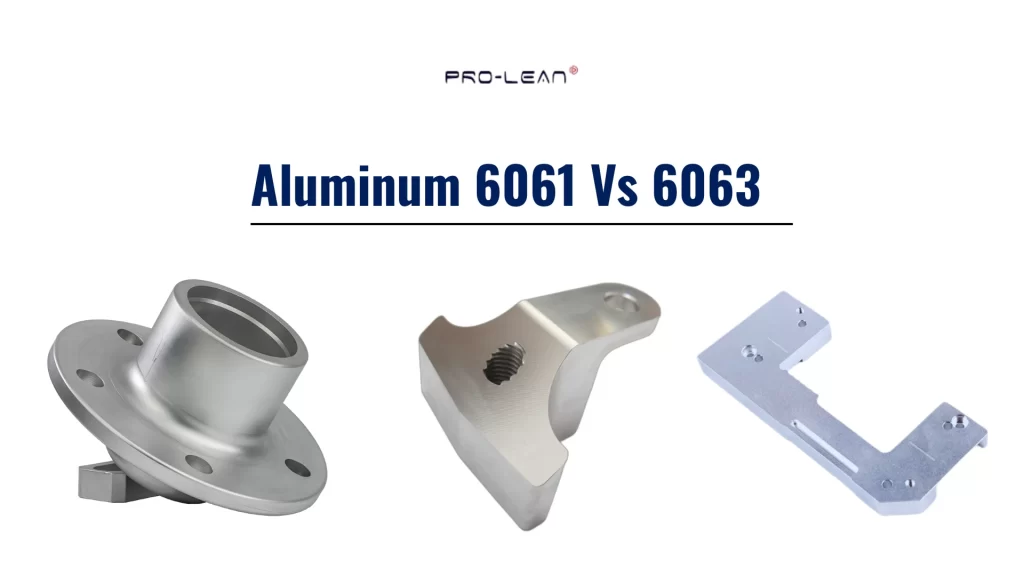
Aluminum 6061 vs 6063
Different aluminum CNC machining projects require unique aluminum grades, as some need strength and load-bearing capacity. At the same time, other applications may demand a clean finish and easy shaping. That’s where 6061 and 6063 come into play. They are both 6000-series alloys; however, they serve different purposes. This guide compares aluminum 6061 and 6063 by their strength, formability, surface quality, and typical uses.
6061 aluminum is known for its higher strength and structural stability. It is commonly used where load-bearing performance matters. In contrast, 6063 aluminum offers better surface finish and formability, making it ideal for architectural and decorative applications.
Designers, engineers, and builders often face the same question. Should the priority be strength or appearance? The answer depends on load requirements, finishing needs, fabrication methods, and cost constraints.
What Is Aluminum 6061
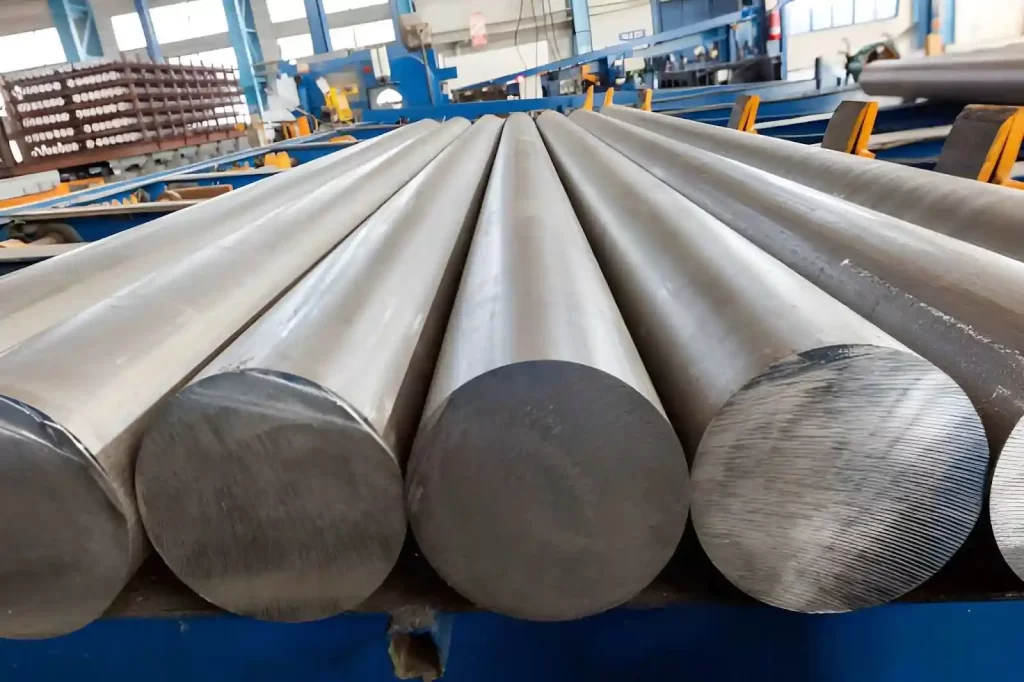
Aluminum 6061 Rods
Aluminum 6061 is a common choice for parts that require high strength and superior load-carrying capacity. Frames, mechanical parts, and structural assemblies are typical applications that require handling significant loading without failure and deformation.
However, the primary focus of 6061 is not merely to produce aesthetically pleasing surfaces or polished finishes. Rather, it is to provide reliable, consistent performance under stress and offer a long service life.
6061 does not machine as fine or as glossy a surface finish as other aluminum grades for machining, like 6063. It is generally easier to work with via machining, forming, and welding. Therefore, when choosing materials for functionally loaded parts that must remain dimensionally accurate and structurally stiff throughout their operational life, 6061 is a viable, reasonable choice across numerous industries.
Tensile Strength (6061)
Heat-treated aluminum 6061 typically attains a tensile strength of approximately 290 MPa (42,060 psi). The value is relatively high for a lightweight material and indicative of its suitability for load-bearing structures, aerospace components, and industrial frames.
The most significant benefit of using 6061 is that it achieves these strength values without significantly increasing the structure’s weight. Weight reduction is critical in many applications where improved efficiency is necessary, while maintaining safety and durability.
Corrosion Behavior (6061)
While 6061 is not the first-choice material for decorative corrosion resistance, it has performed adequately in virtually all commercial environments. The alloy naturally develops a protective oxide layer. This protects against subsequent oxidation. This provides a significant reduction in corrosion rates and protects the substrate beneath the layer from moisture and chemical exposure.
Therefore, in applications involving structural parts exposed to ambient air, moisture or mild chemicals, 6061 provides a reliable level of corrosion resistance without the need for additional coating systems.
Machining and Fabrication Characteristics
Another reason for aluminum 6061’s popularity is its predictable machinability. It can be easily cut, maintain close tolerances, and consistently produce results from CNC milling and turning operations. These characteristics make it an ideal choice for the production of precision components with multiple, complex, or fine-detail tool paths. Although 6061 is among extrudable aluminum alloys, it is typically used in applications where maximum strength and dimensional stability are essential.
What Is Aluminum 6063
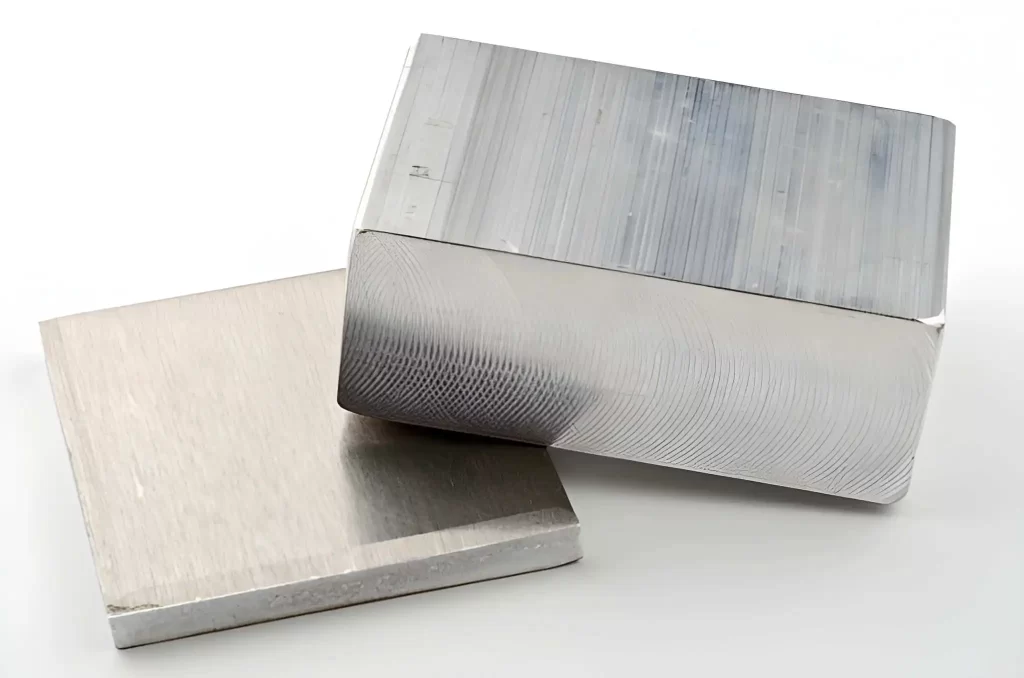
6063 Aluminum Block
Aluminum 6063 is generally referred to as the “architectural” alloy due to its application in visible exterior applications. This grade is chosen for its high degree of extrudability and clean surface finish. Additionally, when anodised, 6063 exhibits high corrosion resistance, making it an ideal material for harsh environments. In addition, 6063 is commonly used in applications where the product’s aesthetic appeal is a significant factor, such as frames, trims, and decorative profiles.
Compared to 6061, aluminum 6063 is softer and easier to form/shape. This characteristic makes it a popular choice for extrusion and finishing applications. Additionally, 6063 performs well in environments where the material will be exposed to moisture, salt, or weather. Typical applications of 6063 include irrigation systems, outdoor storage components, and architectural frames where both durability and aesthetic appeal are essential.
Tensile Strength (6063)
When it comes to 6063 aluminum strength, it has a tensile strength of approximately 186 MPa (26,977 psi) in commonly heat-treated conditions. Although this is lower than 6061, it is sufficient for many functional uses, particularly when the structural load is minimal. The tensile strength of 6063 is enough for general-purpose frames, tubing, and profiles that do not subject the material to excessive stress.
As noted previously, one of the most significant advantages of 6063 is its high formability and acceptable strength. This combination makes it a popular choice for producing long, thin extrusions and profiles for use in architectural applications.
Corrosion Behavior (6063)
One of the most significant benefits of 6063 is its resistance to corrosion, especially after anodising. During anodising, the thickness of the oxide layer on the surface increases, thereby slowing corrosion and protecting the base metal from moisture, salt, and other environmental factors.
Anodizing also provides a smooth, uniform surface with a consistent sheen and no extrusion or handling marks. Further, colour pigments can be added to the anodising process, creating a durable finish that does not chip like paint. Due to its corrosion resistance and aesthetic qualities, 6063 is a popular choice for architectural and visible applications that must remain clean and attractive over extended periods.
Workability and Forming Characteristics
Due to its softness, aluminum 6063 is a preferred material for forming and shaping applications. It is relatively easy to bend, shape, and profile compared to many other aluminum grades. This property of 6063 makes it an ideal material for the manufacture of long, continuous sections used in construction and design.
It should be noted that 6063 is a heat-treatable alloy similar to the majority of other 6xxx-series alloys. Therefore, as with other heat-treatable alloys, there is potential for difficulties when attempting to heat-treat and reheat the alloy during the production of complex shapes or during significant deformation. Despite this, its inherent workability is one of the reasons that 6063 is a popular material in architectural manufacturing at Prolean Tech.
Aluminum 6061 vs 6063 (Composition, Physical & Mechanical Properties)
The table below summarizes the key differences between the two materials. It provides clear coverage of composition, physical properties, and mechanical performance.
| Property | Alloying Elements | Aluminum 6061 | Aluminum 6063 |
| Composition | Aluminum | 95.9–98.6% | 97.5–99.4% |
| Magnesium | 0.8–1.2% | 0.45–0.9% | |
| Silicon | 0.4–0.8% | 0.2–0.6% | |
| Copper | 0.15–0.40% | ≤ 0.1% | |
| Chromium | 0.04–0.35% | ≤ 0.1% | |
| Iron | ≤ 0.7% | ≤ 0.35% | |
| Manganese | ≤ 0.15% | ≤ 0.1% | |
| Titanium | ≤ 0.15% | ≤ 0.1% | |
| Zinc | ≤ 0.25% | ≤ 0.1% | |
| Other elements | ≤ 0.15% | ≤ 0.15% | |
| Physical Properties | Density | 2.7 g/cm³ | 2.7 g/cm³ |
| Common Tempers | 6061-T4, 6061-T6 | 6063-T6 | |
| Mechanical Properties | Tensile Strength | 124–290 MPa | 145–186 MPa |
| Yield Strength | 276 MPa | 214 MPa | |
| Fatigue Strength | 96.5 MPa | 68.9 MPa | |
| Hardness (Brinell) | 95 | 73 | |
| Machinability | Good | Fair | |
| Thermal Conductivity | 151–202 W/(m·K) | 201–218 W/(m·K) |
Use Cases of Aluminum 6061 vs 6063
Both alloys serve different purposes. For example, 6063 is the preferred choice for its visual appeal and corrosion resistance characteristics. Moreover, 6063 is simpler to extrude into various shapes.
On the other hand, 6061 is a stronger material and optimal for load-bearing structures. Therefore, it’s imperative to select the alloy based on the intended application, rather than simply choosing by name.
6061 Alloy Applications
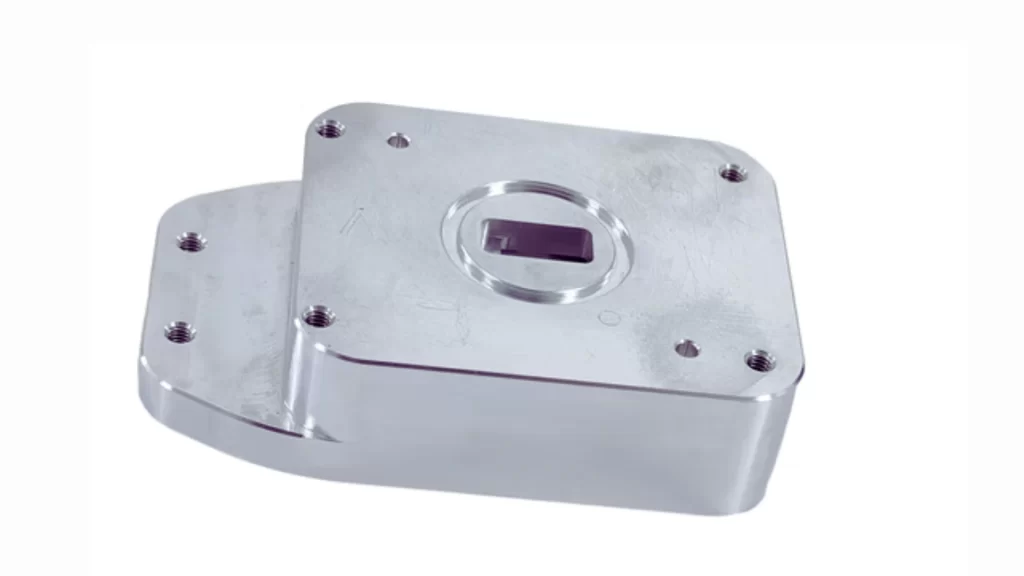
Aluminum 6061 Machined Part
6061 is a preferred material when strength and reliability are the most critical concerns. It is commonly used in structural frames and industrial support components.
Common shapes of 6061 include;
- Round rod
- Square bar
- Angles (with rounded inner corner radii for improved strength)
A wide variety of frames, mechanical components, and structural assemblies utilise the aforementioned 6061 shapes for their high-strength load-carrying capacity.
6063 Alloy Applications
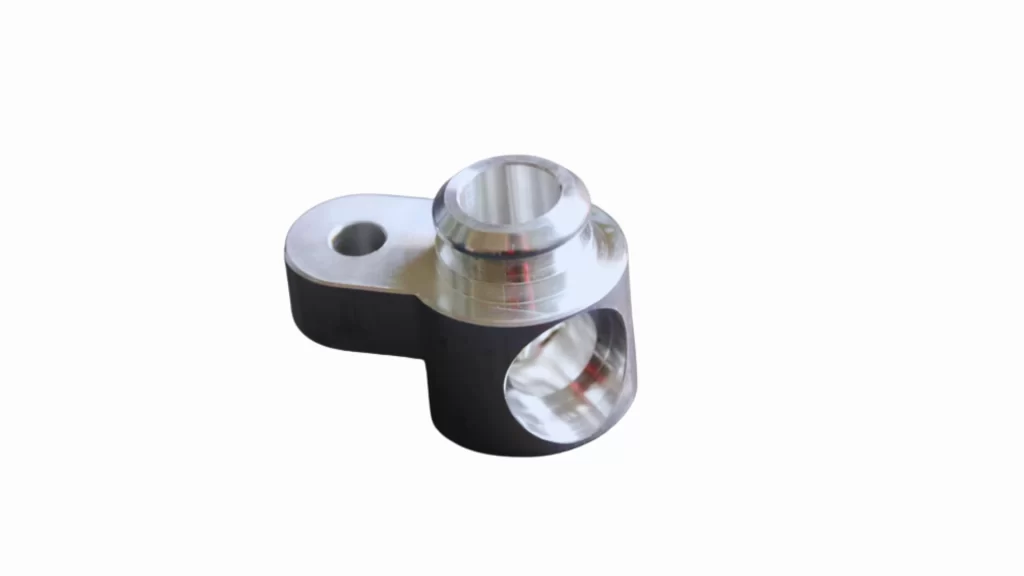
Auto OEM 6063 Aluminum Part
6063 is primarily used for cosmetic products. The advantage of 6063 mainly lies in its appearance and consistency after anodizing. Additionally, 6063 is highly compatible with extrusion processes, enabling the production of complex profiles and precise shapes. Some examples of typical applications for 6063 aluminum precision machining include:
- Architectural frames and trim
- Window and door frames
- Outdoor signs and panels
- T-slot quad track for building and assembly
- T-track for adjustable mounting in workstation configurations
- Z-clip for panel construction
- Round tube for irrigation and external fluid systems
Cost and Availability of Aluminum 6061 vs 6063
When initiating a project, one must consider both cost and availability. Typically, 6063 is more readily available and less expensive. This is mainly due to its widespread usage in the architectural industry. Consequently, 6063 is a good selection for projects having limited budgetary constraints or requiring rapid completion.
6061 is more expensive due to its greater strength and load-carrying capability. However, to achieve added durability, the user typically pays a premium. Suppliers generally carry both 6061 and 6063; however, for some shapes or larger quantities, shipping may be delayed. Therefore, before ordering, verify the supplier’s inventory and shipping schedule to avoid potential delays and additional costs.
Cost and Availability Comparison Table
| Alloy | Cost Level | Availability |
| Aluminum 6063 | Lower | High |
| Aluminum 6061 | Higher | High |
Verify local suppliers’ pricing and delivery schedules before ordering. Pricing may vary based on market demand and geographical area. Some profiles may have longer lead times, affecting project timing and cost.
Aluminum 6061 vs 6063: Which One Should You Choose?
Aluminum 6061 and 6063 are both members of the 6000 series of aluminum alloys. Therefore, they share many of the same basic properties.
- Choose 6061 for strength and load-bearing parts.
- Choose 6063 for parts that need a smooth, clean cosmetic look.
- 6061 is more commonly selected for tight-tolerance, load-bearing CNC-machined parts.
- Use 6063 for quicker builds and lower cost.
- Pick 6061 for vibration or repeated stress.
Get Custom Aluminum Parts from Prolean Tech
Choosing the right aluminum alloy comes with challenges and can confuse clients, as many grades share similar characteristics. But don’t fret, at Prolean Tech, we make that decision easier for you. We offer custom aluminum machining for grades including 6061, 6063, 5052, 6060, 7075, and 2024, and more, depending on your project requirements. Not limited here!
We offer over 50 material options, all sourced from certified suppliers. Moreover, our team supports ISO-compliant fulfilment and design support, and provides free DFM analysis to ensure your parts are manufacturable and cost-effective. Our quotes remain transparent, so you will know what you are going to pay for with no hidden fees. This helps you plan your project with confidence.
Contact us today to get started.
FAQ’s
Is 5052 Better Than 6061?
There is no doubt that 5052 aluminum is a valuable alloy with commendable corrosion resistance, strength, and general versatility for CNC machining projects. The fact that it costs less than 6061 aluminum can make even more sense to some. However, 6061 aluminum also has its positives, especially strength and heat treatability.
What can one do when presented with two metals with good corrosion resistance, but has to trade off between weldability, strength, and machinability? That’s the case for which we have to think critically while making a comparison of 5052 vs 6061 aluminum.
5052 aluminum, available in tempers such as 5052-H32 and 5052-H34, cannot be heat-treated, which is one notable difference from 6061 aluminum. Its corrosion resistance is better than that of 6061 aluminum.
When it comes to tensile strength, yield strength, and hardness, 6061 aluminum exhibits higher values. Hardness affects machinability, so as expected, 6061 aluminum is easier to machine.
At ProleanTech, we have extensive CNC machining and general production with both aluminum alloys, and are at a vantage position to guide which one to use depending on a project.
Get your quote now!
0 Comments