
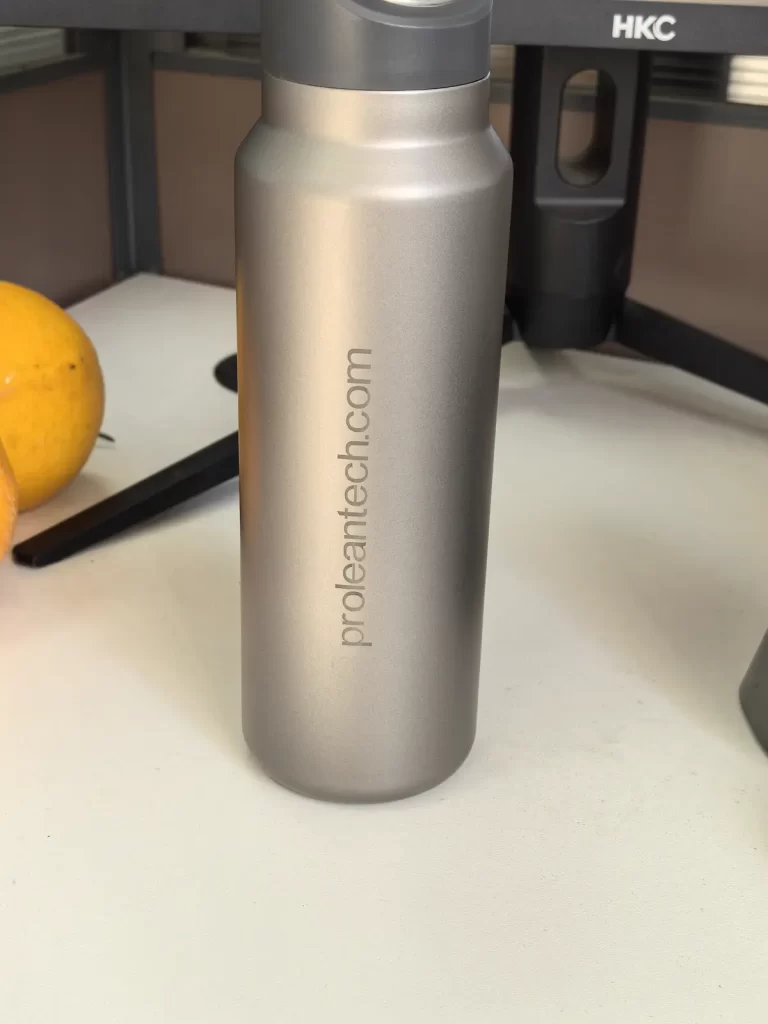
Titanium laser engraving: project overview
This titanium laser engraving case study documents a proleantech.com logo marked on a curved, matte-finish bottle. The engineering focus is logo placement, readable lettering and inspection of the finished appearance. Workshop photos and video provide the project evidence; marking depth and durability were not measured in the supplied records.
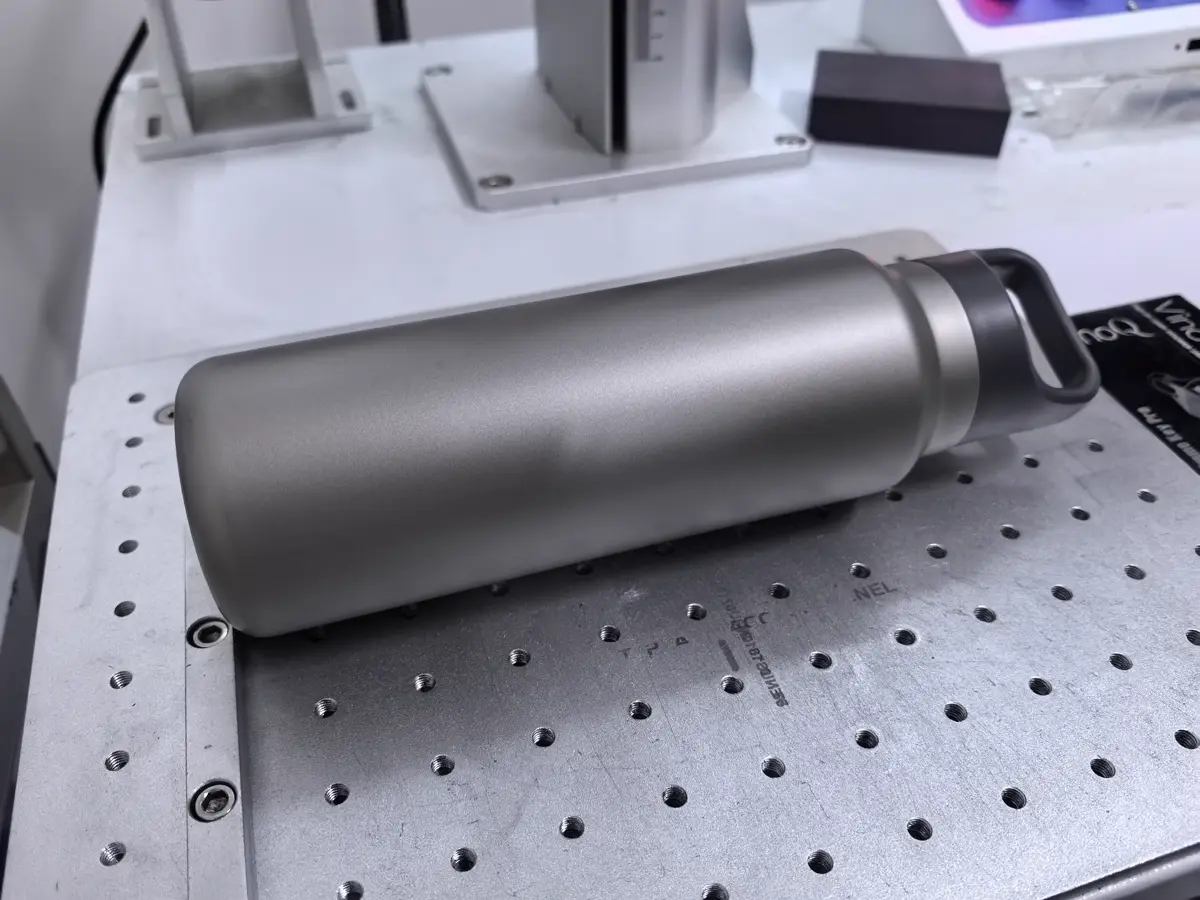
A titanium bottle with a matte metallic surface was marked with the vertical “proleantech.com” wordmark. The supplied workshop photographs document the unmarked part, marking setup, visible marking sequence and finished appearance.
The project focuses on placing a legible brand mark on a curved body while maintaining a clean surrounding surface. Material is identified as titanium by the project owner; the analyzer photograph displays a tentative “CP Ti” identification. A specific alloy or commercially pure titanium grade is not established.
Engineering challenge: logo clarity on a curved titanium surface
The cylindrical body makes logo position, orientation and the marking field important setup decisions. A long wordmark must remain readable from its first letter to its last, with consistent spacing and no visible doubling. The matte background also makes scratches and uneven contrast easy to notice.
The engineering review should define the artwork size, permitted marking zone and appearance standard before selecting a setup. The photographs show a rotary accessory beside the station, but do not establish that it was used for this mark.
Laser marking process and setup
Start with approved vector artwork and establish the bottle orientation against a repeatable reference. Confirm the marking zone clears the shoulder and cap, then check focus and field coverage over the intended logo area. For repeat work, a locating nest or a validated rotary route should be selected according to the artwork width and bottle geometry.
Use a representative sample to approve contrast and surface appearance before releasing the production settings. Power, scan speed, frequency, pulse duration and pass count were not supplied, so this case does not prescribe a machine recipe or identify a laser source from appearance alone.
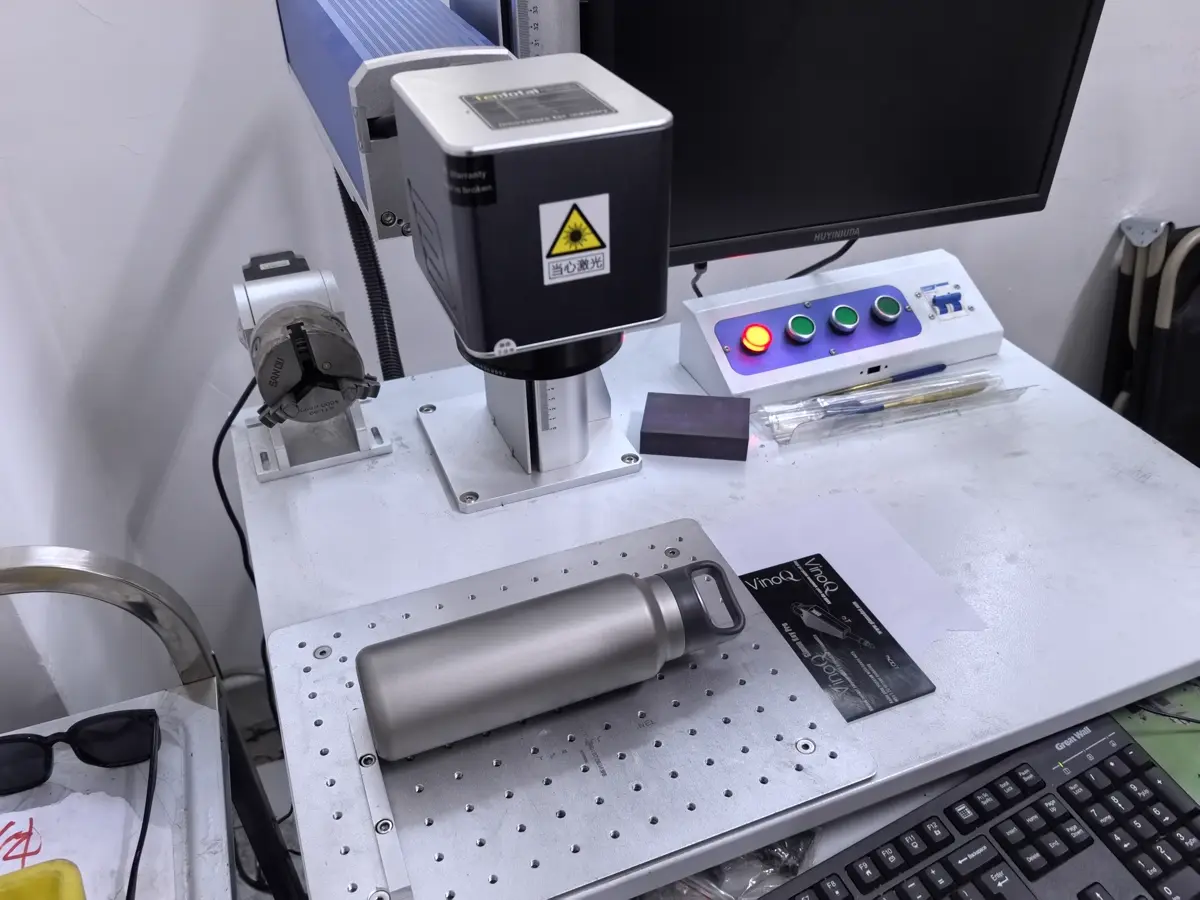
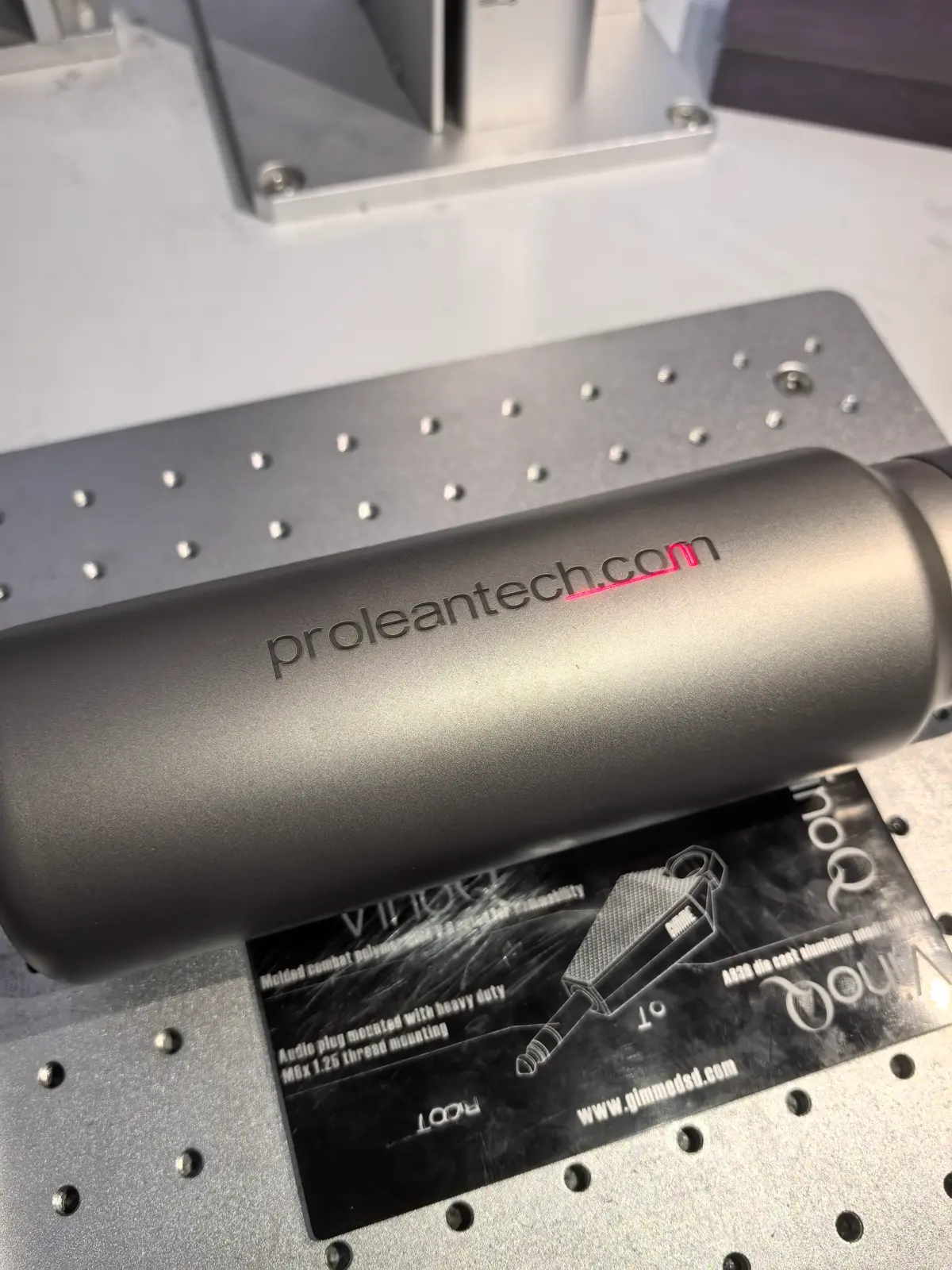
Titanium bottle laser marking videos
Watch four workshop clips from the titanium bottle marking project. The footage complements the setup and finished-part photographs.
Quality inspection and titanium material identification
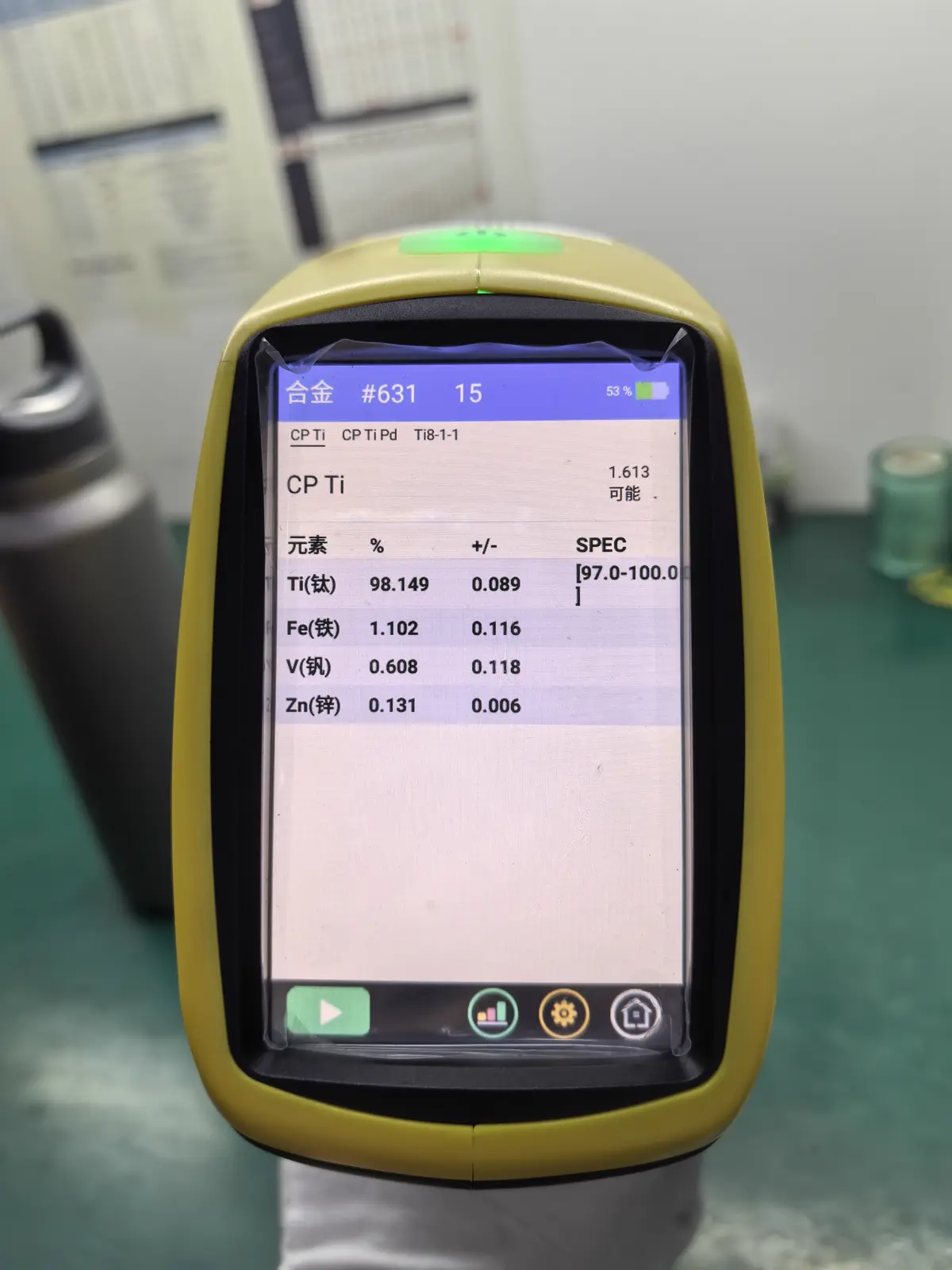
The screen is a field identification record, not a material certificate. It does not establish a specific titanium grade or confirm that the measurement location corresponds to this bottle. Keep the material certificate and part traceability with the job when a grade is specified.
For the mark itself, inspect spelling, orientation, position, stroke continuity and contrast against an approved sample. Depth, abrasion resistance and service durability require defined tests; the supplied images contain no such results.
Results and guidance for titanium laser engraving projects
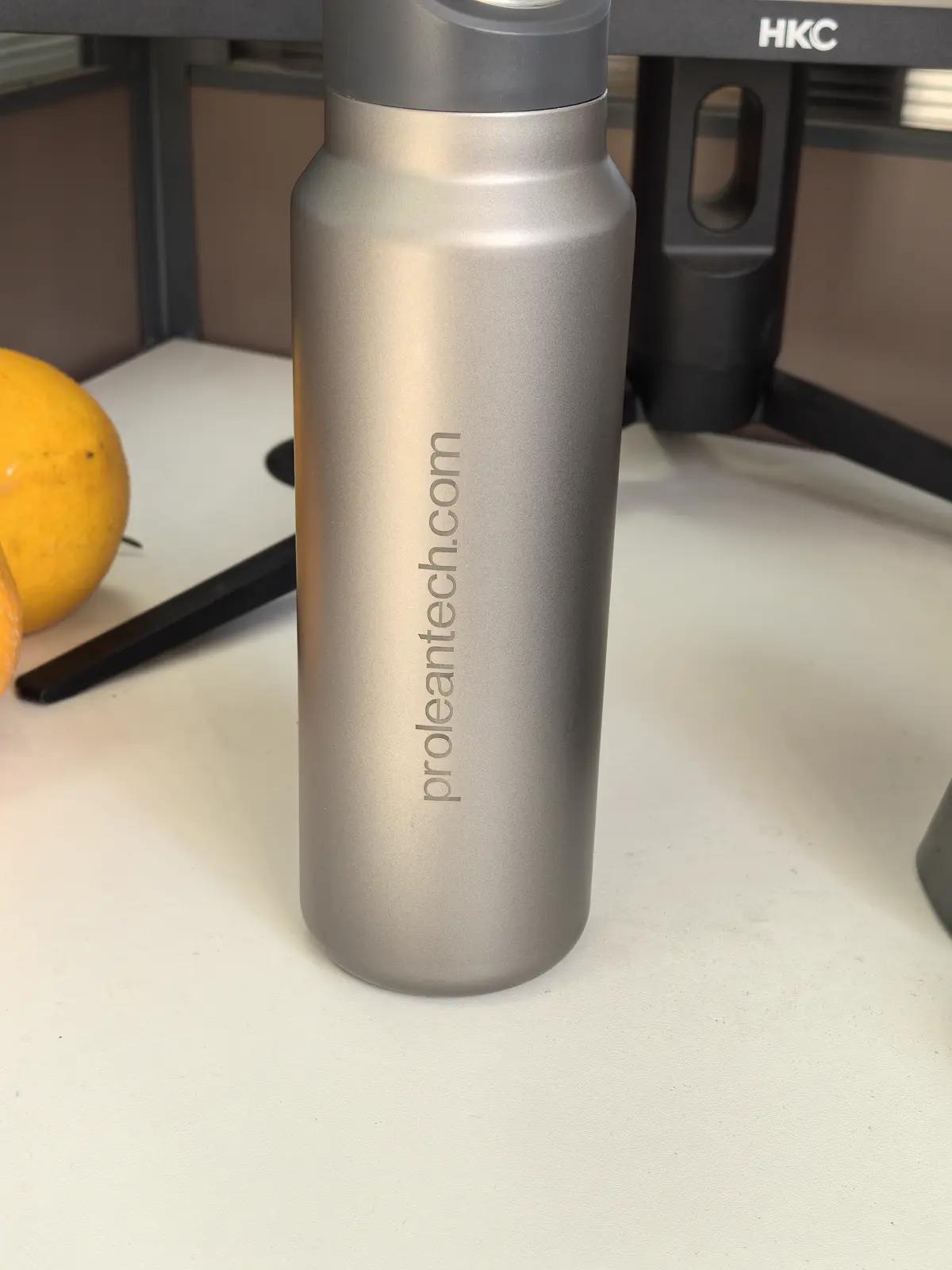
The finished photograph shows a readable wordmark and a visually continuous matte surface around it. This supports an appearance demonstration on a curved titanium part. It does not quantify engraving depth, dimensional accuracy, cycle time or batch acceptance.
For a similar job, provide the material specification, bottle geometry, artwork, logo dimensions and location, quantity and the required appearance or durability criteria. These inputs allow the marking route and sample approval plan to be agreed before production.
Questions about laser engraving titanium bottles
What does this case demonstrate?
The finished photograph shows a readable vertical logo on the titanium bottle. It demonstrates the observed marking appearance, without establishing engraving depth, abrasion resistance or batch yield.
Is the bottle a confirmed titanium alloy grade?
The project owner identifies the material as titanium. The analyzer screen shows a tentative CP Ti identification; a material certificate and traceability are needed before specifying a commercially pure titanium grade or a particular titanium alloy.
What is needed to quote a similar project?
Provide the part drawing, titanium specification, vector logo, marking dimensions and location, quantity, and appearance or durability requirements. Request a project review and quotation to agree the marking route and acceptance criteria.