
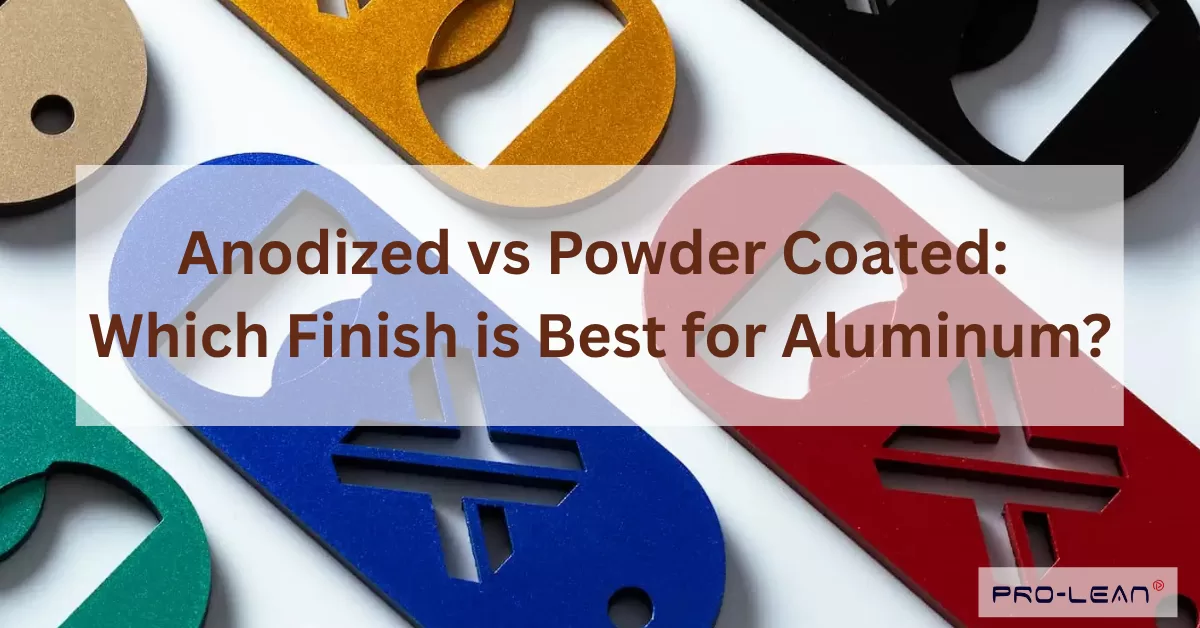
Anodized vs. powder coated aluminum
Anodizing is a long-lasting, durable finish that becomes part of the metal itself. Powder coating, on the other hand, forms a thicker protective layer on top of the surface, which gives the metal something like protective armor. In many cases, powder coating handles rough use better, while anodizing suits precise, smooth parts.
Both methods come with their own advantages and drawbacks. In this guide, we break down the differences between anodizing and powder coating, including cost, durability, and where each one makes the most sense, so you can choose the right finish for your part.
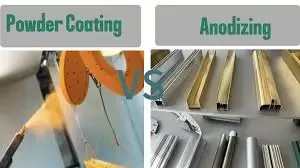
Anodized vs. powder coated parts
Quick Comparison: Anodized vs Powder Coated
Before going into the details, here is a quick comparison of the two finishes.
| Feature | Anodizing (The Integrated Bond) | Powder Coating (The Polymer Shield) |
| Surface Profile | Maintains the feel of the metal; cold to the touch. | Plastic-like; can be smooth, wrinkled, or textured. |
| Tolerance Impact | Minimal. It grows into the metal. | Noticeable. It sits on top of the metal. |
| Durability | Cannot peel or flake, but can be scratched by hard tools. | High impact resistance; may peel if the surface was not prepared properly. |
| Heat Handling | Ideal for heatsinks; does not block thermal flow. | Acts as an insulator; it traps heat inside the component. |
| Repairability | Almost impossible to touch up in the field. | Can be sanded and re-coated or touched up with matched paint. |
| Primary Risk | Batch color shifts. | Dimensional creep. |
For dimensional tolerance, anodizing is the better choice because it changes a part’s dimensions very little. Powder coating is preferred when impact resistance and surface protection matter more.
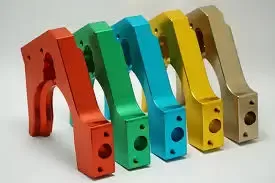
Anodized precision parts
What Is Anodizing and Why Is It an Inside-Out Finish?
Anodizing is a protective layer that grows directly out of the aluminum through an electrochemical process. Because it forms from the metal itself, the sealed surface is easy to clean and maintain. Anodized aluminum is also non-conductive, so it acts as an insulator. Common anodized applications include bike and car parts, electrical enclosures, and outdoor furniture.
Here are a few benefits of anodized aluminum:
Advantages of Anodizing and Anodized Material Properties
- Durability: Anodizing makes the surface scratch-resistant and hard, which suits components in regular use.
- Corrosion protection: The thin oxide layer protects the metal from corrosion and helps parts withstand tough conditions, such as aerospace and industrial settings. Different colors also give the metal a premium look.
- Electrical insulation: The non-conductive layer improves safety against electrical short circuits.
- Improved appearance: Anodizing enhances the metal surface and accepts dyeing, painting, and bonding during assembly. Clear and black finishes give a more professional look.
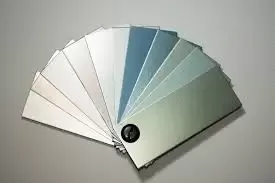
Powder coating finish options
What Is Aluminum Powder Coating? The Protective Wrap Finish
Aluminum powder coating is a process in which an aluminum profile is moved into a spray booth, and electrostatically charged polyester powder is applied to its surface. The coated profiles are then cured under heat to form a tough, uniform protective layer. Because the coating adds a measurable layer on top of the metal, it can slightly affect dimensional tolerances depending on the required thickness.
Advantages of Powder Coating and Powder Coating Material Properties
- Durability: Powder coating protects aluminum from scratches, chips, fading, and rust better than regular paint.
- Color variety: Powder coating comes in a wide range of colors and textures, which suits both consumer goods and industrial components.
- Cost-effective: Powder-coated surfaces last longer and need less maintenance, which helps manufacturers improve efficiency and production schedules.
- Environmentally friendly: Powder coating does not use harmful solvents, which creates a safer workplace.
Powder Coating Applications
Industrial machine frames, automotive wheels, electrical enclosures, and outdoor metal structures.
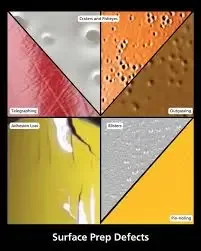
Powder coating risks and defects
Key Considerations Before Anodizing Precision Components
Why Some Parts Shouldn’t Be Anodized
Most surface finishing problems start in the CAD phase, so it helps to plan early. Anodizing changes a surface by only a few microns, which means press-fits, bearing housings, and other tight tolerances stay almost exactly as designed. Powder coating, on the other hand, can add around 0.005 inches (about 0.13 mm) to every surface. That can make M5 threads tight or stop sensors from fitting into their brackets.
Check tolerances early, and discuss a masking strategy with your surface finishing service before production. Planning this up front keeps critical features on target.
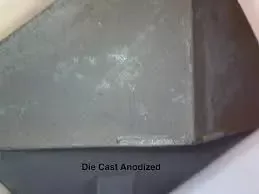
Failed anodizing on die-cast aluminum
Why Die-Cast Aluminum Is Not Suitable for Anodizing
Trying to anodize die-cast parts, such as those made from A380 alloy, is one of the most expensive finishing mistakes. These castings contain a high amount of silicon. Silicon helps molten metal flow smoothly into molds, but in an acid bath it causes problems. It does not oxidize properly, which leaves a patchy, dirty surface that even deep black dye cannot fully hide.
For die-cast parts, powder coating is often the better choice, because it sits on the surface like a protective wrap.
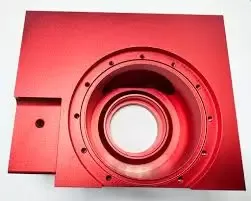
UV exposure and color fading in anodized aluminum
Try Prolean Now!
Solving the Pink Problem: UV Fading and Marine Air
Many engineers notice their part colors fading after just a few months. In most cases, the cause is the finish selection, especially for parts used outdoors or in UV-exposed environments, where not all coatings perform equally over time.
The main reason is UV light. When a part stays in direct sunlight for long periods, UV rays slowly break down the dye and the color fades. Humidity, temperature changes, and constant light exposure can also affect color.
In these situations, powder coating is often the better choice. Its colors may not look as vibrant as anodizing, but its durability means it performs better in the long run.
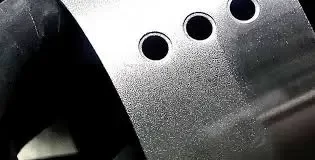
Anodized surface preparation for powder coating
Can You Powder Coat Over Anodizing?
Yes, you can powder coat over anodizing, but not by simply spraying it on. Anodized surfaces are very smooth, so powder does not grip them properly, and a direct coat will peel later. A light sandblast or chemical etch first creates the surface roughness the powder needs to hold on.
Anodizing vs Powder Coating: Which Should You Choose?
Use this table to match your project requirements to the right finish.
| Project Priority | Choose Anodizing If… | Choose Powder Coating If… |
| Dimensional Accuracy | You need tight tolerances or press-fit bearings. | You can allow a 0.1 mm buffer in the design. |
| Thermal Needs | The part is a heatsink or needs to shed heat. | Heat transfer is not critical. |
| Mechanical Fit | Components must slide or rotate against each other. | Parts are static frames or outer housings. |
| Material Type | The part is aluminum or titanium. | The part is steel, stainless steel, or die-cast. |
| Visual Goal | You want a metallic, high-end tech look. | You need specific brand colors (RAL or Pantone). |
| Environment | The part stays in a cleanroom or high-heat zone. | The part lives outdoors or faces heavy impacts. |
Try Prolean Now!
Conclusion
The better finish depends on the part’s application and performance requirements. If you need a smooth, precise finish with minimal dimensional change, anodizing is the more suitable option. If you need long-lasting color for outdoor use, or bolder color options, powder coating is the better fit.
Before choosing a surface finishing service, check your tolerances and application requirements first. Our surface finish services can help you compare options for your specific part.
Frequently Asked Questions
Is powder coating or anodizing better for salty or marine air?
If your part is aluminum, hard anodizing (Type III) can be the better choice, because there is no separate layer that can peel or delaminate. Powder coating also protects well, but if saltwater gets through a chip or scratch, corrosion can spread underneath the coating over time.
Why did my anodized part turn pink?
An anodized part usually turns pink because organic dyes fade under UV exposure. For outdoor use, inorganic or metal-salt dyes hold up much better and last longer.
Which finish provides superior chip resistance for automotive wheels?
For automotive wheels, powder coating generally offers better chip resistance. Anodizing is harder, but it is also thinner and somewhat more brittle than powder coating’s thicker protective layer.
0 Comments