
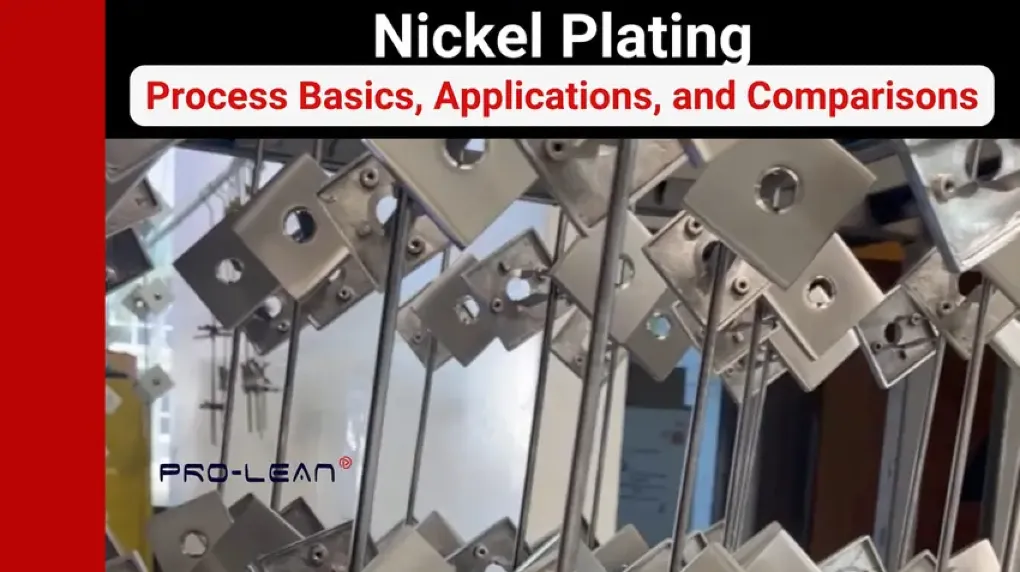
Nickel plating feature image
Nickel plating is an electrochemical process that deposits a layer of nickel on copper, zinc, steel, or other suitable base materials. It typically enhances the appearance and performance of the base material.
Nickel plating is a valuable solution for engineers in key industries such as automotive, aerospace, and electronics. It answers the question of achieving a better outlook and performance without using a different base material. It’s a big cost saver because the base material doesn’t have to be expensive.
When performed by an expert service provider, nickel plating delivers excellent resistance to wear and corrosion. It also makes the item match the appearance requirements of the market, all at a lower cost compared to solid nickel.
This guide is about the nickel plating process basics, equipment used, industries served, and comparison to alternative technologies.
What is Nickel Plating?
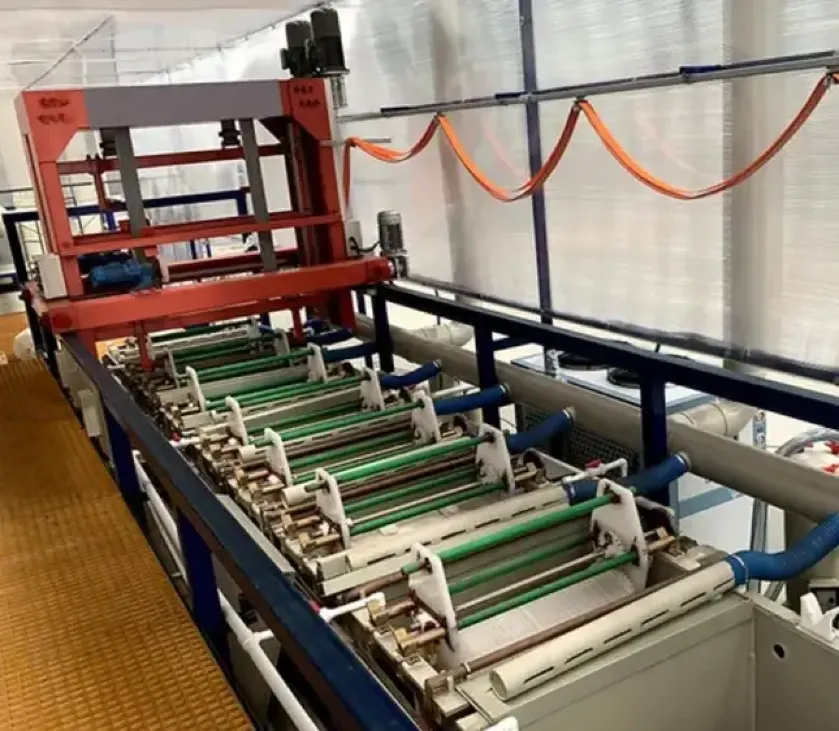
Nickel plating
Nickel plating is an electroplating process that entails depositing nickel on other surfaces. This engineering and decorative process is commonly performed on base metals such as copper, steel, and zinc. With special treatment, nickel plating can also be done on plastics, magnesium, and stainless steel.
How Does Nickel Plating Work?
The nickel plating process starts with substrate preparation. The other steps are activation treatment, pre-plating, main plating, and post-treatment.
Substrate Preparation – The substrate is degreased, cleaned, and etched to remove oxides. Mechanical treatment such as grinding may be necessary to achieve a uniform surface.
Activation Treatment – Activation treatment involves removing the fine oxide film formed during rinsing. Its main function is to enhance chemical activity. For copper and steel substrates, the acid pickling activation method is used.
Pre-plating – Pre-plating, also called flash plating, is about preventing corrosion during the main plating session. The flash plating creates a very thin coating with excellent adhesion.
Main Plating – This is the mainstay of the nickel plating process. Different types of nickel plating solutions result in different types of nickel plating – bright nickel plating, semi-bright nickel plating, dull nickel plating, Watts nickel plating, and so on.
Post-treatment – Once the substrate has been nickel plated, it undergoes rinsing, passivation, drying, and polishing. These efforts enhance the appearance and performance of the coating.
What are the Functions and Benefits of Nickel Plating?
Nickel plating is used widely to enhance the value of products and physical properties.
Enhanced value of products – improves the appeal and outlook of consumer goods and other products
Enhance physical properties – It is used to enhance properties such as wear resistance, corrosion resistance, and heat resistance
These functions bear benefits such as;
- Improved appearance
- Quality base for additional painting or coating
- Conductive and magnetic properties
- Dimensional uniformity
- Cost-effective surface finish
Try Prolean Now!
Industrial Applications of Nickel-plated Parts
Nickel-plated parts are widely used in automotive, coinage, plastics, aerospace, and electronic industries. More on these applications is discussed below.
Nickel Plating in the Automotive Industry
Nickel plating in the automotive industry provides the much-needed heat and corrosion resistance. Its thin but dependable coating is used on brake parts, fasteners, and bolts.
Specific application areas for nickel plating in the car industry include parking brakes, cylinder liners, drying cylinders, and hydraulic systems.
Nickel Plating for Coinage
The coinage industry often uses nickel-plated steel for those shiny, attractive coins. The coating enhances the durability of the coins at a low cost. When the coins are no longer useful, the steel and nickel can be easily recycled.
Nickel Plating in Plastics Manufacturing
ABS (Acrylonitrile butadiene styrene) plastic mouldings are usually nickel-plated to enhance durability in parts for electronics, consumer goods, automotive parts, and taps.
Nickel Plating in the Aerospace Industry
This plating helps meet the strict aerospace requirements for uniform thickness, excellent corrosion resistance, unmatched durability, and reliable adhesion. Many aerospace manufacturers are increasingly using nickel plating to help meet their performance and safety requirements.
Electronic Industry and Nickel Plating
Nickel plating is commonly applied to microprocessors, connectors, and circuits. It enhances corrosion resistance and solderability.
Types of Nickel Plating Methods
The two main types of nickel plating are Electrolytic Nickel Plating and Electroless Nickel Plating. Each of these categories encompasses some nickel plating approaches, as the section below highlights.
Electrolytic Nickel Plating
-Bright Nickel Plating
-Satin Nickel Plating
-Black Nickel Plating
Electroless Nickel Plating
-High-Phosphorus Electroless Nickel Plating
-Medium-Phosphorus Electroless Nickel Plating
-Low-Phosphorus Electroless Nickel
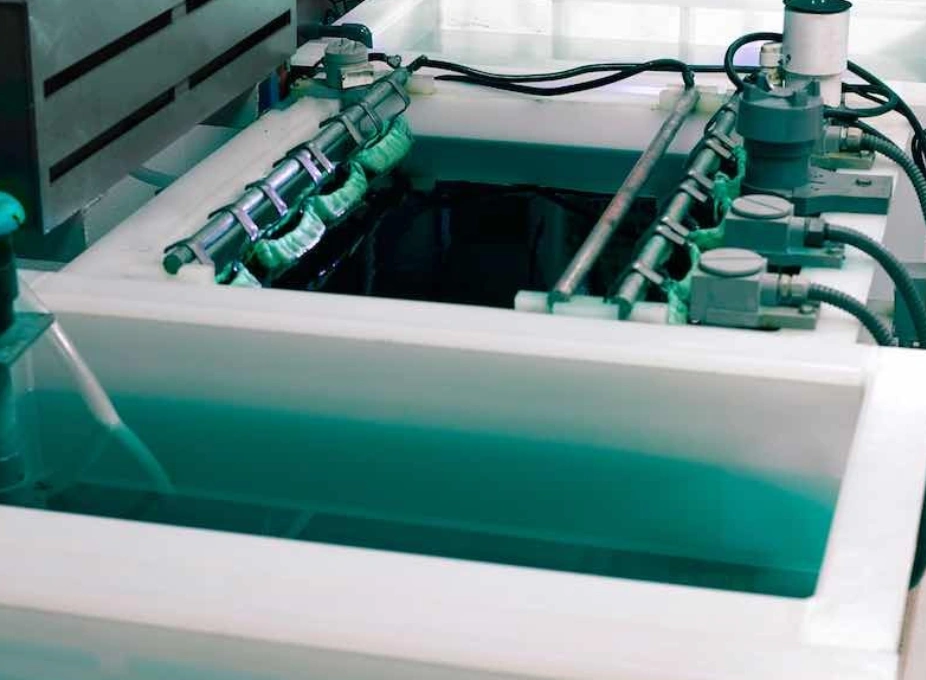
Electroless nickel plating
Below is a further comparison table for electrolytic vs electroless nickel plating
|
Element |
Electrolytic nickel plating |
Electroless nickel plating |
|
Coating mechanism |
Based on the electric current |
Autocatalytic chemical reduction |
|
Coating uniformity |
Based on the geometry– thinner in blind holes, thicker at the edges |
Uniform even on complex parts |
|
Thickness management |
Set through the current density and plating time |
Set through the bath immersion time |
|
Hardness |
Not usually heat treated for hardness |
Heat treatment applies |
|
Typical applications |
Chrome undercoat, decorative finishes |
Internal bores, blind holes, and valve bodies |
Considerations When Choosing a Nickel Plating Method
The ideal nickel plating method depends on desired part appearance and geometry, and the resistance requirements for dependable service.
Appearance
For appearance, consumer-facing components are best coated in bright nickel for its mirror finish. If you want the part to conceal fingerprints and scratches, a matte surface is a good choice.
Part Geometry
For a complex part with blind holes, it is better to use the electroless nickel plating method because it does not depend on current flow. The current density for Electrolytic plating concentrates on edges, so it can produce uneven coating on complex parts.
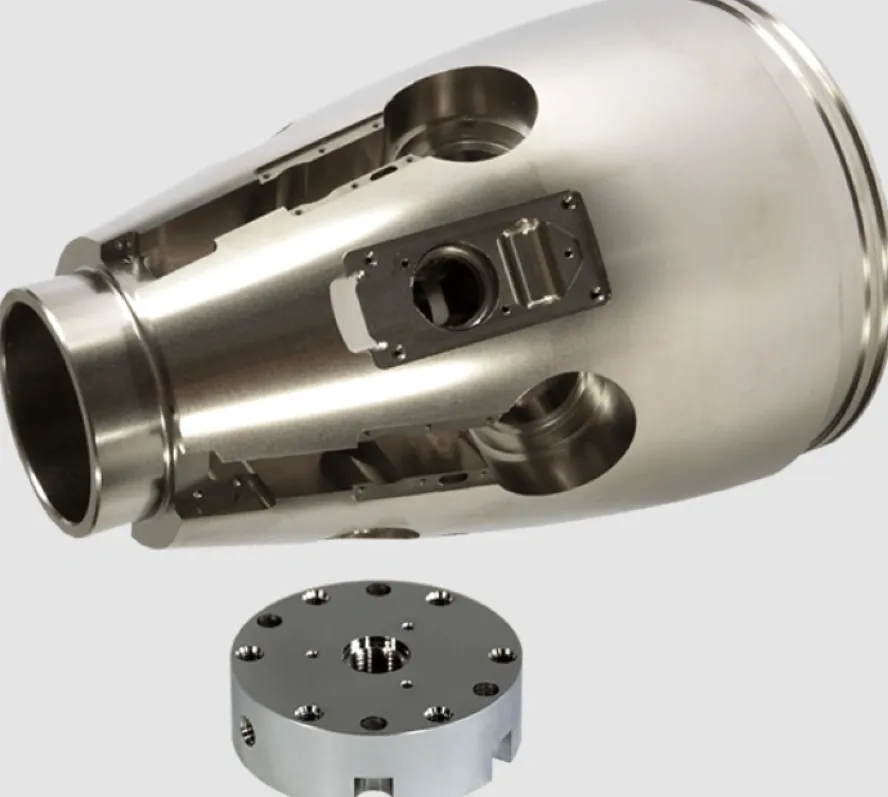
Electroplated complex part
Resistance Requirements
High-phosphorus electroless nickel-plated parts perform the best in corrosive environments, including marine environments. The low-phosphorus grades may not be as resistant, but they are harder.
Try Prolean Now!
Nickel Plating for Different Metals
Nickel plating aluminum, brass, steel, copper, zinc, and other engineering metals is common.
| Engineering metal | Notes |
| Aluminum | Zincate needs to be applied first to counter the natural aluminum oxide, which can hinder adhesion during the nickel plating aluminum process |
| Brass | Copper or nickel strike required first to prevent zinc from contaminating the nickel plating solution |
| Steel | Acid pickling is enough to prepare the steel surface for nickel plating |
| Copper | With cleaning, degreasing, and pre-treatment, the metal takes the nickel coat well |
| Zinc | A copper strike is required for quality adhesion |
Equipment Used in Nickel Plating
The main equipment in nickel plating includes the anode, cathode, DC power supply, and the plating tank. Others are heating components, agitation systems, safety equipment, and chemical baths.
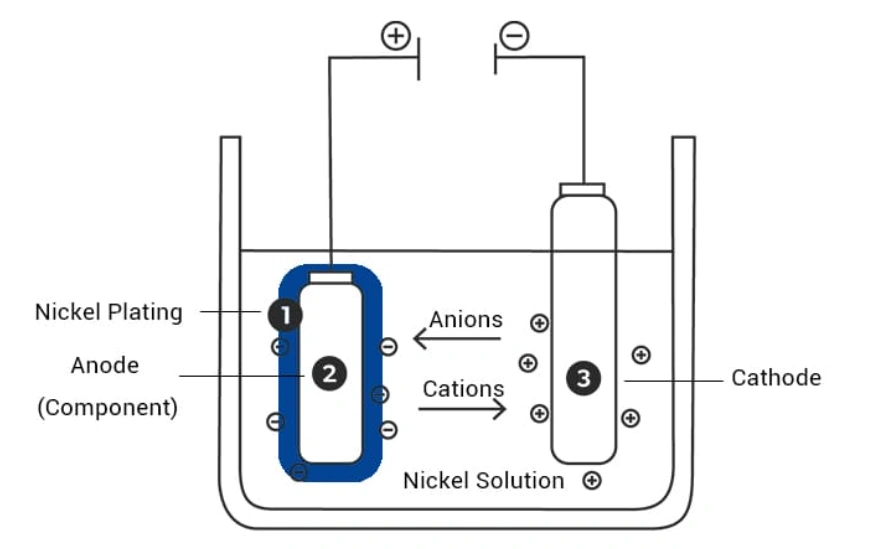
Nickel plating setup
Anode and cathode – These terminals conduct the required DC power for electroplating. The nickel anode supplies nickel ions.
DC power supply – This is the electrical current used for electrochemical deposition
Plating Tank – This is the tank bearing the chemical bath. It holds the piece when it is being plated.
Heating Components – These components ensure that the process occurs at the optimal temperature.
Agitation Systems – These systems circulate the chemical solution, ensuring that the nickel plating is even and smooth.
Safety Equipment – These protect the operator from hazardous fumes and chemicals associated with the electroplating process.
Chemical Baths – These are nickel plating solutions carrying chemicals such as nickel salts and boric acid.
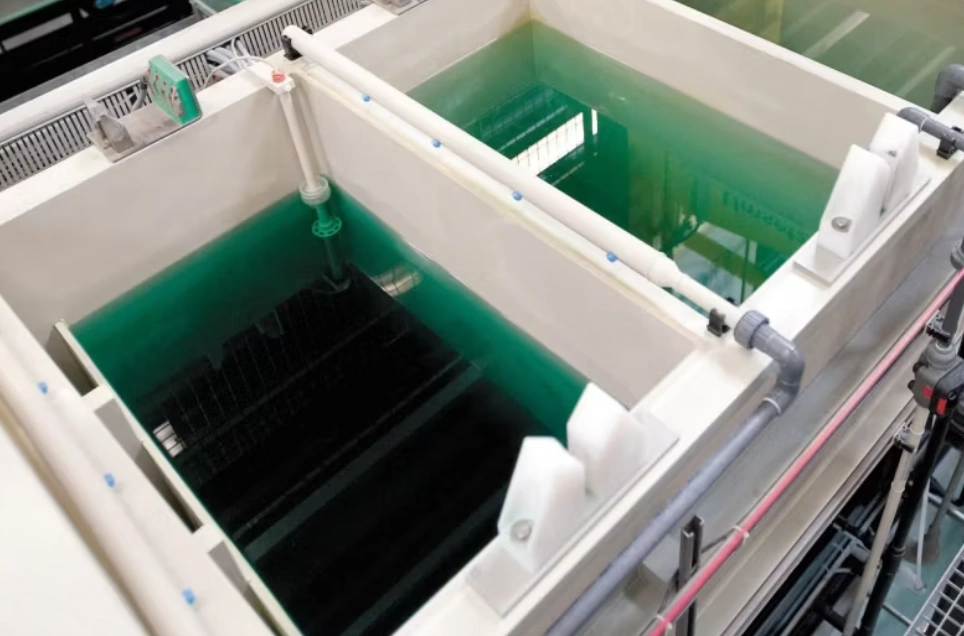
Nickel plating bath
What are the Main Parameters in Nickel Plating?
There are six main variables in the plating process: Current, Agitation, pH level, Temperature, Coating thickness, and Bath composition.
Current – The current density should be balanced at 2 – 7 A dm-2
Agitation – The bath solution should be clear and homogeneous
PH level – The PH level should be within the specified boundaries – 3.5 – 4.5.
Temperature – The recommended temperature for most baths is 40-60°C, which is based on the ‘Watts’ formulation developed by Professor Oliver P. Watts in 1916. [2]
Coating thickness – This depends on the application severity. The coating thickness categories are functionally categorized as;
- Decorative nickel – A bright finish applied as an undercoat or standalone on luxury items and plumbing fixtures
- Corrosion protection – The plating forms a strong passive oxide barrier of uniform thickness, which offers corrosion protection
- Engineering/wear-critical coatings (5 µm to 125 µm or more) – A corrosion- and wear-resistant coat with dimensional restoration capability. [2]
Bath composition – The throwing power and conductivity of the nickel deposit depend on the ratio of boric acid (30 – 45 g L-1), nickel sulfate (240 –300 g L-1), and nickel chloride (30 – 90 g L-1). [2]
Types of Chemicals Used in Nickel Plating?
The main types of chemicals in nickel plating include nickel sulphate, nickel chloride, boric acid, and complexing agents.
Comparing Nickel Plating with Other Metal Finishing Processes
Nickel plating is often compared to other finishing processes, including chromium plating, zinc plating, gold plating, and anodizing. Choosing between nickel plating and these options involves factors such as hardness, corrosion method, wear performance, cost, and material compatibility.
Nickel Plating vs. Chromium Plating
Though more expensive, chromium plating is harder and more wear-resistant. The controlled nature of hexavalent chromium also means using the finishing comes under higher regulatory watch.

Chromium plated parts
Nickel Plating vs. Zinc Plating
The main difference is in the corrosion mechanism. For a nickel plate, the coating is a barrier, while zinc plating presents sacrificial corrosion. Zinc plating is the cheaper of the two.
Nickel Plating vs.Gold Plating
Gold plating is renowned for superior oxidation resistance and conductivity. However, its high cost means that most manufacturers can only use it for contact surfaces. Typically, nickel is applied first to offer a barrier and extend the life of gold.
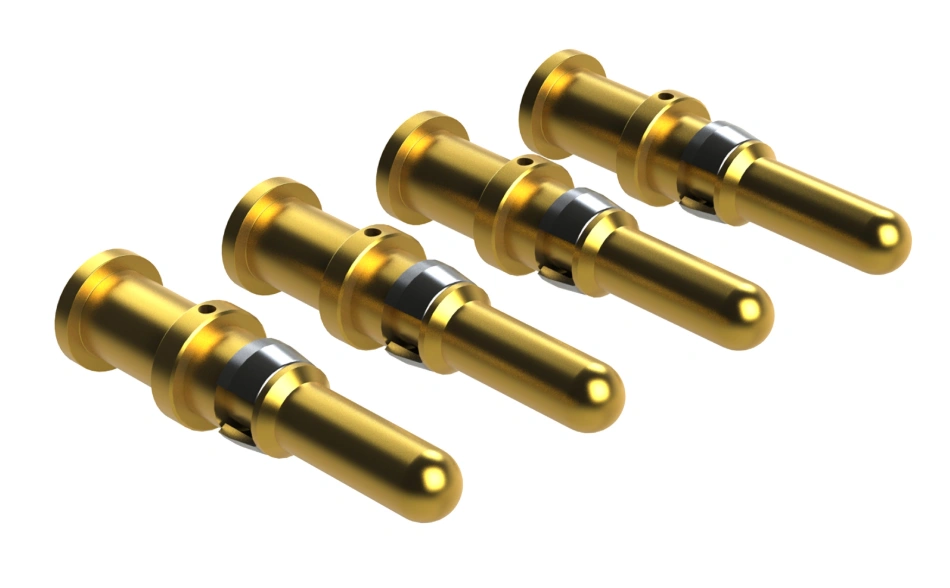
Gold-plated contact pins
Nickel Plating vs. Anodizing
Nickel plating is versatile, working with a wide range of ferrous and nonferrous metals. Anodizing is only possible with aluminum and selected nonferrous metals. The electrical conductivity of nickel plating is another notable difference. If the part requires conductivity, anodizing is avoided because it is insulating.

Black anodized aluminum
More about these comparisons is summarized in the table below.
|
Process |
Hardness |
Mechanism |
Wear Resistance |
Relative Cost |
Common Applications |
|
Nickel plating |
Moderate to high |
Barrier |
Good |
Moderate |
Blind holes, precision parts |
|
Chromium plating |
Highest in this group |
Barrier |
Best |
High |
Tooling, engine parts |
|
Zinc plating |
Low |
Sacrificial |
Poor |
Lowest |
Fasteners, low-load parts |
|
Gold plating |
Softest |
Barrier |
Poor |
Highest |
Electrical connectors, contacts |
|
Anodizing |
Varies according to type |
Base metal converted to oxide layer |
Good – Hard anodize |
Moderate |
Heat sinks, housings |
Try Prolean Now!
Challenges of Nickel Plating
Its positives aside, nickel plating presents challenges such as demanding surface preparation, composition maintenance, and health & environmental concerns.
Surface Preparation – There is no fixing the mess that occurs after plating on a surface that had residues
Composition Maintenance – Concentration and levels of components change with time, so continual testing is a requirement
Health & Environmental Concerns – Fumes, wastewater, and nickel sulfate must be treated and managed according to existing occupational and environmental standards. [2]
How to Maintain Nickel-Plated Surfaces?
Nickel-plated components keep their performance and appearance if cleaned regularly and protected from ammonia-based cleaners and abrasives.
Quality Control in Nickel Plating
For a nickel-plated part to meet specifications, the four main quality checks are visual & optical inspection, corrosion resistance testing, adhesion testing, and coating thickness measurement.
|
Quality Check |
Checks |
|
Visual & Optical Inspection |
Surface defects |
|
Corrosion Resistance Testing |
Reliability against corrosive conditions |
|
Adhesion Testing |
Mechanical stress-triggered peeling or flaking |
|
Thickness Measurement |
Micron range of the deposit |
Nickel Plating ISO Standard
Several standards govern nickel plating, including ISO 4527 (or ASTM B733) for electroless nickel, ISO 1456 for decorative electrolytic nickel, ISO 4525 for nickel on plastics, and ISO 4526 for engineering-grade electrolytic nickel.
Guide for Specifying Nickel Plating
The five sequential steps of specifying nickel plating are coating type, base material, layer details, heat treatment, and finish:
Step 1: Choose the Nickel Plating Type
- Electroless: complex, precise, corrosion resistance. The reference standard is ISO 4527 or ASTM B733
- Electroplated: Cost-effective/large volumes, decorative. The reference standard is ISO 1458
- Confirm the budget and performance requirements before settling on a nickel plating type
Step 2: Define the Base Material
The adhesion and pre-treatment requirements depend on the base material. Both the material type and exact alloy designation should be specified.
- Material type, alloy designation
Step 3: Define Layer Details where Applicable
The two variables here are phosphorus content (electroless) and desired thickness.
- Phosphorus Content Levels – The levels are Low phosphorus (between 1 % and 3 %), Medium phosphorus (5 to 9 % P), and High phosphorus (more than 10 % P). (1)
- Coating thickness – Thinner layers are for cosmetic use, while thicker layers are for corrosive or heavy wear service. The minimum thicknesses for the thickness levels are;
- SC1 – 5 µm
- SC2 – 13 µm
- SC3 – 25 µm
- SC4 – 75 µm (1)
Step 4: Specify Heat Treatment
The two major goals of heat treatment in nickel plating are hardening and dehydrogenation.
Hardening – This is done after plating for a substantial increase in electroless nickel hardness
Dehydrogenation – The heat treatment, also called baking, minimizes the hydrogen embrittlement risk.
Note that the heat treatment step can be overlooked if the hydrogen embrittlement risk is minimal and the part is non-structural.
Step 5: Other Considerations
There is also another set of considerations that involve appearance and thickness tolerance. Specifically, these are the finish, rack contact points, and coating thickness tolerance.
- Finish – bright, semi-bright, or matte
- Rack contact points
- Coating thickness tolerance
Try Prolean Now!
In Conclusion
Nickel plating is a valuable process for enhancing wear resistance, corrosion resistance, and appearance of components across various industries, including electronics, automotive, and aerospace.
The process is longstanding in these industries, with cost-effective and adaptable results. The best plating service providers can adjust nickel plating according to the specifics of your job.
Whether you are enhancing the visual appeal of products, finalizing fastener manufacturing, or enhancing the performance of precision aerospace parts, the right nickel plating equipment, process, and chemistry are necessary.
With our nickel plating service, you can get the results you desire faster at an affordable rate. Send us your project design so we can share a custom quote. You can also contact our engineering team for a more direct discussion of the project specs.
FAQs
What is the cost of nickel plating?
The nickel plating cost depends on part geometry, part size, plating method, volume, and desired coating thickness. The tighter bath control requirements of electroless nickel make the process generally more expensive than electrolytic nickel.
Does copper accept electroless nickel?
Yes, copper can be plated with electroless nickel. This requires proper activation and surface cleaning.
Is nickel more expensive than chromium?
No, chromium plating is more expensive than nickel plating. The process is not only more expensive but also requires higher regulatory compliance expenses. Note that high phosphorus content can significantly increase the cost of nickel plating, almost to the chromium plating level.
Resources
[1]https://store.astm.org/b0733-22.html
[2]https://nickelinstitute.org/media/lxxh1zwr/2023-nickelplatinghandbooka5_printablepdf.pdf

0 Comments