
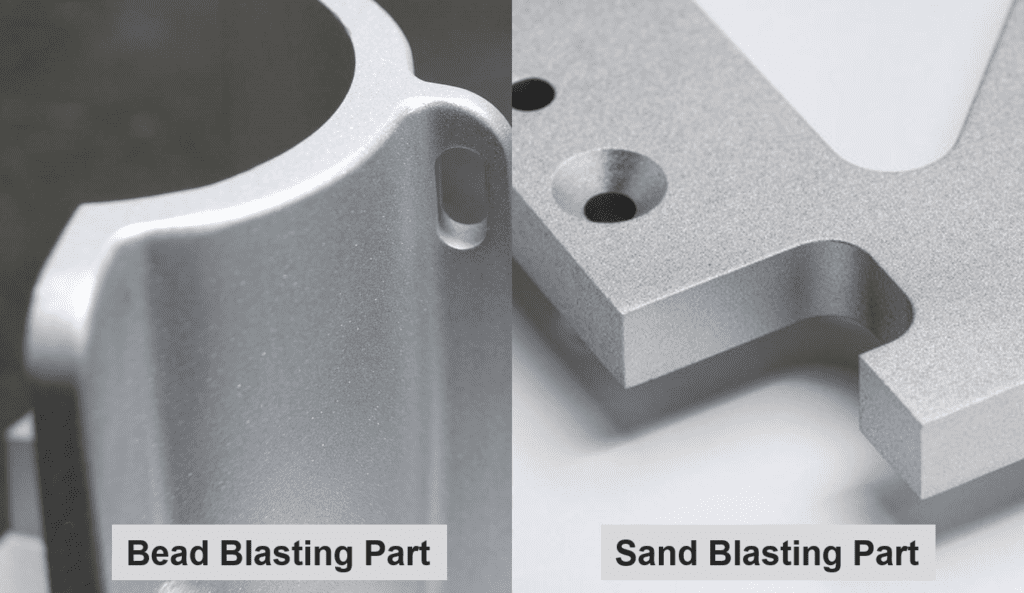
Manufactured parts often require surface finishing operations to achieve specific surface properties and aesthetic requirements. Bead blasting and sandblasting are two common finishing processes used for CNC-machined, cast, and assembled parts. Although bead blasting and sandblasting are similar in nature and follow the same basic working principle, their differences can be seen in blasting media, process intensity, applications, and final surface results.
Bead blasting usually provides a gentler finishing method suitable for delicate materials, while sandblasting is often preferred for aggressive cleaning, rust removal, and surface preparation.
This article will explain the differences between bead blasting and sandblasting in detail to help you make an informed decision based on your specific requirements.
What Is Bead Blasting?
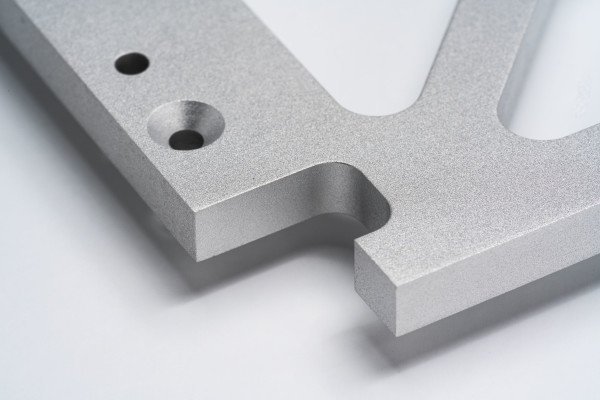
Aluminum parts sandblasted
Bead blasting is a surface finishing process that uses abrasive steel, ceramic, or glass beads to remove fine surface material and create a smooth, satin, or slightly shiny finish. This method uses a blasting gun to propel blasting beads toward the part surface at high pressure, typically between 20 and 70 psi.
When beads are propelled onto the surface under controlled pressure, their abrasive action can produce several effects, including cleaning dirt and grime from the surface, removing old paint or coatings, and creating a uniform, smooth surface texture.
The gentle nature of bead blasting, along with the shape and material of the blasting beads, distinguishes it from more aggressive methods such as sandblasting.
Table 1: Common Bead Types and Sizes
| Material | Size (Microns) | Applications |
|---|---|---|
| Glass | 50-200 | Automotive, aerospace |
| Ceramic | 100-300 | Delicate materials, fine polishing |
How Is Bead Blasting Performed?
As mentioned above, bead blasting involves propelling steel beads or crushed glass beads onto a machined part at high pressure. The blasting media creates small indentations on the component surface, resulting in a consistent and uniform finish.
The final result is usually a satin or matte appearance. Depending on the roughness of the blasting media used, the surface may appear uniformly rough or relatively smooth.
One major advantage of bead blasting is that it helps hide machining marks or minor surface imperfections on the part. This is because bead blasting produces a slightly brighter and more uniform surface tone, which helps mask visible differences on the component surface.
Bead Blasting Techniques and Equipment
Bead blasting requires specialized equipment to control the size, shape, and material of the blasting beads, as well as the blasting pressure and angle. Common equipment includes blasting cabinets for small components, blasting rooms for larger parts, and pressure blasting systems for controlling blasting pressure.
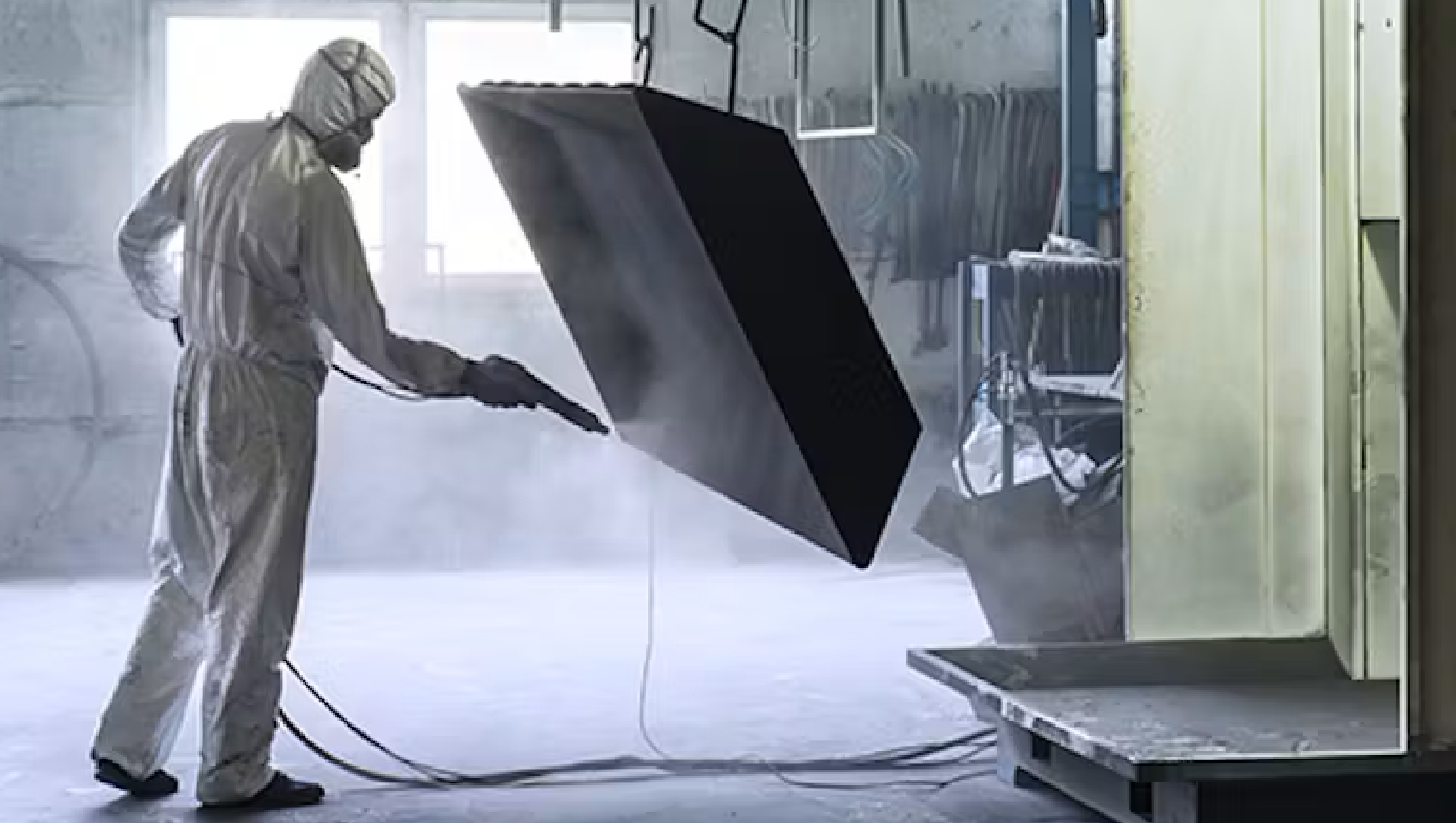
Therefore, selecting the correct bead blasting parameters, such as equipment type, blasting pressure, and bead size, is essential to achieve the desired surface finish without excessive wear or part deformation.
Table 2: Bead Blasting Equipment Specifications
| Equipment Type | Pressure Range (PSI) | Media Capacity (lbs) | Typical Applications |
|---|---|---|---|
| Blasting cabinet | 40-130 | 25-100 | Small components, delicate materials |
| Blasting room | 50-150 | 100-1000 | Large parts, industrial applications |
| Pressure blasting system | 60-150 | 50-500 | Versatile applications |
Applications and Uses of Bead Blasting
Bead blasting is a versatile surface finishing technique used across multiple industries. In the aerospace industry, it is used to clean and finish precision components without compromising structural integrity. In the automotive industry, it is used to restore old vehicle parts by removing paint and oxides. In furniture restoration, bead blasting can gently remove old paint and finishes from antique furniture while preserving the natural beauty of the wood.
- It provides a smooth surface without causing deep abrasion.
- It is suitable for cleaning complex and delicate components.
- It can use environmentally friendly materials, such as recycled glass beads.
What Is Sandblasting?
Sandblasting, also known as abrasive blasting, involves propelling fine granular media at high speed onto a surface. Traditionally, sand was the preferred abrasive material, but today, various other media are used depending on the application and surface requirements.
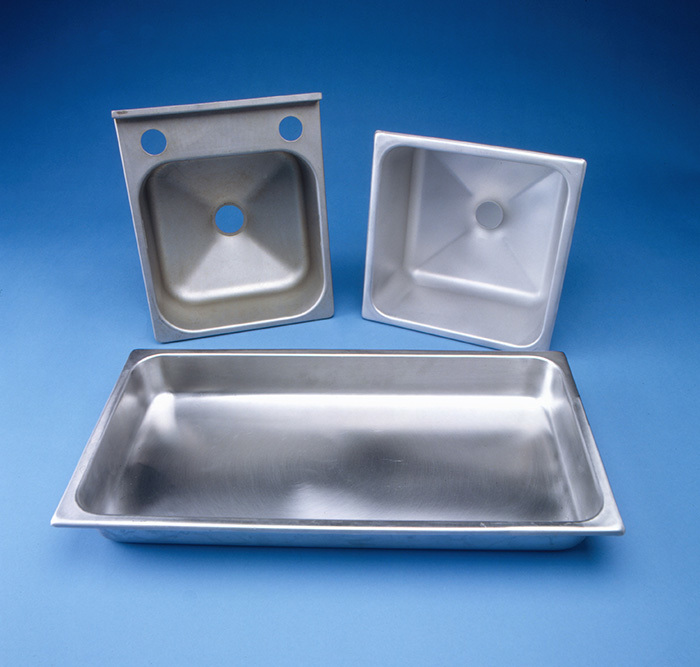
Stainless Steel Sandblasting Treatment
Sandblasting is a versatile technique used for rust removal, corrosion removal, contaminant and grease cleaning, surface preparation before painting or coating, and surface texturing to improve adhesion. It can handle large areas and rough surfaces and is suitable for different materials and finish requirements.
Table 3: Common Sandblasting Media Types and Grit Sizes
| Material | Grit Size Range | Applications |
|---|---|---|
| Sand | 16-220 | General cleaning, rust removal |
| Silicon carbide | 20-220 | Aggressive cutting, glass etching |
| Aluminum oxide | 16-220 | Paint removal, surface preparation |
| Steel grit | G10-G120 | Fast cutting, deep surface profiling |
How Is Sandblasting Performed?
Sandblasting follows the same basic principle as bead blasting. It uses high pressure and is often performed inside a blasting cabinet or enclosed system to prevent exposure to dust and abrasive particles. The process may also use reusable abrasive media depending on the material and application.
Sandblasting is suitable for removing paint or rust from old components and preparing new surfaces for subsequent finishing processes. However, sandblasting is generally more aggressive on metal surfaces and may affect the dimensional accuracy of the part if not properly controlled.
Sandblasting Techniques and Equipment
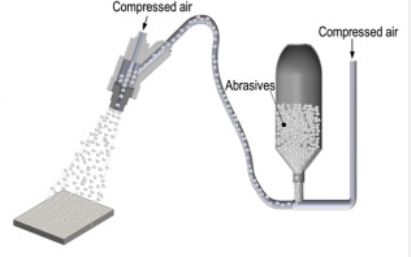
Sandblasting Process
Sandblasting techniques and equipment must be carefully selected according to the application requirements. Key factors include abrasive type, particle size, media hardness, blasting pressure, nozzle size, and the initial condition of the surface.
Table 4: Sandblasting Equipment Specifications
| Equipment Type | Pressure Range (PSI) | Media Capacity (lbs) | Typical Applications |
|---|---|---|---|
| Siphon blasting system | 30-100 | 50-300 | Light cleaning, detail work |
| Direct pressure system | 50-150 | 100-1000 | Rust removal, surface preparation |
| Automatic blasting system | 60-180 | 200-2000 | High precision, industrial-scale production |
Applications and Uses of Sandblasting
In the automotive industry, sandblasting is used to remove rust, paint, and oxides from vehicle bodies before repainting. In the construction industry, sandblasting can clean and restore surfaces such as brick, stone, and concrete by effectively removing old paint and dirt. In metal fabrication, it is essential for preparing surfaces before welding or coating to ensure better adhesion and a clean surface.
For machined parts, sandblasting can remove burrs, machining marks, and other minor surface defects.
1.It creates a uniform surface texture.
2.It is ideal for cleaning and preparing surfaces for subsequent processes, such as anodizing or painting.
3.It can use environmentally friendly abrasives, such as recycled glass or walnut shells.
What are the Key Differences between Sand and Beadblasting?
The decision to choose between glass bead blast and sandblasting often comes down to understanding the unique aspects, requirements, and results of each method. Here’s a detailed comparison:
Sandblasting uses sharp-edged sand particles(sand, silicon carbide, and aluminum oxide) to aggressively clean and etch surfaces, making it suitable for heavy-duty tasks. On the other hand, bead blasting uses spherical glass or ceramic beads, which provide a softer abrasive action. It is ideal for delicate and intricate components.
Table 5: Comparison of Materials and Hardness
| Method | Typical Materials | Mohs Hardness | Application |
|---|---|---|---|
| Bead Blasting | Glass, Ceramic | 5-6 | Delicate surfaces, Polishing |
| Sandblasting | Sand, Silicon Carbide | 6-9 | Rust removal, Rough surfaces |
Next, let’s compare beadblasting vs sandblasting in different aspects.
1. Techniques and Equipment
The equipment for bead blasting and sandblasting varies, reflecting differences in pressure, nozzle design, and media size.
Table 6: Comparison of Techniques and Equipment
| Aspect | Bead Blasting | Sandblasting |
|---|---|---|
| Nozzle Type | Wide | Narrow |
| Pressure | Moderate (40-150 PSI) | High (50-180 PSI) |
| Media Size | Small (50-300 Microns) | Varied (16-220 Grit) |
2. Environmental Impact and Safety
Bead blasting, despite being a gentler process, still has environmental impacts that need to be considered. Possible water contamination, energy consumption, and waste management are all factors that need to be considered when utilizing this method for surface finishing. Proper protocols must be in place to ensure that bead blasting is performed in an environmentally responsible manner.
Sandblasting is a method that uses abrasive materials, which requires careful handling of environmental concerns. The process can produce airborne dust and pollution, high noise levels, and consume resources.
Environmental considerations include proper disposal of spent media, ensuring adequate ventilation and dust control for air quality, and providing appropriate personal protective equipment (PPE) for operator safety.
3. Cost and Efficiency
Cost and efficiency may also factor into the decision-making process, with sandblasting often being more cost-effective but potentially more aggressive.
Table 7: Cost and Efficiency Comparison
| Aspect | Bead Blasting | Sandblasting |
|---|---|---|
| Average Cost | Higher | Lower |
| Efficiency | Moderate | High |
| Surface Finish | Smoother | Rougher |
Try Prolean Now!
Advantages of Bead Blasting and Sandblasting
Both the finishes clean and enhance substrate appearance and adhesion properties. They can remove rust, paint, and other contaminants. Consequently, both methods are versatile and suitable for various materials. However, they also have some specific benefits that differ from each other.
Advantages of Bead Blasting
1. Gentle and Precise
Bead blasting is renowned for its gentle approach, making it suitable for applications that require precision without damaging the underlying material.
- Bulleted List:
- Delicate materials such as aluminum, plastic.
- Fine polishing without deep abrasion.
- Preservation of original contours.
2. Suitable for Delicate Materials
Different industries prefer bead blasting for delicate materials, from automotive parts to aerospace components. Additionally, bead blasting can use environmentally friendly materials, such as recycled glass beads, promoting sustainable practices.
Table 8: Industry-Specific Applications and Materials
| Industry | Materials | Application |
|---|---|---|
| Aerospace | Titanium, Aluminum | Engine parts, Wings |
| Automotive | Chrome, Alloy | Rims, Engine parts |
| Restoration | Wood, Antique metal | Furniture, Artifacts |
3. Versatility in Finishes
Bead blasting offers versatile finishing options, allowing for customized results tailored to specific needs.
Table 9: Bead Blasting Finishes and Applications
| Finish Type | Bead Material | Pressure (PSI) | Applications |
|---|---|---|---|
| Smooth | Glass | 40-80 | Automotive, Glass |
| Matte | Ceramic | 60-120 | Jewelry, Metalwork |
| Textured | Mixed Media | 80-150 | Sculptures, Art |
Advantages of Sandblasting
Sandblasting, owing to its aggressive nature and wide range of media choices, offers a multitude of advantages:
1. Efficiency and Speed
Sandblasting is an efficient method for removing contaminants quickly, making it a preferred choice in various industrial applications. It can rapidly remove rust and paint, clean large surface areas, and requires minimal manual labor, making it a time-saving solution for surface preparation and restoration projects.
2. Versatility in Applications
Sandblasting is a versatile technique used in various industries for many applications. It is commonly used in the automotive industry for paint stripping and rust removal, in maritime applications for hull cleaning, in manufacturing for surface preparation, and in restoration for masonry and wood restoration, among others. Different materials are used for sandblasting, including silicon carbide, steel grit, aluminum oxide, glass beads, and others, depending on the application and surface requirements.
3. Range of Surface Finishes
Sandblasting offers a range of surface finishes by utilizing different abrasive media. Steel grit is used for heavy rust removal and other rough finishes, while fine glass beads yield a smooth finish suitable for metal polishing. Aluminum oxide is used for decorative purposes, such as etching designs onto glass and stone surfaces.
4. Economic Benefits
Sandblasting is often preferred for its cost savings in labor and project timelines. It reduces labor costs, shortens project completion time, and has a wide availability of media, which reduces material costs.
Limitations and Challenges of Bead Blasting and Sandblasting
While both bead blasting vs sandblasting offer distinct advantages, they come with limitations and challenges that need to be considered. Let’s discuss their disadvantages collectively:
1. Risk of Surface Damage
Inappropriate media selection or improper technique can lead to surface damage.
Table 10: Risks and Preventive Measures
| Method | Risk | Preventive Measures |
|---|---|---|
| Bead Blasting | Over-polishing | Proper Pressure, Media Selection |
| Sandblasting | Deep Scratching, Warping | Controlled Pressure, Skilled Operation |
2. Health and Safety Concerns
Safety is a top priority when it comes to bead blasting and sandblasting due to risks such as dust inhalation and eye injury. Proper ventilation, usage of personal protective equipment (PPE) such as respirators and goggles, and adherence to safety regulations and standards are crucial measures to ensure the safety of operators and those in the surrounding environment.
3. Environmental Impact
Both bead blasting and sandblasting can have environmental concerns, particularly related to waste management and air quality. Bead blasting can use eco-friendly materials like recycled glass beads, while sandblasting requires proper containment and disposal of spent media. Dust collectors and wet blasting can be used to improve air quality in bead blasting, while dust collection systems are recommended for sandblasting.
4. Skill and Equipment Requirements
Proper execution of bead blasting and sandblasting requires specific equipment and skilled operators. This includes training in equipment handling, understanding of media selection and pressure adjustments, and maintenance of blasting equipment.
Bead Blasting vs. Sandblasting: Which One to Choose?
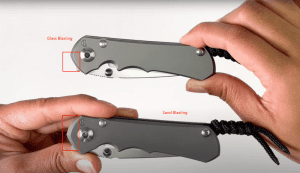
Glass Blast VS Sandblast
If you’re torn between bead blasting and sandblasting as a surface finishing option, this section will explain a few factors to consider.
- The Cycle Time for the Processes
Regarding the time needed for both processes, sandblasting is the better choice. It is faster, and sandblasting is the better choice if you need a process that can be completed quickly.
- The Type of Material Used
Bead blasting uses steel beads or fine glass, while sandblasting utilizes sand. In this case, bead blasting is the better choice. This is because sand contains silica, which has harmful respiratory effects when exposed to humans. However, glass and beads don’t have harmful consequences; hence, they are safer for use.
- The Abrasiveness of the Process
Sandblasting is the more abrasive process of the two, as it uses sand, an abrasive material. The abrasiveness of sand means it is harsher on the part’s surface and can cause changes in the part’s dimension. Hence, bead blasting is also the better choice here, considering abrasiveness, as it gives an optimum finish without damaging the part.
- Differences in the Finishing Appearances
In terms of finishing appearances, bead blasting is also the better choice. This is because it gives an optimum and uniform finish without damaging the part. Due to the abrasiveness of the sandblasted metal finish, it is better suited to stripping parts of rust, old paint, or scales. Hence, using it as a final finishing procedure could produce poor part aesthetics.
- Applications
As mentioned earlier, bead blasting can be used as a final surface finish for plastic, metal, rubber, or glass parts. On the other hand, sandblasting is more suited to removing impurities from the surface of parts.
Considering the factors highlighted, bead blasting is the better choice for both blasting processes. It gives a better finish and is gentler on the part’s surface.
Innovations and Trends in Bead Blasting and Sandblasting
Recently, innovation in technology and material science has made the bead and sandblasting finishes more precise and effective. In this context, prolean stays at the forefront of an evolving industry by embracing technological innovations and following trends.
- Automation in Surface Finishing
Automation is an important factor in enhancing efficiency and consistency in surface finishing. Robotic arms provide precision, computer-controlled blasting chambers offer more control over the process, and real-time monitoring systems ensure timely adjustments and maintenance. These technologies contribute to a higher quality finish and reduced labor costs while also minimizing the impact on the environment.
- Emerging Technologies in Blasting
Prolean is always looking to adopt emerging technologies that provide advantages in surface finishing. They have a table of emerging technologies that they have implemented, including wet blasting for reduced dust and enhanced finish, cryogenic blasting for environment-friendly and gentle cleaning, and laser cleaning for precision without abrasive materials.
Ready to give your machined parts the perfect finish they deserve? Get our top-tier bead blasting service! Superior quality, safety, and precision are just a click away. Opt for the best – choose our bead blasting service today.
Summing Up
We have discussed the principles, advantages, and limitations of bead blasting and sandblasting while showcasing the quality assurance, and safety protocols.
Understanding the nuances between bead blasting and sandblasting is imperative for anyone looking to achieve the best results for their machined parts.
While both processes harness the power of high-pressure equipment, the distinctions in the blast media, finishes, and safety concerns make bead blasting the more favorable option. It not only ensures a uniform and optimum finish but also prioritizes the operator’s safety and the machined part’s longevity.
FAQs
What distinguishes bead blasting from sandblasting?
Bead blasting utilizes glass beads and is gentler and suitable for fine finishes. Sandblasting employs sand or other abrasive materials for more aggressive cleaning and shaping.
Are there any industry-specific applications?
Sand and bead blasting caters to various industries, including automotive, maritime, aerospace, and restoration.
How do we ensure safety during sandblasting and bead blasting?
To ensure worker safety, follow strict safety protocols, including mandatory PPE, regular training, health monitoring, and well-ventilated workspaces.

Danke für den Leitfaden zum Sandstrahlen. Richtig es ist auch ein Abrasivstrahlen. Das Sandstrahlen mit dem Sandstahlgerät war mir geläufiger als das Perlenstrahlen.
It is great to hear that you get comprehensive knowledge of our post. Keep engaging with our blogs for follow-up contents