
Metal material guide
Stainless Steel
CNC Machining
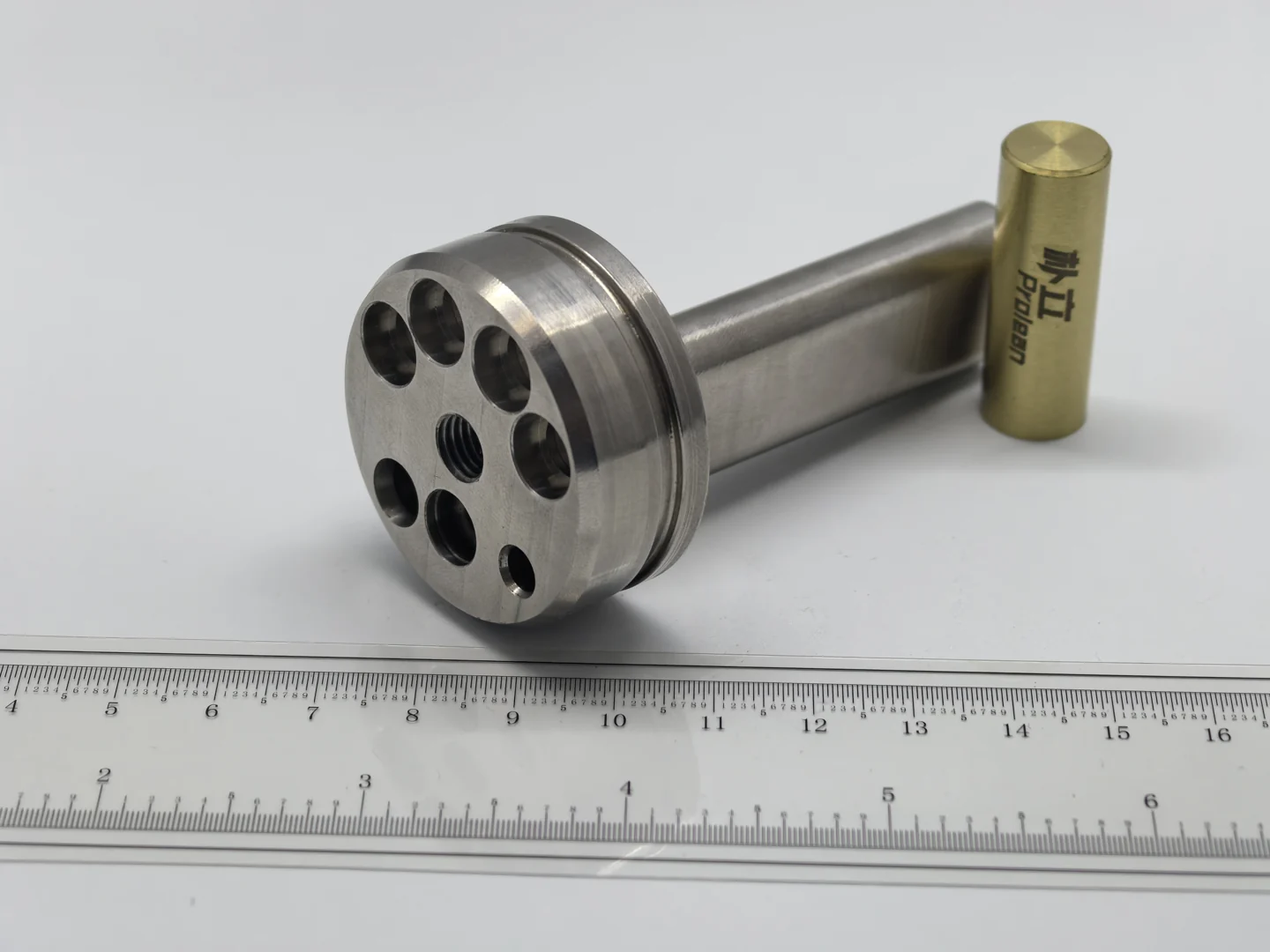
Machined shafts, fittings and housings, with the stainless grade, corrosion exposure and final surface matched to the assembly.
Confidential enquiries. NDA available.
- Specify
- 303 or named alternative
- Review
- Seal face and Fit diameter
- Confirm
- Final condition and acceptance records
Choose the stainless grade for the environment and the part.
Stainless steel is a family of materials, not one corrosion or machining specification. A free-machining connector, welded housing and hardened shaft can require different grades and conditions.
Fittings and connectors
Define fluid contact, threads, sealing faces and cleaning conditions. Include the required surface state inside ports as well as outside.
Shafts and loaded components
Identify the load, wear contacts and heat-treatment condition. Strength requirements can lead to a precipitation-hardening grade rather than a general-purpose austenitic grade.
Corrosion-exposed housings
Describe the actual medium, chlorides, temperature and exposure duration. The grade name alone does not establish suitability for every corrosive service.
Choose the grade and stock together.
Compare the Stainless Steel options below against the drawing and service conditions. Specify the complete supplier grade, condition and stock form; material examples do not establish current inventory or permit substitutions.
| Grade or stock | Why consider it | What to resolve |
|---|---|---|
| 303 | Turned components where machining response is a priority. | Review corrosion and welding needs before choosing a free-machining grade. |
| 304 / 304L | General corrosion-resistant parts and assemblies. | Specify the exact grade, stock form and any joining or cleaning requirement. |
| 316 / 316L | A candidate where the corrosive environment warrants a molybdenum-containing grade. | State the actual exposure. The grade name is not a universal seawater or chemical-service approval. |
| 17-4 PH | Strength-led parts using a defined precipitation-hardening condition. | Specify the condition and final properties, plus when critical dimensions are inspected. |
Selection examples are subject to material and drawing review. They are not an inventory list.
Already have a grade on the drawing?
Add it to your quotation checklist ↓Plan the cut and the final material condition.
Identify thin sections, repeated bores and the surfaces that locate or seal. Those details determine how cutting, any heat treatment and final inspection should fit together.
Work hardening and chip control
Stable engagement and an appropriate cutting route matter on stainless features. Flag deep holes, interrupted cuts and small threads that need special review.
Distortion and heat treatment
Show long, slender or asymmetric sections. If aging, welding or another thermal process is required, state which dimensions must be accepted afterwards.
Burrs and internal passages
Define edge breaks at cross holes and small ports. Identify locations where a burr would affect flow, sealing or assembly.
Mark critical dimensions on the drawing. Achievable tolerances, wall thickness, part size and delivery are confirmed for the geometry, material, finish and quantity in the quotation.
Specify the stainless surface by function.
Passivation
Name the process requirement, preparation and required records. Passivation is not a substitute for choosing a suitable alloy.
Polished or electropolished faces
Identify the relevant faces and measurable roughness or appearance criteria. Mark threaded and fit-critical surfaces for review.
Blasted or as-machined
Define media, texture, tool-mark acceptance and protected contact surfaces. Include internal surfaces where the part handles fluids.
Check the grade, condition and final surface.
Identity and traceability
Request the purchase specification, heat or lot records and any agreed positive material identification. Identification methods have grade-specific limits.
Dimensions in the final state
Locate datums, fits, threads and sealing faces on the drawing. State whether the inspection follows heat treatment or finishing.
Surface acceptance
Define roughness locations, visual standards and any passivation or cleaning records needed with delivery.
Three different checks.
The material record identifies the purchased stock. The inspection report checks the drawing. Application validation checks the part in service.
Review inspection requirements ↗Stainless Steel machining questions.
Answers to the decisions that affect the material, drawing and finished part.
Is 303 a direct substitute for 304?
No. Its machining advantages come with different material characteristics. Corrosion exposure, joining and the drawing specification must be reviewed before substitution.
Does 316 eliminate corrosion risk?
No. Concentration, temperature, chlorides, crevices and cleaning conditions still matter. Provide the operating environment so the particular grade can be assessed.
Which condition should I specify for 17-4 PH?
Use the condition required by the design, with hardness or mechanical acceptance where needed. Agree the heat-treatment stage and the final inspection state.
Should stainless parts always be passivated?
Define the requirement from the application and governing specification. The quote should state the finishing scope and associated records, rather than assume every order needs the same process.
Can an alloy analyser distinguish every stainless variant?
Not necessarily. The instrument and method have limitations, including for some light-element or carbon distinctions. Agree the document package and any suitable test method.
What belongs in a stainless machining RFQ?
Include the grade and condition, stock specification, quantity, drawing, corrosive medium, surface requirement, critical dimensions and required traceability or inspection records.
Prepare your enquiry
Review the stainless grade with the finished part.
Send the CAD model and dimensioned drawing with quantities, service conditions and the requirements below. If the grade is undecided, describe the function and the constraints.
Your files stay confidential. NDA available.
Stainless Steel RFQ checklist
Material: Stainless steel, [grade + condition + product standard]
Service: [fluid, chemicals, chlorides, temperature, cleaning]
Drawing: [datums, fits, threads, internal passages]
Finish: [passivation / polish / roughness / masking]
Quantity: [prototype and repeat quantities]
Records: [heat traceability, inspection, agreed tests]
Material references & specification notes
Manufacturer information supports material selection. Use the datasheet for the exact grade, stock form and test conditions. It does not establish Prolean inventory, application approval or a guaranteed machining result.
Prepared October 2026. Final material and manufacturing requirements are agreed in the quotation.