

PEEK injection molding
If you are interested in injection molding for PEEK parts, you are in for a high-performance thermoplastic. This material offers impressive chemical resistance, heat resistance, and strength. It is not surprising that a bulk of PEEK parts are found in aerospace, automotive, medical, transportation, oil & gas, electronics, and other demanding industries. You can bet PEEK is a premium plastic just from its price, which tends to be on the higher side.
However, the excellent mechanical and chemical properties offer high value for money. Where conventional plastics would fail, PEEK injection molding parts deliver unrivaled performance. That’s why this engineering plastic is the subject of this article. Read on for more on its properties, applications, and considerations, which can make a difference in your applications.
What is PEEK Plastic?
PEEK is a super engineering plastic with the full name Polyetheretherketone. Its umbrella group is polyaryletherketone (PAEK). This popular thermoplastic polymer has earned the name “the king of polymers” for its chemical, mechanical, and thermal properties.
The molecular formula for the polymer is as shown below.

PEEK molecular formula
Alt text: Chemical structure diagram of PEEK polymer showing repeating aromatic ether ketone units. PEEK is far more capable than alternatives such as PLA and ABS. The materials cannot match PEEK’s capability to perform effectively in harsh conditions. Manufacturers know the worth of PEEK parts. Examples of application areas for the engineering plastic are automotive, aerospace, chemical processing, and medical.
PEEK Material Properties
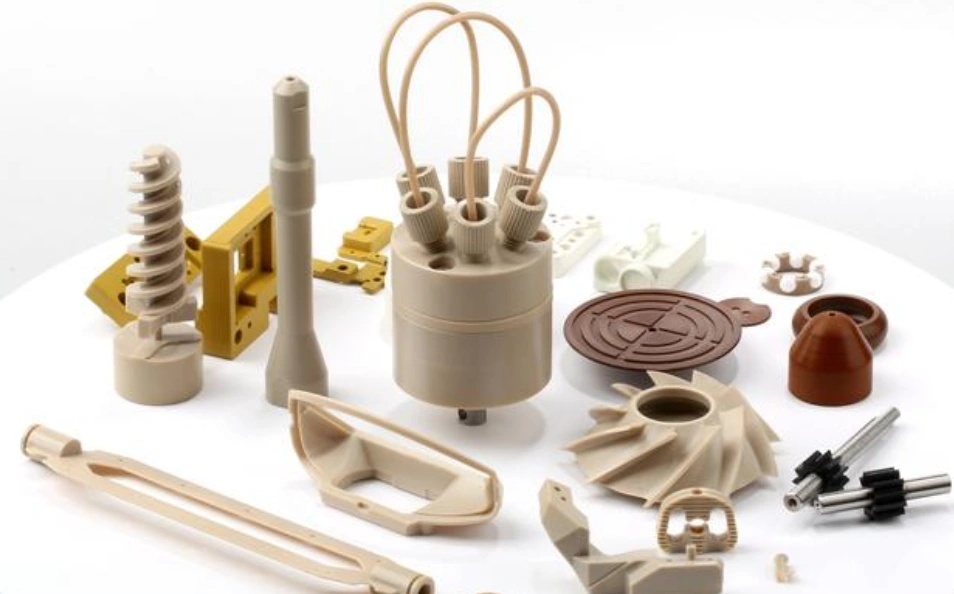
PEEK plastic parts
PEEK is lightweight, like most polymers. However, PEEK’s mechanical properties mirror those of some metals. It has excellent chemical, creep, and fatigue resistance. Its continuous operating temperature is approximately 260 °C. It also has an impressive tensile strength of 100 MPa and a high heat deflection temperature (HDT).
As the “Property Pyramid” below shows, PEEK is at the apex of engineering polymers in terms of the most important properties. It being a top injection molding material should therefore not be surprising.
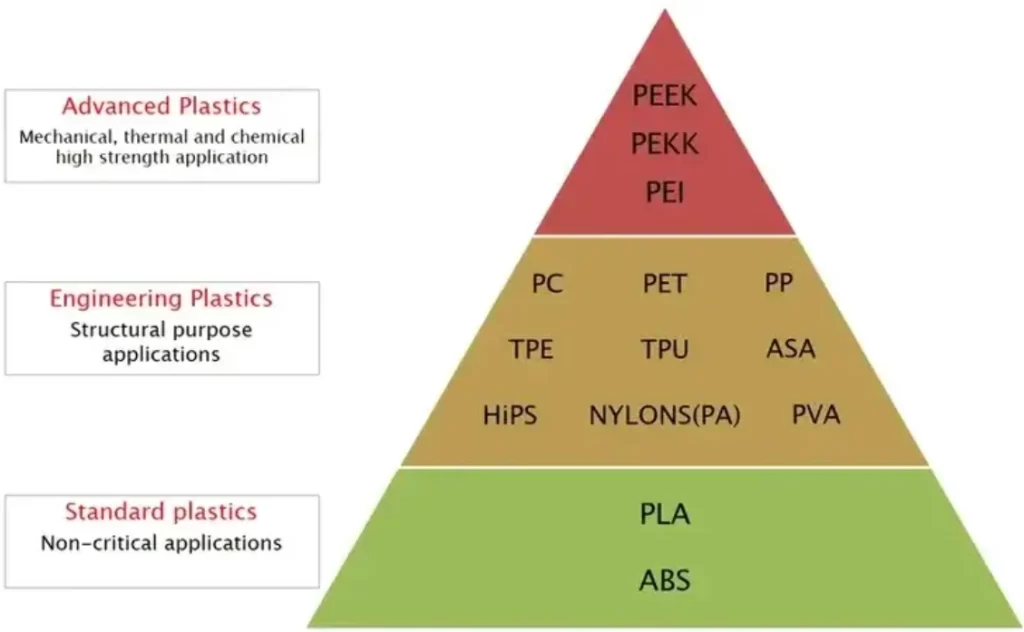
Property pyramid
Advantages of Injection Molding PEEK Parts
The polymer is highly regarded not only for its cost-effectiveness but also for its high-temperature stability, outstanding PEEK chemical resistance, repeated sterilization resistance, low creep behavior, and extreme performance capability.
- Cost-Effectiveness – Let’s not get it wrong. PEEK is not low-cost, but cost-effective over the long term. The total ownership cost of PEEK injection molding products reduces due to the material’s low failure rate and relatively long service life.
- High Temperature Stability – Users of these plastic parts also benefit from high temperature stability. This stability is about the heat-resistant polymer retaining its mechanical strength and, generally, structural integrity, at temperatures that other common plastics would fail.
- PEEK Chemical Resistance – Corrosive media such as industrial chemicals and fuels do not affect PEEK. Injection-molded parts from this plastic perform excellently in corrosive environments. Therefore, the failure rate of these parts is very minimal.
- Repeated Sterilization Resistance – This benefit refers to the engineering plastic’s capability to undergo repeated sterilization cycles and still maintain PEEK material properties. This characteristic is critical for food-grade and medical grade PEEK.
- Low Creep Behavior – Creep can be a serious problem with some engineering plastics, but not with PEEK. Therefore, PEEK parts last longer under sustained mechanical loads.
- Extreme Performance Capability – Whether in complex or simple geometries, PEEK performs predictably. The material is dependable in demanding applications.
Limitations of Injection Molding PEEK Parts
The advantages of injection molded PEEK parts aside, there are several challenges too – mold design complexity, high processing temperatures, expensive machinery, and the proneness of PEEK to degradation.
Mold Design Complexity – PEEK is notorious for its tendency to shrink and it’s high viscosity. The mold cooling channels must therefore be designed to avoid deformation and warping. For these and related conditions, the mold design can be complex.
High Processing Temperatures – PEEK requires approximately 400°C for processing. That’s the level of temperature required to melt and inject the plastic effectively. The problem with this high temperature is not only high energy costs but also the potential to damage the mold.
Expensive Machinery – Related to the above points is the fact that handling high temperatures and complex designs requires relatively expensive machinery.
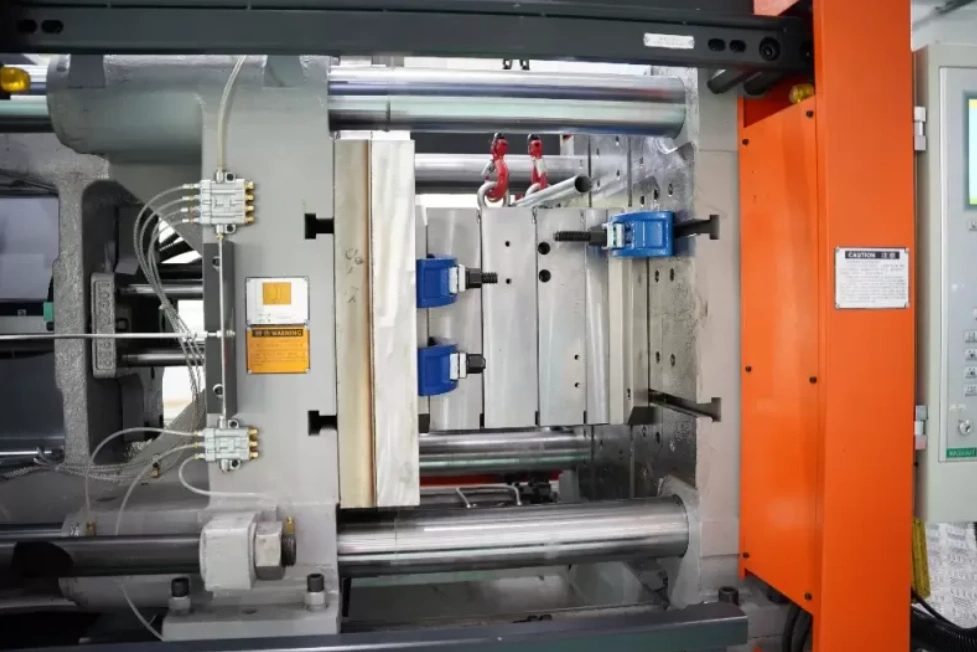
Injection molding machinery
Many businesses opt to work with experts in injection molding material processing, such as ProleanTech. This not only offsets the machinery cost but also guarantees quality products.
Proneness to Degradation – The high processing temperature can potentially damage PEEK. Remedies for this processing challenge are the use of dried pellets and close temperature control.
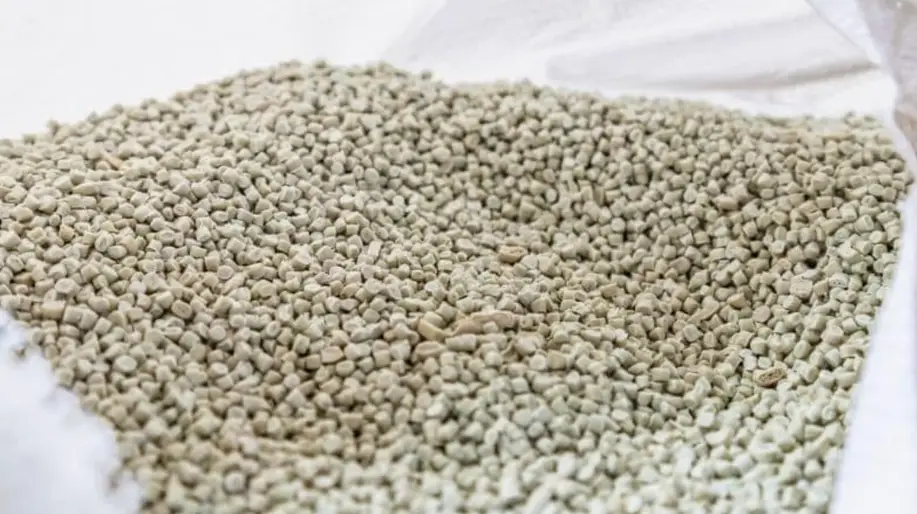
PEEK pellets
PEEK Applications in Injection Molded Parts
The performance of PEEK injection-molded parts justifies application in demanding sectors such as medical, aerospace, automotives, electronics and industrial machinery.
Medical – For its sterilization and biocompatible properties, this engineering plastic is widely used in the manufacture of surgical devices, bone plates, spinal cages, and other medical grade PEEK parts.
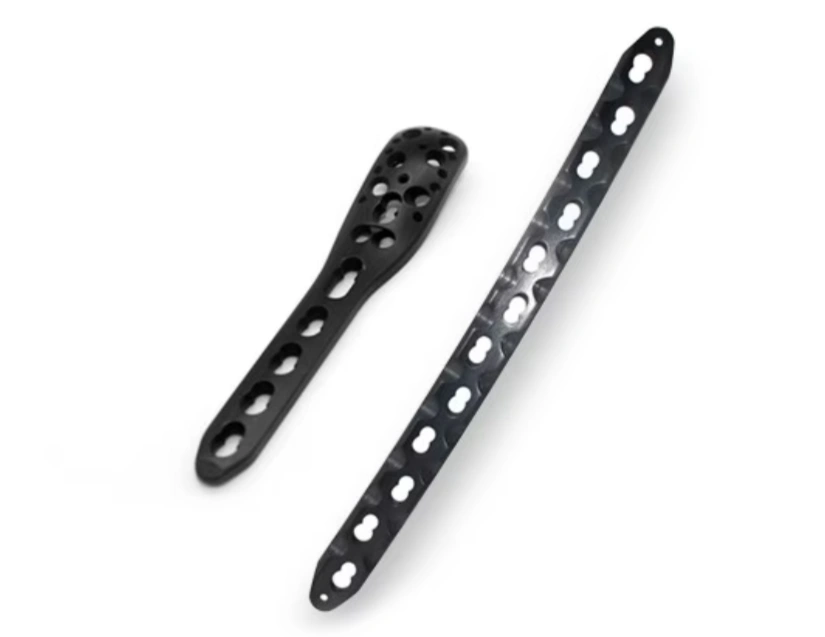
PEEK bone plates
Aerospace – Examples of parts are insulation, bearings, and engine parts.
Automotive – The low weight, low creep, strength, and chemical resistance are crucial for car parts, including bearings and transmission parts.
Electronics – PEEK’s excellence in fatigue resistance, stress-crack resistance, strength, and light weight attracts usage in electronics and electrical parts. Its injected-molded parts are used in power modules, terminal blocks and insulating spacers.
Industrial Machinery – Gear and pump components are perfect examples of PEEK applications in this expansive sector.
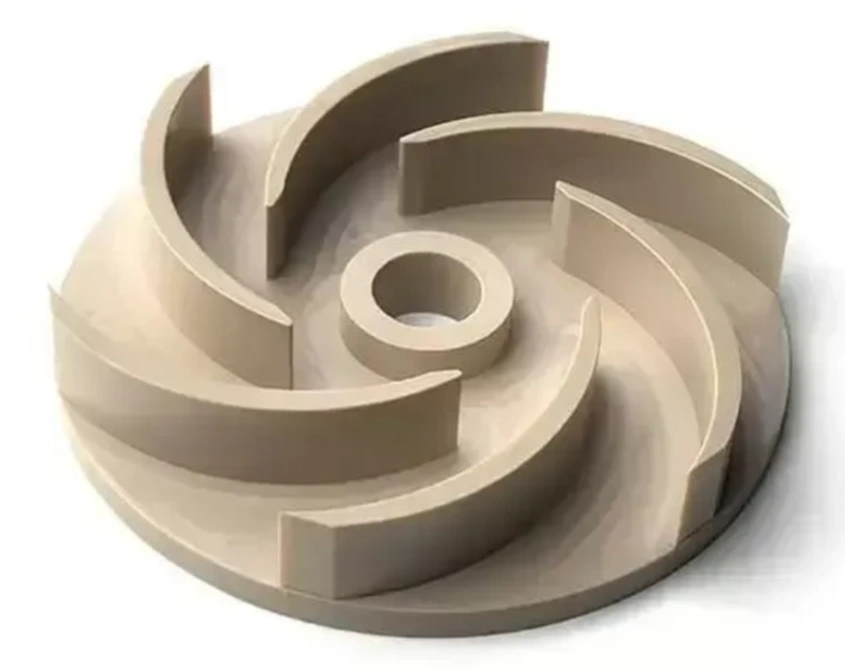
PEEK pump impeller
Oil & Gas – Valve seats and seals are made from this chemical- and heat-resistant plastic.
Try Prolean Now!
Design Guidelines for PEEK Injection Molding
The best PEEK injection molding services follow several design guidelines, including requirements for radii, wall thickness, tolerance, and draft angle.
Sharp Radii Discouraged
Sharp internal radii should be avoided because they promote stress concentrations. We use smooth radii to ensure smooth melt flow. The design also promotes tool life and strengthens the plastic part.
Wall Thickness
Small wall thicknesses, say, under 0.8mm, require close rheological control during the PEEK plastic molding process. Expensive tools are required to execute this process. A simpler and more cost-effective option is to optimize wall thicknesses for PEEK parts. It not only reduces scrap rates but also shortens cycle times.
Tolerances As Good As 0.05%
Advanced process control and tooling help achieve high tolerances, as tight as ±0.05%. The high precision is essential for parts meant for critical PEEK applications. Assemblies requiring high-dimensional repeatability work perfectly with these tolerances.
Draft Angle – 0.5° and 2°
Draft angles are crucial for enhancing part ejection. Between 0.5° and 2°, the part comes out cleanly and smoothly. It also enhances a faster manufacturing process, which is necessary in high-volume manufacturing.
Considerations for PEEK Material Processing (Injection Molding)
Understanding PEEK’s behavior in processing is as important as understanding the design principles, so the considerations below are critical in PEEK plastic molding.
Cleanliness Matters
Cleanliness should be upheld when injection molding PEEK. As you can attest, the plastic’s high processing temperatures would degrade many other plastics. Therefore, ensuring that the hoppers, molders, and drying ovens are clean is a major requirement.
Big Gates
PEEK injection molding and big gates go together. As a semi-crystalline polymer, PEEK experiences a relatively high shrinkage rate compared to amorphous thermoplastics. As the PEEK plastic molding temperature is also very high, the material will naturally shrink as much. To ensure that the part fully packs out, large gates are recommended.
Dry PEEK Pellets
In the supply chain, PEEK pallets may absorb some atmospheric moisture. The drying process can take a few hours in an oven. The goal is to keep the material’s residual moisture content at below 0.02%.
Standard PEEK Injection Molding Machine
Like in other engineering processes, using standard injection molding equipment is a huge cost and time saver. Manufacturers who know this secret rely on equipment that can be sourced and repaired locally.
Proper Temperature Control
Optimized mold temperature is critical. The temperature should be such that the unique PEEK material properties can be attained. The recommended temperature is between 170 and 200⁰C. Each PEEK grade has its specific ideal mold temperature.
Try Prolean Now!
Alternative PEEK Processing Methods
To add to injection molding, PEEK can be processed by joining, 3D printing, CNC machining, and extrusion.
Joining – PEEK can be adhesively bonded or welded. Common welding techniques are hot-plate and vibration.
3D Printing – 3D printing or additive manufacturing for PEEK is performed using powder in laser sintering (SLS/LS) and filament in high-temperature FDM.
CNC Machining – PEEK’s machinability is excellent. The engineering polymer produces clean chips. It doesn’t wear the cutting tool excessively. It is perfect for low-volume manufacturing.
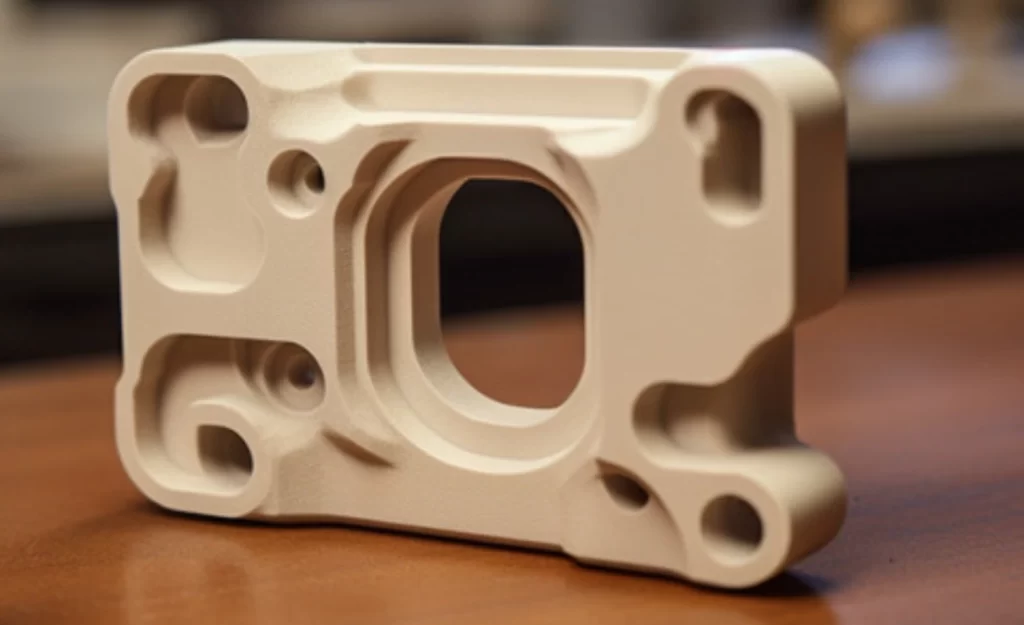
CNC-machined PEEK plastic part
Extrusion – Used to make profiles, rods, and tubing
Conclusion
PEEK is undoubtedly a peak performer, beating many other engineering polymers. It is built with a rich combination of chemical, mechanical, and thermal properties. Adding low weight to all the other capabilities makes PEEK injection molding irresistible in numerous critical industries.
Thanks to the unmatched injection molding service, you can get quality PEEK products for your industry. If you need this service for PEEK or any other engineering plastic, get in touch for details and to make an order.


0 Comments