
Monel vs stainless steel
When we have requirements such as high corrosion resistance, high temperatures, and long-term service without failure, that is where these two powerful alloys, Monel vs Stainless Steel, come into discussion. You might have already heard a lot about stainless steel. Monel is also a competitor of stainless steel, but we rarely hear about it because Monel is an expensive material used mainly when performance is more critical than cost.
This article gives you a clear, high-level comparison of Monel vs Stainless Steel. We’ll deeply discuss their composition, properties, corrosion behavior, applications, and selection criteria. You will get a clear understanding of why these materials are compared, how they differ, and exactly when each material should be used.
Introduction to Monel and Stainless Steel
Both Monel and Stainless Steel belong to the category of high-performance corrosion-resistant alloys. We usually go for these two options when general steels are no longer sufficient for our needs.
Before moving in-depth, we’ll get to know what Monel vs Stainless Steel is in simple terms.
- Monel: Monel material is a nickel-copper alloy engineered for extreme corrosion resistance, making Monel metal ideal for harsher environments. This is specially used in seawater and aggressive chemical environments.
- Stainless Steel: Stainless steel is an iron-based alloy family. It provides a balance of corrosion resistance, strength, and cost efficiency across a wide range of applications.
Both look somewhat similar when considering applications and some performance levels. However, they have huge differences in composition, corrosion mechanisms, mechanical behavior, and cost. Therefore, selecting one over the other should be done carefully. The selection can affect the product’s safety, durability, lifecycle economics, and many other factors.
What is Stainless Steel?
Stainless Steel Marking
Stainless steel is a family of iron-based alloys that contain at least 10.5% chromium.
Stainless steel is very popular for its corrosion resistance. Its corrosion resistance comes from the chromium content. Chromium reacts with oxygen to form a thin, invisible chromium-oxide layer that protects the alloy surface from rust and corrosion. This is a passive layer and it can self-repair when damaged, which is the defining feature of stainless steel.
Depending on the grade, stainless steel may also include nickel, molybdenum, manganese, titanium, or copper, each added to enhance strength, corrosion resistance, or high-temperature performance.
What is Monel Material?
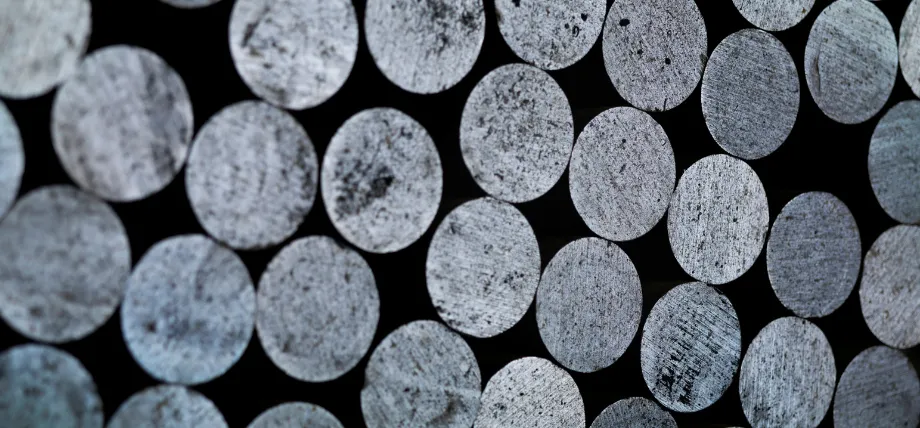
Monel Rod Ends
Monel is a nickel-copper alloy, and it is specially developed to perform in highly corrosive environments. Most Monel alloys have roughly 65% of nickel and 35% of copper. Sometimes, small amounts of iron, manganese, aluminum, or titanium are also present.
Unlike stainless steel, Monel’s corrosion resistance does not come from a passive oxide film. It comes from Monel’s high nickel content, which is strong enough to stay stable even when exposed to aggressive chemicals.
Monel metal has a single-phase face-centered cubic (FCC) structure. This structure gives Monel an excellent ductility and toughness over a wide temperature range. Because of this property, Monel is highly valuable in marine, chemical, and cryogenic applications. Although stainless steel is the most popular corrosion performer we know, many stainless steels struggle in the above-mentioned environments.
Chemical Composition of Stainless Steel vs Monel
With the data below, you can clearly see the difference in the compositions of Monel and Stainless Steel. Stainless Steel is an iron-based alloy with chromium, protection, and Monel is nickel-copper based, with very little iron. This difference clearly shows why Monel behaves so differently in seawater and acidic environments.
Table 1: Chemical Compositions of the Most Common Grades of Monel and Stainless Steel
|
Element |
Stainless Steel 304 |
Stainless Steel 316 |
Monel 400 |
Monel K-500 |
|
Chromium (Cr) |
18-20% |
16-18% |
– |
– |
|
Nickel (Ni) |
8-10.5% |
10-14% |
63-70% |
≥63% |
|
Copper (Cu) |
– |
– |
28-34% |
27-33% |
|
Molybdenum (Mo) |
– |
2–3% |
– |
– |
|
Iron (Fe) |
Balance |
Balance |
≤2.5% |
≤2% |
|
Aluminum (Al) |
– |
– |
– |
2.3-3.15% |
|
Titanium (Ti) |
– |
– |
– |
0.35-0.85% |
Types of Monel Alloys
Monel 400
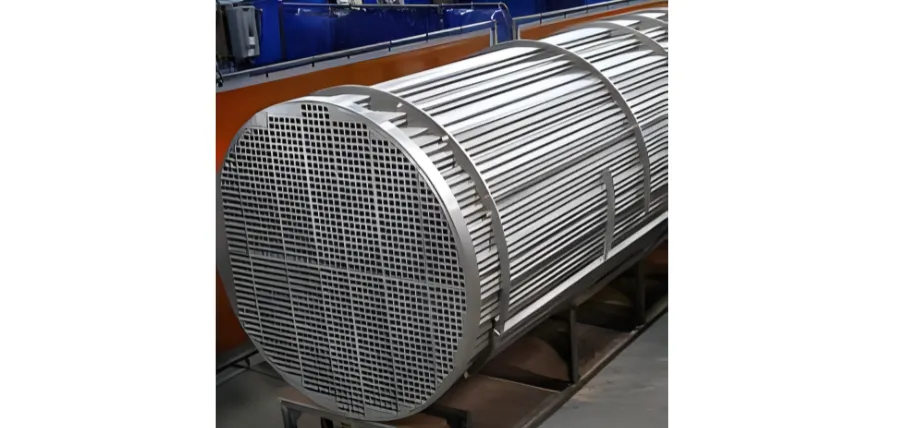
Industrial Monel Exchanger
Monel 400 is a general-purpose nickel-copper alloy.
General composition: 63-70% of nickel and 28-34% of copper.
If you need strong corrosion resistance levels in seawater, alkalis, and acidic conditions, Monel 400 is a popular choice. Monel 400 can stay tough and ductile over a wide temperature range without becoming brittle (from cryogenic conditions up to about 480 °C). Because of this unique property, Monel 400 is used in components inside marine equipment, pump and valve components, heat exchangers, and chemical processing systems.
Monel R-405
Monel R-405 can be referred to as a free-machining version of Monel 400 since it is developed to improve machinability. It also has a small amount of sulphur to make it easier and more economical to machine. Sulphur helps break chips during machining and reduces tool wear. This is highly useful in forming precise or high-volume parts.
Monel R-405 also has a corrosion resistance almost as close to Monel 400. It is commonly used for fasteners, fittings, valve parts, and other machined components where good corrosion resistance and easier fabrication are both needed.
Monel K-500
Monel K-500 is a nickel-copper alloy that is precipitation-hardenable. It also contains aluminum and titanium as strengthening elements. We can achieve higher strengths after age-hardening while also maintaining similar seawater and marine corrosion resistance.
Because of this combination of properties, Monel K-500 is highly suitable for applications such as propeller shafts, pump shafts, offshore oil and gas components, and aerospace hardware. Those components have a high mechanical load and also function in aggressive environments.
Monel 404
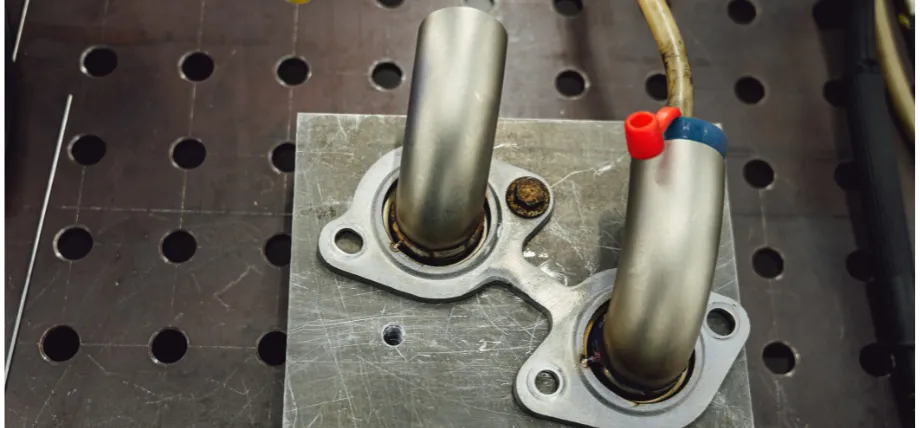
Welded Monel Components
Monel 404 is a specialized Monel alloy designed for non-structural applications. This is widely used in the electronics industry. Monel 404 is quite different from other types because its composition is specially controlled to obtain low magnetic permeability and good metallurgical stability.
Monel 404 is not designed for load-bearing service. Instead, it is created for places where magnetic properties and reliable joining behavior are more important than mechanical strength. Monel 404 is mainly used in electronic components, brazing applications, and ceramic-to-metal seals.
Types of Stainless Steel
Stainless steels are generally classified into five families, as mentioned below.
Austenitic stainless steel
Austenitic stainless steel is an iron-chromium alloy, and it contains:
- 16-26% of chromium
- 8-22% of nickel
- A very low carbon content.
This composition makes it an alloy with excellent corrosion resistance, high ductility, and good formability. Austenitic Stainless Steel is generally non-magnetic. It performs well in both low-temperature and moderately high-temperature environments. Austenitic Stainless Steel is widely used in food processing, chemical equipment, and general industrial applications.
Ferritic stainless steel
Ferritic stainless steel is an iron-chromium alloy, and the composition is roughly:
- 10.5% to 30% of chromium
- Small amounts of nickel
It is naturally magnetic and gives good resistance to oxidation, especially at high temperatures.
Its corrosion resistance is lower than that of austenitic grades, but it is sufficient for many atmospheric and mild industrial environments. This makes it a cost-effective choice for automotive components, appliances, and structural uses.
Martensitic stainless steel
Martensitic stainless steel contains:
- 12-18% chromium and
- High carbon content compared to other stainless steel families.
We can heat-treat it to achieve high strength and hardness. Although its corrosion resistance is only moderate, its mechanical strength is very high. Martensitic Stainless Steel is designed specially for situations where wear resistance and load-bearing capability are more important than maximum corrosion protection. Custom stainless steel parts are suitable for applications such as shafts, fasteners, turbine parts, and cutting tools.
Duplex stainless steel
Duplex stainless steel has an iron-chromium base with roughly:
- 18-28% chromium
- 4-8% nickel
- Small amounts of molybdenum.
Its microstructure is a mix of austenitic and ferritic phases. So, it has a balanced combination of high strength and good corrosion resistance. Duplex grades have strong resistance to stress-corrosion cracking, especially in chloride-rich environments. They are commonly used in marine, offshore, and chemical processing applications.
Precipitation-hardening (PH) stainless steel
Precipitation-hardening stainless steel is an iron-chromium-nickel alloy. It also contains additional strengthening elements such as copper, aluminum, niobium, or titanium. Because of these elements, we can harden it through an ageing heat treatment process, to obtain high strength while maintaining good corrosion resistance. PH stainless steels are mainly used in aerospace and high-performance mechanical components. These are applications where both strength and corrosion resistance are important.
Try Prolean Now!
Mechanical Properties of Monel vs Stainless Steel
Strength
- Monel 400: 517–620 MPa (annealed)
- Monel K-500: up to 880 MPa (age-hardened)
- Stainless Steel 304: 515-750 MPa
- Stainless Steel 17-4 PH: up to 1,730 MPa
Stainless steel properties, such as tensile strength, can be improved by precipitation hardening in stainless steels. But Monel offers superior performance in corrosive environments.
- Monel 400 shows moderate yield strength, but Monel K-500 shows a drastic increase after ageing.
- Austenitic stainless steels typically have low yield strength in annealed form but strengthen significantly through cold working.
Hardness
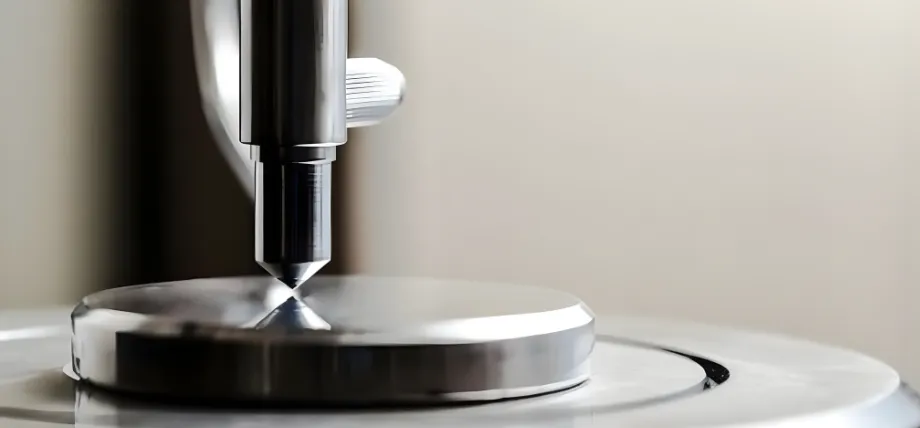
Hardness Testing Monel
- Monel 400 has moderate hardness, but it increases with cold working.
- Monel K-500 can achieve a high hardness after aging
- Martensitic stainless steels can also reach very high hardness after heat treatment, which makes stainless steel machining comparable to Monel.
Ductility and Toughness
- Both Monel and austenitic stainless steels have excellent ductility.
- But Monel can retain toughness even at cryogenic temperatures, without a ductile-to-brittle transition. This is a unique and very rare advantage in low-temperature applications.
Corrosion Resistance of Monel
This is the property where Monel vs Stainless Steel shows the main difference. Monel has:
- Exceptional resistance to seawater, even at high velocities.
- Outstanding performance in hydrofluoric acid. Stainless steel rapidly fails here.
- Strong resistance to alkalis, phosphoric acid, and sulfuric acid (below 85%)
- Near-zero susceptibility to chloride stress-corrosion cracking
Anyways, Monel performs poorly in strongly oxidizing environments such as ferric chloride solutions.
Differences Between Monel and Stainless Steel
Corrosion Resistance
Monel is the best option than stainless steel to use in seawater and HF acid. Monel can also face pitting very well. The main issue is that Monel is expensive.
Temperature Performance
Monel can stay strong and ductile for a wide temperature range. It is performing better even at cryogenic temperatures. Stainless steel also has a high temperature, but Monel is the ideal option for extreme conditions.
Strengthening Methods
We can age-harden Monel grades like K-500 if we need more strength. But we cannot age-harden austenitic stainless steels. They can only be cold-worked to improve strength.
Cost
Monel is more expensive (usually 3 to 8 times that of stainless steel) since it has higher nickel content. Nickel is highly expensive. So, stainless steel is still the best option if cost is the main consideration over performance.
Machinability
Monel is difficult to machine because it work-hardens rapidly. But stainless steel is way easier to machine; some stainless steel grades are difficult to machine and can require special coated tools.
Magnetic Behavior
Monel is weakly magnetic, especially after cold-working. Austenitic stainless steels are mostly non-magnetic. If you need to avoid any magnetic effects, stainless steel is the go-to choice.
Density
Monel has a higher density because of Ni and Cu (Usually 10% denser than stainless steel)
Try Prolean Now!
Machinability of Monel VS Stainless Steel
Machinability tells you how easily you can cut the material, the type of surface finish you can achieve, and even calculate costs because the power consumption changes depending on machining parameters.
Let’s compare the machining properties
- Chip formation: When you machine Monel, the chips are long, continuous, and sticky. This makes it difficult for a machinist to remove the chips. Stainless steel chips are easier to manage and clean.
- Tool wear: because Monel can be work-hardened, the tool wear is rapid.
- Surface Finish: When the tool wears as the machining progresses, the Monel surface finish becomes worse. This is because Monel is prone to tearing, and a poor tool edge can lead to a poor surface.
- Tool forces: Cutting forces for Monel are generally higher because of work hardening. Stainless Steel also undergoes work hardening depending on the alloy.
Practical Machining Considerations
Monel Machining Tips
For Monel, you can use carbide tools with sharp, positive rake angles. Monel machining can also be more efficient by using some hard-coated tool tips like TiAlN. High-speed steel may suffice for low-volume work, but the tool wears quickly, and a worn-out tool produces a variation in surface finish.
Cutting Parameters
Monel typically requires a lower SFM when you compare it to stainless steel. Monel is machined at 40 – 80 sfm and 60 – 120 for stainless steels or even higher. The feeds and depths of cuts are similar for both materials, and using moderate feeds prevents glazing and excessive hardening.
Coolants
When machining Monel, use abundant coolants like soluble oils and straight cutting oils to dissipate heat and remove chips.
Applications of Monel
- Marine Engineering: Propeller shafts, seawater valves, pump shafts, desalination equipment.
- Offshore Oil and Gas: Drill collars, wellhead components, subsea systems exposed to sour gas.
- Chemical Processing: Hydrofluoric acid alkylation units, chemical reactors, heat exchangers.
- Aerospace: Safety wire, fuel system components, high-temperature engine hardware.
Applications of Stainless Steel
- Food and Beverage Processing: 304 and 316 stainless steel tanks, piping, and hygienic equipment.
- Pharmaceutical and Biotechnology: 316L reactors, bioreactors, and ultra-clean piping systems.
- Chemical and Petrochemical: Storage tanks, heat exchangers, and processing vessels.
- Architectural and Structural: Facades, railings, bridges, and coastal infrastructure.
Choosing Between Monel and Stainless Steel
| Criteria | Choose Monel | Choose Stainless Steel |
| Environment | Seawater, HF acid, chlorides | Mild to moderate corrosion |
| Temperature | Cryogenic or hot water/steam | General industrial ranges |
| Strength | High strength + corrosion | Adequate, wide grade range |
| Cost | Failure cost justifies price | Budget-sensitive projects |
| Fabrication | Specialized machining available | Standard fabrication |
| Availability | Long lead time acceptable | Widely available |
Table 2: Selection Criteria for Monel and Stainless Steel
Custom Metal Machining | Proleantech
Proleantech provides high-quality metal machining services with standard 3-axis, 4-axis, and multi-axis machining centers. Monel is a popular alloy for machining valve bodies, shafts, and heat exchanger tubes. Proleantech has ISO certifications, provides material certificates, and offers DFM support to quickly mass manufacture components after prototyping.
Request a free quote today!
FAQ
Which Is Better: Monel or Stainless Steel?
There is no winner in Monel vs Stainless Steel. Monel is a high performer in marine and acidic environments. It has excellent corrosion resistance and toughness, but at the cost of its higher cost. Stainless steel is the economical and versatile choice for the majority of industrial and structural applications. We should choose the material that meets service requirements with the lowest total lifecycle cost, not simply the strongest or most corrosion-resistant option.
Is Monel the same as stainless steel?
No. Monel is a nickel-copper alloy, and stainless steel is an iron-based chromium alloy. Their corrosion mechanisms and applications differ significantly.
What are the disadvantages of Monel?
High cost, difficult machining, higher density, and limited availability compared to stainless steel.
Which material is stronger than stainless steel?
Some Monel grades exceed austenitic stainless steels, but precipitation-hardening stainless steels can achieve much higher strength.
0 Comments