
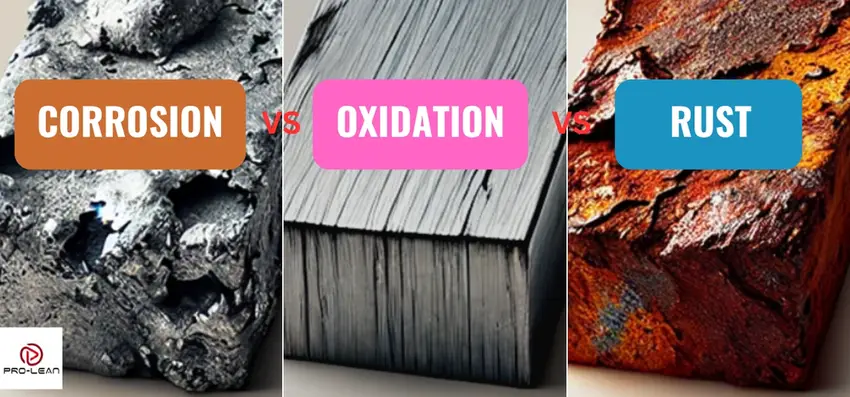
Corrosion vs oxidation vs rust
The results of metal fabrication are exciting, with all the variations of parts and components, but it is not without some challenges. Key among the issues manufacturers face is the corrosion vs oxidation vs rust question. Which is which, and what are the remedies?
Corrosion is the degradation of metals and other materials from chemical reactions in the environment. When this process happens to iron and its alloys, it is called rust. Oxidation occurs when a material loses electrons with oxygen involved.
These metal degradations have significant impacts on the functionality, performance, and aesthetics of parts. The type of material used, the process, and the environment are some elements that promote rusting, corrosion, and oxidation.
This article reviews these metal degradations, focusing on their triggers, materials affected, prevention mechanisms, and the main differences.
What is Oxidation?
Oxidation on a metal is a chemical reaction in which a metal loses electrons to another element. This reaction is central to many industrial processes. Oxidation forms many beneficial processes in manufacturing, but it also contributes to damaging processes, such as the rusting of steel and other types of metal corrosion.
Therefore, it is worthwhile to understand this phenomenon, both in how its protective characteristic solves some industrial requirements and how its potential to damage metals can be managed in CNC-machined parts and other settings.
The Oxidation Chemical Reaction
An oxidized state of a metal is when the metal is exposed to oxygen. This involves the metal losing electrons, as the case of magnesium shows.
2 Mg + O2 → 2 [Mg2+][O2-],
Which could be written in two halves as below,
Mg → Mg2+ + 2 e-
O2 + 4 e- → 2 O2-
In CNC machining environments, oxidation occurs regularly with various machinable metals, including aluminum, iron, and steel. Each of these materials oxidizes at different rates based on the operating conditions and electron setups.
The chemical reaction representation of this phenomenon shows why each metal requires a specific protection strategy. With ProleanTech, oxidation-proneness is one of the critical considerations when producing CNC machining parts.
Examples of Oxidation
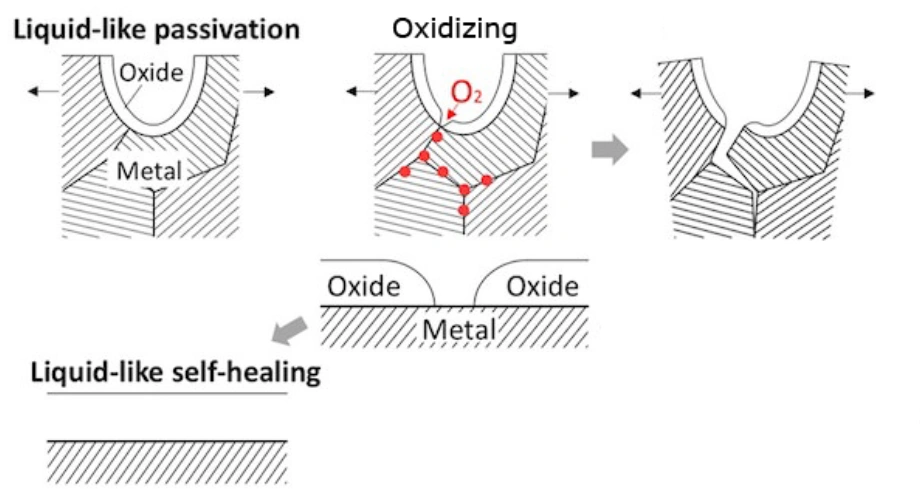
Oxidation on metals occurs in various ways in daily interactions with metals. On silver, the chemical reaction shows as a black tarnish on the metal parts. Aluminum is affected by oxidation, forming a dull gray layer of aluminum oxide. In the natural passivation process, a protective barrier forms and prevents further damage.
Aluminum passivation
You will also find oxidation on steel and iron parts as a reddish-brown coating. Magnesium, whose chemical reaction is indicated above, forms a grayish-white powdery coating. Apart from the different appearances, these oxidations have varied effects on part functionality and longevity.
Definition of Corrosion
Corrosion is the slow deterioration of metal caused by chemicals, microorganisms, moisture, oxidation, and contact with dissimilar metals. Corrosion is broader than the electron-transfer oxidation process described above because multiple environmental and other factors are involved. These factors combine to accelerate the metal breakdown process. This differentiation is important because while oxidation is present in all corrosion processes, it is not necessarily destructive. Some oxidation processes are beneficial in sheet metal services.
What Are the Two Types of Corrosion?
The two most common types of CNC-machined parts are galvanic corrosion and pitting corrosion. However, there are other types of corrosion, as listed here;
- Crevice
- Intergranular
- Uniform attack
- Erosion-corrosion
- Biological corrosion
- Stress-corrosion-cracking
- Selective leaching
The type of corrosion depends on the environment and the type of material composition. Each type affects metal through a different mechanism.
More details about the mechanisms are next.
Galvanic Corrosion
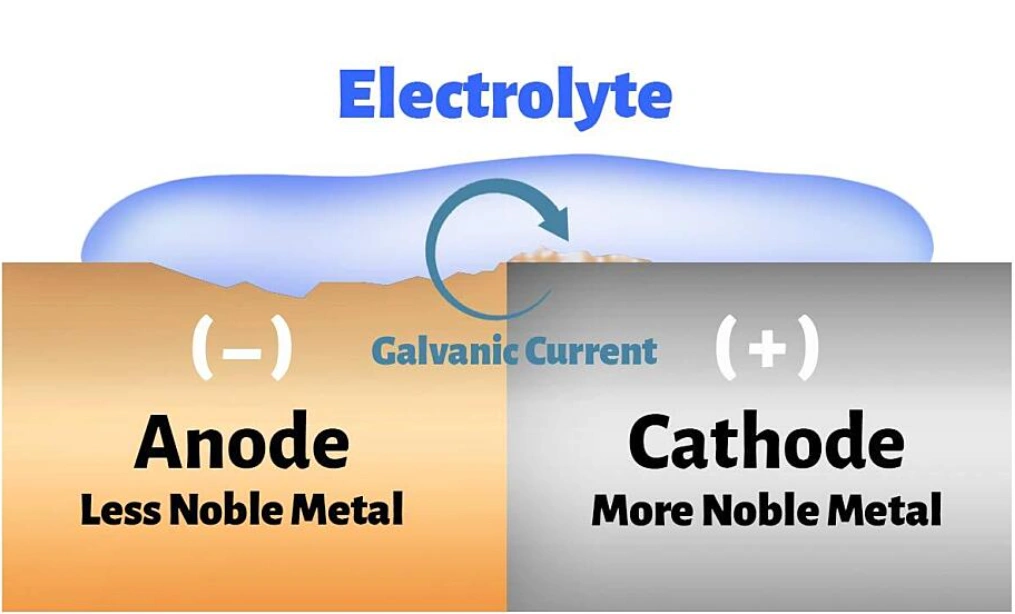
Galvanic corrosion occurs when two types of metals are exposed to a corrosive environment. An electrode potential is formed, leading to corrosion. An electrical connection between two such metals prompts the more active one to become the anode.
Galvanic corrosion
This type of corrosion is evident where steel bolts are used to fasten copper plates, among other examples. There are various remedies against galvanic corrosion, but the most effective one is to avoid using dissimilar metals.
Pitting Corrosion
Pitting corrosion is a type that generates holes in the metal, especially if the metal has a protective oxide film. Stainless steel is particularly susceptible to this corrosion. This destructive corrosion is often initiated by secondary forces, for instance, crevice corrosion, scratches, or chemical attack.
Crevice Corrosion
Crevice corrosion
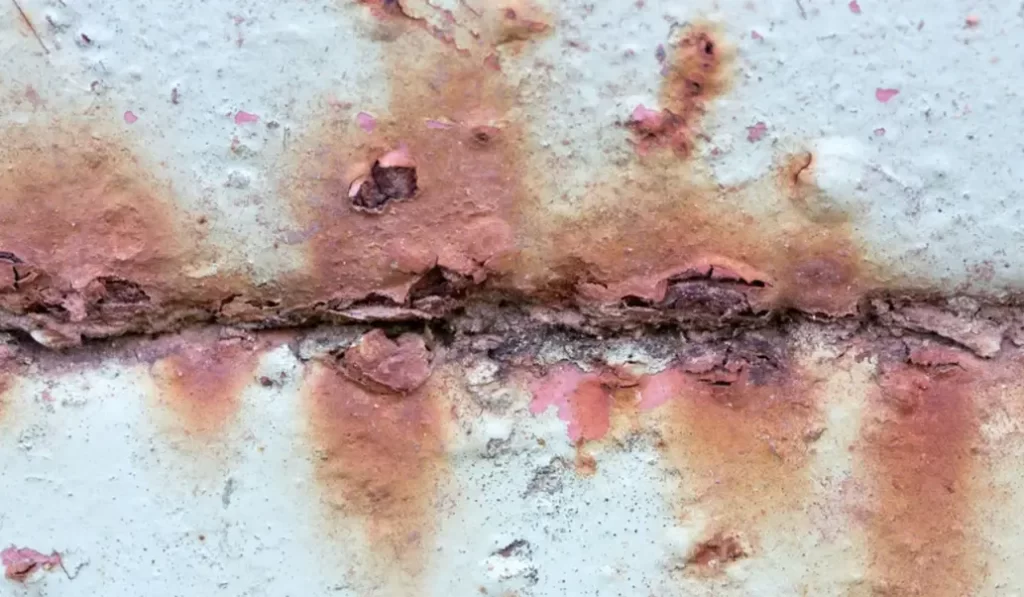
Crevice corrosion is associated with localized attacks in crevices in lapped joints. When the area is exposed to corrosive environments, the attack can occur. Partially shielded sections of metal are also prone to crevice corrosion.
Intergranular Corrosion
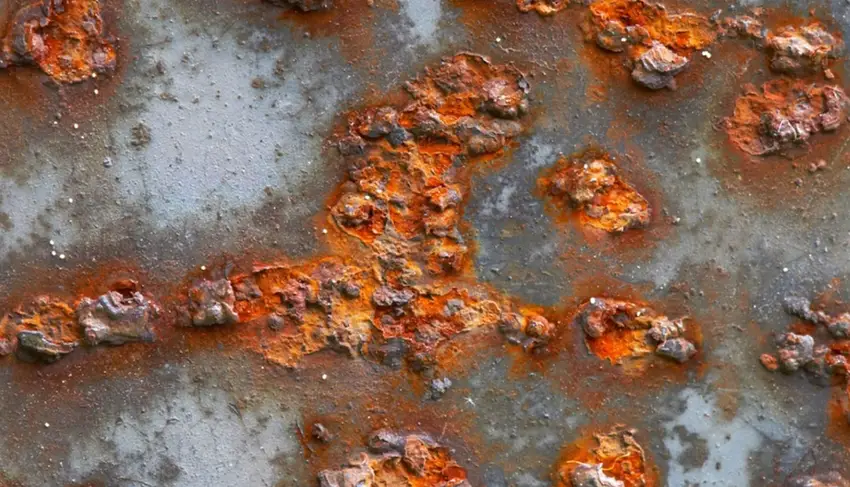
Intergranular corrosion
Grain boundaries in a metal may deplete or harbor impurities, alterations that can invite intergranular corrosion. This type of corrosion is common in welded stainless steel. Heat treatment can also enhance this corrosion.
Uniform Attack (Corrosion)
In uniform corrosion, the entire surface of the material undergoes a largely uniform corrosive attack. This type of corrosion emanates from the cathode and anode regions in contact with the electrolyte, changing continually.
Erosion-Corrosion
Erosion-corrosion happens when an electrolyte flows at high velocity, creating an abrasive environment that enhances corrosion. The corrosion is worse if the electrolyte happens to contain solids. That’s why certain metals have specific threshold electrolyte velocities.
Biological Corrosion
Metal attack can also emanate from biological elements. This corrosion can be either microbially induced corrosion (MIC) or macrofouling effects.
Stress Corrosion Cracking
Stress corrosion cracking is seen in certain alloys when any of the following threshold conditions are met:
- Corrosive environment
- Metal composition
- Metal structure
- Tensile stress
- Temperature
Stress corrosion cracking is common in stainless steel and brass alloys.
Selective Leaching (Dealloying)
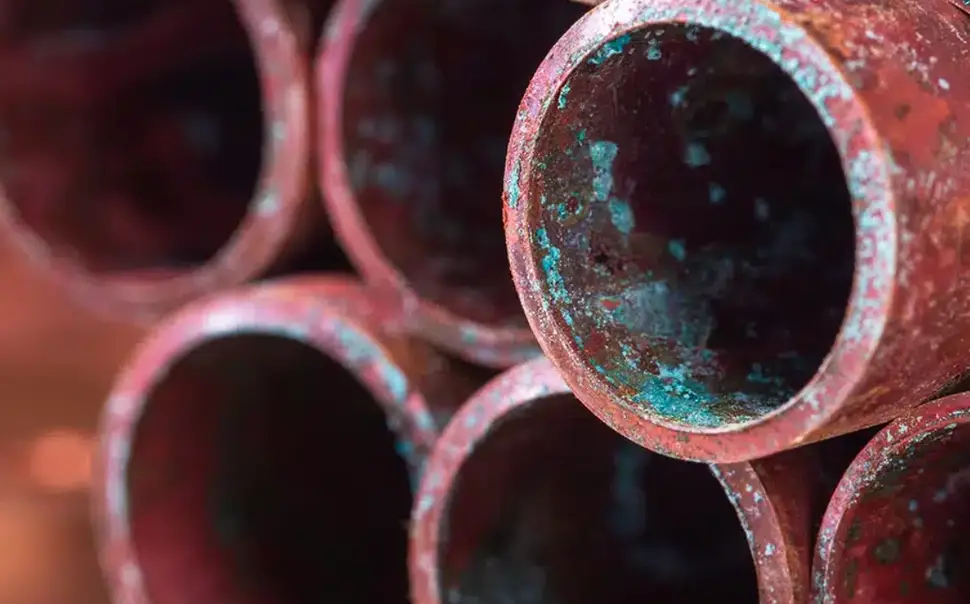
Selective leaching
Selective Leaching corrosion occurs in metals with metallurgically different surfaces. You may find this problem in brass, which is an alloy of copper and zinc. When exposed to a corrosive environment, zinc can corrode and leave copper behind, resulting in a color change.
Effects of Corrosion
A business’s bottom line suffers from corrosion through compromised safety, lower performance reliability, reduced component lifespan, and lower reliability. The risk of sudden failure of parts or components is constant. Such risks can be mitigated through the proper application of sheet metal finishes and other treatments of metal parts.
The presence of these effects is already serious, but even worrying is that they compound as time progresses. An issue could start as a mere surface defect, but within a few months, it escalates to a serious structural failure, as has been witnessed in bridges and other structures.
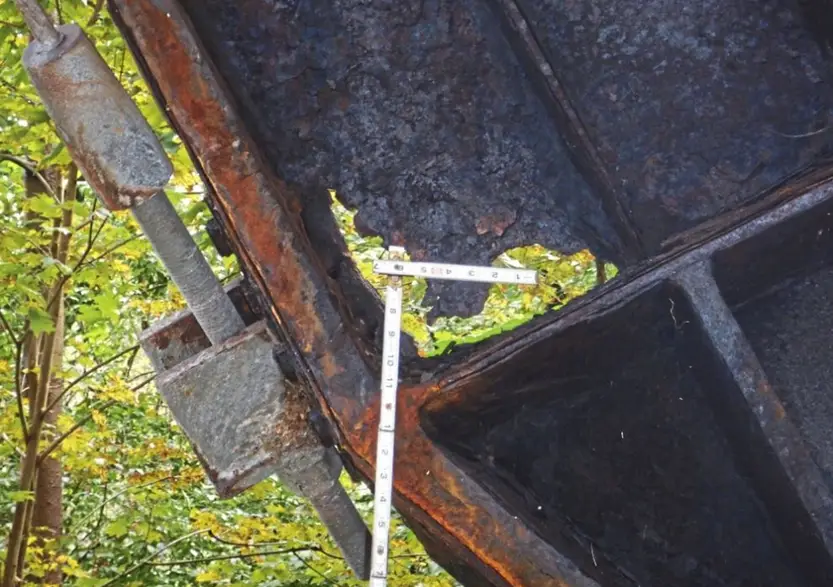
Corrosion in a bridge
Try Prolean Now!
Materials That Undergo Corrosion
All metals and alloys can corrode, but the rate and severity depend on the environment, reactivity of the metal, and the chemical composition of the metal. While corrosion-resistant metals like platinum and gold are exceptional, zinc and magnesium are among the most corrosion-prone metals. This varying resistance can be determined or predicted from the metal’s electrode potential.
Electrode potential is a measure used in electrochemistry and corrosion theory. It is a measure of a material’s capability to lose or gain electrons in an electrochemical reaction.
A table showing the electrode potentials for some of the commonly CNC-machined metals is below.
|
Metal |
Electrode potential |
|
Magnesium (Mg) |
–2.37 |
|
Aluminum (Al) |
–1.66 |
|
Zinc (Zn) |
–0.76 |
|
Iron (Fe) |
–0.44 |
|
Steel (Carbon Steel, approx. Fe) |
–0.44 |
|
Nickel (Ni) |
–0.25 |
|
Titanium (Ti) |
–0.17 |
|
Copper (Cu) |
+0.34 |
|
Stainless Steel (Fe-Cr-Ni alloy) |
+0.40 (approx.) |
|
Brass (Cu-Zn alloy) |
+0.45 (approx.) |
How to Prevent Corrosion
Effective corrosion prevention in sheet metal fabrication processes entails a combination of strategies, mostly electrochemical protection techniques, proper material selection, use of corrosion inhibitors, surface treatments, and surface finishes.
These strategies are designed to address different stages of oxidation-corrosion. The most effective corrosion inhibition methods combine other strategies in consideration of the environment, type of material, and cost.
The Difference Between Oxidation and Corrosion
Oxidation and corrosion refer to distinct chemical processes with different effects on CNC-machined parts due to process type, protective capability, and reversibility.
Below are the main differences in a comparison table:
|
Element |
Oxidation |
Corrosion |
|
Definition |
Chemical reaction involving oxygen |
Destructive degradation of metal |
|
Materials affected |
All metals |
Specific metals and their alloys |
|
Effect on material |
Harmful or protective |
Often degrades the material |
|
Reversibility |
It can be reversed sometimes |
Irreversible damage |
|
Speed |
Can be fast or slow |
Typically slow degradation |
|
Example |
Aluminum oxide layer |
Steel rusting |
|
Protection |
Can provide a protective barrier |
Requires protection |
What is Rusting?
Rust is the exclusive corrosion of iron or iron-containing metals, which results in the formation of iron oxide after a reaction between iron, water, and oxygen. Rusting is a progressive and non-reversible process. Owing to this fact, prevention is always the recommended measure instead of remediation.
Three Types of Rust
Rust can present in three different forms: black rust, red rust, and yellow rust. Each type is distinct in appearance, threat level, and formation method.
Black Rust
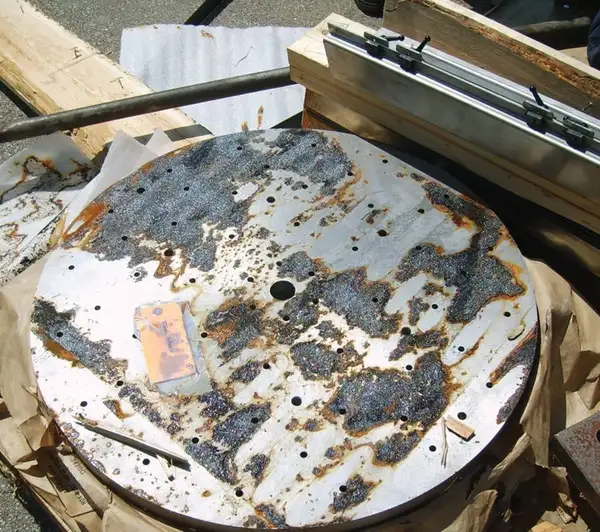
Black rust
Black rust is a thin layer of Iron (II)oxide (Fe3O4), which forms in low-oxygen environments. Usually, a metal develops this rust if it has some sort of cover that prevents fast degradation.
Red Rust
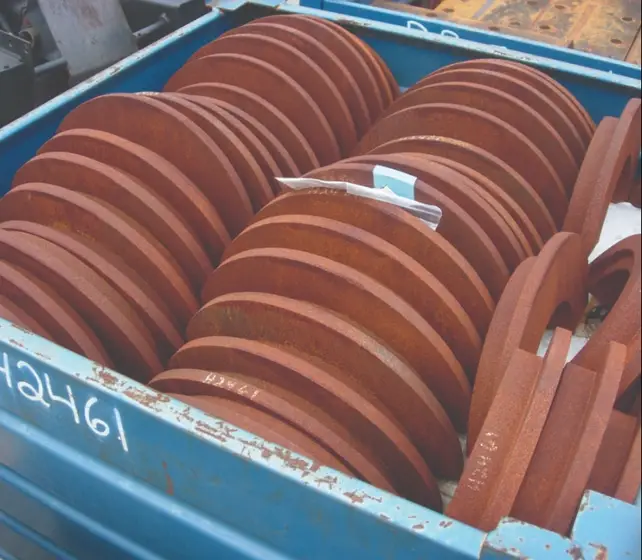
Red rust is hydrated oxide Fe2O3•H2O, which forms in environments exposed to high oxygen and water. The corrosion is consistent, as shown in the image below.
Red rust
Yellow Rust
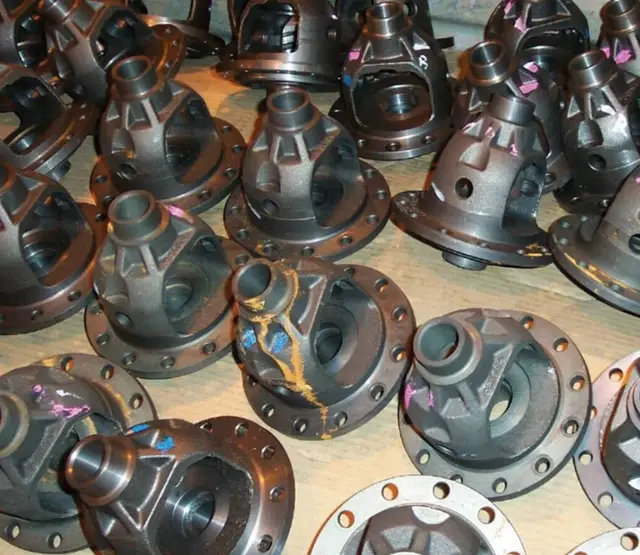
Yellow rust or Iron oxide-hydroxide FeO(OH)H2O forms where moisture is plentiful. You will mostly find it around stagnant water.
Yellow rust
Try Prolean Now!
Is Rusting a Chemical Change?
Yes, rusting is a chemical change involving the exposure of iron or its alloy to moisture and oxygen. In this often slow process, iron atoms bond with oxygen atoms to produce iron oxides. Consequently, the iron atom bonds become weaker.
First, iron reacts with oxygen and loses electrons. The presence of water enhances this process. This is followed by the formation of iron hydroxides. So, what is iron oxide? Upon losing water (drying), the iron hydroxides become oxides, for instance, Fe₂O₃, which show as the reddish-brown rust.
The overall chemical reaction for the formation of rust is;
4Fe+3O2+6H2O→4Fe(OH)3
Which then dries and dehydrates to form oxide as indicated below:
4Fe(OH)3→2Fe2O3⋅3H2O+3H2O
How Does Rust Occur Based on Conditions?
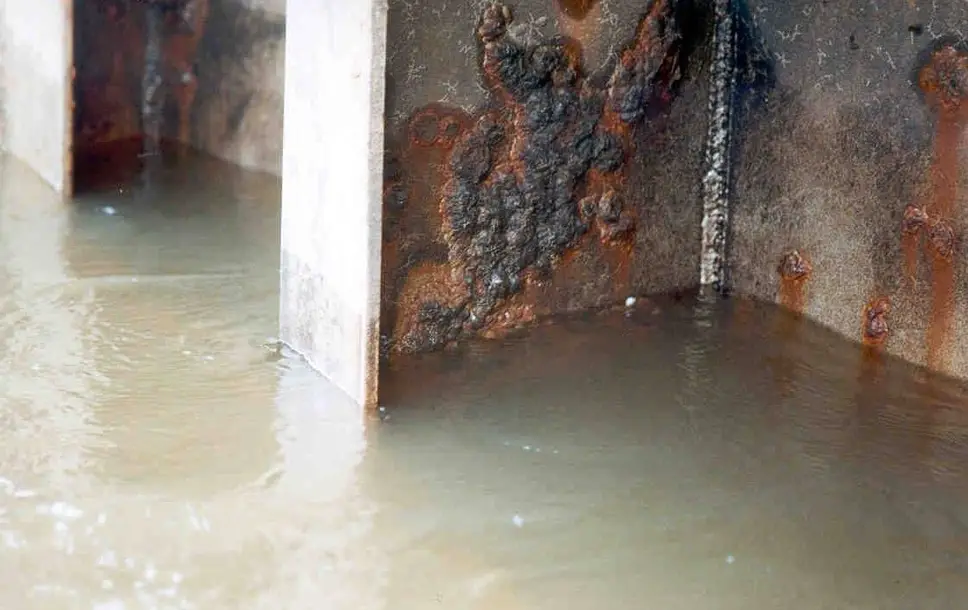
Rust forms and accelerates under special conditions, including moisture, the presence of oxygen, temperature, environment, and surface conditions.
Availability of Water (Moisture)
Damp environment
Water is an important electrolyte in rust formation. It harbours oxidation-reduction reactions required for rusting.
Presence of Oxygen
Oxygen is a fundamental element in rusting. The more aerated areas are the most dangerous due to plenty of oxygen.
Temperature
Temperature plays a critical role in rusting. Generally, high temperatures accelerate chemical reactions, rusting included.
Environment
Both acidic and alkaline environmental conditions promote rusting, but the acidic ones do so more vigorously.
Surface Condition
Moisture can settle on dirty surfaces, thus enhancing rusting. Debris or the mere surface design can encourage the settling of moisture.
Materials Commonly Affected by Rust
Exposure and proneness determine how rust affects a material.
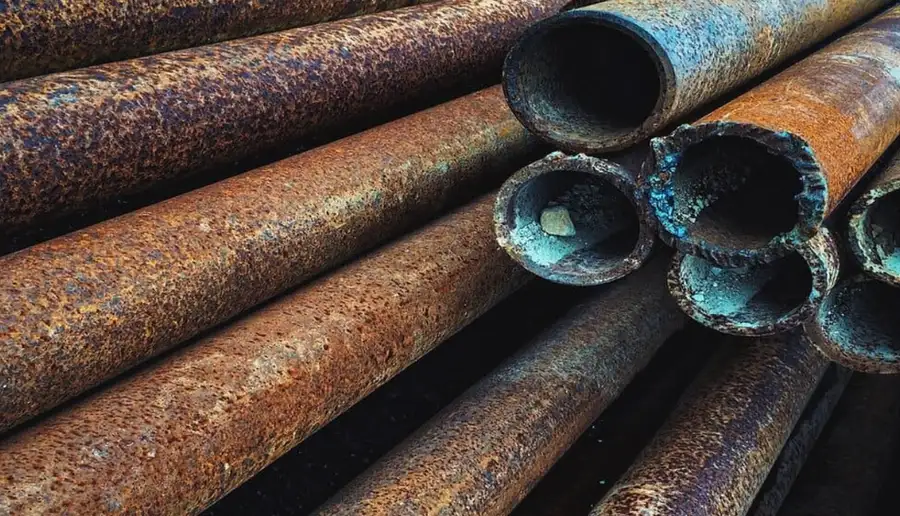
In summary, here’s a list of the most commonly affected materials:
- Carbon Steel (especially low-carbon steel)
- Wrought Iron
- Cast Iron
- Pure Iron
- Low- and Medium-Carbon Alloy Steels
Carbon steel rust
Alt text: Rusted carbon steel pipes with rust and blue-green deposits on surfaces
What Metals Won’t Rust?
Metals that won’t rust include:
- Stainless steel
- Galvanized steel
- Aluminum
- Copper
- Brass
- Bronze
- Titanium
- Platinum
- Gold
How to Prevent Rust
The following general measures can help prevent rust on parts and equipment:
- Wash equipment and machinery regularly
- Stop items in a dry place
- Regular inspections of rust-prone equipment
- Using corrosion-resistant materials like galvanized sheet metal
- Painting or coating equipment
- Using desiccants
- Lubricating moving parts
- Applying rust inhibitor
Is Rust the Same as Corrosion?
No, and understanding corrosion vs rust is key to distinguishing these terms. Rust is a type of corrosion that affects iron and its alloys. In other words, corrosion is a general term for the gradual deterioration that metals undergo through chemical or electrochemical reactions.
Can Rusting Be Called Oxidation?
Yes, rusting can be called oxidation. Specifically, it is the oxidation of iron or its alloys to form iron oxides.
Comparison Table: Corrosion vs Oxidation vs Rust
Here is a comparison table for various elements of corrosion vs oxidation vs rust.
|
Element |
Corrosion |
Oxidation |
Rust |
|
Definition |
Metal deterioration due to chemical reactions |
Loss of electrons from a material |
Corrosion of iron forming oxides. |
|
Effects |
Loss of structural integrity |
Changes in material composition |
Formation of reddish-brown fragments |
|
Materials affected |
All metals |
Metals and nonmetals |
Iron and iron alloys |
|
Reactants |
Metal, oxygen, moisture. |
Oxygen |
Iron, oxygen, moisture. |
|
Prevention & control |
Coating, cathodic protection |
Prevent oxygen exposure |
Galvanization, painting |
Contact us to learn more about the preventive and protective strategies against the above problems.
In Conclusion
The three metal-related phenomena can have some resemblances, but as this discussion has revealed, each has unique causes and effects. Metals and metal alloys for CNC machining and related projects should be selected based on how they respond to these issues.
There are also means to use different metals despite their vulnerability to rust, corrosion, and oxidation. With our experts, you can learn all the intricacies of these occurrences and how to work around them. Get in touch with ProleanTech for more details and to get a quote today!
0 Comments