
Aluminum Alloy Grades
Aluminum grades are standardized alloy designations based on chemical composition and processing, like casting or wrought alloys. Different series of aluminum alloys are engineered for specific properties. These properties can be strength, corrosion resistance, formability, weldability, and even electrical resistance.
Different grades of aluminum are mainly a result of composition and the process of making the particular alloy. Don’t confuse it with heat-treated aluminum, which are different types of aluminum of the same particular grade, like O / T6/ T651, etc, which are actually tempers and not different grades.
What Are Aluminum Grades and Why Do They Matter?
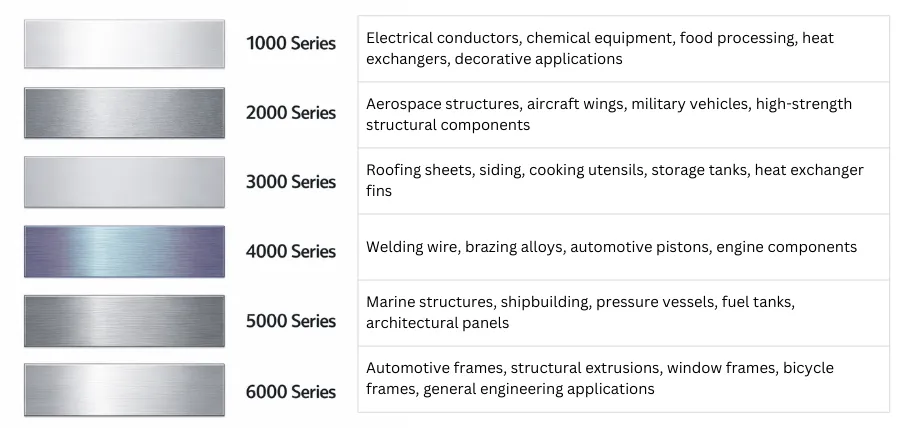
Aluminum Alloy Series Overview
Aluminum and aluminum alloys have different grades depending on their chemical compositions and mechanical properties. The various grades mean that each grade excels in different aspects, such as mechanical properties, corrosion resistance, and manufacturability.
Different types of aluminum, like 3003 Aluminum and 6061 aluminum, are used for different applications. This means that a specific type of aluminum grade is suited for a specific function. For example, the 6xxx series, including 6061 aluminum, is used for structural applications, while the 1xxx series, including 1100 aluminum, is used for electrical purposes.
This grading helps to standardize aluminum in the industry, which then helps you to select the right one for your job. The type of aluminum alloy depends on the required specifications, such as weldability, formability, and strength.
Pure Aluminum vs Aluminum Alloys
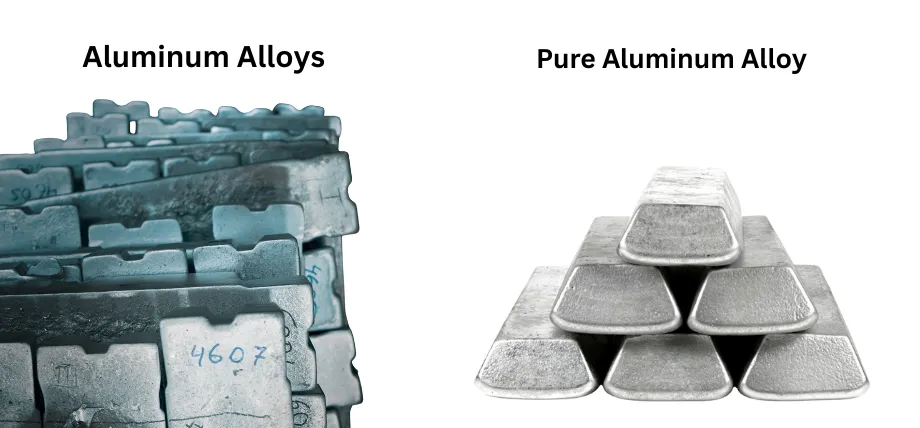
Alloys vs Pure Aluminum
Pure aluminum has excellent corrosion resistance and electrical conductivity, but it lacks the mechanical strength that most applications require due to its purity. Aluminum alloys solve the problems that pure aluminum poses. The alloys have better mechanical properties. The manufacturing process of these alloys involves adding specific amounts of alloying elements to make an alloy.
Aluminum alloys have better thermal stability and strength because of the alloying elements that modify the aluminum’s properties. This also means that these alloys are more commonly used for industrial applications than standard aluminum.
Role of Alloying Elements in Different Grades of Aluminum Alloys
Aluminum Powder
Alloying elements that are added to aluminum change its microstructure. This means that it changes the mechanical and physical properties of aluminum as well. Some common alloying elements used are mentioned below:
- Copper (Cu): Copper increases the strength and hardness of the material. This makes the alloy more durable but also reduces corrosion resistance.
- Magnesium (Mg): The addition of magnesium enhances the strength, corrosion resistance, and weldability of the alloy
- Silicon (Si): Adding silicon allows you to cast the alloy more easily and lowers the melting temperature.
- Zinc (Zn): Zinc gives high strength after heat treatment.
- Manganese (Mn): Manganese improves strength and helps control grain structure; commonly used to enhance formability in some alloy groups.
- Chromium (Cr): Enhances corrosion resistance and grain refinement
- Iron (Fe): Iron is typically regarded as an impurity, but it increases strength in exchange for lower ductility.
Different Kinds of Aluminum Alloys
Aluminum alloys use a four-digit system to classify wrought aluminum. This system can efficiently deliver the information that you need to identify an alloy. The starting digit of the alloy defines the series and tells you the primary alloying element present in the alloy.
1xxx Series Aluminum
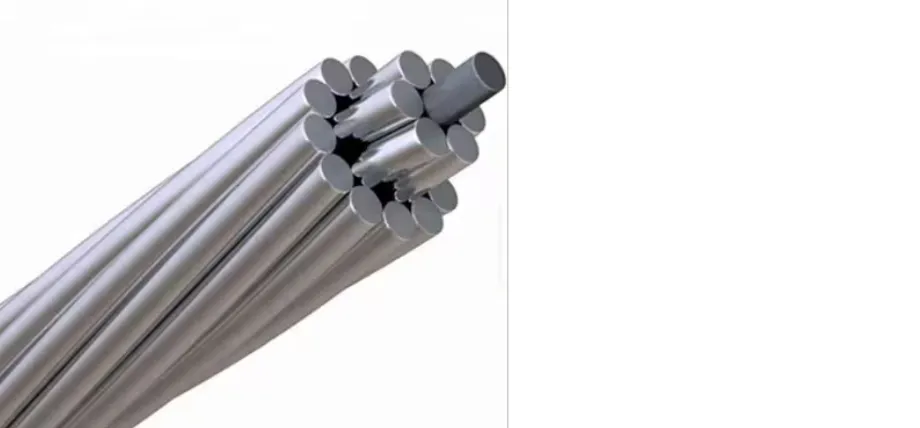
Stranded Aluminum Power Cable
The 1xxx series consists of over 99% pure aluminum. This means that it is softer and easier for you to form and shape. The higher purity also means that it is more conductive, making it good for conductive applications. The downside of such a series is that it is unable to handle load-bearing applications and easily deforms.
The 1xxx series is commercially pure aluminum and has high-purity aluminum grades widely used in applications requiring high conductivity. Frequently used aluminum 1xxx grades include 1050, 1060, 1070, and 1100. These alloys can be used in wires, busbars, reflectors, and chemical equipment.
Typical Chemical Composition (%)
| Element | Content |
| Aluminum (Al) | ≥ 99.0 |
| Silicon (Si) | ≤ 0.25 |
| Iron (Fe) | ≤ 0.40 |
| Copper (Cu) | ≤ 0.05 |
| Magnesium (Mg) | ≤ 0.05 |
| Manganese (Mn) | ≤ 0.05 |
Typical Properties
| Property | Range |
| Density | 2.70 g/cm³ |
| Tensile Strength | 60 – 110 MPa |
| Yield Strength | 20 – 35 MPa |
| Elongation | 25 – 45% |
| Electrical Conductivity | 60 – 65% IACS |
| Corrosion Resistance | Excellent |
| Heat Treatable | No |
2xxx Series Aluminum (Al – Cu Alloys)
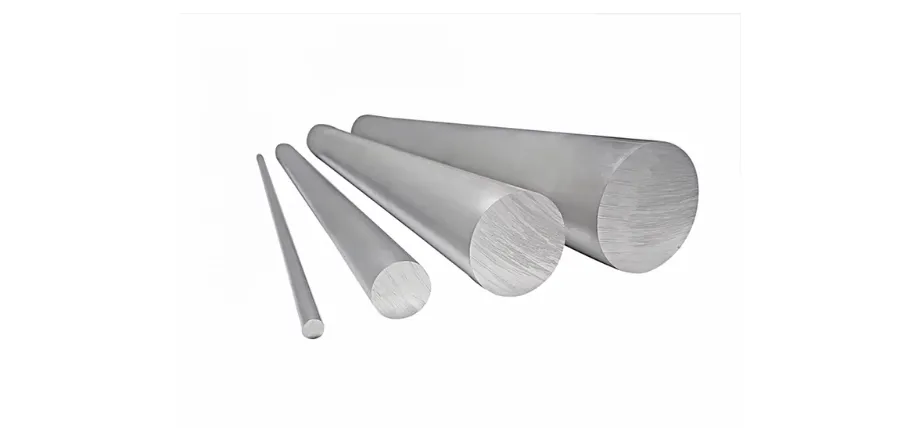
2000 Series Aluminum Rods
The 2xxx series is a copper-based alloy series. The addition of copper enhances the aluminum’s strength and fatigue resistance, making it more durable and wear-resistant. This is why it is commonly used in the aerospace industry to mark durable and strong structures.
The only downside to this series is that it lacks excellent corrosion resistance and requires corrosion protection.
2xxx series aluminum is used for its high strength and heat-treatable capability. Common processing grades include 2014, 2024, and 2219. These 2xxx series are used in aerospace structures, aircraft fittings, and in parts where the strength-to-weight ratio is critical.
Typical Chemical Composition (%)
| Element | Content |
| Aluminum (Al) | Balance |
| Copper (Cu) | 3.8 – 4.9 |
| Magnesium (Mg) | 1.2 – 1.8 |
| Manganese (Mn) | 0.3 – 0.9 |
| Silicon (Si) | ≤ 0.50 |
| Iron (Fe) | ≤ 0.50 |
Typical Properties
| Property | Range |
| Density | 2.78 g/cm³ |
| Tensile Strength | 380 – 470 MPa |
| Yield Strength | 250 – 325 MPa |
| Elongation | 8 – 20% |
| Fatigue Resistance | High |
| Corrosion Resistance | Moderate – Poor |
| Heat Treatable | Yes |
3xxx Series Aluminum (Al – Mn Alloys)
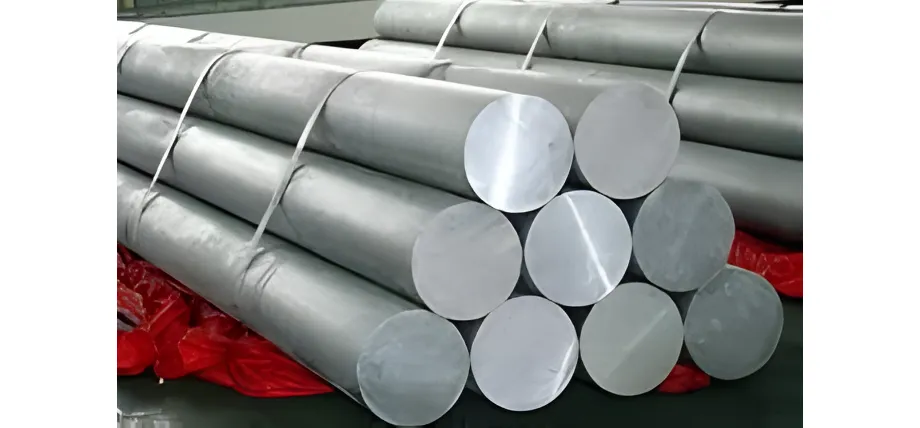
3000 Series Aluminum
Manganese is the alloying element used in the 3xxx series of aluminum. The manganese gives the alloy better strength and formability, which is helpful in making small parts and components. The formability and corrosion resistance of this series enable them to be widely used for thin-gauge applications, such as HVAC vents and cookware.
The 3xxx series has moderate strength and good corrosion resistance. Some common machined 3xxx grades include 3003, 3004, and 3105, which are used in beverage cans, cooking, storage tanks, and heat exchanger components due to their formability and weldability.
Typical Chemical Composition (%)
| Element | Content |
| Aluminum (Al) | Balance |
| Manganese (Mn) | 1.0 – 1.5 |
| Iron (Fe) | ≤ 0.70 |
| Silicon (Si) | ≤ 0.60 |
| Copper (Cu) | ≤ 0.20 |
Typical Properties
| Property | Range |
| Density | 2.73 g/cm³ |
| Tensile Strength | 110 – 285 MPa |
| Yield Strength | 40 – 125 MPa |
| Elongation | 15 – 30% |
| Corrosion Resistance | Very Good |
| Formability | Excellent |
| Heat Treatable | No |
4xxx Series Aluminum (Al – Si Alloys)
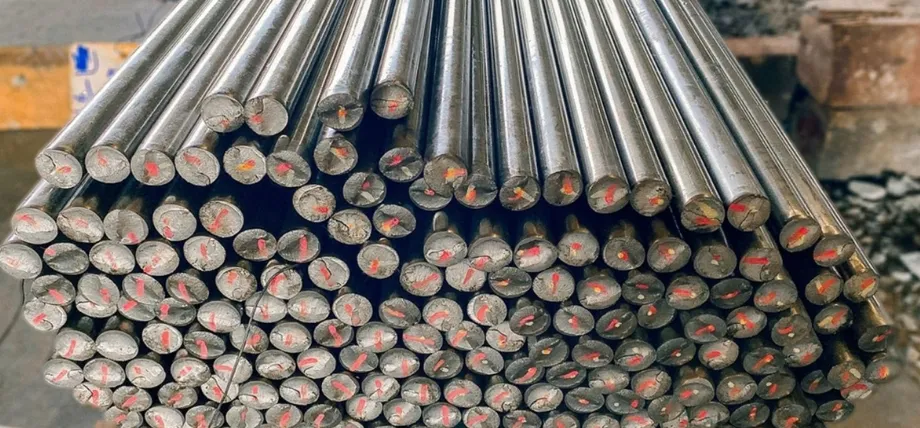
4000 Series Aluminum Rods
The addition of silicon characterises the 4xxx series. Silicon is able to reduce the melting point of the aluminium, which means that it improves the fluidity and flow. This improvement in fluidity means that it is really good as a welding filler material.
The silicon in the 4xxx series is the main alloying element, which improves the wear resistance. Common grades include 4032, 4043, and 4343, and these grades you’ll find in welding wires, brazing materials, and automotive pistons.
Typical Chemical Composition (%)
| Element | Content |
| Aluminum (Al) | Balance |
| Silicon (Si) | 4.5 – 13.0 |
| Iron (Fe) | ≤ 0.80 |
| Copper (Cu) | ≤ 0.30 |
| Magnesium (Mg) | ≤ 0.10 |
Typical Properties
| Property | Range |
| Density | 2.66 g/cm³ |
| Tensile Strength | 170 – 280 MPa |
| Yield Strength | 120 – 200 MPa |
| Melting Range | 577 – 610°C |
| Wear Resistance | Good |
| Heat Treatable | Limited |
5xxx Series Aluminum (Al – Mg Alloys)
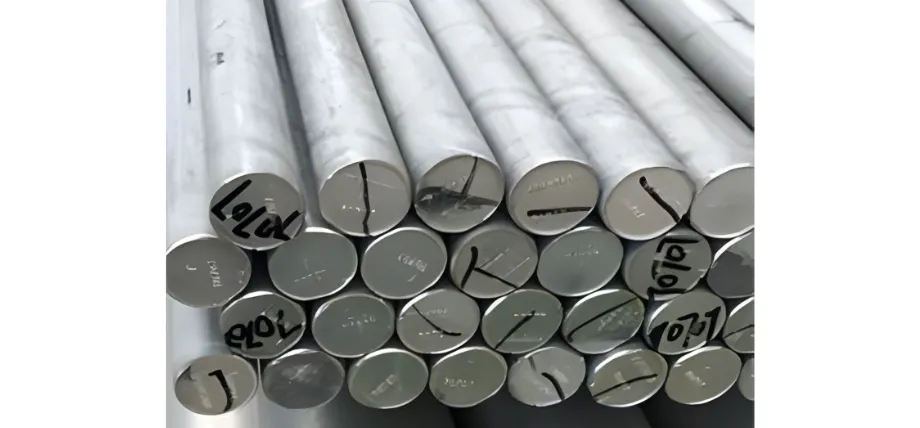
5000 Series Aluminum Cylinders
The 5xxx series aluminium alloys have magnesium as their main alloying element. Adding magnesium improves the corrosion resistance of the material. The better corrosion resistance means that it is used in marine and harsh environments.
Frequently machined aluminum grades include 5005 and 5052, which are used in shipbuiilding, pressure vessels, fuel tanks, and some structural applications that need welding fabrication during assembly.
Typical Chemical Composition (%)
| Element | Content |
| Aluminum (Al) | Balance |
| Magnesium (Mg) | 2.2 – 5.5 |
| Manganese (Mn) | 0.15 – 1.0 |
| Chromium (Cr) | 0.05 – 0.35 |
| Silicon (Si) | ≤ 0.40 |
| Iron (Fe) | ≤ 0.40 |
Typical Properties
| Property | Range |
| Density | 2.66 g/cm³ |
| Tensile Strength | 230 – 350 MPa |
| Yield Strength | 125 – 275 MPa |
| Elongation | 12 – 25% |
| Corrosion Resistance | Excellent |
| Weldability | Excellent |
| Heat Treatable | No |
Try Prolean Now!
6xxx Series Aluminum (Al – Mg – Si Alloys)
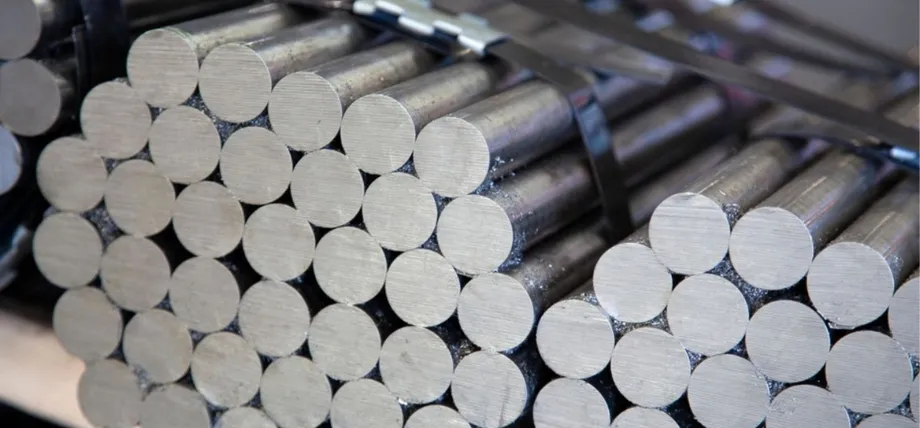
6000 Series Aluminum Bars
The 6xxx series has both magnesium and silicon as its alloying elements. These elements give the alloy great properties such as strength, corrosion resistance, and machinability. The combination of these properties means you can use them in various applications and industries.
6xxx series aluminum is one of the most widely used aluminum grades, with 6061 and its tempers, 6063, and 6005 among the grades for architectural profiles, automotive components, and bridges.
Typical Chemical Composition (%)
|
Element |
Content |
|
Aluminum (Al) |
Balance |
|
Magnesium (Mg) |
0.6 – 1.2 |
|
Silicon (Si) |
0.4 – 1.3 |
|
Iron (Fe) |
≤ 0.50 |
|
Copper (Cu) |
≤ 0.40 |
|
Chromium (Cr) |
≤ 0.35 |
Typical Properties
|
Property |
Range |
|
Density |
2.70 g/cm³ |
|
Tensile Strength |
240 – 350 MPa |
|
Yield Strength |
170 – 300 MPa |
|
Elongation |
8 – 20% |
|
Machinability |
Very Good |
|
Corrosion Resistance |
Good |
|
Heat Treatable |
Yes |
7xxx Series Aluminum (Al-Zn Alloys)
The 7xxx series has the highest strength compared to all other alloy series. This is because of the use of zinc as its main alloying element. The zinc added to the aluminum changes its properties and improves the strength and maximum load capacity of the material.
The higher strength means that it is a preferred material for high-strength applications across various industries. Some of the common aluminum 7xxx grades include 7005, 7050, 7475, which are processed for aerospace structures and high performance sporting equipment.
Typical Chemical Composition (%)
|
Element |
Content |
|
Aluminum (Al) |
Balance |
|
Zinc (Zn) |
5.0 – 8.0 |
|
Magnesium (Mg) |
1.0 – 3.0 |
|
Copper (Cu) |
1.2 – 2.0 |
|
Chromium (Cr) |
0.18 – 0.28 |
Typical Properties
|
Property |
Range |
|
Density |
2.81 g/cm³ |
|
Tensile Strength |
450 – 600 MPa |
|
Yield Strength |
380 – 540 MPa |
|
Elongation |
5 – 11% |
|
Fatigue Resistance |
Very High |
|
Corrosion Resistance |
Moderate |
|
Heat Treatable |
Yes |
8xxx Series Aluminum
The 8xxx series alloys generally refer to specialty alloys that have their properties modified to suit specific tasks. These tasks can be anything from high-performance aerospace parts to electrical wiring for a specific device. It has high performance and durability.
Typical Chemical Composition (%)
|
Element |
Content |
|
Aluminum (Al) |
Balance |
|
Lithium (Li) |
0.5 – 3.0 |
|
Iron (Fe) |
0.5 – 1.3 |
|
Silicon (Si) |
≤ 0.50 |
|
Other Elements |
Depend on the type and final application |
Typical Properties
|
Property |
Range |
|
Density |
As low as 2.45 g/cm³ (Al – Li) |
|
Tensile Strength |
300 – 550 MPa |
|
Elastic Modulus |
Higher than standard aluminum |
|
Fatigue Resistance |
High |
|
Heat Treatable |
Yes |
Try Prolean Now!
Cast Aluminum vs Wrought Aluminum
Aluminium that is made by melting and then pouring it into a mould is cast aluminium. With casting, you can make different complex parts depending on the complexity of the mould and the material’s fluidity. However, it has limited strength and ductility. Wrought aluminium is different in that it is processed through mechanical working to refine its grain structure to improve its performance and mechanical properties.
| Property | Cast Aluminum | Wrought Aluminum |
| Manufacturing Method | Casting | Rolling, extrusion, forging |
| Strength | Lower | Higher |
| Ductility | Limited | High |
| Dimensional Complexity | High | Moderate |
| Typical Uses | Housings, engine blocks | Structural frames, panels |
The Impact of Heat Treatment & Anodizing on Aluminum Grades
1. Impact of Aluminum Heat Treatment
Aluminum alloys can significantly benefit from heat treatment, a process that can enhance their mechanical properties. For instance, heat treatment can improve strength, hardness, and resistance to impact. However, it’s essential to remember that not all aluminum grades respond favorably to heat treatment.
For instance, 6061 Aluminum is often heat-treated to increase its mechanical strength, while 5083 Aluminum does not respond well to heat treatment, and its properties may degrade with this process. Therefore, when considering an aluminum grade for your CNC machining project, be aware of its compatibility with heat treatment.
2. Anodizing and Its Effect on Aluminum Grades
Anodizing is a widely used surface treatment technique that improves the corrosion resistance, surface hardness, aesthetic appearance, and wear resistance of aluminum parts. During the anodizing process, a protective oxide layer is built on the surface of the aluminum part. This layer is highly adhesive, making it an excellent base for secondary finishes such as painting or sealing.
However, the anodizing process might affect different aluminum grades differently. For instance, 6061 aluminum and 7075 aluminum anodize well due to their high silicon content, which makes them ideal for applications requiring both durability and aesthetics. On the other hand, 2024 aluminum does not anodize well due to its high copper content.
In essence, the grade of aluminum used can influence the effectiveness of the anodizing process, and hence, should be considered when deciding the material for CNC machining.
Aluminum Applications Across Industries
Aerospace Engineering
There are various aluminium alloys that are used in the aerospace industry. The High-strength characteristic of 2024 and 7075 means it is the ideal material for the fuselage and wings of aircraft. Their use in the aerospace sector is because of their ability to withstand extreme forces.
Automotive Manufacturing
The automotive industry uses both the 5xxx and 6xxx series to make body panels and suspension components because of their lightness. It allows manufacturers to put them into chassis and other components of cars without increasing the weight while maintaining the structural integrity.
Marine and Offshore Structures
The 5xxx series is highly resistant to corrosion and has good weldability, both characteristics that manufacturers look for when making ships and structures that are in the sea. This instantly makes the aluminum alloys the perfect choice for manufacturers to use for hulls of ships and structures that need to withstand harsh environments and seawater.
Construction and Architecture
The use of the 6xxx series is pretty common in the construction industry because of its great structural integrity. It is used in making curtain walls for buildings you see every day. Modular systems that can be disassembled and reassembled also use this aluminum alloy since it is lightweight and durable, making transport and assembly easy.
Electrical and Thermal Systems
The 1xxx and 3xxx series are highly conductive and allow for both efficient electrical and thermal conductivity. This makes them the ideal choice for heat management systems and electrical motors. Their use in electrical systems makes for cost-effective parts, lowering manufacturing costs.
Choosing the Right Aluminium Grade
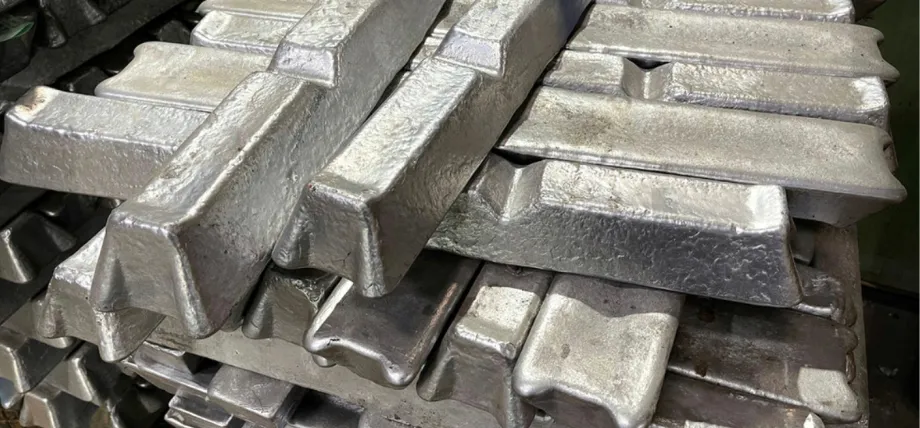
Various Aluminum Alloy Ingots
Choosing the correct grade of aluminium that suits your job depends on the requirements of your job. This requires you to calculate how much load a part needs to withstand, not only just the load but also the temperature changes the material may undergo.
The longevity of the material is also a factor you need to take a look at because it determines factors such as serviceability and wear resistance, which directly impact how long a partmade ot the alloy will last. It is important to check that the aluminium grade’s properties also align with your requirements, such as heat treatment capability and weldability.
Aluminum 6061 Vs 6063
When you compare aluminum 6061 vs 6063, the main difference for practical applications comes down to strength and finish capability. Aluminum 6061 is particularly popular for its strength and multi-purpose applications. It can be used in most applications requiring moderate loads and corrosion resistance. Compared to 6063, aluminum 6063 offers an excellent surface finish and is better suited for visual and architectural uses. For CNC machining aluminum projects, 6061 aluminum has better machinability and is more predictable during machining operations; comparatively, 6063 is better at extruding processes.
Aluminum 3003 Vs 6061
Choosing between aluminum 3003 vs 6061 largely depends on the final environment and application scenario. Aluminum 3003 is soft, highly corrosion-resistant, and is excellent for marine applications. 3003 aluminum lacks mechanical strength, which makes it less desirable for structural applications. When CNC machining, aluminum 6061 is preferred for precision components and load-bearing applications, while 3003 is better for sheet metal parts that involve bending and forming.
Aluminum 6061-T6 Vs T651
Both aluminum 6061 T6 and T651 are heat-treated aluminums and of the same alloy class. The heat treatment difference when comparing Aluminum 6061-T6 vs T651 is a stress-relieving process after solution heat treatment that reduces residual stresses.
The extra step in heat treatment improves stability during machining, which means final dimensions come out accurate and there’s no overchipping or undercutting of the dimensions. For your practical concerns, T6 is more suitable for cost-effective strength applications where minor dimensional warping is not a serious problem, like automotive parts and frames. But if you’re looking for better precision in your aluminum parts for aerospace and CNC-machined prototypes, the T651 offers lower scrap rates and improved manufacturing accuracy.
Aluminum 6061 Vs 7075
Copper-Coated Aluminum Rods
If you guessed the differences between aluminum 6061 and aluminum 7075, you’d be surprised by how similar they look, but the differences are many. In aluminum 6061 vs 7075, there is still an important distinction. While both are precipitation-hardened alloys, in aluminum CNC machining, 6061 offers broader applications and cleaner chip formation, with reduced tool wear.
Aluminum 2024 Vs 6061
When you compare aluminum 2024 vs 6061, the 2024 aluminum has copper that improves its strength without affecting its weight significantly. This means you get a better strength-to-weight ratio and fatigue resistance. Aluminum 6061 has excellent strength and weldability. It is a general-purpose alloy that can fit most uses requiring corrosion resistance and easy machining.
Custom Aluminum Machining
Proleantech has supplied aluminum machined parts, components, and standard machined aluminum to over 30 countries. We are an ISO certified company that provides prototyping, scaled production, and assistance to move from prototype to low-volume and high-volume manufacturing. Proleantech has a stable supply chain of aluminum alloys for machining and part production, with material transparency and material certificates guaranteeing the alloy in our parts. We also provide heat treatment, post-process services like finishing, and coatings for all aluminum parts.
Request a free quote today!
Conclusion
The different grades of aluminium show how its components are mixed together and how it changes their properties. The series numbers tell you what is present inside an alloy and how it behaves under stress, allowing you to choose the correct grade for your project.


0 Comments