
 OEM Metal Fabrication Services
OEM metal fabrication is the process of producing custom metal parts and assemblies for original equipment manufacturers based on their designs, drawings, and specifications.
Original equipment manufacturers (OEMs) use custom sheet metal fabrication to create specific metal parts which match their precise requirements. The manufacturing process unites exact engineering methods with suitable material choices to reach ±0.01 mm precision for products used in automotive and aerospace industries, as well as medical devices, electronic components, and industrial machinery. And this makes precision sheet metal fabrication essential for high-performance OEM production.
Proleantech is a high-quality OEM metal fabricator with over 15 years of experience in prototyping complex designs and scaling production with ISO and Material certification. We use presses, laser machines, CNC machines, and waterjet cutters for heat-sensitive metal fabrication processes.
What is OEM Metal Fabrication?
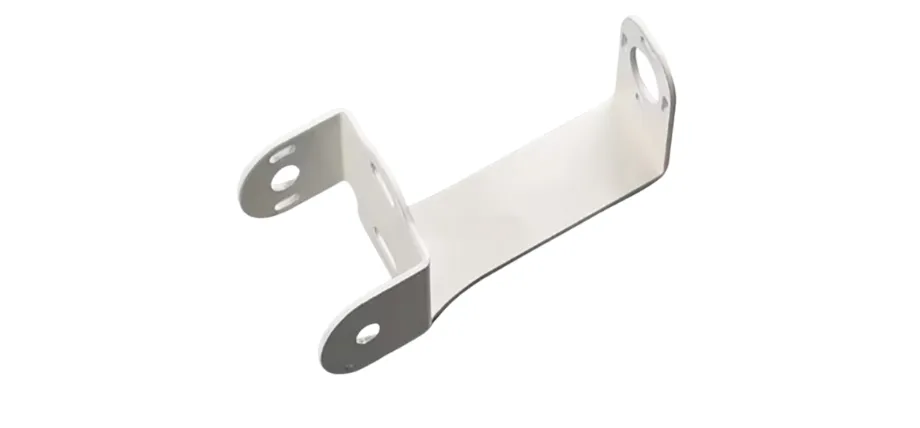
Precision Metal Bracket
The process of OEM metal fabrication involves on-demand manufacturing of custom metal parts and assemblies that match the exact specifications from original equipment manufacturer engineering drawings. The manufacturing process transforms basic materials, including sheet metal, plate steel, bar stock, extrusions, and castings, into completed parts through controlled operations of cutting and forming, machining and welding, and surface finishing.
The manufacturing process maintains tight tolerance levels between 0.025 mm and 0.10 mm while providing complete material tracking and following AS9100, ISO 9001, and ISO 13485 standards, which is expected in OEM metal fabrication and OEM sheet metal fabrication.
The manufacturing process handles both prototype and production runs while maintaining the OEM-specified mechanical characteristics, dimensional precision, and surface quality that match the approved design specifications.
Benefits of OEM Metal Fabrication
The manufacturing process of OEM metal fabrication produces parts with tolerances that reach ±0.01 mm while selecting materials for maximum stress capacity of 500 MPa and maintaining defect rates under 0.5% through ISO 9001:2015 and AS9100D certified production methods that ensure performance and reliability for OEM parts fabrication.
Specialized Engineering Expertise
Outsourcing to OEM fabricators grants access to multidisciplinary engineering teams proficient in finite element analysis (FEA) and design for manufacturability (DFM), reducing design iterations by 40%.
Superior Precision and Tolerancing
The manufacturing process of OEMs depends on coordinate measuring machines (CMMs) and laser interferometry to achieve positional accuracy of ±0.01 mm, which is essential for electronic assembly interlocking systems because any misalignment greater than 0.05 mm will damage signal quality. Medical OEMs achieve biocompatibility standards of ISO 13485 through precise manufacturing, which results in a Ra 0.4 μm surface finish that stops bacteria from attaching to implant housings. These surface qualities and properties are typical for precision sheet metal fabrication and high-tolerance OEM metal fabrication capabilities.
Material Selection
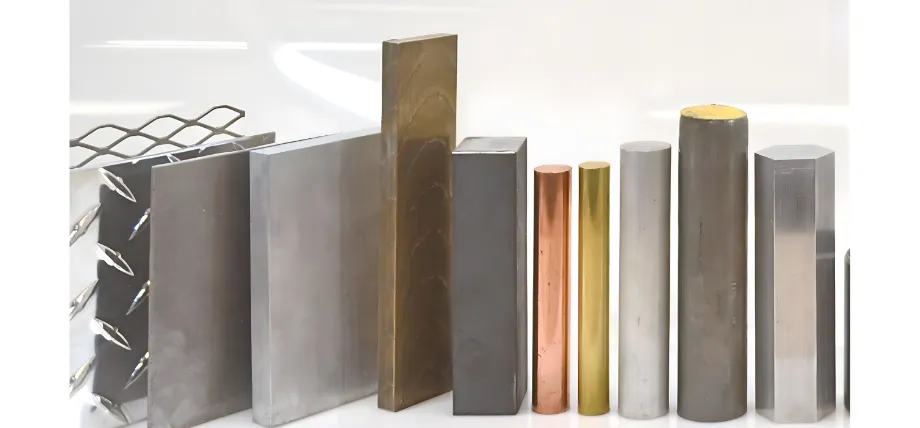
Metal Materials
OEM metal fabricators have access to common alloys like 6061-T6 aluminum, which is useful for most applications. They also have material access to standard stainless steel and titanium alloys. You can also request custom materials with heat treatments like annealing for enhanced mechanical properties. Flexible OEM metal fabrication capabilities help OEM suppliers produce parts optimized for performance and cost.
Enhanced Durability
Many metal fabricators provide processes like shot peening that induce compressive residual stresses. Fabricated OEM components have the advantage of being customized, and small process customizations can lead to large durability. For example, fatigue life extensions can be doubled in high-cycle applications. Industrial machinery parts produced through OEM metal fabrication, like gears with heat treatment and coatings, can reduce downtime by resisting wear better than standard off-the-shelf gears.
Reduced Lead Times
Robotic arms and ERP systems help streamline production, which can cut lead times from months to weeks, depending on the volume. For most electronic OEM suppliers, automated nesting can make sheet metal fabrication more efficient. Robotic welding and Industry 4.0 capability are essential for rapid prototyping and making design changes more efficient for on-demand manufacturing and OEM metal fabrication.
Cost Reduction
OEM metal fabrication techniques often use simulation software that can help minimize scrap and waste metal. For example, OEM metal fabricators can predict material flow in forming, and this is particularly used in sheet metal forming to compensate for springback and reduce errors and scrap products.
Then, there’s the advantage of shared tooling. Since OEM fabricators regularly produce metal parts of different alloys and materials, they already have proper cutting tools, coatings, and specialized tooling and fixtures, which reduces the average cost for all customers.
Compliance with Standards
OEM manufacturers generally have the most sought-after quality standard certifications, like ISO 9001 quality inspection. Other standards include AS9100D standards, which give full traceability through QR codes. For medical industries that are more regulated, medical devices have their own FDA standards and material certificates for biocompatibility.
OEM Metal Fabrication Capabilities
Cutting
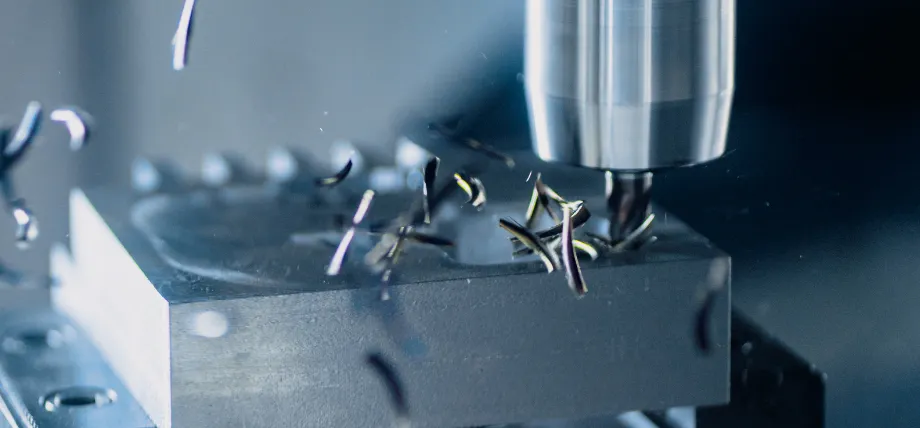
Precision CNC Machining
Precision cutting generally uses CNC systems for automated cuts. CNC milling and CNC turning can produce metal prototypes and components with precise dimensions and tolerances below 1mm.
For sheet metal fabrication, laser cutting and plasma cutting techniques use a high-power laser to vaporize material at rates around 100m/min, which can produce dozens of sheet metal parts with high complexity every hour. This is a standard workflow for sheet metal manufacturers.
If you’re concerned about thin parts lacking structural integrity from the heat and warping from the CNC processes, you can also opt for waterjet cutting, which uses water abrasion to cut metal sheets, avoiding HAZ, an alternative used in OEM metal fabrication capabilities.
Forming and Bending
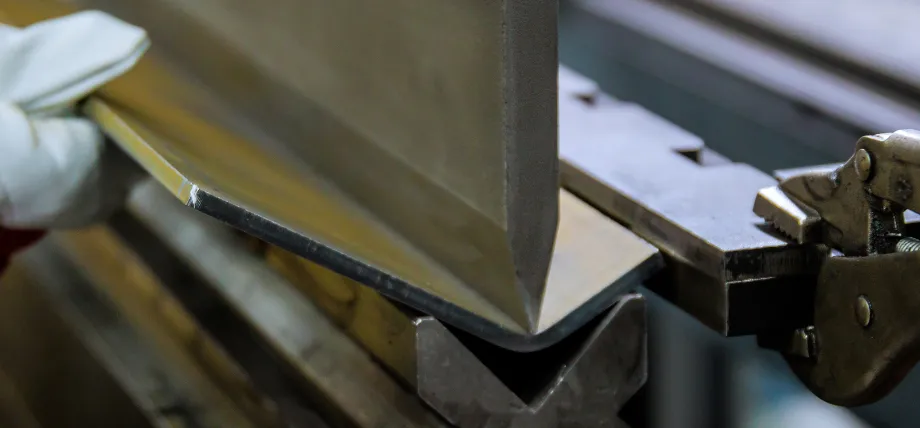
Metal Sheet Bending
Exterior panels in cars, sheet metal enclosures, and protective boxes are made using a quicker OEM metal fabrication technique called forming. Bending falls under sheet metal forming, and the most common type is press brake bending that produces bent and angled parts using air bending machines. Generally, sheet metal bending can achieve angles within ±0.5°, ideal for fabricated OEM components.
Roll forming is another shaping technique that progressively shapes profiles like channels with cross-sections up to 300 mm, ideal for structural beams supporting 500 kN loads. This is commonly used in custom sheet metal fabrication and scaled OEM parts fabrication.
Welding
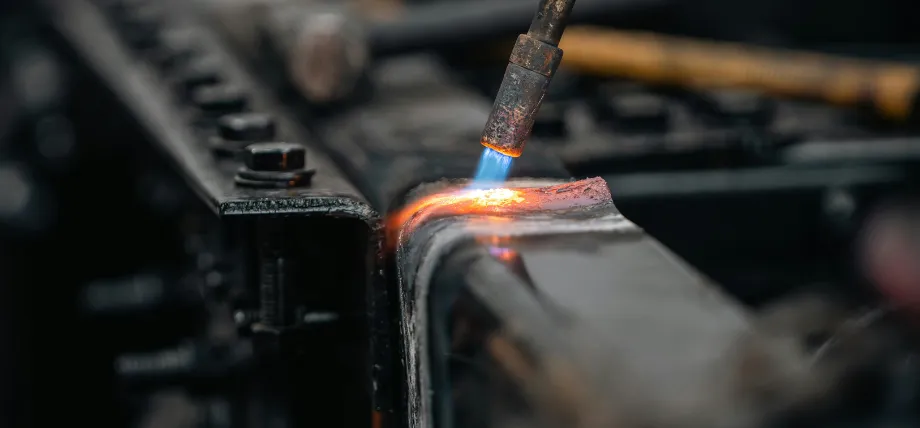
Metal Welding Process
OEM metal fabrication mostly uses MIG and TIG welding for joining metal parts. MIG welding fuses edges with an argon gas to prevent metal oxidation. TIG welding is great for producing porosity-free joints in aluminum. The choice largely depends on the material thickness, material type, and joint.
Try Prolean Now!
Advanced OEM Metal Fabrication Capabilities
Multi-Axis Machining
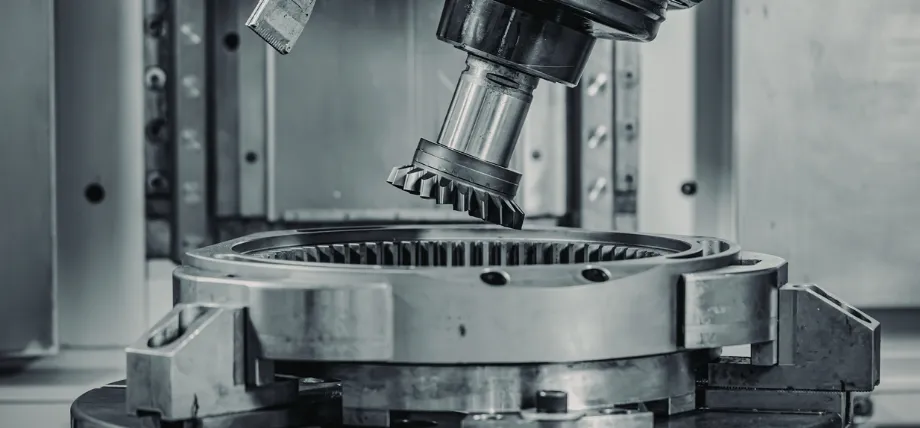
Gear Cutting Operation
4-axis, 5-axis, and multi-axis CNC machining provide manufacturing capabilities for extremely complex design features. Multi-axis machines allow the tool to manoeuvre around undercuts and machine cavities, and features that would otherwise require multiple part orientation changes and tool cutter changes. Another advantage of multi-axis CNC machining in OEM metal fabrication is the freedom to design features that would otherwise be too complex to manufacture using standard CNC workshops.
Additive-Subtractive Hybrid Processes
Additive-subtractive processes for OEM metal fabrication use metal laser sintering to build parts with 0.2 – 0.5 mm layers and then machining the excess and producing contour features with ±0.02 mm.
The advantage of using direct metal laser sintering and then machining down to size is rapid prototyping, cheaper than casting and molding, and this process retains 95% density. Naturally, you’d expect voids and pores, but post-processing treatment like isostatic pressing can eliminate these voids and keep porosity below 1%.
Wire EDM
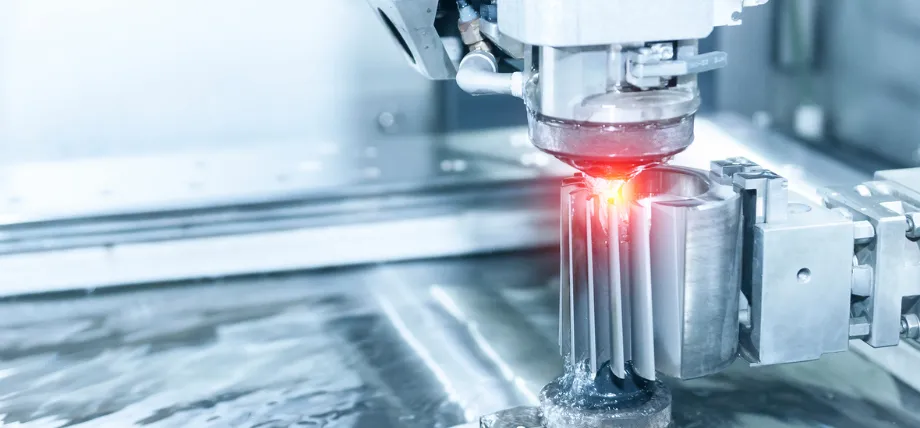
EDM Cutting Process
Wire EDM uses a wire electrode to precisely cut a metal block by high voltage that instantly erodes the material around the wire. Depending on the diameter of the wire, it can produce extremely precise parts with micron-level precision.
Surface Coating
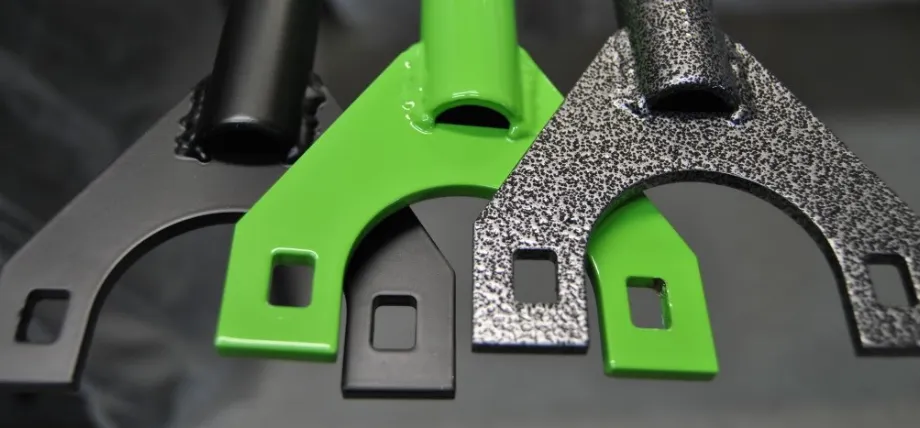
Powder Coating Finishes
Coating metal parts is often the final OEM metal fabrication process and is used to enhance the durability, aesthetic, or provide some functional benefit to the part. There are many standard coatings like anodizing, chemical vapor deposition, paint, and powder coating, but depending on the material, you can also get PVDF and plastic coatings.
Fabricated OEM Components
Automotive Industry
- Chassis Brackets: Chassis brackets require torsional load distribution, and 1018 carbon steel fabrication can sustain these large loads.
- Exhaust Manifolds: Cast from 409 SS, these manifolds are required to sustain temperatures in excess of 900°C.
- Body Panels: OEM metal fabricators can produce stamped parts like body panels with custom dies.
- Brake Caliper Housings: Housings are critical components made from CNC machining aluminum alloys.
Aerospace Industry
- Wing Spar Fittings: Made from 7075-T6 aluminum connectors that transfer shear forces exceeding 500kN and high fatigue cycles.
- Turbine Blades: Require specialized alloys like investment cast Inconel 718 that can endure the high creep at high temperatures.
- Landing Gear Components: Requires precision EDM-machined components and machining of tough titanium alloys like Ti-6Al-4V.
Medical Industry
- Surgical Instrument Handles: Sheet metal-formed stainless grips that can be contoured for ergonomic grips.
- Implant Frames: Additive-manufactured Ti64 scaffold supports.
- Diagnostic Enclosures: Aluminum 6061 housings that are CNC-machined can be used to shield electronics with IP67 and thermal protection.
Electronics Industry
The production of electronics depends on exact metal components, which serve to protect devices while providing grounding functions and heat dissipation.
-
- Heat sinks: OEM metal fabrication factories use extrusion to produce aluminum fins that can dissipate heat rapidly.
- Connector Shells
- Cable Brackets
Try Prolean Now!
Type of OEM Fabrication and Suitable Materials for OEM Metal Fabrication
Sheet Metal
Sheet metal fabrication produces metal components through cutting, bending and stamping and punching, and welding operations, which create enclosures and brackets and housings, automotive panels, and industrial machinery parts. The production method delivers excellent results for making parts in medium to high quantities while providing strong structures at affordable prices.
- The material Carbon Steel provides high strength at affordable prices, which makes it suitable for structural elements and weight-bearing components.
- The material Stainless Steel provides corrosion protection and durability for applications that require medical and clean-room environments.
- The material Aluminum serves two main purposes because it remains lightweight while conducting electricity, thus finding its way into electronic devices and transportation systems.
- The materials Copper and Brass exhibit excellent thermal and electrical conductivity, which makes them suitable for HVAC systems and electrical components.
CNC Machining
The CNC machining process enables the production of exact OEM parts and complex shapes, which need precise manufacturing methods. The system produces exact parts from different materials through its computerized cutting tool operations. The process of CNC machining finds widespread use in aerospace applications, as well as automotive manufacturing, medical device production, and hardware development.
- The manufacturing industry prefers aluminum as its main material because it provides excellent machinability and an exceptional strength-to-weight ratio.
- The combination of steel and stainless steel materials provides exceptional performance for mechanical and industrial operations.
- The combination of high strength and exceptional corrosion resistance makes titanium the top choice for aerospace and medical industry applications.
- The three plastic materials, POM, Nylon, and ABS, serve best for creating gears and custom fixtures, and housing applications.
Die Casting
The die casting process requires pressure to force molten metal into the mold shapes. The process enables large-scale manufacturing of precise components which find application in consumer electronics, automotive parts and appliance housings.
- The material properties of aluminum alloy include good strength and corrosion resistance, and light weight.
- Zinc Alloy provides manufacturers with their best option when they require exact measurements and intricate product designs.
- The lightweight properties of magnesium alloy make it suitable for electronic device applications.
Injection Molding (Metal Injection Molding)
MIM produces small complex metal parts through plastic molding and powder metallurgy processes. The manufacturing process allows companies to produce parts with shapes that are close to their final form, so only small amounts of additional machining work are required.
- Stainless Steel offers exceptional strength properties along with superior resistance to wear.
- Tool Steel shows its best performance when used in situations that involve high levels of stress.
- The combination of Titanium and Copper Alloys provides both weight reduction and corrosion protection.
OEM Sheet Metal Fabrication Service
Get precision, durability and quick turnaround with precision OEM sheet metal fabrication. Get OEM precision parts delivered at your doorstep with skilled engineering, advanced technology and strict quality control.
From prototype to production, we ensure cost-effective and consistent parts. Get a free quote today from our online quoting system.
Conclusion
The production of OEM metal fabrication results in components that meet ±0.005 mm tolerances through processing sheet metal and CNC machining and die casting, and MIM methods with aluminum alloys, stainless steels, and titanium, and high-performance nickel alloys.
0 Comments