
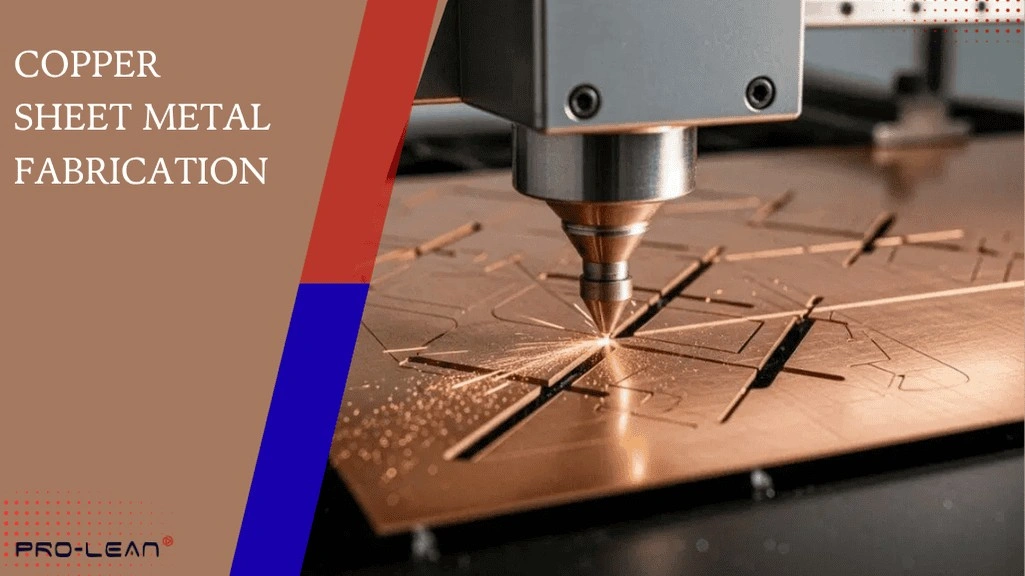
Copper fabrication
You can fabricate both pure and alloyed copper. Sheets of C101, C110, and other types of sheet metal are cut, punched, bent, and welded to create the desired shape. Copper sheet metal fabrication services are ideal for producing products that require thermal conductivity, electrical conductivity, corrosion resistance, and antibacterial properties. It includes electrical bus bars, terminals, heat exchangers, decorative panels, household fixtures, and a variety of other products.
This article further discusses the process of copper fabrication, including fabrication techniques, design tips, and a comparison of copper 101 vs. 110 fabrication.
What is meant by Copper Sheet Metal Fabrication?
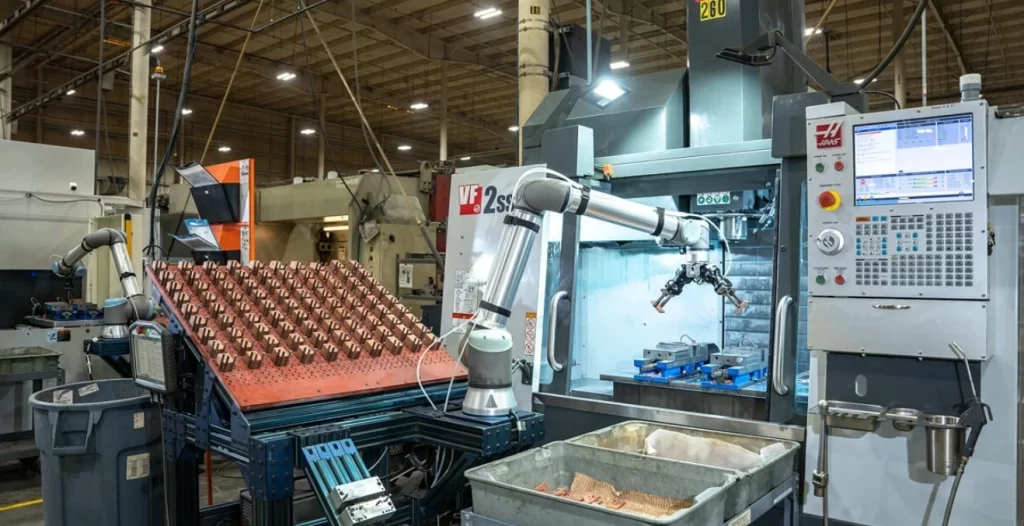
Copper fabrication setup
It is the process of converting blank copper sheets (or coils, strips, or plates) into functional parts by various sheet metal fabrication techniques, such as cutting, bending, joining, and finishing. The high ductility of copper allows it to be formed into complex shapes with precision. Sometimes, the fabricator even tempers the copper sheets to adjust the formability according to performance needs.
A typical range of copper sheet metal thicknesses suitable for fabrication ranges from 0.127 mm (0.005″) to 6.35mm (0.250″), or even higher. This is equivalent to sheet metal gauges from 36 to 3. Moreover, parts or products made from copper fabrications are widely applicable in various industries, including electrical, telecommunication, automotive, plumbing & fixtures, chemical processing, and others.
“At ProleanTech, we specialize in producing OEM copper fabrication items that are tailored to specific needs. Our advanced fabrication equipment, custom tooling, expertise, and experience can be helpful for you to leverage the full potential of copper sheet metal fabrication.”
What Makes Copper a Good Choice for Sheet Metal Fabrication?
Copper is known as an extremely fabrication-friendly material, mainly due to its ductility or malleability. In addition to that, copper is a good choice for applications requiring electrical conductivity, thermal conductivity, or antibacterial properties.
The list below illustrates the best reasons for using copper in sheet metal fabrication.
- Excellent Formability: The ductility of copper sheets allows for the formation of complex shapes without any defects.
- Aesthetic Appeal: Copper gives pleasing brown-reddish appearances, and the surface can be finished with different textures.
- Antibacterial: This characteristic makes it suitable to fabricate products for applications where hygiene is critical.
- Conductivity: Copper is an excellent conductor of heat & electricity, making it an ideal option for electrical and thermal applications.
Copper 101 Sheets (C101)
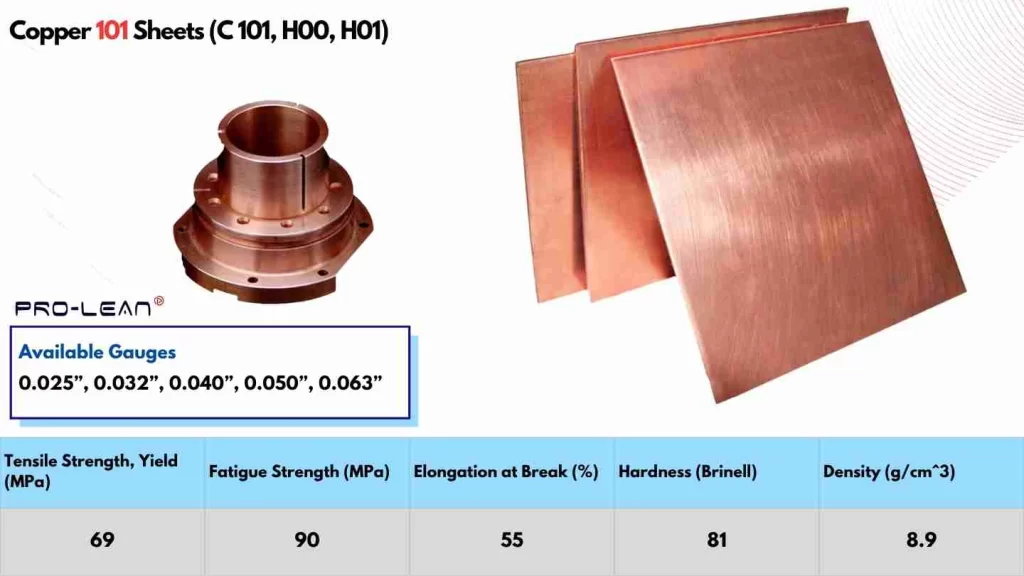
Copper 101 sheets
C 101 is a pure grade of copper, almost 99.99% pure, free from oxygen, and with strict limitations on other impurities. This purity is highly beneficial for electrical conductivity. However, its high ductility increases the work-hardening rate, making some forming operations challenging to handle. Copper sheet metal manufacturers often temper the sheet to balance ductility for forming and increase its mechanical strength, known as C101 H01 grade.
C101 is used to make grounding plates, radio-frequency components, circuit breakers, and precision electrodes.
Copper 110 Sheets (C110, H01, H02)
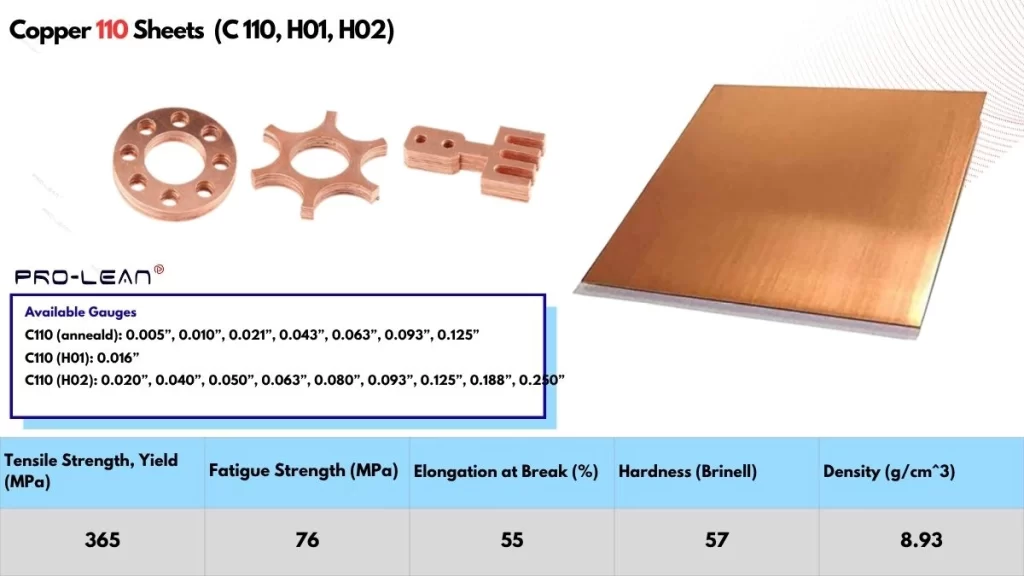
Copper 110 sheets
Copper 110 is not as pure as C 101, still, its purity is approximately 99.90%. It contains impurities like oxygen (0.02–0.04%), silver, sulfur, and nickel in negligible amounts. In comparison to 101, these minor impurities have a minimal effect on conductivity and formability.
Consequently, C110 is a cost-effective and commonly available grade of copper sheet, available in annealed or half-hard tempered forms, including C110 (annealed), C110 H01, and 110 H02. The heat-treated sheets help to control the springback during fabrication.
This copper grade is preferred for electrical and heat transfer-related applications, including industrial busbars, heat exchanger tubing, heat sinks, switches, electrical connectors, and decorative panels.
Try Prolean Now!
Copper 101 vs 110: What are the Differences?
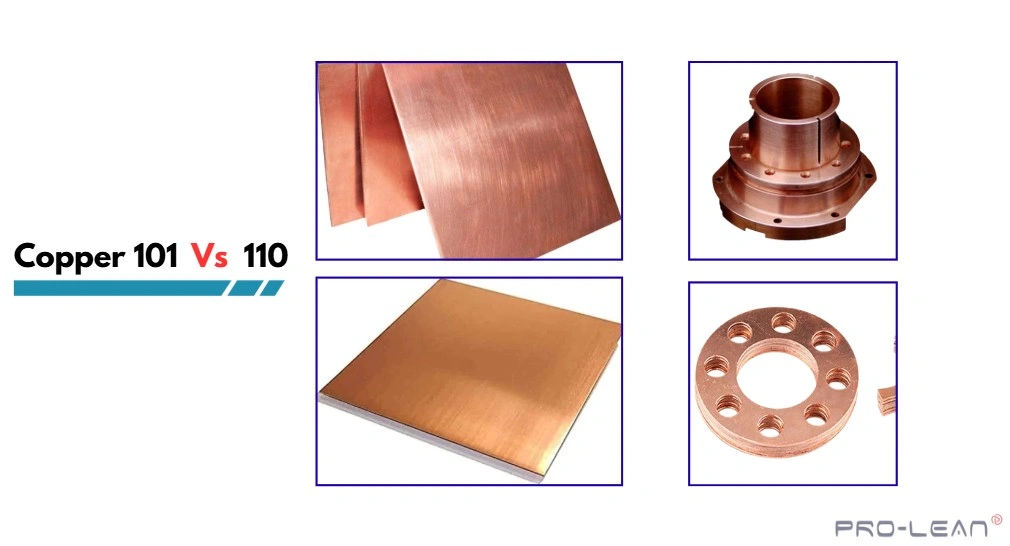
Copper 101 vs 110
Although both C 101 and 110 are known as pure copper grades, C 101 is the purest form with < 99.99% of Cu. This slight difference in the presence of impurities affects machinability, conductivity rate, and other properties.
Let’s take a look at the comparative table of Copper 101 vs 110 below.
| Property | Copper 101 | Copper 110 |
| Purity | ~ 99.99 % Cu, almost 0 % of O₂ content | ~ 99.90 % Cu, with ~0.04 % O₂ |
| Conductivity | Very high, ~100 % IACS | Very high, often ~100 %+ IACS |
| Formability | Good formability, higher work hardening | Excellent Formability |
| Strength | Higher strength range | Slightly lower strength in many tempers. |
| Best for | High‑performance electrical/thermal applications, where purity matters. | General‑purpose grade for sheet fabrications |
| Cost | More costly due to ultra‑high purity | Easily available & cost-effective |
The Process of Copper Sheet Metal Fabrication
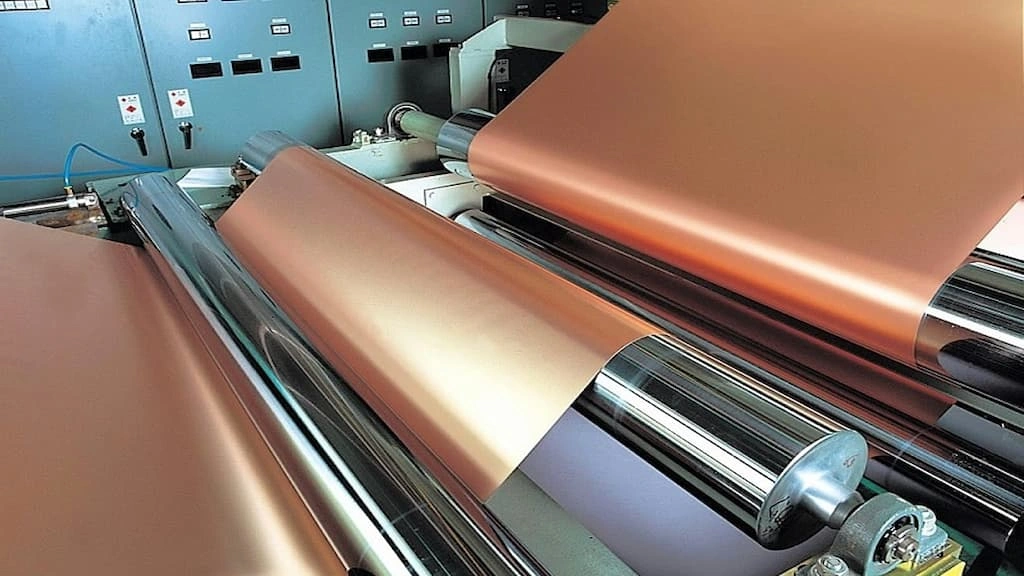
Copper sheet bending
Like the fabrication of any other type of sheet metal, copper fabrication begins with designing a detailed plan, followed by cutting copper sheet metal and performing metal forming operations to shape the blank sheet according to the design.
Let’s look at the individual steps:
- Fabrication Design: Creation of detailed engineering design, illustrating size, geometry, features, and assembly direction.
- Cutting Copper Sheet: Large blank sheets are cut down to specific sizes using techniques such as shear cutting and laser cutting.
- Metal Forming: It involves shaping the sheets with sheet metal bending, sheet metal drawing, punching, or other techniques.
- Joining/Assembly: Welding, soldering, or other suitable joining methods are applied to join the multiple copper parts & create the final shape.
- Post-processing: Post-processing & finishing techniques, such as bead blasting, electropolishing, and lacquering, are applied to refine the surface.
What Are the Different Types of Copper Fabrication?
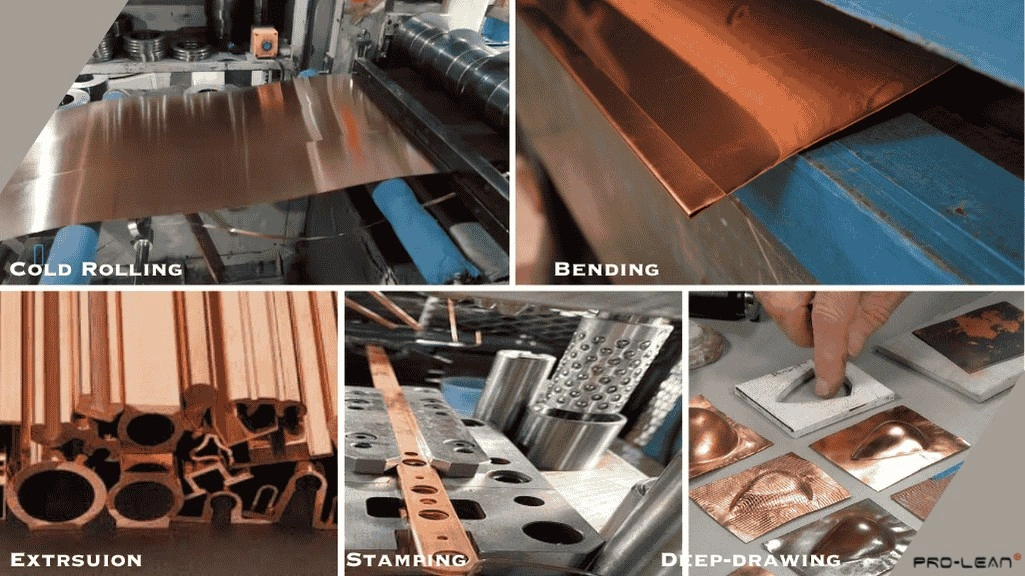
Types of copper fabrication
Bending, stamping, rolling, extrusion, and deep-drawing are the common types of copper fabrication methods. Each of them has a unique capability for shaping the raw copper sheets, tubes, plates, and strips.
The table below highlights processes, capabilities, and use cases of different copper fabrication methods.
| Type | Process | Capabilities |
| Bending | Forming angled or curved shapes using press-brake or bending rollers. | thickness flexibility, moderate–tight radii, low-to medium volumes |
| Stamping | A sequence of forming operations like cutting, bending, piecing, etc., using stamping dies and punches. | Efficient high-volume production, part complexity, and repeatability. |
| Rolling | Passing copper through rollers to reduce thickness | Uniform thickness across long lengths |
| Extrusion | Forcing hot copper billets through extrusion dies to form long & continuous profiles. | Long shapes, both solid and hollow profiles. |
| Deep Drawing | Pulling a flat copper blank into a die to form deep & hollow impressions. | High-depth 3D forms with excellent thickness control |
Try Prolean Now!
Surface Finishes for Sheet Metal Copper Parts
In some cases, post-processing (such as trimming, bead blasting, or deburring) is sufficient for fabricated items, as copper naturally exhibits corrosion-resistant properties. However, they are finished with electropolishing, lacquering, and other suitable methods whenever a smooth and appealing finish is required.
Let’s elaborate on these more briefly.
Electropolishing
Electropolishing of copper produces a smooth and shiny reddish surface for an eye-catching aesthetic and enhanced corrosion resistance. The process involves the use of the electrolysis process, where a material film (a few microns in thickness) is removed by passing electricity through an electrolytic bath.
Lacquering Finish
Have you ever noticed a greenish layer on the surface of copper? It is called tarnish, caused by oxidation. Although it is a corrosion-resistant layer, it affects the aesthetic of copper. Therefore, lacquering finish is applied to various fabricated copper parts. The clear coat of lacquer maintains the original look over time.
Design Tips for Manufacturability and Cost Optimization
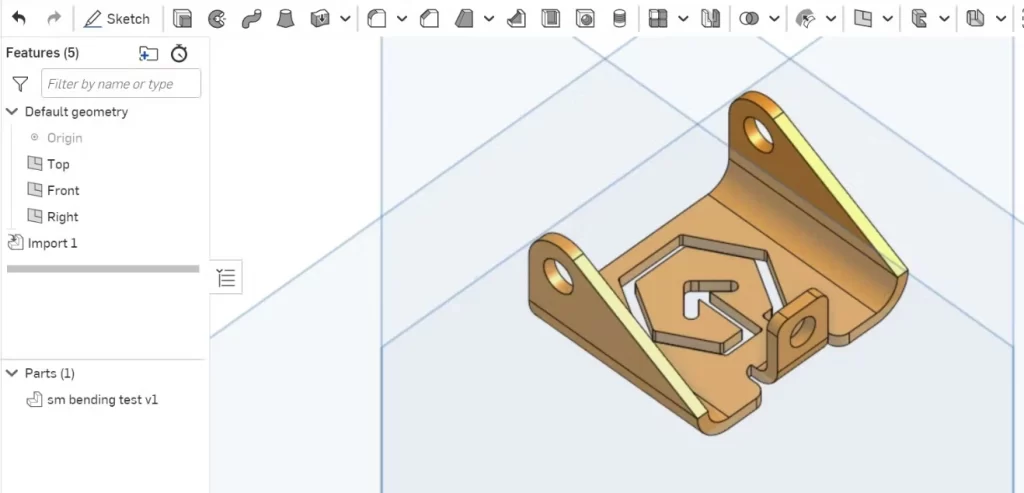
Fabrication design
Design is not only about creating a technical blueprint to produce a desired shape, but it is also about considering manufacturability and reducing costs. Here are some design tips for optimizing manufacturability and reducing metal fabrication costs.
Choose a Suitable Copper Grade
Sheets of copper grade (C101) are expensive than C110 due to their high purity form. Therefore, choose C101 only if it is necessary for the desired functionality and performance.
Optimize the Design Complexity
A high parts count, large assembly requirements, a higher number of unique geometrical features, and tight sheet metal tolerances all increase fabrication costs. Therefore, optimize them with standard features, minimize the assembly steps, and choose tighter tolerances only if required.
Use Standard Parts & Modules
In your custom copper fabrication design, use standardized off-the-shelf fasteners, bearings, housings, and subassemblies. It helps to reduce lead time and per-unit cost.
Advantages of Copper Sheet Metal Fabrication
Copper is a malleable material with various beneficial properties, including formability, conductivity, corrosion resistance, and antibacterial properties.
- The corrosion resistance of copper allows fabricated parts to be used in harsh environmental conditions.
- Copper sheets are antibacterial, making them suitable for medical and other sectors.
- The formability of copper sheets allows manufacturers to fabricate complex parts and products.
- The fabrication process can be used for sheet metal prototyping, small batches, and large volumes, offering production flexibility.
What Are the Industries Using Copper Sheet Fabrication?
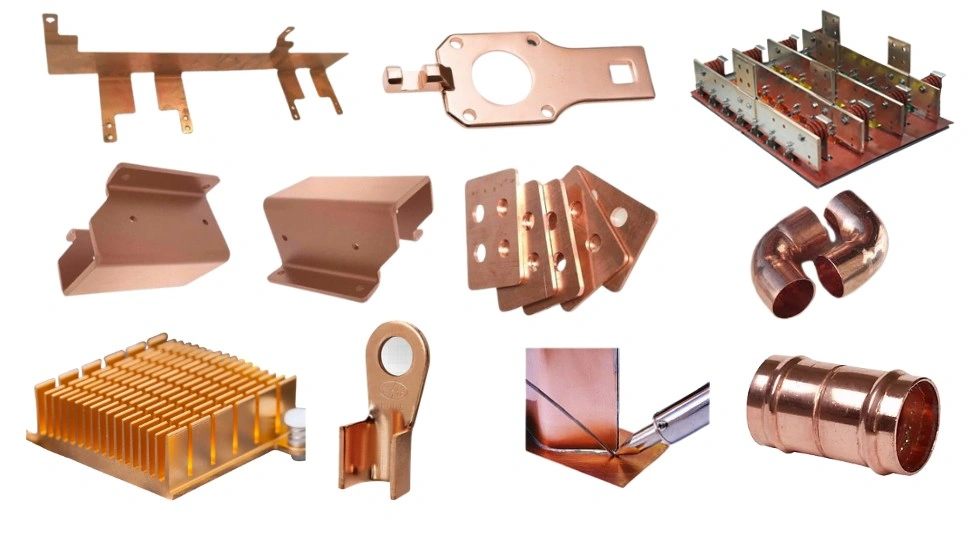
Copper fabrication products
Copper sheet metal fabrication is used in various industries, including electrical, thermal, energy, power generation, architecture, medical, and others.
The list below outlines the common application examples:
- Electrical: Busbars, connectors, terminals, and bus plates for electrical products/systems that require high conductivity.
- Heat Transfer: Components/products requiring high conductivity, such as heat-exchanger plates & tubes, radiators, condensers, and evaporator fins.
- Plumbing Hardware: Pipes, fittings, valves, flashings, condenser coils, etc.
- Decorative & Art: Signage & arts with embossed copper sheet metal, custom interior designs, decorative panels, etc.
- Medical: Components where antibacterial, hygiene, and finishing matters, such as door handles, diagnostic equipment parts, etc.
Read More:
Summing Up
Copper sheets are excellent choices for sheet metal fabrication, particularly when high conductivity, corrosion resistance, and antibacterial properties are required for your applications. You can choose between C101, C110, and other copper grades based on the end requirements. However, it is essential to utilize advanced equipment and the correct sequence of forming operations for optimal results.
If you need help with design optimization for manufacturability or cost reduction, contact our engineers today. Our sheet metal service team can review your design, recommend practical improvements, and help you manufacture high-quality parts at a competitive cost.
FAQs
What are the two types of copper sheets?
Two main types of copper sheets are Oxygen-free copper (C101) and electrolytic Tough Pitch (ETP, C110).
What type of copper should not be bent?
Rigid & hard-temper copper should not be bent, such as H04 tempering. Essentially, look for brittleness and the risk of cracks when forming the bends.
0 Comments