
 Titanium Sheet Metal Fabrication
Titanium sheet metal is known for its desirable qualities, such as light weight, high strength, corrosion resistance, and exceptional performance. Applications in aerospace, medical, automotive, and industrial fields depend on the safe and effective use of titanium. Knowing and understanding characteristics such as low elasticity and strength-to-weight ratio provide the foundation for accurate titanium sheet metal fabrication, machining, and finishing.
Prolean Tech, one of the leading sheet metal manufacturers in China, fabricates titanium to meet your exact specifications. Our custom sheet metal fabrication will tackle any obstacle to ensure you receive titanium parts that meet all industry requirements and are stable and strong in harsh conditions.
In this guide, we will discuss titanium sheet metal properties, its alloys, the fabrication process, and factors affecting the cost of titanium fabrication.
Titanium Properties to Consider in Sheet Metal Fabrication
The industrial applications of titanium are limitless, providing strength, low weight, and corrosion resistance. However, before deciding on a titanium grade, particular characteristics must be vetted.
Composition
There’s pure titanium as well as a range of alloys to choose from. If forming and machining ease is the focus, choose the titanium-aluminum-vanadium alloys for better strength and easier fabrication. These alloys are prevalent in aerospace, medical, and industrial applications.
Durability
Titanium resists corrosion in both moisture and chemical environments and retains strength at elevated temperatures. These qualities make titanium serviced components of choice for applications in marine, medical, and high-heat environments where long service life is essential.
Elasticity
Titanium has lower elasticity compared to steel, which makes it harder to machine and bend. As a result, processing time can increase, especially for complex shapes. You need to consider this when planning your designs to prevent excessive production costs.
Hardness
All grades of steel, as well as almost every other metal alloy, are harder than pure titanium. If your project requires significant wear resistance, you will need to use titanium alloys, which are also harder than pure titanium and will deliver better overall project results.
Weight
Titanium has a strong strength-to-weight ratio. Its lower density results in the ability to maintain structural strength while creating lightweight structures. This is ideal in aerospace frameworks, automotive components, and medical devices.
Yield Strength
Titanium performs stronger with less weight, but the tensile strength is still lower when compared to steel. It supports aircraft structures and other designs where low mass and high performance are required.
Titanium Alloy Sheet Metal Applicable for Fabrication
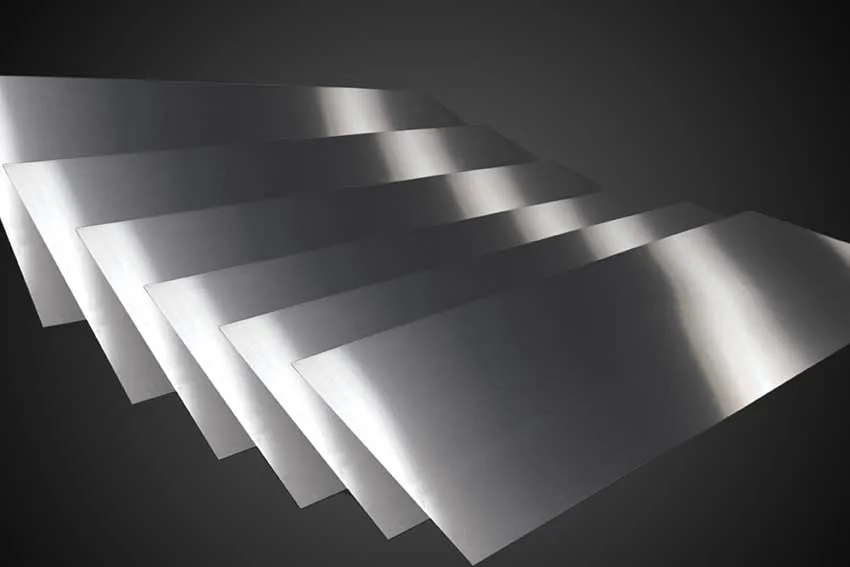
Titanium Sheets for Fabrication
Some titanium sheet alloys are easier to fabricate than others. In titanium fabrication, these alloys are commonly used because they can be cut, bent, formed, and heat-treated while maintaining good strength and corrosion resistance.
Alpha Alloys
Alpha alloys contain stabilizers such as oxygen and aluminum, with neutral elements like tin. These grades do not respond to heat treatment. You shape them through cold working during fabrication.
Near Alpha Alloys
Near alpha alloys contain a small amount of ductile beta phase with about two percent stabilizers such as vanadium, silicon, or molybdenum. These alloys respond well to drawing and support controlled deformation during fabrication.
Alpha and Beta Alloys
Alpha and beta alloys include stabilizers for both phases. They stay metastable and respond to heat treatment. You use them when you need balanced strength, formability, and heat responsiveness.
Beta and Near Beta Alloys
Beta and near-beta alloys contain higher beta stabilizer levels such as silicon, vanadium, and molybdenum. These stabilizers retain the beta phase and support strength enhancement through aging and solution treating. These alloys fit applications that demand strong and stable sheet metal parts.
Titanium Fabrication Process
Titanium parts can be produced by different types of sheet metal fabrication methods, such as machining, bending, and hot treatment. Let’s discuss them in detail.
Machining
Titanium can be machined using conventional tools if rigidity and sharpness are maintained. Slow cuts with lubrication prevent galling and heat buildup. Techniques include:
- Turning: Use coarse feeds and large-nose radius tools. Tungsten carbide or high-speed steel is recommended.
- Drilling: Drill short, shallow holes with intermittent retraction and flood lubrication to minimize friction.
- Milling: Climb milling minimizes chip welding; maintain absolute rigidity.
- Planning & Shaping: Use sharp tools with large-radius tungsten carbide inserts.
- Grinding & Polishing: Reduce wheel speed and use suitable coolants. Canvas wheels with fine abrasives help achieve a high polish.
Try Prolean Now!
Can You Bend Titanium
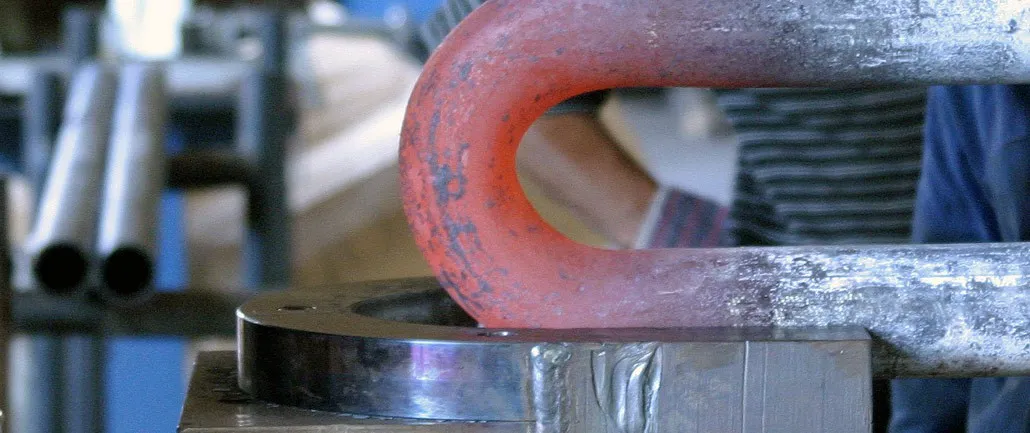 Titanium Pipe Bending
When working with titanium sheets, using power brakes is most effective. Each punch and die set is designed for a specific angle. The rounded shape of the bending die also helps determine the angle. When bending titanium, care must be taken to avoid cracking. Other variables, such as molybdenum disulfide as a lubricant and “bending allowances,” are also essential to maintaining the sheet’s overall integrity
Hot Working
To hot work titanium properly, the titanium must be heated to a temperature slightly lower than what is required to heat mild steel. Oxygen surface contamination occurs when exposed to heat for too long, so to reduce the amount of contamination, the amount of time the titanium is heated needs to be limited.
The tools used are preheated, and the contact time is controlled to maintain the properties of the titanium. Hot working titanium also lowers spring back, increases ductility, and improves the surface quality on the desired flat area of the finished part.
Forging
The method of titanium forging is similar to using low-alloy steel with a press and hammer. However, with titanium, the materials, techniques, and tools differ slightly. Because titanium has a lower thermal expansion, the dies used need to have larger, rounded corners and a larger overall die face radius.
To maintain the titanium’s overall strength, hot trimming and minor reheating need to be used. When it comes to drop forging, it is common to use a process with several stages to avoid the formation of unwanted internal cracks during the process.
Heat Treatment
Titanium is heat-treated to retain strength and ductility. Electric or vacuum furnaces are preferred over fuel-fired furnaces, as the latter can damage thinner sections and absorb hydrogen.
Pre-annealing and preheating temperatures must be strictly controlled to prevent surface hardening through diffusion of oxygen. Careful heat treatment of titanium will retain its desirable mechanical properties through further processing and in service.
Forming
Forming of titanium includes the methods of drop hammer, hydro press, and stretch forming.
- Drop hammer forming uses heated blanks as well as multiple dies and can produce complex shapes. Frosting, rubber, pads, and friction sawing can all be used to correct minor surface-portion deformations while maintaining surface finish.
- Hydro press forming, so as to avoid springing back, also manages high yield strength. It is achieved by delivering uniform pressure onto heated blanks.
- Stretch forming is useful for creating bends, channels, and curves. Often, ductility and spring-back are reduced via annealing combined with brake forming.
Deep Drawing
Deep drawing titanium needs hydraulic or hydroform presses that can apply great drawing forces. To relieve some of the stress and to avoid cracking, annealing may be needed, especially for deep shapes. To improve the ductility of the titanium, the blank should be heated prior to deep drawing.
Welding
A controlled environment is needed for welding titanium because of its reaction to oxygen, nitrogen, and hydrogen. Common techniques are TIG, MIG, resistance spot, electron beam, and plasma welding. Inert gas shielding (usually argon or helium) is used to avoid the contamination that can occur during welding. With pure titanium and alpha alloys, ductile welds are made, while beta alloys can become very brittle if there is a lack of control in cooling and if the alloy is controlled improperly.
Surface Treatment and Descaling
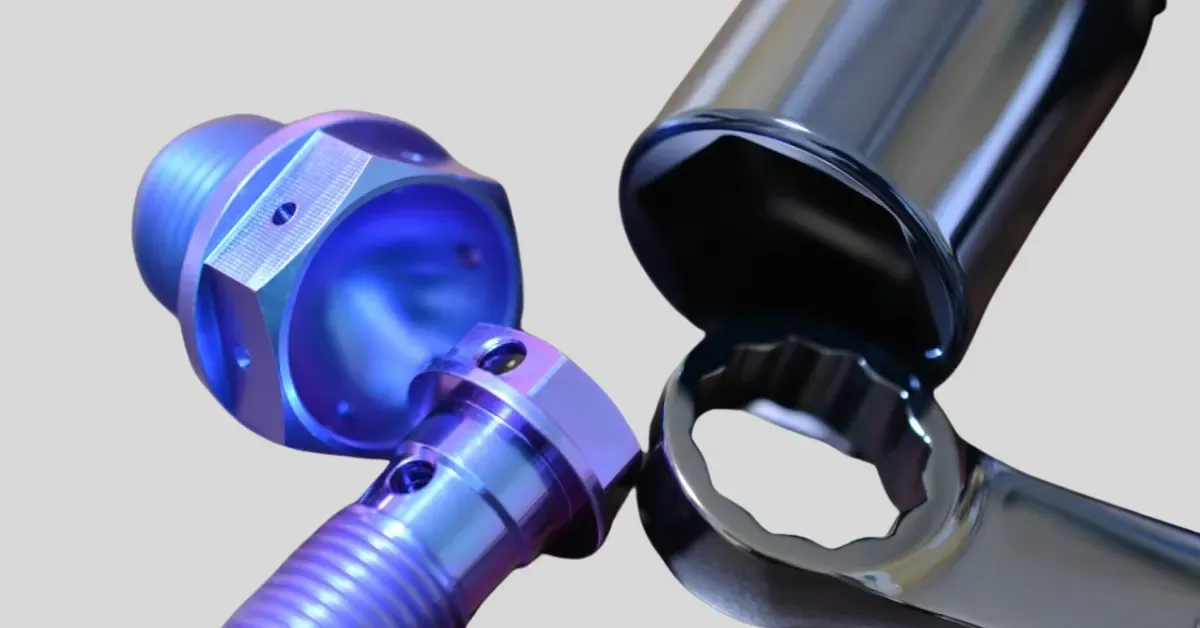 Anodized titanium parts
Heat exposure forms oxides and nitrides on titanium surfaces, which must be removed for mechanical integrity. Descaling methods include caustic soda baths with oxidizing agents.
- Anti-Galling Treatments: Anodizing, Sulfinuz coatings, and adherent nickel or chromium layers reduce galling.
- Electrodeposition: Prepares titanium for metallic coatings like nickel, chromium, zinc, or cadmium.
- Anodizing: Produces a thin oxide layer with interference colors determined by applied voltage.
These processes ensure that titanium sheet metal fabrication parts maintain strength, corrosion resistance, and precise dimensions throughout fabrication.
Advantages of Fabricated Titanium Parts
The benefits of using titanium in fabricated parts are as follows:
Corrosion Resistance
When titanium is exposed to oxygen, it forms a stable oxide layer. This oxide layer prevents moisture and other chemicals from getting to the surface. This is why, for long periods of time, titanium sheets will be protected, allowing them to be used for outdoor and other exposed applications.
High Melting Point
Titanium can withstand extreme temperatures without losing its strength. Due to this ability, the titanium fabricated parts can be used close to heat sources like engines and industrial systems. The material remains stable and will not deform during temperature fluctuations, so your components are always going to be stable.
High Strength to Weight Ratio
Titanium offers superior strength while also being lightweight. This is of great advantage to the structures in aircraft, parts in automobiles, and any other use case where strength and lightweight are important.
Non-Toxic and Biocompatible
Titanium stays chemically inert. It does not react with the human body or the environment. You see titanium in medical implants, dental parts, and support devices because the material stays safe inside the body.
Recyclable
Titanium resists weathering for long service life. This helps reduce maintenance and long-term costs. You also recycle titanium into new parts without losing quality, which supports cost control during future fabrication.
Limitations of Using Titanium in Sheet Metal Fabrication
There are some limitations when working with titanium for sheet metal fabrication.
Titanium Sheet Metal Price
Titanium fabrication is costly due to the complex production steps and stringent control required. You also deal with higher fabrication expenses, which limit its use.
Fabrication Difficulties
Working with titanium means overcoming some hurdles. Its incredible strength and lofty melting point make casters’ lives difficult. With sheets, one will have to handle them with care and execute every step in the manufacturing process with precision. As temperature, tool, and handling policy compliance is required to keep them free of defects.
Deforming Issues
Titanium has a low elastic modulus. This makes the material prone to bending or warping during forceful fabrication methods. You have to manage forming pressure and tool setup carefully to keep shapes accurate and prevent unwanted deformation.
Galvanic Coupling
Titanium reacts when it touches other metals in the presence of an electrolyte. This forms a galvanic couple that accelerates corrosion. You plan material combinations and isolation techniques to prevent these reactions during assembly and fabrication.
Application of Titanium Sheet Metal Fabrication Parts
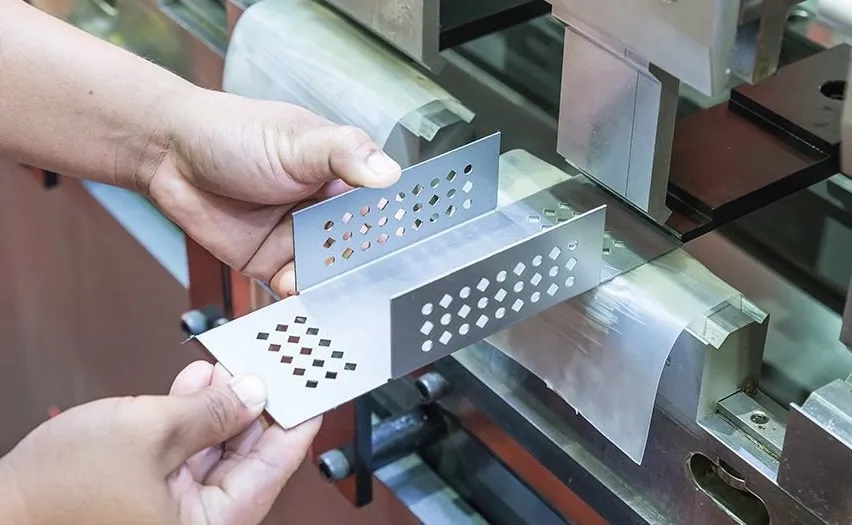 Titanium Sheet Metal Bracket
Aerospace industry
Titanium is ideal for aircraft structures, as it resists heat and corrosion while maintaining a low weight. You see titanium in airframes, engine parts, and assemblies made through aerospace sheet metal fabrication, where strength and low mass are essential.
Medical Industry
Titanium stays stable inside the human body and does not react with tissues. You see it in implants, joint replacements, dental parts, and support devices. These components are often produced through medical sheet metal fabrication to meet strict safety and performance requirements.
Power Generation
Titanium works in high-temperature and corrosive environments found in power systems. You can use fabricated titanium parts in firewalls, protective assemblies, and other components exposed to heat and pressure. According to Titanium Fabrication Corporation, titanium (Grades 2, 5, 23, and 32) is ideal for these products.
Automotive Parts
Titanium appears in high-performance vehicles where lightweight strength matters. Engine components such as springs and wrist pins use fabricated titanium because they handle stress without adding weight.
Petroleum Industry
Titanium offers corrosion resistance for offshore platforms and extraction equipment. You see it in production risers and other parts that face saltwater and demanding operating conditions.
Try Prolean Now!
How to calculate fabrication cost
Fabricating titanium sheets is more expensive than common metals, so accurate cost estimation is important. You calculate the cost by considering materials, design, machining, labor, and overhead. So let’s start.
Step 1: Cost of Raw Material
You first have to determine that how much titanium sheet is needed for a single product, including scrap allowance. Titanium is usually priced per kilogram.
Material cost = volume × density of titanium × cost per kg.
If multiple titanium alloys are used, calculate each separately.
Step 2: Designing Cost
The overall cost of fabrication also depends on the design. It involves creating a 3D model or drawing for fabrication planning. Complexity, required tolerance, and engineering expertise affect the cost. Good design minimizes waste and reduces machining challenges.
Step 3: Machining Cost
Machining titanium is challenging due to its strength and low elasticity. Calculate machining cost hourly, including:
- Machine investment cost
- Electricity consumption (power × unit cost)
- Operator, assistant, and supervisor charges
- Maintenance cost
- Workspace cost
- Consumables like lubricants, dies, and filters
Sum all hourly costs and add profit margin. Each machining step must be calculated separately since intermediate parts become raw material for the next operation.
Step 4: Overhead Cost
Include costs for facility, consultation, administration, and service. These support the fabrication process but are not directly part of machining.
Step 5: Total Fabrication Cost
To calculate the total fabrication cost, add all the costs that we discussed above:
Total cost = (Titanium sheet cost) + (Total machining cost per hour × operating hours) + Design cost + Overhead costs
Factors Affecting Titanium Sheet Fabrication Cost
- Type of Titanium & Alloy: Pure titanium costs less to machine, but alloys like Ti-6Al-4V are stronger and more expensive.
- Sheet Thickness (Gauge): Choosing the correct gauge avoids unnecessary material usage and weight.
- Machining Technology: Advanced processes like laser cutting titanium increase cost compared to standard methods.
- Tolerance: Tight tolerances increase labor, setup, and quality control requirements.
Conclusion
Titanium sheet metal fabrication combines strength, corrosion resistance, and light weight to create high-performance components. These durable parts are used for aerospace, medical, automotive, and industrial use. Understanding its properties and proper fabrication processes is important.
At Prolean Tech, we specialize in custom sheet metal fabrication and titanium CNC machining services. Our team manufactures titanium components to your exact requirements, whether you need a prototype or production parts. Partner with Prolean Tech for reliable quality and consistent results.
Contact us and get a quote for reduced fabrication issues and long-lasting results for every project.
0 Comments