
3D Printing Vs Injection Molding
The success of your production can be determined by the choice between 3d printing and injection molding. Both manufacturing processes are very powerful, but serve different purposes. Injection molding excels in high-volume and repeatable production for injection molded components, while 3D printers offer unmatched flexibility when it comes to complex, low-volume, or customized builds. Making the wrong decision at the wrong time can cost you money, time, and momentum.
Understanding the whole picture is important before you commit to a particular process. ProLean Tech helps manufacturers in a variety of industries make informed decisions about production details and choosing the one from extrusion vs injection molding. Selecting the right method is based on a number of factors. Injection Molding Service is best for high-volume plastic component production.
This guide compares both methods so that you can choose the best option for your project.
Basic Principles of 3d Printing vs Injection Molding
Both can deal with plastic, and they have quite a few similarities. They are used in different industries, and even a small error is not acceptable. If you want to produce various types of prototypes for testing at low cost, both methods are good. They have overlapping functionality and produce similar results at the end.
Before discussing their pros and cons, first, understand their basic principles and how they truly differ.
Volume
For high-volume production, injection molding becomes cost-effective, typically above 10,000 units. For small batch production, 3D printing is an ideal choice. It has no minimum order quantity.
Complexity
3D printing can produce intricate internal geometries, which are impossible to create with traditional tooling. Such as a lattice structure. Injection molding limits the complexity of a part that can be realistically produced. It has design constraints. Such as draft angles and wall thickness uniformity.
Strength
3D printed parts, especially FDM parts, can show layer-line weaknesses under stress. We can narrow this gap through advances in materials. Injection-molded parts are denser and mechanically more consistent. Because under pressure, molten material fills the mold. It can produce uniform molecular bonding.
Lead time
In 3D printing prototype can be ready within hours. It wins significantly on lead time. Injection molding takes several weeks due to mold fabrication. This is critical for fast-moving product development cycles
Try Prolean Now!
What is Injection Molding?
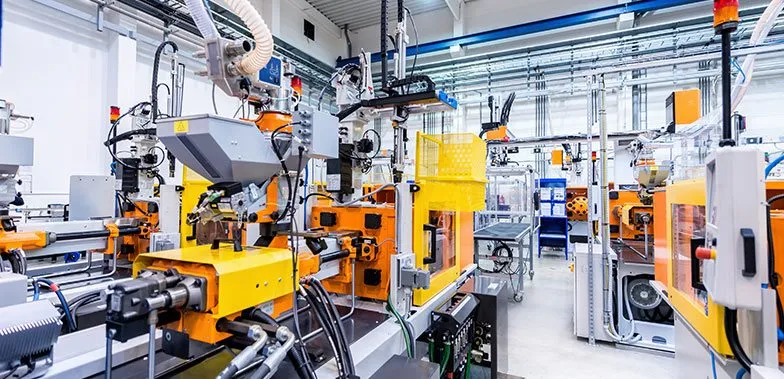
What is injection molding
Injection molding is a manufacturing process. In this process, molten material is injected into a pre-made steel or aluminum mold at high pressure. To create complex shapes from plastic materials. In a barrel, plastic material is mixed, then the material is melted into liquid form. For mass-producing plastic components, it is one of the most widely used methods.
Before the process starts, you can design and create the injection mold itself. It’s actually the changeling part of the whole process.
Creating and meeting the design requirements can take weeks, even months. For low production runs, soft tooling works well. For large-scale production, hard tooling is better.
How Does Injection Molding Work?
Here is the step-by-step process of how injection molding works.
Clamping
Before injection begins. Two halves of the mold are clamped together under high pressure.
Injection
At controlled temperature and speed, molten plastic is injected into the mold cavity.
Dwelling / Packing
As the plastic begins to cool. The additional material is packed in to compensate for shrinkage.
Cooling
Parts are ejected when they are sufficiently solidified to maintain shape, typically well above room temperature, and the workpiece is removed.
Ejection
When the mold opens. The ejector pins push the finished part out for inspection or further processing. For mass production injection molding machine can repeat this cycle.
What is 3D Printing?
3D printing is also known as additive manufacturing. It is the process by which we can make parts from a design by adding material layer by layer. Parts are built up by adding thin slices from the bottom, instead of cutting or shaping the material. It requires no tooling, unlike injection molding. It is ideal for making custom products, prototypes, or small batch production.
To create the most complex shapes, including inner holes, this method is best. They don’t compromise the integrity of the piece.
How Does 3D Printing Work?
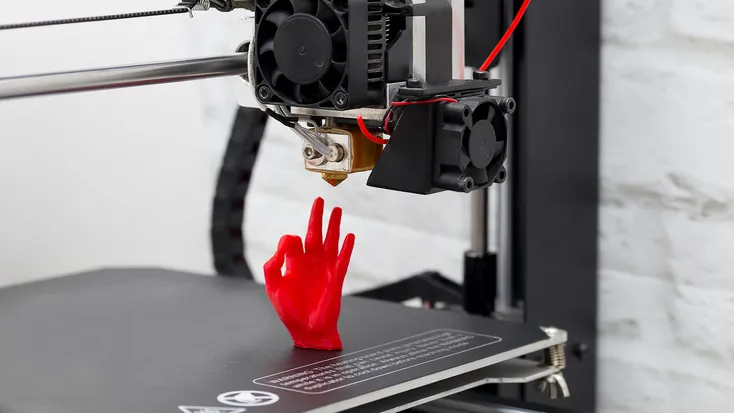
How does a 3D printer work
Here is the step-by-step process of how 3D printing works.
Design
A 3D model is created with the help of Computer-Aided Design (CAD) software. Without any tooling cost, changes can be made quickly.
3D Print
Specialized software can break the model into hundreds or thousands of thin, 2D horizontal layers. The printer can follow the G-code to build the object layer-by-layer. It heats and extrudes material through a nozzle.
Post-Processing
The finished product may need cleaning, removal of support structures, curing, or polishing. It depends on the application and the level of finish required.
In plastic prototyping, FDM prototyping is one of the most accessible and cost-efficient methods. It is ideal for early-stage product development.
Pros of Injection Molding When Compared to 3D Printing
Injection molding has several advantages when volume and repeatability are priorities.
High Efficiency
Injection molding has high efficiency. It can produce thousands of identical parts per hour once the mold is made. For large-scale plastic production, it is the most efficient process
Large Scale Production
As volume increases, the unit cost drops dramatically. For production runs of 10,000 parts or more. Injection molding can deliver the lowest possible cost per part of any plastic manufacturing.
Strength and Durability
At high pressure mold is filled with material. Polymer chain orientation occurs during filling and packing, often creating anisotropy between flow direction and transverse direction. Injection molding has better mechanical performance compared to 3D printing.
Cost-Effectiveness
For high-volume production, the 3D printing vs injection molding cost comparison. It is heavily in favor of injection molding.
Superior Detail and Accuracy
Injection molding can produce better surface finishes, tight tolerances, and complex geometries. There is no need for post-processing. For large batch production, repeatability is difficult for 3D printing.
Minimal Material Waste
Conventional cold-runner systems generate runner scrap. Only hot runner systems significantly reduce or eliminate runner waste. Runners can often be recycled back into the process.
Material Versatility
Injection molding works with a broad range of materials. Such as nylon and polycarbonate to rubber-like elastomers and glass-filled composites.
Wide Color and Finish Options
Before molding, colors can be blended directly into the material. Without secondary operations, the mold surfaces can be polished or engraved. To produce a wide range of aesthetic finishes.
Cons of Injection Molding: When compared to 3D Printing
In the early stages of product development. Injection molding has some limitations, such as
Process Limitations
To ensure the mold fills correctly and the part ejects cleanly. Injection molding requires consistent wall thicknesses and draft angles. The design freedom can be limited.
Complex Mold Creation
Machining a mold is a skilled and time-consuming process.
High Initial Investment
For a production-grade mold tooling cost is high. Due to complexity For early prototyping, or uncertain product designs, this is not an ideal choice.
Design Restrictions
Design changes are costly and sometimes impossible. Once a mold is cut. Unlike injection molding alternatives such as 3D printing, late-stage design modifications in injection molding mean entirely scrapping the mold.
Long Tooling Lead Times
Due to complexity, molding can be done in 4 to 12 weeks. This timeframe can stall entire product launches.
Not Good for Small Production Runs
The initial investment is high. Without high-volume production, this is not ideal. The injection molding tooling cost is economically impractical.
Try Prolean Now!
Pros of 3D Printing When Compared to Injection Molding
When flexibility is more important than volume, then 3d printing is a smarter choice.
Customization
A 3D printed part can be uniquely tailored easily without any additional cost. It is ideal for consumer products, prosthetics, and medical devices.
Design Modifications
Changing in a 3D model is very easy. It takes hours, not weeks. Revisions can be done easily without any additional tooling cost.
Fast Prototyping
In fast prototyping 3d printing can dominate. The design can be modified and printed withina few hours.
Low Upfront Costs
In 3D printing, there is no need for physical molds. It allows production to start immediately from a digital file. It will save upfront cost.
Cost-Effective for Small Production Runs
In the 3D printing vs injection molding cost comparison, 3D printing is ideal for low-volume production. When you need a small batch. Due to no tooling costs, additive manufacturing is the economically better choice.
Create Complex Geometries
3D printing can create internal channels, lattice structures, and undercuts. Injection molding can produce many complex features using slides, lifters, collapsible cores, and multi-part tooling. Only fully enclosed internal structures are typically impossible. Designs are created easily that were previously theoretical.
Reduced Material Waste
In 3D printing, material waste levels vary depending on technology (FDM, SLA, SLS). It uses only the material the part requires, unlike molding, which often requires sprues, runners, and flash cleanup.
Cons of 3D Printing When Compared to Injection Molding
Some of the limitations of 3d printing, such as
Limited Part Size
In 3D printing, fewer materials are available. The parts may lack durability, thermal resistance, or material consistency.
Splitting the larger parts into sections and joining post-print.It can introduce structural weak points and add labor costs.
Surface Imperfections
3d printed parts have layer lines. It requires post-processing sanding, filling, and painting, which adds time and cost.
Slow Speed of Production
For complex parts, printing can run for many hours. It can only produce a few parts at a time. It is not ideal for high-volume production.
Lower Strength and Durability
It creates anisotropic behavior due to layer bonding in FDM and SLA. It can reduce structural performance under loading conditions.
Quick Comparison Between 3D Printing and Injection Molding
Here is the quick comparison table that will help to understand the difference between 3D printing and injection molding.
| Factor | 3D Printing | Injection Molding |
| Upfront Cost | Low (no tooling) | High ($5K–$100K+ molds) |
| Per-Unit Cost | Higher at scale | Lower at high volumes |
| Lead Time | Hours to days | 4–12 weeks (tooling) |
| Best Volume | 1–1,000 units | 10,000+ units |
| Surface Finish | Requires post-processing | Excellent out of the mold |
| Design Flexibility | Very high | Moderate (mold constraints) |
| Material Range | Growing rapidly | Very broad |
| Strength | Moderate (layer-dependent) | High (isotropic) |
Uses of Injection Molding
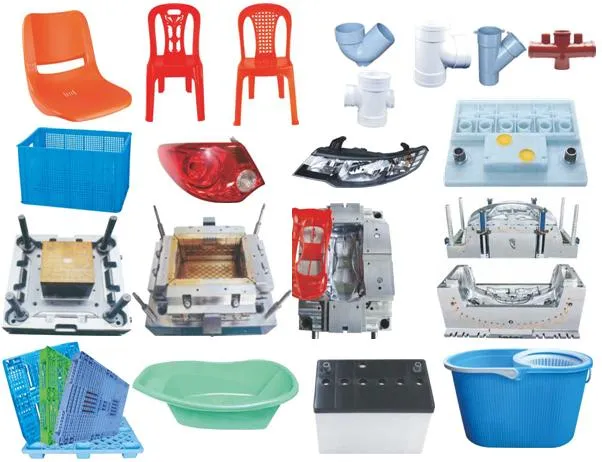
Uses of injection molding
Injection molding plays a major role in modern plastic manufacturing. It is used in many industries such as
Mass Production
Through injection molding, billions of products are produced. Such as consumer goods, household appliances, and packaging.
Automotive Industry
For consistent and durable plastic parts manufacturing. The automotive sector depends on injection molding.
Electronics Industry
Due to high tolerance and surface finishes. Enclosures, connectors, switches, and housings for consumer electronics are produced through injection molding.
Medical Devices Industry
Most of the medical devices, such as syringes, surgical instrument and diagnostic devices are manufactured through injection molding.
Packaging Industry
The most common injection molded parts in production are caps, closures, bottles, containers, and thin-wall packaging components.
Try Prolean Now!
Uses of 3D Printing
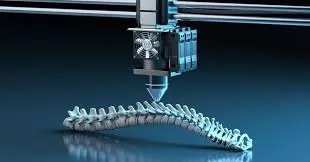
Uses of 3D printing
Here are the key uses of 3D printing such as.
Active Prototyping
To rapidly produce and test design iterations, 3D printing is widely used.
Custom or Low-Volume Production
3D printing reduces expensive tooling investment. When customization is needed at a small level.
Aerospace
To produce lightweight, complex components aerospace industry uses 3D printing. Such as making ducting, brackets, and cabin interior parts. To manufacture conventionally, it would be difficult or impossible.
Dental Industry
Custom dental crowns, aligners, and implants are produced using 3D printing. Customization can be done at the clinical scale.
Product Development
To move from concept to market-ready prototype, faster startups and industrial designers use 3D printing.
Fashion Industry
3D printing is used by high-end fashion and footwear brands. It is used to create structural pieces, custom shoe soles, and accessories.
When Should You Choose Injection Molding vs 3D Printing
It depends upon your production goals. These are the key points that you keep in mind when choosing the injection molding process.
| Scenario | Why Injection Molding Wins |
| Large-Scale Manufacturing | Above 10,000 units, per-unit economics, production speed, and part quality at scale are unmatched by any additive process |
| Rapid Prototyping & Personalization | When consistency and repeatability matter at volume, injection molding delivers uniform parts every cycle |
| Cost Per Unit | Above 1,000–5,000 units, tooling amortization tips the cost balance firmly in favor of injection molding |
| Design Flexibility | Parts designed around moldability with high-volume production needs are best served by injection molding |
When is 3D Printing preferred over Injection Molding
Due to these factors 3d printing is preferred over injection molding. Such as
| Scenario | Why 3D Printing Wins |
| Prototyping | Test, iterate, and refine without committing to tooling; fundamental competitive advantage |
| Custom Parts | Every part can be unique with no minimum run size and no penalty for design changes |
| Low-Volume Production | Below 500–1,000 parts, the absence of mold costs makes it cheaper overall despite higher per-part material costs |
| Complex Part Designs | Internal geometries, topology-optimized structures, and organic freeform surfaces that cannot be demolded are natural candidates |
Hybrid Manufacturing: Industries that Combine Injection Molding and 3D Printing
In hybrid manufacturing, we can combine 3D printing with injection molding. To improve production efficiency. It offers quick, cost-effective, and highly customized solutions in the manufacturing industry.
Automotive
For rapid prototyping of interior and mechanical components, automakers use 3D printing. For production at scale, they transition to injection molding.
Medical Industry
Through 3D printing, custom, patient-specific implants and prosthetics are produced. Then, refinement and production are done by injection molding.
Consumer Electronics
For fast design iteration, 3D printing is used. For durable, high-volume, and aesthetically finished products, follow up with injection molding.
Aerospace and Defense
For low-volume, high-complexity structure and cabin components, 3D printing is used. When standard parts are required in larger numbers, then injection molding is used.
Manufacturing and Tooling
3D-printed molds help to produce parts quickly. It improves production speed and reduces delay.
Try Prolean Now!
Conclusion
There is no clear winner when it comes to 3D Printing vs Injection Molding. You only need the right tool at the right stage for your project. Injection molding is unmatched in terms of efficiency, strength, and cost-effectiveness at large volumes. When tooling investments would be premature or unjustifiable, 3D printing offers speed, flexibility, and accessibility. Understanding the injection molding vs additive manufacturing in terms of volume, cost, complexity, timeline, and performance will help manufacturers make informed decisions based on real production needs, rather than industry trends.
ProLean Tech can help engineering and production teams make this type of decision, whether they’re evaluating the injection molding options for early-stage production, scaling up to production, or combining these methods into a hybrid manufacturing approach. Contact us to discuss the project requirements. We will then determine the most cost-effective route from prototype to full production.
0 Comments