
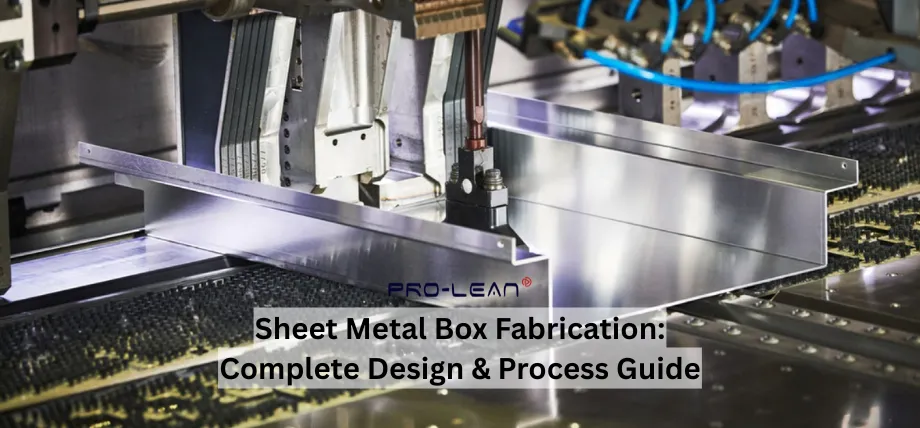
Sheet Metal Box Fabrication
Sheet metal box fabrication is the process of forming parts, including sheet metal boxes, from a metal sheet by punching, cutting, stamping, and bending. 3D CAD files are converted into machine code, which controls a machine to precisely cut and form the sheets into the final part.
Sheet metal parts are known for their durability. Parts for high-volume production are cost-effective despite higher setup and material costs, while low-volume prototypes may have higher per-unit cost. Because parts are formed from a single sheet of metal, designs must maintain a uniform thickness.
Introduction to Sheet Metal Box Fabrication
From automotive to aerospace, and electronics to architecture, the applications of sheet metal boxes, custom metal boxes, and sheet metal enclosures are vast and diverse, shaping industries worldwide.
It offers flexibility, precision, and cost-effectiveness for a wide range of components and products. It allows for the creation of intricate shapes, complex geometries, and custom designs, making it indispensable in the manufacturing of everything from automotive bodies to medical devices. Tolerances are as tight as ±0.1 mm with CNC equipment.
Applications of Sheet Metal Boxes and Enclosures
Sheet metal boxes and sheet metal enclosures serve as protective housings across many industries that protect components from environmental factors like dust and moisture. Their design can include ventilation, which is advantageous for heat-generating equipment.
Electronics and Telecommunications
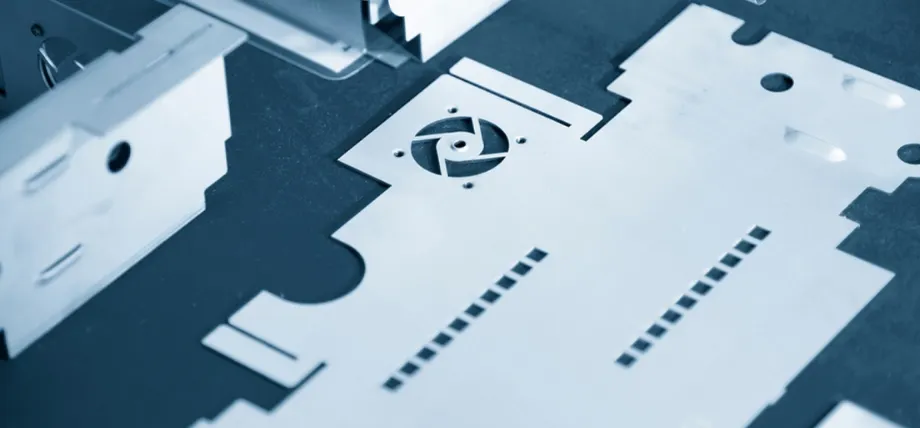
Precision Laser-Cut Components
Sheet metal box fabrication make prevents short circuits caused by dust or moisture. A suitable enclosure ensures the electronics operate smoothly.
- Junction boxes.
- Server racks with rails & vents.
- EMI gaskets to stop signal interference.
Industrial and Manufacturing
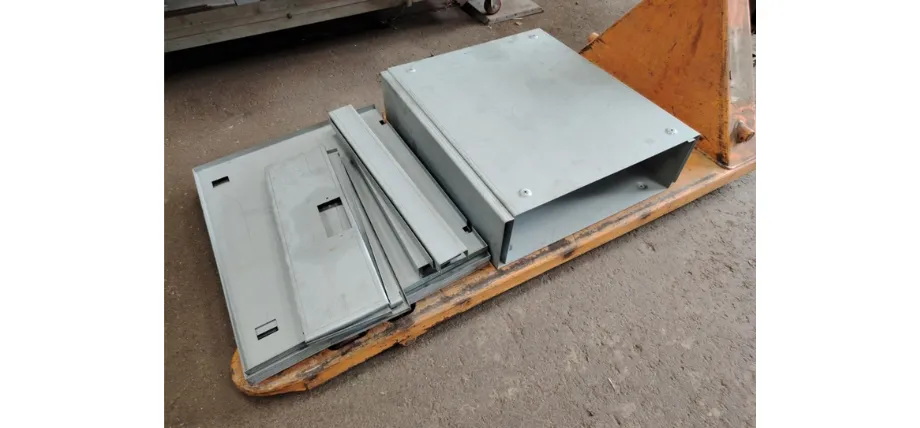
Enclosure Panels
Enclosures withstand chemical exposure and mechanical stress in harsh operating conditions.
- Reinforced control cabinets.
- Sensor enclosures with inserts.
Automotive and Aerospace
Enclosures protect electrical systems in vehicles.
- Battery casings in EVs.
- Aircraft boxes.
- Engine compartment enclosures.
Medical and Pharmaceutical
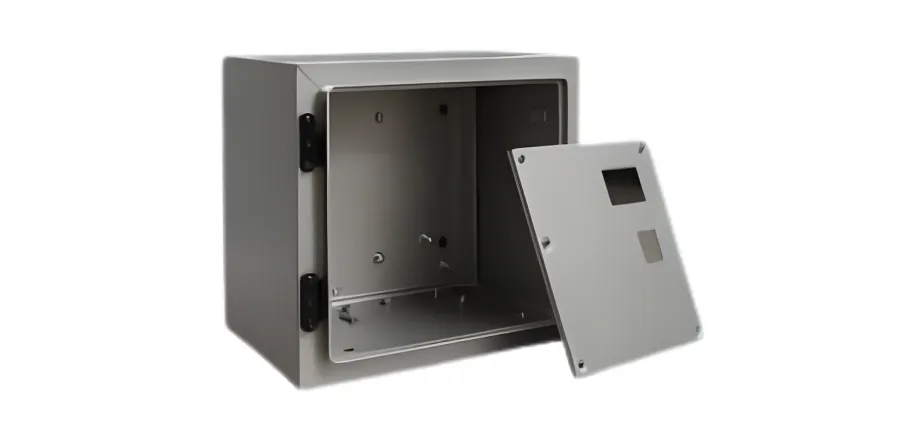
Assembled Metal Enclosure
They ensure devices function correctly in critical situations
- Diagnostic equipment.
- Surgical instrument containers.
Renewable Energy and Outdoor
Weatherproof enclosures use sealed, corrosion-resistant materials
- Solar inverter boxes.
- Wind turbine control boxes.
- Polycarbonate windows.
Choosing the Right Material for Your Metal Enclosure
The type of material you will use is very important. Different materials have different advantages. Material selection influences the performance of that specific enclosure.
Stainless Steel Enclosures
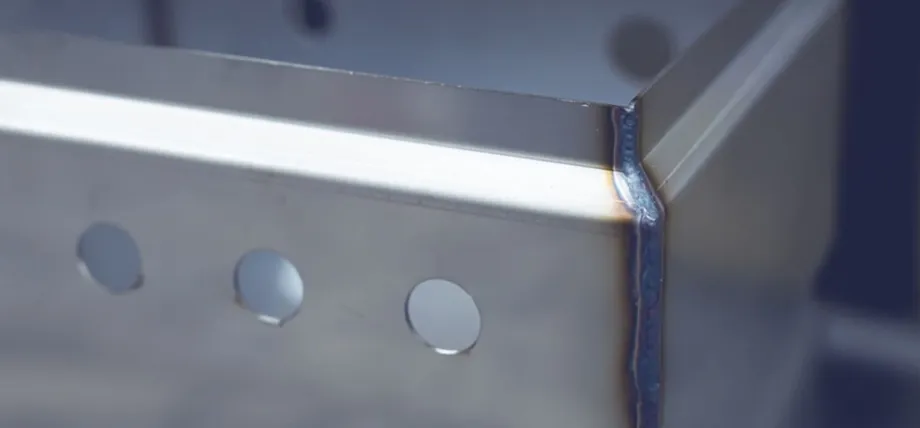
Stainless Steel TIG-Welded Corner Seam
Stainless steel, such as 304 and 316 grades, offers a tensile strength of 515-620 MPa. Thus, you can be sure of increased corrosion resistance. This material is suitable for sheet metal box design and sheet metal enclosure designs for high-impact applications. Grade 316 provides resistance against chloride-affected environments. Applications include marine or chemical processing. Cost is higher when using stainless steel, but this material does not require a second coat, which reduces assembly time by 20-30%.
Carbon Steel Enclosures
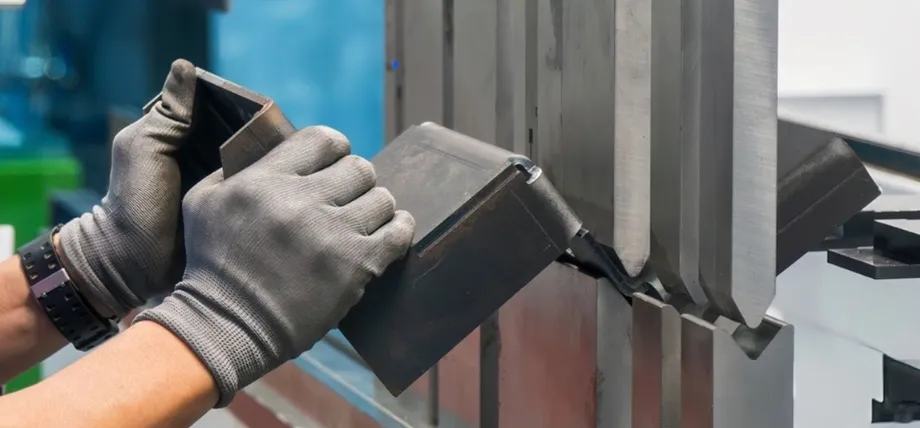
Precision Press Brake Bending
Another standard choice is steel. Carbon steel, such as A36, delivers a tensile strength up to 400 MPa. It’s strong, durable, and appropriate for harsh environments. Because steel can rust, coatings have to be laid on if it is not properly treated. It is suitable for indoor steel sheet metal fabrication, industrial sheet metal enclosures, and an economical option for users because it costs slightly less than stainless steel.
Galvanized Steel Enclosures
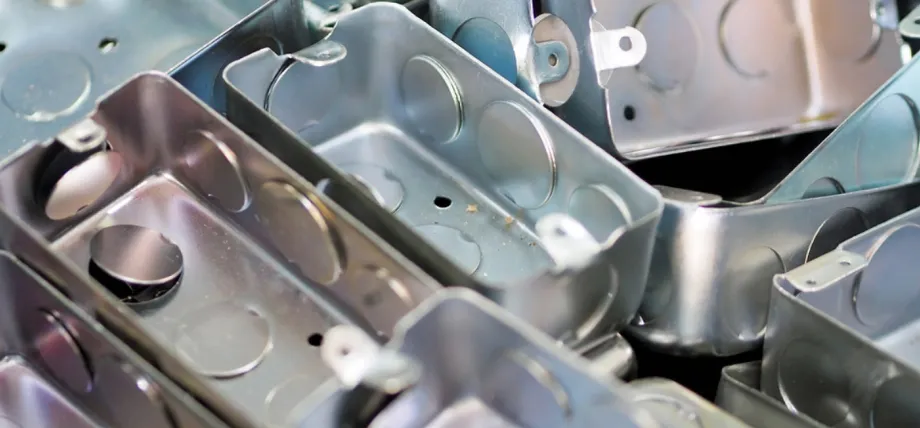
Finished Junction Boxes
This is any steel material coated with zinc and annealed. The purpose of the annealing is to ensure the bonding of the zinc through diffusion into the substrate. Therefore, you can be sure there will be no flaking off during forming or bending. If you intend to use the galvanized sheet metal enclosure or steel sheet box in wet conditions, then Galvanneal is your best option. It is also corrosion-resistant, depending on its coating.
Coating adds very little weight to it (0.1-0.5%) and bends well without shattering the zinc layer, but under extreme pressures and angles, the layer can peel. Ideal for exterior cases such as utility boxes, but costs 10-20% more than plain carbon steel; nevertheless, it extends the service life to 20-30 years in moderate atmospheres.
Aluminum Enclosures
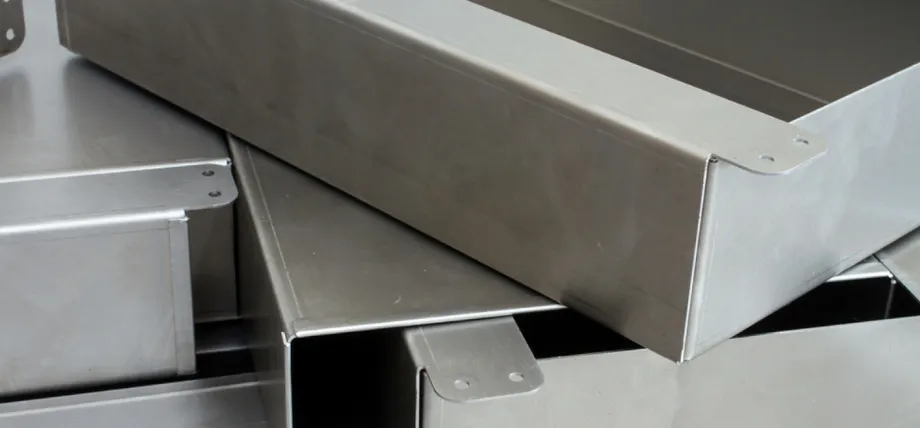
Metal Enclosures
This metal is lightweight and corrosion-resistant. It has a significantly lower stiffness level than steel in some conditions. There are different types of aluminum grades. However, there are two primary aluminum alloys employed in sheet metal enclosures. They are 5052 Aluminum and 6061 Aluminum.
5052 aluminum has incredible bending abilities. You can also easily machine and weld this alloy, making it suitable for sheet metal enclosures. On the other hand, 6061 aluminum is much more susceptible to cracking than its counterpart. However, it can also be easily machined.
The lightweight and corrosion-resistant properties of aluminum make it great for sheet metal boxes, custom metal boxes, and enclosures. In some cases, you may need to anodize aluminum parts for durable and protective coatings. Chromate coating may also be ideal for a component that requires electrical contact.
Try Prolean Now!
Design Considerations for Sheet Metal Enclosures
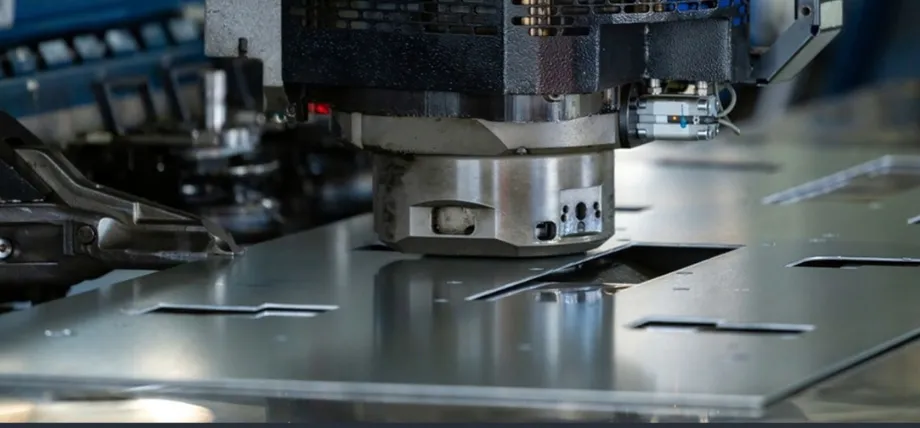
Turret Punching Operation
Designing sheet metal enclosures involves more than just aesthetics; it requires a deep understanding of the material properties, sheet metal design guidelines, manufacturing processes, and end-use requirements. Here are some essential tips to help you optimize your designs for both performance and production efficiency:
- Describe the functional requirements: Determine the necessary dimensions and analyze the positioning of internal components, like height and size of parts, and connector locations. Functional requirements also include calculating internal volume with 10-20% margin.
- Choose Shape and Dimensions: Choosing the right shape of the enclosure is another one of the crucial sheet metal enclosure design tips. Consequently, you can avoid the common pitfalls of sheet metal box design and enclosure design by following proven sheet metal design guidelines.
- Take Material Properties into Account: The performance and longevity of your sheet metal enclosure are largely dependent on the material you choose. Cold-rolled steel sheet, galvanized sheet metal, aluminum, and stainless steel are common materials for sheet metal box construction.
- Include Forming Elements: To raise the moment of inertia by 20–30%, make stiff hems or flanges that are 5–10 mm broad around the edges. To avoid distortion, place holes at least twice the diameter from bends and use countersinks for flush fasteners.
- Plan for Thermal and Ventilation Management: Include louvers or vents in key places to promote natural airflow. Arrange them to optimize cross ventilation without sacrificing the protective qualities or structural integrity of the enclosure. Use perforated metal sheets in areas that need additional airflow. This keeps the interior parts safe from external exposure and physical harm while allowing air to flow freely. In addition to passive cooling, you may incorporate fans or cooling devices, particularly in enclosures that are securely sealed or exposed to high temperatures. These devices should be supported by the design without limiting access or airflow. Vents should cover 10-20% of the surface area and must be spaced 15mm apart to boost heat transfer by 50%.
- Ensure Accessibility and Mounting: Designing with accessibility in mind ensures that parts can be easily reached, removed, or replaced without dismantling the entire enclosure. Incorporate quarter-turn latches for maintenance and hinged doors with a 180° swing to guarantee accessibility and mounting.
- Tolerances and Finishing: Give ±0.5 mm for external dimensions and ±0.2 mm for holes. Choose finishes that are compatible with welds to avoid cracking, such as powder coating (50–100 μm thick) for 1000 hours of salt spray protection.
- Incorporate Bends Instead of Welds: Instead of depending solely on welds, try to include bends in the design of your sheet metal enclosure. Bends provide the enclosure a more streamlined, clean look while also strengthening its structural integrity. Additionally, they do away with the requirement for extra materials and labor related to welding, which, if done incorrectly, can present weak points and possible rust sites.
Standard vs. Custom Sheet Metal Boxes
Custom sheet metal boxes and custom metal box fabrication are superior to alternatives due to their numerous advantages. Precision is one of the benefits. Users can maximize space utilization and guarantee a perfect fit for their intended purpose by altering the box’s dimensions and features. Long-term structural integrity is also guaranteed by sheet metal’s durability. Protecting expensive machinery or parts. Additionally, a variety of finishing techniques can improve the visual appeal of custom boxes, giving the finished product a polished appearance.
For aerospace applications, this allows for the integration of features like hybrid materials or custom cuts (tolerances ±0.1 mm), increasing design flexibility by 70%. Due to setup for single-piece flows, lead times can reach three to six weeks, and per-unit expenses are two to three times higher.
Try Prolean Now!
Fabrication Processes for Sheet Metal Boxes
Sheet metal fabrication process of sheet metal enclosures involves several key steps, from initial concept to the final product. Understanding each phase can help ensure that the finished enclosure meets all technical specifications and quality standards. Processes must be selected based upon volume, material, and tolerances down to ±0.05 mm.
Cutting Processes
Sheets are first shaped to blank size using kerf widths of 0.2-0.5 mm to eliminate excess. Excess material must be removed through kerf widths of 0.2-0.5 mm. Laser cutting uses fiber optics to vaporize edges with minimized heat-affected zones. Waterjet is ideal for aluminum to avoid thermal warping. Shearing is cost-effective for high-volume steel metal box fabrication.
Laser Cutting
Laser cutting is a highly precise and efficient method for cutting sheet metal, which uses a concentrated beam of light to melt, burn, or vaporize the material. Here are some key benefits and considerations:
- Precision and Cleanliness
- Speed
- Material Compatibility
- Heat Affected Zone (HAZ)
Waterjet Cutting
Waterjet cutting uses a high-pressure jet of water, often mixed with an abrasive substance, to cut through materials. This method offers different advantages and is suitable under various conditions:
- No Heat Affected Zone
- Versatility
- Precision
- Environmental and Safety Benefits
Plasma Cutting
Plasma cutting is another effective method for slicing through sheet metal by using a jet of ionized gas heated to an extremely high temperature. This method is suited for thicker metal sheets and provides the following advantages:
- Efficiency
- Versatility
- Cost-Effectiveness
- Considerations
Bending and Forming
In order to prevent cracking and predict angles using sheet metal bending calculation, air bending on CNC press brakes applies 50-500 tons of force at 0-180° angles with radii 1-2 times thickness (e.g, 2 mm for 1 mm steel).
By completely closing the V-die, bottoming increases springback compensation and guarantees tighter tolerances (±1°). The ability to bend metal cleanly depends upon its thickness. For the thicker metals, more force and specialized equipment may be needed. Each type of metal has a minimum bend radius that is optimum.
This accounts for the fact that after bending, metal will ‘spring back’ slightly towards its original shape. Types of notches in sheet metal, like V-notches and relief notches, and lance notches, can help in bending by reducing material thickness for easier bending.
Welding and Joining
With heat inputs of 0.5-2 kJ/mm to reduce distortion, TIG welding provides 99% penetration on stainless steel up to 4 mm thick. Different metals can be bonded using adhesives like epoxy, which distribute loads over 50–100 mm² for vibration resistance.
Assembly and Finishing
For 50-150 μm films with 5H pencil hardness, finishing uses electrostatically sprayed powder coating that is cured at 180-200°C. Finishing options include the following:
- Powder Coating
- Anodizing (for aluminum)
- As machined
- Galvanizing
- Nickel plating
Custom Sheet Metal Fabrication
Proleantech has over 15 years of experience in sheet metal box fabrication. Get precision tolerances, small bending angles, and optimal sheet metal design guidelines by partnering with Proleantech’s sheet metal box fabrication and prototyping services.
Contact us today for a free quote and engineering assistance for your enclosures.
Conclusion
To create reliable custom sheet metal boxes, sheet metal box production combines material science and precise design. Choosing the right materials and procedures maximizes performance while keeping expenses under control. Following the guidelines guarantees long-lasting, effective results for a variety of applications.
0 Comments