
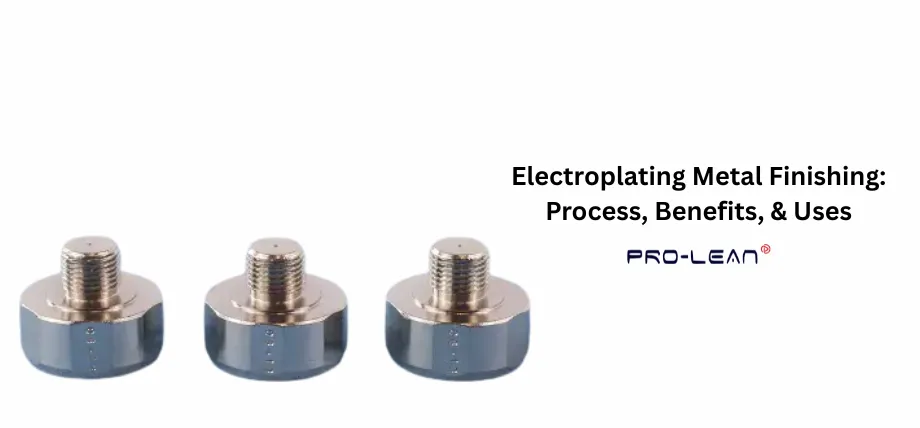
Electroplated industrial components
Electroplating metal finishing is an industrial process used to improve the metal surfaces with thin and functional coatings. It improves corrosion resistance, wear durability, electrical conductivity, and visual appeal, making it important in industries such as electronics, aerospace, automotive, medical devices, and precision manufacturing.
What Is Electroplating?
Electroplating is an electrochemical technique that deposits a thin layer of metal onto the surface of another material using an electric current. Manufacturers use this process to alter surface characteristics of the material without modifying the bulk properties of the base material. Products can achieve improved performance while maintaining cost efficiency as the outcome of this process.
This process involves dissolving metal ions in a solution and using electricity to attract those ions onto a conductive substrate. What is electroplating? The deposited layer forms a uniform and controlled coating.
Electroplating is one of the most widely used coating methods that offers flexibility for both decorative and functional purposes. It is commonly applied in industries where surface quality directly affects the performance and longevity of the product. Another advantage of electroplating is its adaptability. It is applied to a wide range of materials, including steel, aluminum, brass, and plastics, when properly treated. This versatility makes it a preferred solution for engineers and manufacturers worldwide.
How the Electroplating Process Works (Step by Step)
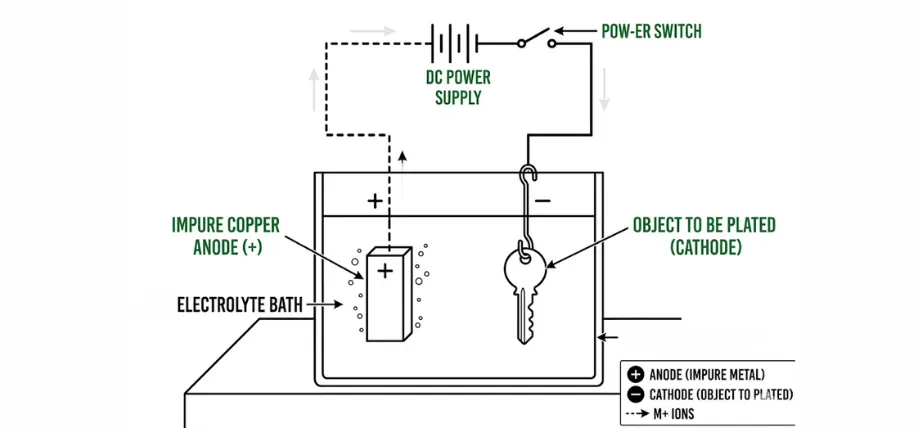
Electroplating process
You should have a clear idea of how does electroplating work. This is important to optimize the quality of the coating and to obtain consistent results. The electroplating process consists of multiple controlled steps to create a high-quality finish.
Step 1 – Surface Preparation
The initial step of electroplating is the preparation of the surface of the material. The substrate must be completely free of contamination with oils, grease, dust, and oxidation. The plating layer may fail to adhere if the surface is not cleaned properly, leading to peeling or blistering. This is why cleaning is an important part of electroplating metal finishing.
Common cleaning methods include alkaline cleaning, solvent degreasing, acid pickling, and ultrasonic cleaning. Each method is selected based on the material and level of contamination.
Step 2 – Material Surface Activation
The material undergoes activation after cleaning to improve its surface reactivity. This process involves dipping the component in an acidic solution to take off any remaining oxide layers of the material surface. Activation confirms strong bonding between the substrate and the plating layer. It also improves uniformity across the surface. Activation of the material surface is important in electroplating machined parts to maintain the dimensional accuracy of the product while obtaining smooth finishes.
Step 3- Electrolyte Bath Preparation
The cleaned and activated component is placed into an electrolyte solution containing dissolved metal ions. The composition of this solution determines the type and quality of the coating. Different metals require specific electrolyte formulations, such as copper plating, which uses copper sulfate, while nickel plating uses nickel chloride or sulfate solutions. Maintaining the equilibrium of the chemical system properly is necessary to obtain consistent electroplating metal finishing results.
Step 4- Applying Electric Current
This step shows how electroplating works during the process. Current is directly applied between two electrodes dipped in the electrolyte. The material is applied as the cathode. The plating metal is used as the anode. Metal ions pass through the solution and attach to the cathode surface.
The thickness and quality of the coating depend on the density of the current, the time required for plating, and the conditions of the solution. These parameters should be controlled during the process to obtain a smooth and uniform plating finish.
Step 5- Rinsing, Drying, and Post Treatment
The processed material is removed from the bath once plating is complete and rinsed thoroughly to wash off residual chemicals.
Polishing, passivation, or heat treatment are additional treatments that may be applied to the material to improve the durability and finished look of the material. These finishing steps are important to achieve high-performance coatings that comply with industrial standards.
Try Prolean Now!
Electroplating vs. Electroforming vs. Electroless Plating
Manufacturers compare electroplating with other techniques used for metal deposition to select the best option for their product. But each method has different properties and applications.
Electroforming is building thick metal layers on the material that can be separated from the substrate to form standalone components. Molds and precision parts are produced using this method.
Chemical reactions are applied in electroless plating to deposit metal uniformly across surfaces, including complex shapes, and electrical current is not applied for this method. The energy source is the primary difference between electroplating and electroless plating. Electroplating uses electricity, while electroless plating uses chemical reduction as the energy source.
Electroplating is suitable for large-scale production processes and provides control for the thickness of the coating. Electroless plating provides superior uniformity. Therefore, this method is applied in producing complex designs.
Common Metals Used in Electroplating
The properties of the final coating depend significantly on the selected metal for electroplating. Each metal provides benefits unique to each application.
Gold and Gold Alloy Plating
Gold is a metal that provides both electrical conductivity and corrosion resistance. This metal is widely used in electronic connectors and luxurious decorative applications.
Gold is mixed with other metals such as copper, nickel, silver, or zinc to produce Gold alloys. This metal is harder than gold and has the ability to conduct electricity. Therefore, gold alloy plating is used for components that need durability while conducting electricity.
Copper Plating
Copper plating is used as an intermediate layer. It improves the adhesion and electrical conductivity. Copper is applied as the coating material in precision machining services.
Nickel Plating
Nickel plating provides both corrosion and wear resistance. It is widely used in industrial and engineering applications. Nickel plating serves as a base layer for chrome plating, improving adhesion and hardness of the material.
Chrome Plating: Decorative vs Hard Chrome
Chrome plating is available in two main forms, which are decorative chrome and hard chrome. Decorative chrome provides a shiny and attractive finish and moderate corrosion resistance. Hard chrome is used for wear resistance and longevity in heavy-duty machinery and hydraulic components.
Zinc Plating
Zinc plating is used primarily for corrosion protection. Galvanisation prevents the base metal from forming rust. Therefore, zinc plating is used for automotive parts, fasteners, and outdoor equipment that are exposed to extreme environments.
Specialized Electroplating Techniques
Modern manufacturing needs specialized methods for plating to optimize the performance and durability of its products. These different electroplating methods are designed to improve coating uniformity, minimize deficiencies, and optimize efficiency. Industries including aerospace, electronics, and automotive use these techniques to obtain results precisely and consistently. Standard plating processes are not sufficient to meet complex engineering demands. Therefore, specialized methods have been developed for electroplating to provide specific properties in surface finishing. These techniques evolve with development in the field of materials science and engineering (MSE).
Barrel Plating for High-Volume Parts
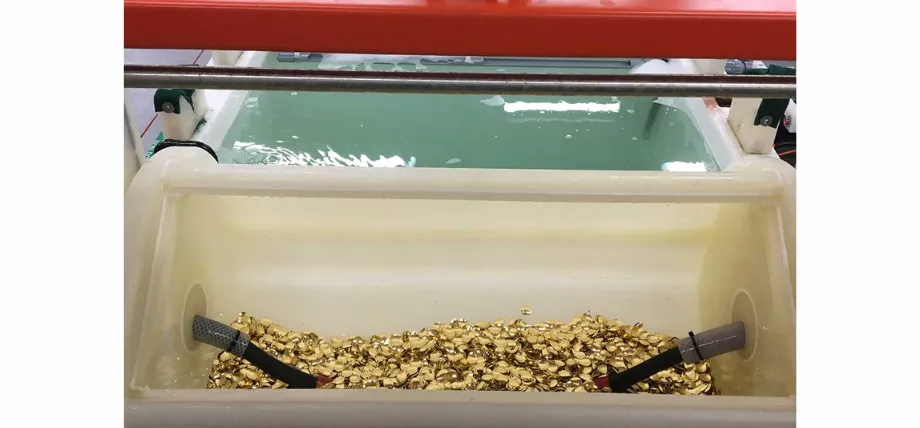
Barrel plating process
Barrel plating is an efficient technique used for coating large quantities of small components at the same time. Parts are loaded into a rotating barrel that is submerged partially in the plating solution. The components tumble over one another as the barrel rotates, exposing the part to the electrolyte evenly.
This is a cost-effective technique for mass production compared to other techniques. Therefore, this technique is applied in industries producing fasteners, connectors, and small hardware parts, as it minimizes the requirement for labor and increases the output. Barrel plating is suitable for producing components that are resistant to damage caused by tumbling.
Pulse Electroplating
Pulse electroplating is a technique that uses intermittent electrical currents instead of a continuous flow. Switching the current on and off rapidly enables precise control over the metal deposition process. The pulsed current decreases the average size of the grain structure of the coating, making it smaller and distributed uniformly. This refining significantly enhances the coating quality because adhesion is increased and uniform thickness.
Porosity, roughness, and uneven thickness are several limitations of the electroplating process, and pulse electroplating is able to minimize these defects. It also improves adhesion and the quality of the coating. Pulse electroplating is applied in industries such as microelectronics and semiconductor manufacturing, as precision is a necessity.
Black Chrome Plating
Black chrome plating is a specialized treatment method that produces a dark, matte, or semi-gloss coating. This type of coating provides a visually distinctive appearance, increasing the resistance to corrosion and longevity. The black chrome plating technique is used to produce automotive parts, consumer electronics, and decorative hardware.
This method has unique properties such as light absorption. Therefore, black chrome plating is used for optical instruments and solar energy applications. The coating provides wear resistance and defends environmental damage while improving the lifetime of components.
Hexavalent vs. Trivalent Chromium Plating
Hexavalent chromium plating is widely used because it provides high hardness, good wear resistance, excellent corrosion protection, and a bright finish. It is commonly selected for parts exposed to heavy wear and demanding service conditions. However, hexavalent chromium contains hazardous substances, so its use is restricted in many countries due to environmental and worker safety regulations.
Trivalent chromium plating is a safer alternative with lower environmental impact. It provides good corrosion resistance, an attractive finish, and is easier to handle during production. Although it may not match the hardness of hexavalent chromium in every application, it has become a common choice as manufacturers move toward safer plating processes.
Compared with electroplating vs electroless plating, chromium plating requires an external electric current to deposit the coating, while electroless plating forms the coating through a chemical reaction without electricity. Similarly, electroplating vs. anodizing differ in process and application. Electroplating adds a metallic coating to the surface, whereas anodizing converts the surface of aluminum into a protective oxide layer instead of depositing another metal.
Try Prolean Now!
Applications of Electroplating Metal Finishing
The versatility of electroplating metal finishing makes it important across a wide range of industries.
Printed Circuit Boards and Electronics
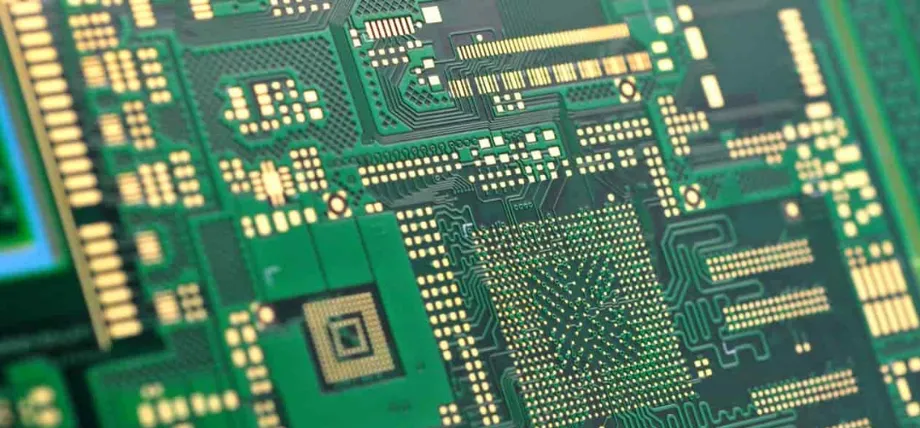
PCB plating
Electroplating is important in printed circuit board manufacturing as it confirms the conductivity of electricity. Copper and gold coatings are used to produce printed circuit boards and electronics.
Aerospace and Defense
Corrosion is one of the main problems that causes durability issues in aeronautic engineering applications because of exposure to extreme environmental conditions. Electroplating minimizes these two main limitations by applying a thin and protective layer of a more resistant and harder metal onto the base material. Specialized coatings improve the safety and reliability of machinery and parts to protect them in extreme environmental conditions.
Automotive

Automotive plating
Electroplating is used to improve functional parts in automotive manufacturing while also applying them for decorative purposes. Chrome plating improves appearance while zinc plating protects against corrosion.
Jewelry and Precious Metal Plating
Manufacturers use electroplating to create attractive jewelry at a lower cost. Gold and silver coatings improve the dazzling look and value of jewelry. It also enables intricate shapes and consistent finishes.
RF, Microwave, and Power Electronics
Conductivity and signal performance in RF, microwave, and power electronics are improved by electroplating, which requires precise coatings to maintain efficiency.
Prototyping
Electroplating machined parts is used in prototyping to determine the performance of the coating before starting the production on a large scale. These prototypes should be validated to confirm their precision and functionality.
Electroless Plating vs. Electroplating
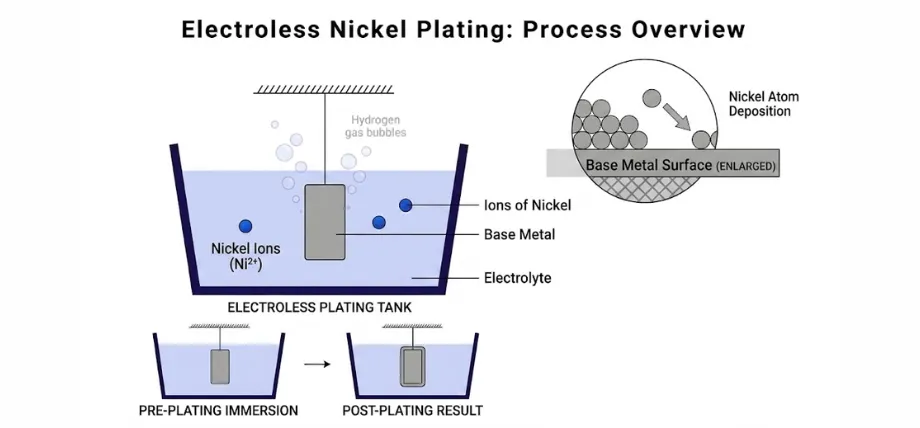
Electroless-nickel plating
Electroless plating provides uniform coatings without using an electrical current. Therefore, electroless plating is used widely to produce composite shapes and non-conductive surfaces. The thickness of the coating is controlled effectively by electroplating, and it is cost-effective for large-scale production.
Anodizing vs. Electroplating
Anodizing creates an oxide layer on metals such as aluminum, improving corrosion resistance. Electroplating deposits a separate metal layer onto the surface to provide increased flexibility in material selection and is used for a wide range of metals.
Powder Coating
Powder coating is another surface treatment method used by manufacturers. A dry powder is applied, and heat is applied to form a protective layer. Electrochemical reactions are not applied to this technique. This is used for decorative and protective applications. But powder coating does not provide the electrical conductivity benefits.
Choosing the Right Electroplating Metal Finishing Partner
Manufacturers should select the most suitable electroplating metal to obtain high-quality electroplating metal finishing results. They should determine their provider based on the expertise in various types of metal plating and processing techniques. Companies that provide integrated solutions can increase the effectiveness and efficiency of the coating process. Manufacturers should select partners experienced in handling rigid and complex electroplated machined parts. Quality assurance and environmental compliance are other factors that should be considered when selecting a plating provider.
Try Prolean Now!
Precision Machining Services
At Proleantech, we provide custom CNC machining with tolerances as tight as ±0.005 mm to support complex part geometries. Our in-house 3-axis, 4-axis, and 5-axis CNC milling machines can process materials ranging from aluminum to titanium and other high-performance alloys. We also offer electroplating service and other surface finishing processes to meet your functional and appearance requirements.
Work with our manufacturing team to get:
-
Ra 0.4 µm surface finishes
-
ISO 9001 certified supplier
-
100% inspection and material traceability
-
Surface finishes, including electroplating and powder coating
Reach out today for a reliable, high-quality quote.
Conclusion
Electroplating metal finishing is an important coating method in modern manufacturing that improves the performance, durability, and finishing look of metal products. Manufacturers are able to make right decisions and obtain high quality and reliable results in a fast paced industry with the knowledge and understanding of each technique and applications of each electroplating technique.
0 Comments