
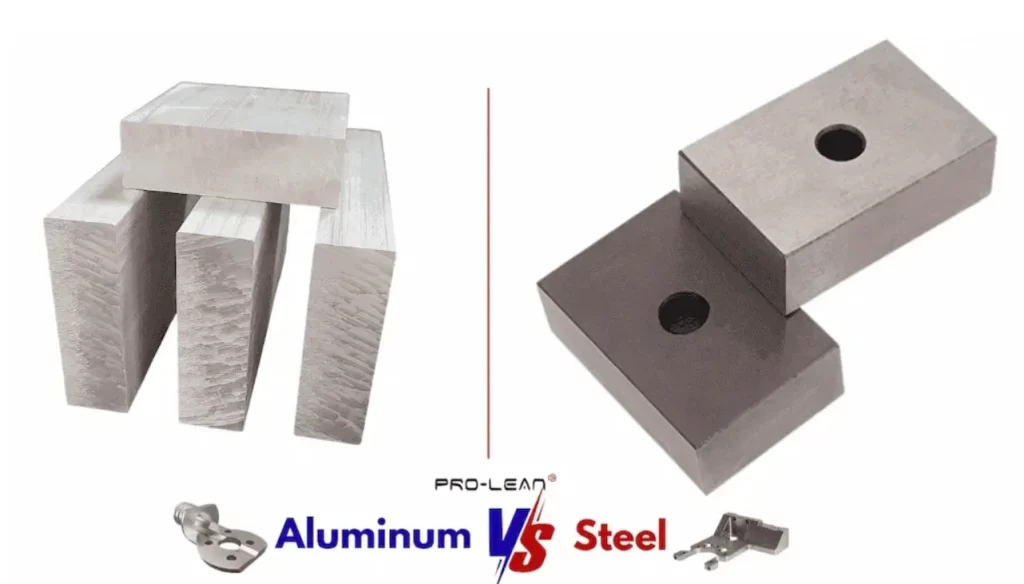
Aluminum vs steel
Aluminum and steel are two major metals used in manufacturing to produce a wide variety of parts and products. Both are high-strength materials, but aluminum is significantly lighter than steel.
They differ in corrosion resistance, strength-to-weight ratio, malleability, cost, and preferred applications. Understanding the characteristics and differences between Aluminum and steel helps you decide whether steel or aluminum CNC machining is the best fit for your project.
This article presents a comparative overview of Aluminum Vs Steel and the factors to consider in the material selection process.
Aluminum Metal and Its Alloys
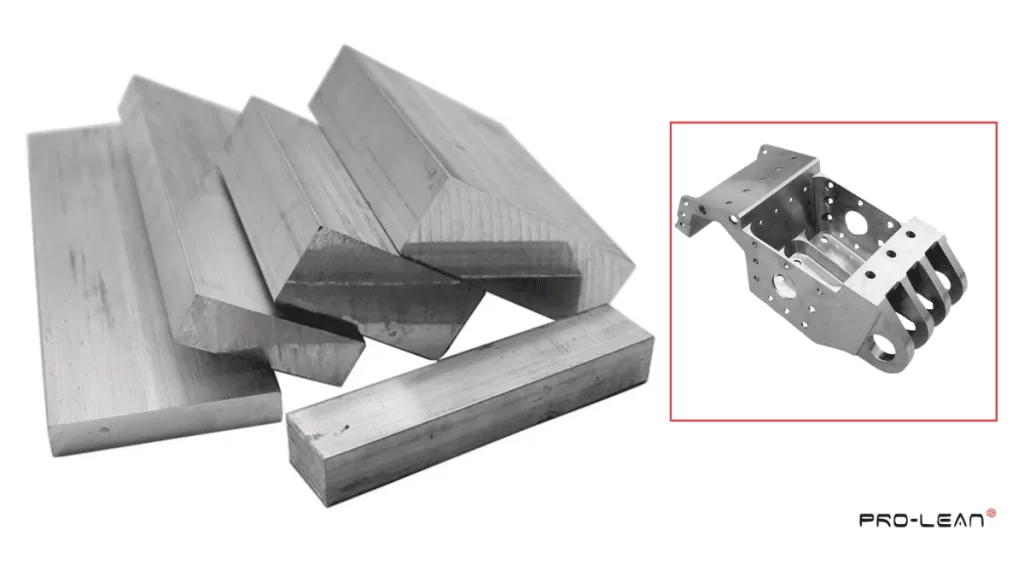
Aluminum material
Aluminum is a non-ferrous metal, known for its lightweight, strength, corrosion resistance, and conductivity. In manufacturing, pure aluminum and different alloys are used. The alloys contain up to 13.5% of alloying elements, including zinc, magnesium, silicon, and copper.
- Aluminum 3003: It contains manganese (Mn) as a major alloying element, which improves strength but slightly reduces corrosion resistance.
- Aluminum 6061: Magnesium and silicon are the main alloying constituents, providing higher corrosion resistance, strength, and wear resistance.
- Aluminum 1100: It is the purest aluminum, with over 99% Al, providing excellent ductility and formability.
Besides these three, there are several other grades, each with a unique alloying composition and a specific set of properties. You can read further about 7075 billet aluminum vs 4140 steel here.
Steel and Its Alloys
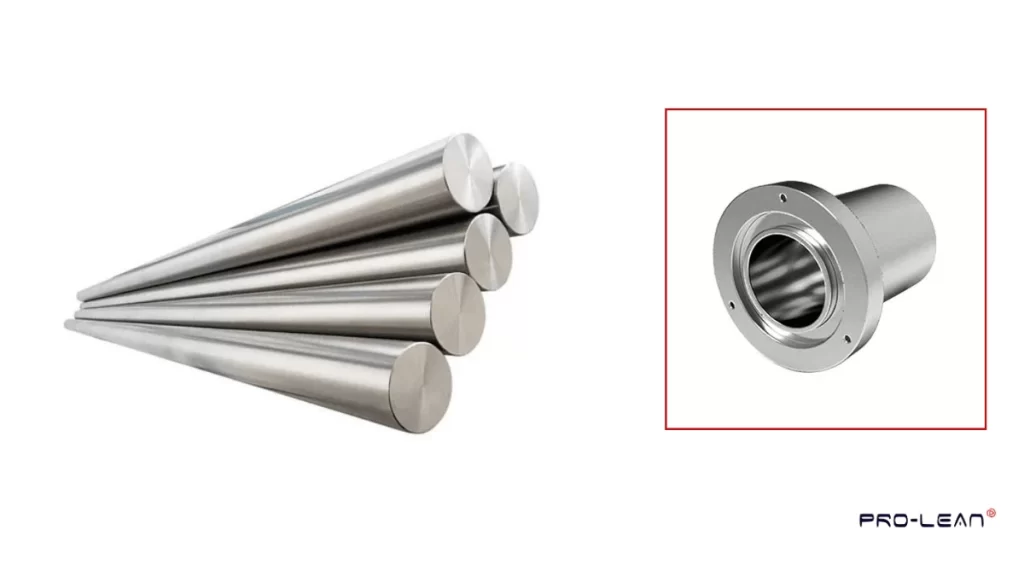
Steel material
Steel is a ferrous alloy containing iron as its main constituent and a variety of alloying elements, such as carbon, manganese, chromium, silicon, and nickel.
The exact alloying amount depends on the type of steel and the particular grade. For instance, stainless steel contains chromium > 10.5%, whereas carbon steel contains carbon up to 2.1%.
Steel alloys offer high mechanical strength, rigidity, ductility, and durability. The exact properties vary from one steel type to another and depend on the steel manufacturing methods used to produce them. For instance, rolling, cold working, and extrusion.
Next, we will discuss a head-to-head comparison of aluminum metal vs steel based on different criteria.
Try Prolean Now!
Aluminum VS Steel: Weight and Strength
What is stronger, aluminum or steel? Steel is almost three times as dense as aluminum, and its strength is comparatively low, considering per-unit weight. However, in absolute comparison of aluminum vs steel strength, steel outperforms aluminum alloys.
Aluminum strength is especially beneficial for applications requiring lightweight materials, such as laptop casing, car panels, and heat sinks. On the other hand, steels are suitable for high-stress applications.
Aluminum Vs Steel: Corrosion Resistance
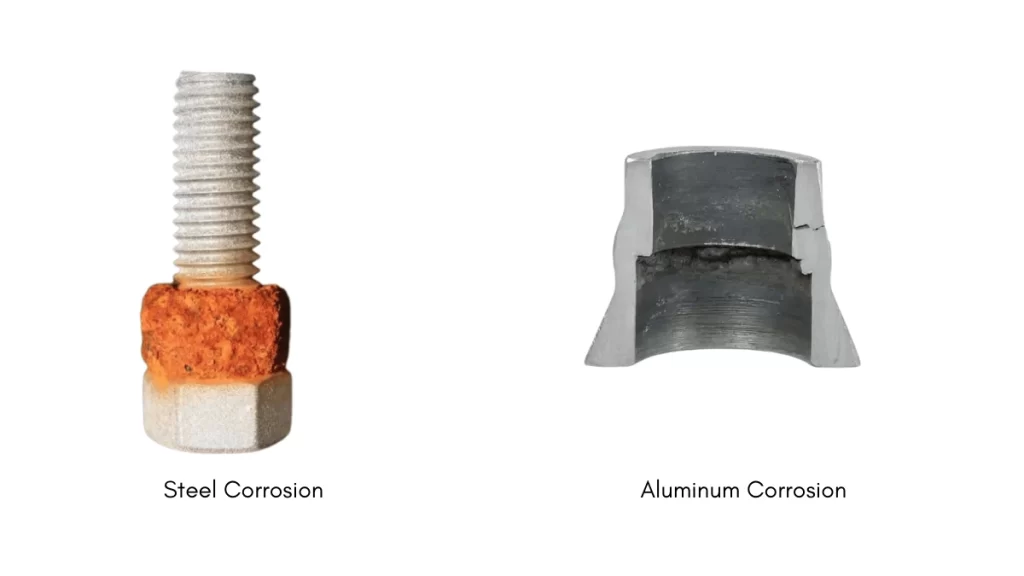
Aluminum vs. Steel corrosion
Even without any additional surface treatments and coatings, aluminum can resist rust formation and material degradation. It is because aluminum forms a non-porous oxide layer when it comes into contact with moisture.
Carbon steel and mild steel offer poor corrosion resistance. But if we compare stainless steel vs aluminum, stainless steel is more corrosion-resistant. Like aluminum, stainless alloys form a protective chromium oxide film on their surfaces, preventing rust formation.
However, carbon and mild steels can be finished with coating, plating, galvanizing, or painting to make them corrosion-resistant and extend their life.
Furthermore, you can read a related article, “Galvanized Aluminum vs. Galvanized Steel,” here.
Aluminum Vs Steel: Thermal and Electrical Conductivity
Aluminum is the best conductor of heat and electricity compared to copper, known for its better conductivity-to-weight ratio. Therefore, 100 series alloys are preferred for parts requiring high thermal performance, and 6101 & 6063 for electrical bars.
The thermal conductivity of aluminum ranges from 205 to 237 W/m.k, whereas it is only 15-60 W/m.k. Consequently, pure aluminum has an electrical conductivity of 61-65% of copper, and steel conducts only about 10% of copper.
Aluminum Vs Steel: Machinability
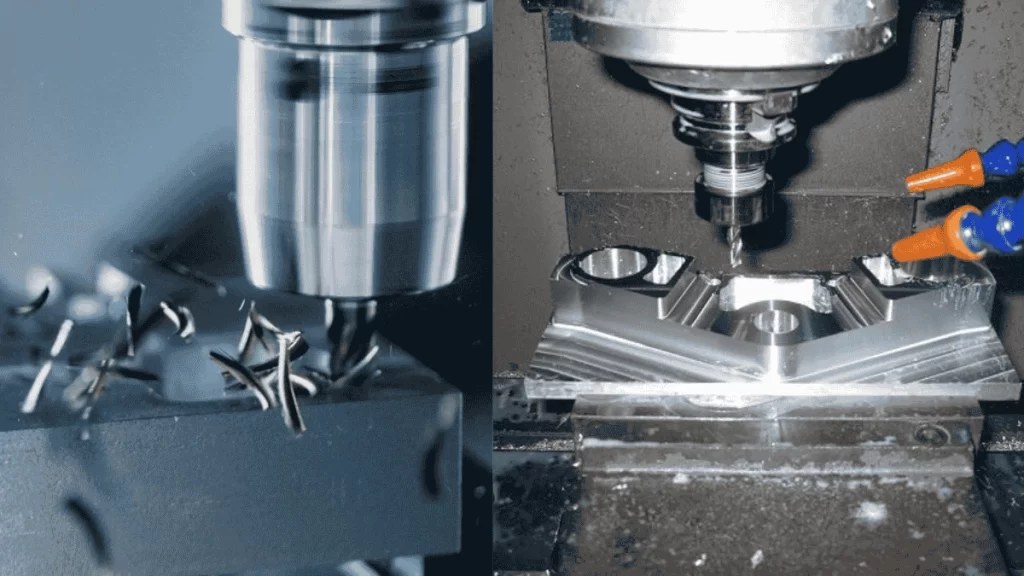
steel vs aluminum machining
Machinability is the ease with which a material can be shaped with cutting tools and is influenced by softness, work-hardening, tool wear, and heat dissipation.
Aluminum is softer than steel and allows effective heat transfer from the machining area. These two properties make aluminum easier to machine than steel. You use various alloys in aluminum CNC machining, with low cutting forces, and achieve smooth finishes.
Aluminum Vs Steel: Ease of Fabrication
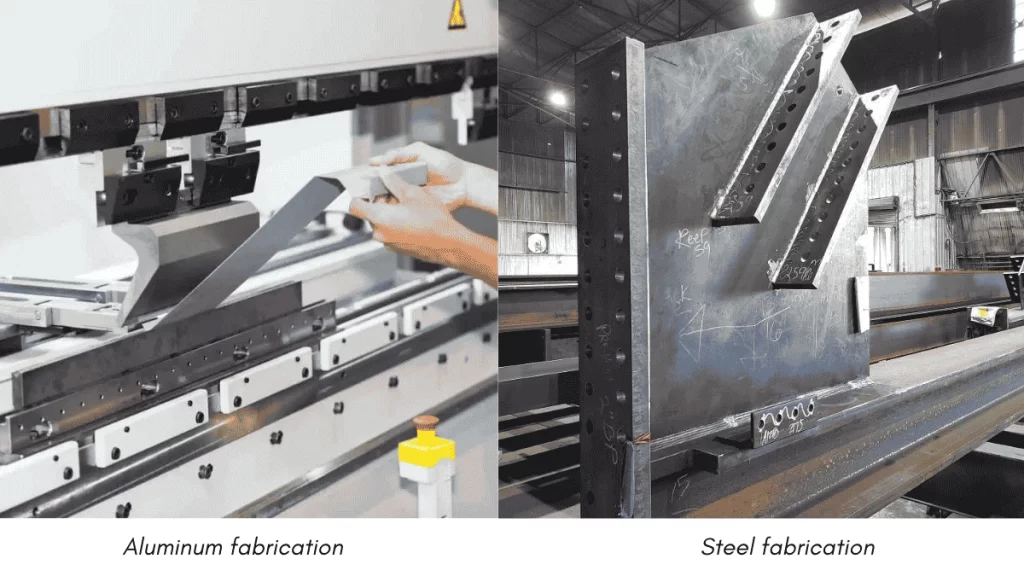 Aluminum and steel fabrication
Ease of fabrication or workability refers to a material’s ability to form into the desired shape with bending, stamping, welding, and other fabrication techniques. Additionally, it is also about not compromising the structural integrity and other original characteristics after forming.
Aluminum’s higher ductility, strain-hardening rate, and malleable nature make it easy to form into desired parts & products. Steel is formable, but thick sheets might need to be heated before forming.
Consequently, steel is easier to weld, and multiple steel pieces can be permanently joined with stick, TIG, MIG, and other welding techniques. On the other hand, Aluminum is relatively difficult to weld due to its high conductivity and oxidized layer on the surface.
Aluminum Vs Steel: Uses and Applications
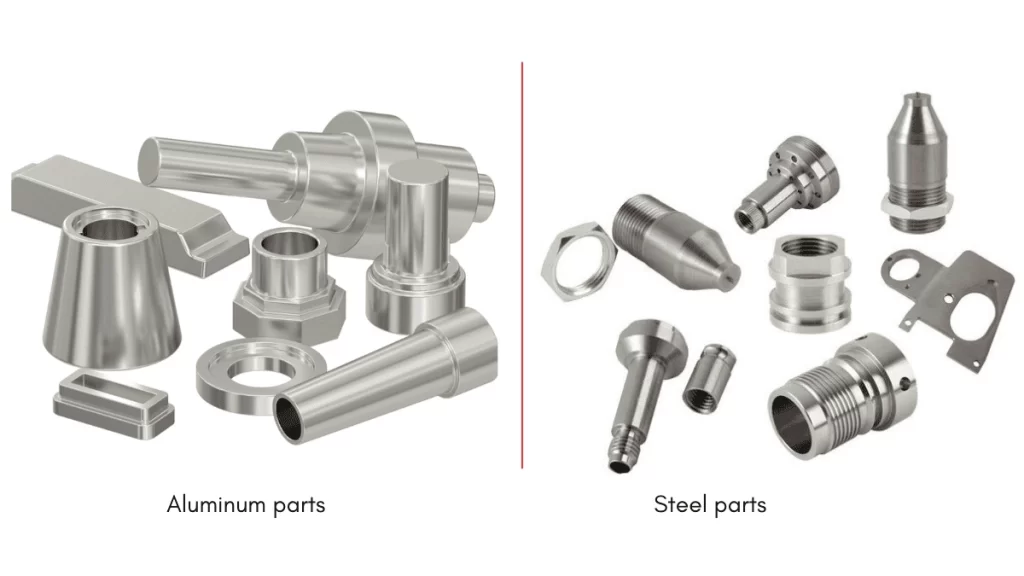 Steel and aluminum parts
Aluminum is suitable for parts & products across industries that need strength, lightweight, ductility, durability, or conductivity. On the other hand, steel is ideal for high-load-bearing and structural purposes.
Aluminum Application Examples
- Chemical processing components
- Architectural & decorative items
- Fuel tanks
- Heat exchangers
- Kitchen appliances
- Ship and offshore components
- Aircraft wing parts
- Motorcycle engine parts
- Automotive suspension components
- Packaging cans
- Electrical and electronic enclosures
- EV Battery Enclosure
- Electrical connectors and bus bars
- Medical device components and surgical tools
Steel Application Examples
- Parts for chemical & wastewater treatment plants
- Food processing equipment
- Pressure vessels and evaporators
- Structural components for construction
- Roofing & architectural parts
- Transmission towers
- Wind turbine towers
- Automotive body panels
- Engine transmission parts
Try Prolean Now!
Aluminum Vs Steel: Cost Implications
Whether steel is cheaper than aluminum or not depends on which type of steel you are comparing with it: carbon, mild, or stainless? In the aluminum vs steel cost comparison, stainless steel is more costly than aluminum, whereas carbon and mild steels are cheaper than aluminum alloys. While choosing an economical option, it is critical to consider the application requirements, processing cost, and surface treatment for corrosion protection.
Aluminum Vs Steel: A Quick Comparison Table
Let’s look at the quick comparison table for steel vs aluminum below;
| Criteria | Steel | Aluminum |
| Density | Heavier and stiffer than Al alloys | Lightweight material |
| Strength | Exceptional tensile & wear resistance | Higher strength-to-weight ratio |
| Machinability | Moderate- Good | Excellent, and allows faster machining |
| Conductivity | Lower conductivity and retains heat in cuts | High conductivity and efficient heat transfer |
| Cost | Lower than aluminum, except stainless steels | Relatively higher materials cost |
| Applications | Structural, heavy machinery, automotive parts | Aerospace, consumer products, heat sinks |
| Corrosion | Prone unless alloyed or coated | Highly corrosion-resistant |
Mild Steel Vs Carbon Steel Vs Alloy Steel Vs Aluminum
Mild steel is basically a low-carbon steel with up to 0.25% C, whereas alloy steel contains chromium, molybdenum, nickel, and other elements, along with carbon. Subsequently, carbon steel is available in low-, medium-, and high-carbon varieties.
Carbon Steel vs Aluminum
Carbon steel offers higher tensile strength and hardness, along with moderate thermal stability. But it is less ductile, heavier, and less corrosion-resistant compared to aluminum.
Alloy Steel Vs Aluminium
Alloy steel is stronger than both aluminum and carbon steel, providing excellent rigidity, strength, and improved corrosion resistance. However, its strength-to-weight ratio does not exceed that of aluminum.
Factors to Consider While Choosing Between Aluminum and Steel
Choosing between two CNC machining materials, aluminum and steel, requires consideration of multiple factors, including weight limitations, stress-bearing requirements, desired conductivity, part complexity, and project budget.
Next, the list below outlines five key factors to consider:
- Do you need lightweight parts, or do you want to reduce weight as much as possible while maintaining considerable strength? →If Yes, Choose Aluminum.
- If you are making parts for high-stress applications → If yes, Choose Steel
- Are your parts related to electrical or heat transfer?→If yes, Choose Aluminum
- Consider the cost of materials and ensure they are within your budget→ Cost in increasing order: Carbon steel, alloy steel, aluminum, and stainless steel.
- Does your design have complex geometrical features?→If yes, Aluminum sheets provide better workability.
Try Prolean Now!
Summing Up
Choosing between Aluminum Vs Steel ultimately depends on the application requirements of the designed parts. When conductivity, lightweight, or high formability are desired, aluminum is a better option. On the other hand, steels are ideal for heavier and stiffer structural applications.
At ProleanTech, we offer a comprehensive aluminum machining service tailored to your specific needs. Additionally, our engineers also help you with DFM optimization and material selection.
- Flexibility in production volume
- Precision as low as ±0.005″
- Minimum thickness of 0.03″
FAQs
Is aluminum a metal or a nonmetal?
Aluminum is a metal that offers metallic properties, such as strength, lightweight, and conductivity.
Does aluminum rust like steel?
No, unlike steel, aluminum forms an oxide film that protects the underlying material from corrosion.
What are the disadvantages of aluminum?
The main disadvantages of aluminium are lower structural stiffness, a higher risk of fatigue cracking, and a lower melting point.
Will aluminium replace steel?
No, aluminum can not replace steel in all applications. Both materials have some specific application preferences.

0 Comments