
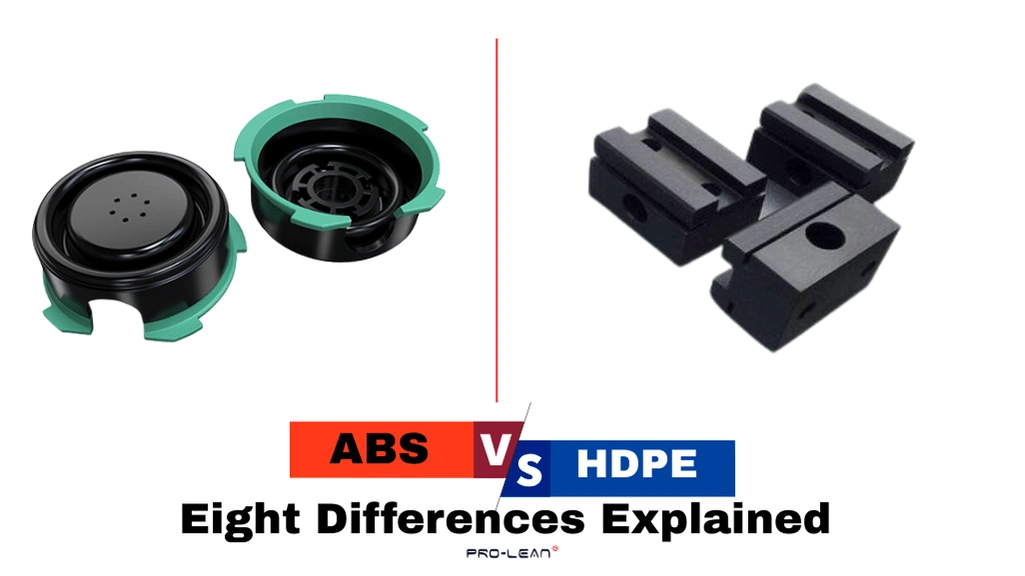
ABS and HDPE are two thermoplastics used in manufacturing. Although both are considered strong plastic materials that can be shaped into a variety of items, they differ in their properties, performance, and preferred applications.
ABS Plastics are characterised by toughness, strength, impact resistance, moderate chemical resistance, and relatively low pricing. On the other hand, HDPEs are flexible, durable, and mainly found in the packaging of household products and consumer goods.
Understanding the differences between ABS vs HDPE helps to identify which material is the best fit. So, you can make the right material decision.
This article will elaborate on eight major differences between ABS and HDPE.
Let’s get started.
What is ABS?
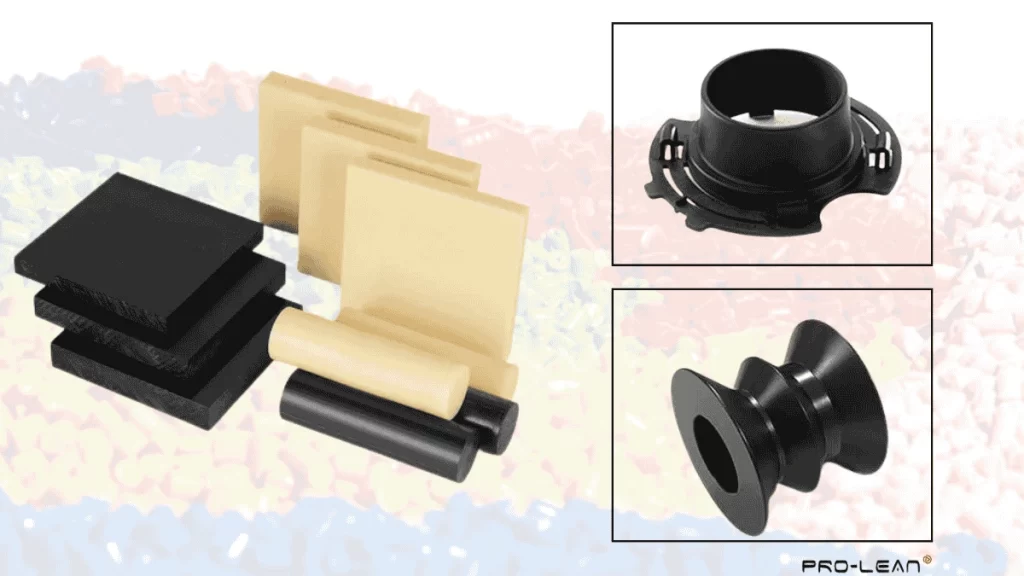
ABS plastic
ABS, or Acrylonitrile Butadiene Styrene, is a versatile thermoplastic first introduced by Borg-Warner in the 1950s. Then, many polymer companies are continually advancing their products, and we have different variations of ABS available in the market today.
The internal structure of ABS involves rubbery polybutadiene chains dispersed within a rigid styrene–acrylonitrile (SAN) matrix. In the raw ABS sheets, rods, blocks, and pellets, various additives are also mixed in small amounts, such as stabilizers, pigments, and flame retardants.
Each of the three monomers is responsible for some specific ABS physical and mechanical properties.
- Acrylonitrile (15- 35 %) → Fatigue strength & stability at high temperatures, and chemical resistance.
- Butadiene (5- 30%) → Toughness and impact resistance
- Styrene (40-60%)→ Finish, rigidity, machinability, and flowability
What is HDPE?
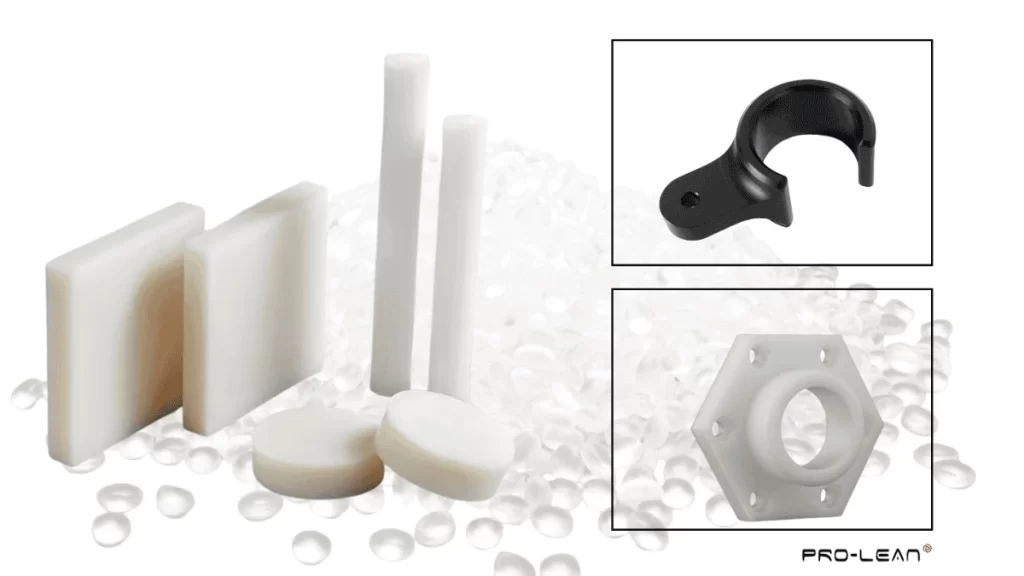
HDPE plastic
HDPE is an impact resistance plastic made with linear polyethylene chains with minimal branching, formed through catalytic polymerization of ethylene gas and first introduced by Karl Ziegler in the 1950s.
Its tight molecular packing and high crystallinity (up to 90%) result in a stable structure that offers high density, tensile strength, impact strength, and UV & chemical resistance.
Consequently, the thermoplastic material HDPE provides an excellent strength-to-weight ratio, durability, moisture resistance, and food-safety properties. Some application examples include packaging products, consumer goods, and automotive parts.
Try Prolean Now!
ABS VS HDPE: Composition
ABS is made of three different monomers: acrylonitrile, butadiene, and styrene. The polybutadiene chains disperse into styrene-acrylonitrile copolymer chains containing both styrene units and polar nitrile groups.
On the other hand, HDPE is a homopolymer composed of long, linear ethylene (C₂H₄) chains arranged in either a repetitive or random pattern, with minimal branching.
ABS VS HDPE: Physical Properties
Comparing ABS and HDPE physical properties, ABS performs better in terms of dimensional stability, finish, and elevated temperatures. On the other hand, HDPE is better for moisture resistance, chemical stability, and stress-crack resistance.
Next, let’s look at the comparative table below for “ABS vs HDPE physical properties.”
| Property | ABS Physical Properties | HDPE Physical Properties |
| Polymer | Amorphous | Semi-crystalline homopolymer |
| Density (g/cm³) | 1.03 – 1.08 | 0.933 – 1.27 g/cm³ |
| Melting Point (~°C) | Not fixed, up to 200 °C | 120 – 137 °C |
| Glass Transition (Tg) | ~105 °C | ~-120 °C |
| Water Absorption (%) | 0.2 – 0.4 | <0.01% |
| Chemical Resistance | Moderate | Excellent |
| UV Resistance | Poor | Moderate |
| Electrical Insulation | Good | Excellent |
ABS VS HDPE: Mechanical Properties
ABS and HDPE both have good mechanical properties, but there are some notable differences in their stiffness, hardness, elongation at break, and creep resistance. ABS is a good option where stiffness, flexural strength, rigidity, and dimensional stability are required for performance, whereas HDPE excels in flexibility, toughness, and fatigue resistance.
Next, let’s look at the comparative table below for “HDPE vs ABS mechanical properties.”
| Property | ABS | HDPE |
| UTS (MPa) | 40 – 75 | 20 – 38 MPa |
| Elongation at Break | 10 – 150% | Up to 1500%, or higher |
| Impact Strength (J/m) | 150 – 400 | 50 – 200 |
| Hardness (Rockwell) | R95 – 115 | R50 – 70 |
| Flexural Strength (MPa) | 0.5- 97 | 16-90 |
| Thermal Stability (°C) | Up to 100 °C | Up to 120 °C |
| Creep Resistance | Moderate | High |
* The values are for comparative review; they can differ based on formulation and specific grades.
ABS Vs HDPE: Machinability
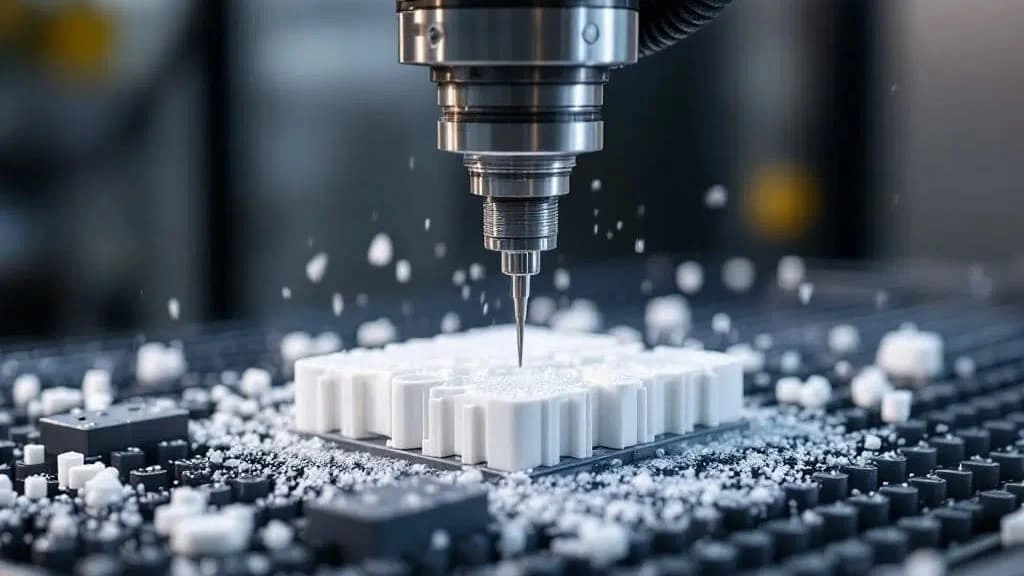
ABS machining
Both ABS and HDPE can be processed using plastic CNC machining methods such as milling, turning, drilling, and threading. However, ABS CNC Machining generally provides better dimensional stability, tighter tolerances, and a smoother surface finish than HDPE, making it a preferred choice for precision plastic components.
HDPE is more sensitive to heat buildup and can cause material warpage under thermal stress. Consequently, it requires careful chip control during CNC machining.
ABS Vs HDPE: Ease of Injection Molding
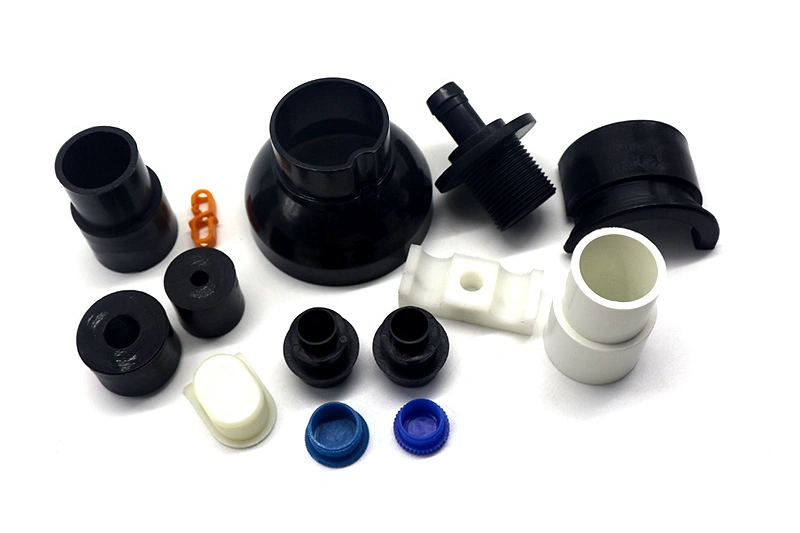
HDPE injection molding
Both ABS and HDPE can be melted and shaped into the desired form. However, their flowability within the mold affects shrinkage and dimensional stability. Compared to HDPE, ABS has better flowability in the molten state, making it more suitable for complex designs.
In plastic extrusion, HDPE is better suited to the process and can be shaped into complex, continuous profiles.
ABS Vs HDPE: Applications
ABS parts and products are suitable for applications requiring higher stress-bearing capability, dimensional stability, and complex shapes. On the other hand, HDPE parts and products are predominantly used where chemical resistance, impact toughness, and moisture resistance matter.
ABS Plastic Parts & Products
- Automotive dashboards & interior panels
- Rigid bumpers
- Electronics housings
- Toys & decorative items
- Custom profiles and fittings
- Parts for home appliances
- Medical equipment enclosures
- 3D printing filaments
- Sporting Goods
HDPE Plastic Parts & Products
- Automotive Fuel Tanks
- Food containers
- Milk bottles and packaging bags
- Industrial storage units
- Outdoor furniture
- Trash bins
- Water and gas fittings
ABS Vs HDPE: Cost Implications
The raw material cost of ABS is higher than that of HDPE, whether in solid blocks and bars or in molding pellets. Raw molding pellets for ABS cost around $4 per kg or more, whereas HDPE costs around $1.2 per kg.
The cost also varies depending on composition and specific grades. For instance, 3D printing filaments or UV-stabializer filled ABS are costlier than standard pellets.
Furthermore, supplier region, ordered volume, certification requirements, and other factors also influence the material cost. If you have a reliable supplier and order in large quantities, the per/kg material costs drop significantly.
Try Prolean Now!
ABS Vs HDPE: Recycleability and Environmental Concern
Both ABS and HDPE are recyclable. You can process the plastic machined parts and products made from HDPE or ABS after their lifecycle and reuse them as raw materials. However, if you ask which one is easier to recycle? The answer is HDPE; subsequently, the recycling cost for HDPE is lower than that for ABS.
ABS recycling requires multiple steps, as it is more challenging than HDPE. It is due to ABS’s teropolymer structure and chemical complexity.
Mostly recycled ABS is used to make large, structural items, such as furniture frames, architectural elements, and automotive parts.
ABS and HDPE Alternatives
The above sections compare ABS VS HDPE with objective differences. If neither of them is the best fit for your application requirements or budget, there are also some alternatives.
ABS Alternatives
- Acrylonitrile Styrene Acrylate(ASA): Weather stability, durability, and the same toughness.
- Polysulfone (PSU): Thermal stability is the same or higher than ABS, and greater strength.
- Cyclic Olefin Copolymer (COC): Thermal & chemical resistance, optical clarity, and low moisture absorption.
HDPE Alternatives
- Polyethylene Terephthalate (PET): Higher stiffness, moisture barrier, and chemical resistance.
- Syndiotactic Polystyrene (SPS): Better thermal and chemical stability
- Polylactic Polyacetic Acid (PLA): Less thermal & impact-resistant, but ideal for 3D printing of parts with shorter life.
If you need further guidance for material selection, contact ProleanTech. Our engineers will help you find the optimal plastic that fits within your budget and meets all functional and performance requirements.
ABS Plastic vs PP Vs HDPE
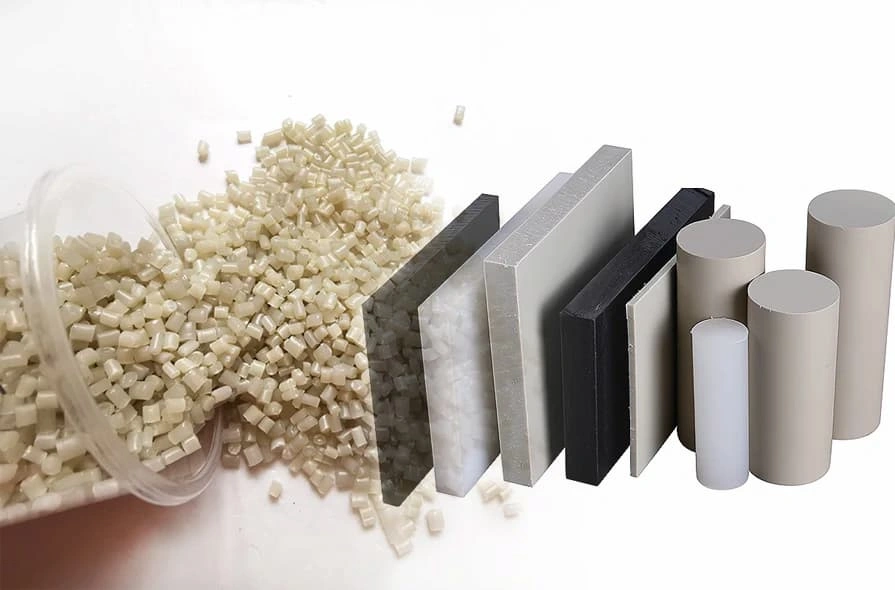
PP plastic material
Polypropylene (PP) is a lightweight thermoplastic with good flexibility and chemical stability. But its rigidity, strength, and heat resistance are lower than those of ABS, and it is less flexible than HDPE. You can choose PP for flexible and low-cost parts, such as food packaging, medical devices, and containers.
| Property | ABS | PP | HDPE |
| Strength | High | Moderate | Moderate |
| Chemical Resistance | Moderate | High | High |
| Impact Toughness | Good | Good | High |
| Heat Resistance | High | Moderate | Moderate |
| Cost | Moderate | Low | Low |
| Surface Finish | Excellent | Good | Good |
Try Prolean Now!
Summing Up
The right material option between ABS Vs HDPE depends on your application requirements, including strength, thermal stability, operating conditions, and dimensional consistency.
ABS is suitable where rigidity, surface finish, and dimensional stability are needed, and operating temperatures can fluctuate up to a moderate range. On the other hand, HDPE is the right choice where moisture resistance, flexibility, and impact toughness matter.
Looking for high-quality ABS parts, our ABS machining service can deliver the results you need for your project. We have advanced multi-axis CNC systems and precision measurement devices that can work with complex designs.
So, upload your design file and request a quote today!
FAQs
Is ABS stronger than PVC?
Yes, generally ABS is stronger than PVC. It offers tensile properties similar to those of PVC and higher impact strength.
Is HDPE the strongest plastic?
Although HDPE offers excellent toughness and impact resistance, it is not the strongest plastic. ABS, PVC, PP, and a few other plastics are stronger than HDPE.
Is HDPE impact resistance better than ABS?
Yes, HDPE offers better impact resistance than ABS in cold conditions.
0 Comments