
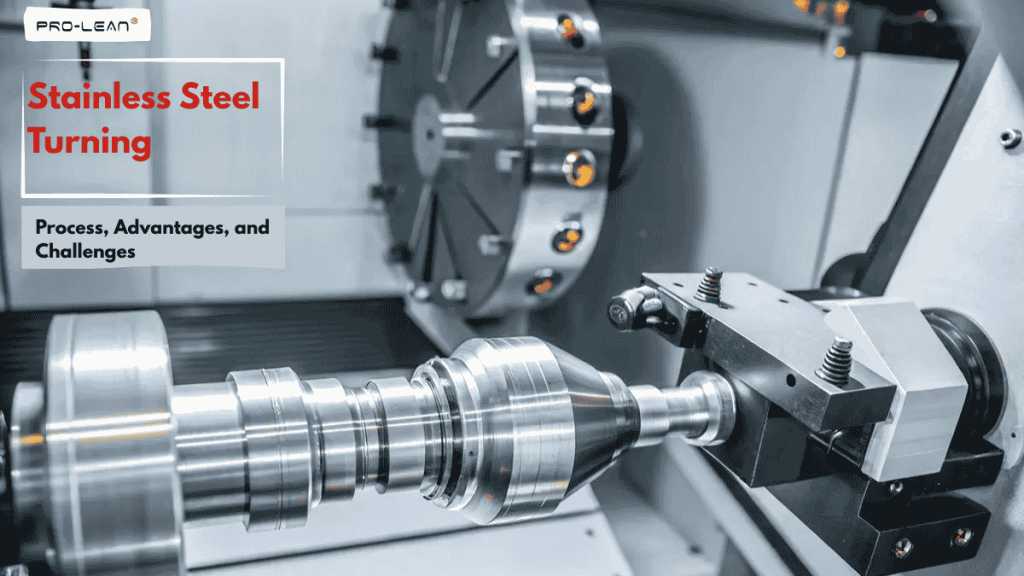
Stainless steel turning
Stainless steel is a common engineering material used for its strength, toughness, impact resistance, and corrosion protection. Meanwhile, you need machining, fabrication, and other processes to convert raw stainless steel into functional items.
Among different stainless steel machining processes, turning is known for cylindrical components, such as shafts, rods, pins, bushings, and tapered cones.
As there are many stainless alloys that behave differently during turning, it is important to consider machinability, tooling compatibility, and other factors to ensure defect-free components.
This article will discuss the various aspects of stainless steel turning, including types of stainless steel, their advantages, and potential machining challenges.
What is Stainless Steel Turning?
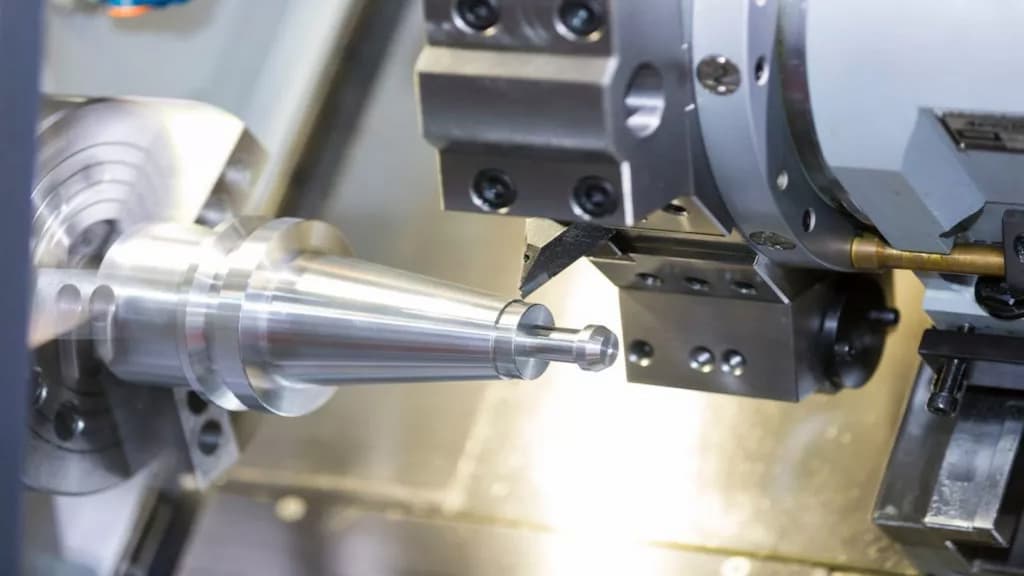
Taper turning
Turning is a type of CNC machining process used to create axially symmetrical shapes (cylindrical, conical, spherical, etc.) and surface features. It can work with all stainless steels, including hardened tool steel grades.
Manufacturers use CNC lathe machines or turning centres for turning operations. They can provide high machining speed, tight precision, finish, and repeatability across multiple batches. Consequently, turning is technically & economically feasible for all production volumes.
“ In turning, the stainless steel workpiece attached to the headstock spindle rotates at high RPM and the tool attached to the toolpost moves in longitudinal or transverse direction to shape the workpiece.”
Common stainless steel turned parts include transmission shafts, hydraulic cylinders, fuel pump components, studs & bolts, and bushings.
Is Stainless Steel Hard to Turn?
Yes, stainless steel is hard to turn, compared to many CNC machining materials. However, it is not that difficult, like inconel and titanium alloys. You can CNC turn steels into a variety of high-performance parts.
Consequently, the exact machinability (or turning difficulty level) depends on the specific grades of stainless steel. For instance, SS 303 and 304 are easier than PH 17-4 stainless steel.
Try Prolean Now!
The Process of Stainless Steel Turning
The stainless steel turning process involves a series of steps, and they must be executed carefully. It starts with creating an engineering design for the desired part, followed by programming, setup, turning, and post-processing.
Let’s look at each step in brief.
- Engineering Design: Create a detailed engineering design of stainless parts you want to turn, with clear shape, orientation, dimensions, tolerances, and other variables.
- Material Selection: Choose a suitable machining grade of stainless steel based on your application requirements.
- CAM Programming: Generate a CNC program for the design you have made using a suitable CAM software.
- Machine Setup: Clamp the work material & set the tool in the machine; a holder with minimal overhang is recommended.
- Turning Operations: Run the machine and monitor all the turning operations.
- Post-processing: Perform sanding, bead blasting, polishing, coating, or other operations, if required.
What Are the Types of Stainless Steel Used in CNC Turning?
Austenitic, martensitic, ferritic, precipitation hardening, and duplex are the five main types of stainless steel used in CNC turning. If we look at the grade-wise, 303, 304, 316, 416, 430, and PH 17-4 are the popular ones.
Austenitic Stainless Steels
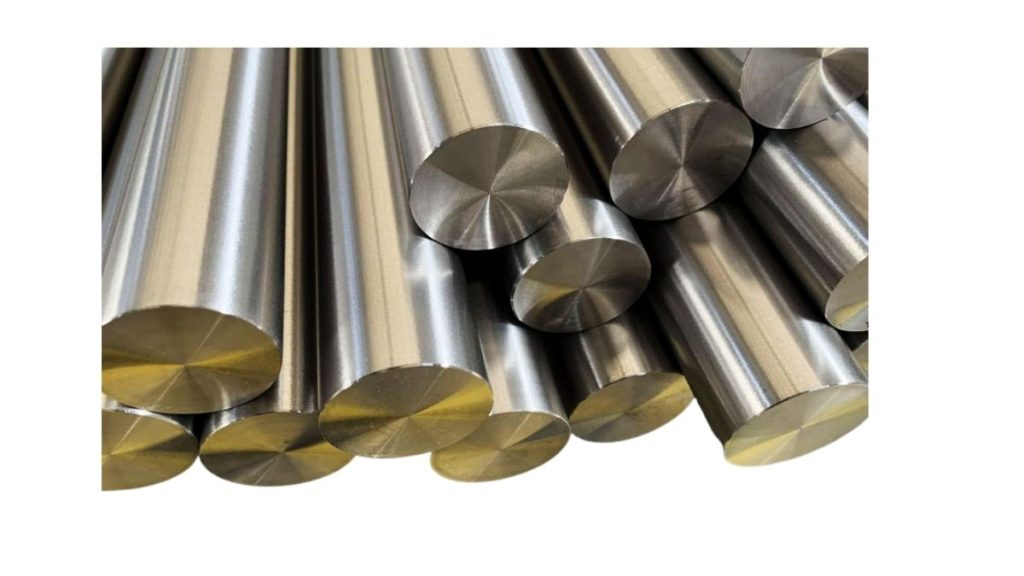
Austenitic stainless steel
Austenitic stainless steel is non-magnetic and contains chromium, nickel, and manganese as key alloying elements, with carbon present in very small amounts.
It is named after its FCC crystal structure, called austenite, which provides excellent ductility and good toughness.
Although all AISI 200 & 300 grades fall under the austenitic SS group, mainly 303 and 316 grades are popular in machining.
Machining 303 Stainless Steel
Compared to other stainless steels, it has good machinability. In fact, 303 is considered the easiest stainless steel to machine for any turning operations.
Machining 316 Stainless Steel
316 steel contains about 2-3% additional molybdenum, which provides higher corrosion resistance. But it also increases the toughness and work-hardening rate, making it difficult for stainless steel turning, compared to 303 SS.
Martensitic Stainless Steels
Martensitic stainless steels are available with both low & high carbon %, and machining grades like SS 416 contain phosphorus and sulfur for better machinability. Although the martensitic grade provides higher strength than the austenitic grade, it has lower corrosion resistance.
Ferritic Stainless Steels
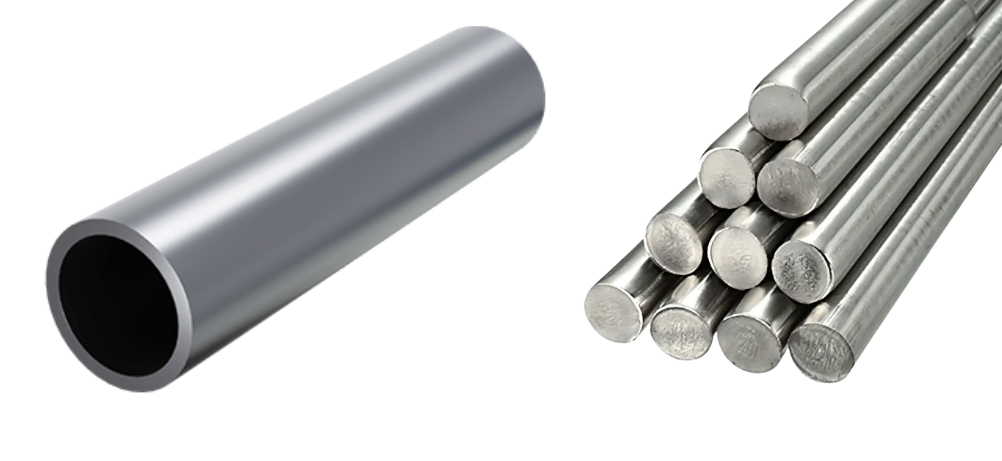
ferritic stainless steel
Ferritic stainless steels are characterized by high chromium and minimal carbon content in the composition. Subsequently, they cannot be hardened by heat treatment, but can be annealed, and are cost-effective.
Stainless 430 is the most common ferritic grade used in machining. It provides moderate corrosion resistance, higher than martensitic grades, but generally lower than austenitic grades.
PH Stainless Steels
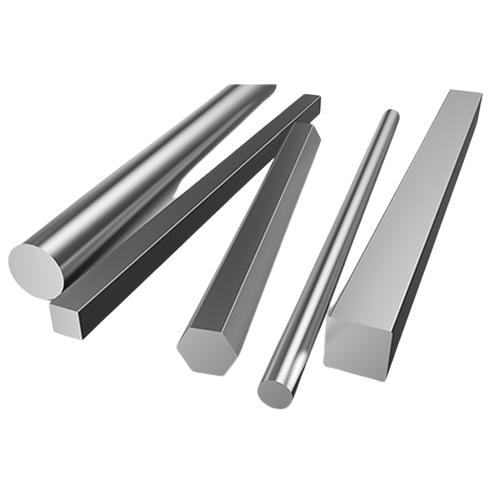
17-4 PH SS
Precipitation hardening (PH) stainless steels are known for their high strength and hardness, which is achieved through adding alloying elements like copper & niobium, and a specialized heat treatment process, called age-hardening.
17-4 Stainless steel is the most common hardened stainless alloy in machining. It offers good machinability with AlTiN and AlCrN coated tools.
Duplex Stainless Steels
Duplex stainless steels involve ferritic and austenitic microstructure phases, typically in equal amounts. So, the manufacturer can leverage the properties of two different types of steel with duplex grades like 2205 and 2507.
Some common uses of duplex stainless steel turning are chemical processing pipes, pump components, valves, and fittings.
Advantages of Stainless Steel
Stainless grades have several advantages as a manufacturing material, including strength, corrosion resistance, impact resistance, thermal stability, and a hygienic surface.
Here are the five key advantages of stainless steel:
1. High Mechanical Strength
Stainless steels are strong, and they provide high compressive and tensile strength, while keeping the proportional weight ratio lower than other types of steels.
2. Corrosion Resistance
When stainless steels are exposed to moisture, they form a protective chromium oxide layer that helps prevent rust and degradation.
3. High Impact Resistance
It is a high-impact-resistant material that can absorb sudden loads, mechanical shocks, and vibration without failure. So, stainless can be used for high-performance machinery parts and structural components.
4. Hygienic Surface
First, many stainless grades are safe for food processing, and they are hygienic. Secondly, you can easily clean and maintain them.
5. Performance at Elevated Temperatures
Stainless steels do not lose their properties up to ~980°C, which is beneficial for high-temperature applications, such as gas-turbine blades and aircraft parts.
Try Prolean Now!
Problems and Challenges in Stainless Steel Turning
Saying stainless steel has good machinability does not mean it is free from any machining problems and challenges. While turning, you might face issues like heat buildup, work hardening, workpiece deformation, long chips, tool wear, and poor as-machined finish.
Next, let’s further elaborate on these challenges one by one.
Heat Buildup
Thermal management is a major challenge in stainless steel turning. The low conductivity of stainless steel causes inefficient heat transfer from the machining area, leading to heat buildup as the tool passes multiple times.
Heat can trigger the tool wear and also impact the strength & hardness of the workpiece. Therefore, use water, oil, or semi-synthetic coolants.
Workpiece Deformation
The stainless workpiece can deform during machining for two reasons: too tight clamping or inadequate cutting forces & feeds. Excessive forces cause internal stress, which leads to microcracks.
Work Hardening
High cutting forces and friction cause the plastic deformation of the material surface through which the tool engages and passes, leading to higher hardness and strength. Grades like 304, 201, and 316 are more prone to this problem.
Chip Removal Challenge
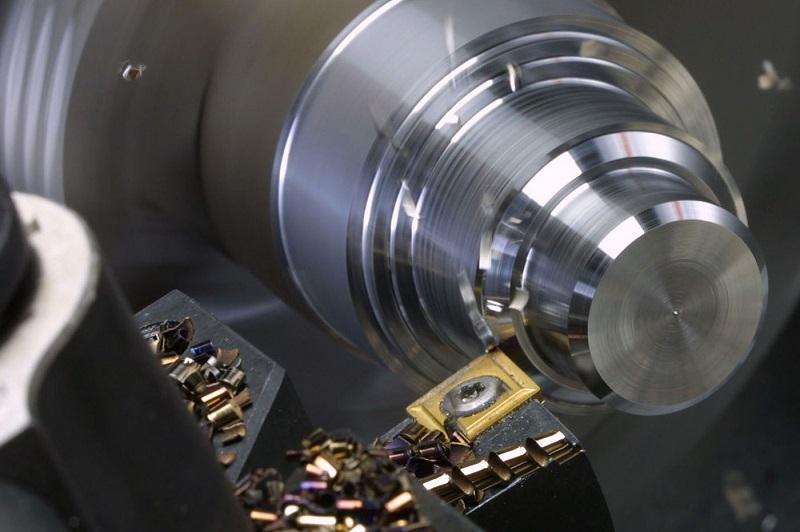
Machining chip removal
Stainless steel turning produces long, continuous chips that can be easily wrapped, making chip removal difficult. It obstructs machining areas, resulting in dimensional and finishing errors. In some cases, chip clogging can break the turning tool.
Poor As-machined Finish
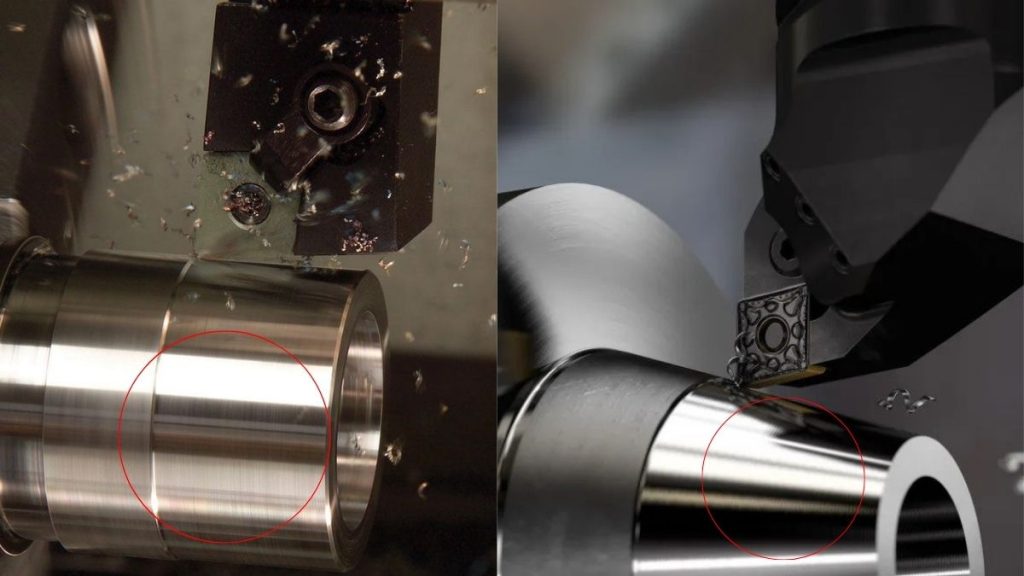
Finishes of CNC turned parts
Improper tooling and tool geometry result in poor surface finishes on stainless steel turned parts. Consequently, the workpiece’s hardening further degrades the as-machined finish because hardness increases.
Therefore, use the right turning parameters, coolant, and turning tools. If any wear is seen on the tool, replace it immediately.
Wear on Turning Tool
Stainless steel hardness is higher than that of other common CNC materials; some grades are as hard as 110 HRB. So, the rate of wear is faster for cutting edges. This causes dimensional inaccuracies and a rougher surface. To tackle this problem, use hard-coated tools and monitor wear regularly.
Stainless Steel Machinability and Affecting Factors
If we consider AISI 1212 steel as a reference, the machinability of stainless steel ranges from 30 to 70%, based on a particular type or grade. SS 303, 430, and 420 are more easily machinable than 304 and 316.
Next, let’s look at the major factors affecting stainless steel machinability: hardness, thermal conductivity, toughness, tool geometry, tool wear, and work hardening rate .
- Hardness: If stainless grades have higher hardness, they are more difficult to machine.
- Thermal Conductivity: Higher conductivity means the heat generated from machining areas is effectively dissipated.
- Toughness: If the steel is tough, there is a greater risk of work fracture & deformation.
- Tool Geometry: For better machinability during stainless steel turning, an appropriate tool geometry is essential.
- Tool wear: Wear on cutting edges makes the turning process difficult, so inspect and replace regularly.
- Work hardening: A high rate of work hardening reduces the machinability of stainless steel.
Try Prolean Now!
Summing Up
Stainless steel turning is a versatile process used to produce axially symmetrical components for automotive, aerospace, food processing, medical, and other applications.
Using the right tool type, material & geometry, along with cutting speed and feed rate, is essential to achieve precision and finish. Additionally, you must consider which type of stainless steel you are using and the associated machining challenges.
If you are looking for stainless steel turned parts, our stainless steel machining services can deliver the results tailored to your specifications.
We have advanced machine shops equipped with multi-axis CNC lathes, Milling machines, turning centres, grinders, EDM machines, laser cutters, and various quality-control instruments.
FAQs
Is stainless steel hard to turn?
Yes, stainless steel is hard to turn, compared to aluminum and other CNC materials. It is because of high toughness, rigidity, and low conductivity.
What is the easiest metal to turn on a lathe?
Aluminum is the easiest metal to turn on a lathe. Aluminum alloys offer excellent machinability and can be turned with tight tolerances and finish.
What is meant by engine turned stainless?
Engine turned stainless refers to a specialized turning process for stainless steel, which produces a decorative polished finish with a distinctive look.
0 Comments